PRESENTATION:Jon Rafman-Main Stream Media
After studying philosophy, literature, and film, Jon Rafman graduated from the School of the Art Institute of Chicago in 2008. Rafman’s artistic practice combines masterfully narrated stories with fantastical, grotesque imagery and immersive spatial installations. Both enthusiastic and critical, he employs computer-generated visual languages and adopts the latest digital technologies. A media-archaeological interest is evident in his engagement with the fate of virtual platforms such as “Second Life” and his ongoing project “Nine Eyes of Google Street View,” initiated in 2008.
By Dimitris Lempesis
Photo: Kunstsammlung Nordrhein-Westfalen Archive
Jon Rafman’s exhibition “Main Stream Media” is the artist’s first solo museum exhibition in Germany and presents a broad overview of his work from 2008 to 2026. The exhibition explores how digital technologies, internet culture, video games, social media, and artificial intelligence have transformed human experience, memory, and communication. Through videos, installations, photography, and immersive environments, Rafman examines the emotional and psychological effects of life online. His works combine nostalgia, humor, discomfort, and criticism to reveal the contradictions of contemporary digital culture.
The exhibition is divided into six sections that trace the evolution of Rafman’s artistic practice over almost two decades. Across these works, he investigates how new technologies have changed not only artistic production but also aesthetics, storytelling, and social interaction. Themes such as online identity, virtual reality, internet subcultures, digital ruins, and algorithmic media appear throughout the exhibition.
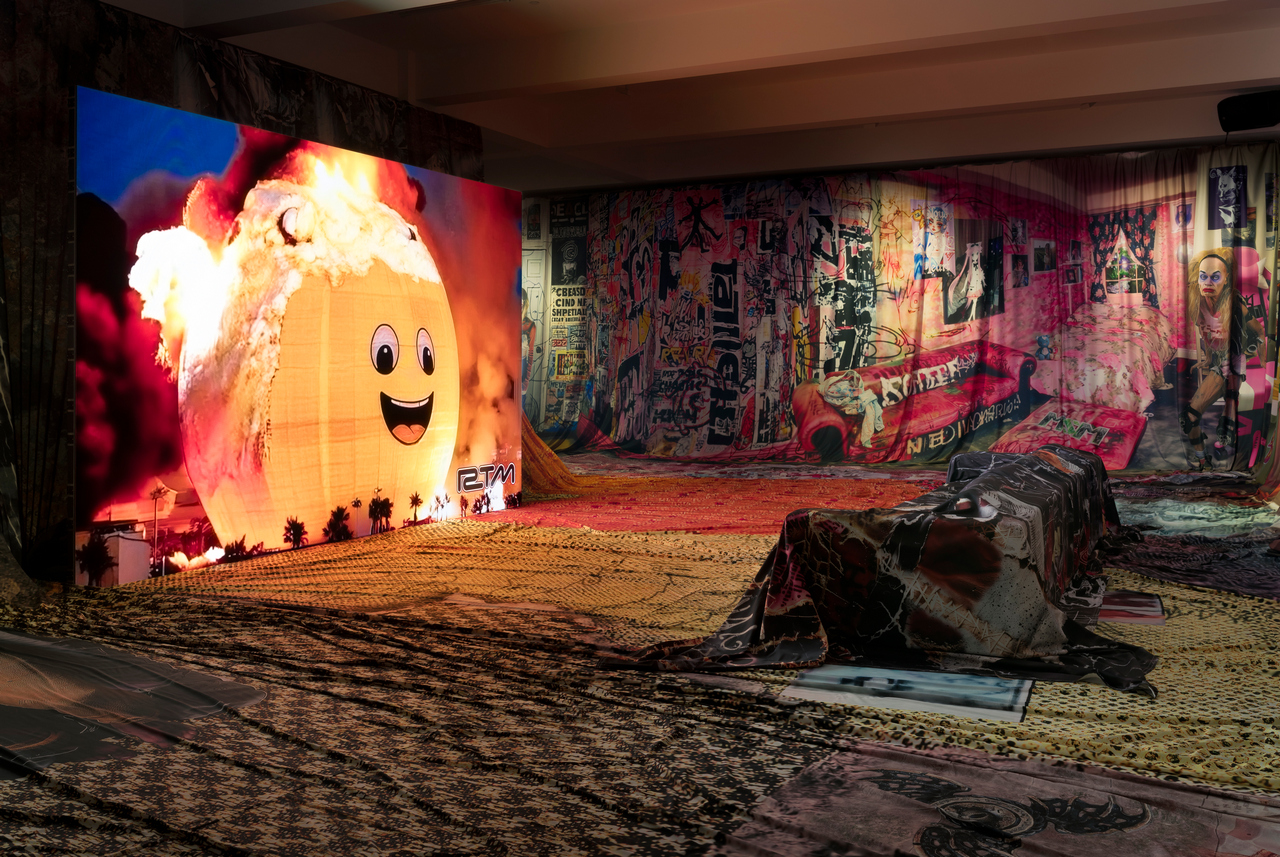
The first rooms feature Rafman’s newest project, “Main Stream Media Network” (2025–2026), inspired by MTV, the television channel that shaped popular culture during the 1980s and 1990s. Rafman uses AI-generated music videos and fictional pop stars to question the meaning of “mainstream culture” in an age dominated by algorithms and endless digital content. Characters such as Cloudy Heart, Iron Tears, and Flux Arcana imitate the visual styles and music of previous decades, creating an atmosphere that feels both nostalgic and unsettling.
These performers are entirely artificial. Rafman and his team developed not only their songs and videos but also fictional biographies, personalities, and fan communities. The installation recreates the experience of watching old television programming, complete with advertisements and interstitial segments. However, unlike traditional pop culture icons, these stars are computer-generated simulations. Through this artificial media environment, Rafman explores how culture is increasingly produced by algorithms rather than human expression.
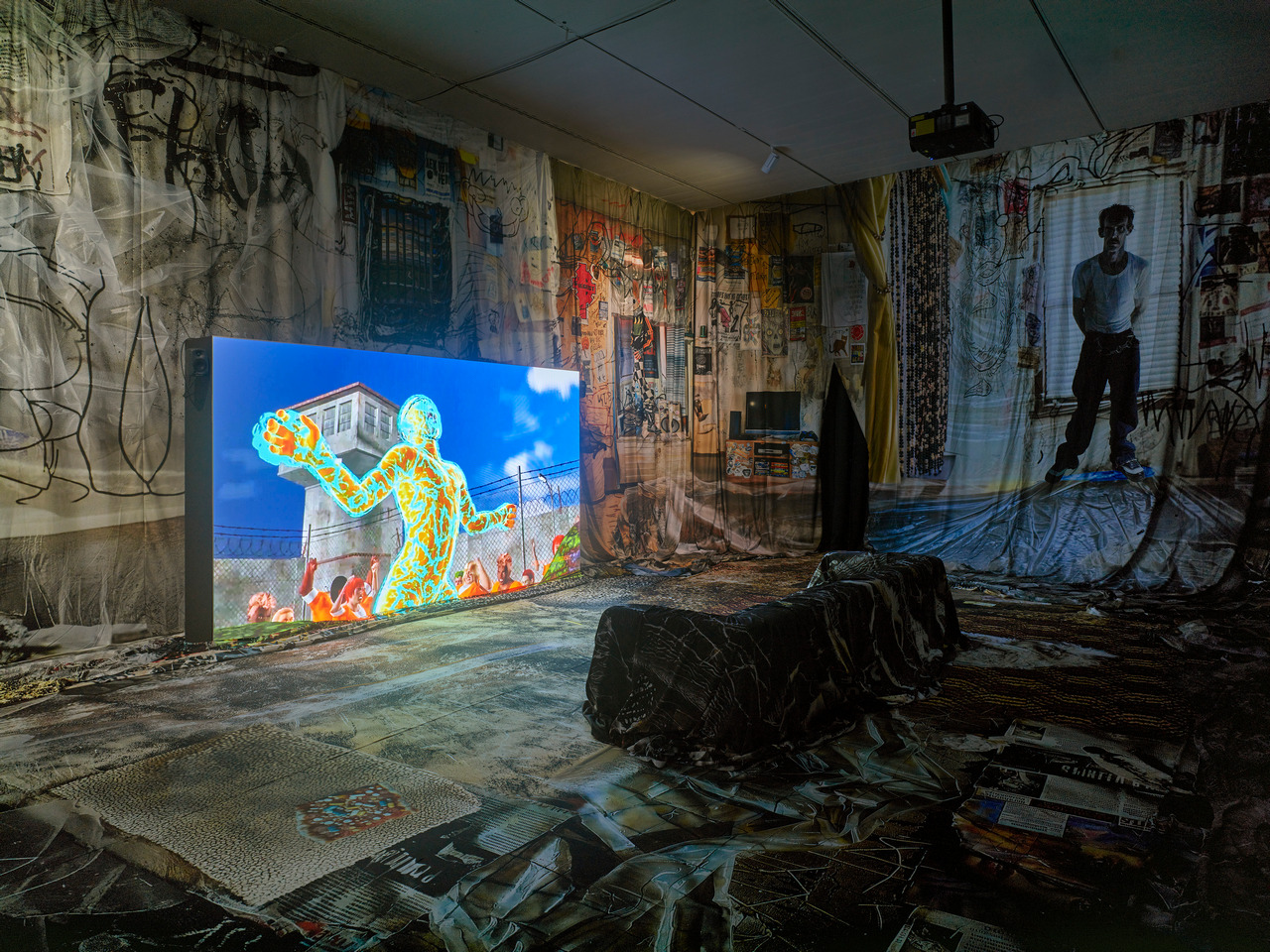
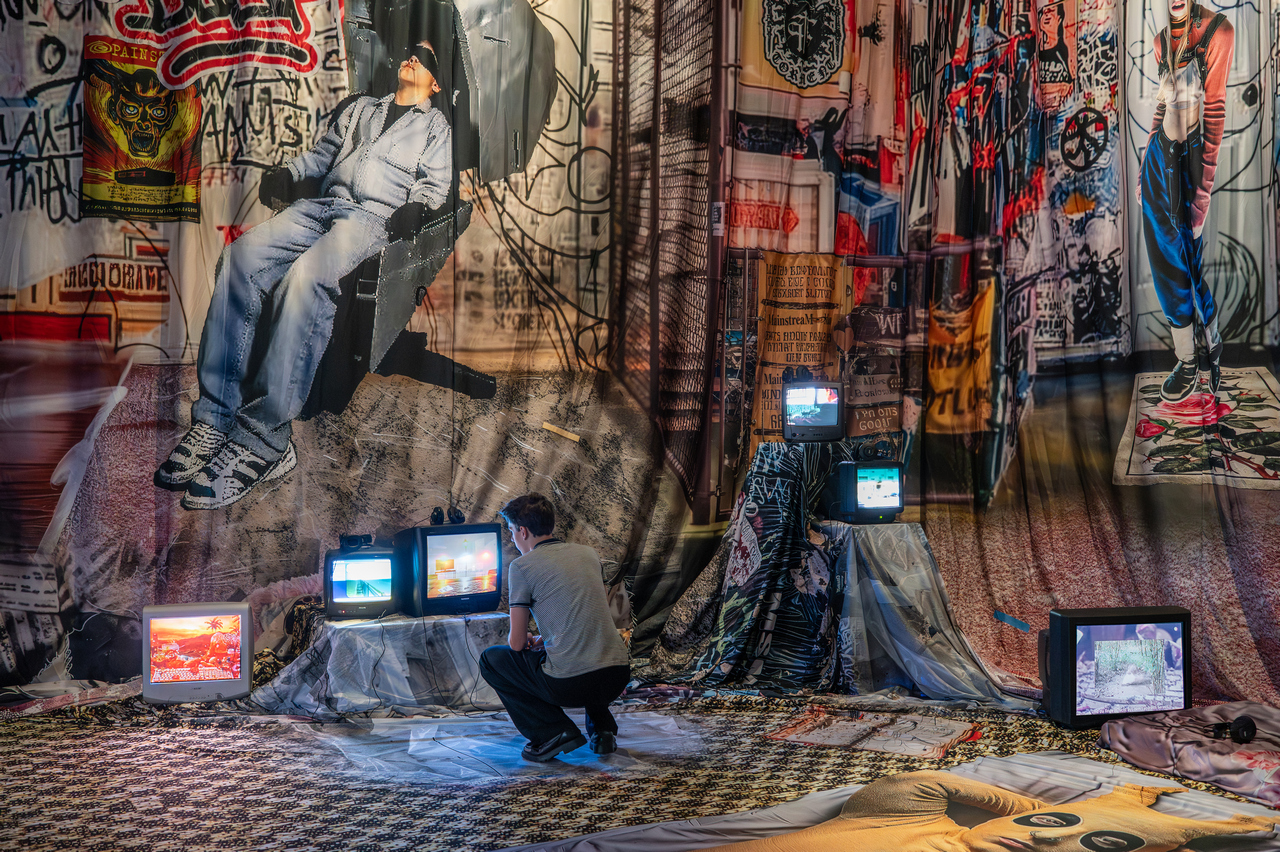
Another important part of the exhibition is the “Betamale Trilogy” (2013–2015), which examines internet subcultures and digital loneliness. Displayed on old CRT monitors, the works recreate the atmosphere of early online communities. In “Kool-Aid Man in Second Life – Interview with Nicholas O’Brien,” Rafman’s Kool-Aid Man avatar wanders through the virtual world of Second Life as a digital observer. The work reflects on online identity and the blurred line between virtual performance and real emotional experience.
Nearby, “Short Story 1” transforms stories written by a Reddit user into narrated videos using AI-generated voices. Together, these works show how internet platforms shape communication, fantasy, and social behavior. The immersive installation design, with carpets and printed fabrics, mirrors the overwhelming sensory environment of digital media.
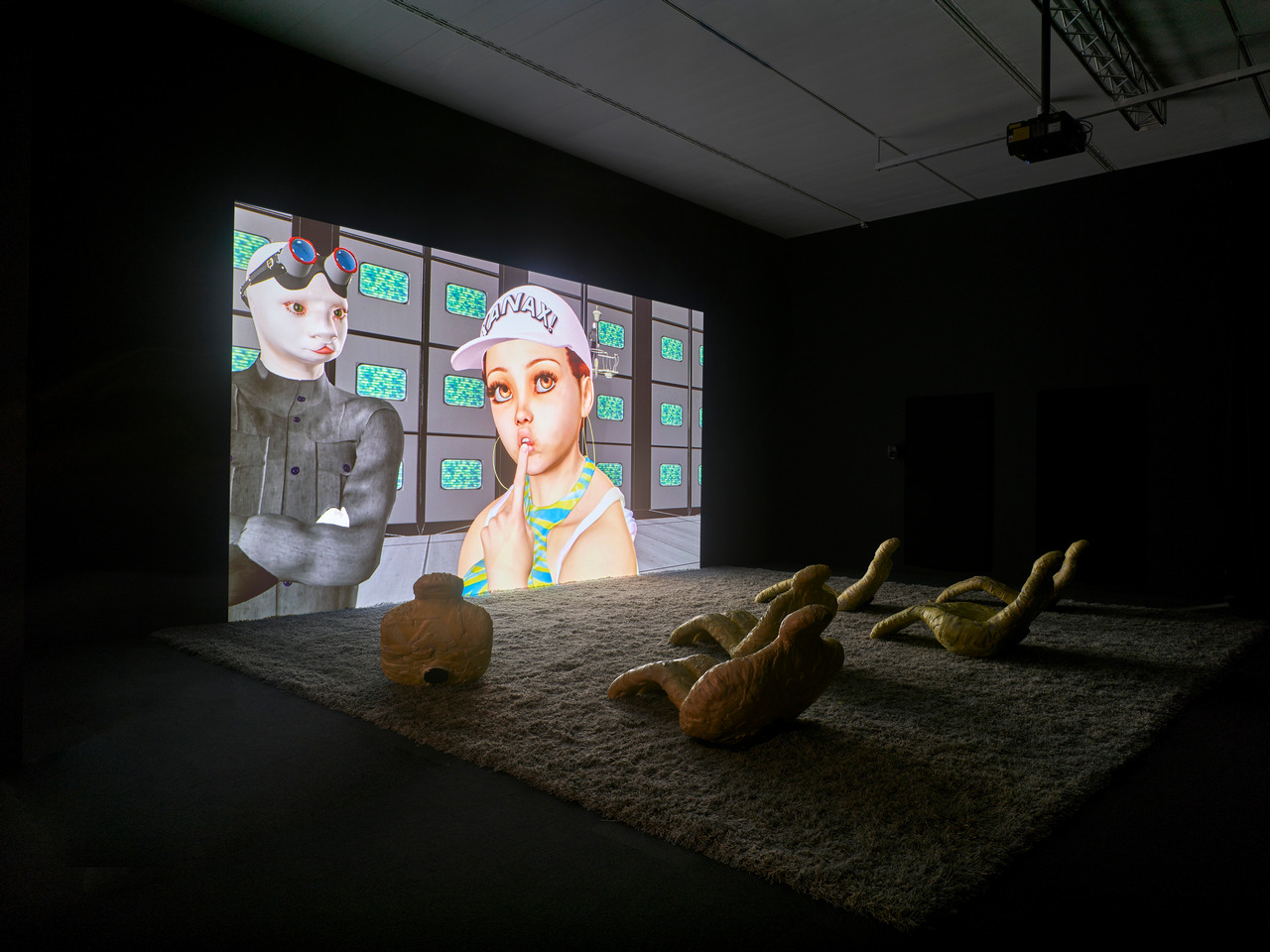
One of Rafman’s best-known works, “Dream Journal 2016–2019,” is shown in a cinema-like room with lounge chairs designed by the artist. The long video contains almost no dialogue and instead relies on surreal imagery and music to create an intense emotional experience. Inspired by lucid dreaming and surrealism, the film presents disturbing scenes involving fear, desire, shame, and anxiety.
Rather than documenting personal dreams, Rafman describes the project as an expression of the “collective unconscious” of the internet. Using consumer 3D software, he creates an endless flow of unstable images and transformations. Characters drift through strange digital spaces, reflecting the fragmented emotional experience of living online. The film resembles the chaotic and addictive structure of internet browsing itself.
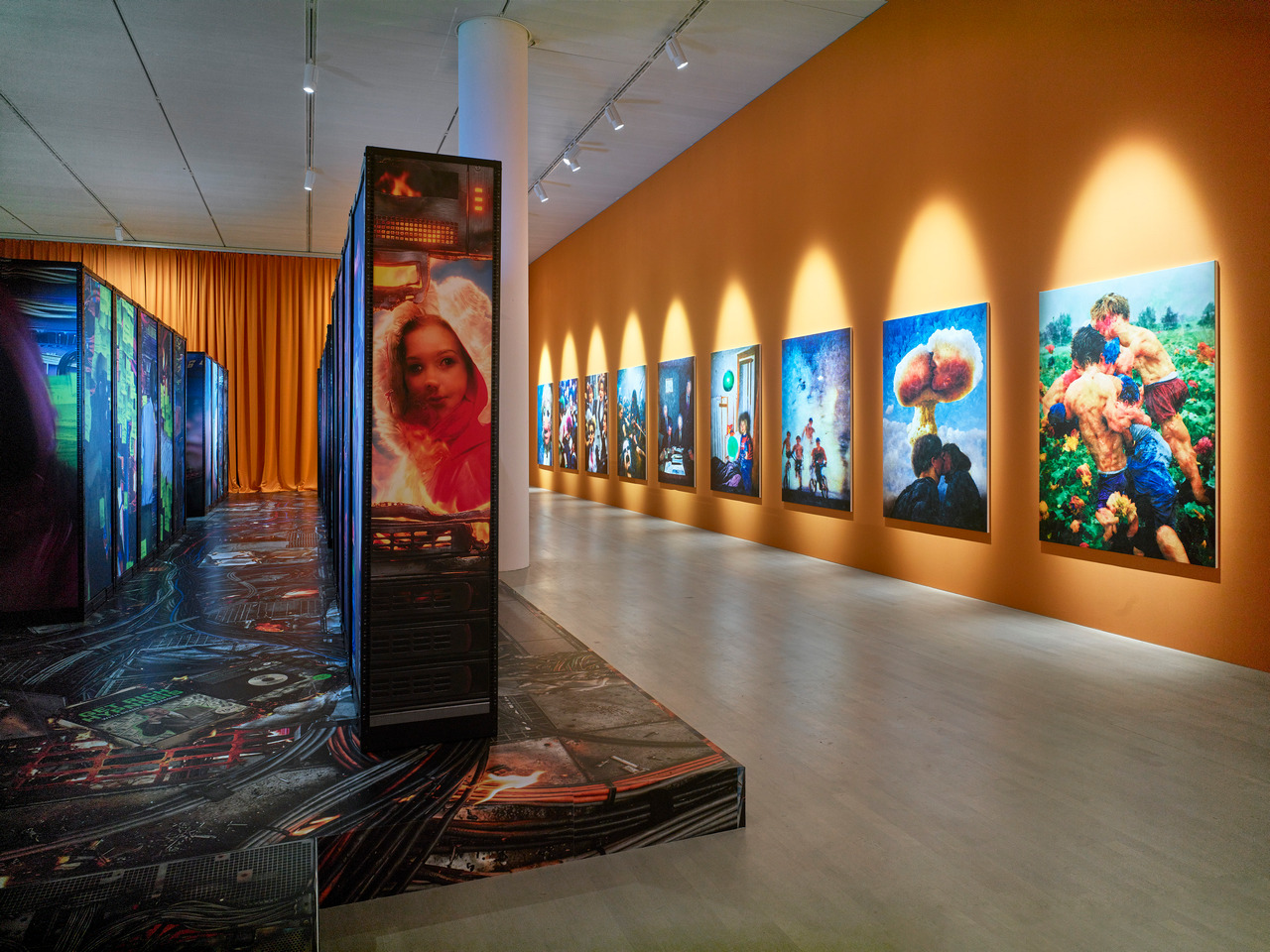
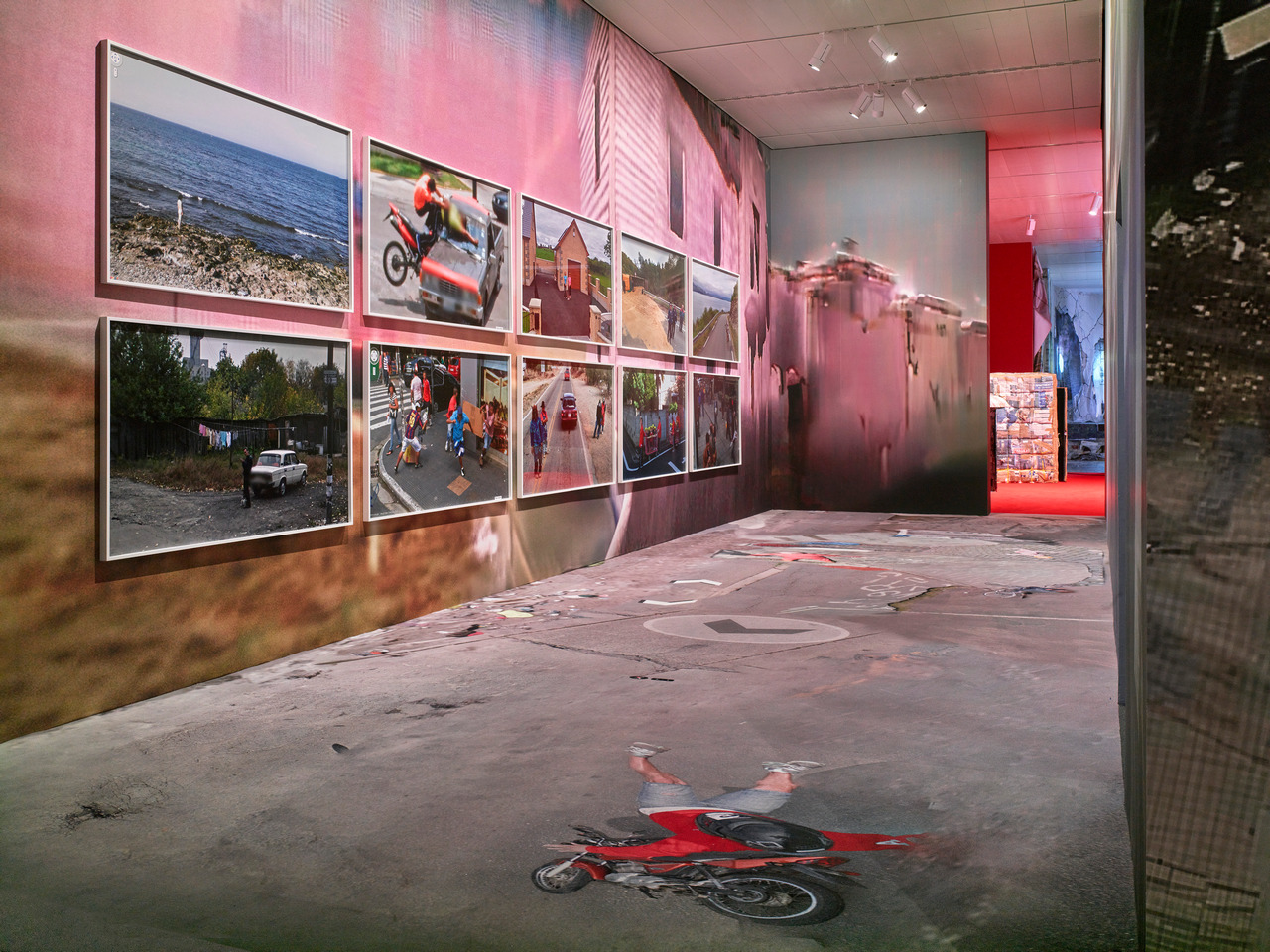
The exhibition also includes Rafman’s famous ongoing project “Nine Eyes of Google Street View.” The title refers to the cameras mounted on Google Street View cars that automatically photograph streets around the world. Since 2008, Rafman has searched these images for unusual, poetic, and disturbing moments accidentally captured by machines.
The project includes scenes such as car accidents, couples kissing, and mysterious figures in isolated landscapes. Rafman first shared these screenshots on his Tumblr blog “9 Eyes,” where they became recognized as a new form of digital street photography. By selecting meaningful moments from millions of automated images, Rafman questions authorship, surveillance, and the role of the artist in the digital age.
A related work, “You, the World and I,” is based on a Google Street View photograph taken on a beach in Bari, Italy. Inspired by the myth of Orpheus, the story follows a narrator searching for memories of a lost relationship after all personal photographs have disappeared. Eventually, even the Street View image is erased by Google’s constantly updated systems. The work reflects on digital memory and the fragility of personal history in online archives controlled by algorithms.
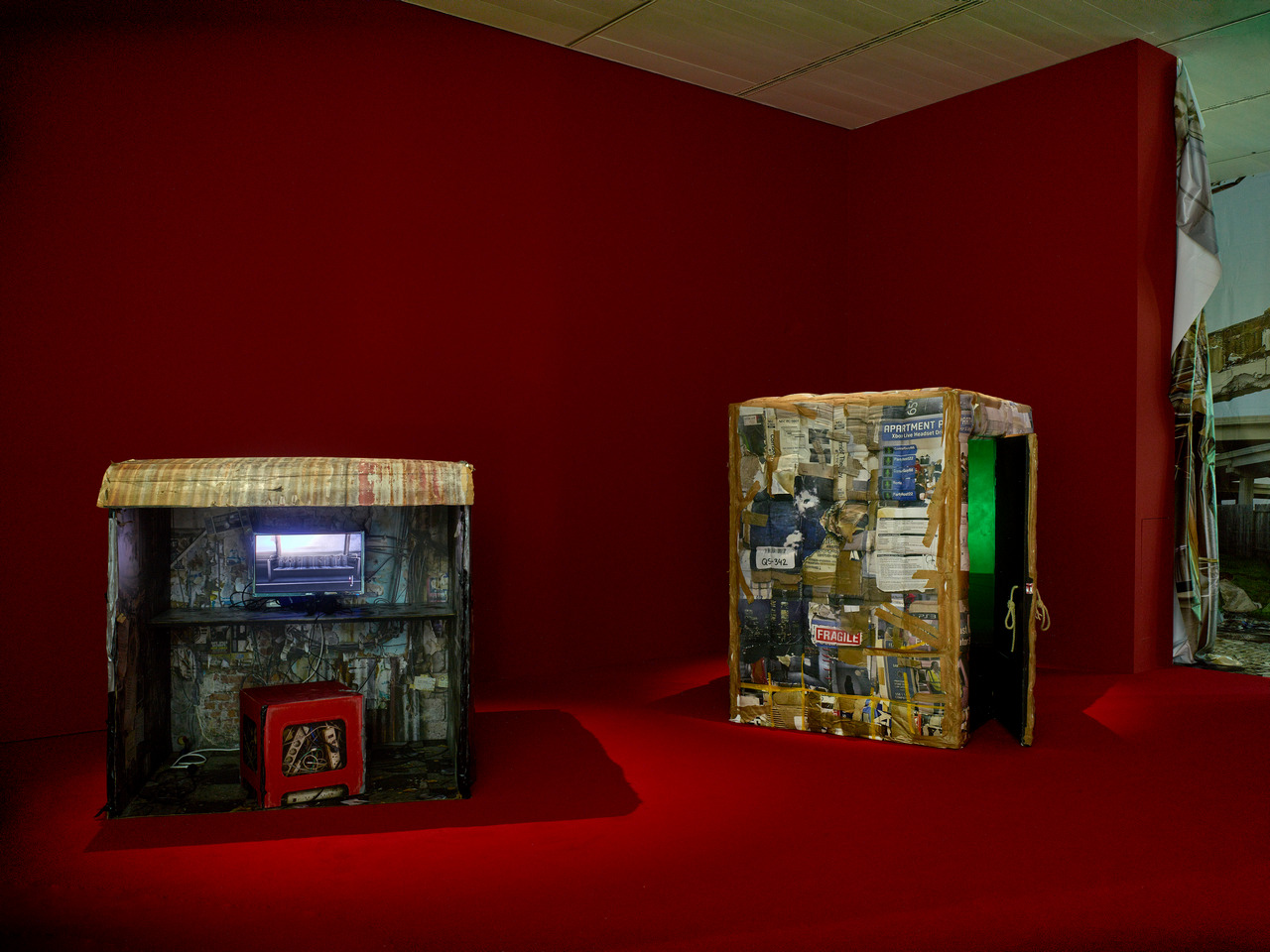
Another distinctive element of the exhibition is the “Pods,” small viewing booths designed for individual visitors. These enclosed spaces resemble gaming stations and allow viewers to experience Rafman’s videos privately. Inside the pods, visitors watch the “Vidya” series, a group of machinima and essay films created inside video game engines.
The videos combine philosophical narration with virtual landscapes from video games. In “A Man Digging,” a narrator reflects on memory and emotional isolation while wandering through empty digital spaces. “Remember Carthage” follows a search for a mythical abandoned city, blending personal memory with reflections on civilization and history. “Legendary Reality,” made for an exhibition about Leonard Cohen, depicts a spiritual journey through spectacular virtual landscapes. These works explore alienation, self-discovery, and the emotional impact of digital environments.
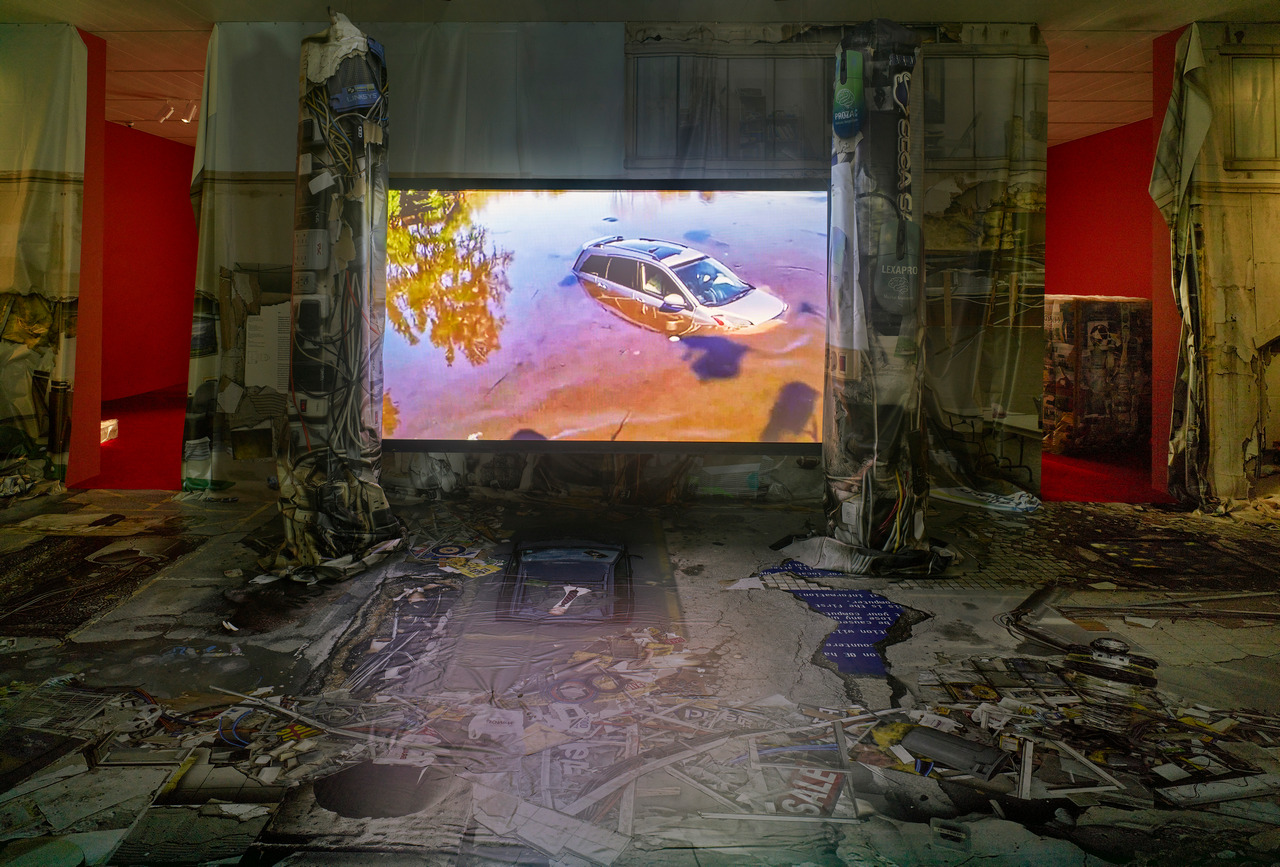
The large-scale projection “Punctured Sky” continues these themes. The story follows a character named Jon searching for a beloved computer game that has disappeared from the internet. As the narrative progresses, the boundaries between reality, memory, and fiction become increasingly unstable. The work reflects on how digital culture constantly erases and rewrites its own history.
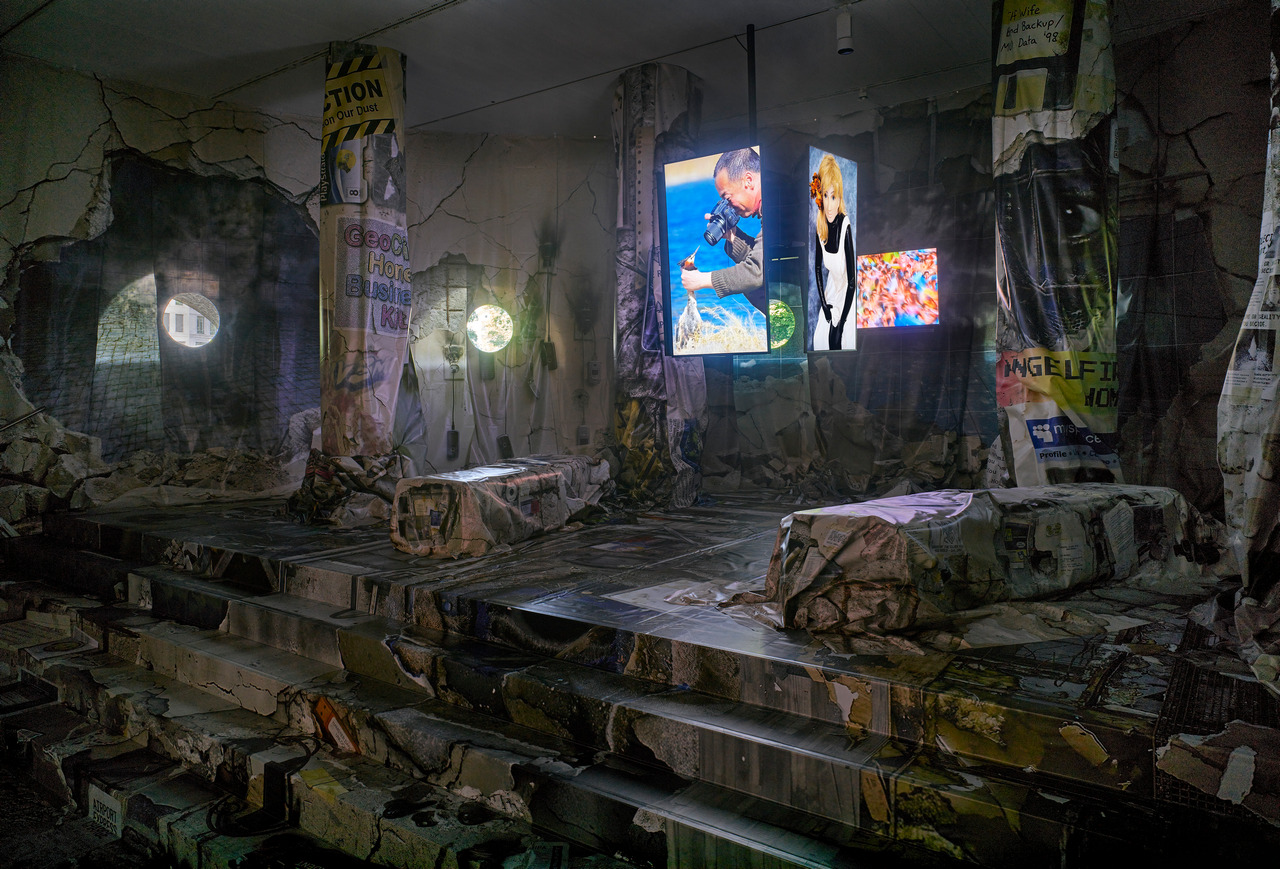
Throughout the exhibition, Rafman repeatedly returns to abandoned internet platforms and forgotten online communities. The disappearance of websites such as Geocities and virtual worlds like Second Life symbolizes the ruins of the early internet. These spaces once represented creativity, experimentation, and decentralized communication but were later replaced by centralized platforms such as Instagram, TikTok, and Snapchat. Rafman presents these abandoned environments as remains of a failed digital utopia.
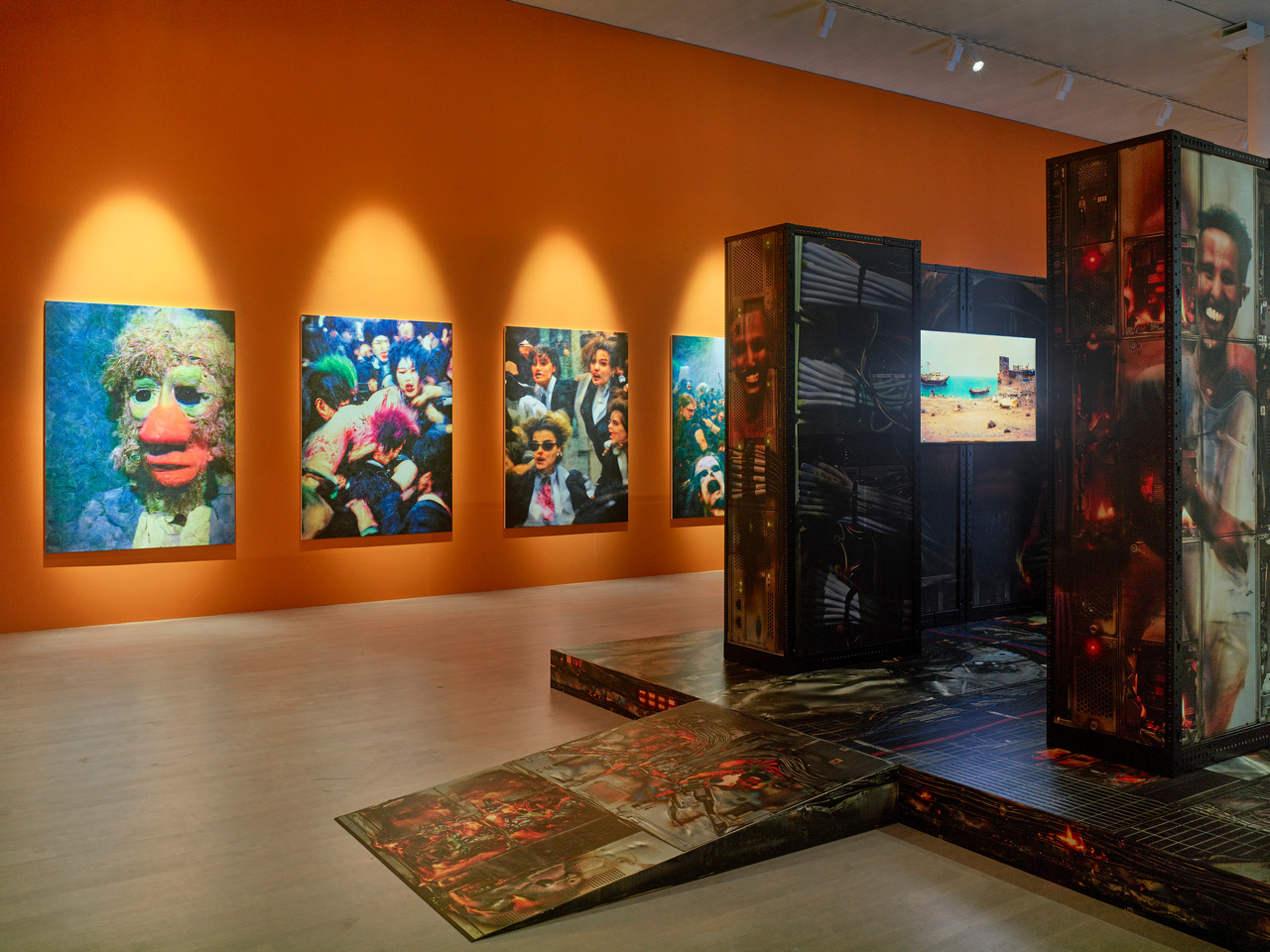
The exhibition concludes with more recent works addressing the political and emotional consequences of online life. Projects such as “Egregore” and “Catastrophonics I–IV” focus on speed, excess, and sensory overload rather than traditional storytelling. “Egregore” imitates the compulsive rhythm of doomscrolling, while “Catastrophonics I–IV” combines viral internet videos with AI-generated imagery depicting war, climate catastrophe, and social collapse.
These final works reveal Rafman’s concern with the real forces behind digital culture, including political instability, environmental crisis, and algorithmic control. While his earlier works focused on online subcultures and virtual escapism, his recent projects suggest that internet media has become inseparable from global social and political problems.
Overall, “Main Stream Media” presents Jon Rafman as one of the most important artists exploring the digital age. His works reveal both the fascination and the dangers of internet culture. By using the same technologies that shape contemporary life—AI systems, social media, video games, and machine-generated imagery—Rafman creates artworks that question how humans experience identity, memory, and reality in an increasingly virtual world.
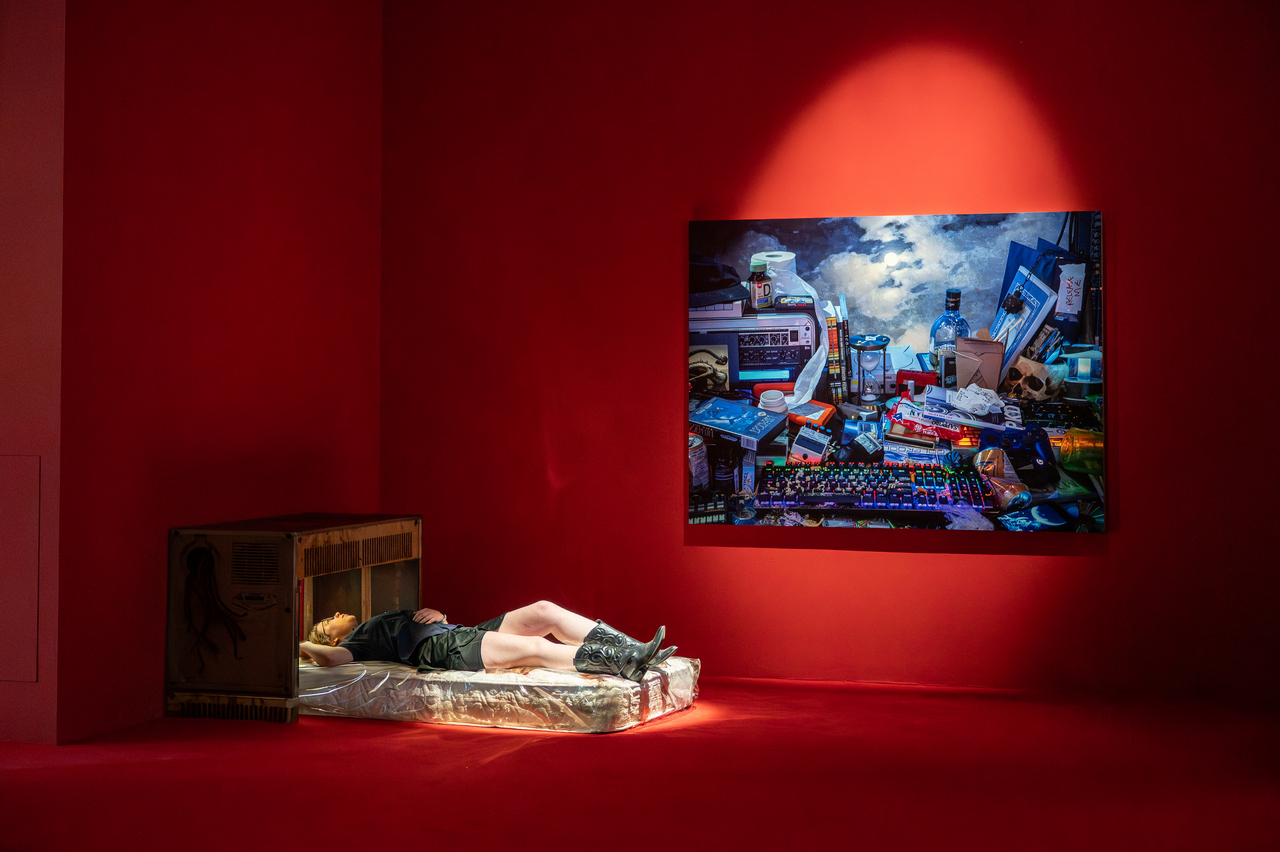
Photo: Jon Rafman, Proof of Concept (installation view), 2025, Courtesy the artist and Sprüth Magers
Info: Curators: Karen Archey and Doris Krystof, Curatorial Assistant: Sebastian Peter, Kunstsammlung Nordrhein-Westfalen, K21, Ständehausstraße 1, Düsseldorf, Germany, Duration: 30/5-27/9/2026, Days & Hours: Tue-Sun 11:00-18:00, www.kunstsammlung.de/