PHOTO:Upstate Photography Biennial
The first Upstate Photography Biennial is a landmark new exhibition series celebrating the diversity and vitality of photographic practices in upstate New York. Highlighting the extraordinary proliferation of creative cultural activity in the region, the exhibition will showcase the work of thirty-nine artists, drawn in part from an open call for submissions.
By Dimitris LEmpesis
Photo: Upstate Photography Biennial Archive
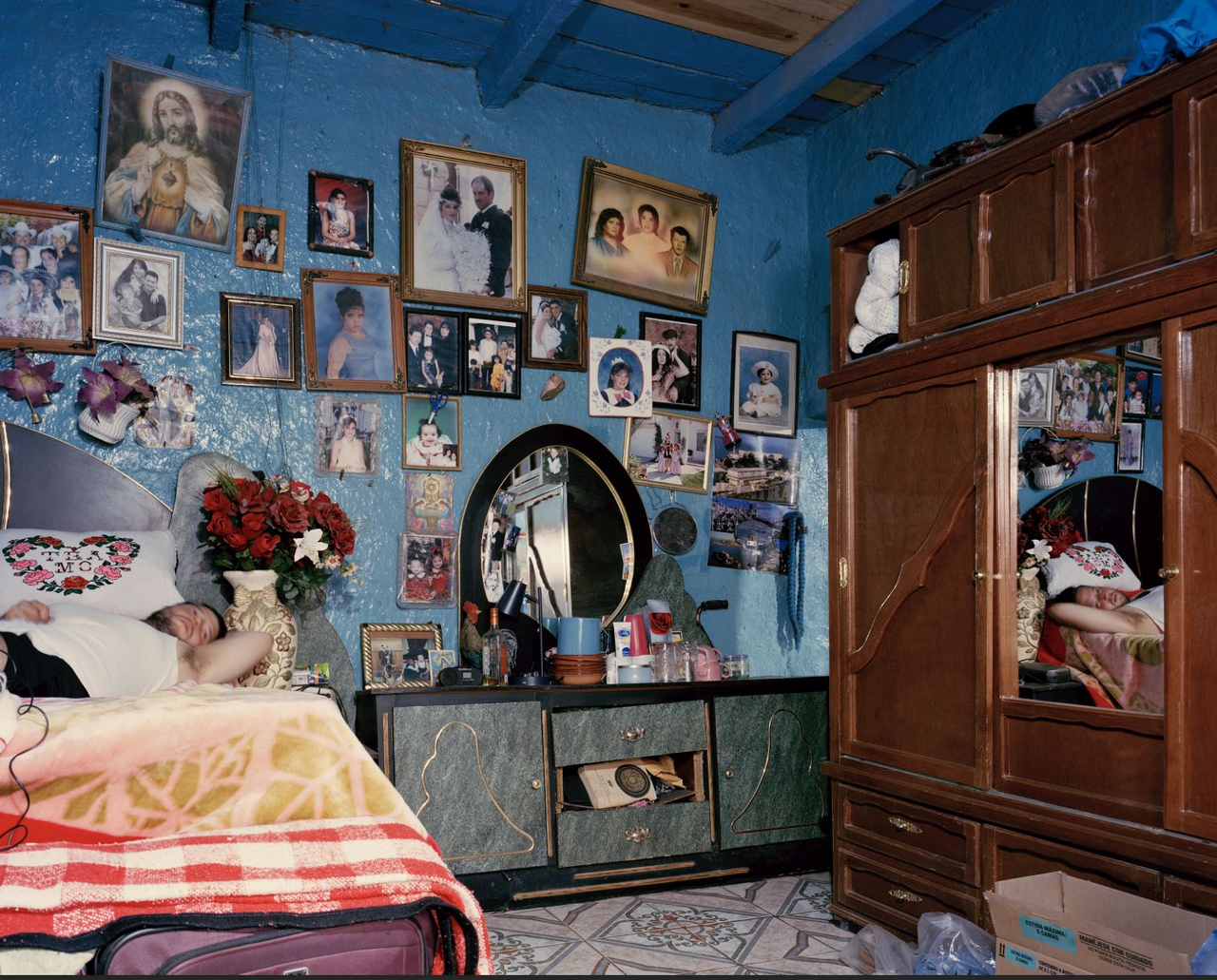
The Upstate Photography Biennial brings together artists who use photography to explore the most relevant issues of our time: identity and the meaning of place, healthcare and the fragility of the human body, climate change and the physical and psychic spaces we inhabit. For the artists in this exhibition, “upstate” describes not only a geographic region but also a condition of transition—between city and countryside, public life and private experience, past and present.
Many of the Biennial artists work with historic photographic processes–tintypes, pinhole cameras, collages, cyanotypes, and meticulously crafted prints–underscoring the photograph as a physical object. At a time when most images appear only briefly on screens, this interest in archaic visual models is not simply a nostalgic throwback but a deliberate political choice of resistance. Altogether, these works demonstrate how photography continues to shape our understanding of history, memory, vision, and realism in a rapidly changing world, where the notions of truth and stability may seem to be crumbling. Among them:
Adrianna Ault’s photographs move between two bodies of work: one made around the sale of her family farm in Ohio, the other along a river where women enter the water together. Seen together, the pictures shift between land and water, between a place being left and a space entered. The farm photographs hold onto buildings, fields, and the traces of a working life shaped by memory and loss. The river pictures follow bodies as they wade, float, and submerge, often at the edge where air meets water. For Ault, these images emerge through a process of working intuitively, allowing meaning to surface over time rather than beginning with a fixed idea. Across both bodies of work, the photographs stay close to moments of transition, where understanding comes slowly and remains incomplete.
Corinne Botz’s photographs focus on lactation rooms located within offices, schools, and other institutional settings. The images are made when these spaces are empty, showing chairs, sinks, outlets, and equipment arranged for a specific purpose. Each room reflects workplace policies that require accommodation, yet the results vary widely in scale, condition, and level of care. The project began as a personal document following the birth of her daughter, later expanding into a broader examination of motherhood and labor. By removing the body, Botz draws attention to how these policies are realized in practice, and how care is structured within systems that prioritize productivity. The photographs describe a form of labor that is necessary but often marginalized. What emerges is a record of how support is unevenly built into everyday life.
In thW selection of work from “Entrance to Our Valley”, Jenia Fridlyand brings together photogravures and their corresponding printing plates, presenting them as parallel objects. Each image exists in two forms, the inked print and the etched plate that produced it, shifting attention between surface and source. The work draws on Chekhov’s The Cherry Orchard, but reverses its trajectory. Where Chekhov’s story centers on the loss of a family home, Fridlyand’s photographs describe the experience of building a new one. Made as an immigrant reflecting on displacement and arrival, the images follow her family through daily life, accumulating meaning over time. The presence of the plates reinforces the physical process behind each image, grounding memory in material form. Together, prints and plates hold the work in a state of transition, where past and present, origin and outcome, remain closely linked
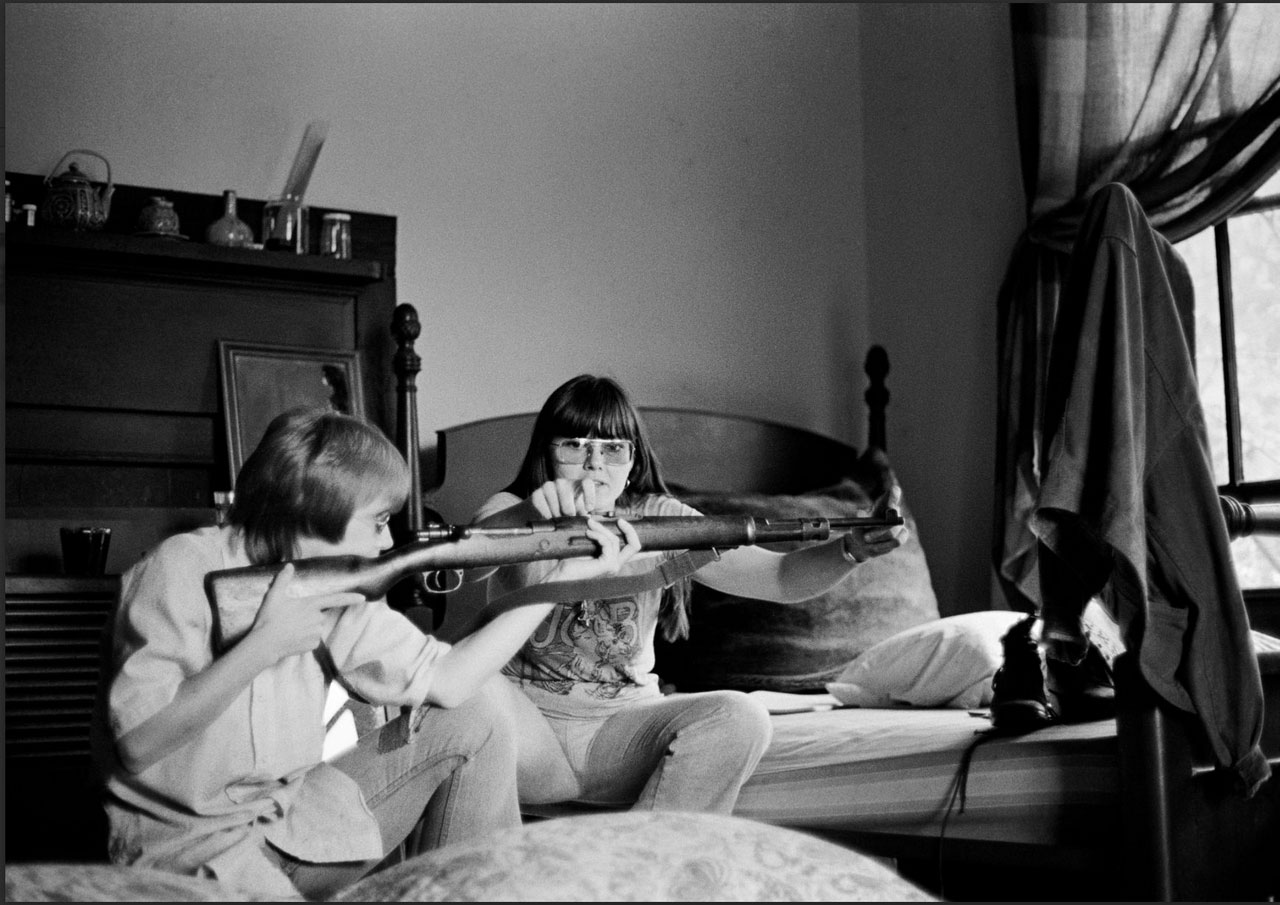
“The Revolution Will Not Be Televised” (1974) was Morgan Gwenwald’s BFA thesis project. Against the backdrop of early 1970s liberation movements and the media frenzy surrounding Patty Hearst’s kidnapping by the SLA, Gwenwald photographed fellow members of a lesbian feminist collective as she taught them how to shoot rifles in the nearby woods. She was failed by the art faculty at Florida State University, a dismissal that turned her away from the art world and towards photographing the lesbian and queer rights movements she was active in.
Tanya Marcuse’s photographs in” Canto XIII draw from Dante’s Inferno,” where the souls of the dead are transformed into trees. Built in the studio from plants, branches, and other materials, the images are constructed through careful arrangement and controlled light. The resulting scenes are dense and difficult to fully resolve, with forms that appear suspended between growth and decay. Light moves through the images in ways that make it hard to distinguish figure from ground. While the work draws on a literary source, it remains grounded in the physical act of building and photographing these environments. The images hold a sense of suspension, where transformation is ongoing but never complete. What emerges is a space that feels caught between states, neither fully natural nor entirely imagined.
Meryl Meisler’s photographs follow nightlife from within the communities she has been part of for decades. Moving between stage and backstage, performance and pause, the images are shaped by familiarity and trust. Bodies gather, dance, and watch one another, forming temporary spaces of connection. Meisler works with film and traditional darkroom processes, maintaining a continuity with earlier periods of her practice. Her return to photographing nightlife extends a long-standing engagement with these environments. The photographs hold onto moments of joy and resilience, grounded in shared experience. What emerges is a record of community sustained over time.
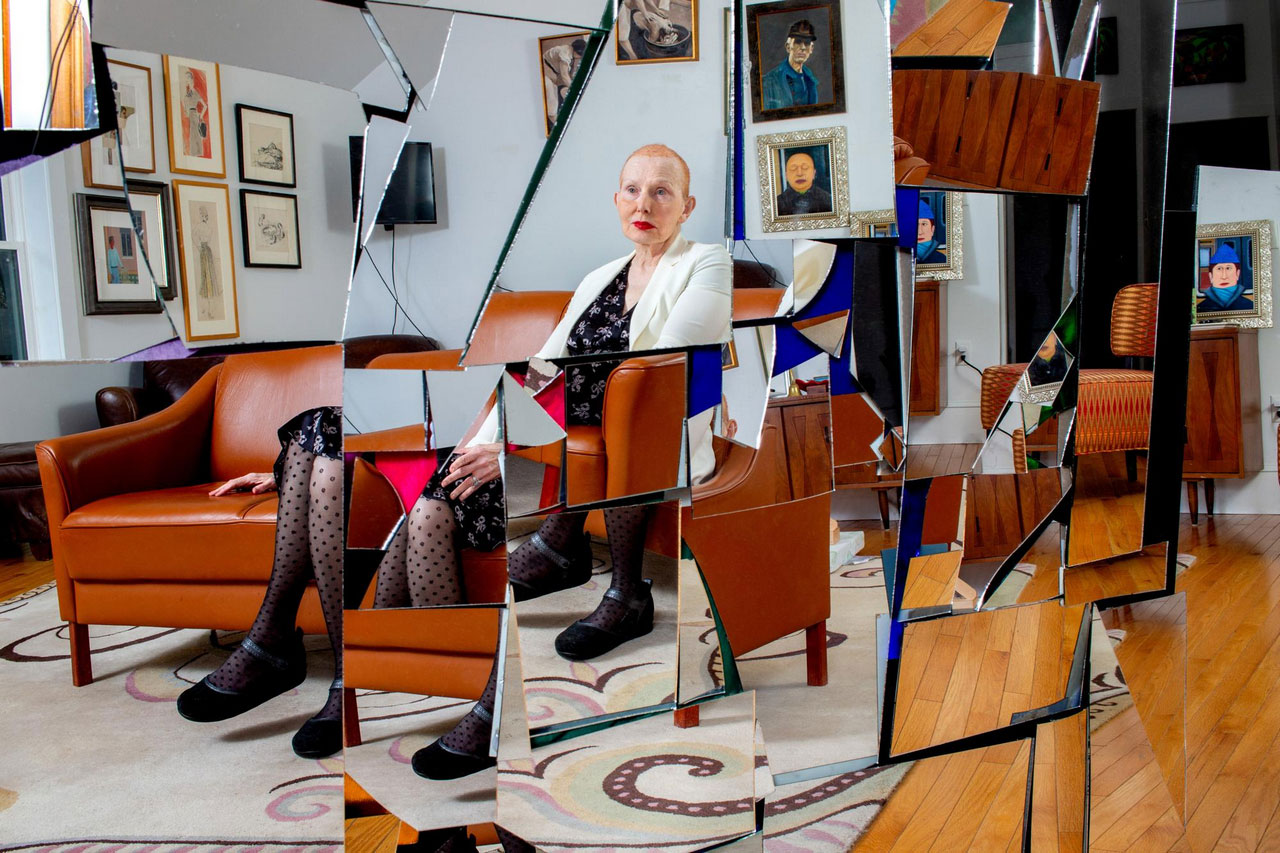
For his “Placements” photographs, Seth David Rubin begins by visually fracturing the physical space itself, before the camera is even introduced. He constructs mirrored structures on site and then photographs the shattered, kaleidoscopic scenes as they appear in front of him. They have the immediate feeling of a charged psychological landscape, but Rubin is chasing verisimilitude before metaphor. His seemingly abstracted photographs more accurately describe human perception in the way we see and experience things incompletely and haphazardly, far from seamlessly and far from fixed.
Kate Steciw’s images begin with photographs drawn from stock libraries, social media, and her own archive, sources closely tied to advertising and the circulation of images online. She prints these images on canvas and collages them onto large panels, limiting each composition to only a few elements. The resulting pictures resemble product photography, but their function remains unclear. Surfaces fold, overlap, and repeat, creating objects that feel both familiar and unresolved. By reducing each image to a small number of gestures, Steciw isolates how images operate once removed from their original context. The work focuses attention on the movement of images through systems of consumption.
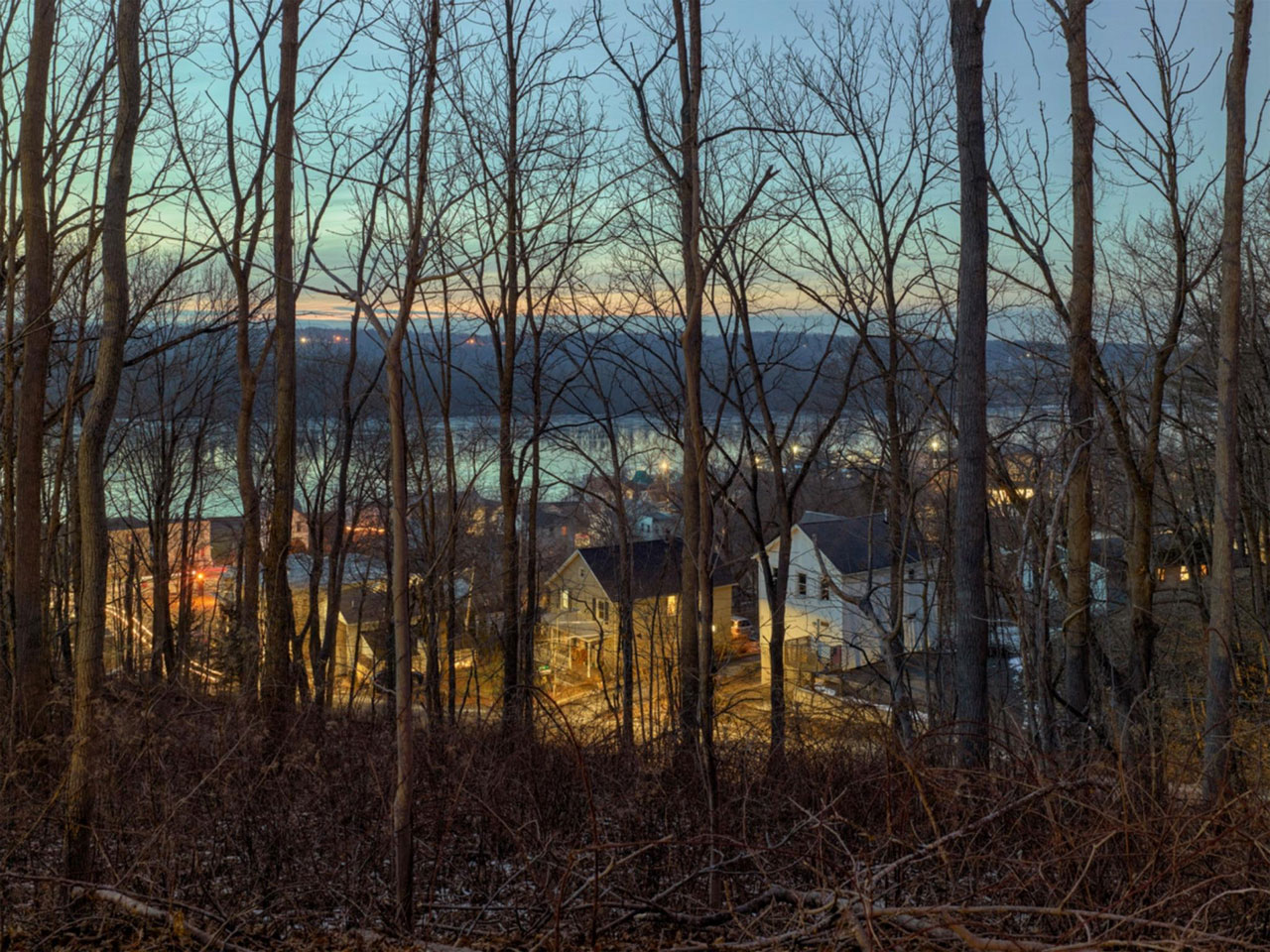
Kevin Williamson’s sumptuous and moody photographs, made in the Hudson Valley where he grew up, are guided by the Hudson River and how it has shaped the geography and identity of the region. Williamson sees the region, like its namesake river that changes direction multiple times a day, as a place full of contradictions—suspended between the urban and the rural, stuck between the past and the present, and swinging between potential fates.
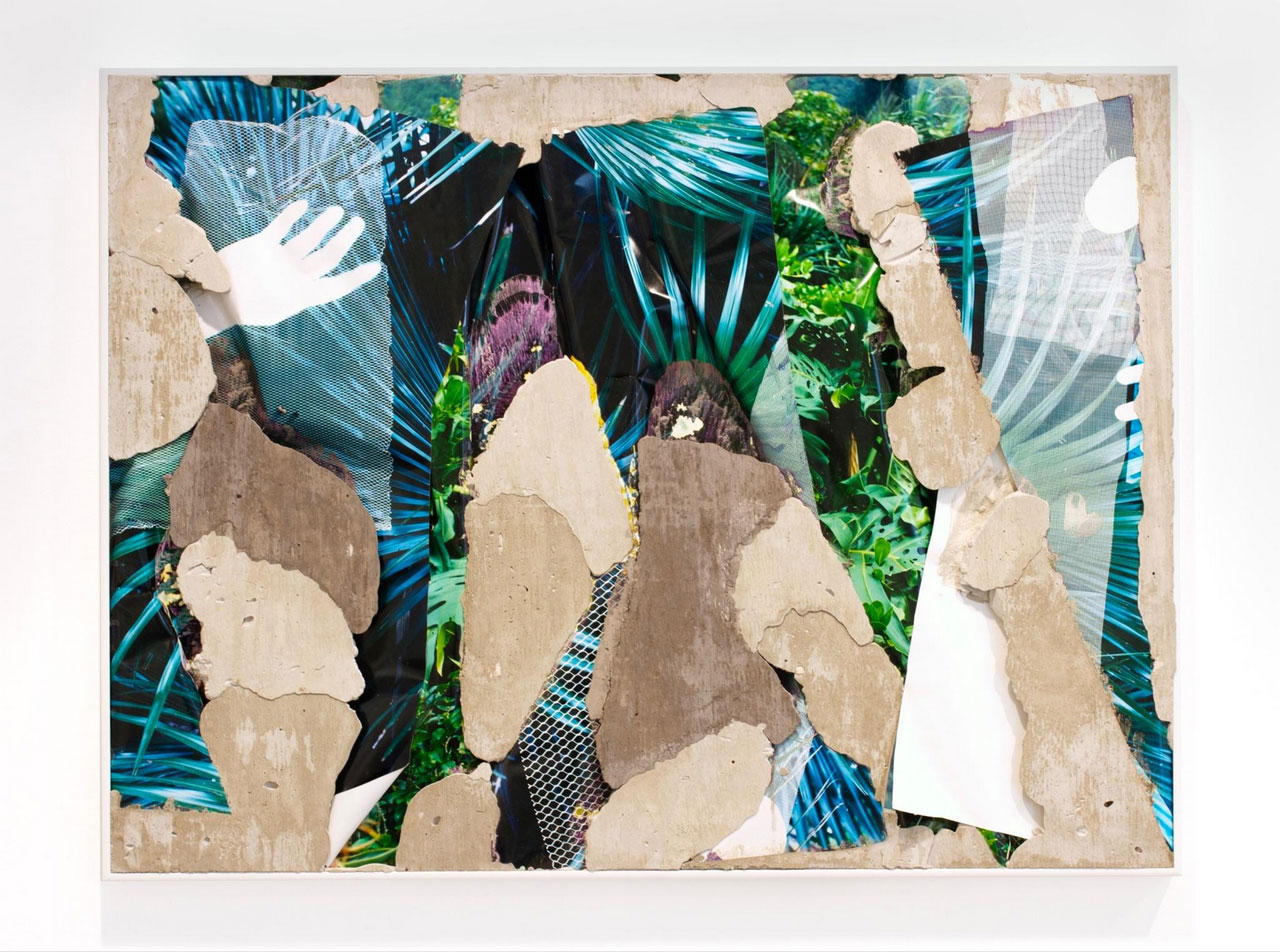
In Letha Wilson’s work, bright, seductive photographs of natural landscapes collide with industrial material. Her photographic prints are curled, folded, and dog-eared, embedded in concrete and fused to steel. Growing up in Colorado instilled Wilson with a deep reverence for the outdoors and the natural landscape. Her material experiments are expressions of her frustration with the failures of landscape photography; her photographs fail to convey the experience she has while making them, so she undertakes an intensely physical and laborious process and utilizes unwieldy and imposing materials to transform the reproduction into something bodily and undeniable.
Participating Photpgraphers: Adrianna Ault, Richard Beaven, Marion Belanger, Onaje Benjamin, Corinne Botz, Ann Burke Daly, Kaitlyn Danielson, Tim Davis, Allison DeBritz, Luis Manuel Diaz, Jenia Fridlyand, Judit German-Heins, Morgan Gwenwald, Lyle Ashton Harris, Jordanna Kalman, Robert Kalman, David La Spina, Ruth Lauer Manenti, An-My Lê, N.B. MacNamara, Tanya Marcuse, Sam Margevicius, Raymond Meeks, Meryl Meisler, Andrew Moore, Elizabeth Pedinotti Haynes, Sofia Peeters, Sasha Phyars-Burgess, Jack Platner, Seth David Rubin, Stephen Shore, Ben Sloat, Kate Steciw, Michael Torres, Allie Tsubota, Viktorsha Uliyanova, Kevin Williamson, Letha Wilson, Sara J. Winston
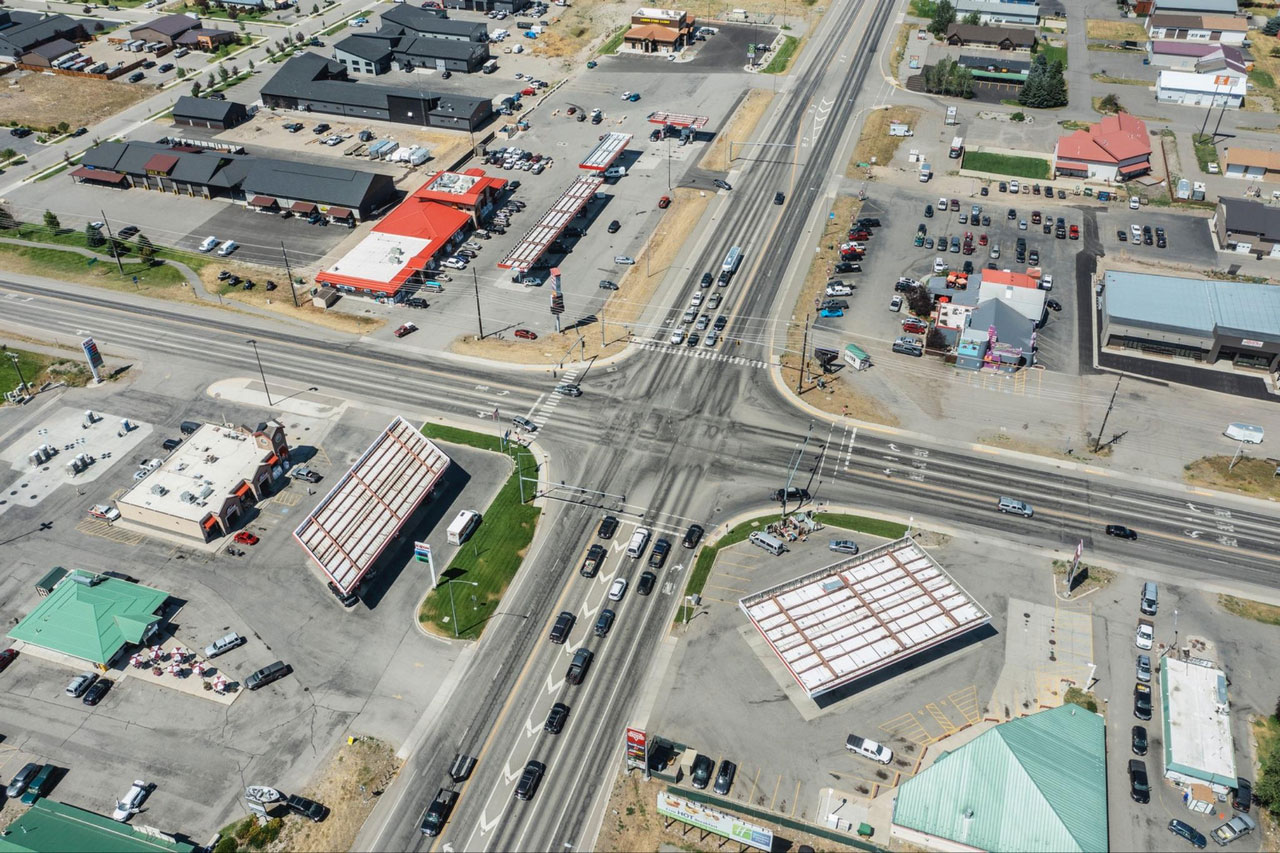
Photo: Andrew Moore, Whiskey Point and Other Tales, Courtesy the artist and Upstate Photography Biennial
Info: Upstate Photography Biennial, 25 Dederick Street, Kingston, NY, USA, Duration: 30/5-6/9/2026, Days & Hours: Tue-Sun 11:00-17:00, https://cpw.org/
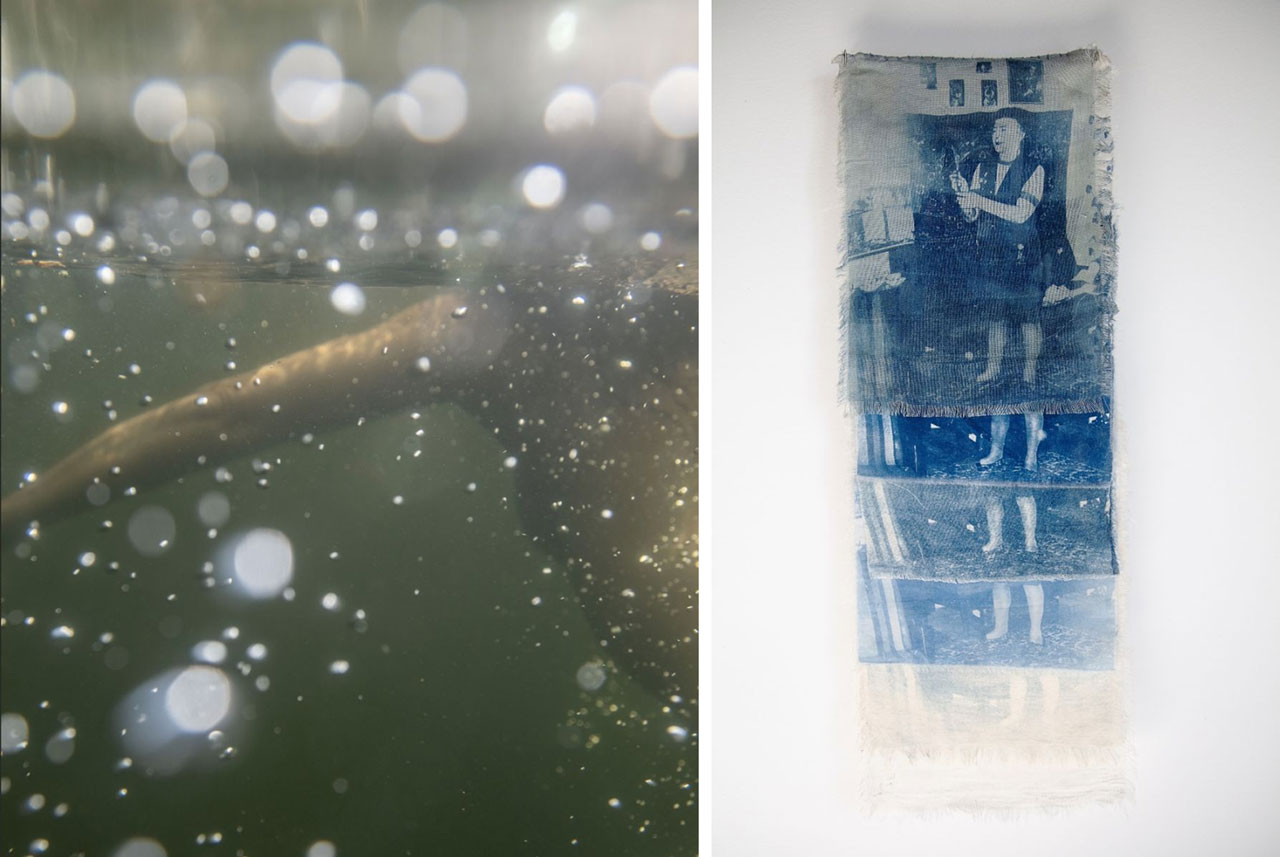
Right: Viktorsha Uliyanova, Quieter than Water Lower than Grass, Courtesy the artist and Upstate Photography Biennial
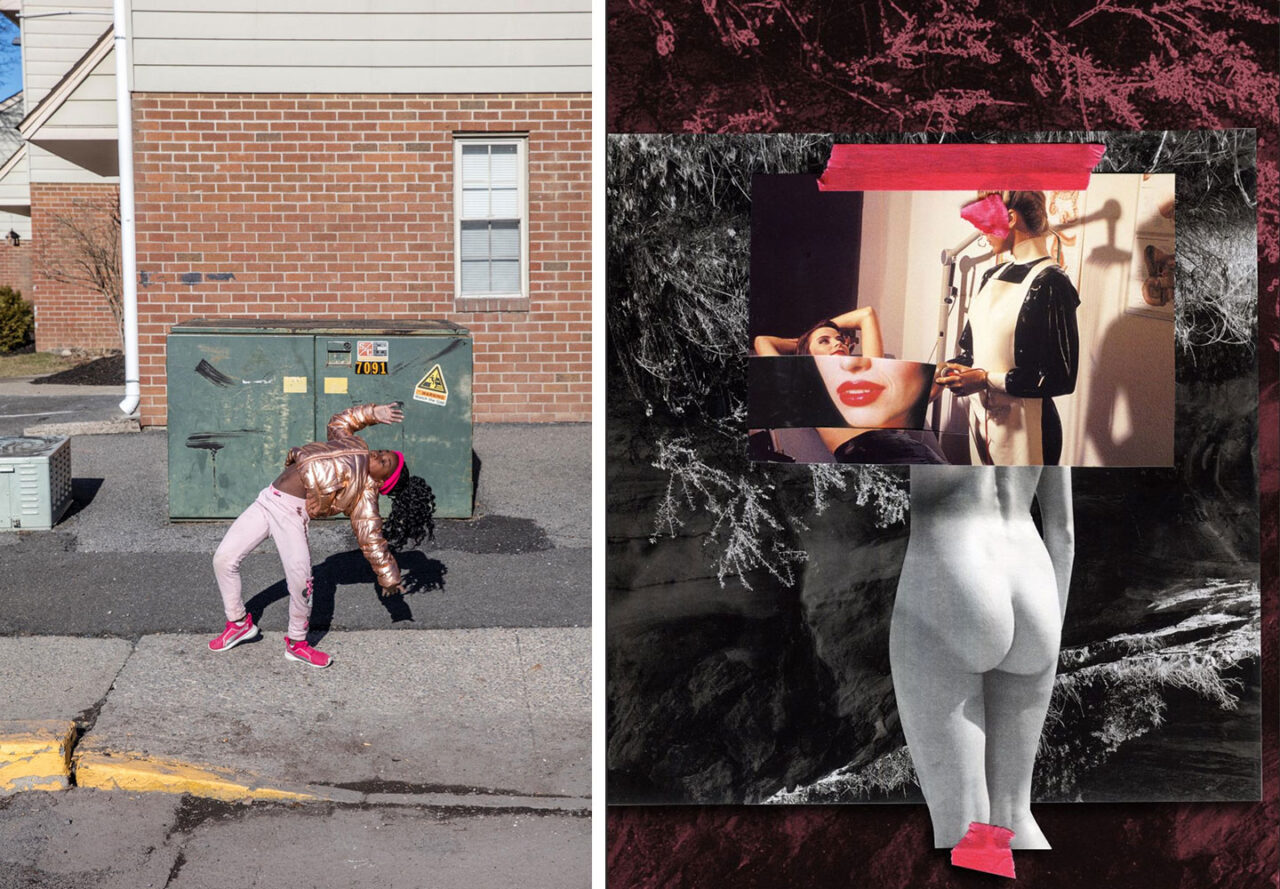
Right: Allison DeBritz, hand her the knife blade first, Courtesy the artist and Upstate Photography Biennial