PRESENTATION:Carrying
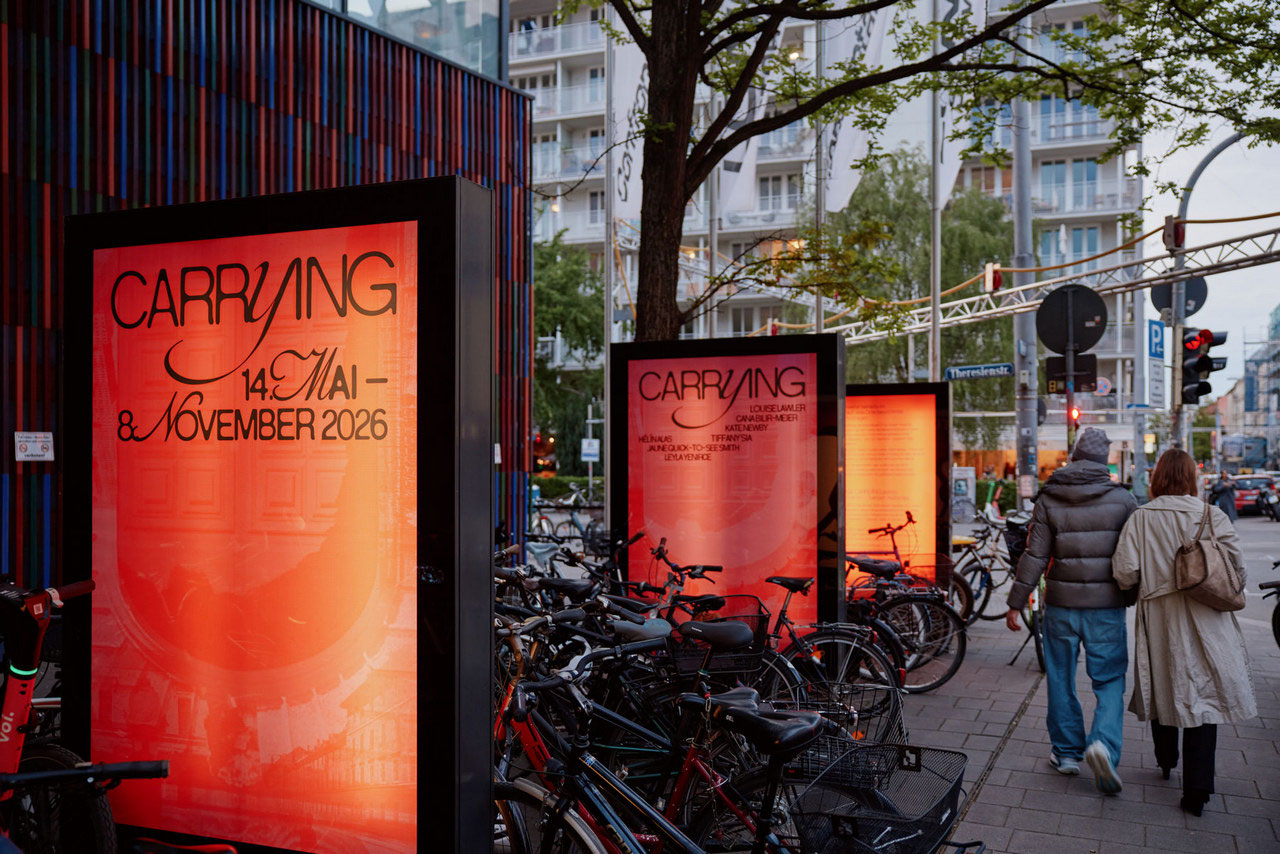
The exhibition project “Carrying” activates spaces inside and outside the building of Museum Brandhorst. Works by nternational artists occupy historically charged sites and transit zones of the museum as well as the public space. Architectural interventions, performances, paintings, and sound and film works enter into dialogue with the museum and interrogate the entanglement of military and cultural power.
By Efi Michalarou
Photo: Museum Brandhorst Archive
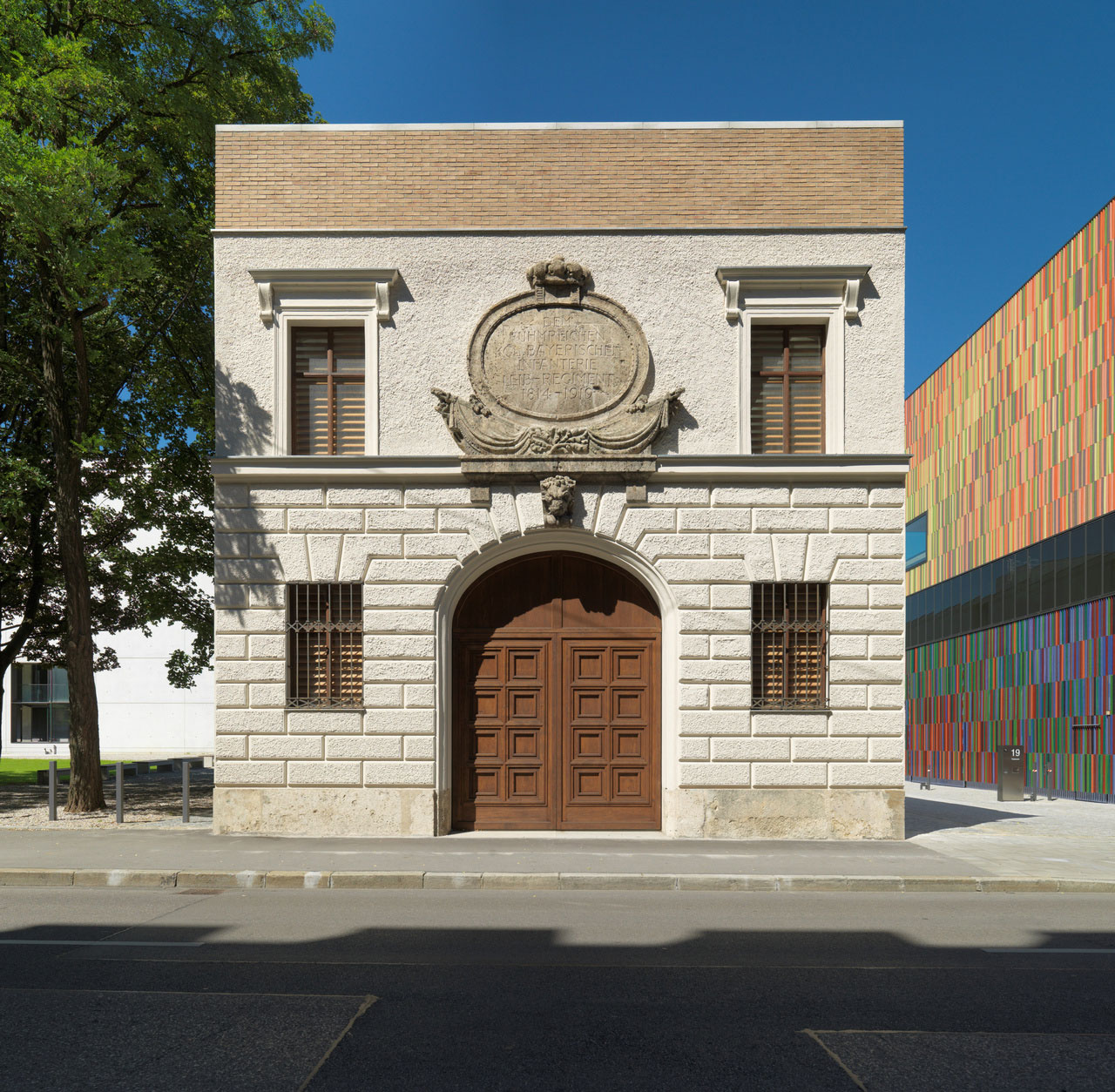
The exhibition “Carrying” takes as its conceptual anchor the very ground upon which Museum Brandhorst stands today. Nestled within Munich’s Kunstareal alongside institutions like the Pinakothek der Moderne, this modern cultural hub occupies a site deeply layered with military history and colonial displacement. Historically, this plot of land was home to the Prinz-Arnulf-Kaserne, popularly known as the “Türkenkaserne” or Turks’ Barracks. Constructed in 1826, the barracks derived their name from a dark chapter in Bavarian history, specifically the late-seventeenth-century exploitation of Ottoman prisoners of war brought to the region for forced labor. Over the centuries, these historical violences became institutionalized and normalized, deeply inscribed into local urban planning through street names such as “Türkenstraße” or Turks’ Street.
By confronting these origins, “Carrying” positions the museum not as a neutral repository of beautiful objects, but as a dynamic resonance chamber. Within this space, the institution actively negotiates its own identity, linking highly localized German topographies with sweeping global questions. The exhibition asks fundamental, systemic questions about which stories are selected for preservation, who is granted the authority to tell them, and how the ghosts of past conflicts continue to shape contemporary cultural institutions.
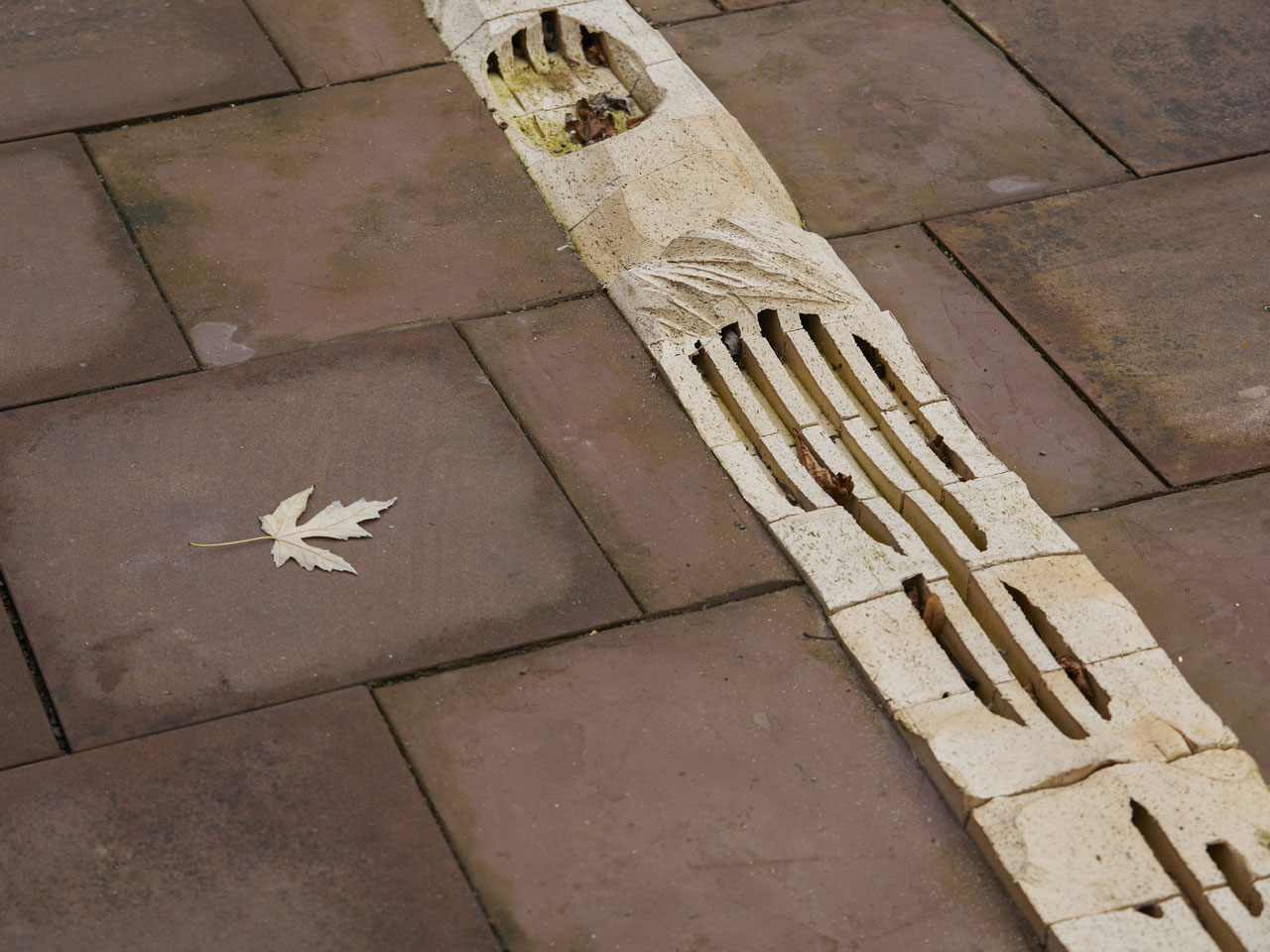
Kate Newby’s site-responsive installation, “anything, anything”, directly engages with the physical and social transit zones surrounding Museum Brandhorst. Addressing the urban space as a site of permanent flux, Newby embedded approximately 1,000 hand-wrought bricks directly into the earth. Arranged in two long parallel lines extending over 80 meters, the work stretches across the swath of green separating the museum building from the sidewalk of Türkenstraße. Installed for a full twelve-month cycle of seasons, the artwork explicitly exposes itself to the public and the elements.
Before firing the clay, Newby intensely manipulated the raw material, incising textures, transferring patterns, and pressing debris gathered from the surrounding urban fabric directly into the bricks. In some instances, shards of discarded glass were embedded into the clay, fusing inseparably during the firing process. As the work sits in the public square, it acts as a passive receptor where rainwater, urban detritus, and wind-borne objects pool within the bricks, transforming them into microscopic landscapes. These localized artifacts document both physical transience and the social texture of Munich. Physically running toward Walter De Maria’s “Large Red Spher”e housed inside the Türkentor, Newby’s linear intervention purposefully resists the monumental, pristine, and closed nature of traditional public sculpture. By embedding her work flush with the earth, she evokes historical canal channels, specifically pointing toward the “Türkengraben” or Turks’ Canal—a massive, never-realized waterway project that originally gave the street its name. The work stands as a profound sculptural reflection on interwoven spaces, times, and their latent contradictions.
At the Türkentor, Louise Lawler presents “No Drones (adjusted to fit)”, an artwork modified to match the specific, imposing scale of this historical wall section. Printed on an adhesive vinyl material, the large-scale photograph depicts Gerhard Richter’s iconic painting “Mustang-Staffel” from 1964. Richter’s original painting was itself an appropriation of a historical photograph showing American fighter jets flying over Germany during World War II. Lawler captured her photograph of Richter’s piece in 2010 during its installation for the reopening of the Albertinum in Dresden—a city catastrophically leveled by British and American air raids in 1945. By capturing this image in Richter’s heavily scarred hometown, Lawler introduces layers of institutional and historical memory.
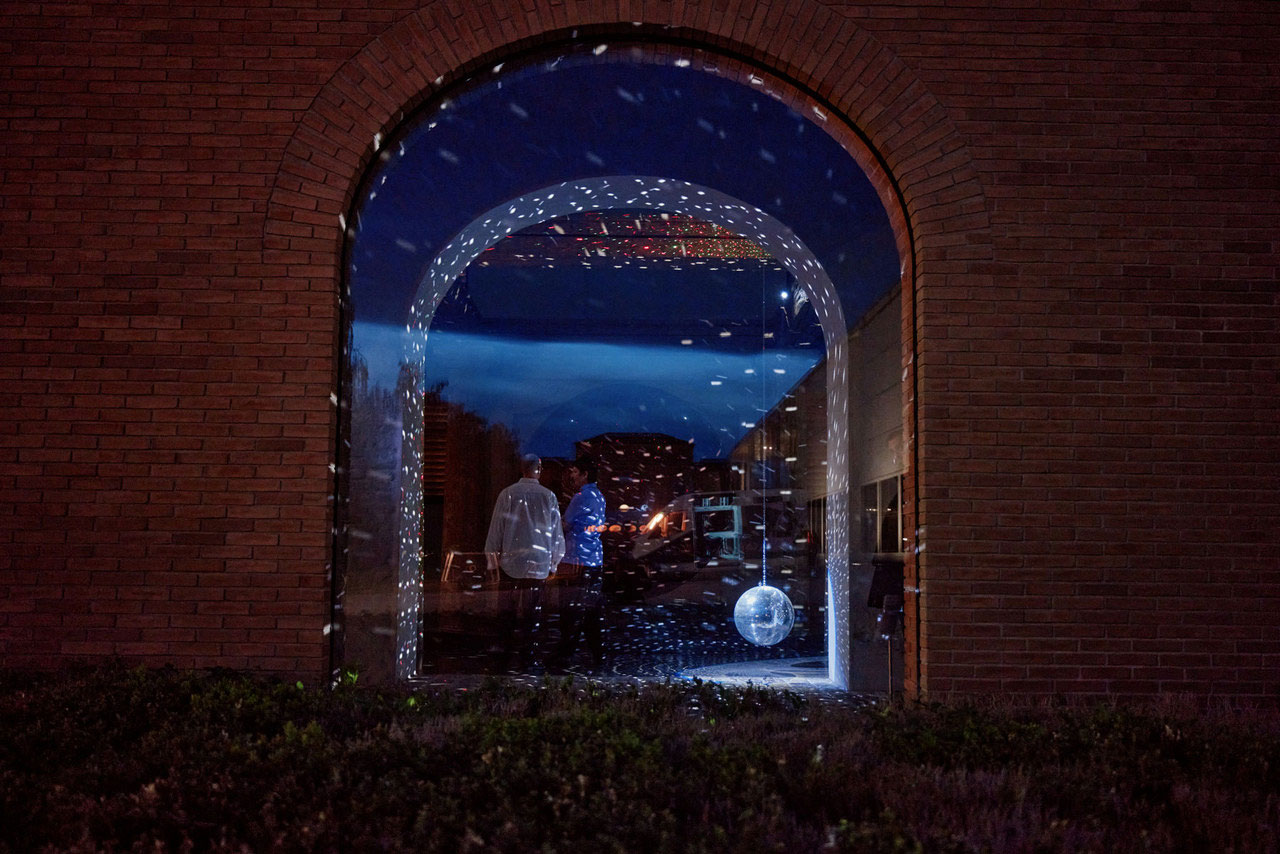
The provocative title, “No Drones”, underscores a lethal continuity of airborne violence stretching from mid-century carpet-bombing to contemporary, automated drone warfare. Inside the exhibition space, an accompanying component titled “Crazy”—a motorized mirror ball rotating just above floor level—casts scattered reflections across the room, while a dual laser system shoots stark red and green beams across the walls. This visual environment deliberately mimics both the flashing allure of late-capitalist outdoor advertising and the dispassionate, digitized optics of remote-controlled airstrikes. This aesthetic choice directly recalls the clean, detached manner in which modern warfare was first broadcast live into global living rooms during the US-led Gulf War of 1990–91.
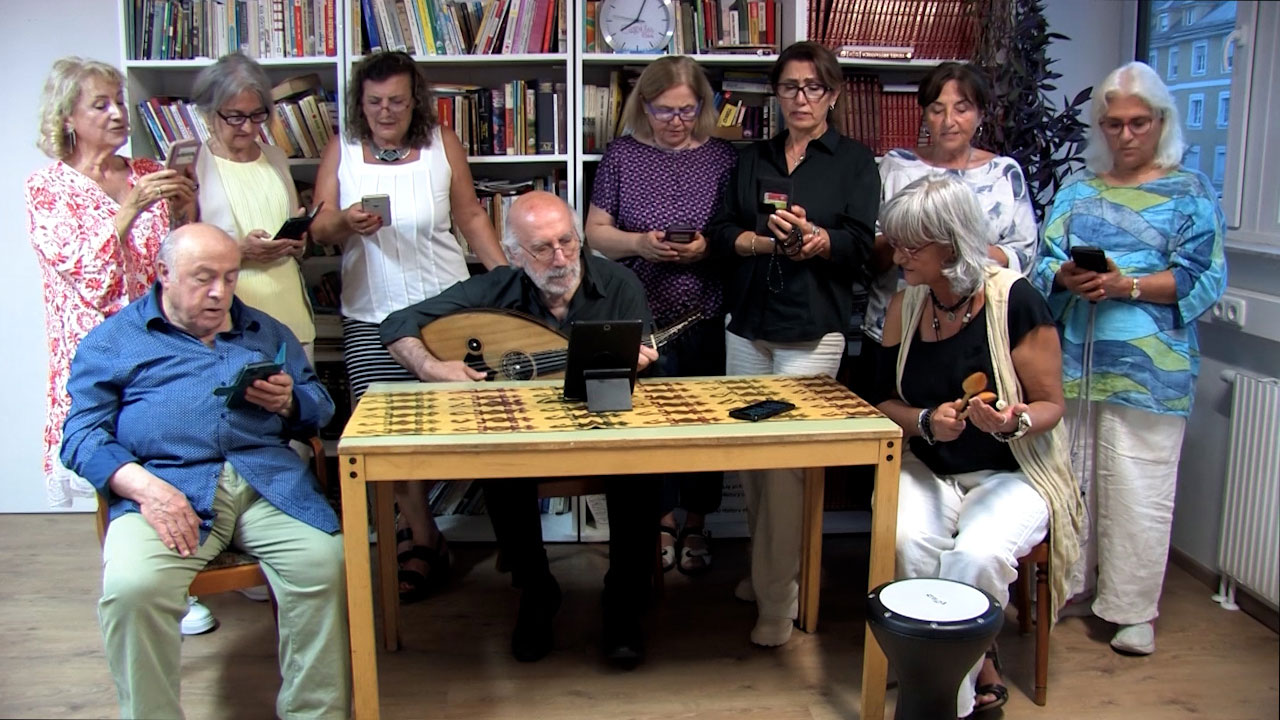
Cana Bilir-Meier utilizes filmmaking, performance, and text to recover the resistant, often obscured biographies of (post-)migrant realities in Germany. Working from an intimate, deeply personal perspective, Bilir-Meier connects these domestic lived experiences to broader archival practices. Her film, “Ein neues Wort or A New Word”, displayed within the museum’s Cosmos space, was specifically commissioned by SİNEMA TRANSTOPIA in Berlin.
The conceptual framework of the film centers on a historical public competition launched in 1970 by the West German public broadcaster, WDR. Seeking an alternative to the increasingly reductive and clinical term “Gastarbeiter”, the broadcaster received over 32,000 public submissions from citizens and immigrants alike. In collaboration with a Munich-based choir boasting a forty-year history—composed predominantly of pioneering labor migrants of Turkish descent—Bilir-Meier developed a complex musical interpretation of these archival linguistic proposals. Choir member Fatoş Haug penned original lyrics for the project, subverting and reinterpreting the traditional German children’s folk song “Die Eisenbahn”. The performance acts as a radical reappropriation of public vocabulary that was historically racist, derogatory, or patronizing, alongside entries that were surreal or entirely emptied of meaning. Through the communal process of rehearsal and collective vocalization, the performance deconstructs harmful linguistic attributions, balancing sorrow and structural critique with moments of profound humor and community solidarity.
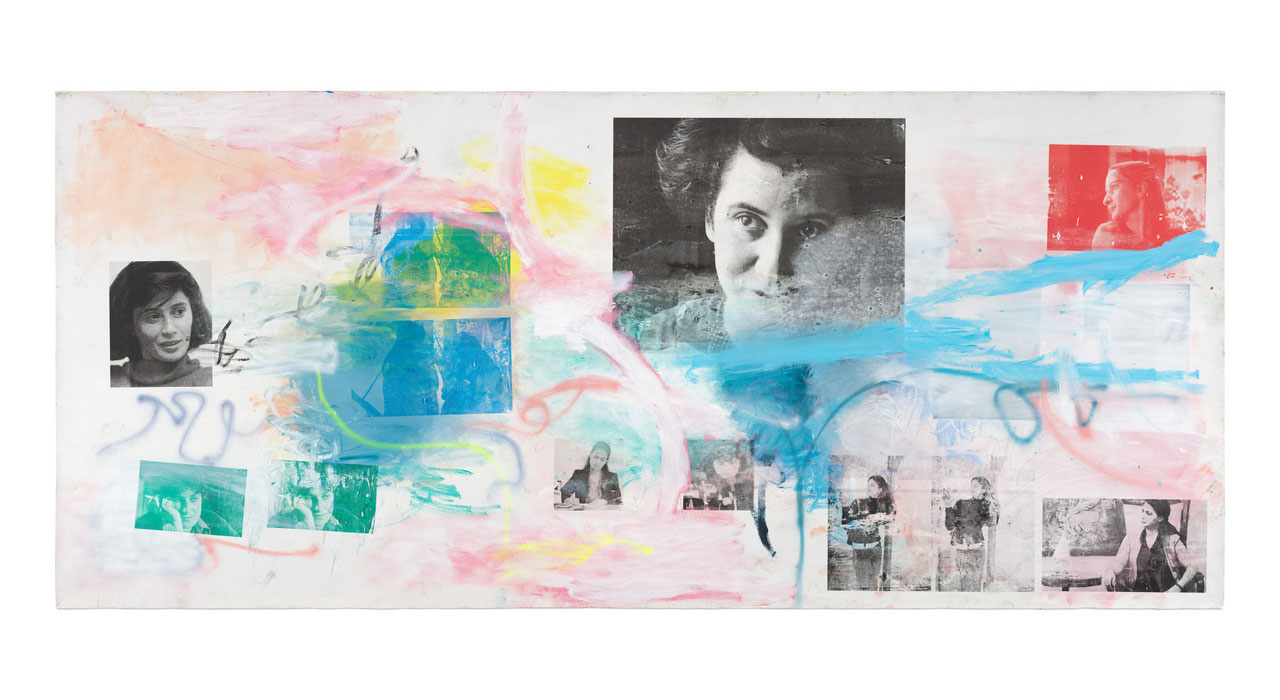
Leyla Yenirce’s large-scale installation, “Company”, synthesizes painting and sound to construct a monument to female resistance. Drawing from an extensive personal and public archive of audio recordings and photographs, Yenirce uses digital sampling, visual layering, and physical collaging to critique dominant structures of representation. Across six imposing, large-format canvases, viewers encounter the portraits of iconic women who asserted their autonomy within film, literature, international politics, and armed activism, including Chantal Akerman, Ingrid Bourgoin, Etty Hillesum, Hevrin Khalaf, Hozan Mizgîn, Leyla Qasim, and Leyla Zana. Yenirce brings these historical figures together within the shared, fictional landscape of painting. Transferred onto the canvases via screenprinting, these portraits are heavily overlaid with expressive, impastoed clouds of oil paint. Because several of these subjects died violently as freedom fighters or political dissidents, their gathering functions as a ghostly assembly. The title “Company” plays intentionally on double meanings, evoking both supportive human companionship and militarized combat formations.
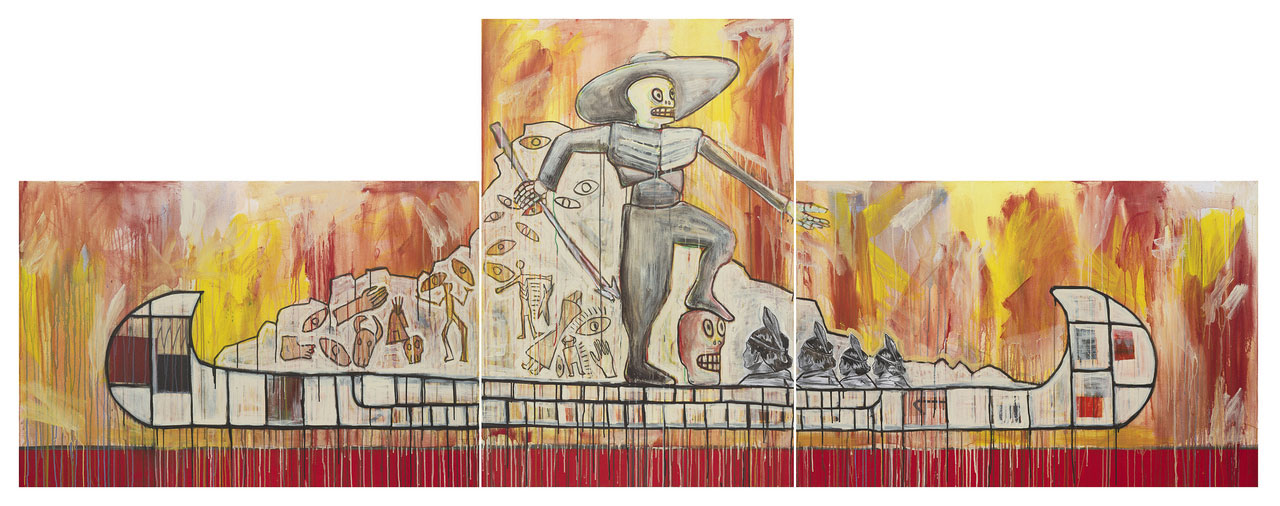
Completing this constellation of resistance is the work of Jaune Quick-to-See Smith, an artist, activist, and enrolled member of the Confederated Salish and Kootenai Nation of Montana. Smith’s practice merges Indigenous visual knowledge with Western art historical references and commercial pop iconography. Following the 1992 quincentennial of Christopher Columbus’s arrival in the Americas, Smith introduced the trade canoe as a central, repeating motif in her practice. In Salish visual traditions, the canoe represents a vessel of mobility, survival, and mutual exchange; however, it simultaneously references how trade was systematically weaponized by European powers to colonize Indigenous populations.
Presented to the public for the first time at Museum Brandhorst, “Trade Canoe: Don Quixote in America” stands as one of the artist’s final major works. The work directly expands upon a pair of historical paintings Smith executed in response to the US invasions of Afghanistan and Iraq following the events of September 11, 2001. Through this imagery, she highlights the ongoing legacy of American imperial violence, connecting modern foreign interventions directly back to the foundational genocide of Native Americans. Set against an expressive, bleeding background of yellow and red flames, a skeletal figure stands upright inside the canoe. Clad in a historical hat and wielding a lance, the figure guides a vessel packed with disembodied limbs, slaughtered bison, and traditional tents. The composition heavily references printmaker José Guadalupe Posada’s famous turn-of-the-century caricature of Don Quixote as a skeleton. In Smith’s hands, the traditional vessel is hollowed out, transforming from a site of cultural commerce into a massive war canoe that indexes the insatiable nature of imperial expansion.
Participating Artists: Hêlîn Alas, Cana Bilir-Meier, Louise Lawler, Kate Newby, Tiffany Sia, Jaune Quick-to-See Smith, and Leyla Yenirce
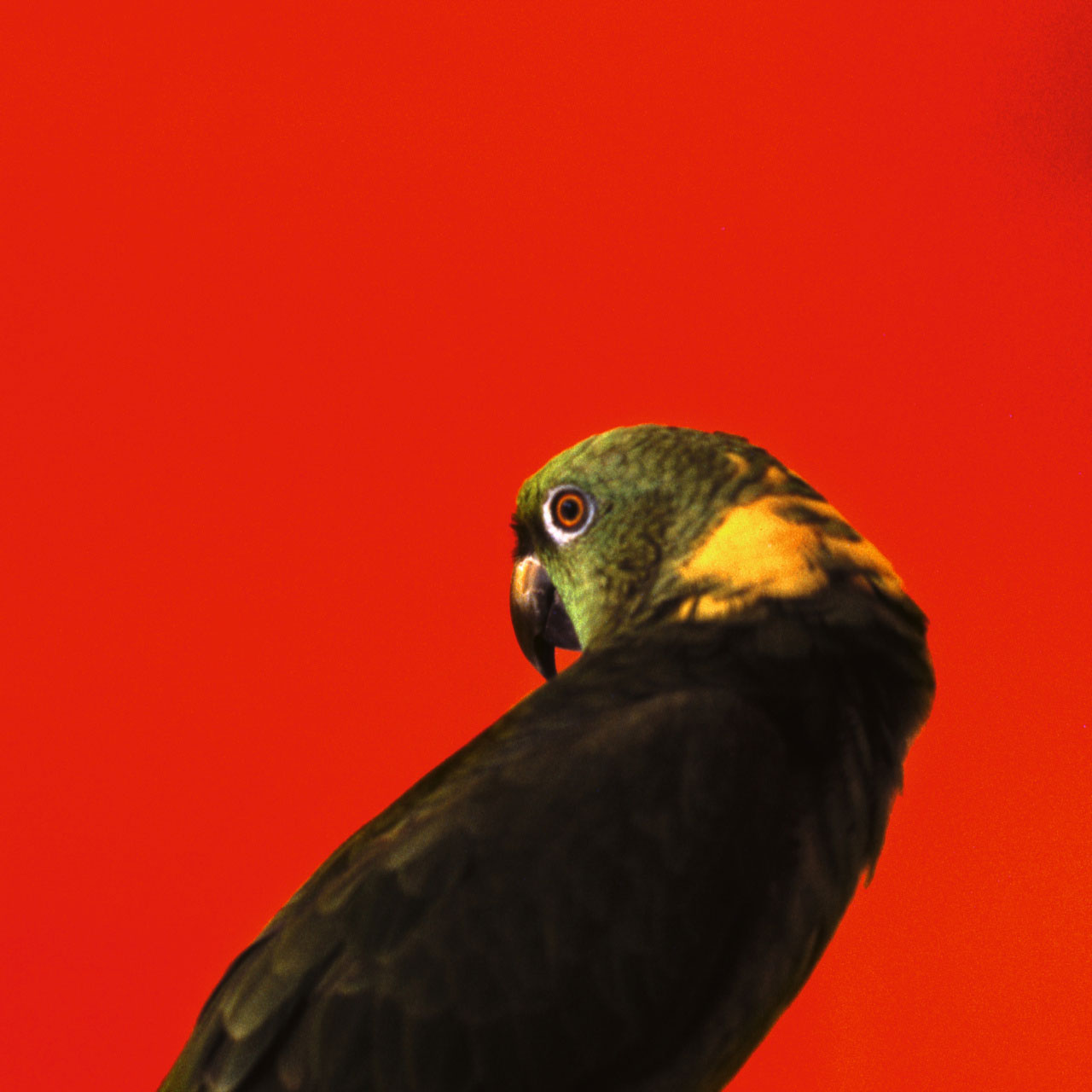
Photo: Louise Lawler Portrait, 1982, Udo and Anette Brandhorst Collection, © Louise Lawler. Courtesy of the artist, Sprüth Magers .
Info: Curator: Franziska Linhardt, Museum Brandhorst, Theresienstraße 35a, Munich, Germany, Duration: 14/5-8/11/2026, Days & Hours: Tue-Wed & Fri-Sun 10:00-16:00, Thu 10:00-20:00, www.museum-brandhorst.de/
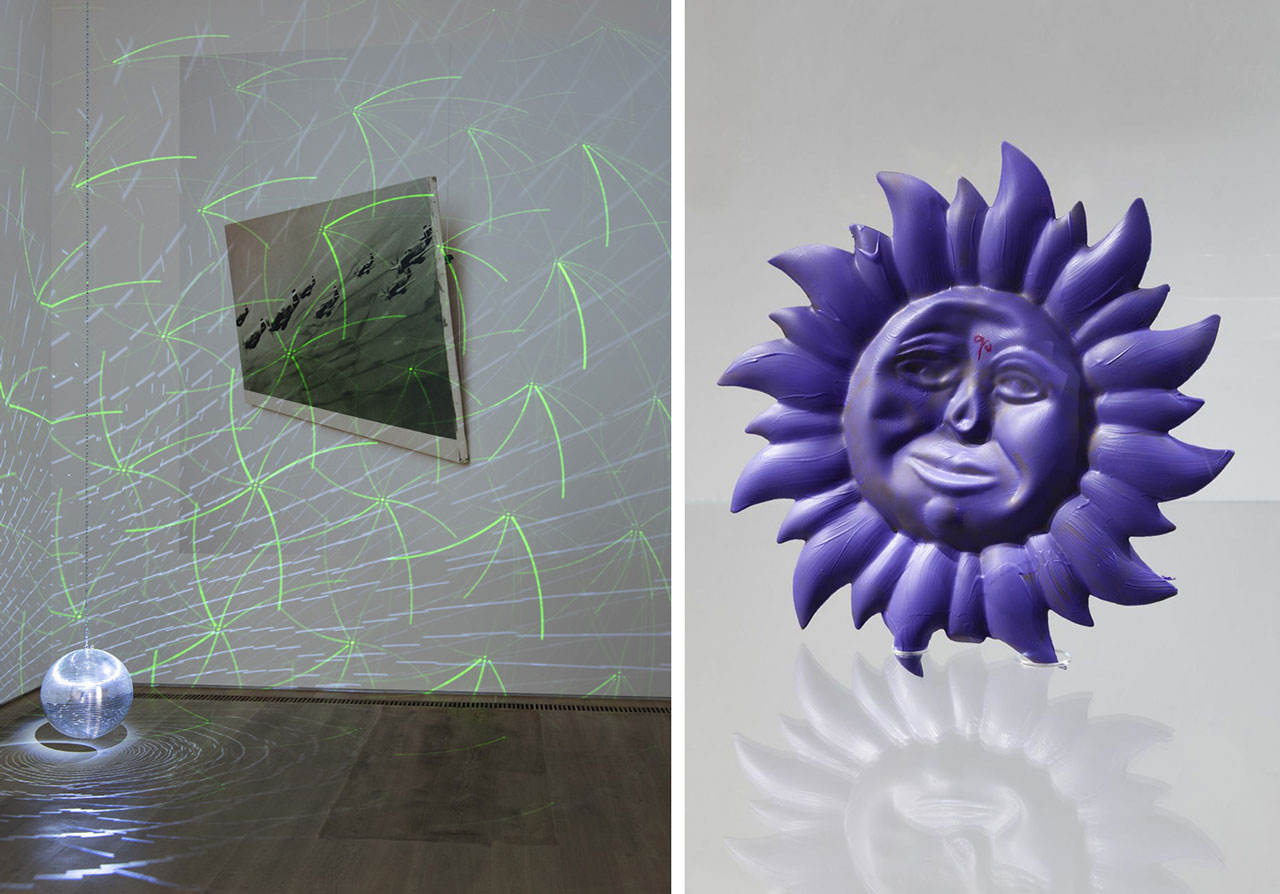
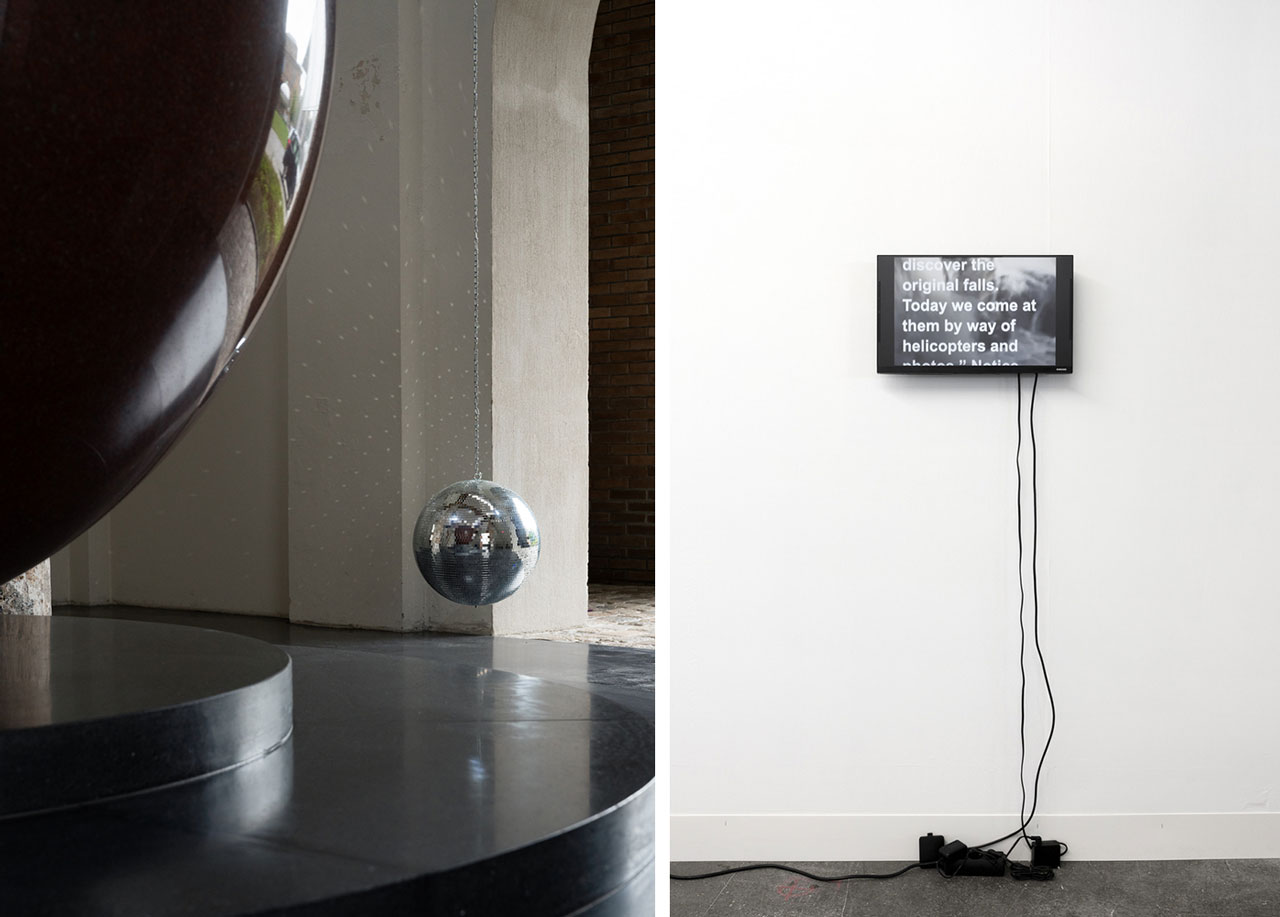
Right: Tiffany Sia, Scroll Figure #4, 2022, © Courtesy of the artist, Maxwell Graham, New York