PRESENTATION:Antony Gormley-What Hold Us
Antony Gormley is acclaimed for his sculptures, installations and public artworks that investigate the relationship of the human body to space. His work has developed the potential opened up by sculpture since the 1960s through a critical engagement with both his own body and those of others in a way that confronts fundamental questions of where human beings stand in relation to nature and the cosmos. Gormley continually tries to identify the space of art as a place of becoming in which new behaviours, thoughts and feelings can arise.
By Dimitris Lempesis
Photo: Galeria Continua Archive
Antony Gormley’s exhibition “What Holds” Us” at Galleria Continua in San Gimignano stages a slow, tactile meditation on the conditions of contemporary urban life, tracing a material biography that moves from the primordial to the provisional. Entering the show is to move through a sequence of textures and weights: basalt and terracotta that speak of geological and human time, concrete and iron that register industrial force, and finally cardboard, the exhibition’s most surprising and telling medium. Across this range, Gormley asks a simple but urgent question in sculptural form—what supports us, what contains us, and what do we mistake for permanence?—and then lets the materials answer through their mass, their fragility, and the ways they shape and are shaped by the body.
The gallery’s main theatre is entirely given over to a site‑specific installation titled “Innercity” (2026), a cardboard metropolis of fifteen monumental “body buildings” that together form a labyrinth. These structures read as architectural anatomies: some present open thresholds that invite entry, others close themselves off and deny access, while still others suggest the intimate, almost childlike act of crawling into a hollow. Moving through the theatre, visitors become both observers and participants; the body is measured against apertures, corridors, and cavities, and the act of walking becomes a way of testing the work’s propositions. Cardboard here is not merely a material choice but a conceptual pivot. The same corrugated sheets that carry billions of consumer packages each year are repurposed into towers and dwellings that enchant and unsettle in equal measure, turning the language of delivery and disposability into a fragile urban poetics.
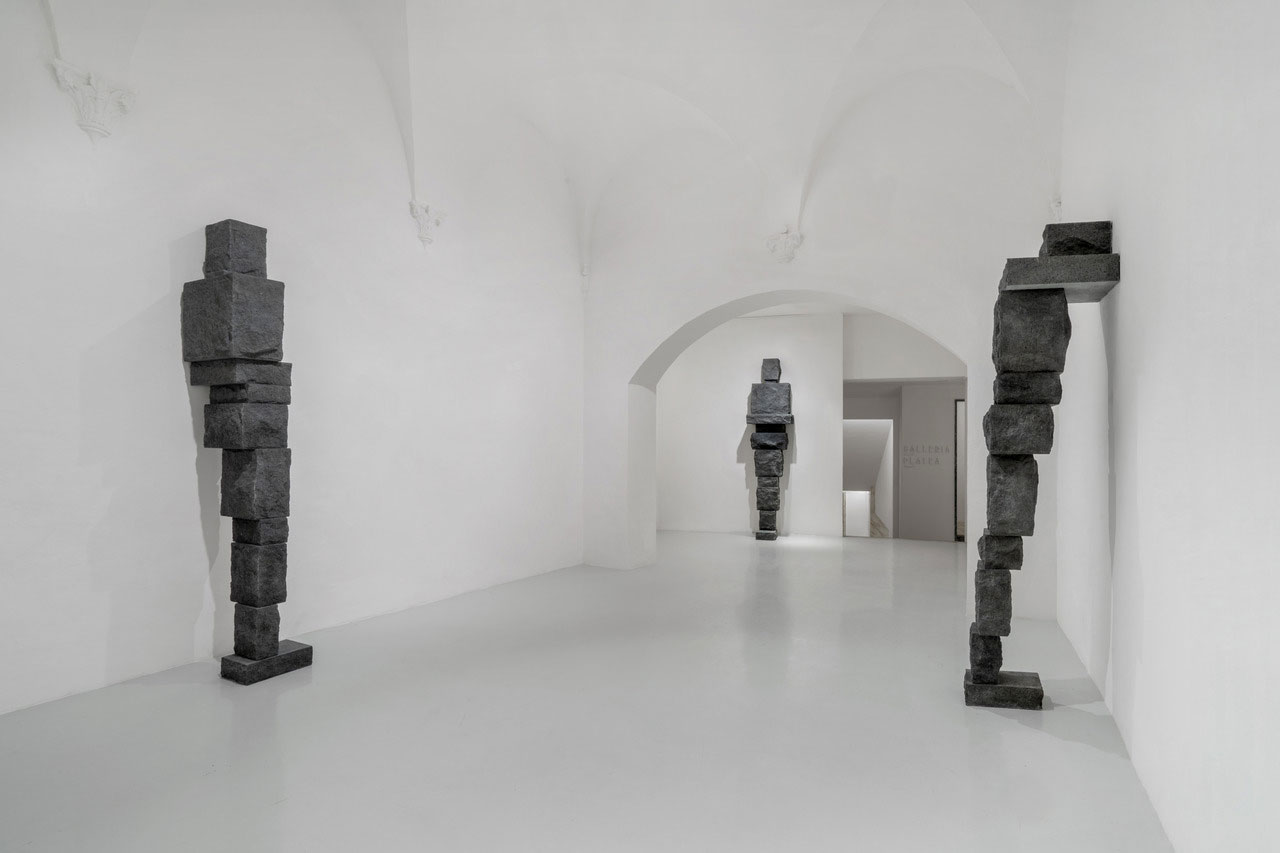
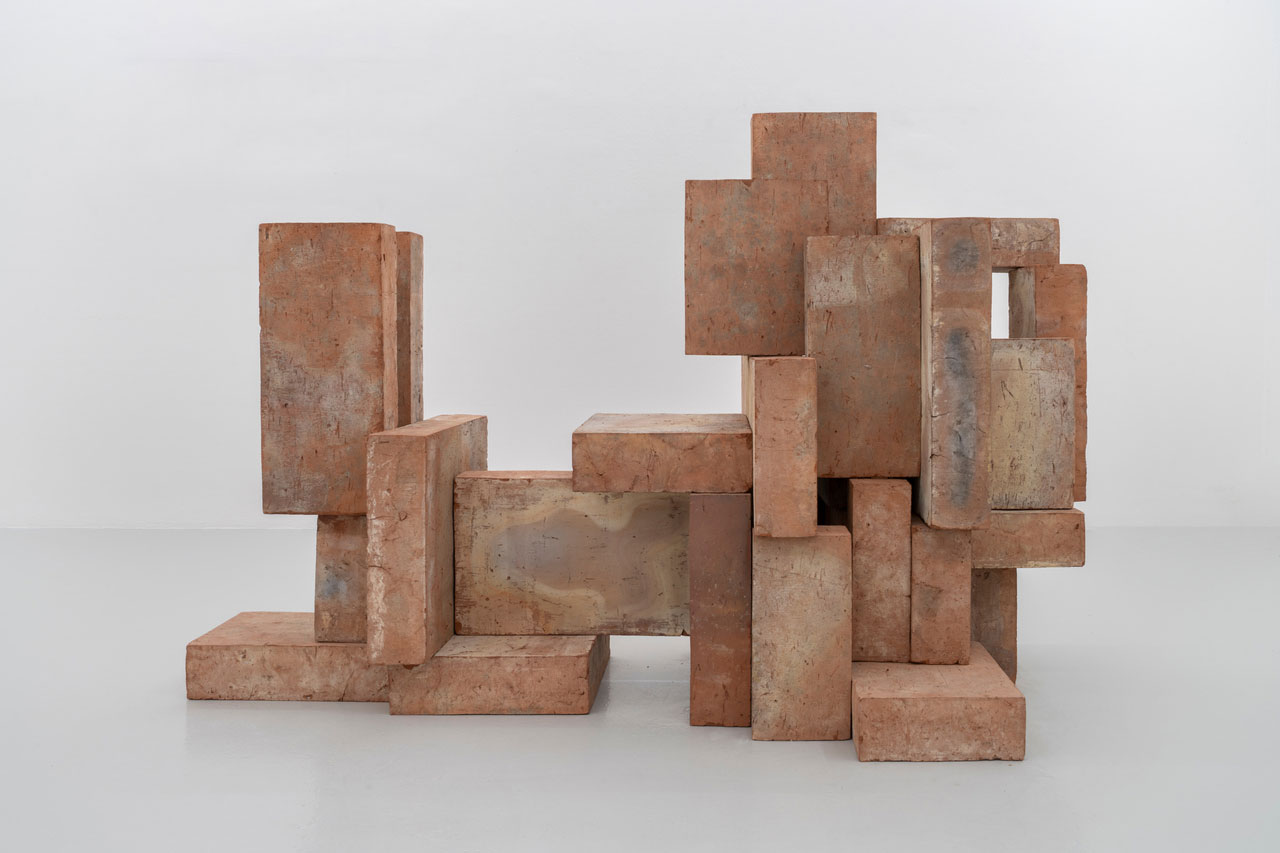
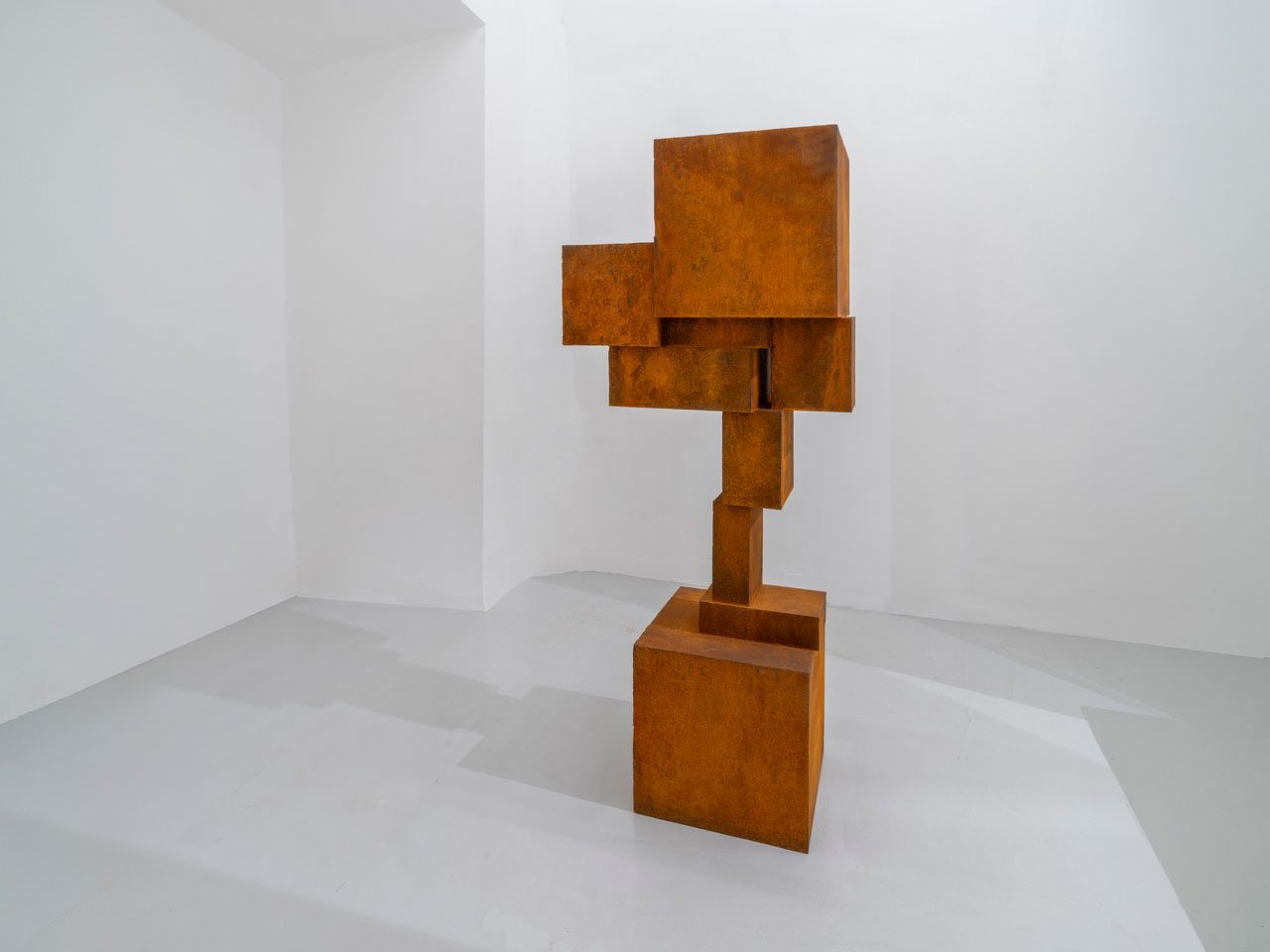
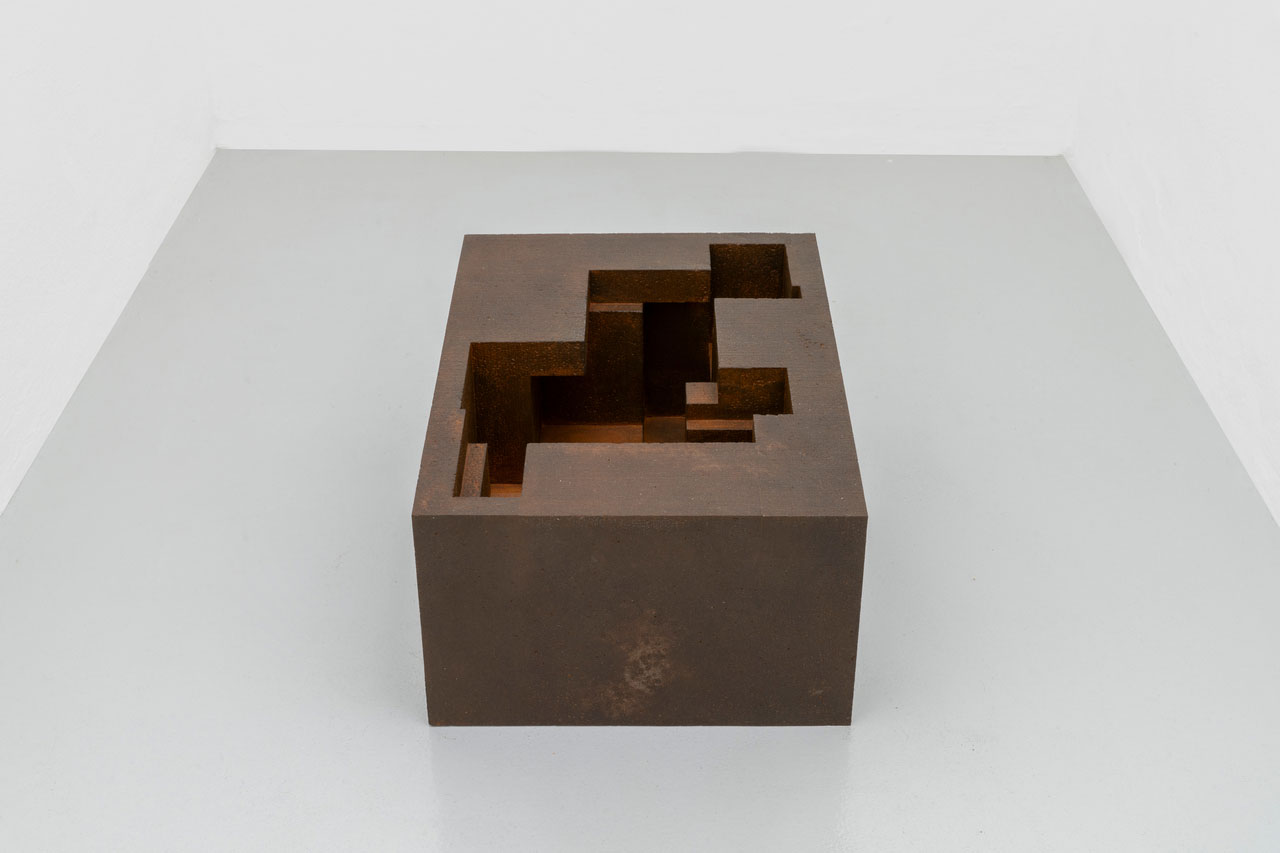
Gormley’s engagement with the building itself deepens the exhibition’s interrogation of support and dependence. At the entrance, basalt “Blockworks” employ stacking strategies that make part relate to part, and part to whole, while also making the gallery’s 14th‑century walls an active structural partner. These works reverse the classical idea of the caryatid: rather than a figure bearing the weight of architecture, the sculptures depend on the ancient masonry for their stability, a relationship that conveys both mutual reliance and the possibility of collapse. In the twice life‑size terracotta “Slabworks,” stacked deadweight binds two bodies into a precarious unity, a house‑of‑cards logic rendered in fired clay that suggests intimacy as much as instability. Elsewhere, a concrete bunker—”Skew II” (2026)—sits within the base of a collapsed tower; a hole at the position of the mouth grants visual access to a dark interior, a small aperture that both invites and resists entry.
Throughout the labyrinth, life‑size and half‑scale sculptures in concrete, stone, iron and terracotta continue Gormley’s long inquiry into mass and void, into the dialectic of enclosure and openness. The works operate at different scales and densities, from the monumental to the human, and from the impenetrable to the porous. Recent drawings on view extend this investigation into two dimensions, exploring dark thresholds and apertures that open onto light, and offering a graphic counterpart to the sculptural experience. Together, the drawings and objects stage a trajectory of encounter: first confrontation, then exploration, and finally a reflective questioning of what we rely on to hold us—physically, socially, and imaginatively.
There is a deliberate playfulness in Gormley’s re‑imagining of urban dwelling. The cardboard city enchants with its miniature domesticities and its invitation to imagine inhabitation, yet it also exposes the precarity of contemporary shelter. Where San Gimignano’s towers historically embodied permanence and civic pride, here permanence is provisional, negotiated between ancient walls and ephemeral materials. The juxtaposition of heavy basalt and fragile cardboard compresses histories of shelter, labor and commerce into a single architectural body, and the result is both elegiac and sharply contemporary: a meditation on how we build, ship, discard, and ultimately live within the infrastructures we create.
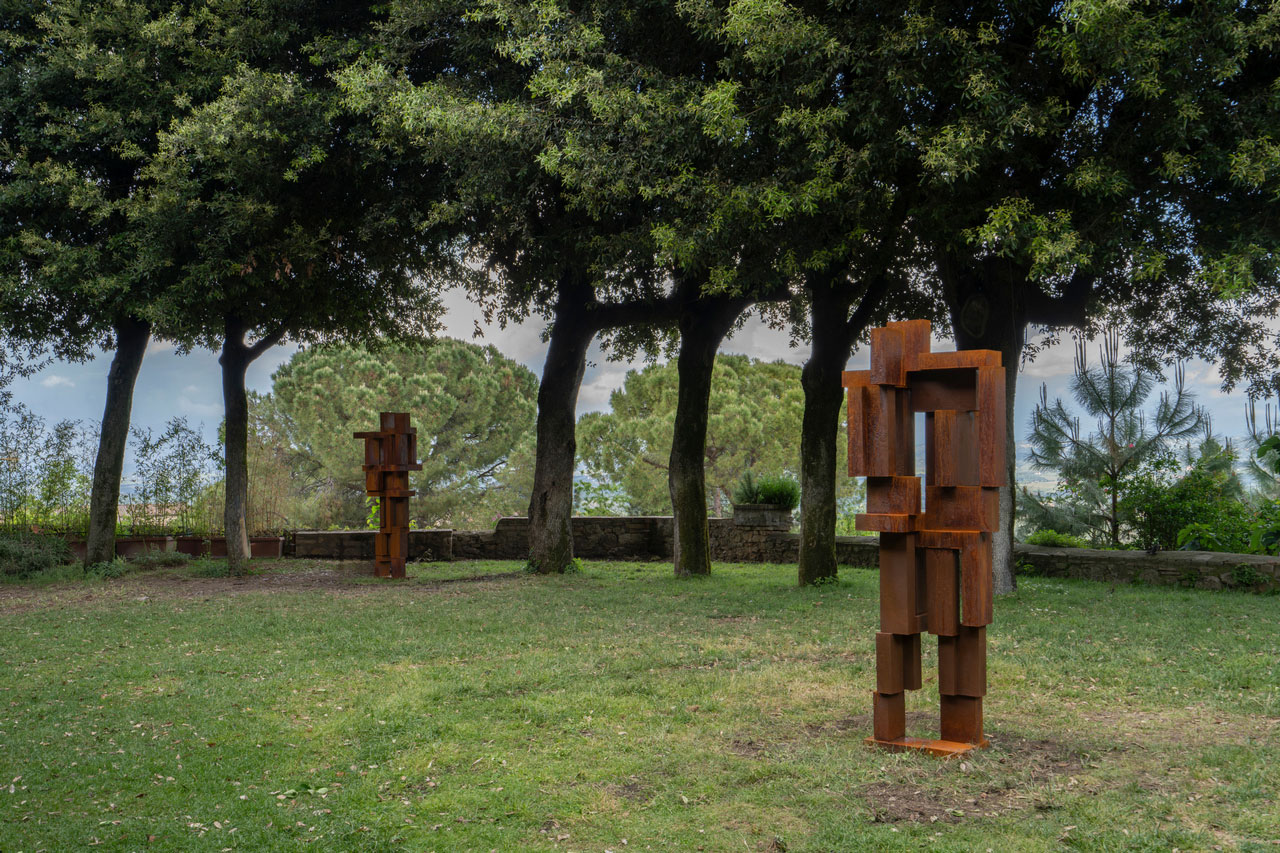
Outside the labyrinth, sculptures set against the Tuscan landscape provide a counterpoint to the interior’s claustrophobic intimacy. Seen from the open air, the works register differently; their silhouettes and textures converse with horizon and light, and the surrounding landscape reframes questions of scale and endurance. The exhibition thus stages a dialogue between interior and exterior, between the built and the natural, and between the private act of inhabiting and the public act of making a city.
“What Holds” Us resists tidy conclusions. Instead it offers a series of embodied propositions that visitors must test with their own movement and attention. To walk through Gormley’s installations is to feel the weight of materials, to be denied or granted access, to imagine the possibility of collapse and the stubborn persistence of shelter. In doing so the show asks us to reconsider the infrastructures—architectural, social, commercial—that we trust to hold us, and to recognize that permanence is often a fragile, negotiated condition rather than an assured state.
Photo: Antony Gormley, What Holds Us, 2026, exhibition view GALLERIA CONTINUA, San Gimignano, © the artist and GALLERIA CONTINUA, Photo: Ela Bialkowska, OKNO Studio
Info: Galeria Continua, Via del Castello 11, San Gimignano, Italy, Duration: 9/5-13/9/2026, Days & Hours: Daily 10:00-13:00 & 14:00-17:00, www.galleriacontinua.com/
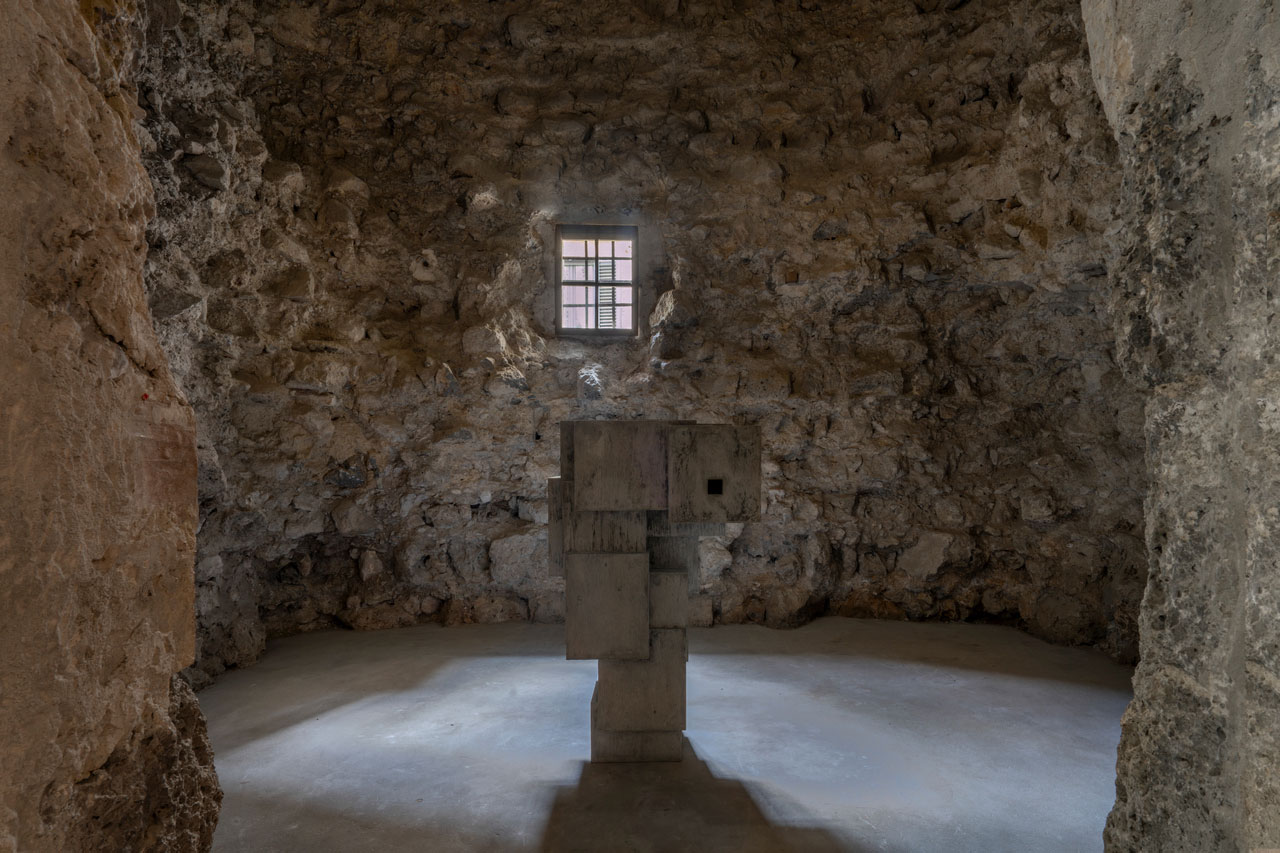
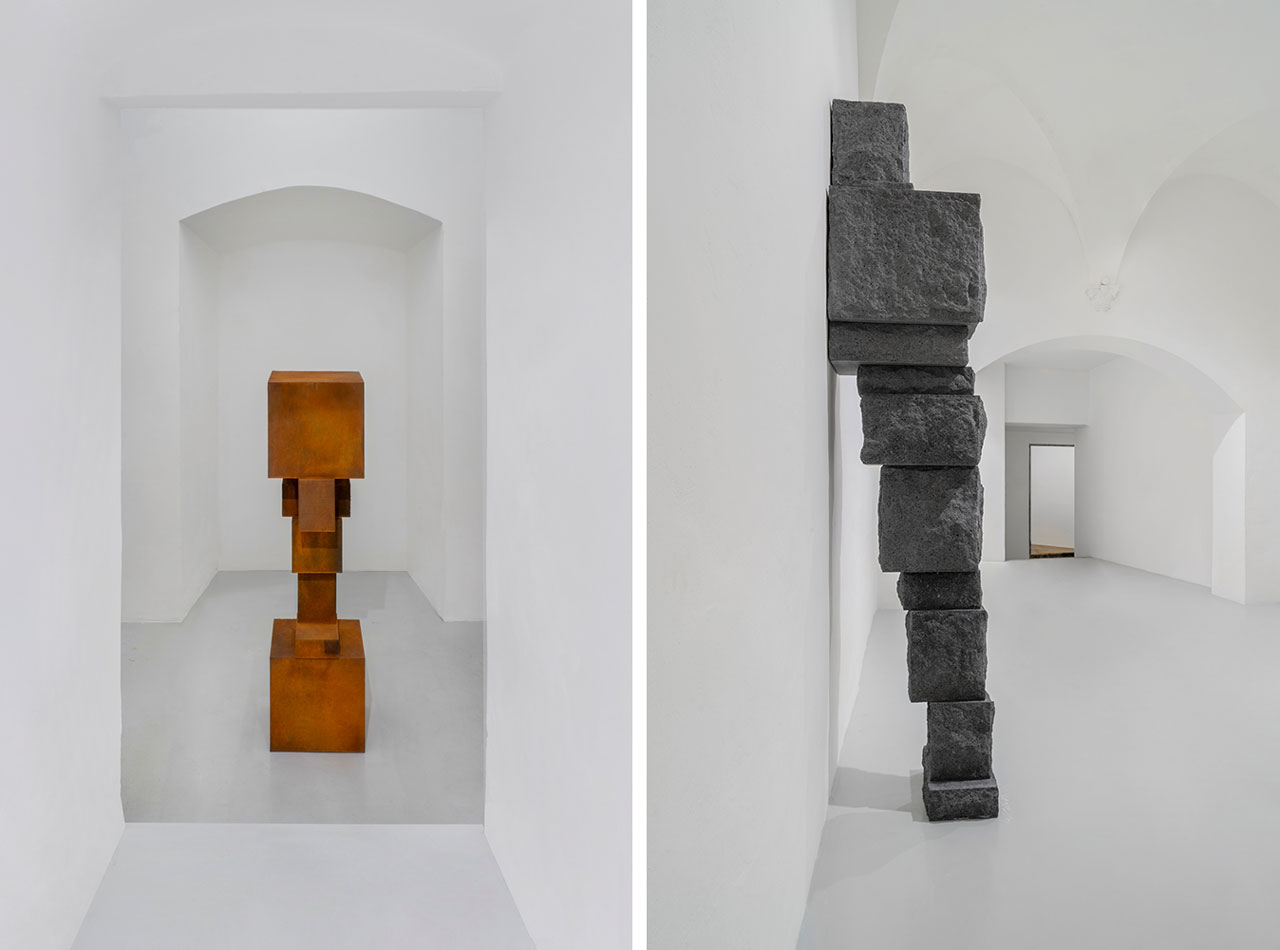
Right: Antony Gormley, BIG COUNTER, 2026, basalt, 271.8 x 67.3 x 78.9 cm Courtesy: the artist and GALLERIA CONTINUA, Copyright: © the Artist Photo: Ela Bialkowska, OKNO Studio
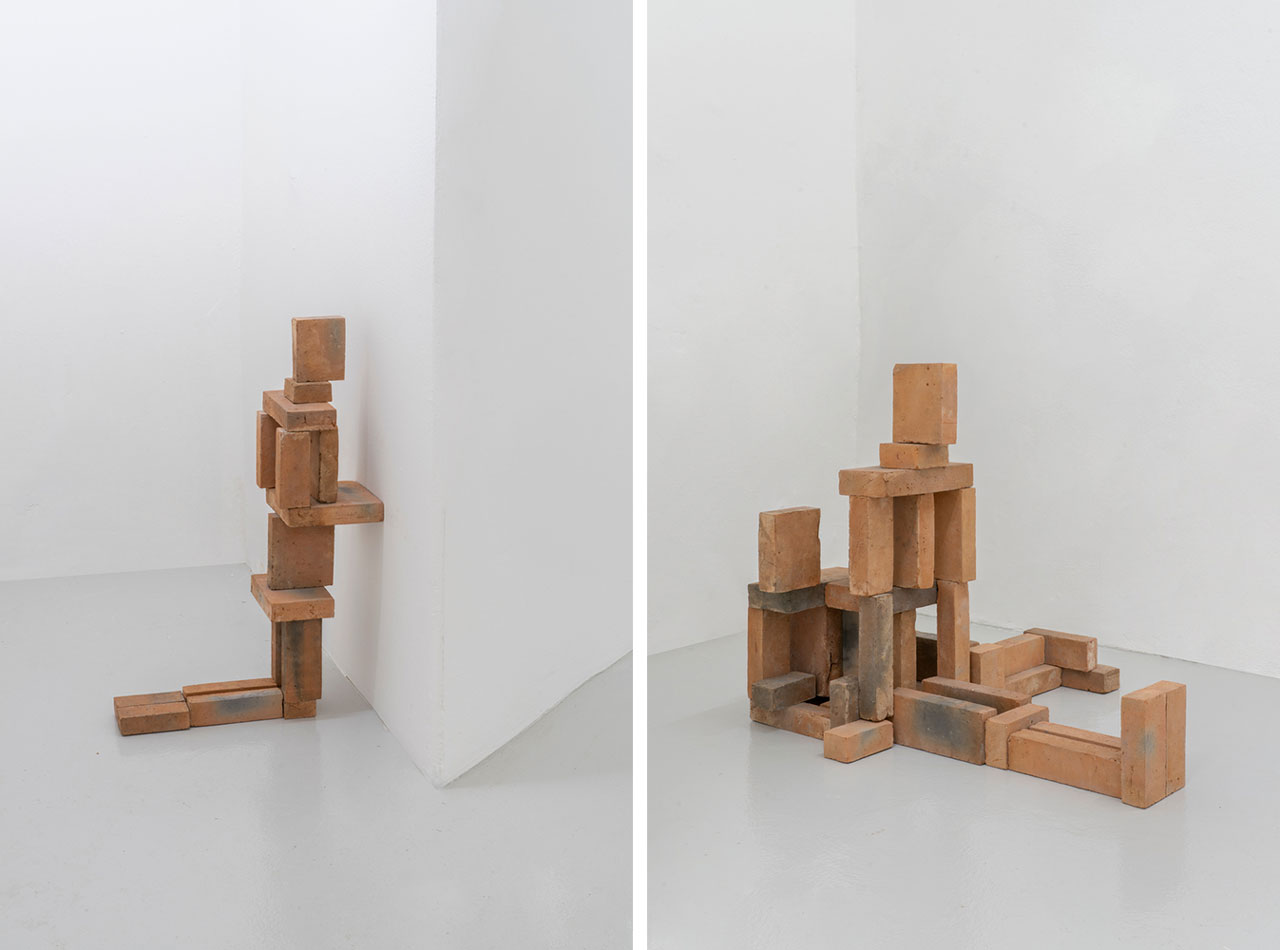
Right: Antony Gormley, SMALL HARBOUR, 2026, clay, 54.5 x 56.5 x 69 cm, 21.46 x 22.24 x 27.17 in, Courtesy: the artist and GALLERIA CONTINUA, Copyright: © the Artist Photo: Ela Bialkowska, OKNO Studio
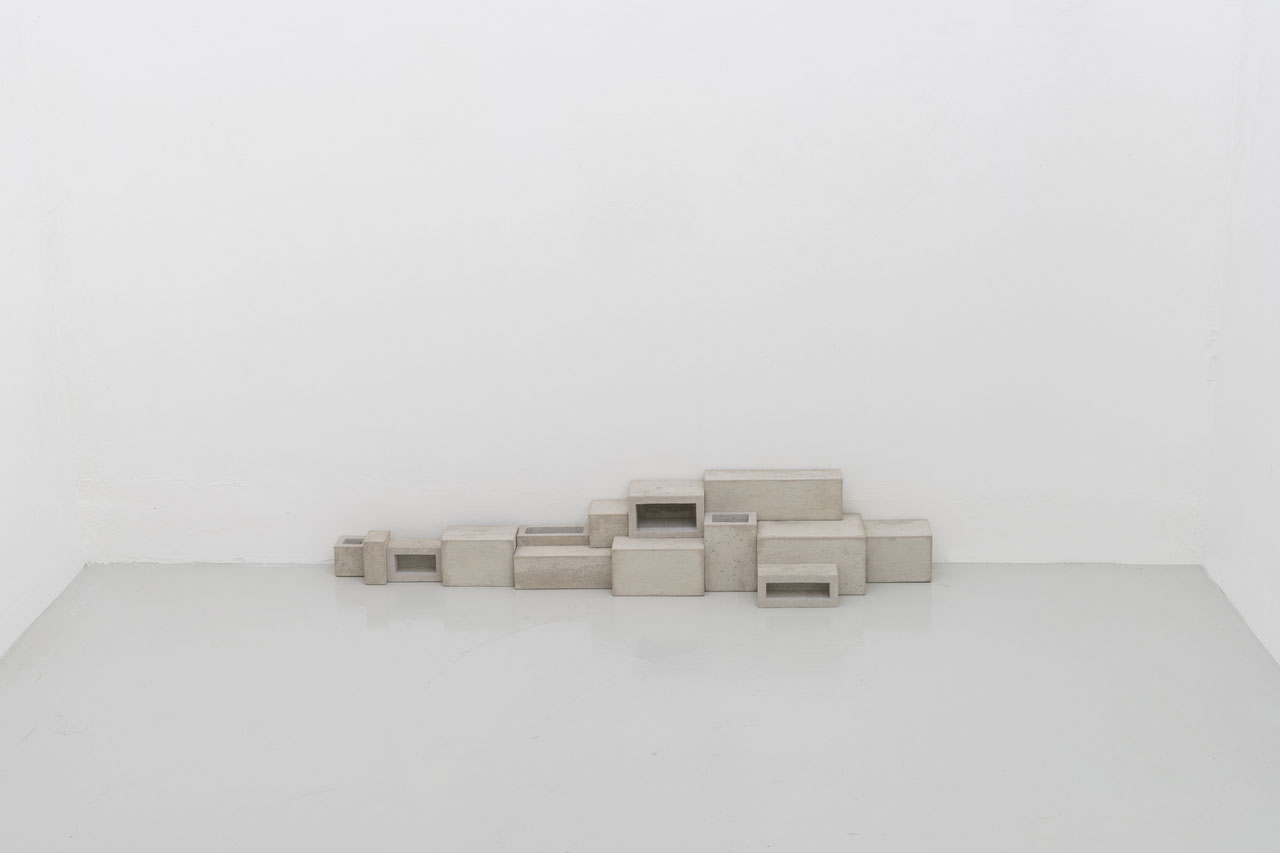
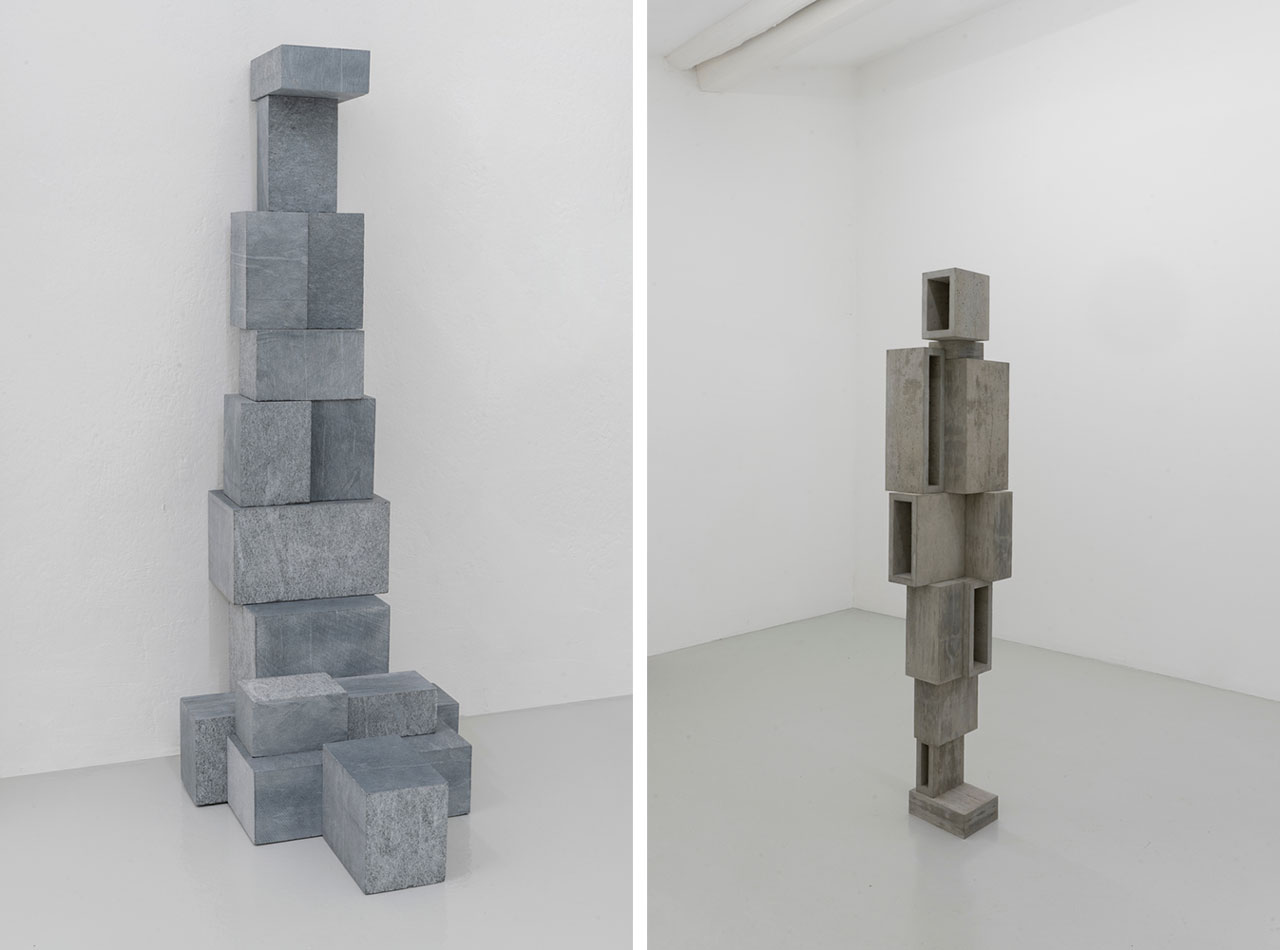
Right: Antony Gormley, SMALL SLUMP, 2026, sandstone, 74.5 x 29 x 37.3 cm, Courtesy: the artist and GALLERIA CONTINUA, Copyright: © the Artist Photo: Ela Bialkowska, OKNO Studio