PRESENTATION: Pierre Huyghe
Pierre Huyghe’s works often present themselves as complex systems characterized by a wide range of life forms, inanimate things and technologies. For Huyghe the exhibition ritual is an encounter with a sentient milieu that generates new possibilities of co-dependence between events or elements that unfold. The exhibition is an entity whose time and space, in which it appears, are constituents of its manifestation. His works are conceived as speculative fiction and often present themselves as continuity between a wide range of intelligent life forms, biological, technological, and tangible inert matter that learn, modify and evolve.
By Dimitris Lempesis
Photo; Fondation Beyeler Archive
Pierre Huyghe’s, first solo exhibition in a Swiss museum becomes a site-specific experience where each work and the in-between form an ambiguous threshold. Through the interplay of shifting works, combining moving images, sound, objects, living organisms, and machine learning, the exhibition unfolds to the rhythms of “Apnea” (2026). An artificial breathing organ, curled underwater, breathes at a human rhythm, its membrane oscillates according to apnea. Air, sound and subtle vibrations circulate through walls, until they are desynchronized or interrupted, forming a shared respiratory field that permeates the entire exhibition.
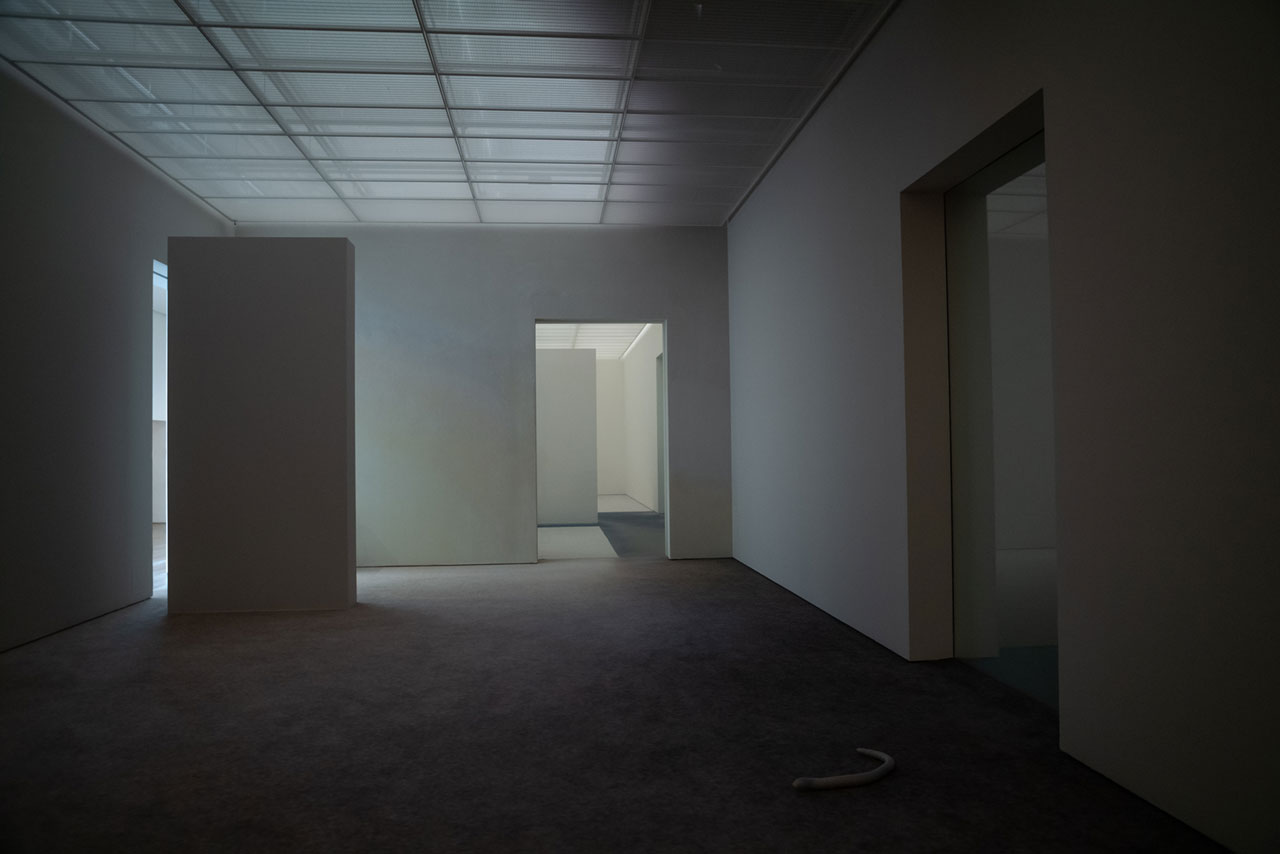
This indeterminate state extends further in “Alchimia” (2026), where a worm, a larval ancestor of the human unconscious, lies at the threshold of a door. Animated by breath, it murmurs and hums into surrounding matter in a polyphony of voices; when deprived of air, it falters and convulses. Like “Apnea”, it foregrounds respiration as both a physical and symbolic force, shaping our experience.
Subtle experiences, as much felt as observed, open onto an encounter with the unknown. This condition is reinforced by the presence of his most recent film, “Liminals” (2025-). “Liminals”, unfolds as a contemporary myth, it simulates a non-human condition and explores uncertainty. A hollow and faceless human-like figure emerges from shifting states and attempts to exist in a realm outside time and space. “A liminal state, incessant dance of matter”, as described by the artist, where multiple possibilities coexist at once, where every moment is a maybe. As inner and outer realms fold together, boundaries between body, environment and shaping forces dissolve. The film explores whether one can relate to such a reality at all, and what conditions might allow multiple states of existence to be experienced at once.
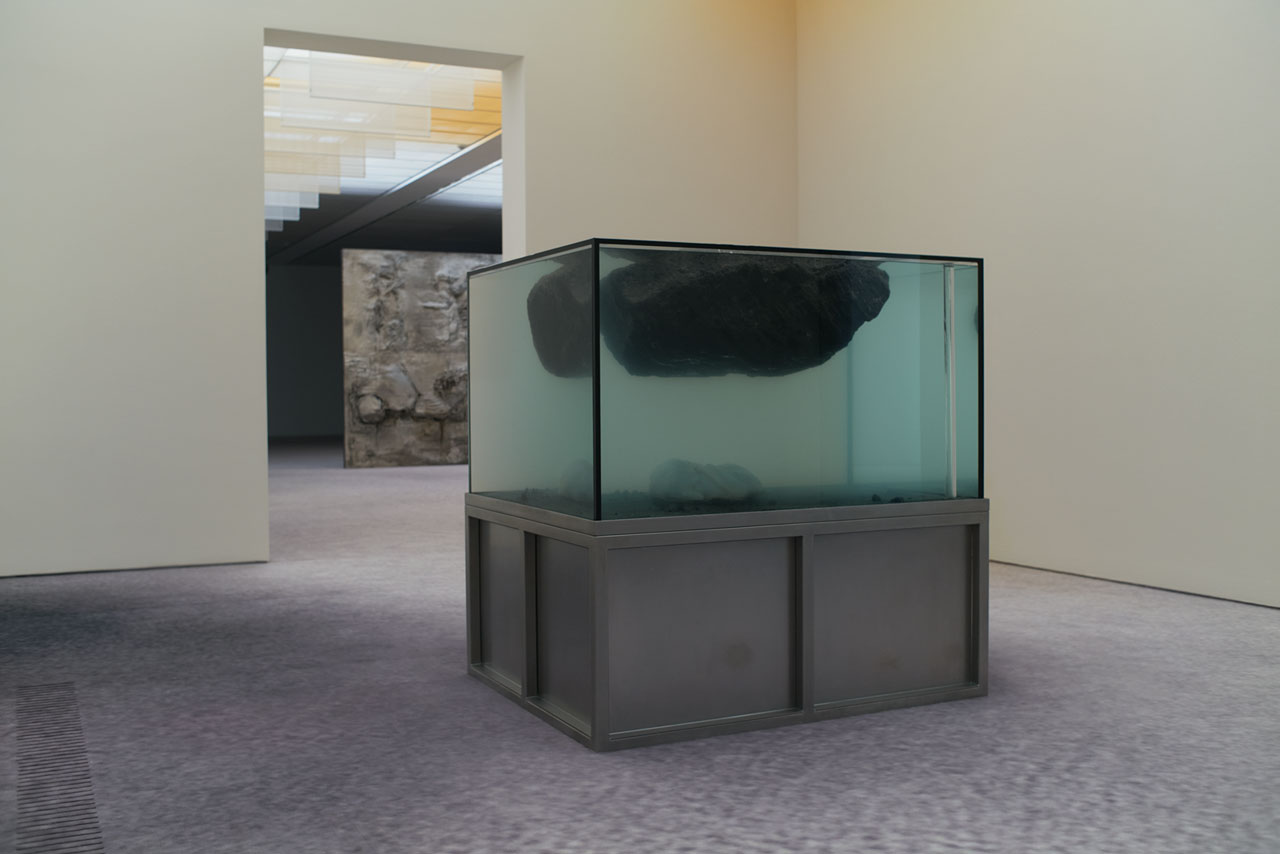
“Cambrian Explosion 19” (2013) evokes some of the earliest complex life forms, emerging in fragile and unstable conditions. Buoyant with encapsulated air, a volcanic rock floats in the aquarium, as if defying gravity. At the bottom, there are live species from the Cambrian Explosion, which took place over 500 million years ago. They have remained nearly unchanged since their primordial origins. Their behaviours extend beyond individual lifespans, repeating through reproduction.
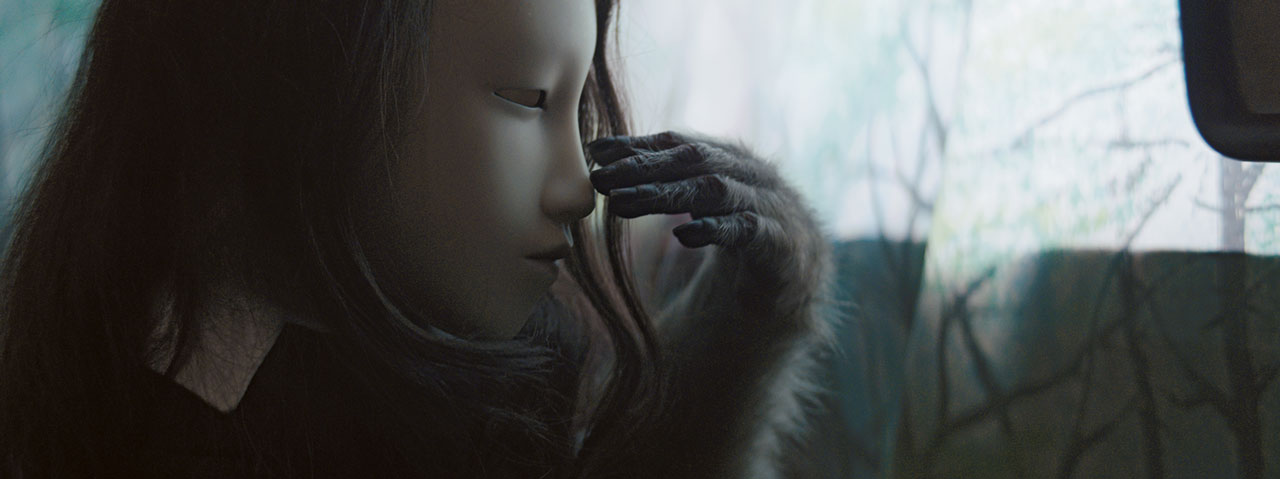
Set in the nuclear exclusion zone around Fukushima, the film “Human Mask” (2014) pens with a drone’s view of an aban- doned city after disaster. Inside an empty restaurant,a monkey wearing a human mask repeats learned gestures like an automaton, then pauses, waiting without purpose. It moves between training and instinct, control and accident. In this moment of suspension following the disaster, the figure faintly evokes human presence.
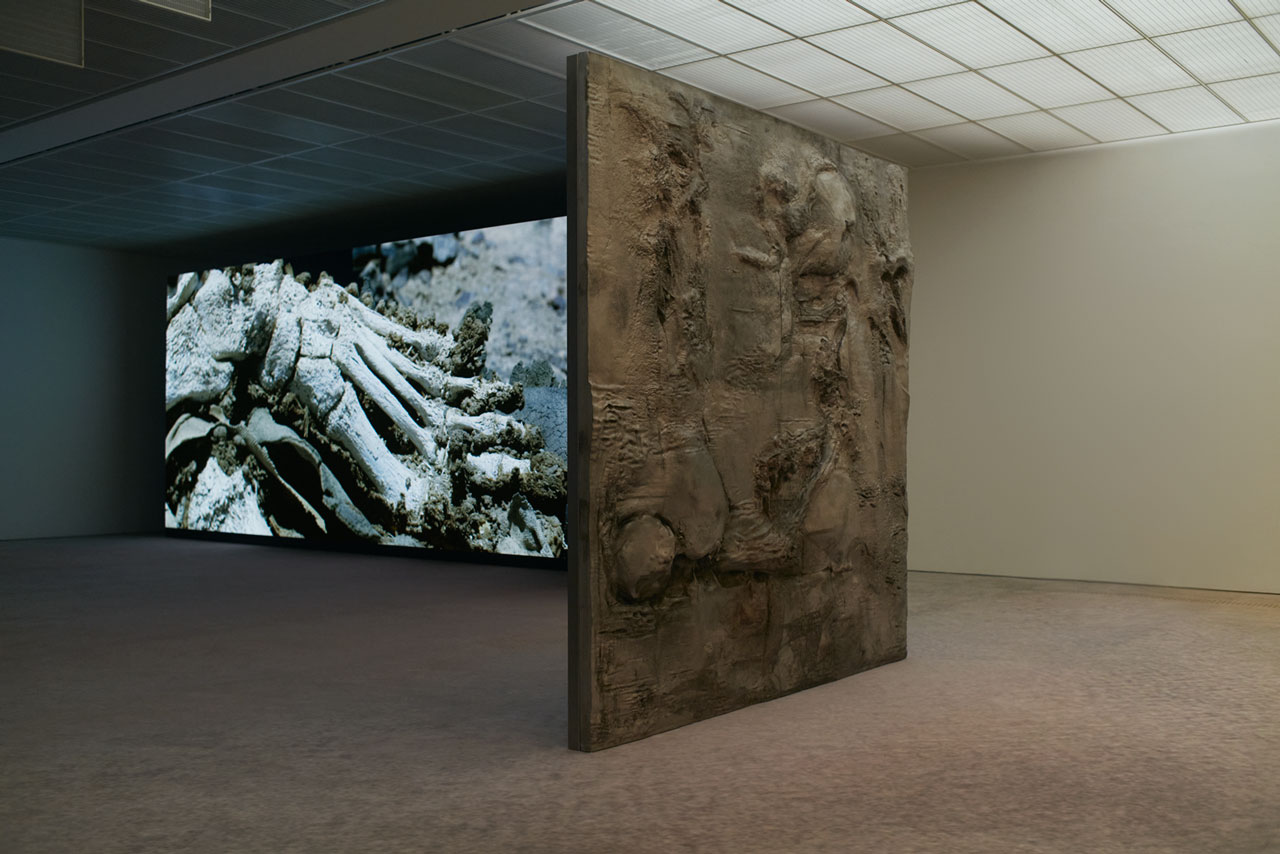
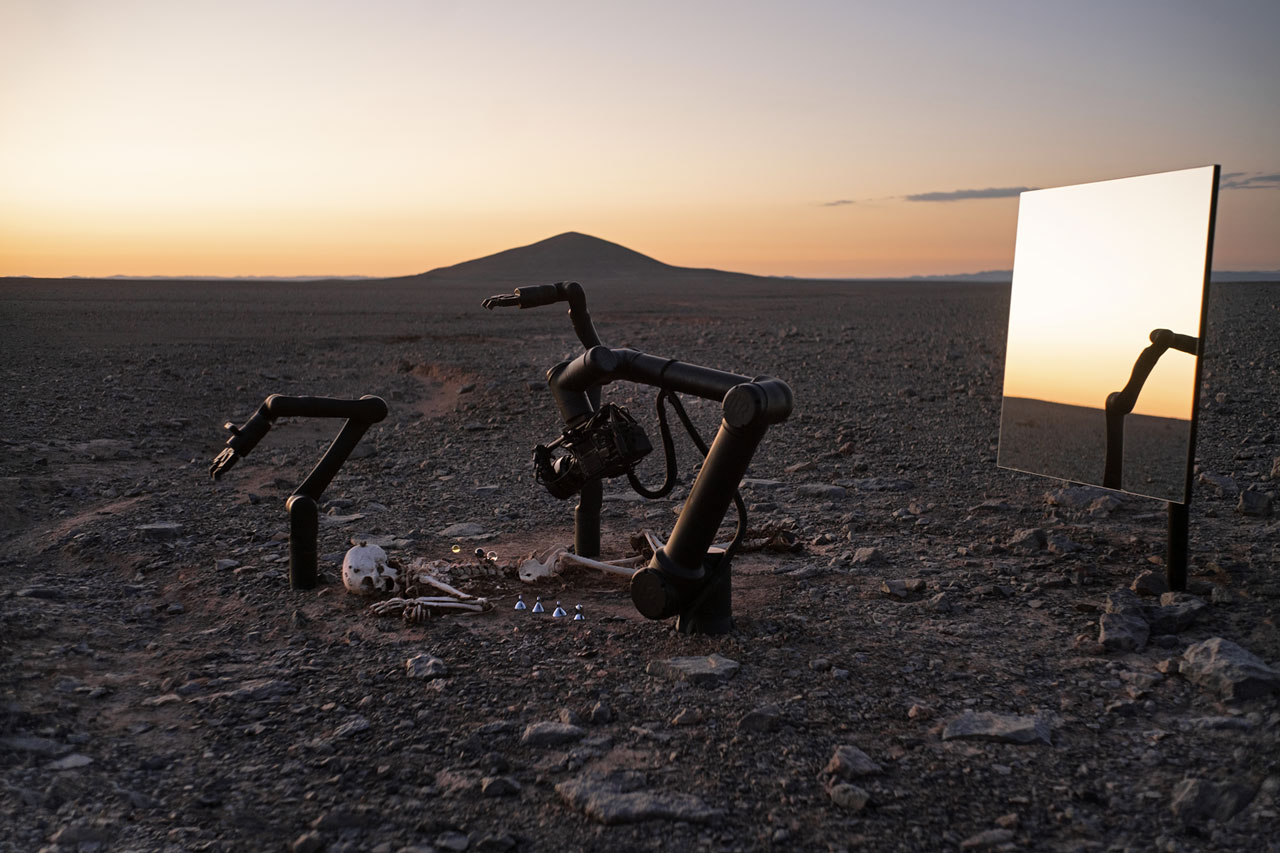
In this exhibition, a large, closed gate, “Adversary’ (2026), stands as a threshold, at once image and access to what lies beyond. A mental image, a co-production of imagination between human and machine, materialized in a bas-relief door. One single image actualized among all possibilities of mental images. In “Camata” (2024), a set of machines appears to perform an unknown ritual on an unburied skeleton found in the Atacama lifeless desert in Chile. It is at once an endless funeral rite, a learning process, and the formation of a bodyless subjectivity. Without linearity, beginning or end, the film is continuously re-edited in real time through sensors embedded in the exhibition space.
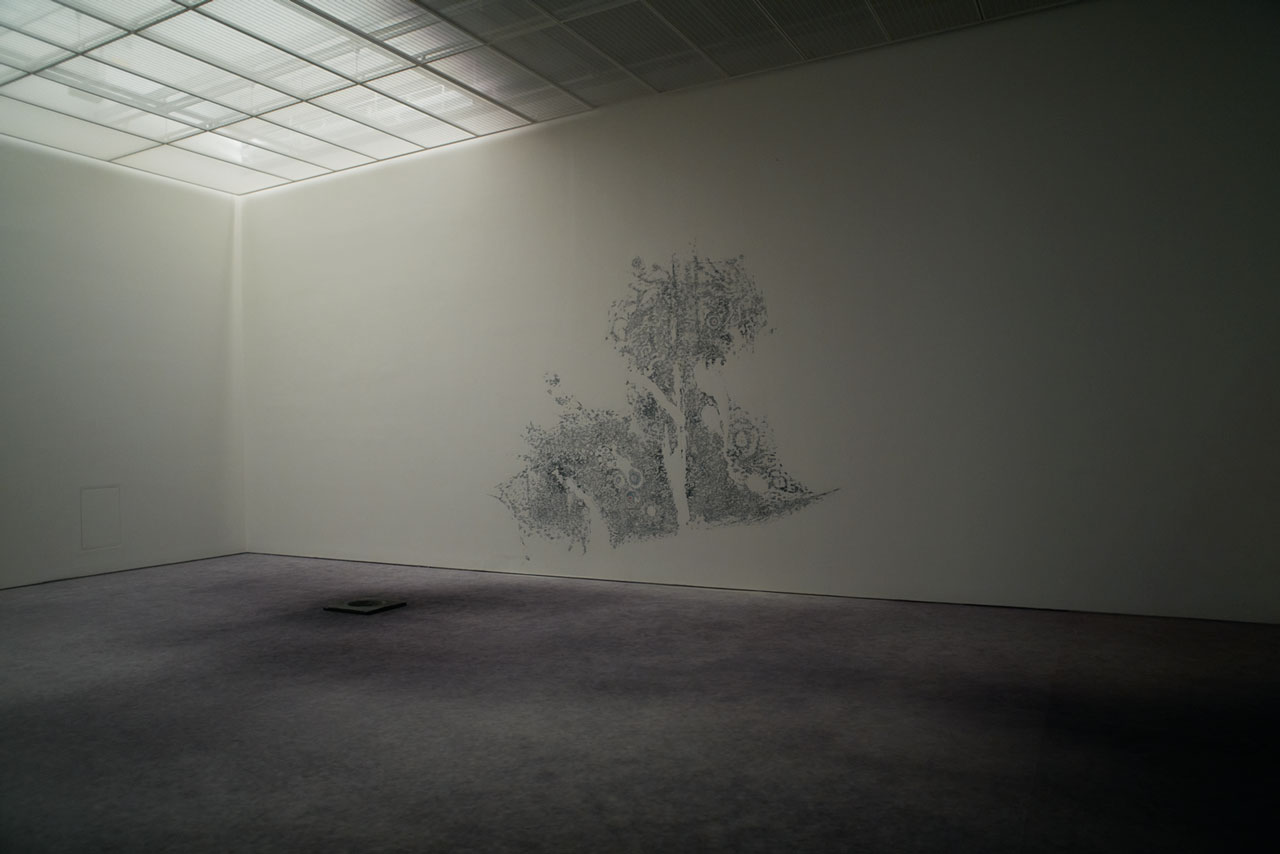
In “Camata” (2024), a set of machines appears to perform an obscure ritual around an unburied skeleton discovered in the Atacama Desert, Chile. At once an endless funerary rite and a process of learning, the scene suggests the emergence of a bodiless subjectivity. The skeleton of a young man lies on the ground as the machines observe and perform their operations. What unfolds remains un- certain: a ceremony, an experiment or the emergence of another form of consciousness? What is sensed, recorded and edited manifests the formation of a lifeless entity. Without beginning or end, the film is continuously re- edited in real time, influenced by sensors in the exhibition space – tracing a passage between a human body and a bodiless presence. Within the exhibition, in “Timekeeper” (2026), layers of walls paints and sediments settle across surfaces, while “Light Dust”, 2026, spreads throughout the space, forming a continuous floor. Coloured dust, shifting patterns, and casted artificial light unfold across floors, walls and the ceiling, making time and light perceptible matter.
The works no longer operate as isolated entities but emerge as permeable situations. Movements, images, and events emerge – sometimes synchronized, sometimes dissonant. Earlier works and new productions coexist as active presences within a set of relations that continually reconfigure themselves, giving rise to new narratives.
The exhibition at Fondation Beyeler invites visitors into a “soulscape”– an inner world composed of multiple temporalities, voices, and states. A polyphony that opens onto moments of contradiction and perplexity. It continues the artist’s exploration of a metaphysical and fictional approach to existence, without hierarchy between fiction and reality, the living and the artificial, the human and the non-human. Both sensory and reflective, the exhibition adopts an outside perspective that extends beyond the human experience, becoming the site of formation of subjectivities and opening onto alternative dimensions of reality.
Photo: Pierre Huyghe, Human Mask, 2014, Film still, Film, color, sound, 19 min., Collection Maja Hoffmann / Luma Foundation, © Pierre Huyghe, represented by ProLitteris (CH) / ADAGP (FR)
Info: Curators: Mouna Mekouar and Anne Stenne, Fondation Beyeler, Baselstrasse 101, Riehen/Basel, Switzerland, Duration: 24/5-13/9/2026, Days & Hours: Mon-Tue, Thu-Sun 10:00-18:00, Wed 10:00-20:00, www.fondationbeyeler.ch/
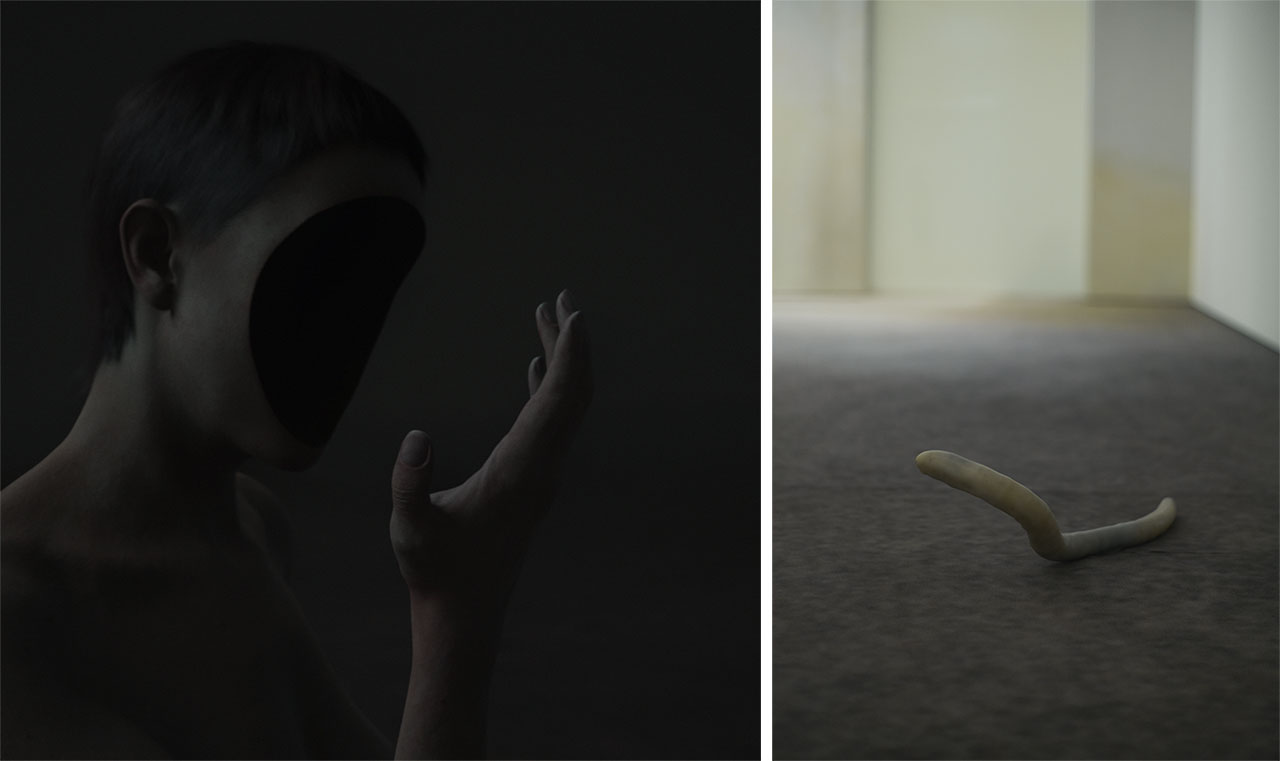
Right: Installation view “Pierre Huyghe”, Fondation Beyeler, Riehen/Basel, 2026, Photo: Ola Rinda, Courtesy the artist and Fondation Beyeler