ART CITIES: Venice-Arthur Jafa and Richard Prince
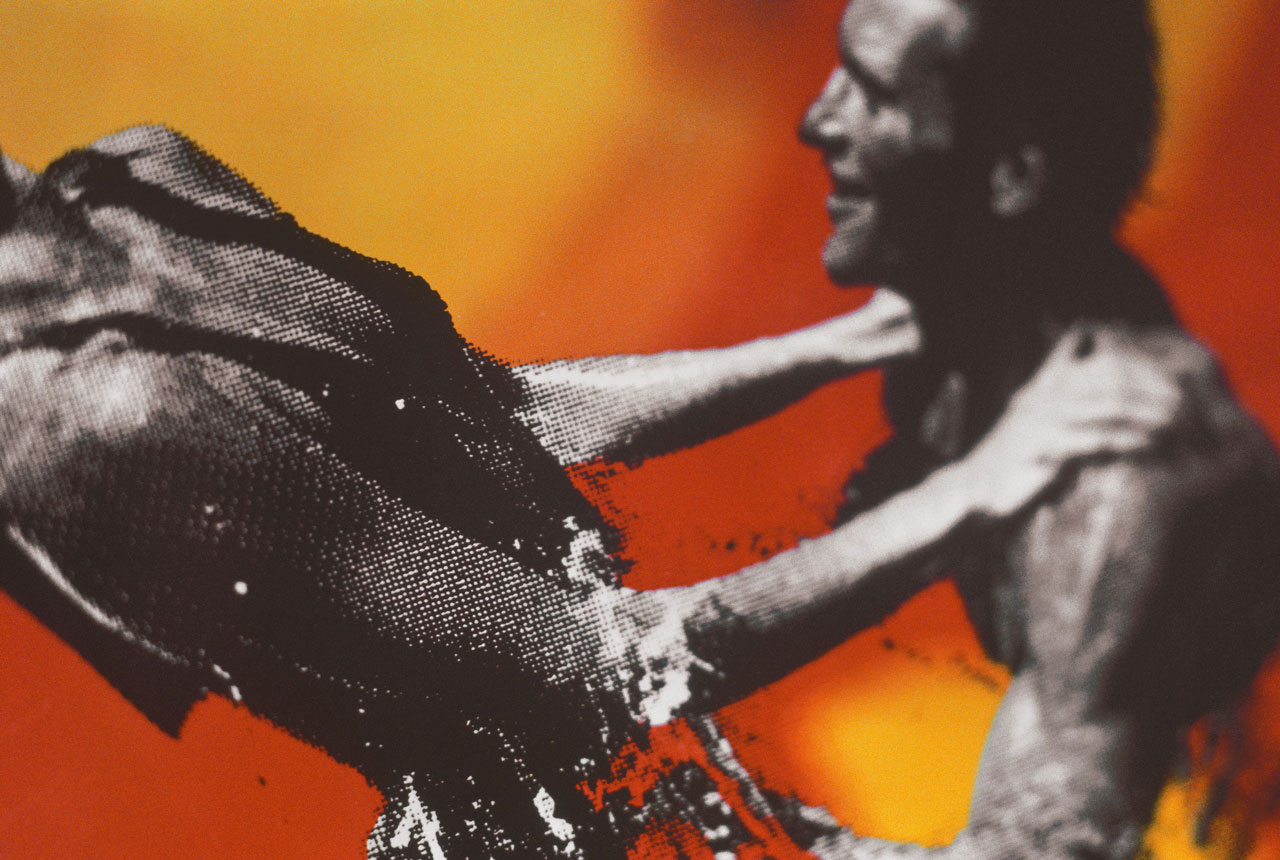
The exhibition “Helter Skelter” reveal a creative conversation between the work of two prominent American artists, Arthur Jafa and Richard Prince, that has never been examined before. Born a decade apart, they share an ethos of lawlessness when it comes to the appropriation and manipulation of images siphoned from movies, pulp novels, comic books, YouTube videos, sci-fi stories, album covers, record sleeves, rock ‘n’ roll posters, first-edition Beat volumes, news reels, celebrity memorabilia, and social-media posts.
By Efi Michalarou
Photo: Gagosian Archive
Trafficking heavily in American popular culture, Arthur Jafa and Richard Prince expose its grit and grift, while embracing many of its myths and perversions. Both artists chart peculiar topographies specific to the United States: Jafa’s reflecting his identity as an African American man, coupled with a mission to invigorate Black cinema and art; Prince’s hovering between a self-conscious critique of white masculinity and a fascination with the underbelly of the American psyche.
“Helter Skelter” features more than fifty works, including photographs, videos, installations, sculptures, and paintings. It also showcases new work by each artist and a collaboratively conceived zine, which incorporates images exchanged between the artists during the process of making this exhibition.
“Helter Skelter” unfold across the ground and first floor of Fondazione Prada in venicethrough a series of thematic and conceptual juxtapositions, combining works by both artists to illuminate each of their practices and tease out shared subject matter and mutual obsessions. Underlying the elective affinities between their artistic projects, “Helter Skelter” reveals a certain vernacular edge in the U.S., where both artists live and work:
The exhibition’s title, “Helter Skelter,” functions as a palimpsest of meanings and references. Originating from a British amusement park ride, the phrase is also a colloquialism for chaos. It is the title of a famous 1968 song by Paul McCartney, released on the LP “The Beatles”, better known as “The White Album”. In late 1968, cult leader Charles Manson appropriated the term to predict an imminent apocalyptic race war, in which African Americans and whites would essentially annihilate one another. “Helter Skelter” was also the title of a 1992 exhibition at the Museum of Contemporary Art, Los Angeles, which notably excluded Black visual artists. The term “Helter Skelter,” reinvoked here as the title of this exhibition, contains all the complexity and messiness of its misuse in popular culture. It is an unruly readymade, selected by the artists to disrupt expectations, a perfect expression of the composite nature of this two-person show.
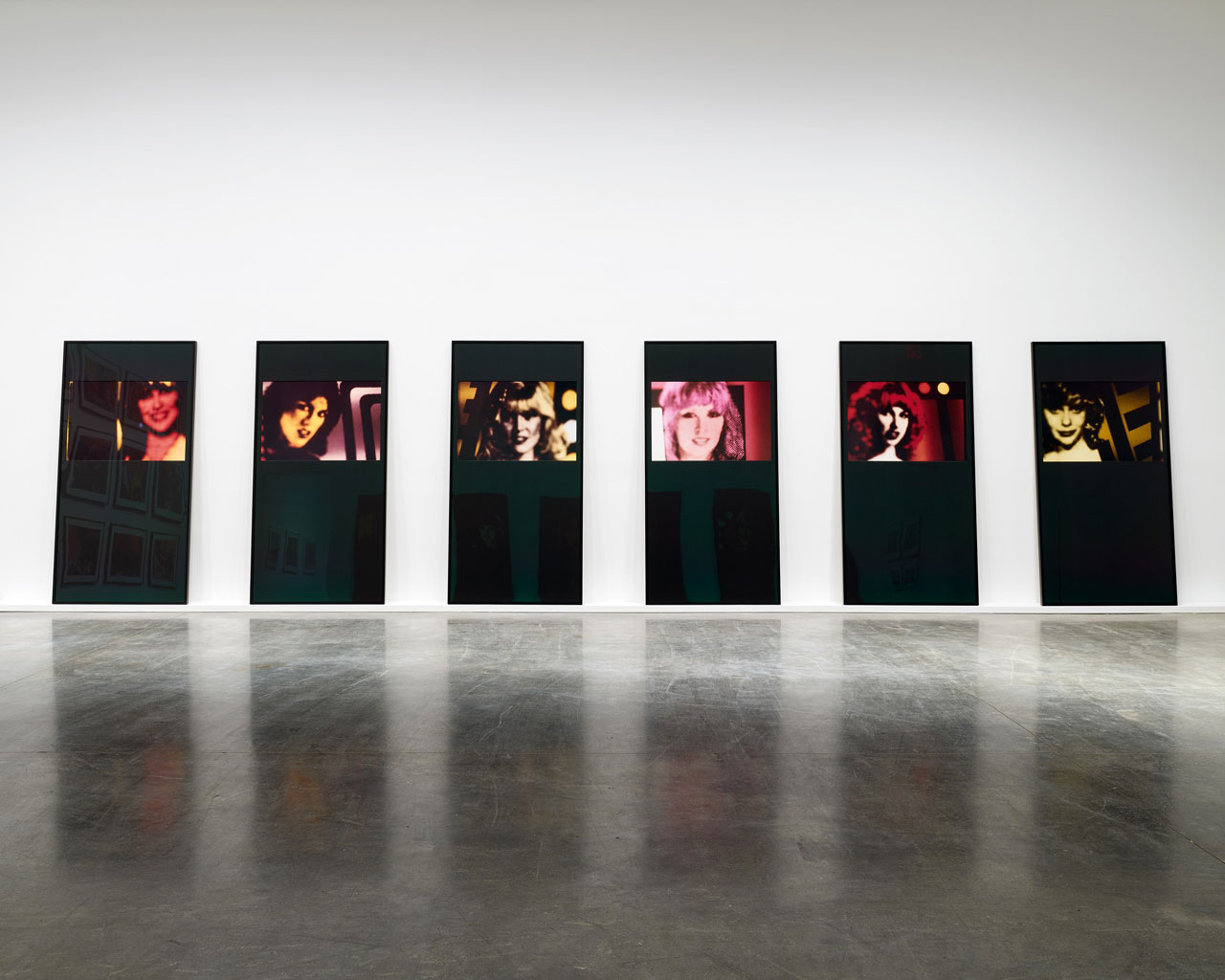
The exhibition opens on the ground floor and in the courtyard of Ca’ Corner della Regina, establishing a dialogue between two large-scale installations: “Folk Songs” (2006) by Richard Prince and “Big Wheel II” (2018) by Arthur Jafa. Steeped in American car culture, both works evoke an on-the-road narrative, which extols emancipatory values. The battered nature of these sculptures and the proximity of their materials to violence—in relation to monster trucks and explosives—render these installations as uncanny artifacts, archeological remains of a future, lost civilization defined by the atrocities of its past. In the adjacent rooms, a formal connection between Jafa’s celebrated video “Love Is the Message, The Message Is Death” (2016) and Prince’s influential photographic series “Untitled (Sunsets)” (1981–82) foregrounds the symbolic presence of the sun in their respective works, while Prince’s iconic series “Untitled (Girlfriend)” (1993) and Jafa’s video work “LOML” (2022) engage in a dialogue about desire and loss.
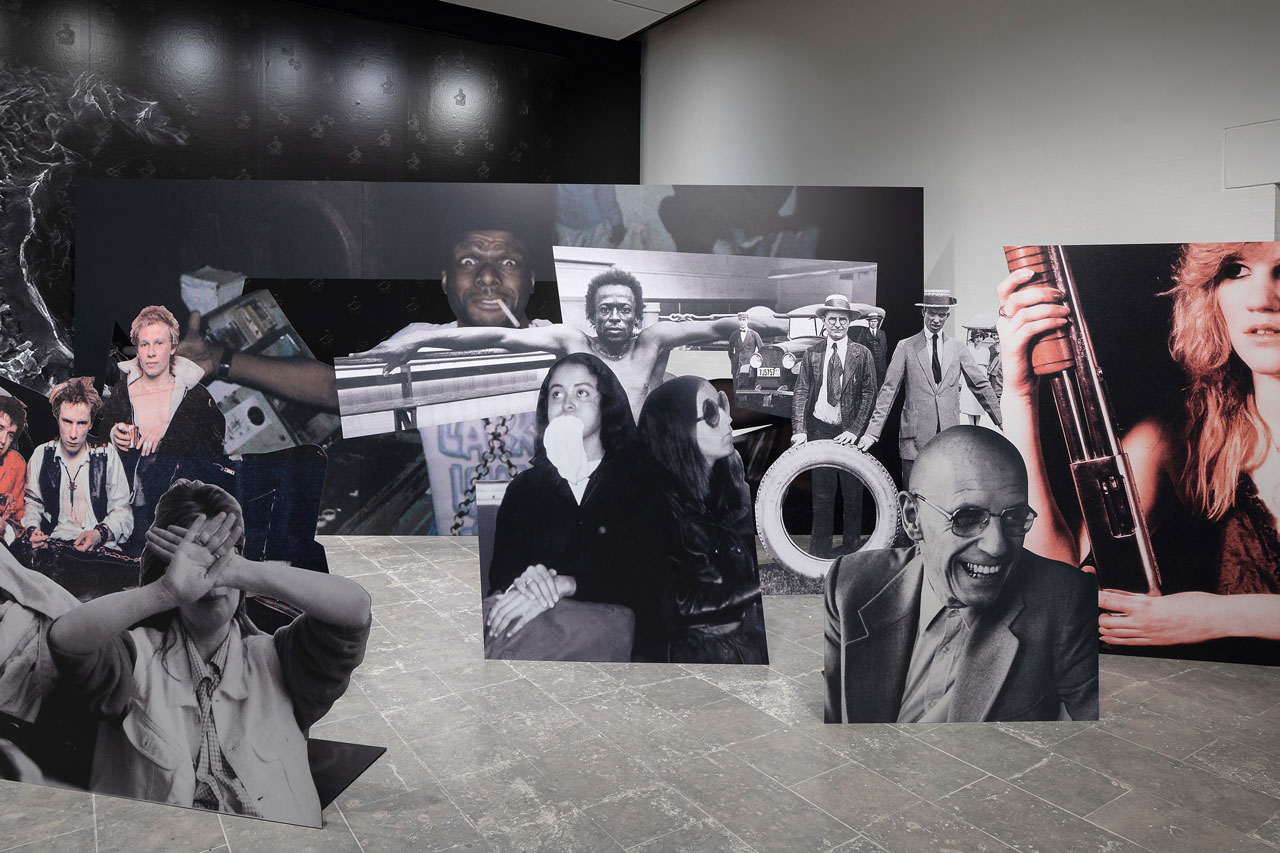
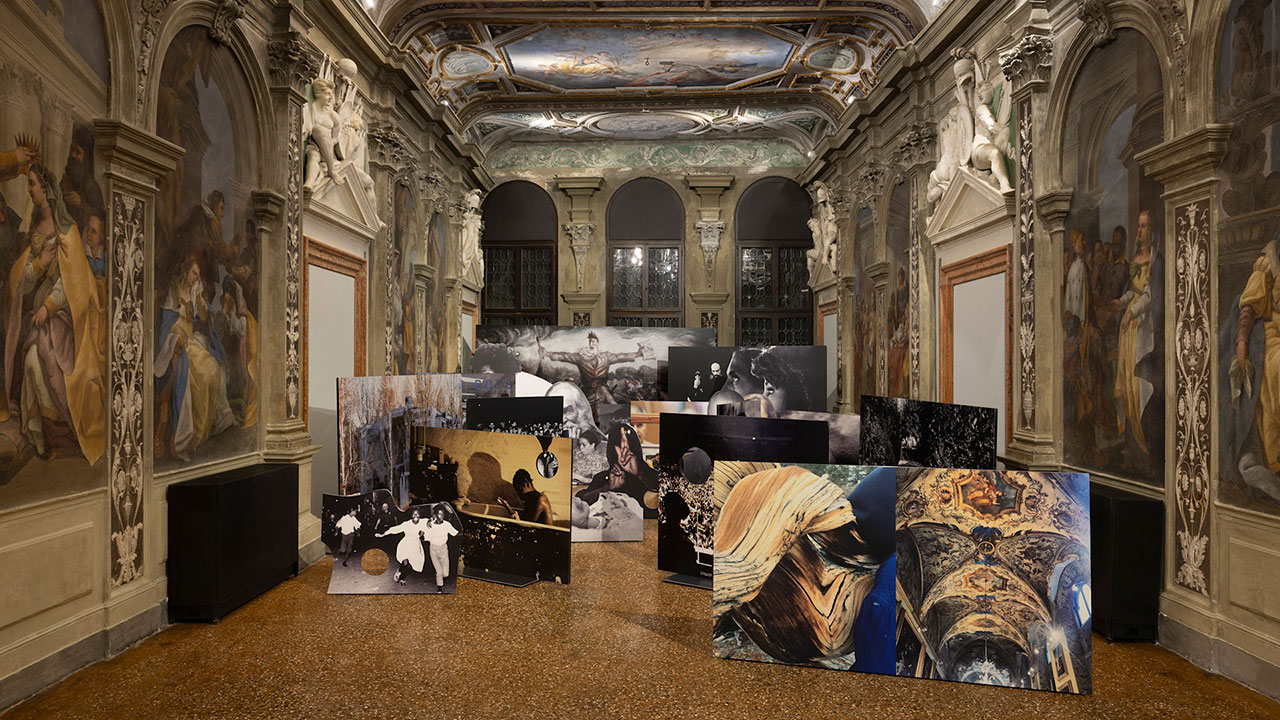
The central room of the first floor hosts Prince’s sculptural work “Untitled (Entertainers)” (1982–83), which assembles publicity shots of aspiring actors sourced from the seedy context of Times Square’s peep shows alongside a new, larger version of Jafa’s multipart sculpture from 2020 “__Array” (2026). The installation comprises a pantheon of personalities including intellectuals, musicians, criminals, and artists as well as historical imagery. Both works operate as composite self-portraits, articulating multiple dimensions of identity and identification.
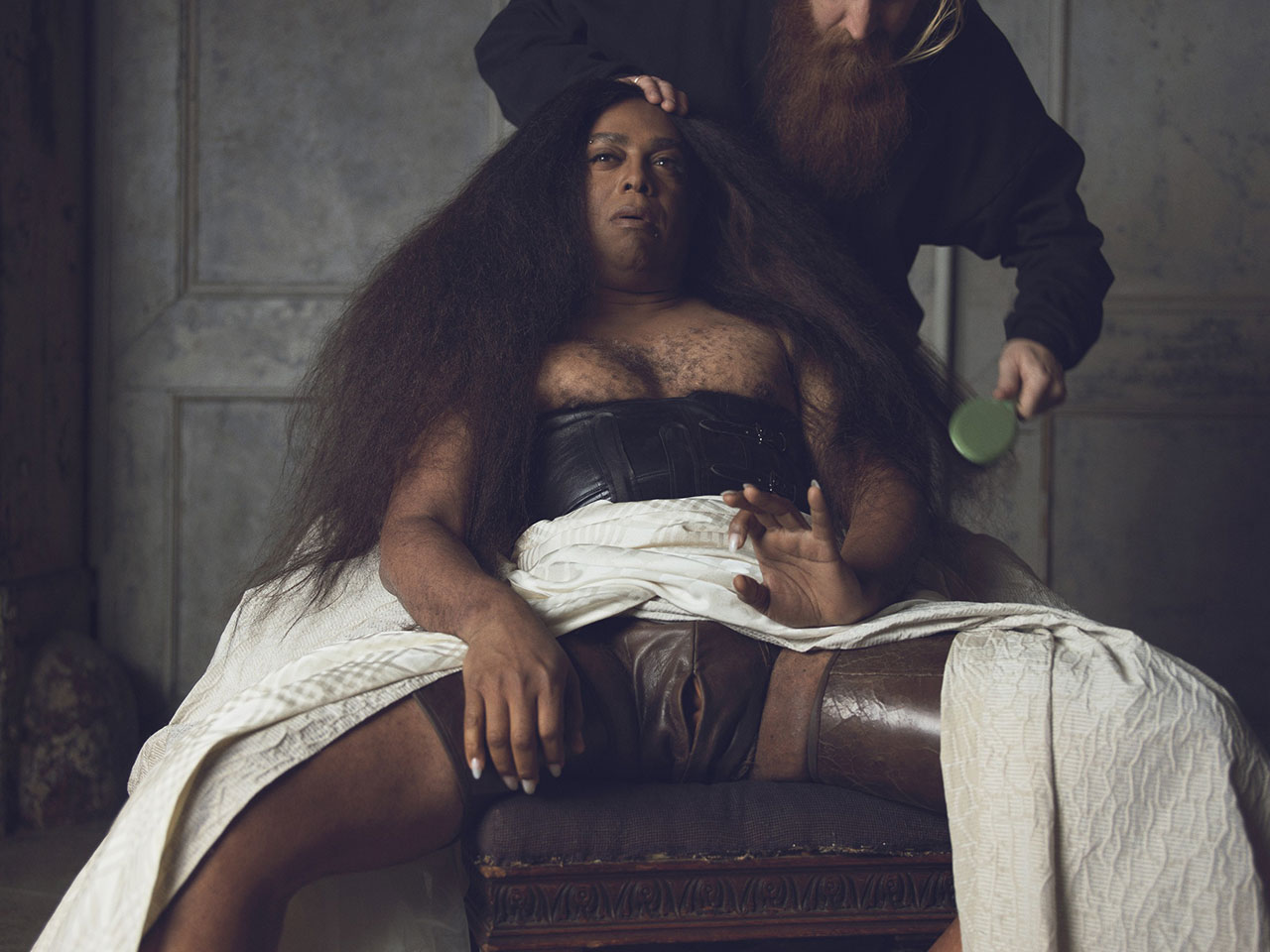
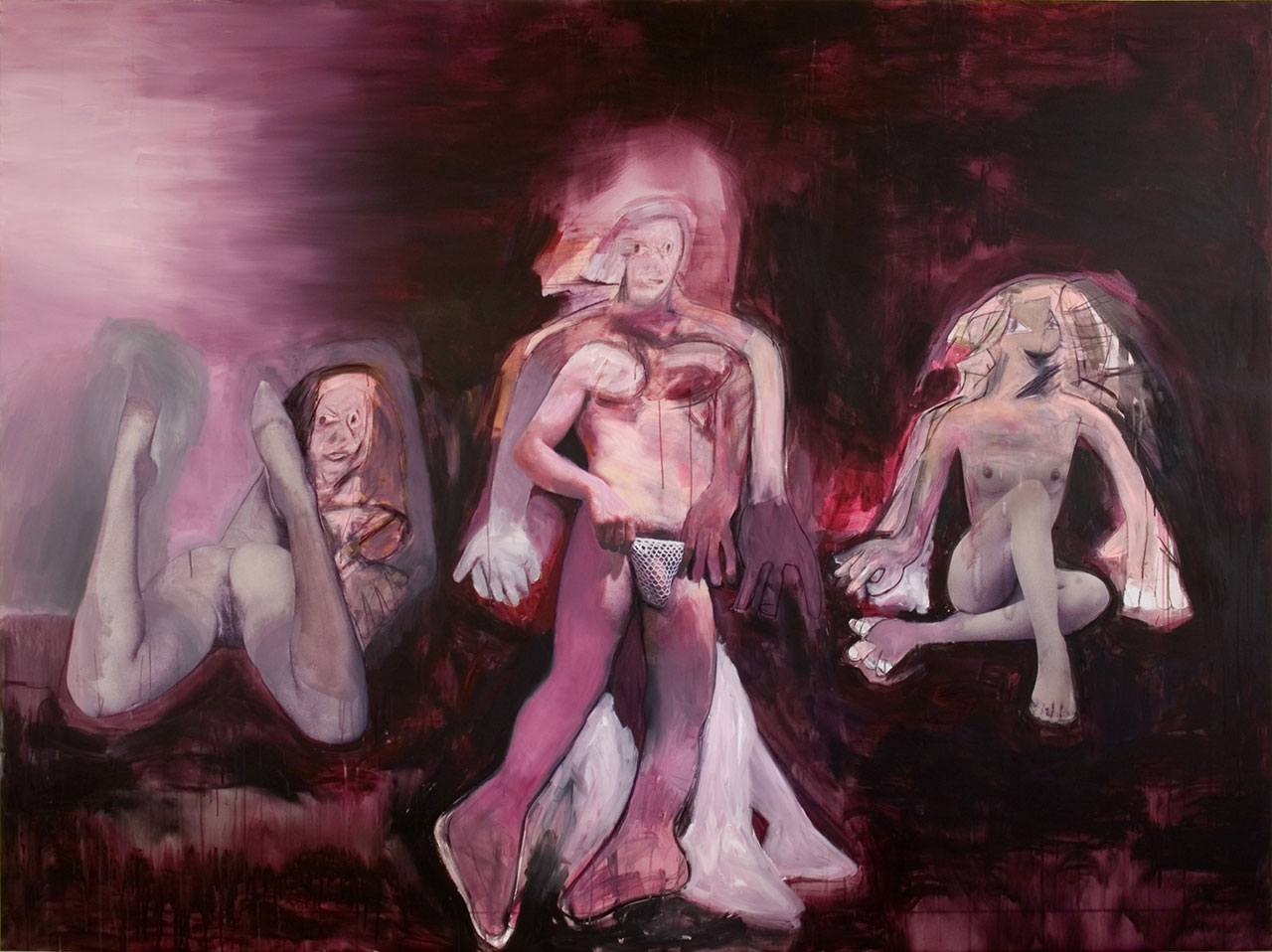
Additional works in the side rooms on the first floor further explore the explicit and subtle connections between the two artists’ practices. The notion of “monstrosity” is embodied in Jafa’s self-portrait “Man Monster – Duffy” (2018), in the guise of a Black transgender sex worker from the mid-19th century, and Prince’s “de Kooning” Paintings, begun in 2006, which are at once an homage to the Abstract Expressionist and an explosion of his vocabulary into new erotic and intersexual dimensions. Whiteness, as a social and cultural construct, is interrogated in Jafa’s video “The White Album” (2018) as it is, albeit peripherally, in Prince’s “White Paintings” (1980–92) which deconstruct cartoons in an ether of white pigment, revealing the underlying hostility and fear embedded in certain strands of American humor.
In “Spiritual America” (1983), an appropriated photograph showing a nude, pre-pubescent Brooke Shields, Prince provocatively addressed the power of images to stimulate debate, reveal hidden meanings, liberate the repressed, and destabilize meaning. Although not included in the exhibition, this work is evoked by the presence of Alfred Stieglitz’s 1923 photograph of a bridled and castrated horse, from which it takes its title. This print, which was formerly owned by Georgia O’Keeffe, is in Richard Prince’s personal collection. Stieglitz’s “Spiritual America” is presented alongside Jafa’s video “BEN GAZARRA” (2024), which reimagines Martin Scorsese’s “Taxi Driver” (1976) in what was supposed to be its original format with Black actors as the pimp and johns—an early casting decision reversed by the director and producer for fear of the racist tropes it would reveal. Jafa’s reinterpretation uncovers this hidden narrative in Scorsese’s masterpiece, showing an unrelenting cycle of violence premised on a rampage to save an underage prostitute.
Jafa and Prince are serial appropriators, employing existing cultural content as the foundation of their art. For Prince, who began rephotographing existing advertising images in 1977, practicing, he has claimed, “without a license,” appropriation marks the beginning of a transformative process. For Jafa, who is equally engaged with the transmutation of imagery, appropriation also challenges the concept of property, reflecting how Black culture has a conflictual relationship with ownership given that in the context of slavery, people, themselves, were owned.
In the 1980s, Prince developed an appropriative process called “ganging,” which consisted of arranging 35mm slides into taxonomic grids premised on various American subcultures, as in “Bitches and Bastards” (1985–86) and “Criminals and Celebrities” (1986). This compositional format demonstrates his impulse to see relationally. Jafa, also an image collector, initially compiled collaged notebooks dedicated to the triumphs and horrors of Black life in America. Shifting his practice to the digital, he eventually put downloaded images on a timeline, creating the video “SloPEX’ (2023), which features 841 photographs and moving images in a continuous stream, mesmerizing the audience with a cascade of visual references to history, science, space, celebrity culture, cinema, music, and art.
Celebrity culture, as manifest in the American mass media, is a rich source for both artists. In the “Publicities” (begun in 1999), Prince accumulates in a single framed composition various autographed head-shots of movie, music, and sports stars, which sometimes bear the artist’s own handwriting. Similarly, Jafa populates his framed photographic assemblages with images of fame: music superstars, pop icons, legendary athletes, and social media phenomens, as well as renowned writers, intellectuals, and historical figures.
In their practices, both artists evoke the idea of countercultural protest and social activism, but within the realm of an art context. With his vertical canvases from the Protest Paintings, featuring shapes of placards or picket signs embedded in their fabric, Prince created empty ciphers for dissent. An exception is “Untitled (Protest Painting)” (1994), which includes the truncated inscription “I Am A Man,” a slogan from the Civil Rights movement and, particularly, the 1968 Memphis Sanitation Strike. In his large-scale photograph “I Don’t Care About Your Past, I Just Want Our Love To Last” (2018), Jafa delves into the thorny issue of explicit representation, choosing to show the brutality of white supremacy and depict the intensity of Black suffering in an appropriated image from the Jim Crow era.
In the video “akingdoncomethas” (2018), Jafa complies found footage of the Black church in America, focusing on Pentecostal oratory and gospel music. This is intercut with scenes of the Los Angeles wildfires. The title is an invented word that partly refers to the belief in the biblical end times, an apocalypse that will usher in a paradise on earth. Jafa explained his approach to religion by saying, “I believe in Black people believing.” Salvation lies in the act, not the object, of faith, in the belief that a better future is possible. Both Jafa and Prince contemplate and complicate the idea of a “spiritual America,” with its tawdry beauty and dystopic dreams.
Photo: Arthur Jafa and Richard Prince, Installation view “Helter Skelter”, Fondazione Prada-Venice, 2026, Photo Andrea Rossetti, Courtesy Fondazione Prada
Info: Curator: Nancy Spector, Fondazione Prada, Ca’ Corner della Regina, Santa Croce 2215, Venice, Italy, Duration: 9/5-23/11/2026, Days & Hours: Mon & Wed-Sun 10:00-18:00, www.fondazioneprada.org/?
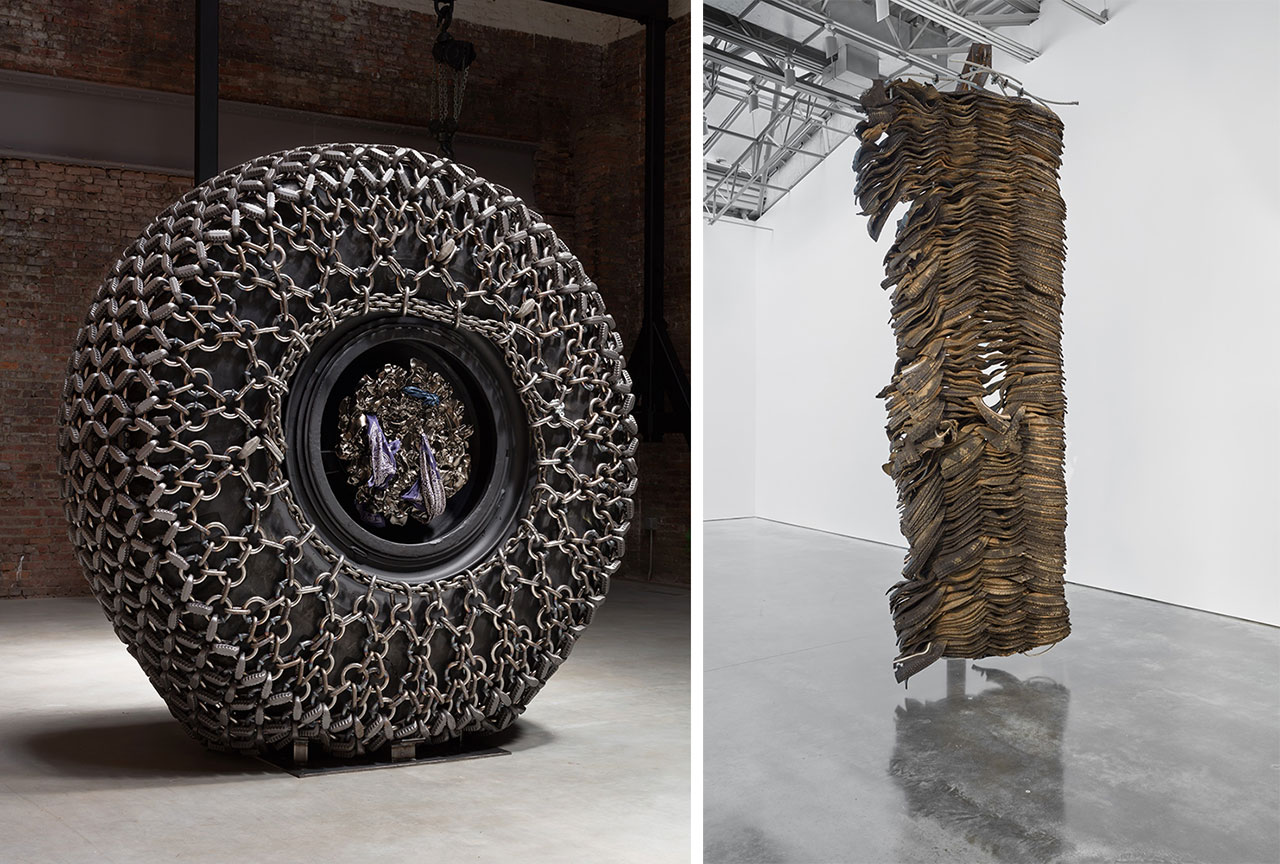
Right: Richard Prince, Folk Songs, 2006, steel and rubber, overall: 246 × 66 × 48 inches (624.8 × 167.6 × 121.9 cm), installation view, Gladstone Gallery, New York, private collection © Richard Prince, Courtesy Gagosian