DESIGN: Positions on Freedom. Design and Its Boundaries
Is design a tool of liberation, oppression, or both at once, the Museum Angewandte Kunst in Frankfurt addresses this question with the exhibition “Positions on Freedom. Design and Its Boundaries” . The exhibition treats its title as a method and unfolds the topic as a spectrum across three interconnected formats: a group exhibition developed through an open call and in collaboration with the museum, newly commissioned works by invited designers (fellows), and a reader featuring theoretical contributions and conversations.
By Efi Michalarou
Photo: Museum Angewandte Kunst
Between aesthetics and norms, designers create tangible objects that define what appears possible. In doing so, they not only produce solutions, but often also exclusions and new forms of normality. Through a wide range of works and formats, Positions on Freedom approaches freedom from multiple perspectives. What emerges is a complex concept that can only be grasped, if at all, through its plurality. The projects presented in the exhibition span political and spatial freedom, as well as artistic and intellectual freedom.
They render these questions tangible through barriers, representations of identity, and engagements with violence and surveillance. A central observation runs throughout the exhibition: freedom is inherently ambivalent. It can only be understood in relation to its limits and constraints, whether spatial, social, or individual. Design makes these tensions visible and tangible, as well as the consequences of unfreedom.
While the exhibition deliberately approaches freedom as an open concept, it is grounded in a curatorial angle that does not define freedom as the dominance of the strongest, but as a concept based on universal human rights and an ethic of care, both between people and in relation to the planet we inhabit.
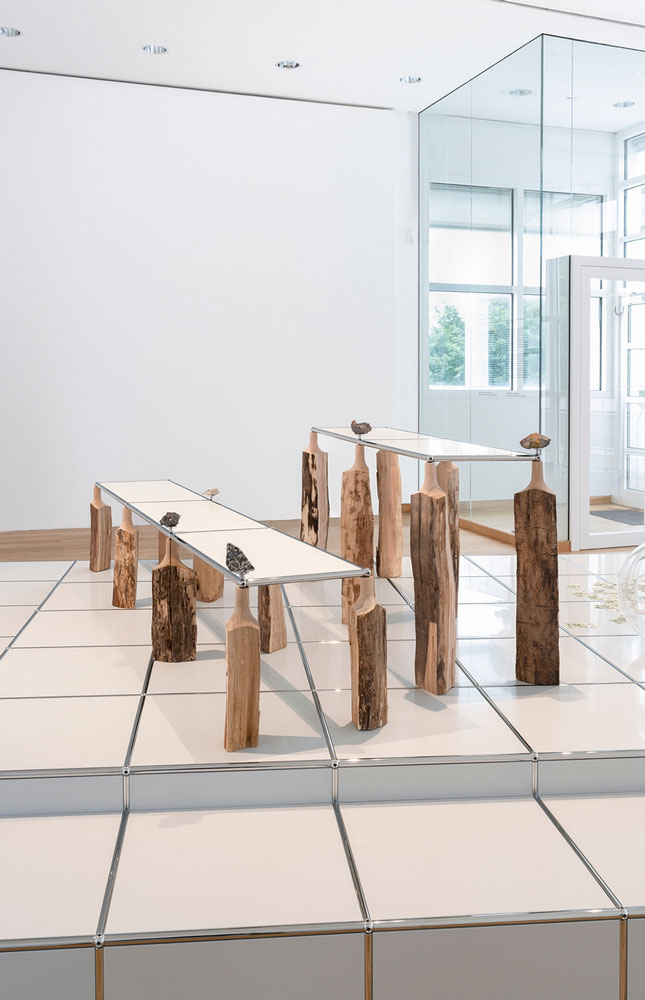
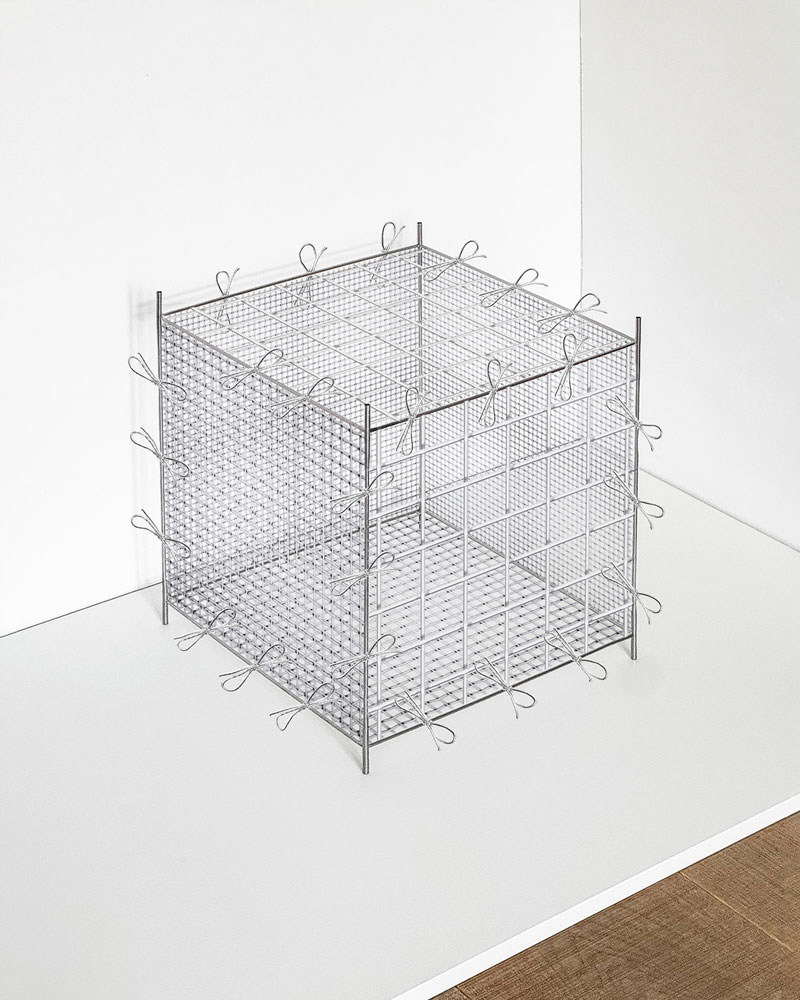
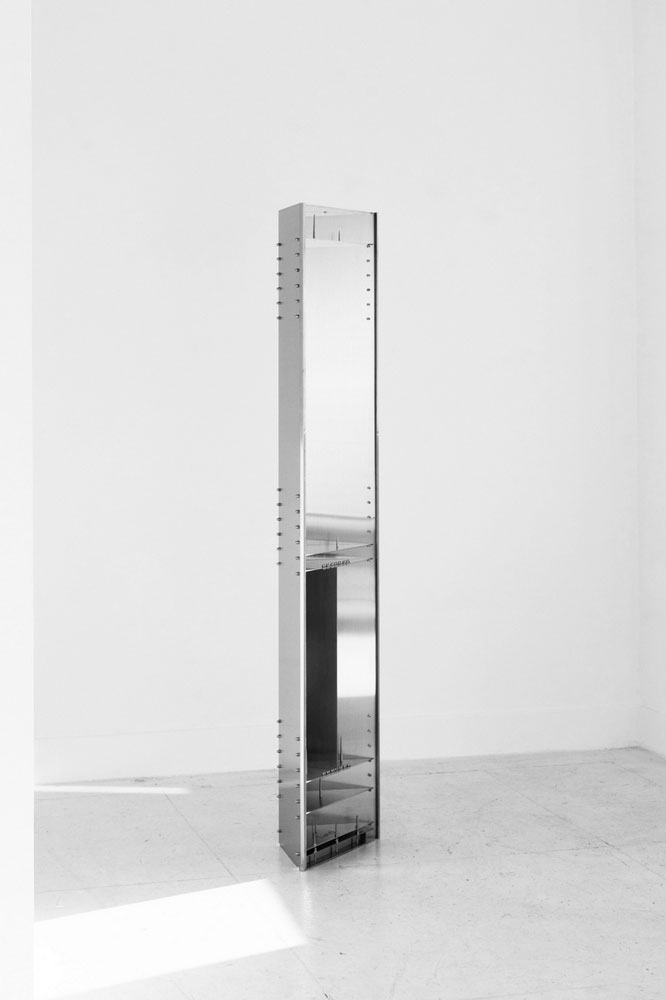
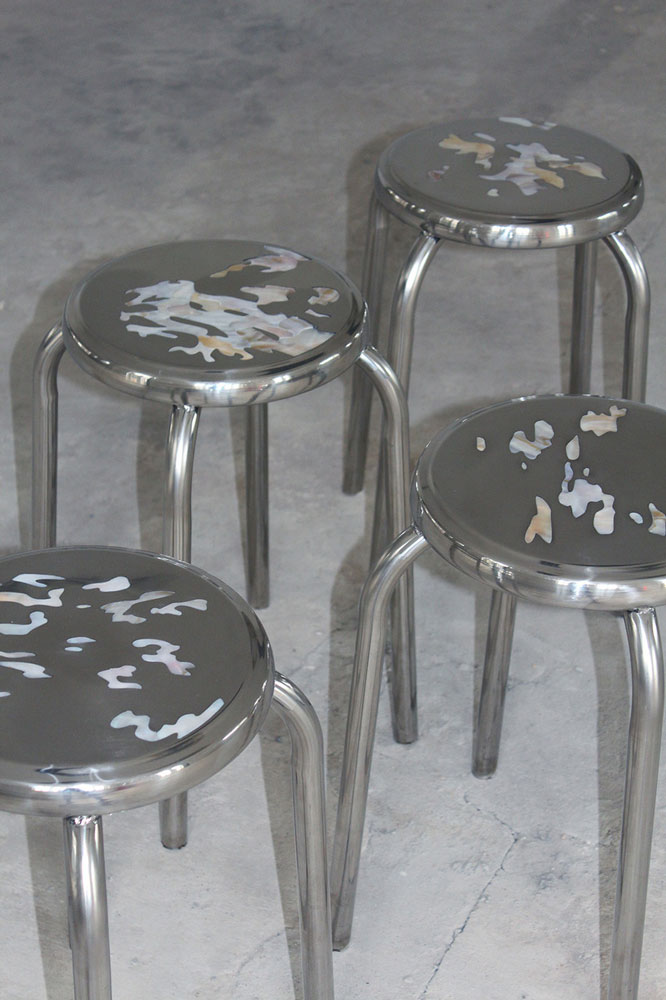
Drawing on the industrial modular system USM Haller, invited designers Fatma Cankaya, Mawuto Dotou, and Johanna Seelemann develop new works at the intersection of critique, material, and intervention. Fatma Cankaya’s Frankfurter Schrank reflects a material culture shaped by post-migrant perspectives as well as meme and internet culture. The object performance Wert by Mawuto Dotou examines the social mechanisms that shape value and questions the relationship between the value of objects and that of people. In her work Semiotische Ergänzungen Johanna Seelemann approaches freedom through material, blurring the boundaries between natural and cultural spheres.
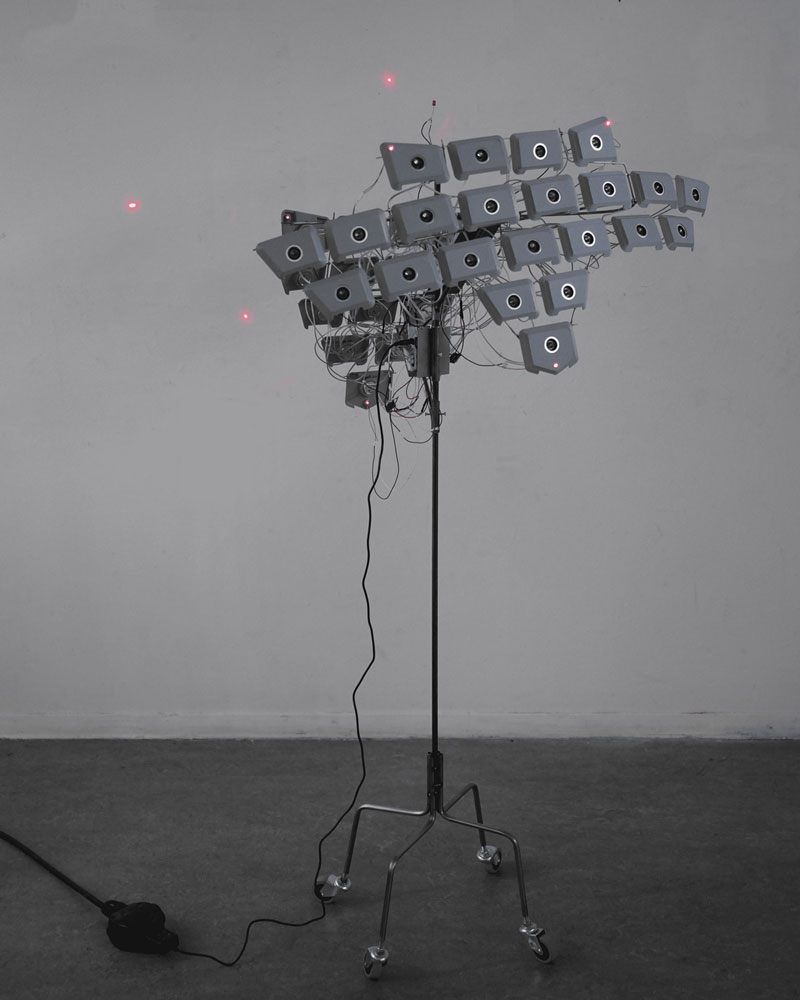
A group exhibition brings together over 20 positions from transdisciplinary and applied perspectives. The works emerge from an open call with around 200 submissions as well as a collaboration with the museum’s curators. The show is curated by the exhibition’s initiator Anton Rahlwes and design critic Vera Sacchetti. The exhibited projects address topics ranging from drone interfaces and practices of intimacy to protest and questions of identity.
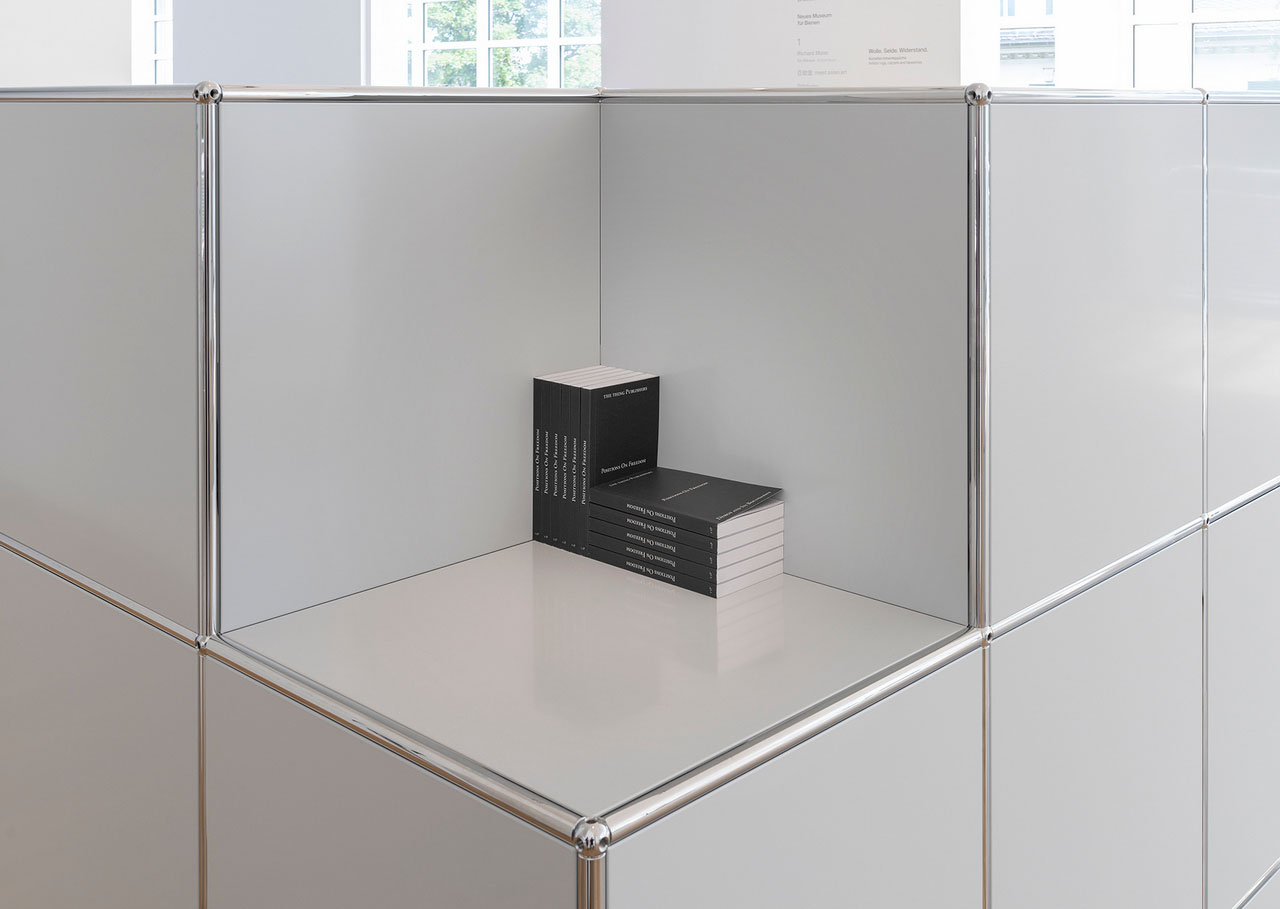
The reader Positions on “Freedom. Design and its Boundaries” brings together essays and conversations by contemporary design theorists and practitioners and functions as an independent intellectual extension of the exhibition. It addresses topics such as racism in design, freedom in education, ableism, and democracy. Published by the thing Magazine, it includes contributions by Anoe Melliou and Anne-Lise Agossa, Anton Rahlwes, Antônio Frederico Lasalvia, Barbara Lersch, Charlotte Rohde, Djamal Elangui Okoko, Inga Krumme und Jamer Hunt, Kelly Walters, Mara Recklies, Mio Kojima, Serena Dokuaa and Vera Sacchetti. The reader can be purchased at the Museum Angewandte Kunst or at thethinggallery.com.
The exhibition is an official project within the framework of World Design Capital Frankfurt RheinMain 2026 and was realized as part of the thing Fellowship, an initiative of the thing Magazine. Developed in partnership with USM and the Fondation USM, the exhibition also explores how freedom can be negotiated within the tension between institutional structures and entrepreneurial frameworks.
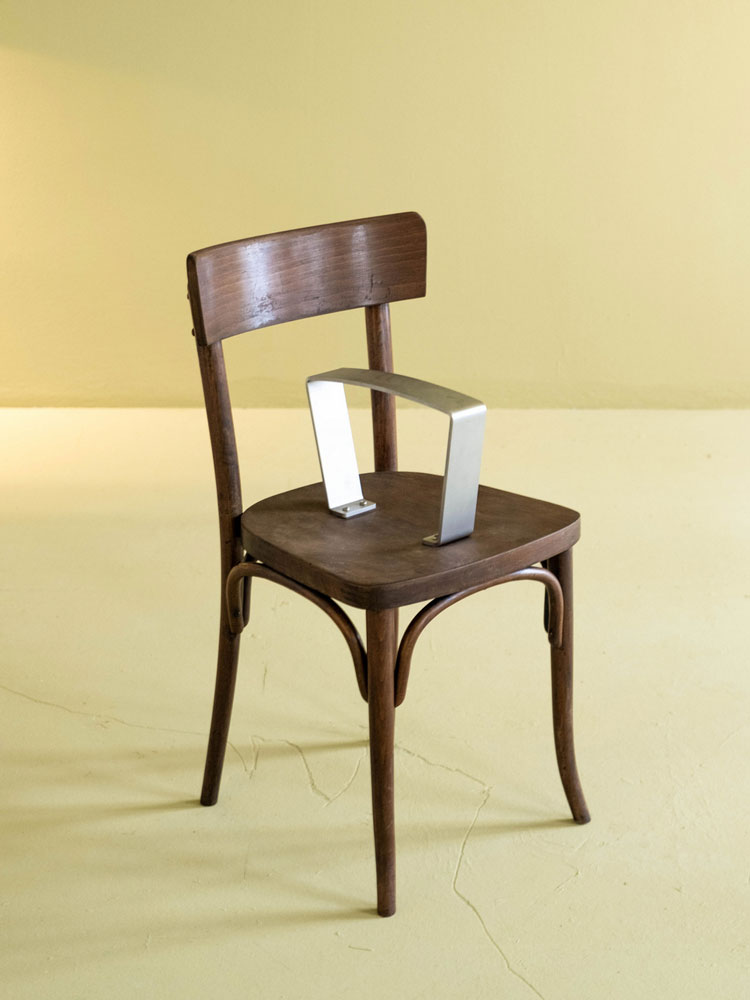
Benjamin Nagy is a designer and artist whose practice moves between art and design, often working with familiar objects. Through subtle interventions, he exposes the assumptions embedded in everyday design and invites a reconsideration of how we relate to the built environment. The artist presents “Chair With Armrest”, a modified seating object that combines a classic bentwood café chair with a stainless-steel armrest taken from public furniture. The project brings together a Thonet chair, historically associated with the Viennese coffeehouse as a place of social exchange, and an armrest commonly found in so-called defensive architecture. Such design strategies are used in public space to prevent certain behaviors, such as lying down or loitering for long periods of time, and, in doing so, exclude specific groups of people. With the insertion of the armrest into the seat, the chair can no longer be used as intended. What appears as an ergonomic support reveals itself as a tool of restriction, shifting the role of design from enabling shared use to enforcing control. As such, the work raises the question of how design shapes access to public space, whet- her it invites participation or quietly enforces exclusion.
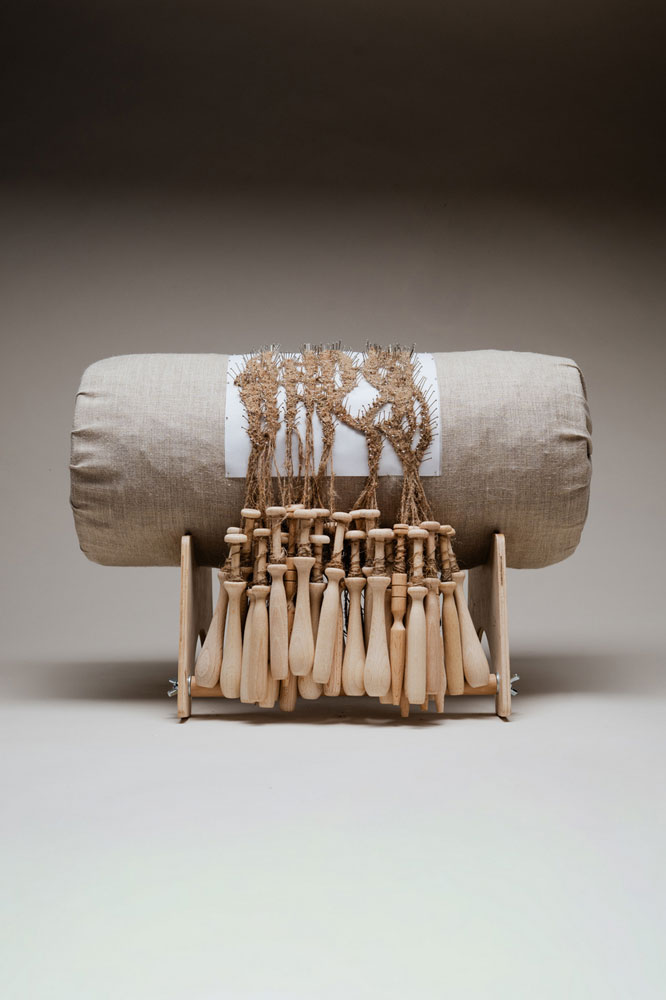
Agnieszka Polkowska is a designer, curator and educator whose practice explores the relationships between natural and cultural systems through site-specific research and material experimentation Agnieszka Polkowska’s “Formative Forces” is a material-based textile work that center on lace made from fibers of wild hop (Humulus lupulus). The project presents handcrafted lace as its main exhibit, using plant-based material processed through traditional techniques. The work begins with wild hop, a migratory plant growing in the riparian forests of the Lower Oder River Valley near Szczecin in Poland. Its fine fibers are extracted through retting, a slow, natural process that requires no industrial input and leaves the plant un- harmed. The resulting material is rare and not suited to large-scale production, instead requiring time-intensive, manual methods. Polkowska translates these conditions into bobbin lace, a craft introduced to Poland from Italy in the 16th century. The process of lace-making reflects the plant’s own behavior, as threads twist and wind in ways that echo how hop tendrils grow around supporting structures, linking natural processes with cultural techniques. The work raises the question of how freedom can emerge through movement, migration, and exchange, rather than through fixed boundaries.
Studio Eidola is a Zurich-based design practice founded in 2020 by industrial designer Denizay Apusoglu and architect Jonas Kiss- ling. Their work operates between research and design, focusing on material flows, industrial residues, and alternative approaches to making. They present “Is the Dam High Enough”, a material-based project exploring how dams alter a river and its resources. At its center are a series of cast clay fragments made from Nile sediment. Arranged in a row, they resemble folded, shell-like forms with a rough, earthy texture. For centuries, the Nile’s annual floods distributed fertile silt along its banks, supporting agriculture and enabling local building practices. With the construction of the As- wan High Dam in the 1960s, this cycle was interrupted. Today, sediment accumulates upstream in Lake Nasser, while downstream its absence is compensated through extraction elsewhere, turning a once freely accessible material into a controlled and displaced resource. The project engages this shift through a repeated yet only partially con- trolled casting process. Using slip-cast Nile clay, each fragment is shaped by material behaviors such as drying, shrinking and bending, allowing the material itself to in- fluence the final form. In doing so, the work raises the question of how freedom changes when access to natural resources is no longer embedded in the landscape but regulated through infrastructure.
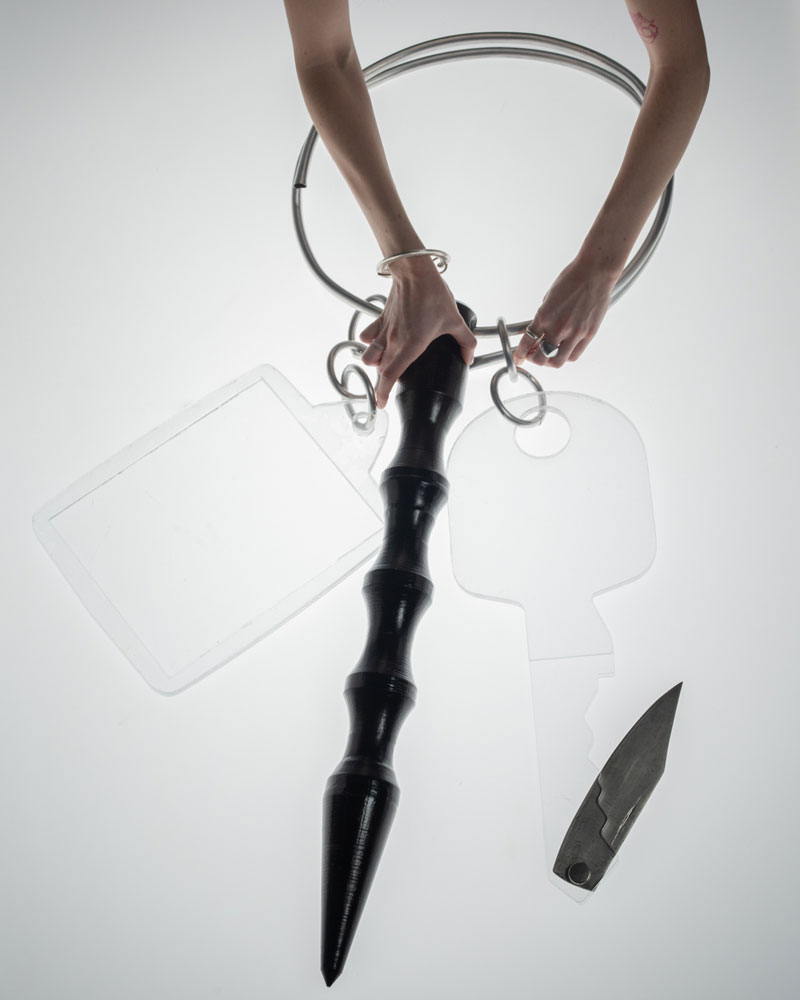
Leonie Holtkamp is an artist whose practice moves between art and design. She explores interpersonal relations, body — space dyna- mics and the emotional charge of everyday objects, combining functional and sculptural approaches. In “Keyring — Get Home Safe” series, attached to this oversized keyring are objects such as a kubotan, a folding knife, and an empty photo pendant, removed from their everyday scale and brought together as a single sculptural ensemble. The series addresses the experience of walking home at night from a female perspective. Objects carried for personal safety appear here not as neutral tools, but as emotionally charged extensions of the body. Through their enlargement and grouping, they shift from discreet companions to visible signs of structural violence against wo- men. The work reveals how every day and public spaces are navigated through fear and strategies of self-protection — and the role objects play within this.
Photo: Positions on Freedom. Design and its Boundaries – the thing Fellowship 2026, Installation view, Photo: Günzel/Rademacher, © Museum Angewandte Kunst
Info: Muse/u/m Angewandte Kunst, Schaumainkai 17, Frankfurt, Germany, Duration:14/5-28/6/2026, Days & Hours: Tue & Thu-Sun 10:00-18:00, Wed 10:00-20:00, www.museumangewandtekunst.de/