ART CITIES: Lisbon-Rosa Barba
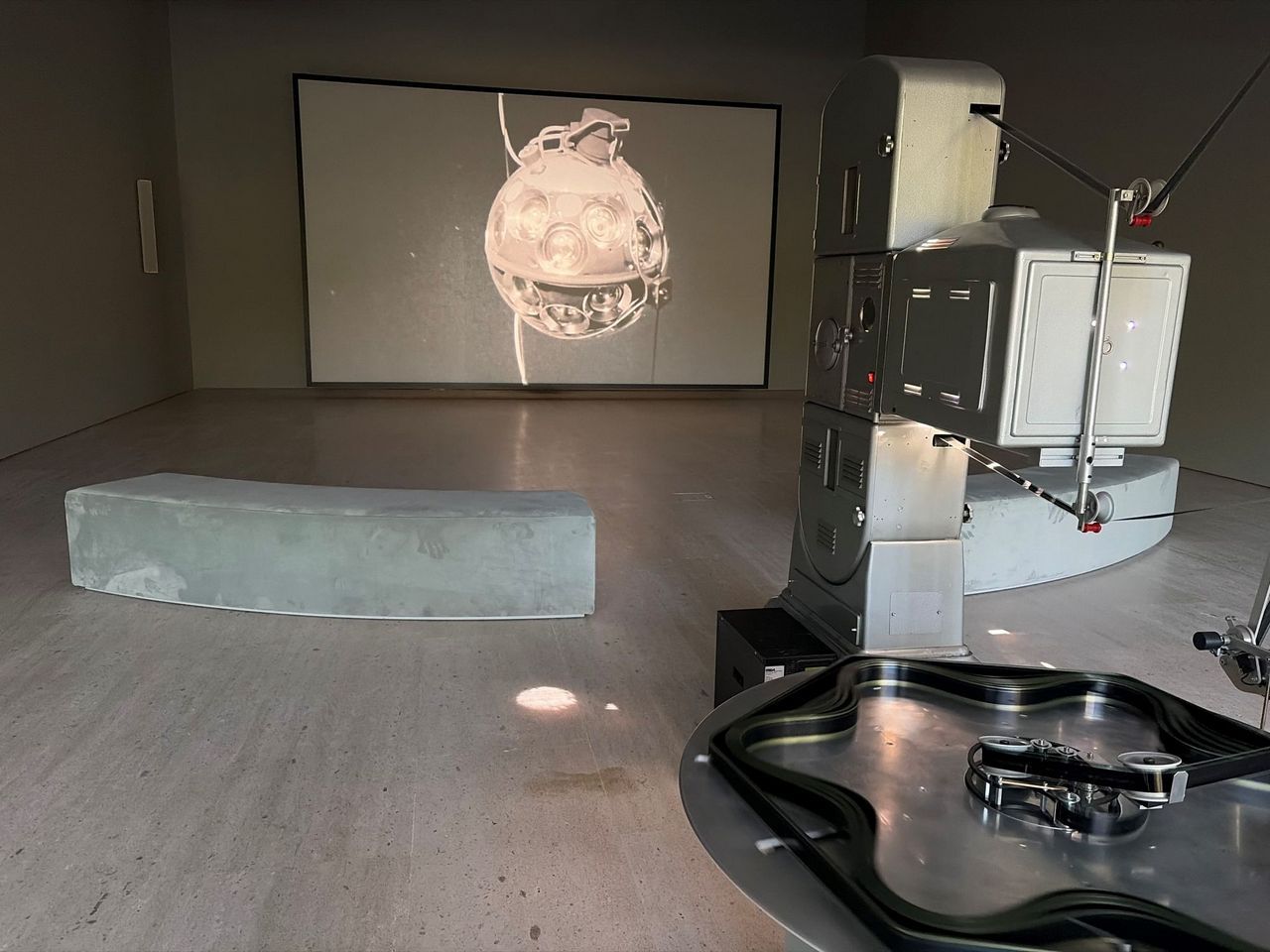
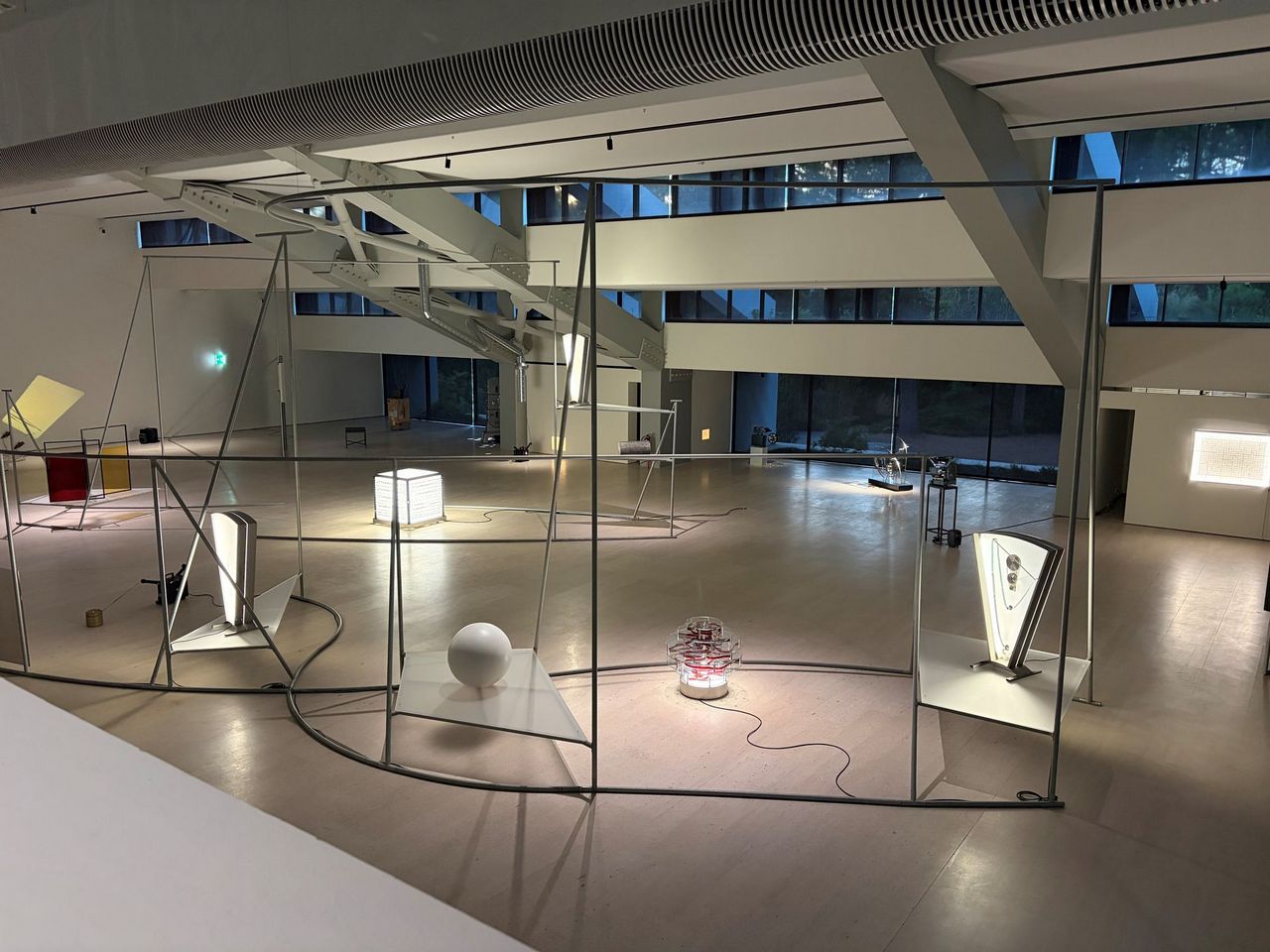
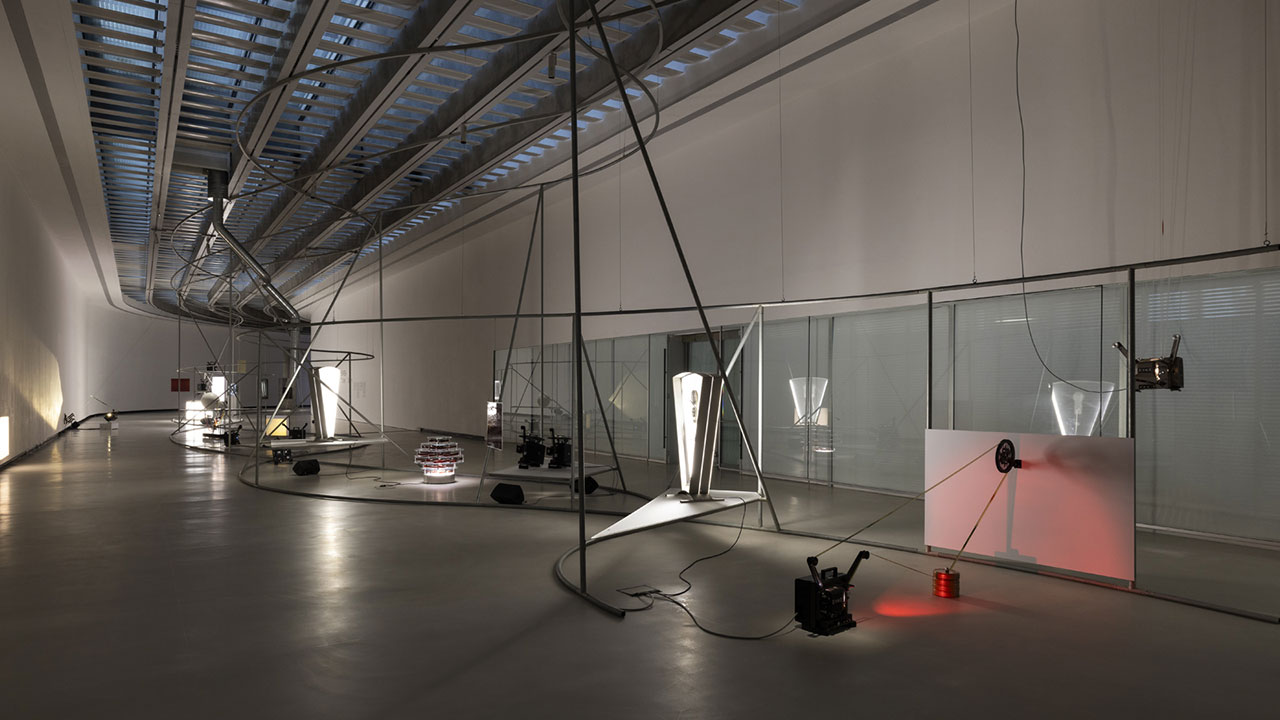
Rosa Barba presents “Tracing Vocabularies”, a major exhibition at the Centro de Arte Moderna Gulbenkian (CAM) in Lisbon that transforms the CAM Nave and Mezzanine into a fully immersive cinematic and sculptural environment. Bringing together approximately 25 works, including new productions and previously unseen pieces, the exhibition operates at the intersection of contemporary art, experimental film, and architectural installation. It offers one of the most comprehensive presentations to date of Barba’s practice, in which cinema is no longer understood as a screen-based medium but as a spatial, material, and temporal system.
By Efi Michalarou
Photo: CAM Gulbenkian Archive
At CAM, Barba is invited to intervene under a “carte blanche” format, becoming the third artist to activate the Nave space in this way. This curatorial framework allows her not only to present her own works but also to select pieces from the CAM Collection. These selected works are not positioned as historical references or background material; instead, they are actively integrated into the exhibition’s structure, becoming part of a larger narrative field. The result is a complex montage of contemporary production and institutional memory, where different temporalities of art history are brought into direct contact.
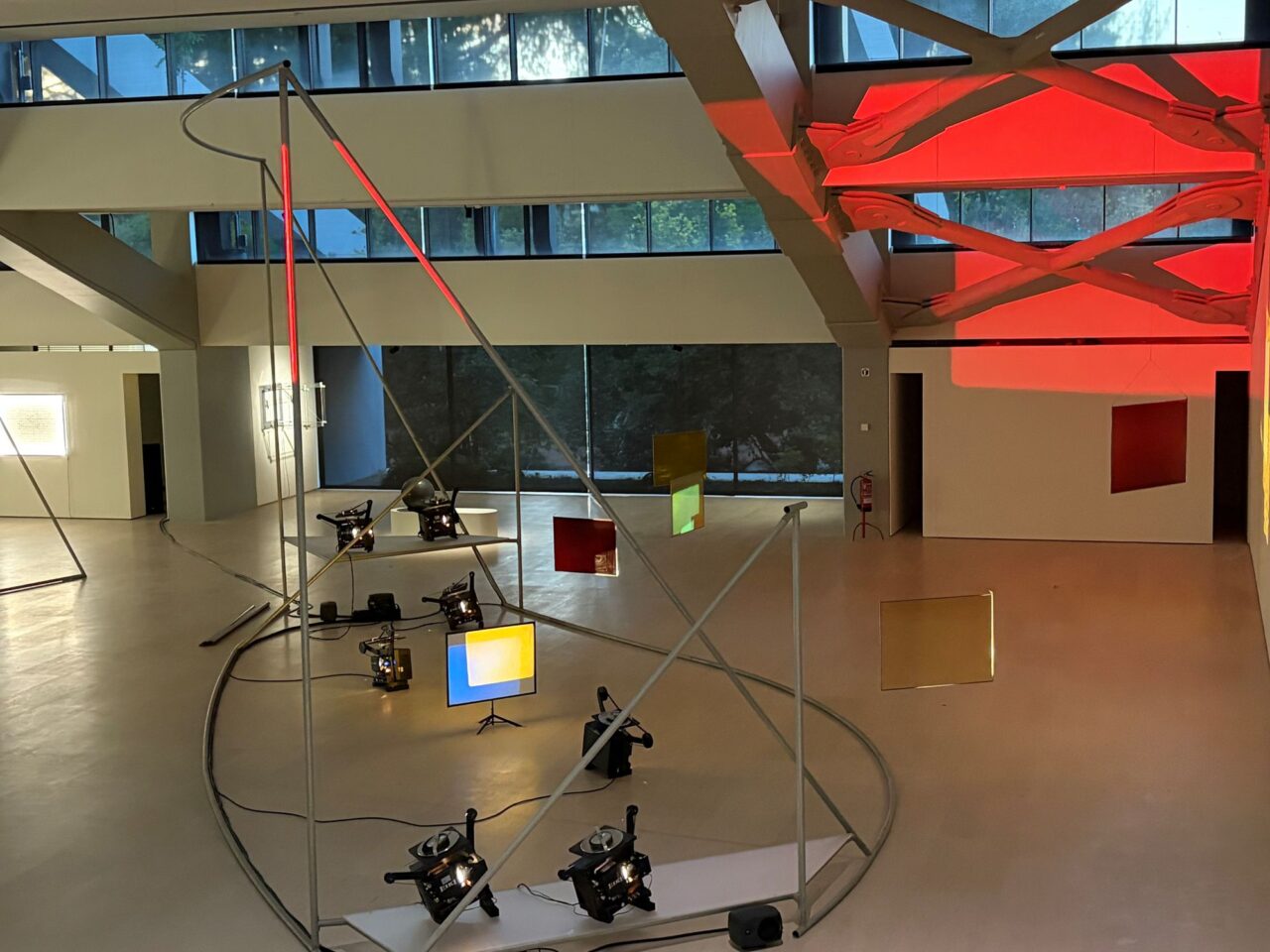
The foundation of “Tracing Vocabularies” lies in Rosa Barba’s sustained investigation into the material conditions of cinema. Over more than twenty years, she has developed a practice that treats celluloid film, projection systems, and cinematic machinery not as neutral technologies but as sculptural and spatial agents. In this exhibition, that approach is amplified to architectural scale. The CAM Nave becomes a continuous cinematic environment where projection is no longer confined to a single surface but distributed across objects, structures, and space itself.
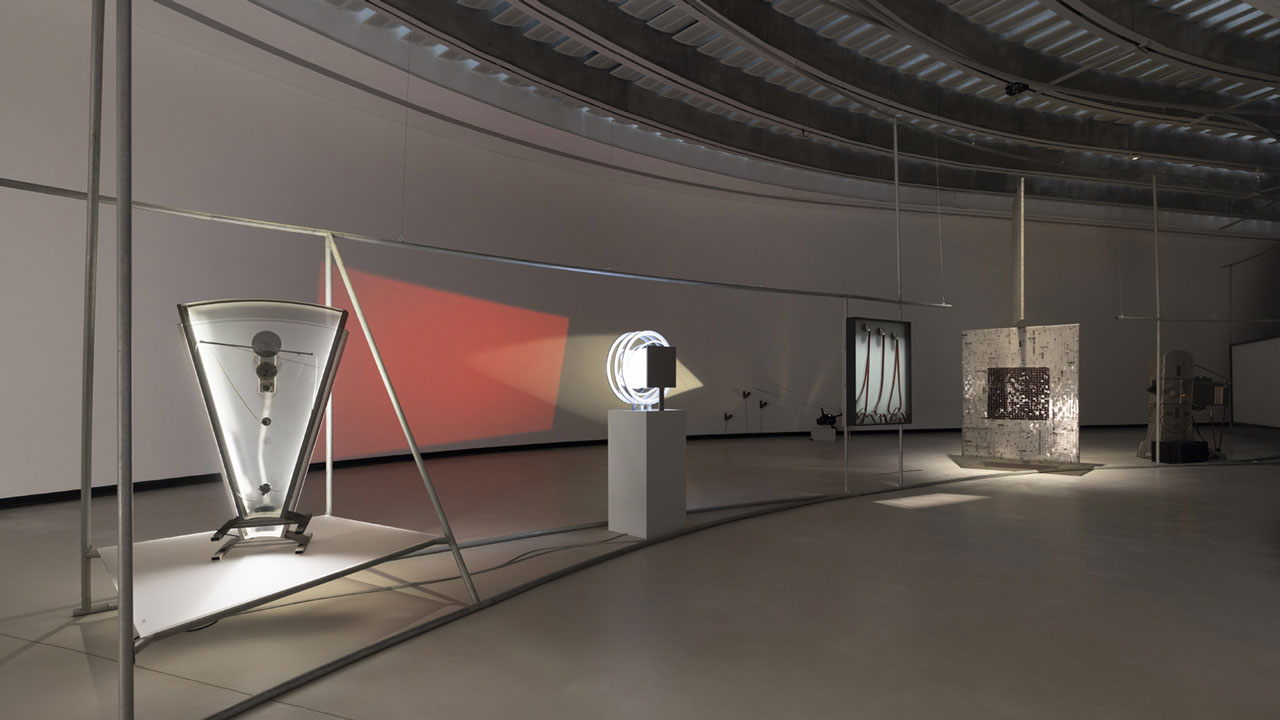
Rather than functioning as a sequence of discrete works, the exhibition behaves like a three-dimensional film. Time is not linear or narrative-driven; instead, it is spatialized, fragmented, and recomposed through movement. Visitors do not simply observe images; they navigate through them. Light, shadow, mechanical rotation, and projection systems generate a shifting perceptual field in which cinematic elements are constantly in flux. In this sense, Tracing Vocabularies can also be understood as a score, where spatial relations operate like musical structures—introducing rhythm, repetition, pause, and variation.
The “carte blanche” structure of the exhibition plays a crucial curatorial role. It situates Barba within the institutional framework of CAM while granting her full autonomy to reshape the space. By selecting works from the CAM Collection, she introduces additional layers of meaning that extend beyond her own practice. These works are not isolated within the exhibition but embedded within its logic, contributing to a layered narrative that connects past and present artistic production.
This approach reinforces one of the exhibition’s central concerns: the instability of meaning over time. The CAM Collection becomes a living archive rather than a fixed historical record, activated through its encounter with Barba’s installations. The result is a shifting constellation of works that continuously reconfigure each other’s significance.
The title “Tracing Vocabularies” reflects the exhibition’s conceptual orientation toward processes of translation, reconfiguration, and instability. “Tracing” suggests both the act of following and the act of drawing outlines that are never fully fixed. “Vocabularies” implies systems of meaning that are constantly constructed and dismantled. Together, the title signals an approach to cinema and language as fluid structures rather than stable forms.
Across the exhibition, Barba explores several interconnected conceptual frameworks. Her work often engages with the relationship between natural environments and human-induced transformation, positioning landscapes not as passive backdrops but as active sites of change. Another recurring focus is the tension between archival history and speculative futures, where documentation and imagination coexist within the same visual field. She also draws connections between astronomy and cinematic projection, suggesting parallels between cosmic systems and filmic structures in their handling of light, time, and perception.
A further dimension of the work is the presence of non-actors, who function as witnesses rather than performers. This strategy emphasizes observation and presence over representation, reinforcing Barba’s interest in cinema as a mode of recording reality that is always partial and mediated.
Underlying all these themes is a sustained reflection on impermanence. Materials degrade, images dissolve, and meaning shifts depending on context. In “Tracing Vocabularies”, impermanence is not treated as loss but as a structural principle. The exhibition embraces instability as a generative force, allowing works to exist in states of transformation rather than resolution.
Two major new productions form the conceptual and material core of the exhibition.
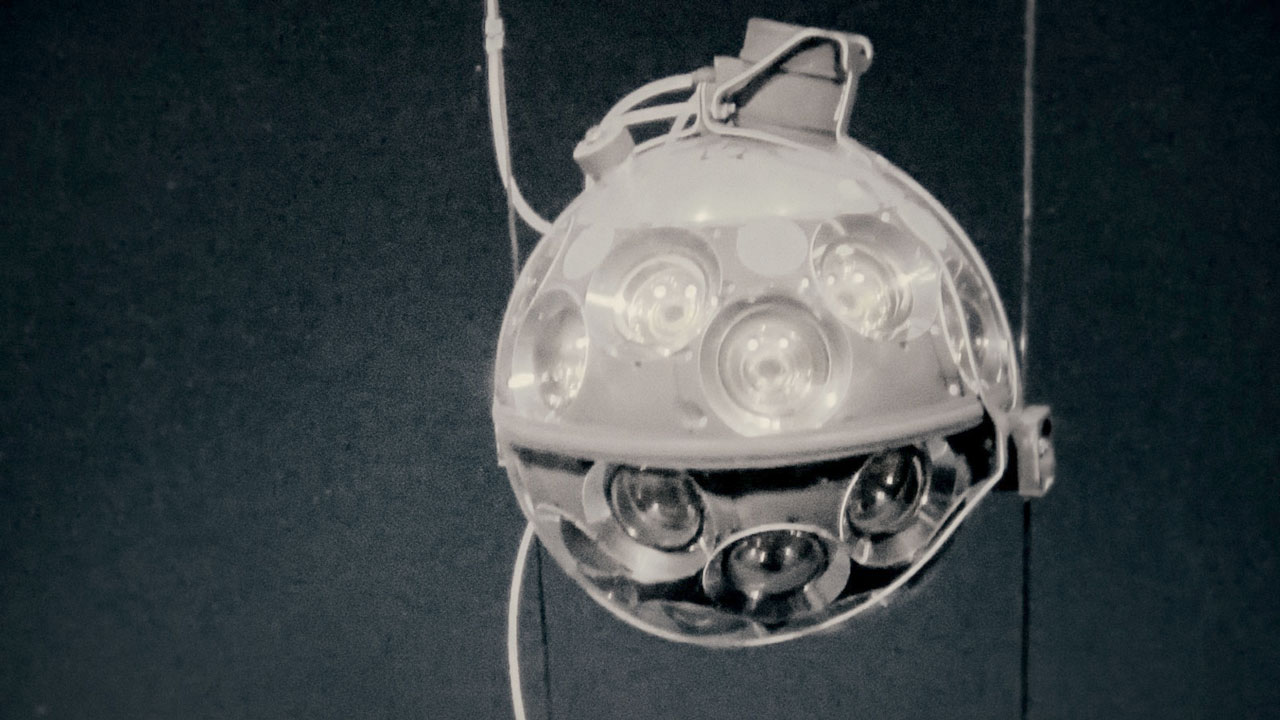
“Myth and Mercury” (2025) is a 35mm film co-commissioned by CAM and MAXXI Rome, and co-produced by Fondazione In Between Art Film and Hamburger Kunsthalle. The work brings together cosmic imagery and collective human activity, constructing a montage in which intergalactic particles are juxtaposed with scenes of communal energy and transformation. The film incorporates excerpts from the prison writings of Antonio Gramsci, introducing a political and philosophical dimension that connects historical thought with contemporary visual language. Images of planetary interiors further expand the scale of the work, situating human experience within a broader cosmological framework. The result is a layered meditation on matter, ideology, and perception.
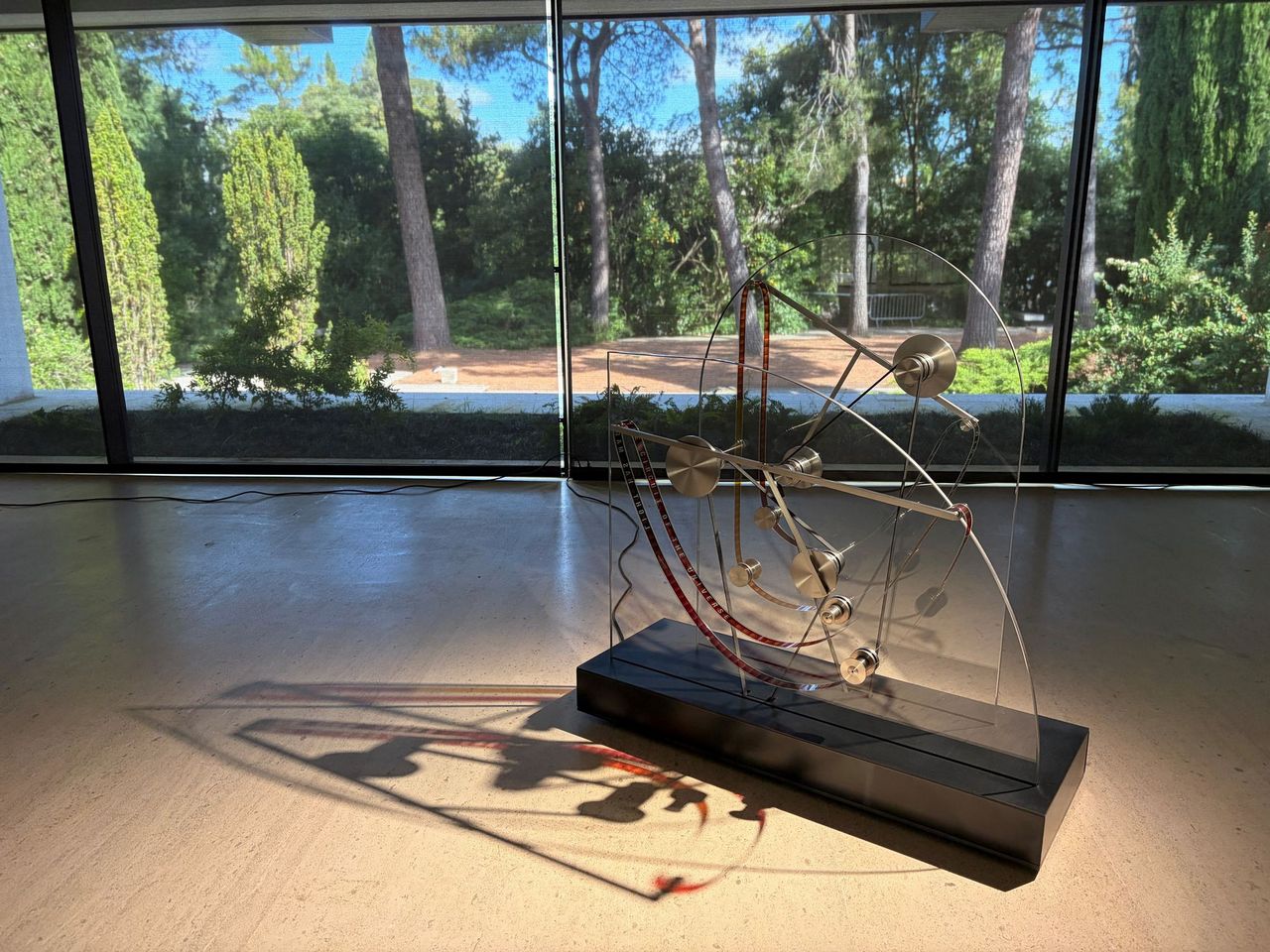
The second central work, “Thick Harmonies” (2026), is a kinetic sculpture that uses a continuously rotating 35mm film loop to generate an unstable visual composition. The loop does not repeat identically; instead, it shifts irregularly, producing variations in color, rhythm, and motion. This instability transforms mechanical repetition into a dynamic system of change. The work exists between sculpture and projection, object and process, emphasizing the tension between recurrence and impermanence. In doing so, it extends Barba’s long-standing interest in film as a physical and temporal material rather than a purely representational medium.
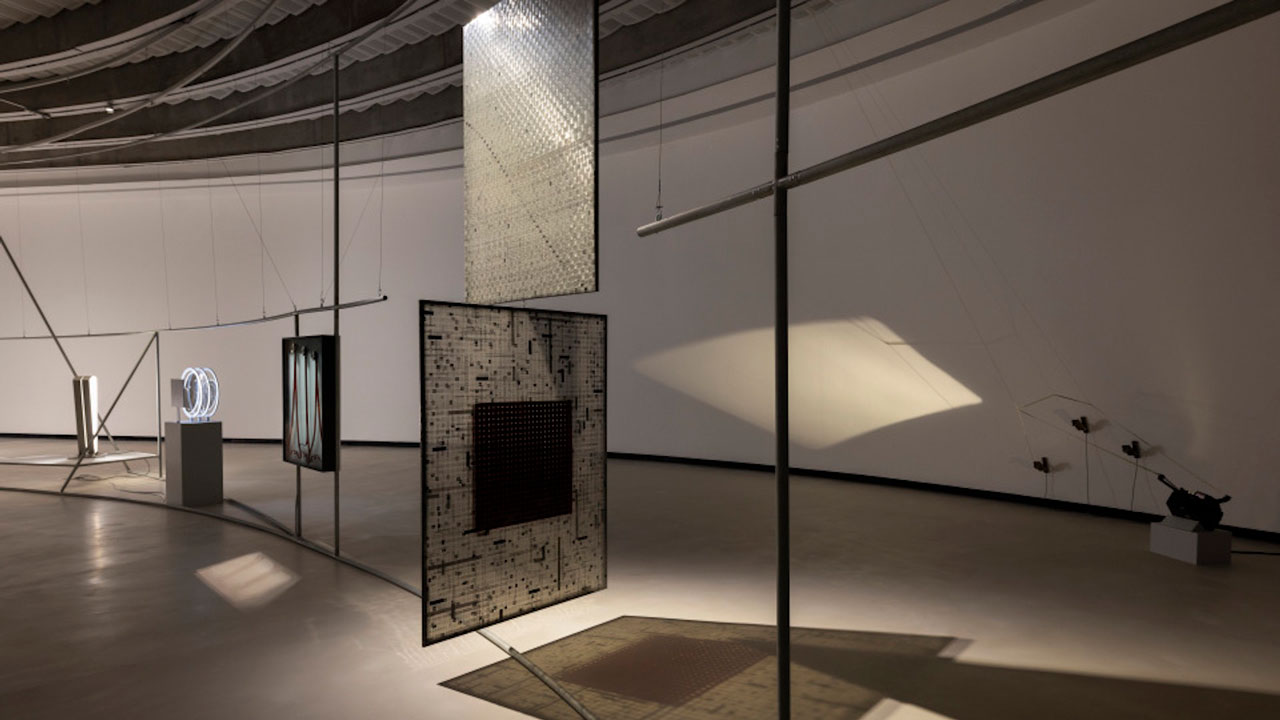
Across the CAM Nave and Mezzanine, Tracing Vocabularies unfolds as a spatial montage in which works from Barba’s practice are interwoven with selected pieces from the CAM Collection. This arrangement produces a multi-layered environment where different works interact continuously, generating shifting relationships between image, object, and space.
The exhibition avoids a linear path. Instead, it constructs a field of movement in which visitors encounter overlapping zones of light, sound, and projection. Cinematic time is dispersed throughout the architecture, no longer tied to a single screen or viewpoint. This spatial distribution encourages a form of active perception in which meaning emerges through movement rather than passive viewing.
As visitors move through the exhibition, they experience cinema as an environmental condition. Projection becomes spatial, sculpture becomes temporal, and architecture becomes cinematic. These categories no longer function separately but merge into a unified perceptual system that is constantly reorganizing itself.
“Tracing Vocabularies positions Rosa Barba as a central figure in contemporary expanded cinema. By dissolving the boundaries between film, sculpture, and architecture, the exhibition proposes a radical rethinking of how moving images can exist within museum space.
Rather than presenting cinema as narrative or representation, Barba constructs it as a living system of relations—between materials, technologies, histories, and viewers. The result is an exhibition that is not simply observed but experienced as an evolving spatial and temporal condition.
Photo: Rosa Barba, Tracing Vocabularies, Exhibition view at Centro de Arte Moderna Gulbenkian. Courtesy the artist, Esther Schipper
Info: Curator: Benjamin Weil, Centro de Arte Moderna Gulbenkian, Rua Marquês de Fronteira 2, Lisbon, Portugal, Duration: 16/5-28/9/2026, Days & Hours: M0n, Wed-Fri & Sun 10:00-18:00, Sat 10:00-22:00, https://gulbenkian.pt/