
PRESENTATION: Hilary Pecis-Love Letters
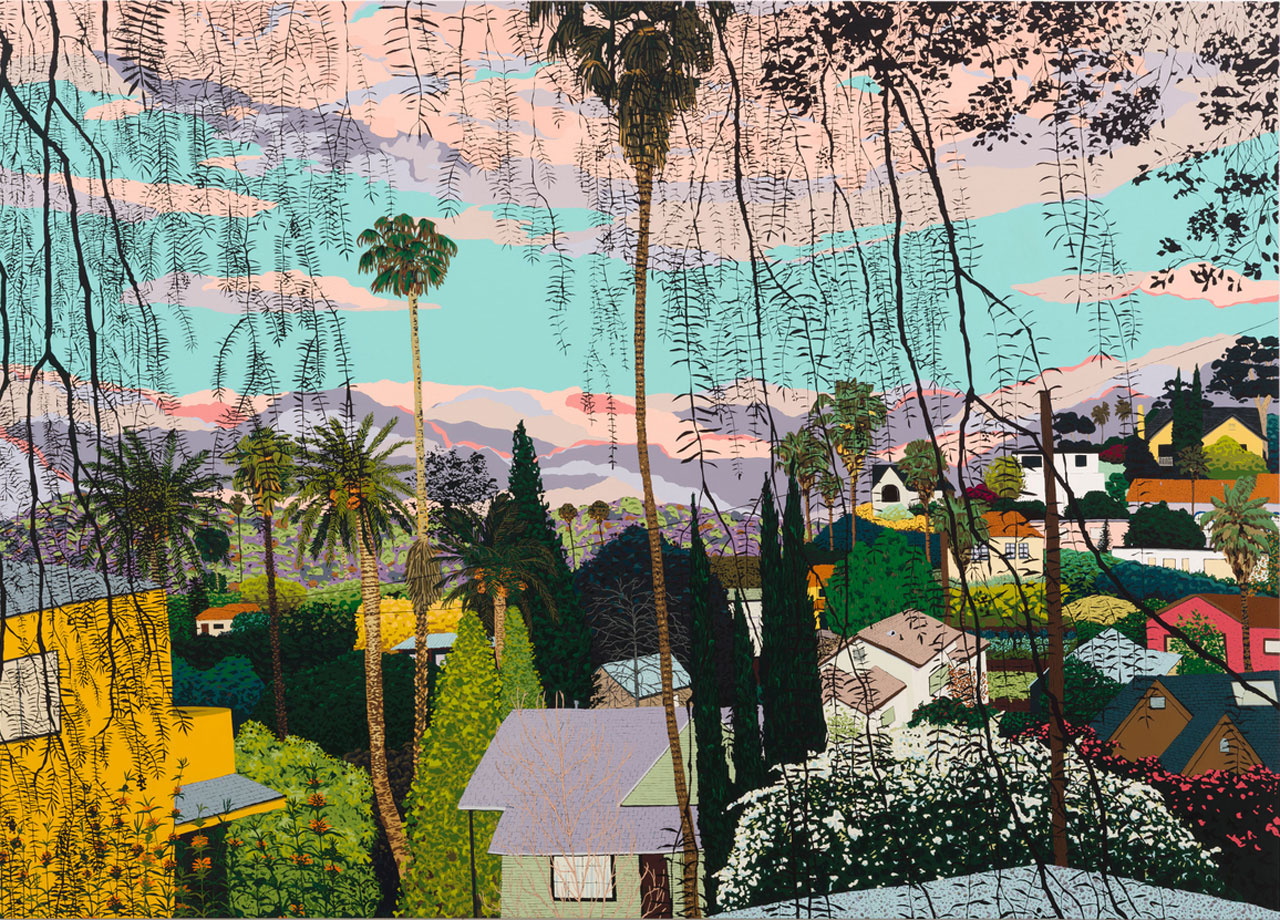
In the paintings of Hilary Pecis, the everyday becomes structurally monumental. A cluttered coffee table, a hillside dense with succulents, a half-finished lunch, or a chair left momentarily vacant are transformed into intensely orchestrated visual fields where color, memory, and intimacy converge. Her paintings do not simply depict lived experience—they metabolize it into pattern, rhythm, and atmosphere.
By Dimitris Lempesis
Photo: David Kordansky Gallery Archive
Hilary Pecis’s newest exhibition, “Love Letters” extends the artist’s long-running investigation into domesticity and place while deepening its emotional register. At first glance, Pecis’s paintings radiate pleasure: saturated chromatic harmonies, flattened perspective, decorative density, and exuberant compositions recall both Fauvist exuberance and California light. Yet beneath their formal vitality lies a philosophical proposition. These works insist that ordinary life—friendship, meals, interiors, landscapes, rituals of movement and care—contains profound existential weight. The exhibition reads almost as a rebuttal to cultural alienation, or, as the gallery text describes it, “a counterargument against nihilism.”
Pecis has become widely recognized for paintings of interiors and still lifes that feel unmistakably Southern Californian: books stacked on tables, ceramics and plants crowding shelves, windows opening onto tangled urban flora, and neighborhoods vibrating under impossible sunlight. Yet unlike traditional still life painting, her objects are never inert. They function as emotional proxies.
In “Love Letters”, objects and spaces become stand-ins for relationships themselves. A friend’s studio window, race medals accumulated over years, or the remnants of a communal lunch are rendered with the same visual intensity as landscapes and architecture. The cumulative effect is diaristic rather than documentary. Pecis constructs identity indirectly, through the traces people leave behind.
Human figures are notably sparse in her paintings, but humanity saturates every surface. A crumpled napkin, an abandoned backpack, or a waiting chair suggests a temporary absence rather than emptiness. Her interiors pulse with implied presence. The viewer becomes aware that these are spaces inhabited by affection, habit, memory, and repetition.
This strategy places Pecis within a lineage of painters concerned less with portraiture in the literal sense than with psychological atmosphere. Like Henri Matisse—whose 1912 painting “Goldfish” directly informs Pecis’s “Lily’s Backyard”—she uses decorative flattening not to deny reality but to intensify sensation.
Although Pecis begins with photography, her paintings ultimately reject photographic logic. She frequently takes snapshots during runs, travels, studio visits, or daily encounters, later reconstructing them through memory and intuition. In the translation from photograph to painting, perspective bends, colors heighten, and distracting details disappear.
The process is less archival than emotional. One of the exhibition’s key works, “Backpackers”, originated from a photograph Pecis took more than fifteen years ago during a trek up Mt. Shasta with her father. The autobiographical resonance is layered: Pecis was named after mountaineer Sir Edmund Hillary, and the painting transforms two hiking packs into symbols of familial continuity and shared endurance.
This emphasis on recollection over realism is central to her practice. Pecis does not paint what a place looked like; she paints how it persists in consciousness. Her surfaces therefore oscillate between observation and reconstruction, fact and emotional residue. The resulting images possess a curious simultaneity. They feel both immediate and remembered, documentary and dreamlike.
Formally, Pecis’s paintings are remarkable for their compression of space. Foreground and background often receive identical chromatic intensity, causing distance to collapse. Trees on a Silver Lake hillside push visually forward with the same force as objects on a tabletop. This flattening creates an almost tactile visual density.
Her compositions are built from intersections: corners of rooms, angular streets, overlapping foliage, layered textiles, tiled floors, lattice shadows. Every inch of the canvas carries information. Pattern behaves simultaneously as ornament and structure.
This tendency connects Pecis to traditions of decorative modernism while also situating her within a distinctly Los Angeles sensibility. Her California is neither cinematic fantasy nor dystopian sprawl. Instead, it is intimate, infrastructural, and deeply inhabited—a geography of porches, cafes, sidewalks, backyard gardens, and artist studios.
The paintings refuse the hierarchy between the natural and synthetic. Plants, signage, architecture, ceramics, food, and asphalt coexist with equal visual authority. In Pecis’s world, contemporary life is experienced as a constant dialogue between organic growth and human construction.
One of the most affecting dimensions of “Love Letters” is its sustained attention to community. Works such as “Studio Lunch” foreground shared rituals among artists working in Pecis’s multiunit studio building. Here, the table itself becomes a social architecture.Unlike the solitude historically associated with still life painting, Pecis’s tablescapes imply conversation, exchange, and collective support. Meals become evidence of networks of care.
Similarly, works depicting her home environment suggest interiority not as retreat but as insulation against fragmentation. Plants, books, family photographs, ceramics, and pets create ecosystems of belonging. In “Corner”, her dog occupies the center of a domestic constellation assembled from personal artifacts and accumulated beauty.
Photo: Hilary Pecis, Target Canyon, 2026, acrylic on linen, 100 x 140 x 1 5/8 inches (254 x 355.6 x 4.1 cm), © Hilary Pecis, Courtesy the artist and David Kordansky Gallery
Info: David Kordansky Gallery, 5130 W. Edgewood Place, Los Angeles, CA, USA, Duration: 16/5-20/6/2026, Days & Hours: Tue-Sat 10:00-18:00, www.davidkordanskygallery.com/
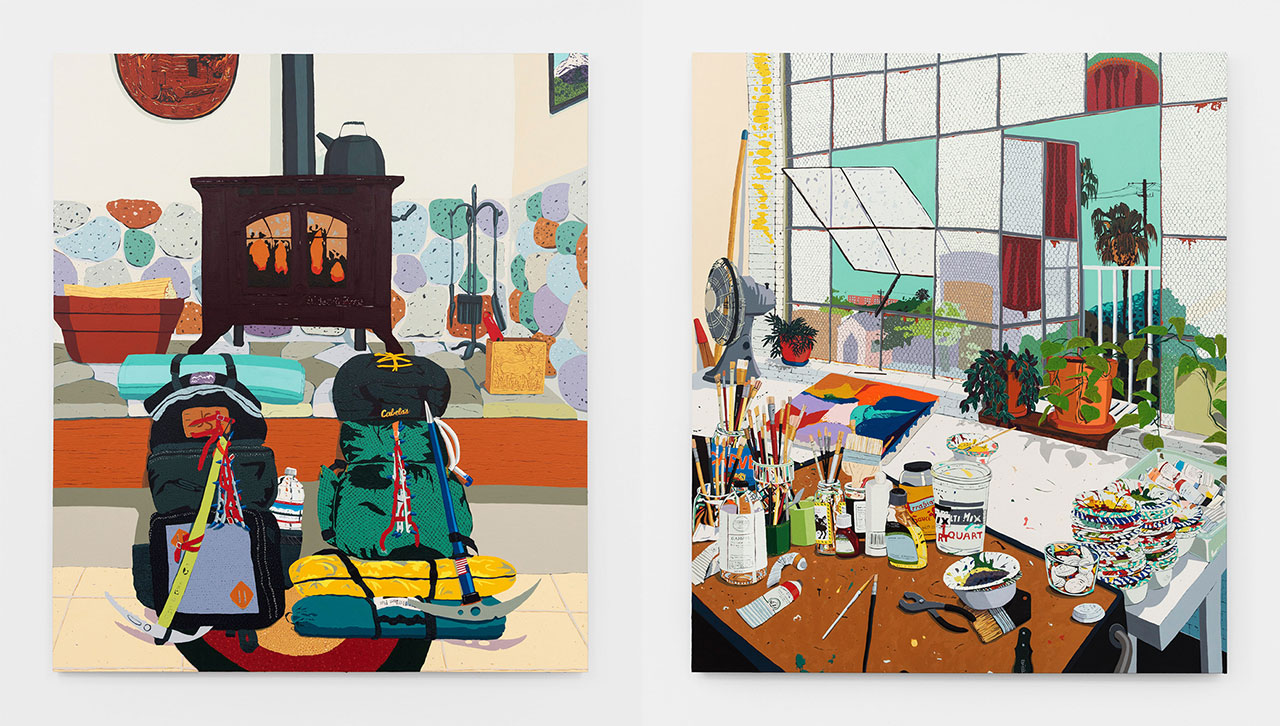
Right: Hilary Pecis, Pam’s Studio, 2025, acrylic on linen, 74 x 64 x 1 5/8 inches (188 x 162.6 x 4.1 cm), © Hilary Pecis, Courtesy the artist and David Kordansky Gallery
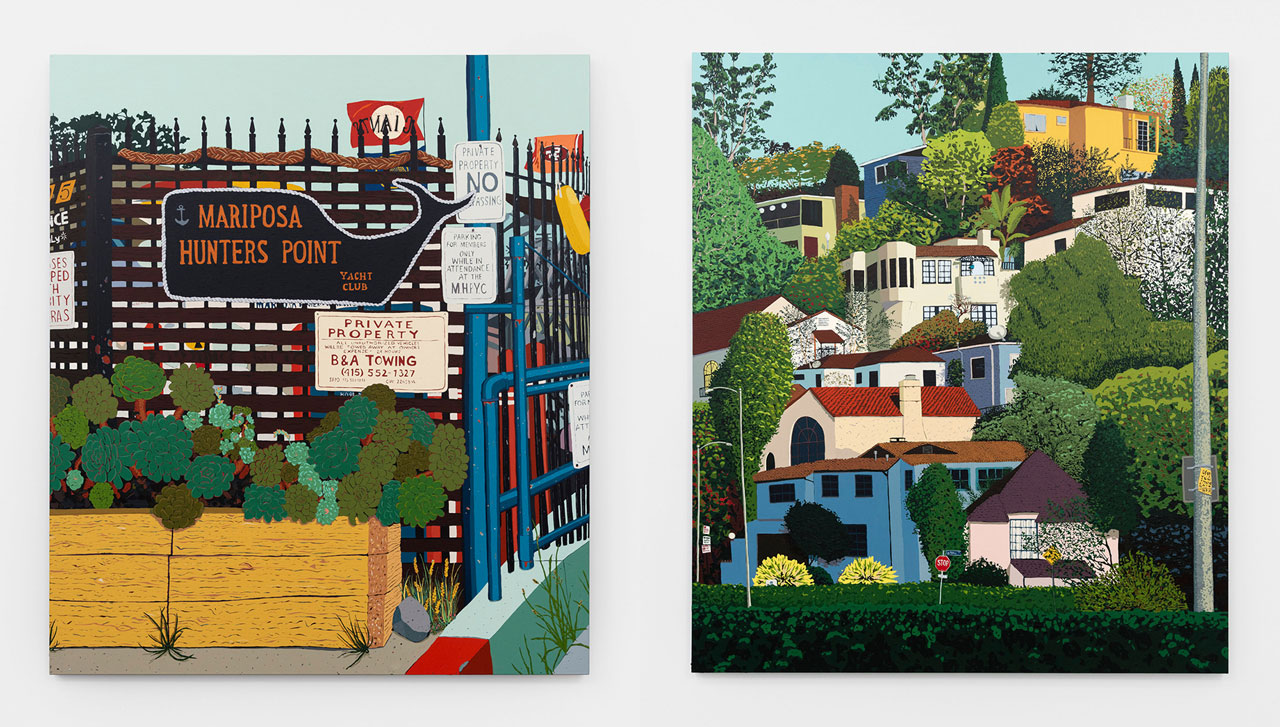
Right: Hilary Pecis, N. Las Palmas Ave., 2025, acrylic on linen, 74 x 64 x 1 5/8 inches (188 x 162.6 x 4.1 cm), © Hilary Pecis, Courtesy the artist and David Kordansky Gallery
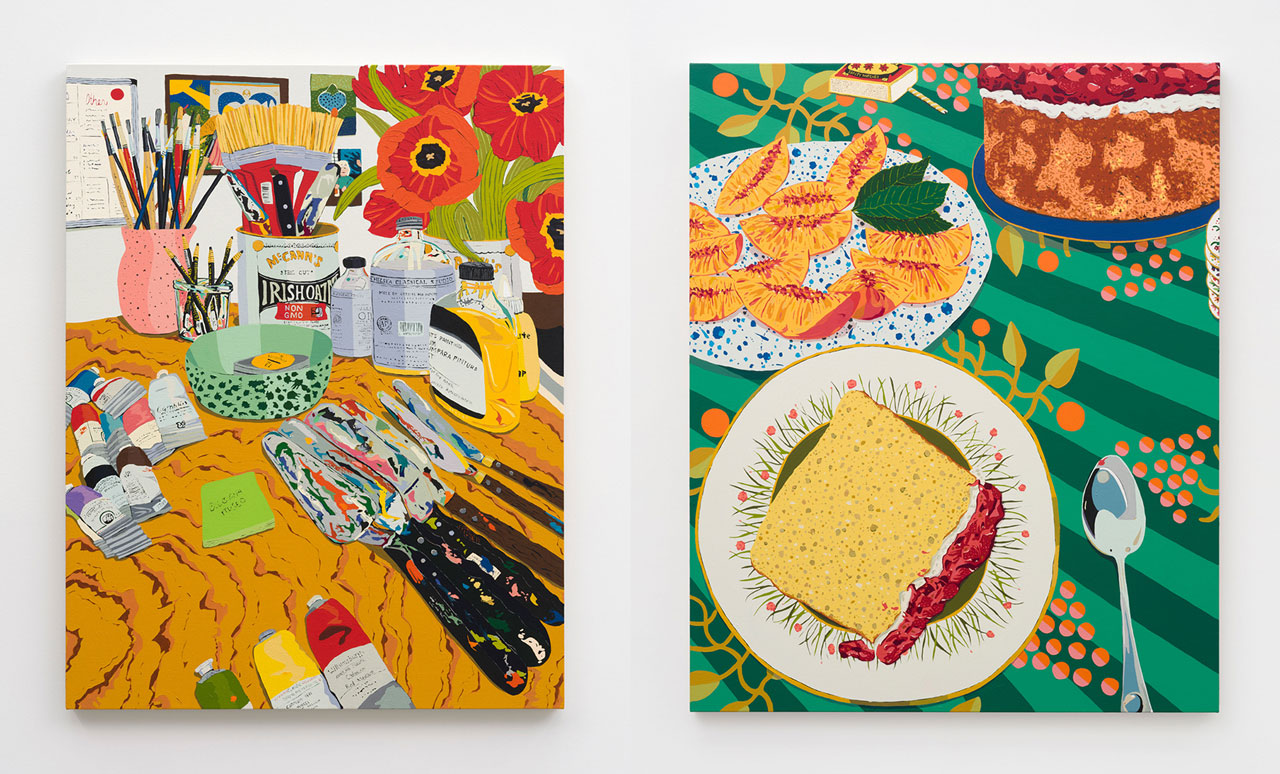
(111.8 x 86.4 x 3.8 cm), © Hilary Pecis, Courtesy the artist and David Kordansky Gallery
Right: Hilary Pecis, Birthday Peaches, 2026, acrylic on linen, 54 x 44 x 1 5/8 inches (137.2 x 111.8 x 4.1 cm), © Hilary Pecis, Courtesy the artist and David Kordansky Gallery
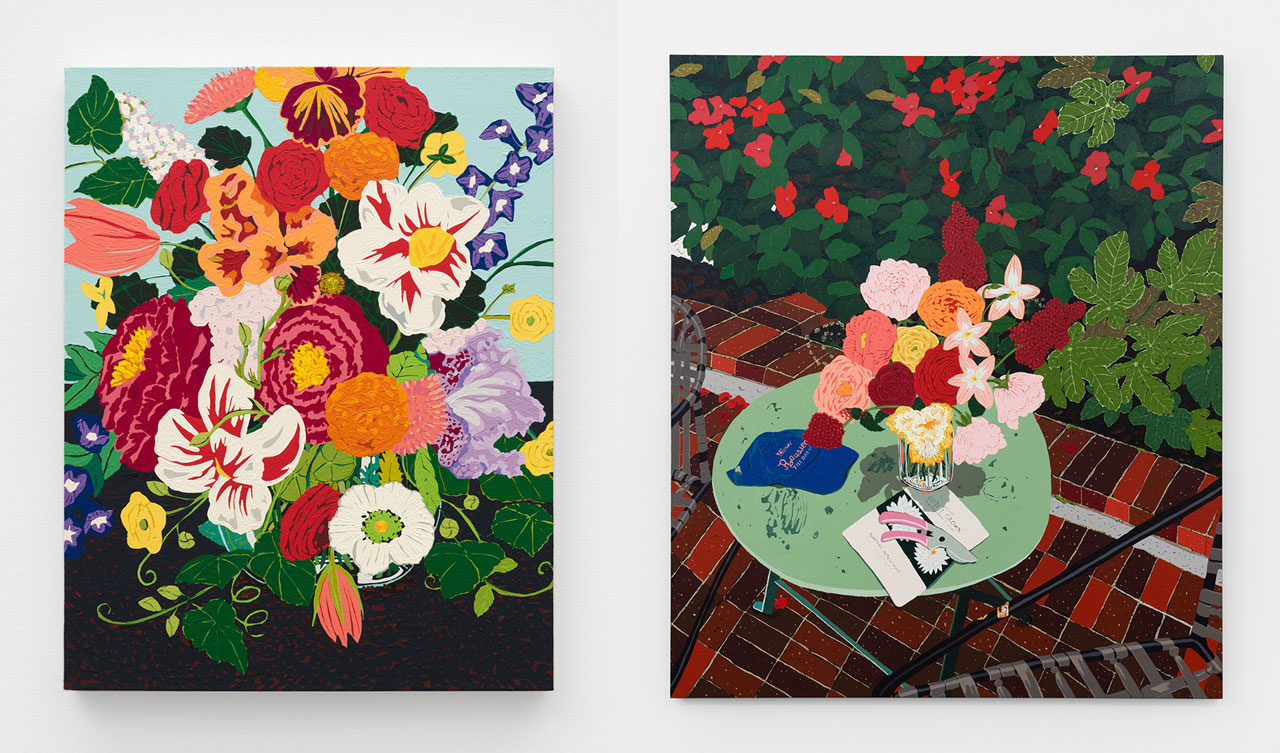
Right: Hilary Pecis, Backyard Garden, 2025, acrylic on linen, 74 x 64 x 1 5/8 inches (188 x 162.6 x 4.1 cm), © Hilary Pecis, Courtesy the artist and David Kordansky Gallery
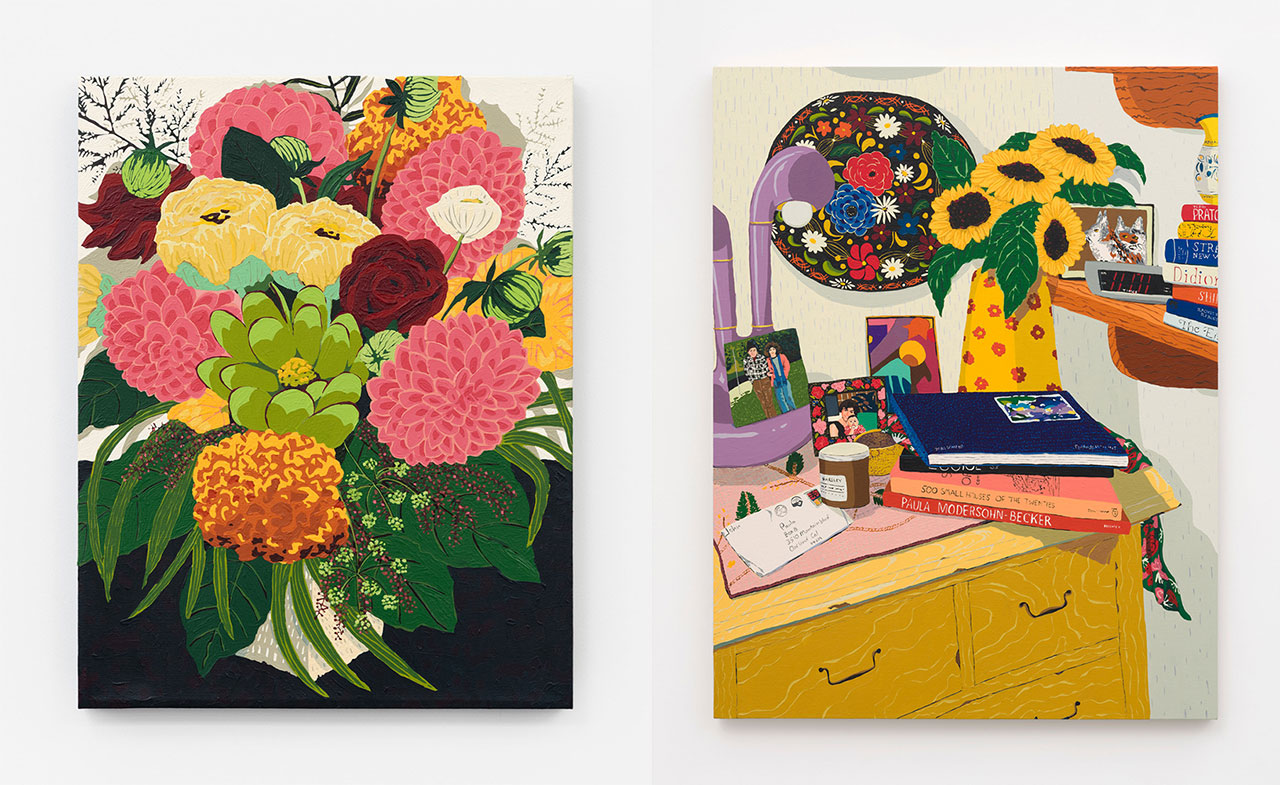
Right: Hilary Pecis, Paula’s Room, 2026, acrylic on linen, 44 x 34 x 1 1/2 inches (111.8 x 86.4 x 3.8 cm), © Hilary Pecis, Courtesy the artist and David Kordansky Gallery