ART CITIES: London-Zineb Sedira
Zineb Sedira’s commission “When Words Fall Silent, Cinema Speaks…” at Tate Britain is not simply an installation—it is a fully inhabited cinematic world, a reconstruction of a political imagination that once pulsed across continents. Working across photography, film, installation, and performance, Sedira has long examined the human dimensions of geopolitical change. With this major commission for Tate Britain’s Duveen Galleries, she turns to the radical cinema cultures that flourished in Algeria after independence in 1962, when the country became a crucible for anti‑imperialist filmmaking and a meeting point for artists from Africa, Asia, and Latin America.
By Efi Michalarou
Photo: Tate Archive
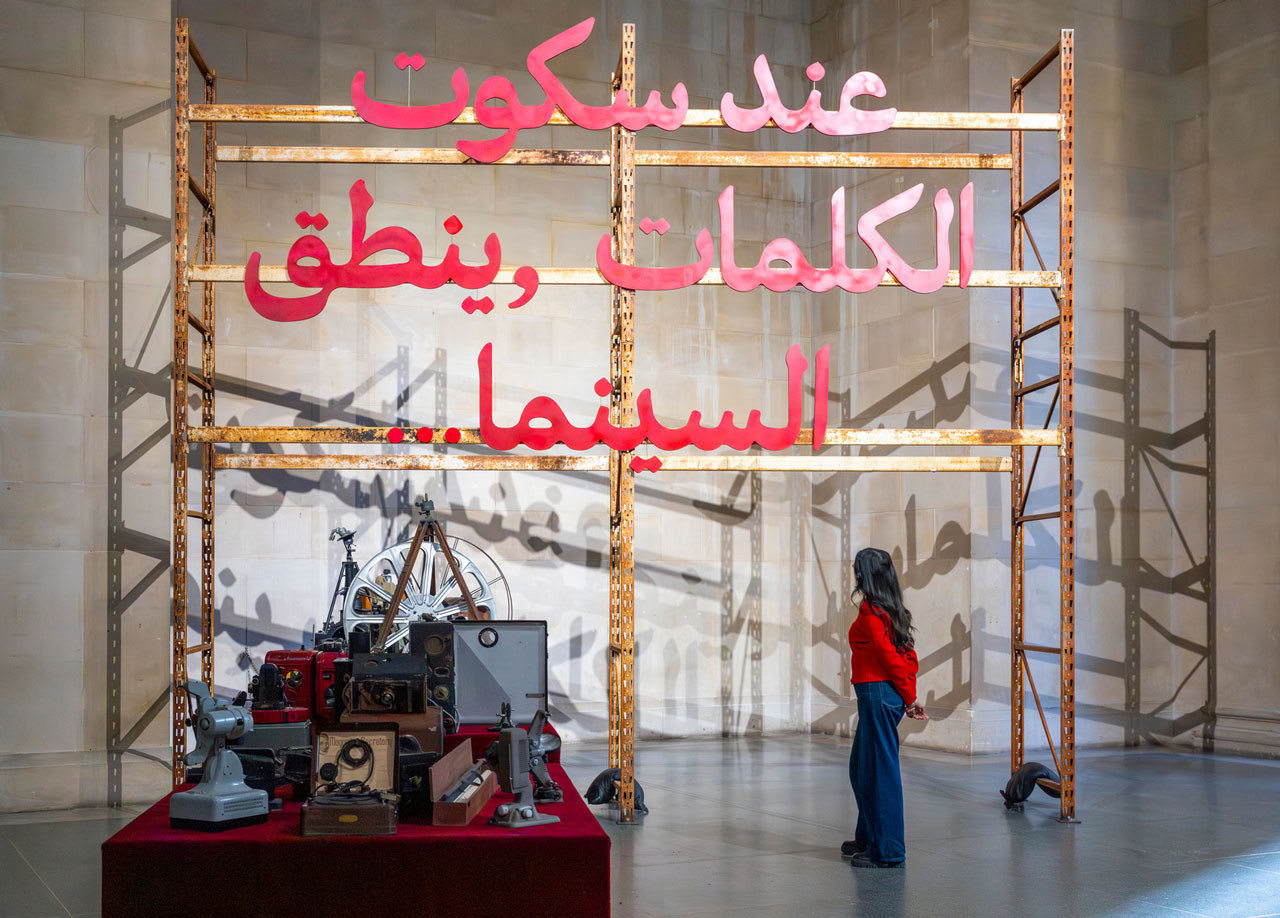
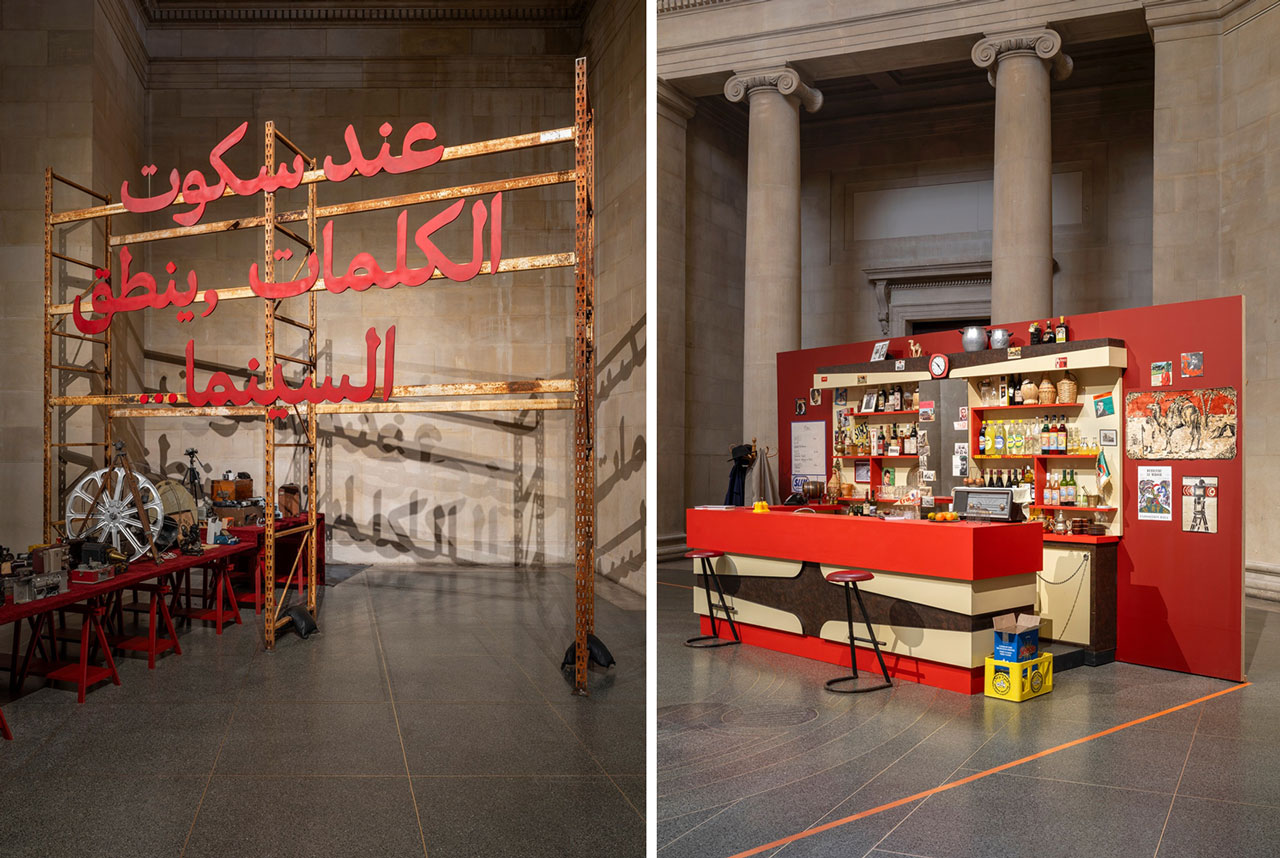
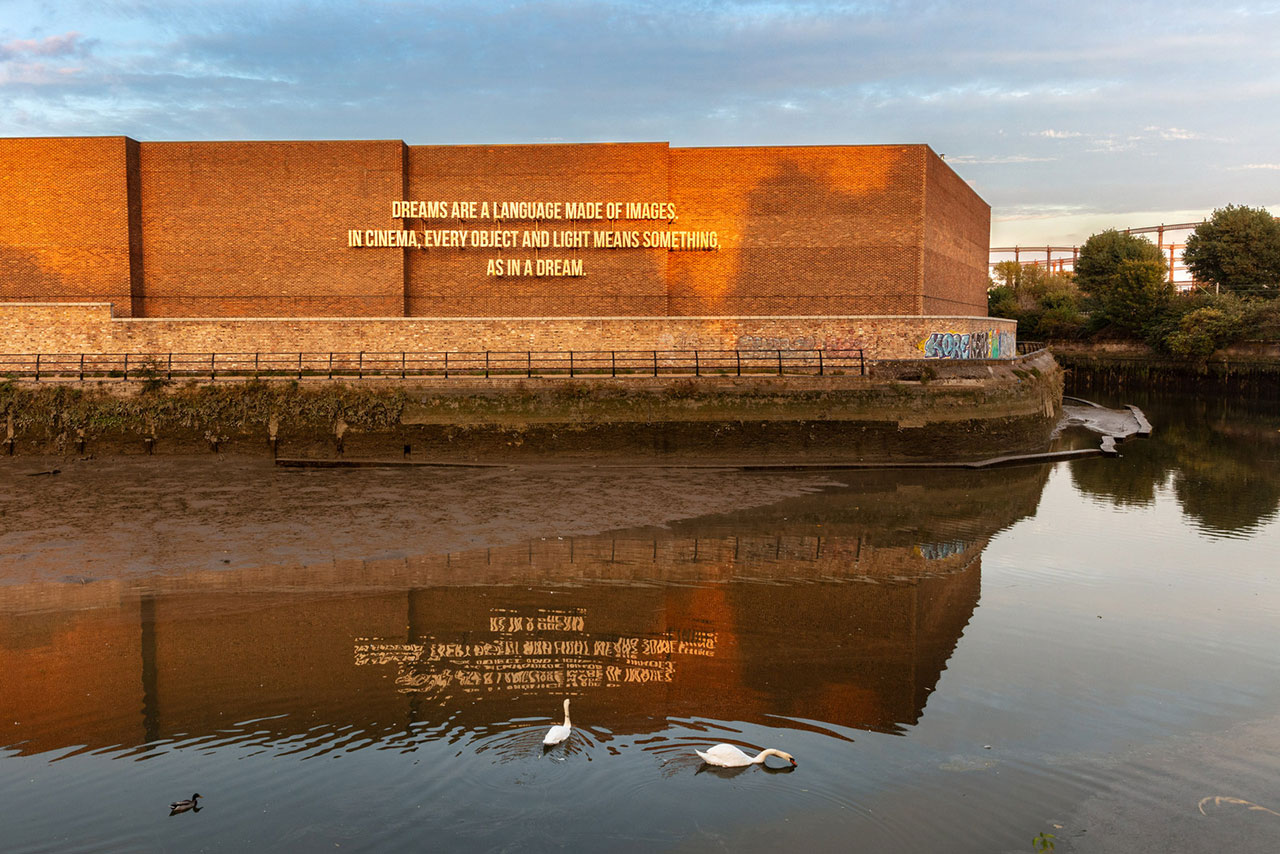
Zineb Sedira’s project “When Words Fall Silent, Cinema Speaks…” draws on the legacy of 1960s–70s African and Global South cinema—its aesthetics, its political urgency, and its belief in film as a tool for collective liberation. The installation opens with the commission’s title blazing in bright red lettering, styled after Hollywood marquees of the 1940s and 50s. But Sedira immediately complicates this familiar glamour: the sign becomes a threshold into the world of Third Cinema*, the anti‑imperialist movement that rejected both Hollywood spectacle and European art‑house detachment.
This collision of visual languages—Golden Age Hollywood and militant cinema—sets the tone for the entire commission. It is a reminder that form is never neutral, and that aesthetics themselves can be sites of resistance.
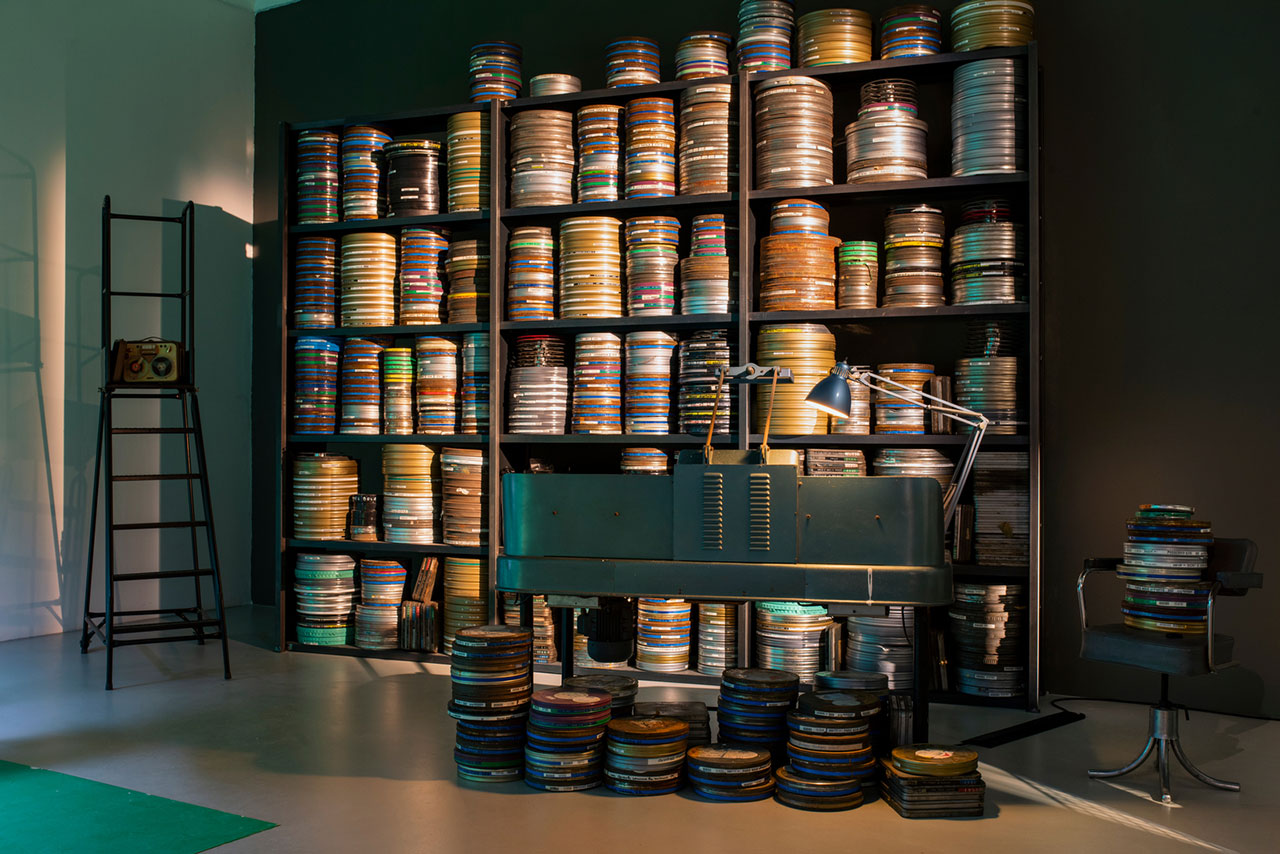
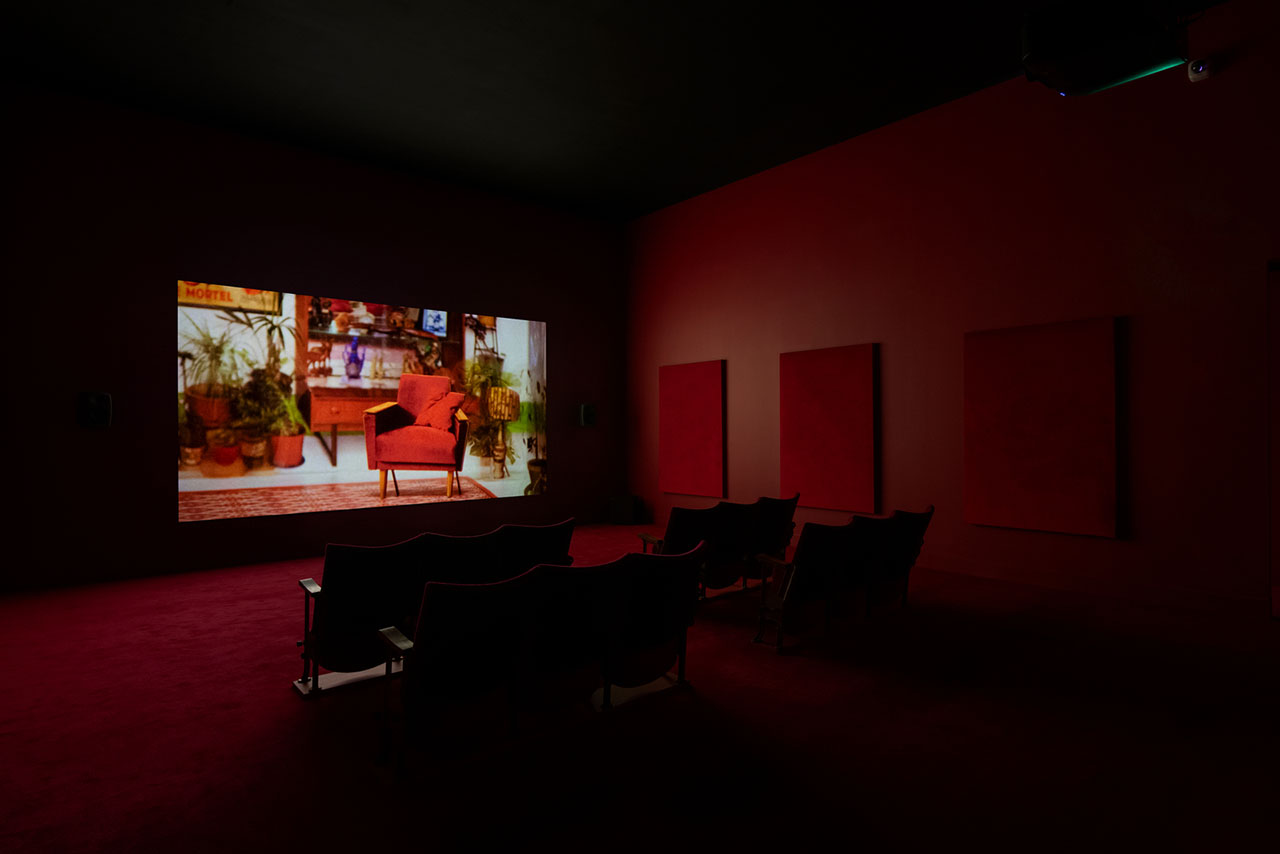
At the heart of the installation is a fully recreated cinema screening Sedira’s newly commissioned film, structured in four acts that mirror the stages of filmmaking: scriptwriting, shooting, editing, and screening. The film interlaces archival material with scenes of Sedira both behind and in front of the camera, creating a self‑reflexive narrative about how histories are constructed, remembered, and performed.
Central to the film is the voice of Boudjema Kareche, director of the Cinémathèque Algérienne from 1973 to 2004. His recollections of the institution—once a vital hub for revolutionary cinema from Africa and the Global South—anchor Sedira’s project in lived experience. His memories give the installation a human scale, transforming political history into personal testimony.
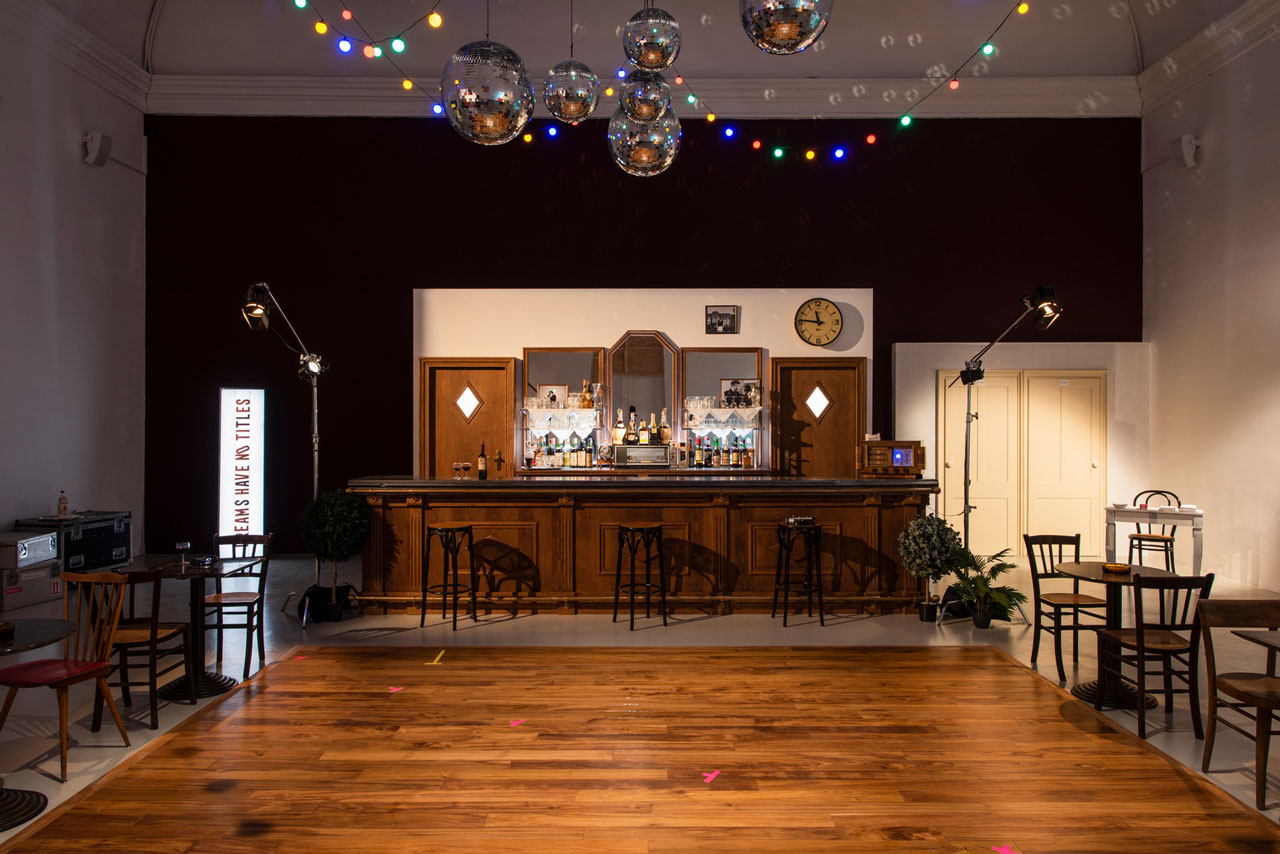
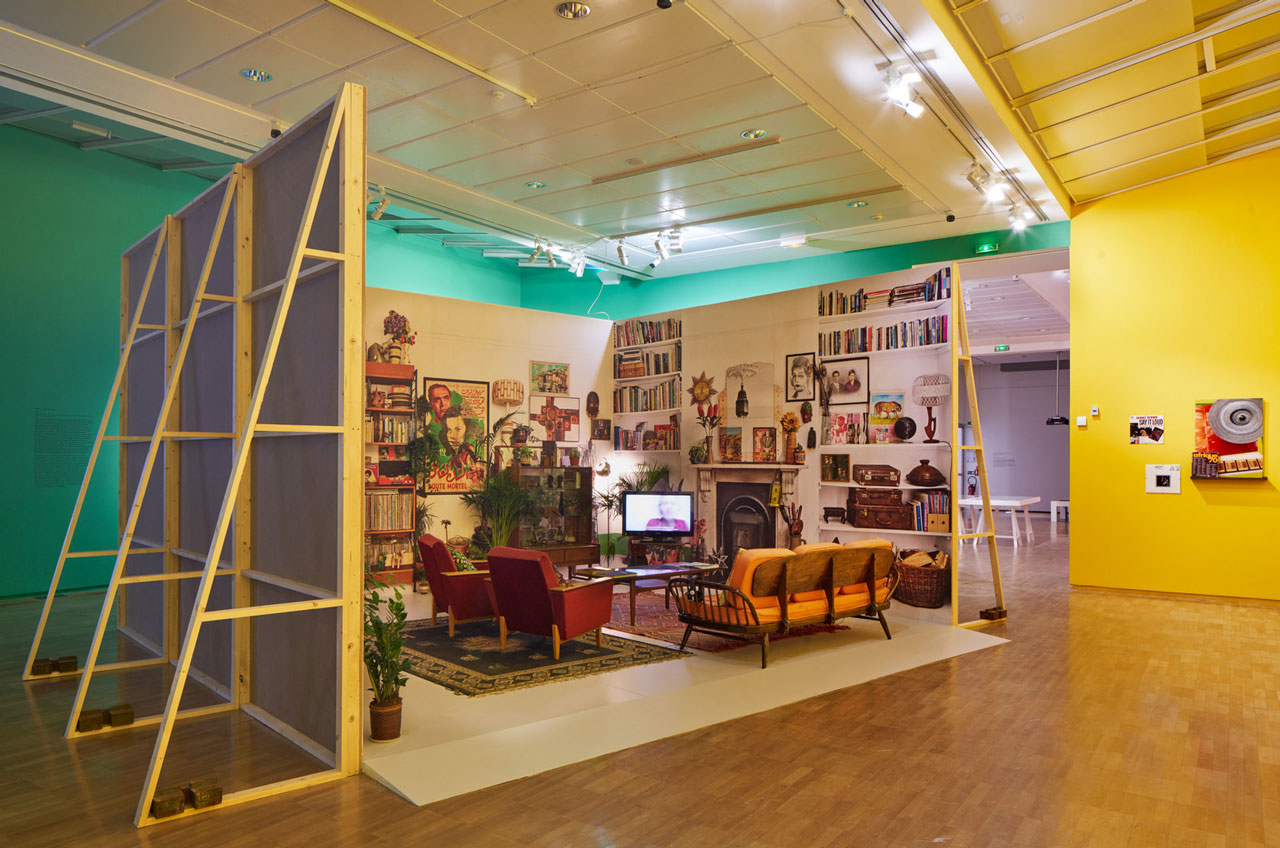
One of the installation’s most evocative spaces is the reconstructed 1960s Parisian café—a sculptural environment complete with bar, tables, chairs, and books. These cafés were crucial meeting places for Algerians living in exile during the War of Independence, sites where political debate, solidarity, and everyday life intertwined. Sedira’s recreation is not a static set but a living social space: visitors are invited to sit, read, and inhabit the atmosphere of diasporic resistance.
Nearby stands a customised Scopitone, the video jukebox once popular among migrant workers. Sedira re-engineers it to play excerpts from Agnès Varda’s “Salut les Cubains” (1963), where animated stills pulse to Afro‑Cuban rhythms. The choice is pointed: joy, dance, and cultural expression become forms of political resistance, countering the narrative that revolutionary movements are defined only by struggle.
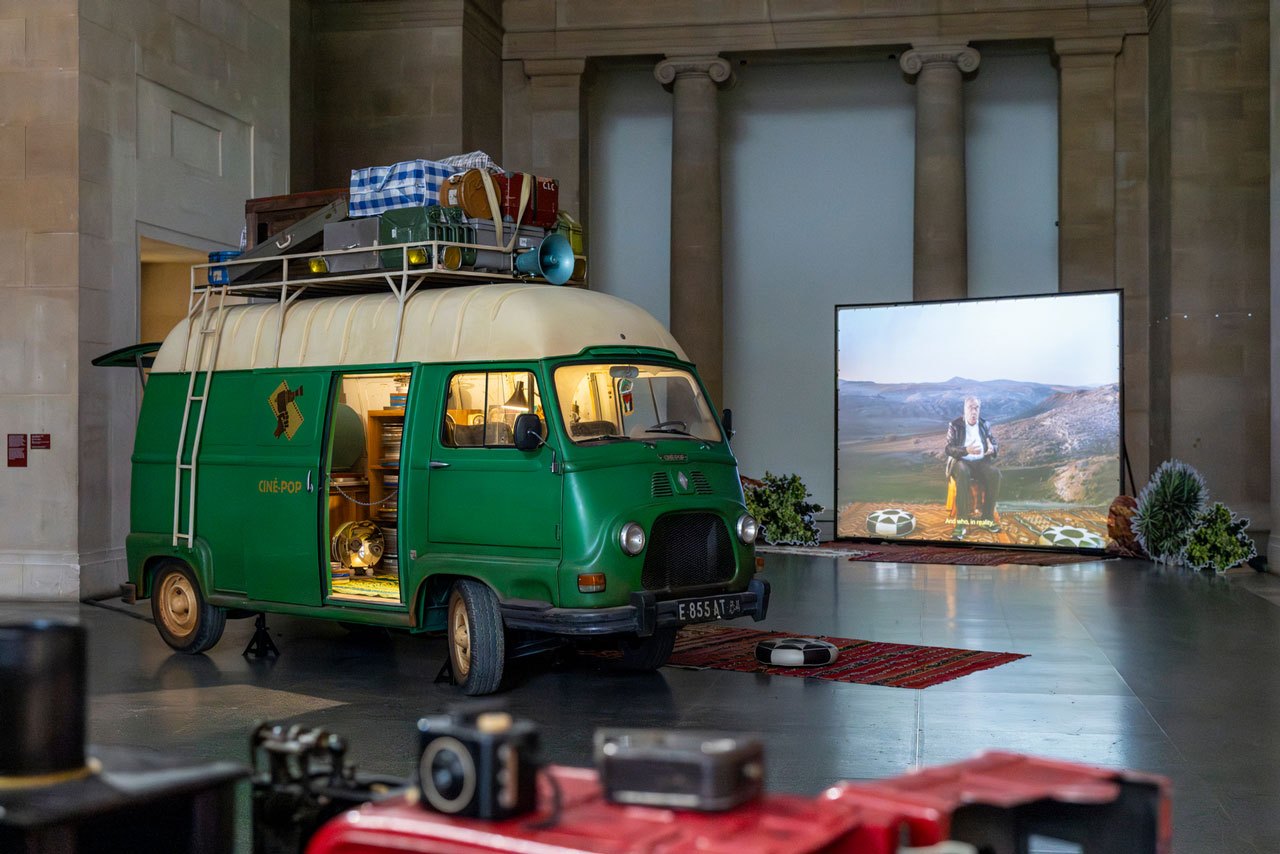
In the North Duveen Gallery, a cinema sign in Arabic presides over a sculptural display of vintage camera equipment—an homage to the material labour of filmmaking and the physicality of analogue image-making.
Nearby, Sedira presents an interview with film critic and historian Ahmed Bedjaoui, projected from a 1960s French van transformed into a Ciné Pop**. These mobile projection units were once used by the French army for propaganda, later reclaimed by the Algerian state to bring revolutionary cinema to rural communities. Bedjaoui’s reflections illuminate how film became a vehicle for political education and cultural memory in post‑independence Algeria. Tate
What distinguishes Sedira’s commission is its refusal to treat history as a closed chapter. Instead, she constructs a living archive—one that viewers can walk through, sit within, and listen to. The installation is part film set, part social space, part historical reconstruction. It is also a manifesto: a reminder that cinema once served as a weapon of solidarity, imagination, and global connection.
Sedira’s achievement lies in her ability to weave together research, memory, and affect into an environment that is both seductive and intellectually rigorous. The work invites viewers not only to learn about a radical cinematic past but to consider how its energies might be reactivated today.
* Third Cinema is a political film movement that began in Latin America in the 1960s as a reaction against Hollywood and commercial filmmaking. It focuses on social justice, anti-colonialism, and the struggles of oppressed people. Unlike mainstream cinema, Third Cinema aims to educate and inspire political change rather than simply entertain. Filmmakers often used low-budget methods, documentary techniques, and real-life settings to present authentic stories. The movement influenced filmmakers across Africa, Asia, and Latin America and remains important for its emphasis on resistance, identity, and cultural freedom.
** Ciné Pop refers to films created mainly for mass entertainment and wide audience appeal. It includes genres such as comedy, romance, action, musicals, and blockbuster films that focus on enjoyment, emotion, and accessible storytelling. Unlike experimental or political cinema movements, Ciné Pop emphasizes commercial success, star actors, and engaging narratives. The style became especially influential through Hollywood productions, which shaped global popular culture. Today, streaming platforms and international film industries continue to expand the influence of Ciné Pop around the world.
Photo: Zineb Sedira, When Words Fall Silent, Cinema Speaks…., Tate Britain Commission 2026, Photo © Tate (Lucy Green)
Info: Tate Britain, Millbank, London, United Kingdom, Duration: 13/5/2026-17/1/2027, Days & Hours: Daily 10:00-18:00, www.tate.org.uk/