ART CITIES: N.York-Francesca Mollett
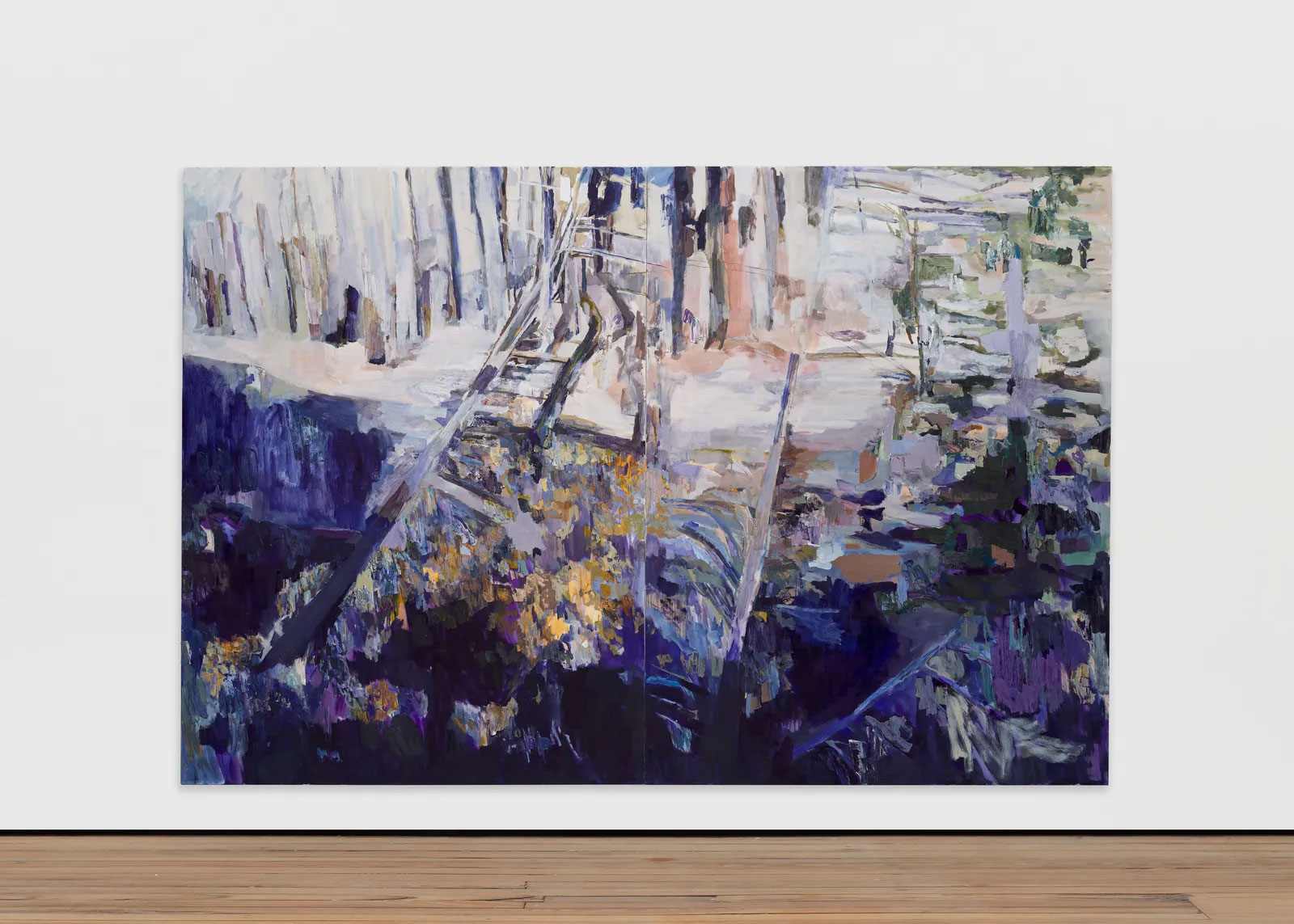
At a moment when contemporary painting continues to oscillate between figuration and pure abstraction, Francesca Mollett has emerged as one of the most compelling voices redefining how paint can embody perception itself. Her new exhibition, “Buried shadow”, extends her ongoing investigation into light, temporality, memory, and the emotional resonance of abstraction.
By Efi Michalarou
Photo: Grimm Gallery Archive
Rather than offering abstraction as escape, Francesca Mollett approaches painting as a phenomenological encounter — a shifting surface where observation, sensation, and recollection collapse into one another. Her canvases do not simply depict images; they enact the instability of perception itself.
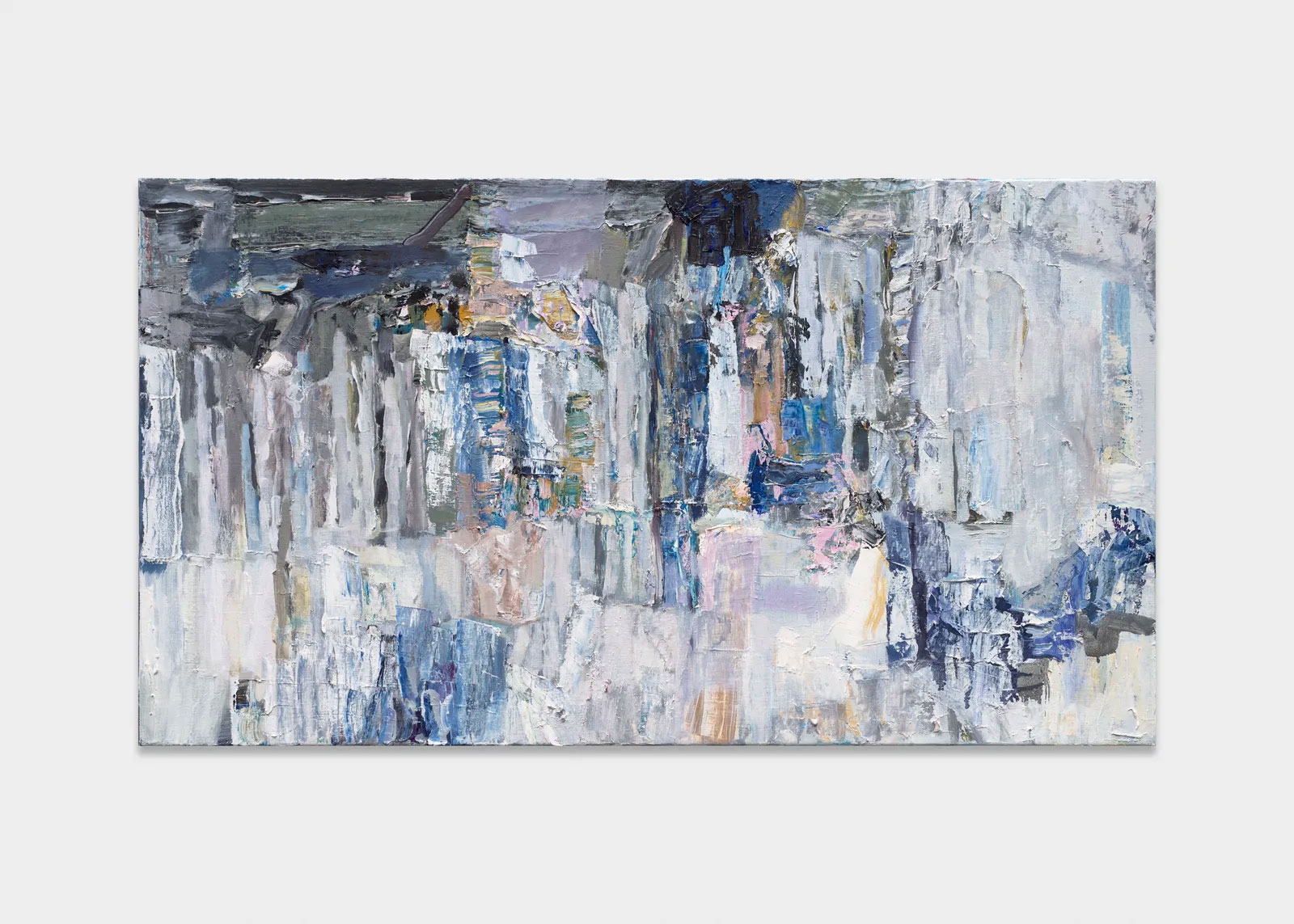
Over the last several years, Mollett has become increasingly recognised within international contemporary art circles for paintings that merge lyrical abstraction with traces of lived reality. What distinguishes Mollett from many younger abstract painters is her ability to sustain ambiguity without surrendering emotional precision. Her paintings hover between atmosphere and structure, between dissolving image and material certainty. Surfaces flicker with hesitant gestures, sharp directional marks, muted chromatic tensions, and flashes of illumination that appear to emerge from beneath the paint itself. In “Buried shadow”, this tension becomes central.
The exhibition “Buried shadow” positions painting as a threshold — a site where matter becomes sensation and where memory becomes spatial experience. According to the exhibition text, each work explores “how to move between what is observed and the elasticity of abstraction.” This idea of elasticity is crucial to understanding Mollett’s practice. Her paintings resist fixed interpretation. Forms appear and recede simultaneously: barriers become passages, shadows become architecture, and landscapes dissolve into fields of suspended colour.
The works often begin from observed imagery, yet the source material undergoes a gradual transformation through paint handling and compositional reduction. Instead of preserving recognisable forms, Mollett extracts emotional and atmospheric residues from them. What remains is less an image than a condition of seeing. Her surfaces feel alive with interruption. Delicate veils of colour are punctuated by abrupt gestures, creating rhythms that resemble changing weather patterns or shifting psychological states. The paintings oscillate between solidity and disappearance, generating what might be described as temporal instability — a sensation that multiple moments coexist simultaneously within the canvas.
A defining feature of Mollett’s work is its deep engagement with literature and philosophy. Her paintings are not illustrative responses to texts, but meditations shaped by literary structures of time, memory, and consciousness.In “Buried shadow”, references to writers such as Mercè Rodoreda, H.D., and Gertrude Stein form an intellectual framework around the exhibition.
One particularly striking reference comes from Rodoreda’s “Death in Spring”, where villagers remove the metal pin from a sundial because they no longer wish to know the time. In a brief moment of resistance, the protagonist’s stepmother stands upon the sundial and declares that she herself will become time. This image of agency emerging within temporal rupture mirrors Mollett’s own interest in unstable duration and emotional suspension.
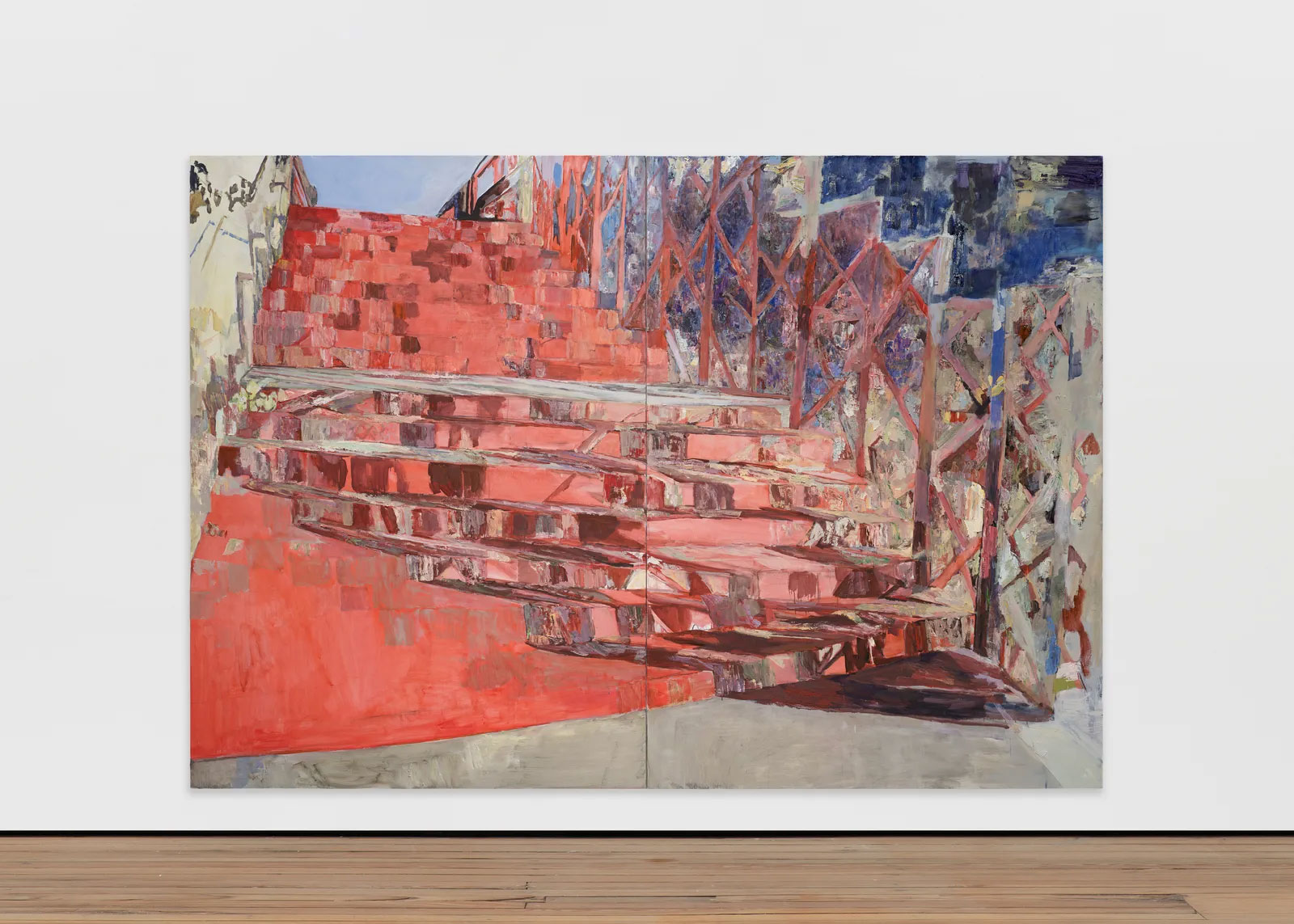
Similarly, Mollett invokes H.D.’s writings on London during the Blitz — specifically the idea of a “rip in time” between historical continuity and lived local experience. In works such as “Arrow to arrow”, a bridge in Burgess Park becomes both physical structure and psychic residue, existing outside the conditions that originally produced it. These literary references are not decorative intellectualism. They illuminate the conceptual architecture beneath Mollett’s paintings: time is never linear, perception is never fixed, and painting itself becomes a medium capable of holding contradictory states simultaneously.
Gertrude Stein’s notion of the “continuous present” is particularly relevant here. Stein proposed a form of narration untethered from conventional chronology, privileging ongoing immediacy instead. Mollett’s paintings operate similarly. They refuse closure, existing instead in a state of perpetual unfolding.
Mollett’s fascination with phenomenology — especially the directional experience of “towardsness” — gives the exhibition a spatial and bodily dimension. The paintings are not passive objects to be decoded from a distance; they actively reorganise the viewer’s position in space. Barriers, stairways, bridges, shadows, and architectural fragments recur throughout the exhibition, though never fully stabilising into representation. These structures become conduits for light and movement rather than descriptive forms. As viewers attempt to orient themselves within the image, the paintings continuously destabilise perspective.
This disorientation is deliberate. Mollett treats painting as an event of becoming rather than an image of completion. The materiality of paint reinforces this idea. Thickened surfaces coexist with translucent passages, while chromatic shifts produce moments of visual hesitation. Colour in Mollett’s work is never merely decorative; it behaves psychologically, carrying memory, atmosphere, and sensation across the surface. The result is a body of work that feels intensely present yet perpetually elusive.
In an era increasingly dominated by hyper-visibility, digital acceleration, and image saturation, Mollett’s paintings demand slowness. They resist instant readability and instead cultivate sustained attention. This may explain why her work resonates so strongly within contemporary painting discourse. Rather than returning nostalgically to abstraction, Mollett reinvents it as a mode of thinking — one capable of articulating experiences that language and representation alone cannot fully contain.
Her paintings propose that abstraction is not withdrawal from reality but deeper immersion into its complexities: the instability of memory, the fragility of perception, and the strange elasticity of time itself. With “Buried shadow”, Francesca Mollett confirms her position as one of the most intellectually and materially sophisticated painters of her generation. The exhibition demonstrates how contemporary abstraction can remain emotionally charged, philosophically rigorous, and profoundly human all at once.
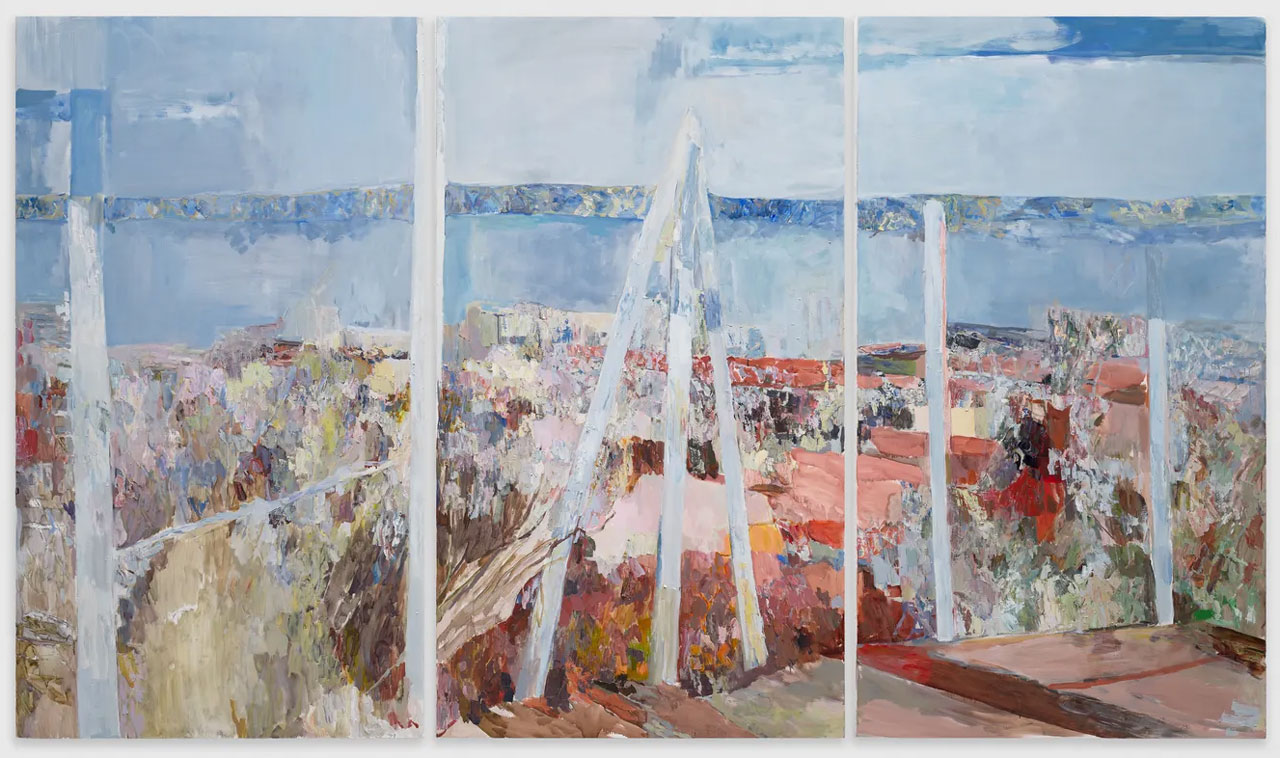
Photo: Francesca Mollett, Inscape (after Cézanne), 2026, Oil on linen, triptych, 230.5 x 130.8 cm I 90 3/4 x 51 1/2 in (each) 230.5 x 400.1 cm I 90 3/4 x 157 1/2 in (overall), © Francesca Mollett, Courtesy the artist and Grimm Gallery
Info: Grimm Gallery, 54 White Street, New York, NY, USA, Duration: 15/5-18/6/2026, Days & Hours: Tue-Sat 11:00-18:00, https://grimmgallery.com/
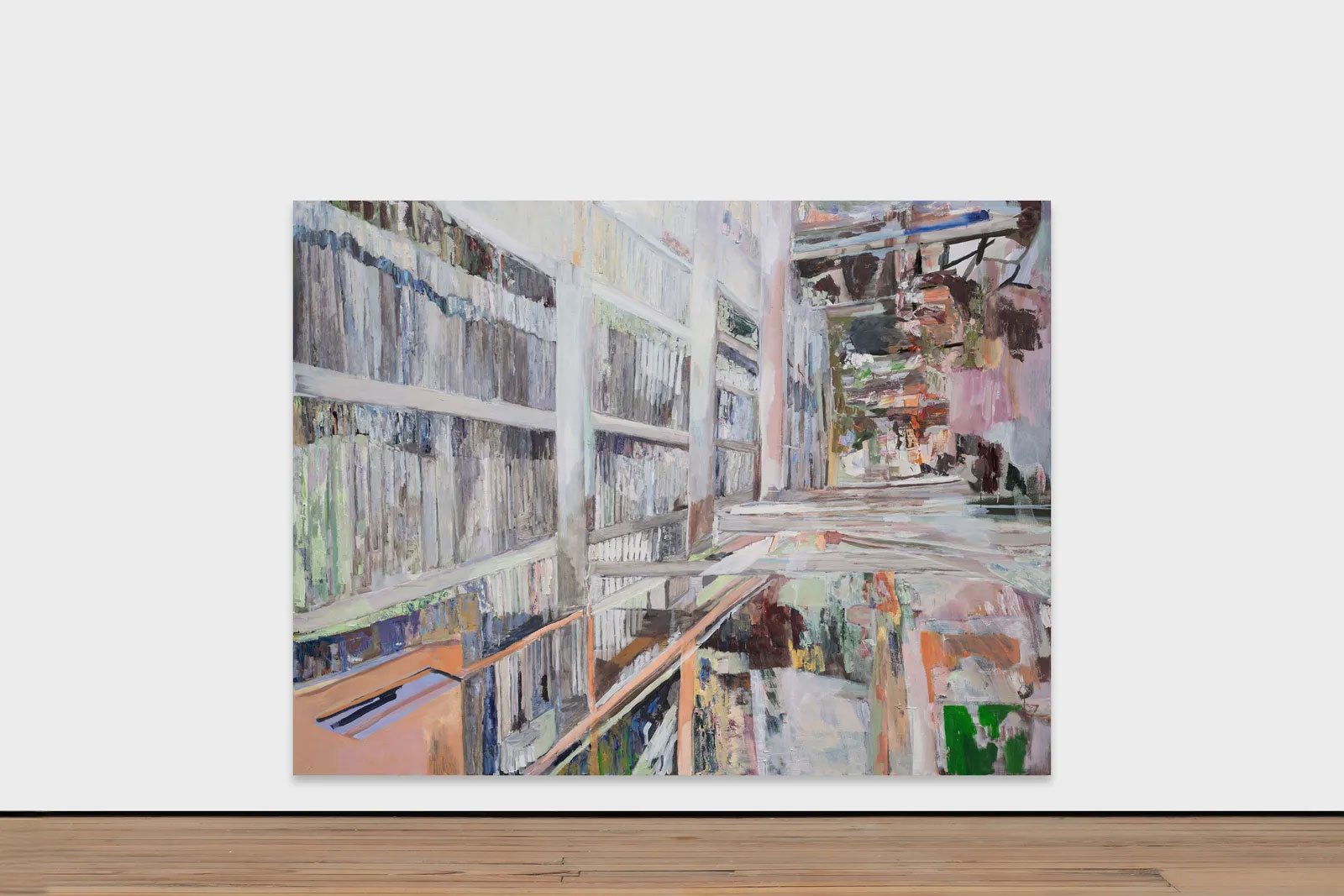
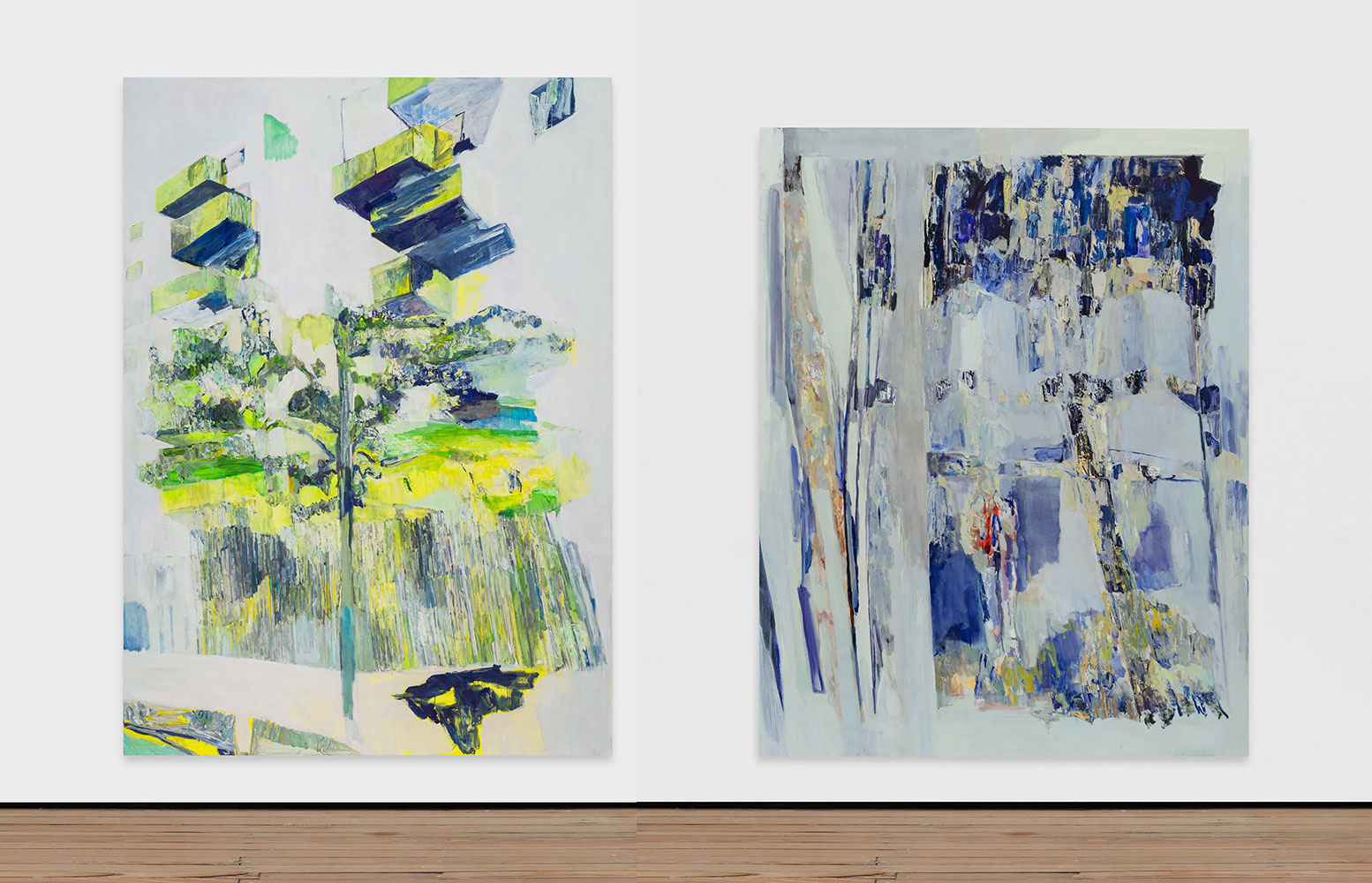
Right: Francesca Mollett, Middle Shadow, 2025-2026, Oil on linen, 229.9 x 180.3 cm I 90 1/2 x 71 in, © Francesca Mollett, Courtesy the artist and Grimm Gallery