PRESENTATION: David Hammons and Jannis Kounellis
Three decades after they last exhibited side by side, David Hammons and Jannis Kounellis are reunited in a landmark exhibition Spanning works from the late 1950s to today, the exhibition highlights a striking dialogue between two artists who, despite coming from vastly different cultural and artistic traditions, share a deeply intuitive approach to materials, symbolism, and social critique.
By Efi Michalarou
Photo: White Cube Gallery Archive
At first, David Hammons and Jannis Kounellis might seem worlds apart. Hammons, the famously elusive American artist, built his reputation through provocative street interventions and works made from found urban materials. Kounellis, the influential Greek-Italian figure of Arte Povera, transformed galleries with installations involving coal, burlap, fire, and even live horses.
Yet the exhibition reveals how closely their practices align. In a newly commissioned essay, critic Martin Herbert describes both artists as “masters of reality,” capable of turning discarded or humble materials into objects charged with political urgency and emotional depth. What connects them is not style, but attitude: a refusal to separate art from lived experience.
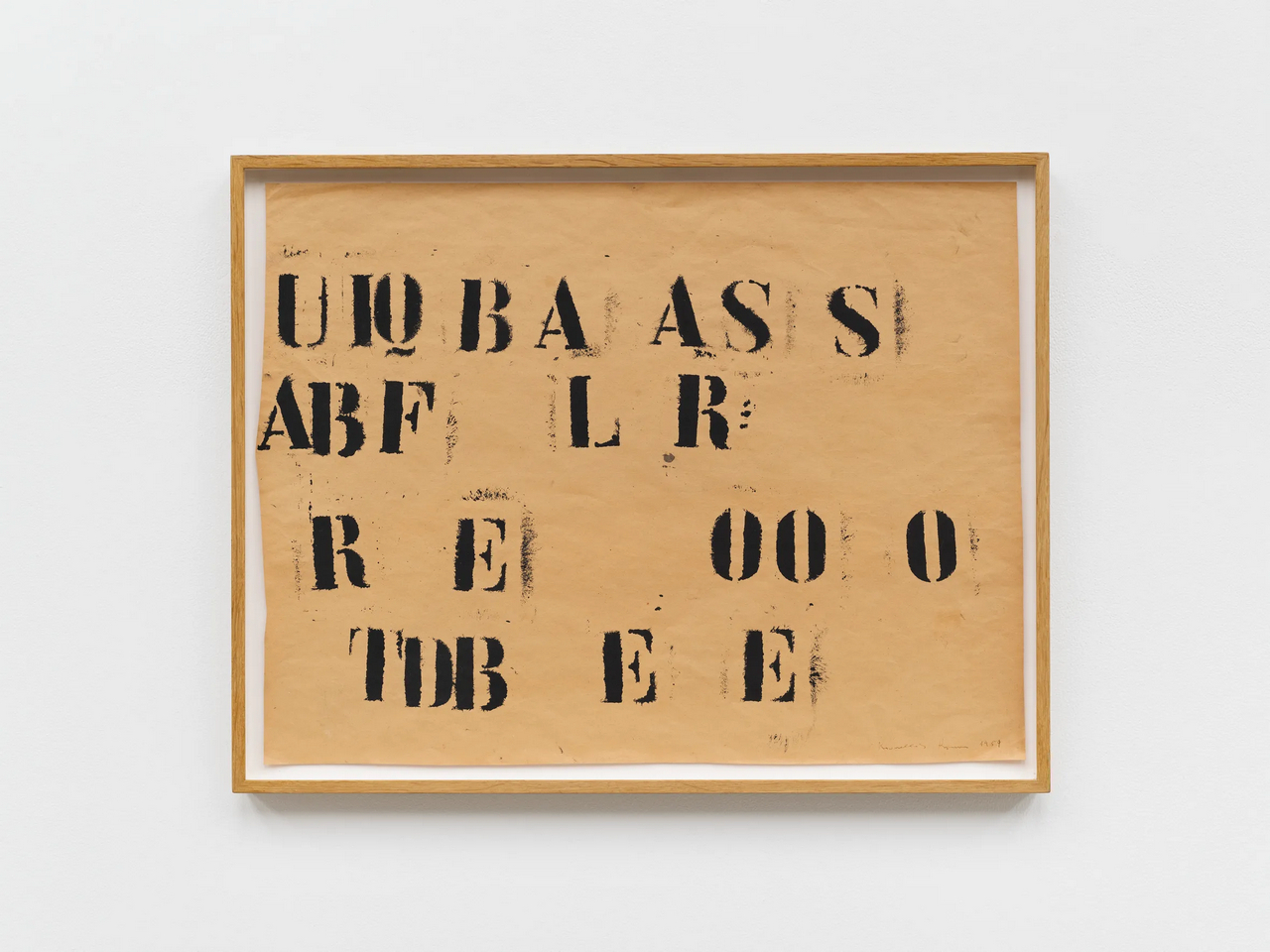
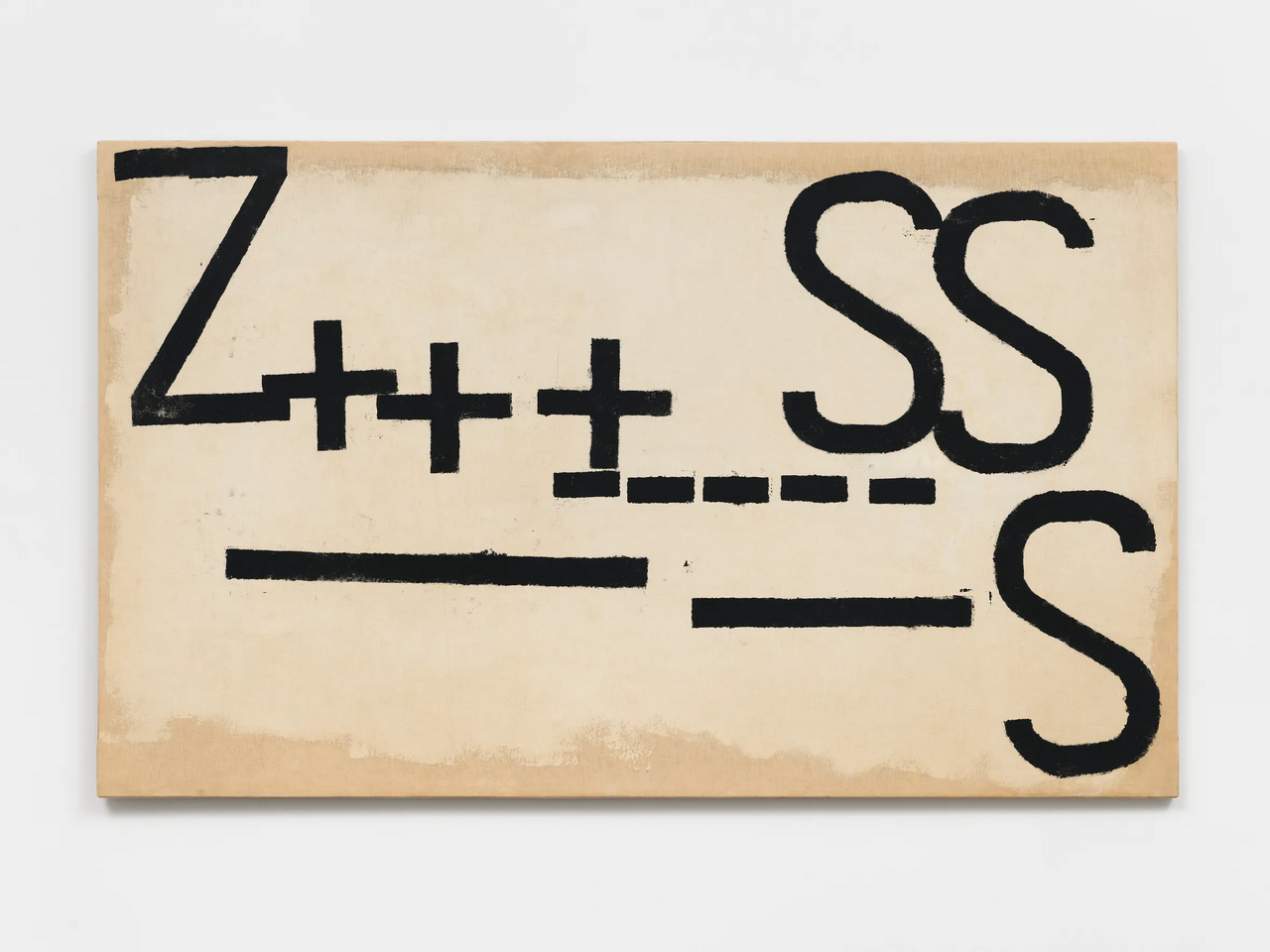
The exhibition begins with Kounellis’s groundbreaking “Alfabeto” works from late-1950s Rome. Arriving in the city during Italy’s postwar industrial expansion, the young artist became fascinated by the visual language of the streets — road signs, commercial lettering, arrows, and symbols of authority.
His early canvases featured stark black letters and numbers painted against white backgrounds, evoking systems of order and communication. But Kounellis deliberately disrupted those systems. Missing letters, fragmented sequences, and disoriented arrows created a sense of instability and breakdown.
By the early 1960s, his work had evolved into a subtle critique of institutional power and social control. The fractured signage reflected a society still haunted by fascism while struggling to define a new identity in an age of rapid modernization.
Across the Atlantic, Hammons was developing his own radical visual language in late-1960s Los Angeles. Rejecting traditional painting techniques, he began creating his celebrated “body prints” using grease, margarine, pigment, and his own physical imprint. Pressing his face and body directly onto paper, Hammons produced ghostlike images that carried both personal and political weight. These works confronted issues of race, visibility, and representation with raw immediacy.
Among the exhibition’s most significant works is “Spade” (1974), in which Hammons incorporates the silhouette of a spade — a loaded racist slur — into the composition. The work confronts the exclusion of Black experience from mainstream avant-garde art while simultaneously challenging and surpassing its visual language. Where Kounellis questioned systems through abstraction and symbols, Hammons used the body itself as evidence.
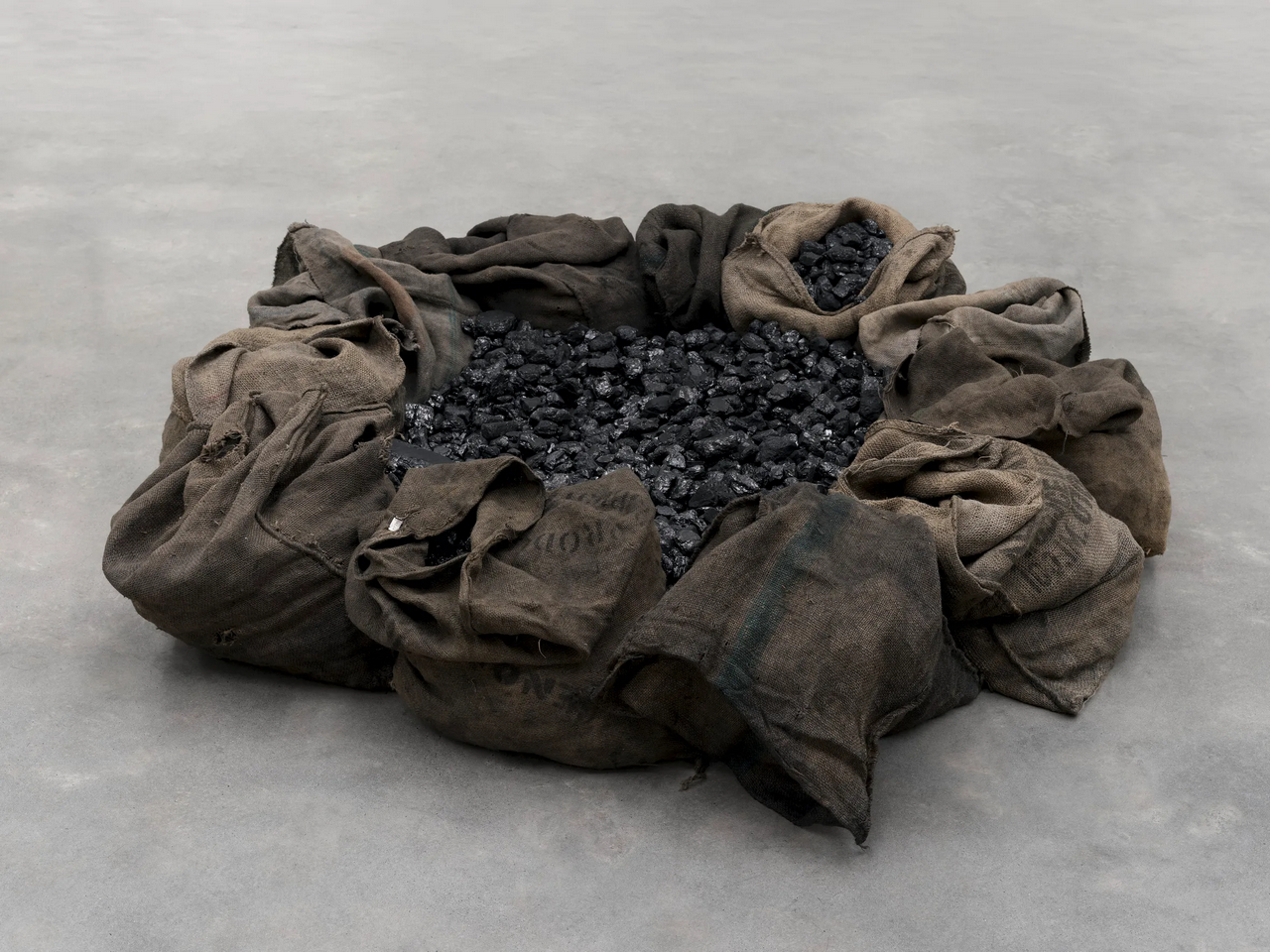
By the late 1960s, both artists had begun pushing against the limits of conventional art-making. Kounellis turned increasingly toward raw materials and immersive installations, introducing coal, earth, and industrial debris into gallery spaces. His 1968 coal-sack installation transformed everyday fuel into a meditation on labour, consumption, and the unseen forces powering modern life.
Hammons, meanwhile, moved away from the commercial art world altogether for a time, staging temporary interventions in Harlem that blurred the line between art and everyday experience. Even when he later returned to gallery spaces, he continued to undermine artistic convention — famously creating abstract compositions by bouncing dirt-covered basketballs across sheets of paper.
The resulting works resemble gestural abstraction, yet remain rooted in the textures and realities of the street. Ultimately, the exhibition positions Hammons and Kounellis not simply as contemporaries, but as artists united by a shared philosophy: that meaning can emerge from the overlooked, the discarded, and the resistant. Their works challenge the polished language of the art establishment by insisting that the raw materials of everyday life carry their own history, politics, and poetry.
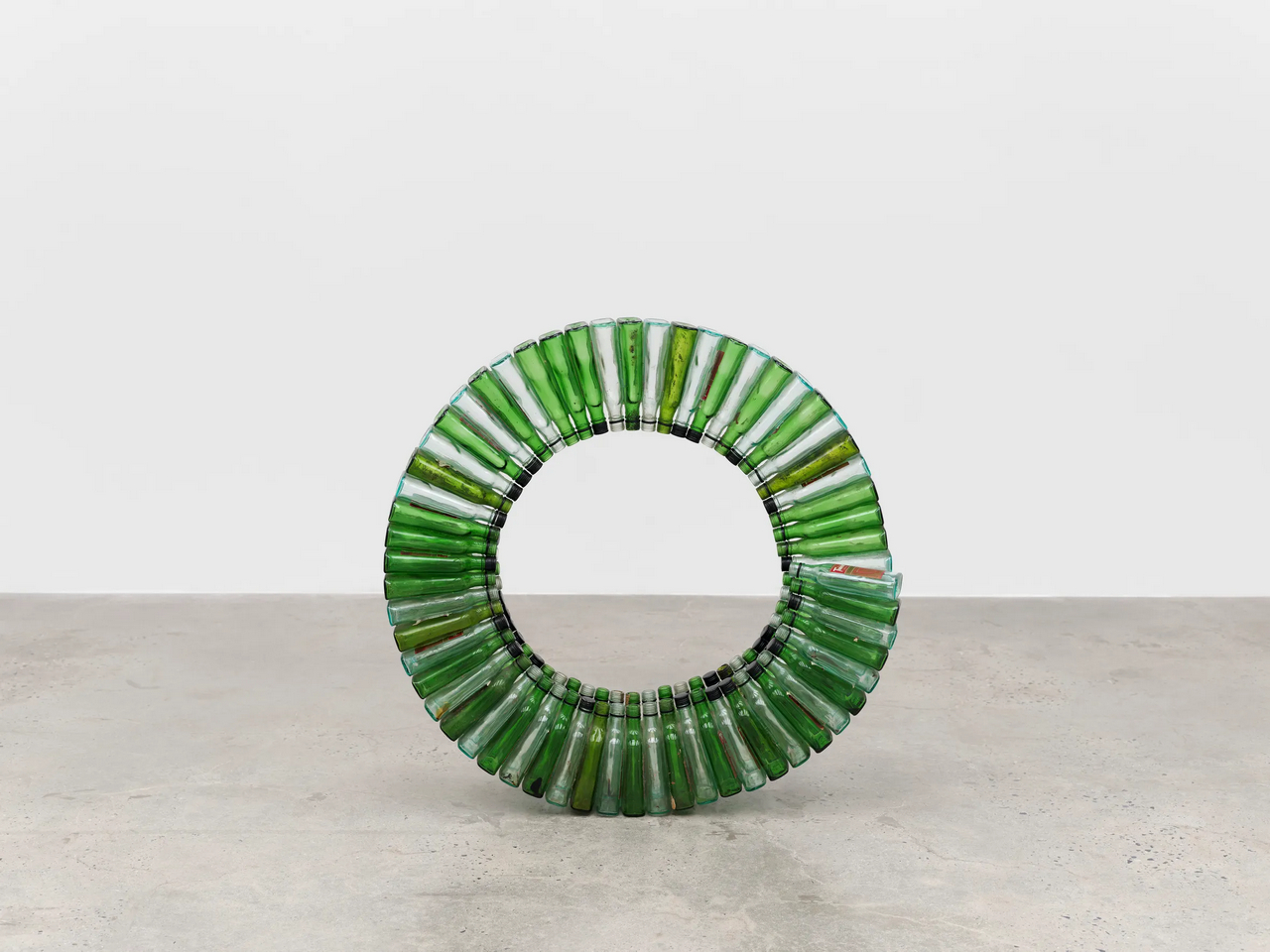
Photo: David Hammons, Untitled (wine bottles), 1989, Green and white glass bottles, silicone glue, 96 x 96 x 20 cm | 37 3/4 x 37 3/4 x 7 3/4 in, Courtesy White Cube Gallery
Info: White Cube Gallery, 1002 Madison Avenue, New York, NY, USA, Furation: 1/5-13/9/2026, Days & Hours: Tue-Sat 10:00-18:00, www.whitecube.com/
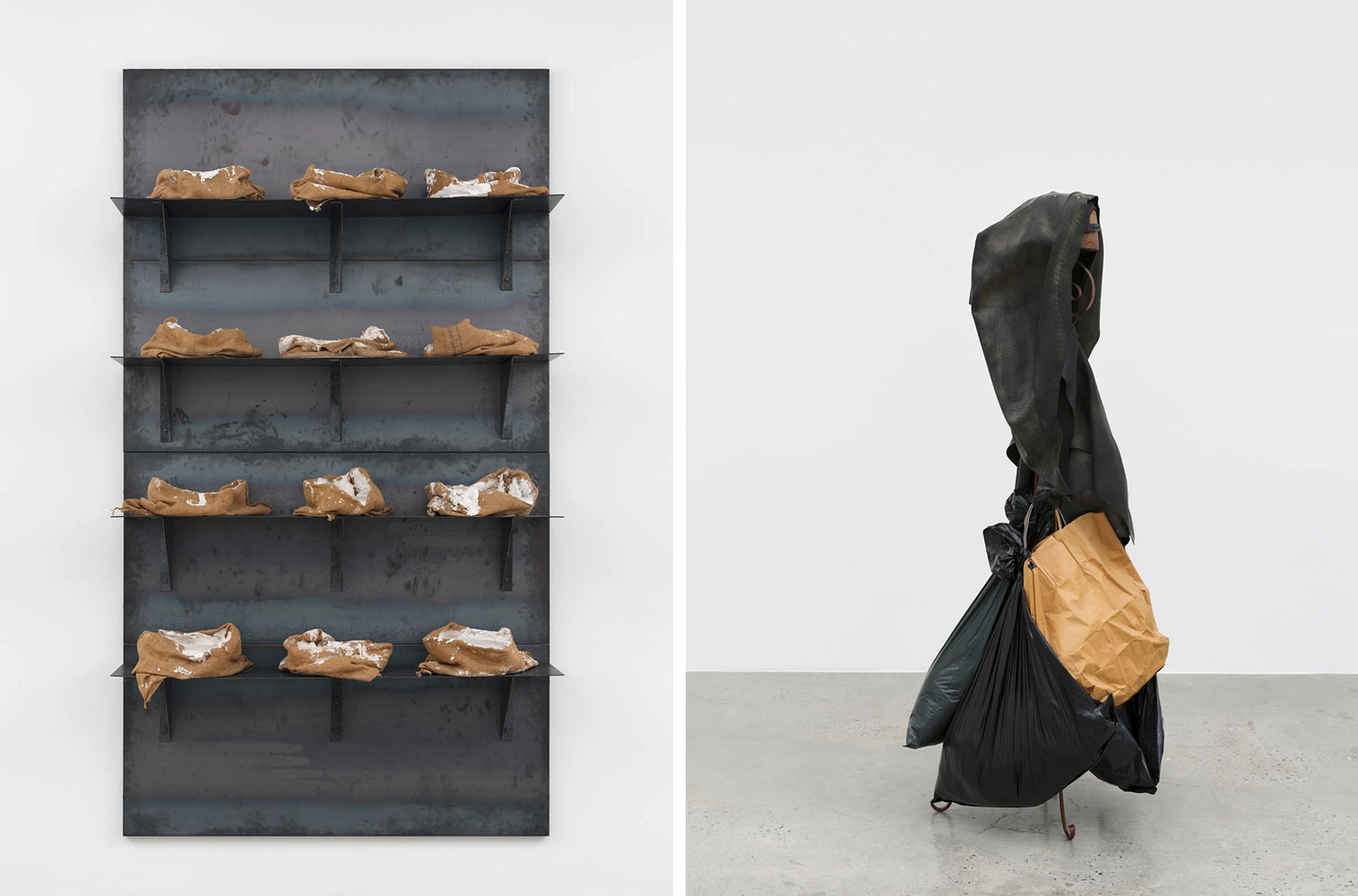
Right: David Hammons, Untitled, c.1990, Metal coat rack, rubber, plastic bags, tin can and found hat, 167.6 x 91.4 x 40.6 cm | 66 x 36 x 16 in, Courtesy White Cube Gallery
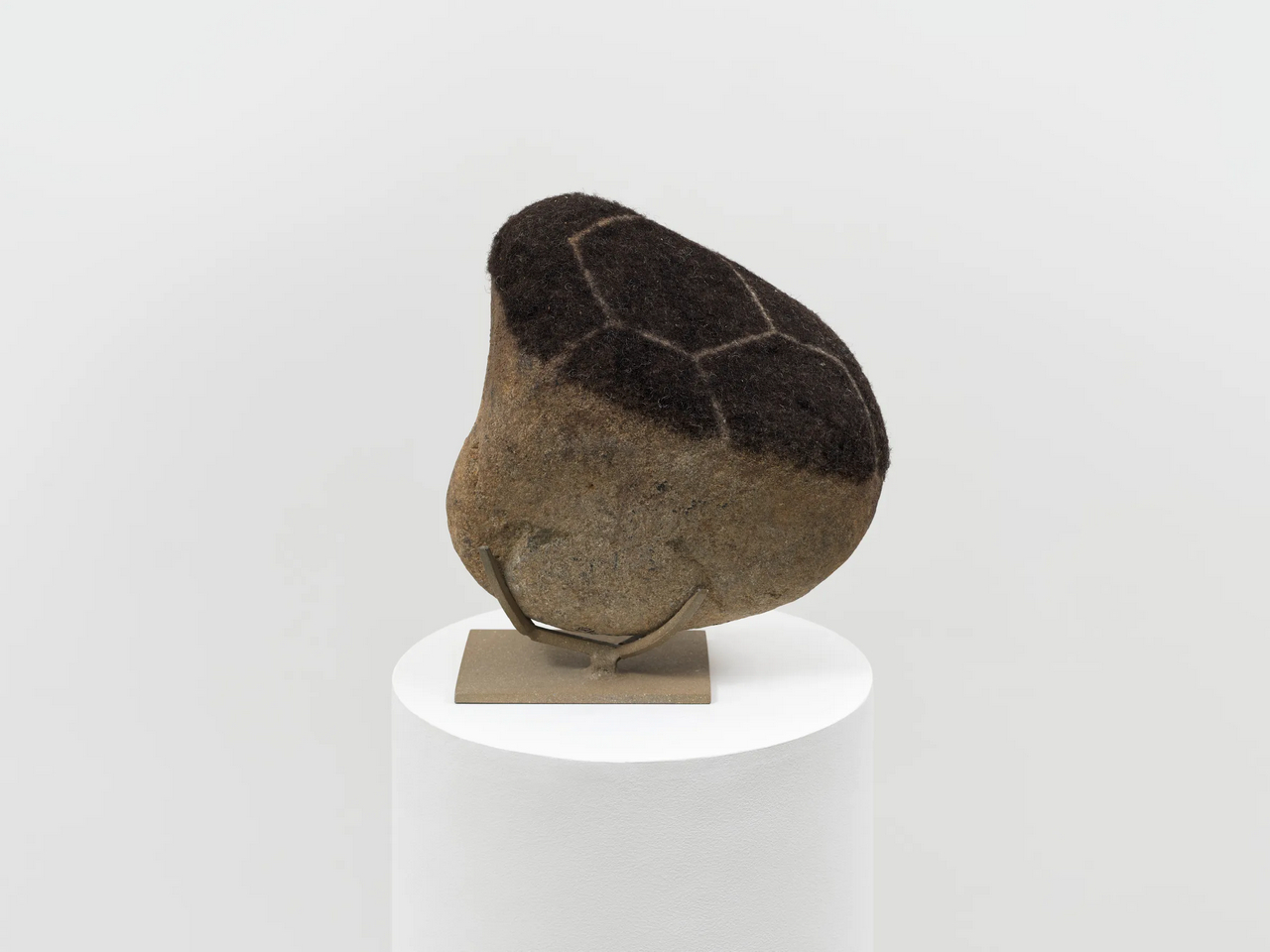
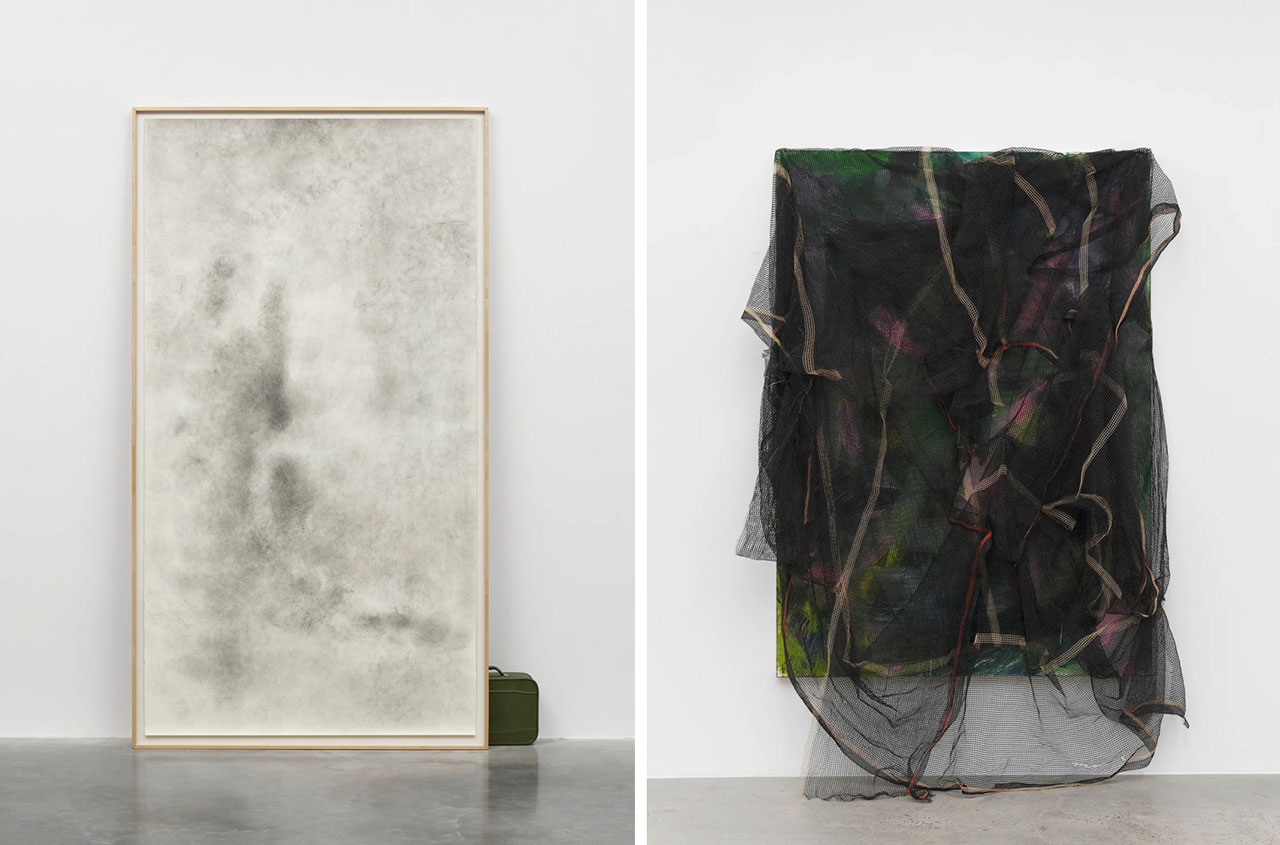
Right: David Hammons, Untitled, 2014-16, Acrylic on canvas with plastic netting, 254 x 182.9 cm | Overall: 100 x 72 in, 213.4 x 154.9 cm | Canvas: 84 x 61 in, Courtesy White Cube Gallery