TRACES: VALIE EXPORT (17/5/1940-14/5/2026)
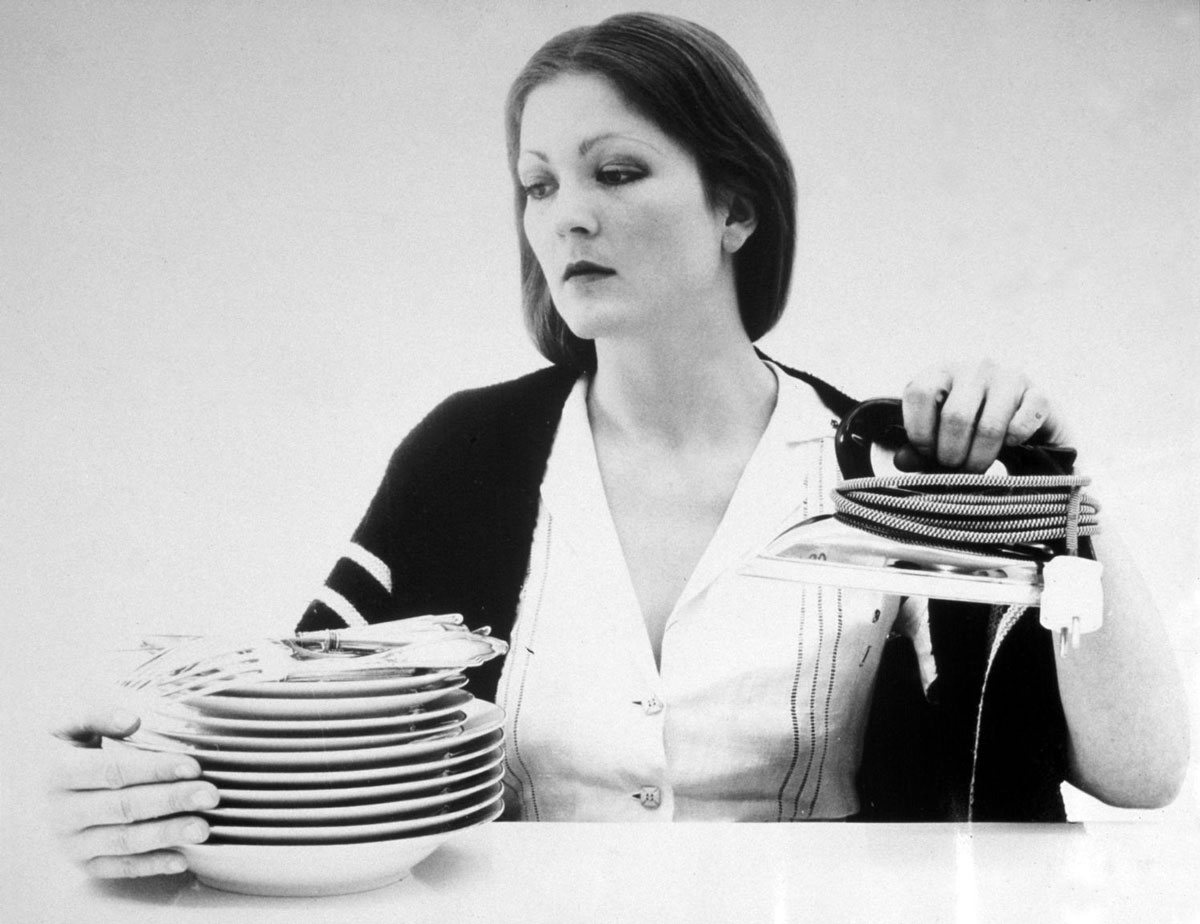
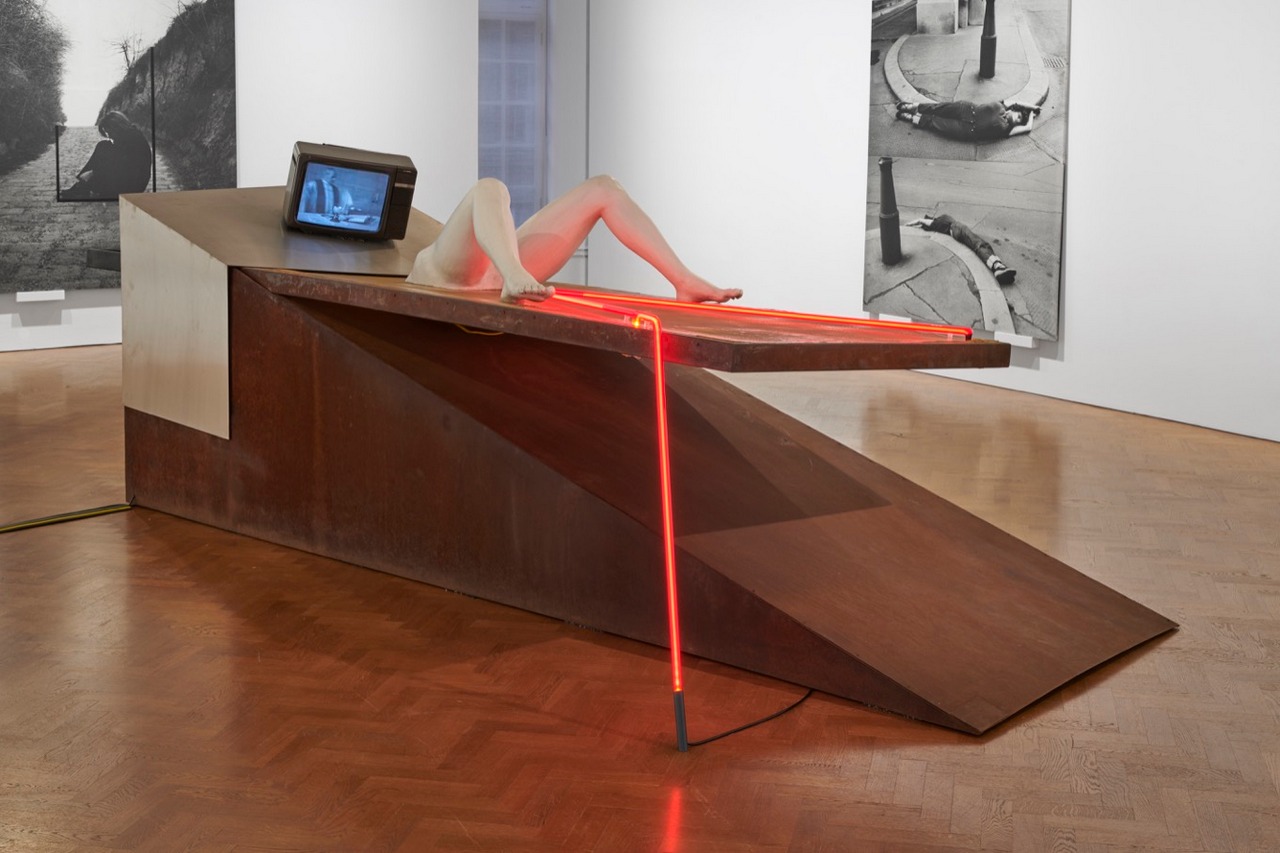
A pioneer in film, video and installation art, VALIE EXPORT (17/5/1940-14/5/2026) has produced one of the most significant bodies of feminist art in the post-war period. Her groundbreaking films and performances in the 1960s and 1970s introduced a new form of radical, embodied feminism to Europe, examining the politics of the body in relation to its environment, culture and society. The multi-disciplinary nature of EXPORT’s ‘Expanded Cinema’ practice, along with her use of her own body as an artistic medium, positions her among one of the earliest performance artists alongside Joseph Beuys and Allan Kaprow.Through documents or interviews, starting with: moments and memories, we reveal out from the past-unknown sides of big personalities, who left their indelible traces in time and history…
By Efi Michalarou
 Born Waltraud Lehner on 17/5/1940 in Linz, Austria, Valie Export grew up in the shadow of World War II. She was raised by a single mother, a war widow, who looked after three children in what Export later called a “women’s household”. The war left a lasting imprint: the young Waltraud spent part of her childhood in bunkers and on the run, while losing her father. She attended convent school until the age of 14, an experience that shaped her understanding of oppressive structures. At just 19, she became pregnant, married, and divorced quickly, later giving her daughter into the care of her older sister. Despite these challenges, she pursued her artistic education. From 1955 to 1958, she studied at the School of Arts and Crafts in Linz, and then from 1960 to 1964, she attended theNational School for Textile Industry (Higher Federal Institute for Textile Industry) in Vienna, studying painting, drawing, and design. After graduating in 1964, she briefly worked as a script girl, film editor, and film extra in the Austrian film industry.
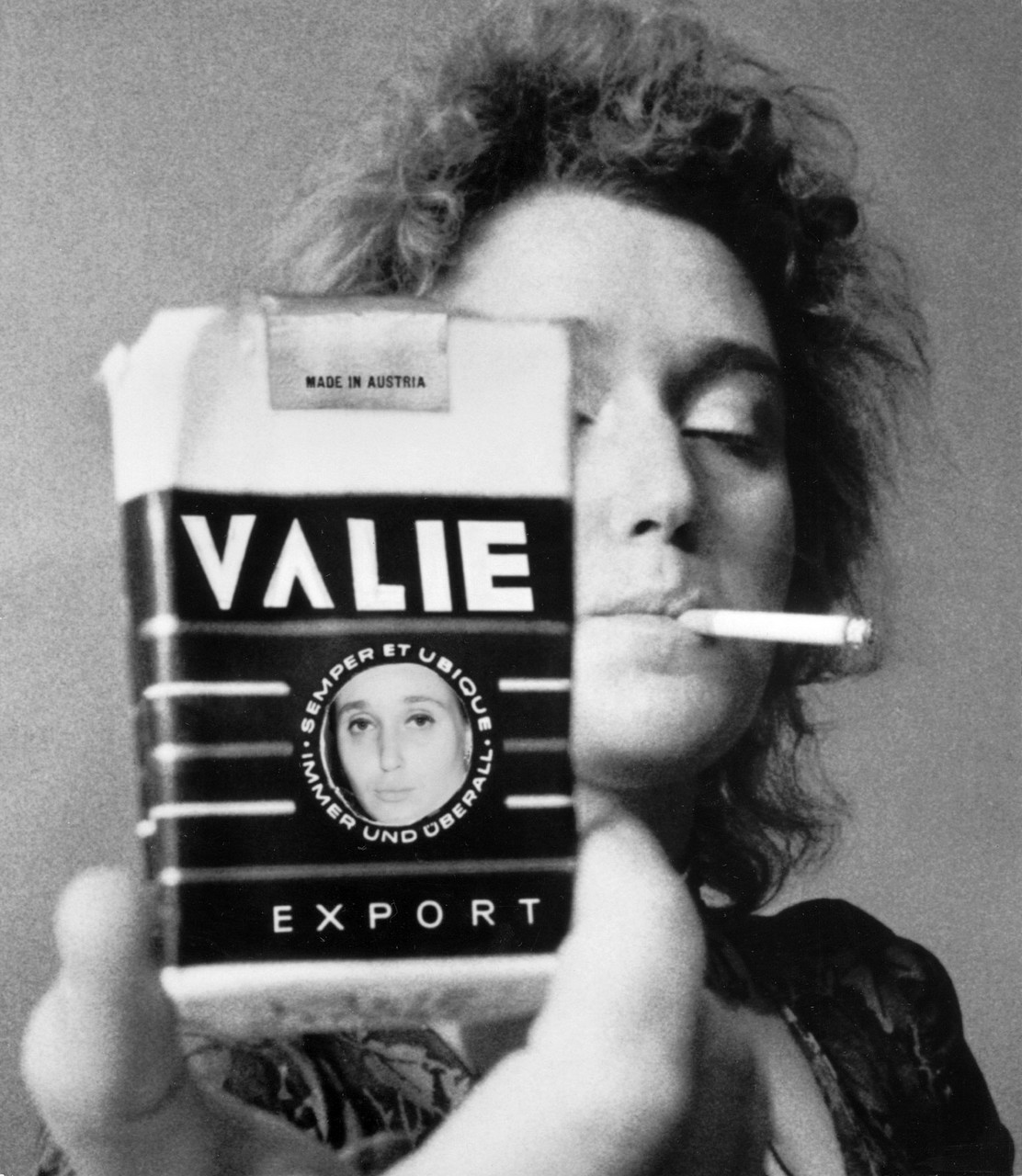
In 1967, at age 27, the artist made a radical decision: she abandoned her birth name (Lehner) and her former married name (Hollinger) to reinvent herself as VALIE EXPORT—always in capital letters, as an artistic concept and logo. She was driven by a desire to break from patriarchal naming conventions and to create herself from scratch, independent of any man’s identity. The name “Export” was partly inspired by the popular Austrian cigarette brand “Smart Export,” which she reimagined for a now-iconic self-portrait. She explained her motivation: “I did not want to have the name of my father [Lehner] any longer, nor that of my former husband Hollinger. My idea was to export from my ‘outside’ (heraus) and also export, from that port” (from the provided text). This act was more than a name change—it was a declaration of intent. Export had already shown a feminist bent from a young age. As she later recounted, at age 13 she wrote in her notebook, “In the beginning was the word and the word was a man”—an early sign of her lifelong critique of patriarchal language and power structures.
In the late 1960s, Export moved to Vienna and became associated with the Viennese Actionists—a group of male artists including Hermann Nitsch, Günter Brus, Otto Mühl, and Rudolf Schwarzkogler, who used provocative, often violent public performances to challenge post‑war Austrian conservatism. While she worked in proximity to them, Export positioned herself as a “Feminist Actionist” , distinguishing her work from the male‑dominated movement. In 1967, she became a member of the Vienna Institute for Direct Art (founded by Brus and Mühl) and a co‑founder of the Austrian Filmmakers Cooperative, alongside Ernst Schmidt Jr., Kurt Kren, Peter Weibel, and Gottfried Schlemmer. Export saw cinema as a male‑dominated medium used to sell a particular version of womanhood. She sought to “circumvent these forms of social control and to develop other forms of language outside of the system dominated by men” (from the provided text). Her work in **expanded cinema**—a movement that interrogated traditional film conventions through experimental projection, performance, light, and sound—allowed her to disrupt the cinematic gaze with the most intimate medium: her own body.
One of Export’s most famous early works is “Tapp‑ und Tastkino” performed in 1968 on a pedestrian street in Vienna. The artist strapped a small box around her naked torso, with a curtained opening in the front like a miniature movie theater. Using a megaphone, her collaborator Peter Weibel invited passersby to “visit the cinema”—that is, to reach through the curtain and touch her breasts for 30 seconds. The work broke down the usual barrier between spectator and spectacle, removing the depersonalization offered by a cinema screen or camera lens. It confronted the voyeuristic male gaze by making the viewer active and accountable, while the artist stared directly into the eyes of each participant.
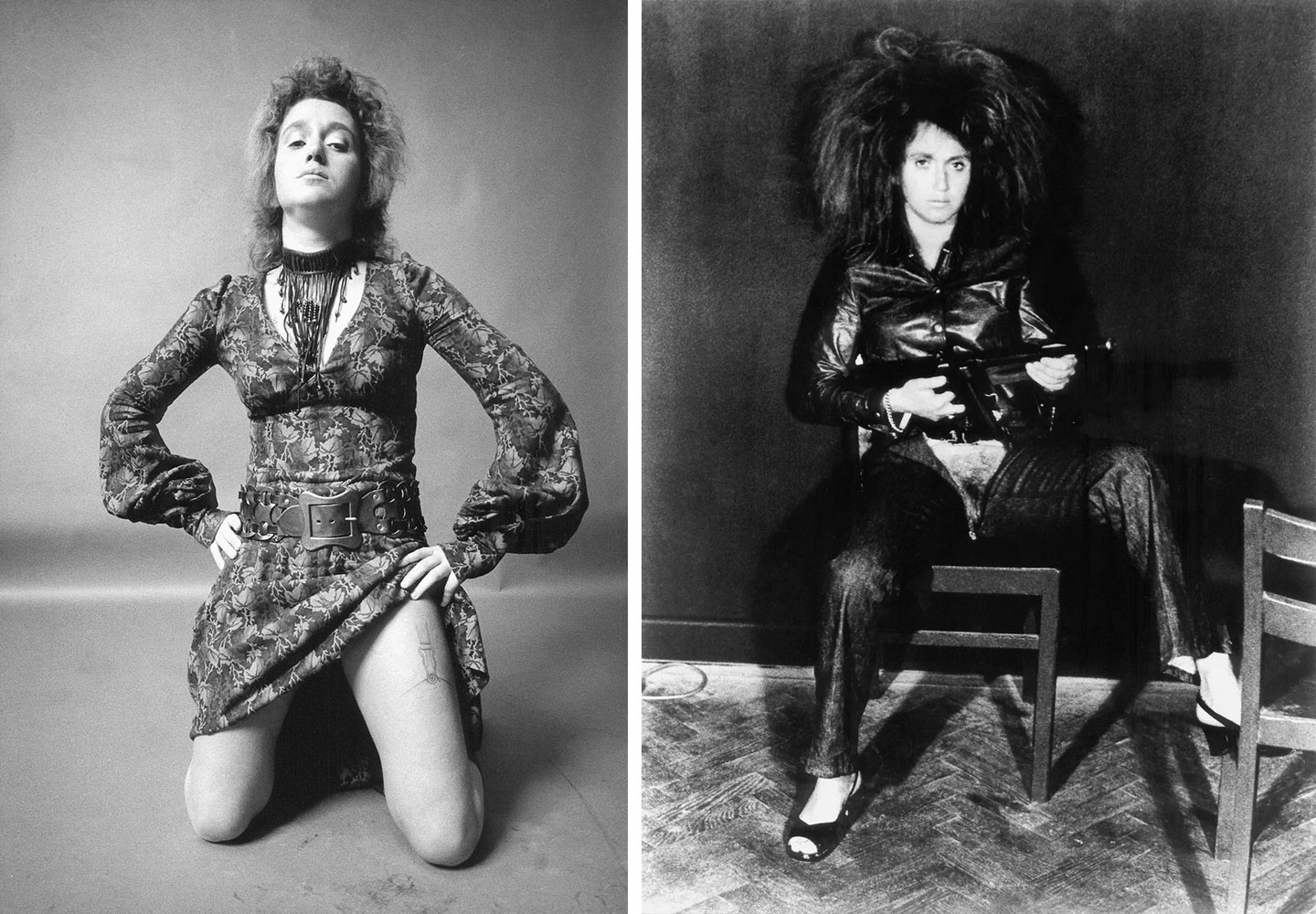
Perhaps Export’s most legendary performance, “Genital Panic”, took place in 1968 at an experimental arthouse cinema in Munich. She walked through the rows of seated spectators wearing crotchless trousers, a tight leather jacket, and wild hair, her exposed genitalia at face level. The audience was forced to confront a real woman’s body instead of the on‑screen, male‑constructed fantasy. The performance shocked viewers, and many left the theater. A year later, the photographer Peter Hassmann captured the performance in a staged photograph called “Action Pants: Genital Panic” in which Export is shown holding a machine gun, amplifying her declaration of power. The work became an avant‑garde touchstone, and Export had the image screenprinted in a large edition and fly‑posted in public squares—a guerilla‑style installation challenging the objectification of the female body.
In the performance “Eros/ion” (1971), Export rolled her naked body in shards of broken glass, then pressed herself against paper or a glass plate, leaving painterly imprints from her lacerated skin. The work explored the relationship between social signs and the body, culture and material. Export explained that the shards of glass represent “a sacrificial mark, in which the female body is represented as violated, or a violating subject, that does not subordinate itself to the rules of the sociocultural gaze” (from the provided text). The act violated social norms—not the artist herself.
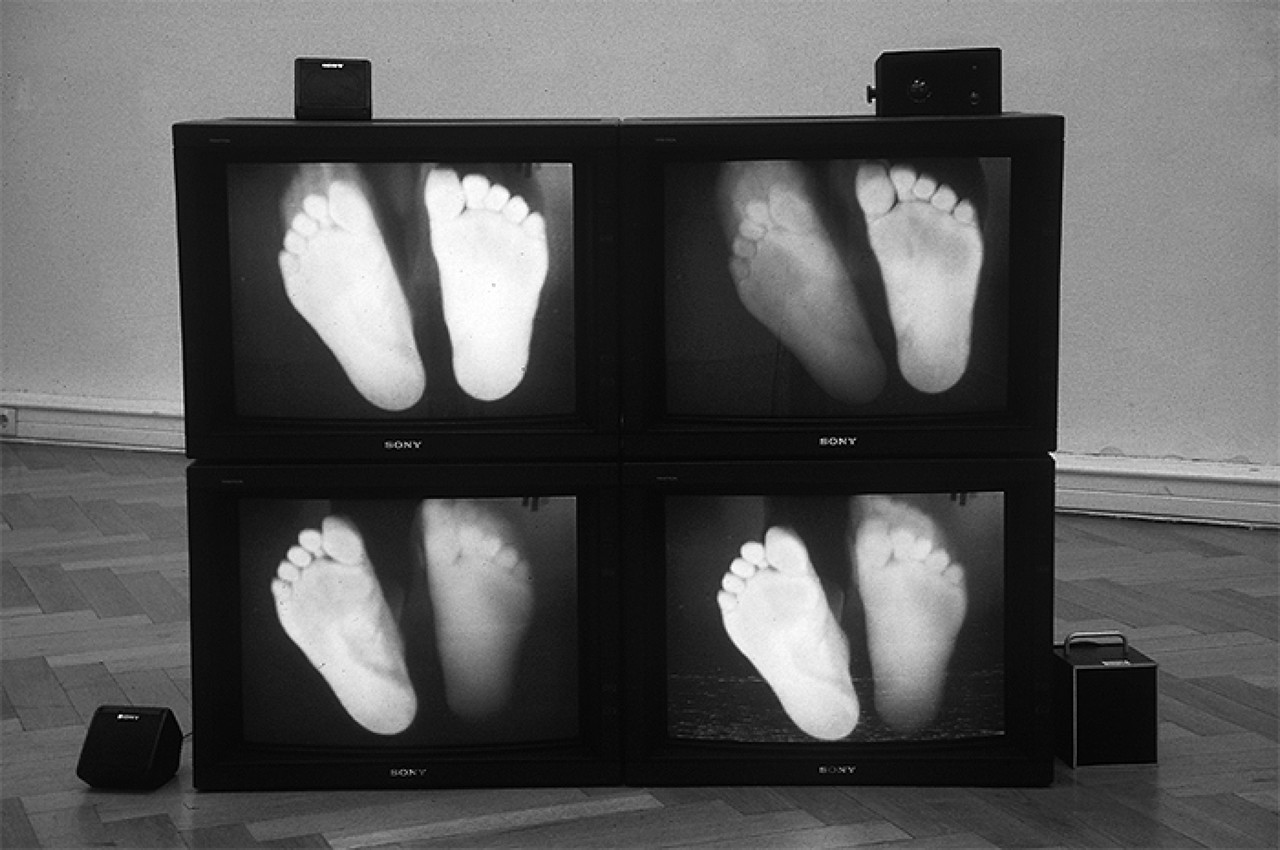
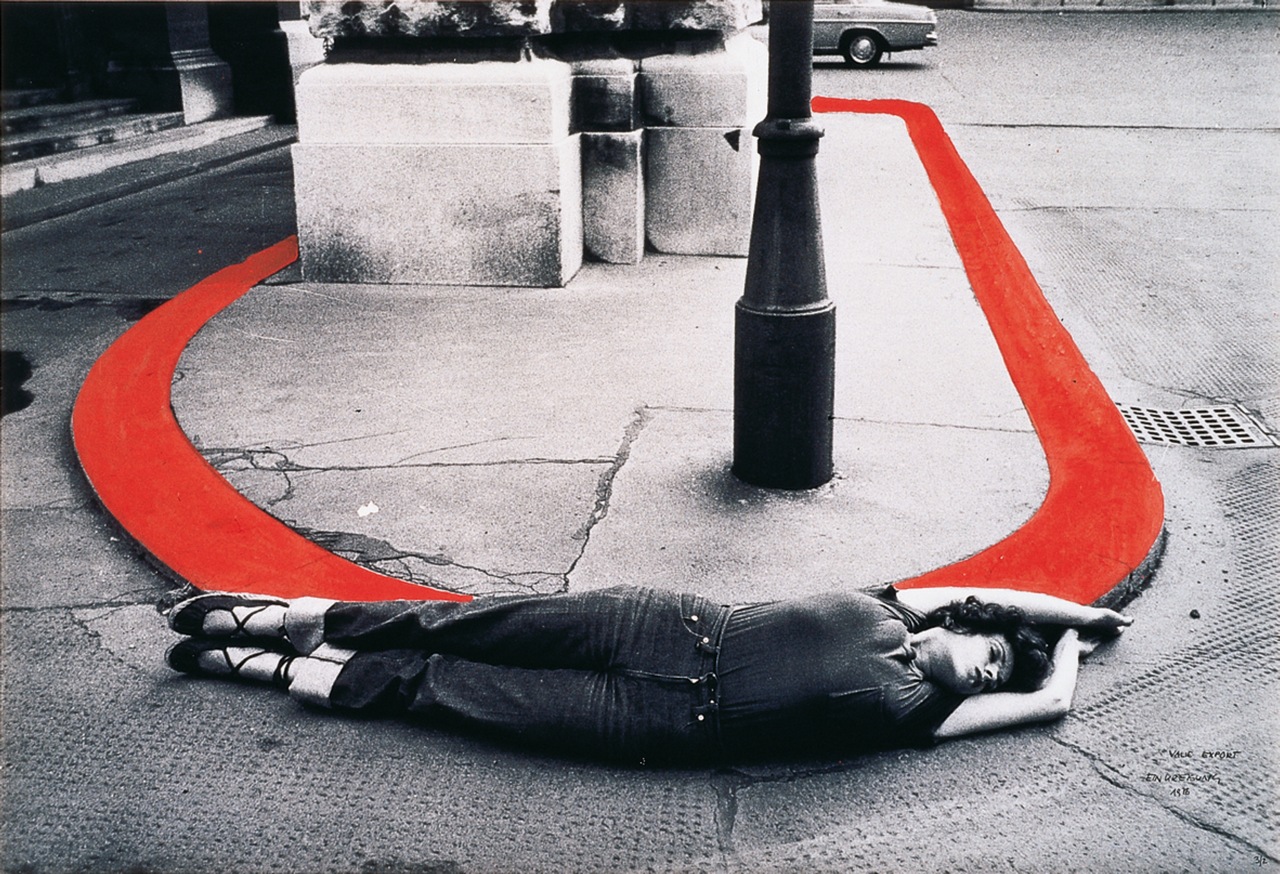
In the photographic series “Body Configurations” (1972-76), Export contorted her body around natural and man‑made forms in public spaces, addressing how the body adapts to its surroundings. These works showed a woman taking up space unapologetically, challenging both architectural and ideological constraints. In the video “Adjunct Dislocations” (1973), she strapped 8mm cameras to her front and back, presenting her own body as technology‑enhanced and reflecting on the perception of space and point of view in film.
Throughout the 1970s and 1980s, Export continued to push boundaries across multiple media. She made experimental feature films such as “Unsichtbare Gegner” (1977), “Menschenfrauen” (1979), and “Die Praxis der Liebe” (1984). In 1975, she co‑founded Film Women International** (UNESCO) alongside Agnès Varda and Susan Sontag. Export also had a distinguished academic career. She held teaching positions at institutions including the University of Wisconsin, Milwaukee (1989–1991); the Berlin University of the Arts (1991–1995), where she also served as Vice President (1994–1995); and the Kunsthochschule für Medien in Cologne (1995–2005). In 2015, the **VALIE EXPORT Center** was founded in her hometown of Linz.
In 2003, she was elected a member of the Academy of Arts, Berlin. Her work has been exhibited worldwide, including at documenta 6 (1977) and documenta 12 (2007), the Venice Biennale (1980, representing Austria alongside Maria Lassnig), the Centre Pompidou in Paris, and the Museum of Modern Art in New York. In 2024, Export was nominated for the Deutsche Börse Photography Foundation Prize, one of the most prestigious awards in contemporary photography.
Valie Export died on 14/5/2026 in Vienna, just three days shy of her 86th birthday. Her death was announced by the Valie Export Foundation. Throughout her life, she fought uncompromisingly for gender equality, using her own body as a medium to challenge patriarchal structures, voyeurism, and the media’s construction of femininity.