PRESENTATION: John Armleder-Ripple: Furniture Sculpture and Painting after 1982
In a small prison laundry room in Geneva, a young man arranged a table, a window, and some wires. It was a modest, almost mundane act — but for the Swiss artist John M. Armleder, it was a revelation. That makeshift arrangement, made during a seven-month stint in prison for refusing his country’s mandatory conscription, contained the seeds of a career-long inquiry into the collective, the functional, and the beautiful.
By Dimitris Lempesis
Photo: David Kordansky Gallery Archive
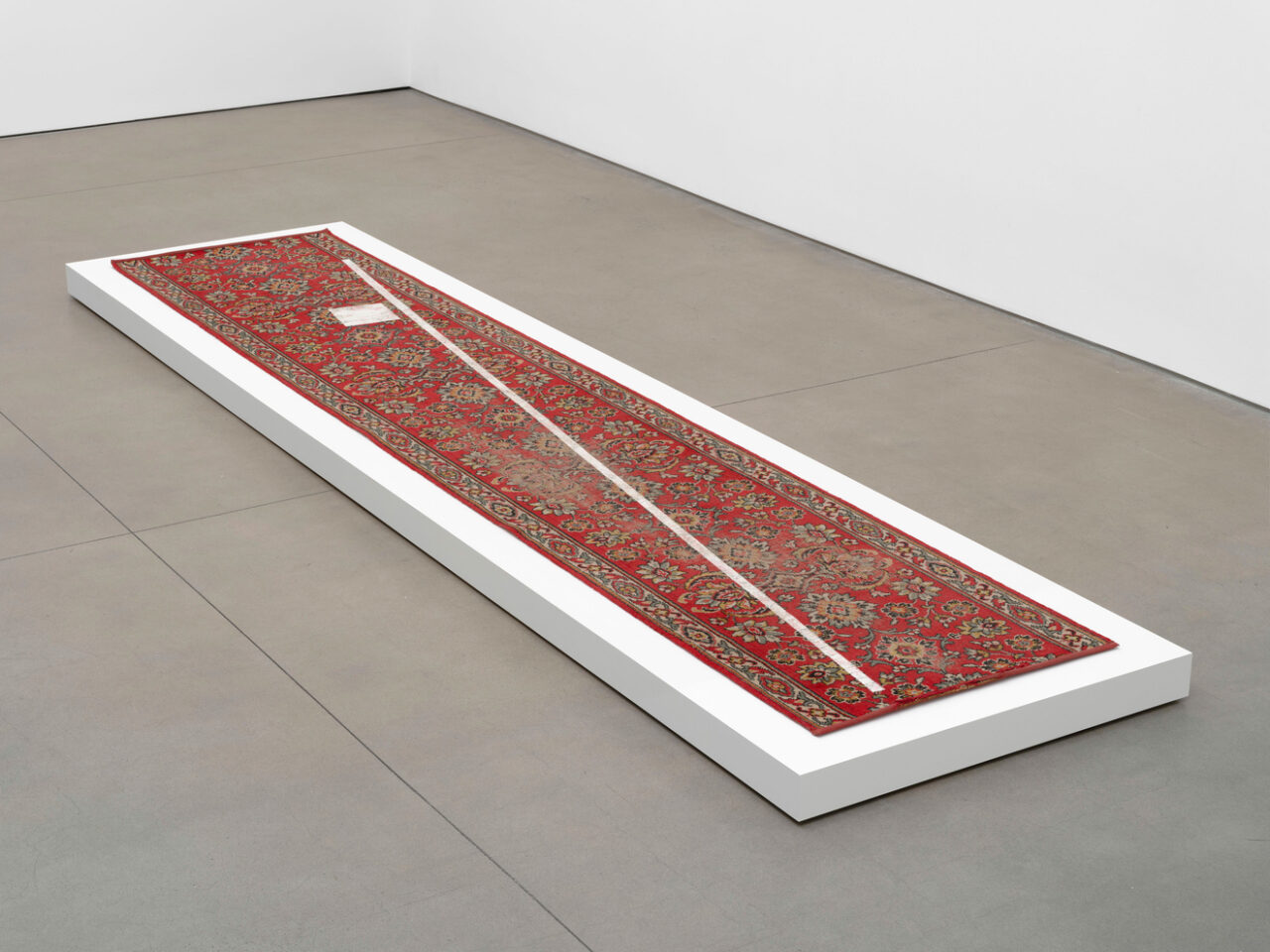
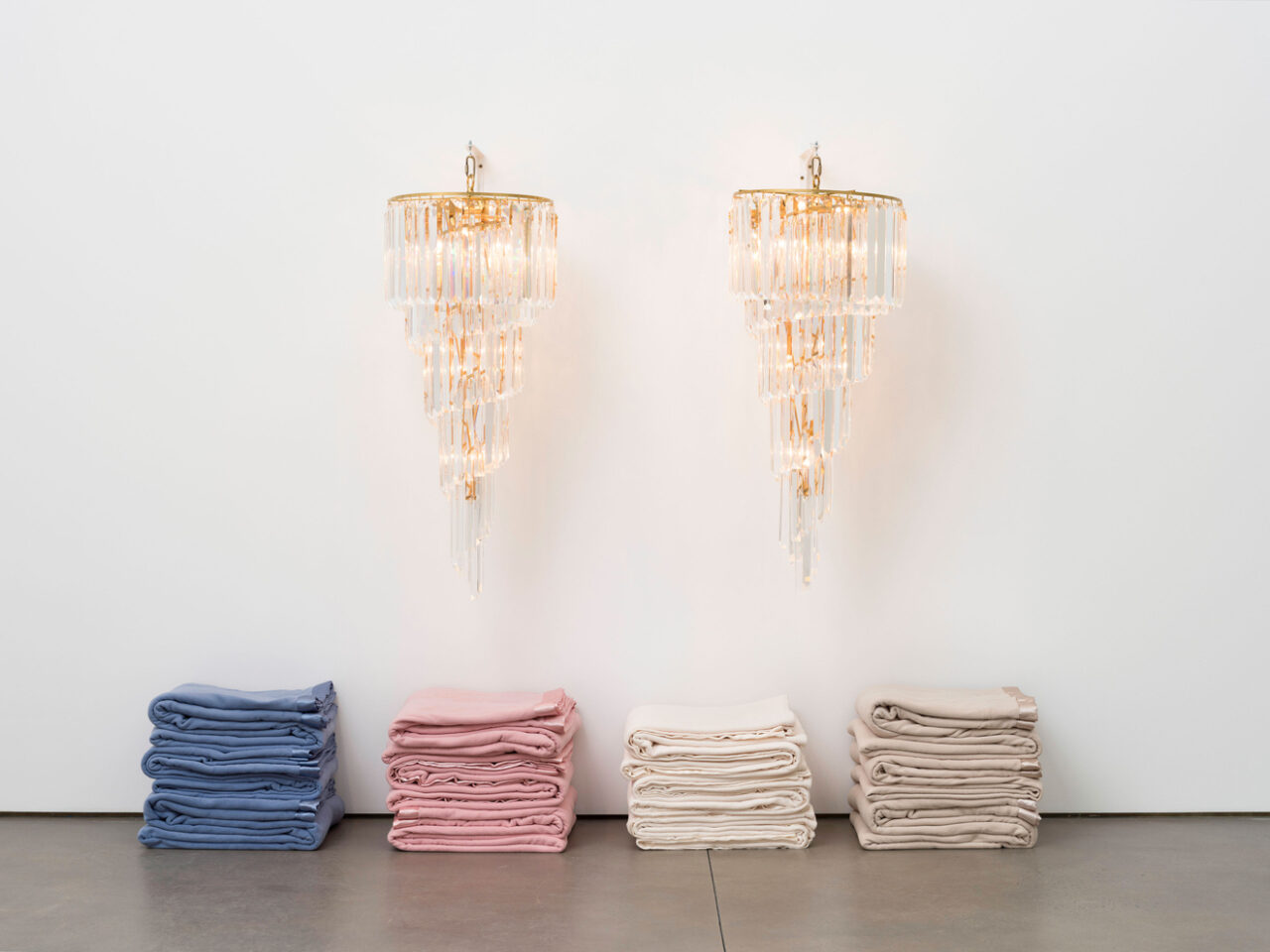
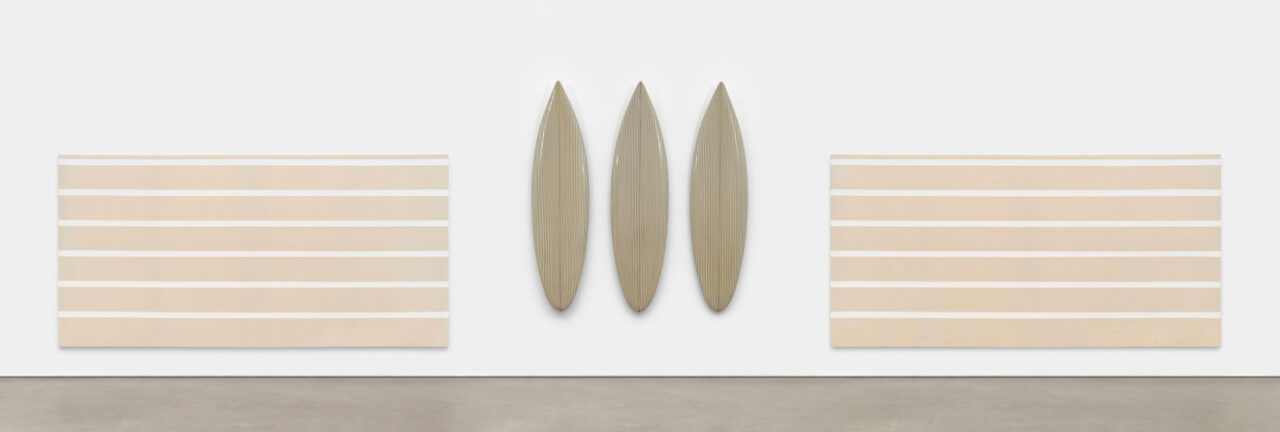
Fifty years on, that same impulse is on full display in “Ripple: Furniture Sculpture and Painting after 1982”, the exhibition assembles a constellation of Armleder’s iconic works from the 1980s and beyond. Here, vintage vanities, guitars, and other found objects stand side by side with luminous abstract canvases, challenging the very boundaries between art and life.
Born in Geneva in 1948, Armleder emerged from a formative engagement with the Fluxus movement, whose irreverent, anti-commercial ethos he helped champion as a co-founder of the Ecart group* in 1969. That early period — a whirl of happenings and musical performances reminiscent of the work of John Cage and Georg Brecht — established a template for a practice that would always prize process over product and chance over intention.
Two seemingly opposite experiences permanently shaped his outlook. The first was a principled act of civil disobedience. In 1967, Armleder refused Switzerland’s mandatory military conscription, leading to a seven-month imprisonment at the Geneva prison of Saint-Antoine. Later, he spent formative hours on a rowing team, practicing daily. For Armleder, both the enforced collectivity of prison and the discipline of team rowing reaffirmed a belief that the individual is always part of something larger. It was in the prison laundry room that he first began to arrange ordinary objects into what would eventually become his “Furniture Sculpture” series.
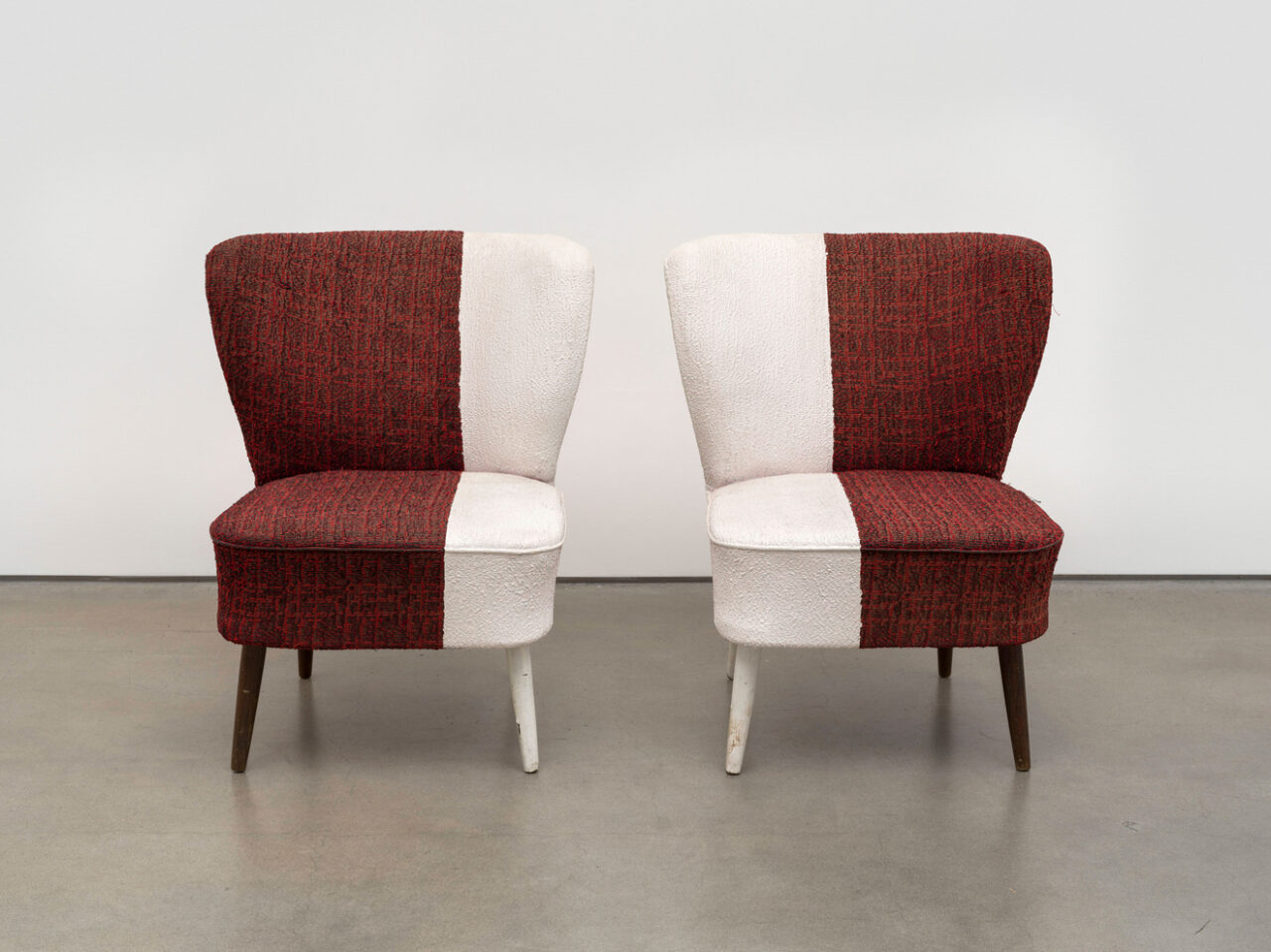
Armleder’s first official “Furniture Sculpture” — a 1979 work that combined abstract gouache with a chair — announced a new kind of hybrid creature, neither purely painting nor purely sculpture. The works in “Ripple” extend this logic, incorporating found furniture, mirrors, and musical instruments into fresh dialogues with abstract canvases.
Take “FS 156” (1987), a vintage wooden vanity whose mirror has been replaced by a monochrome canvas. The effect is quietly radical: the painting recedes to the background, becoming interchangeable with a functional, decorative object. The gesture nods to Marcel Duchamp’s readymades while also recalling the artist’s childhood, growing up in his parents’ hotel, where furniture was endlessly moved and rooms constantly re-decorated.
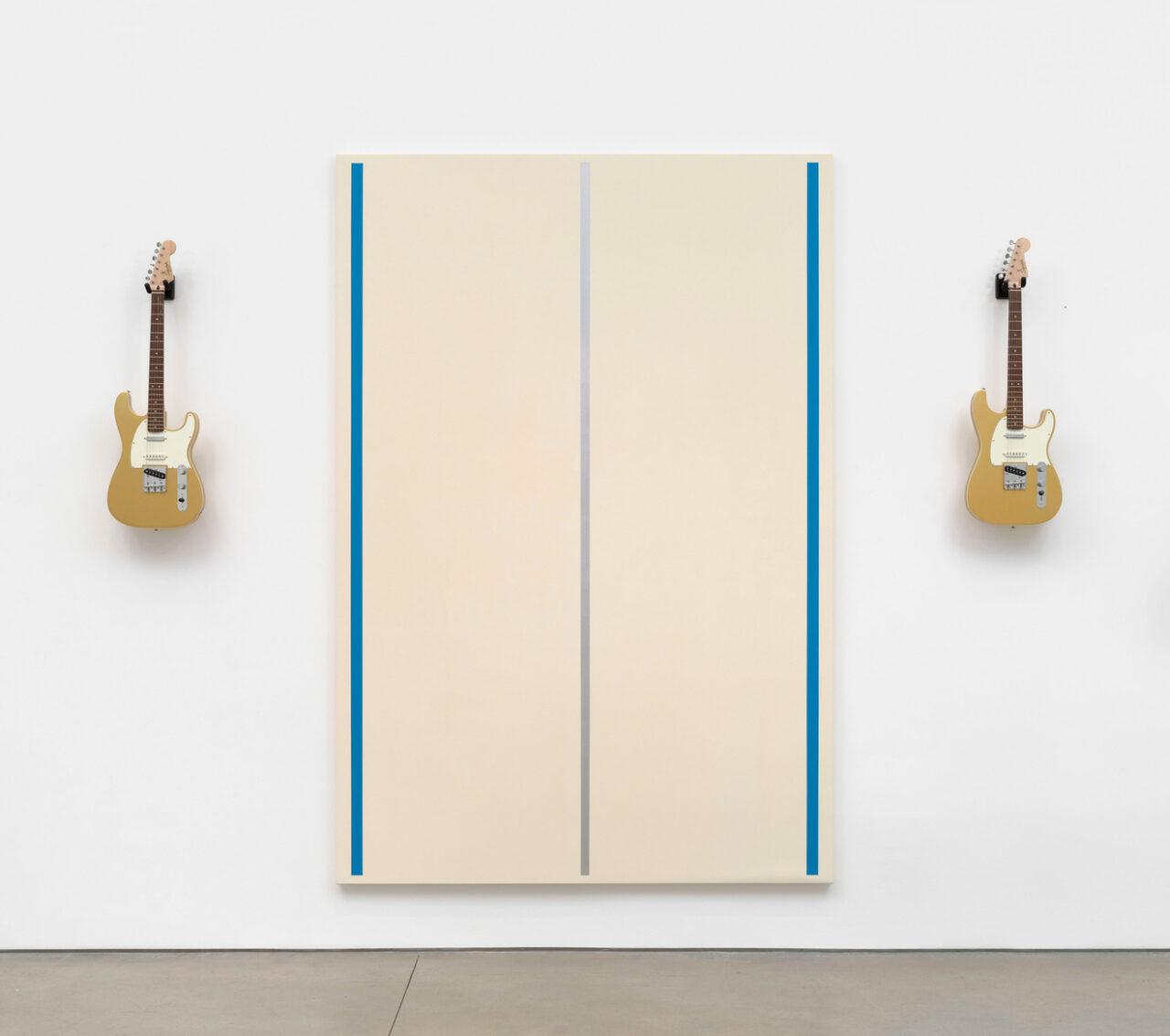
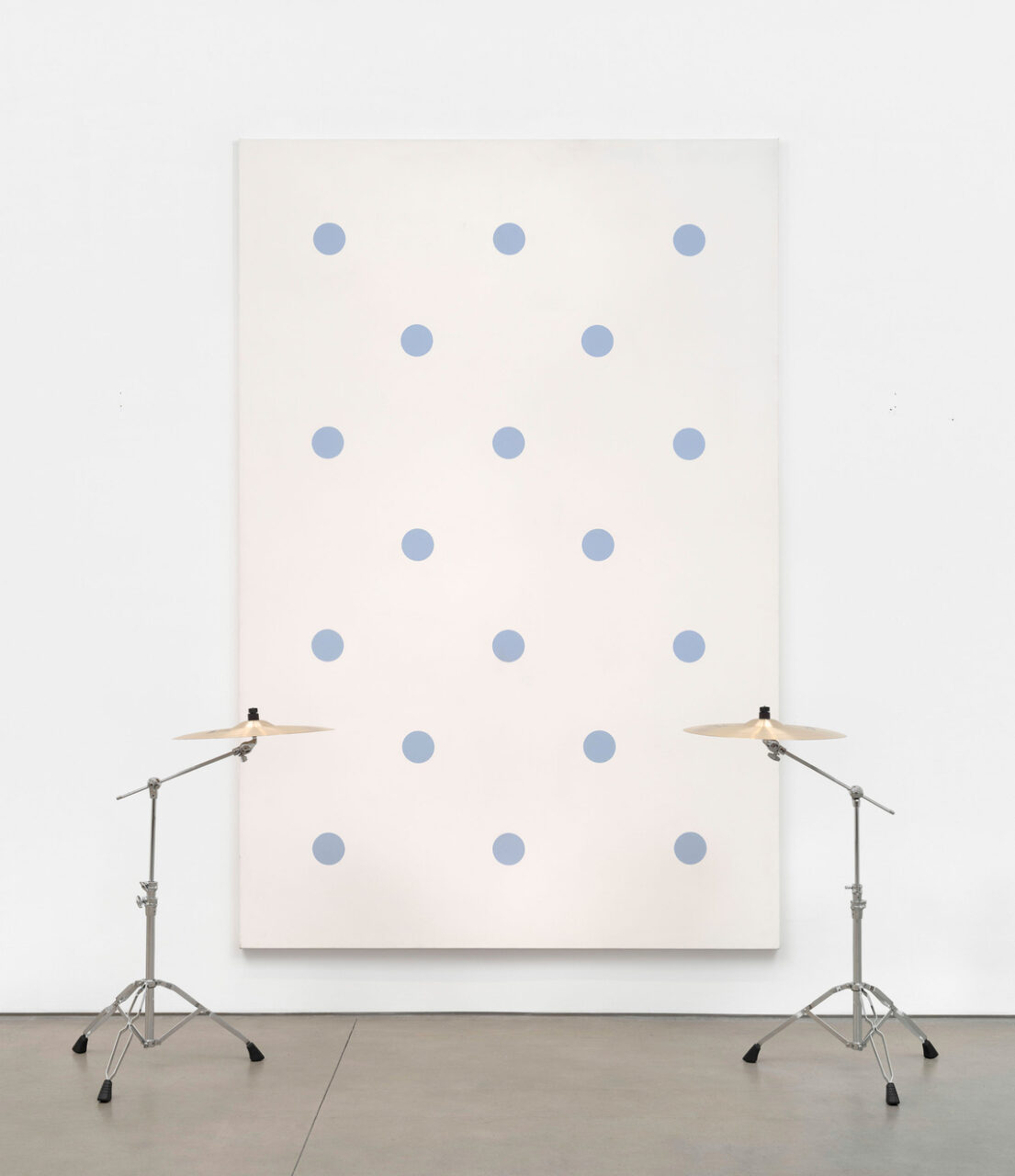
Other works introduce surprising sonic elements. In “Untitled (FS)” (1987), a wall-based painting is flanked by two musical instruments — they seem almost poised to be picked up and played. It’s a subtle reference to Erik Satie’s concept of furniture music, a sound meant to exist in the background while viewers go about their lives. Armleder’s sculptures operate similarly, offering generous access points for association rather than demanding rapt, reverent attention.
Alongside the furniture pieces, the exhibition features key examples of Armleder’s celebrated “Pour Paintings.” Works like “Untitled, U17” (1986) embody a practice that dates to the 1970s. The artist pours, drips, and manipulates paint directly onto an upright canvas, allowing the material to pool and layer into textured striations, ridges, and rivulets. The result is a composition shaped as much by the pull of gravity and the chemistry of drying paint as by the artist’s hand.
In their embrace of chance, these paintings are Armleder’s most direct homage to John Cage. A formative encounter with Cage’s essays, collected in “Silence: Lectures and Writings,” taught Armleder that authorial intention need not be the sole engine of meaning. Like Cage’s compositions, the Pour Paintings invite accident, contingency, and the viewer’s own interpretive freedom.
Though Armleder’s output has been variously linked to Dada, Russian Constructivism, Pop Art, and the Neo-Geo movement, perhaps his most enduring debt is to Marcel Duchamp. Armleder’s choice to leave many of his works untitled — a consistent gesture throughout his career — asserts that the final meaning of a piece belongs not to the artist but to the viewer. It is an act of intellectual generosity, an invitation for each of us to complete the work in our own way.
The exhibition does not simply present objects; it activates a space of exchange. Armleder once created his first Furniture Sculpture in a grim prison laundry. Today, those same principles of improvisation, collectivity, and dialogue continue to ripple outward — turning a gallery into a shared room of possibility.
*Ecart group was an alternative and community-based contemporary art collective, close to Fluxus—the New York–born artistic movement of the 1960s—which produced concerts, objects, happenings, and published books and journals.
Photo: John Armleder, FS 155, 1987, acrylic on chairs, dimensions variable, © John Armleder, Courtesy the artist and David Kordansky Gallery
Info: David Kordansky Gallery, 513 West 20th Street, New York, NY, USA, Duration: 7/5-13/6/2026, Days & Hours: Tue-Sat 10:00-18:00, www.davidkordanskygallery.com/