INTERVIEW: George Harvalias
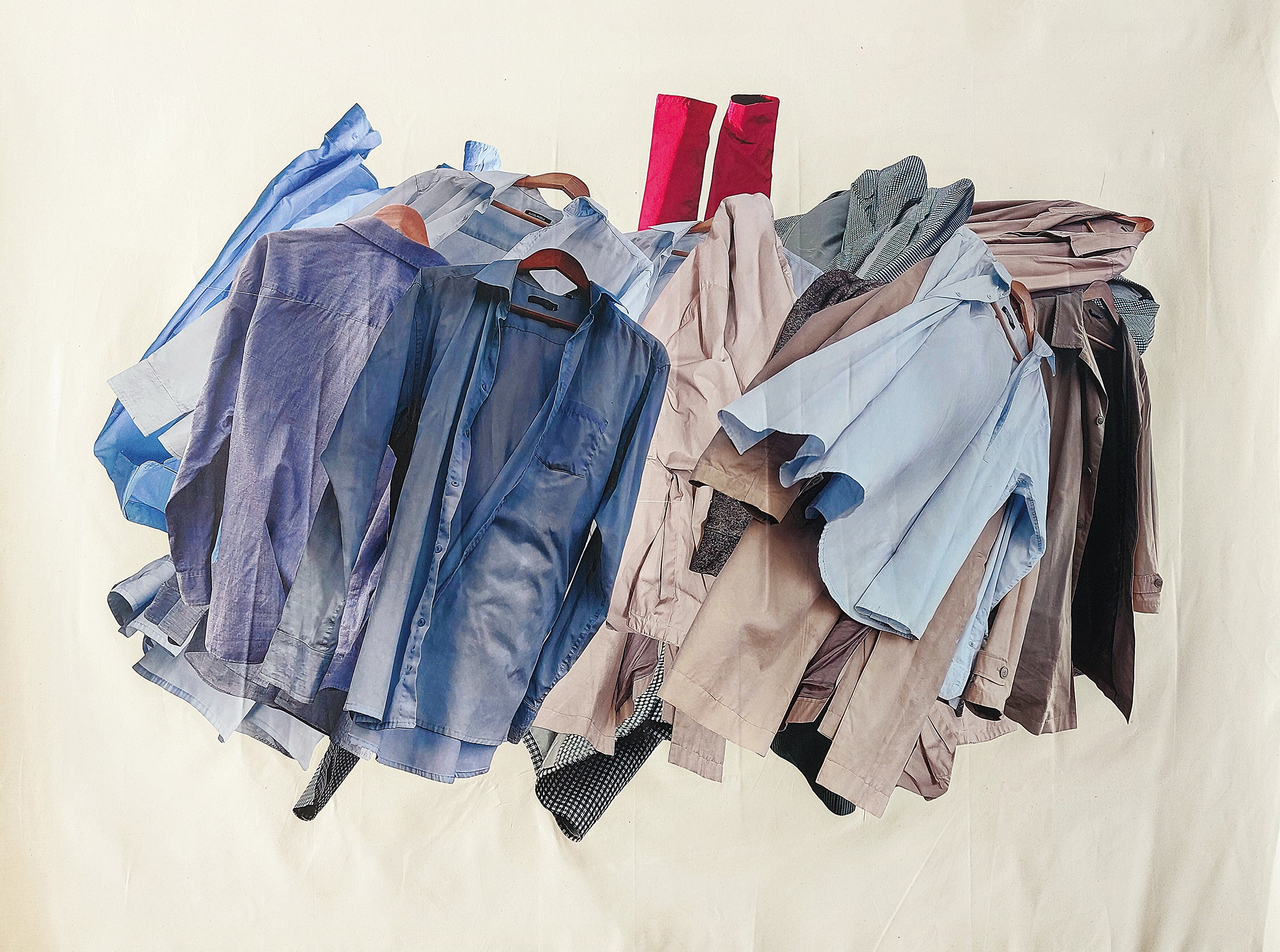
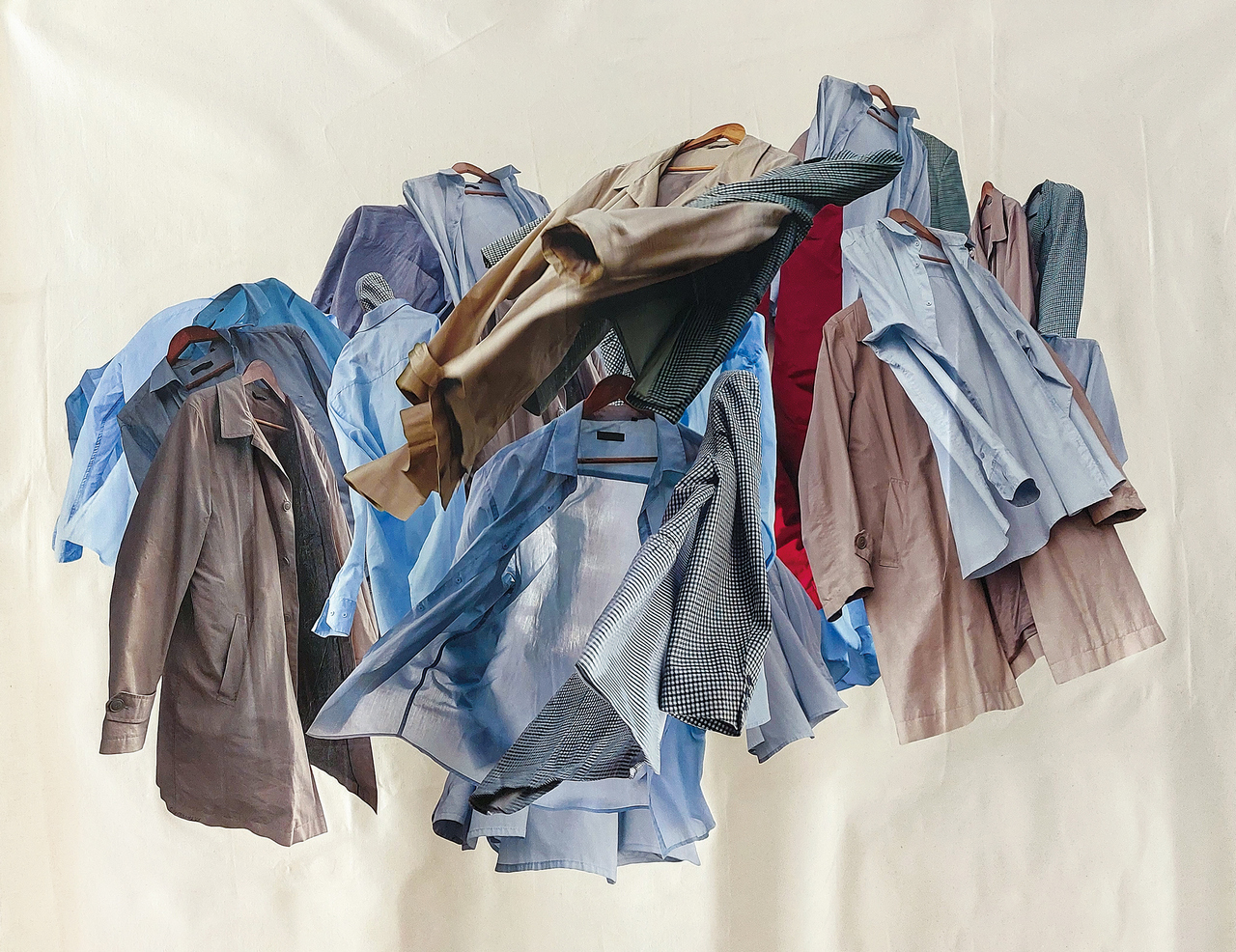
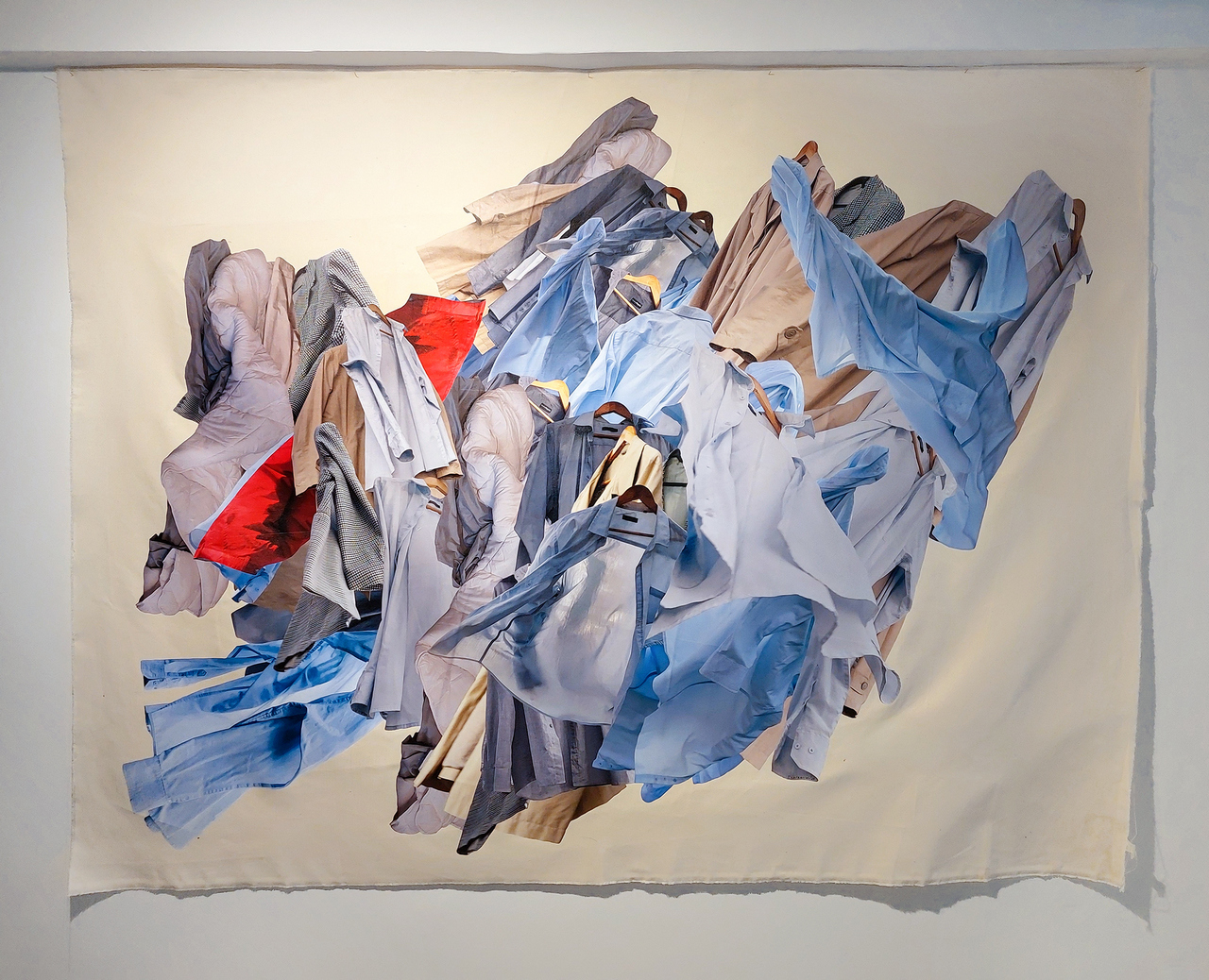
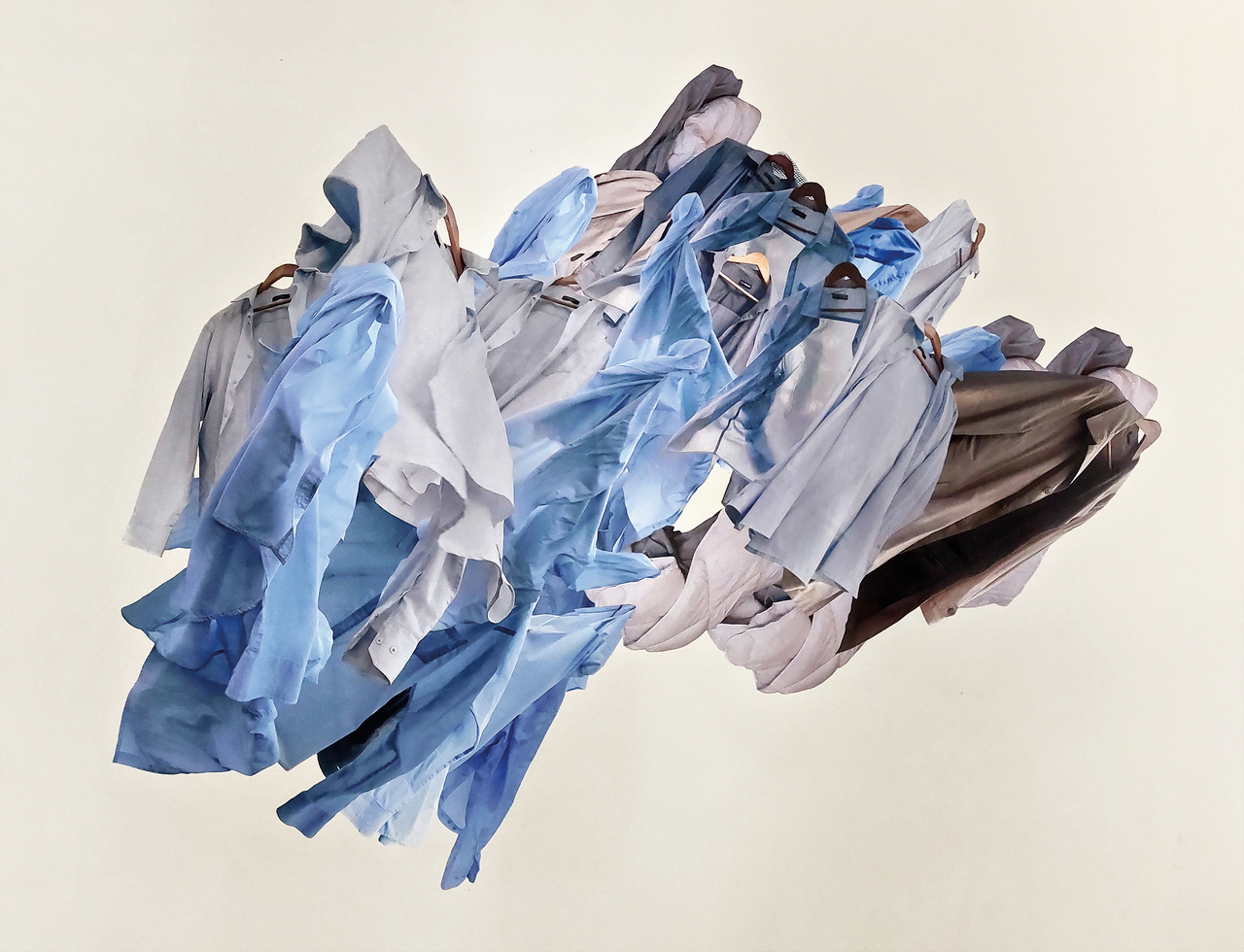
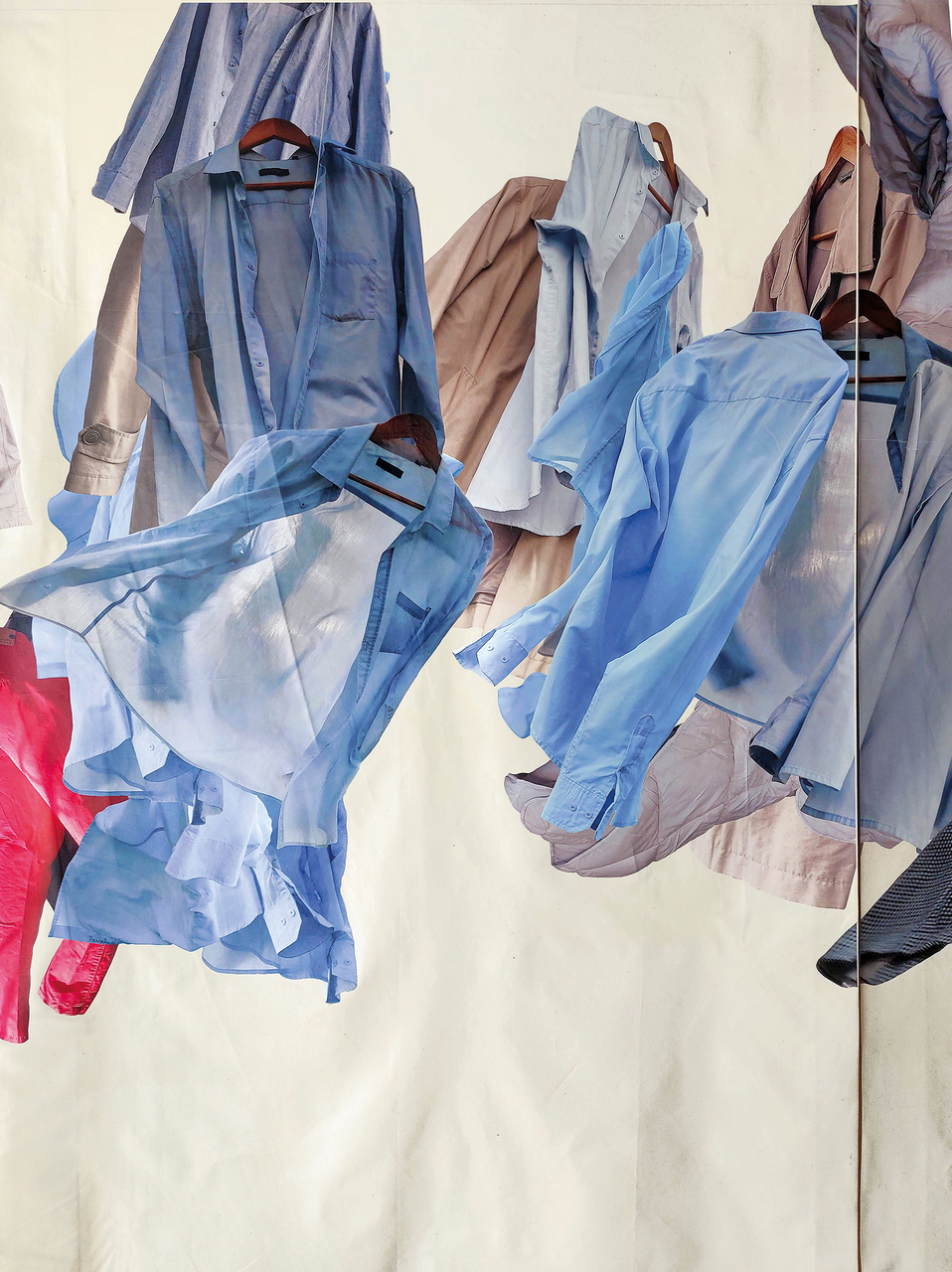
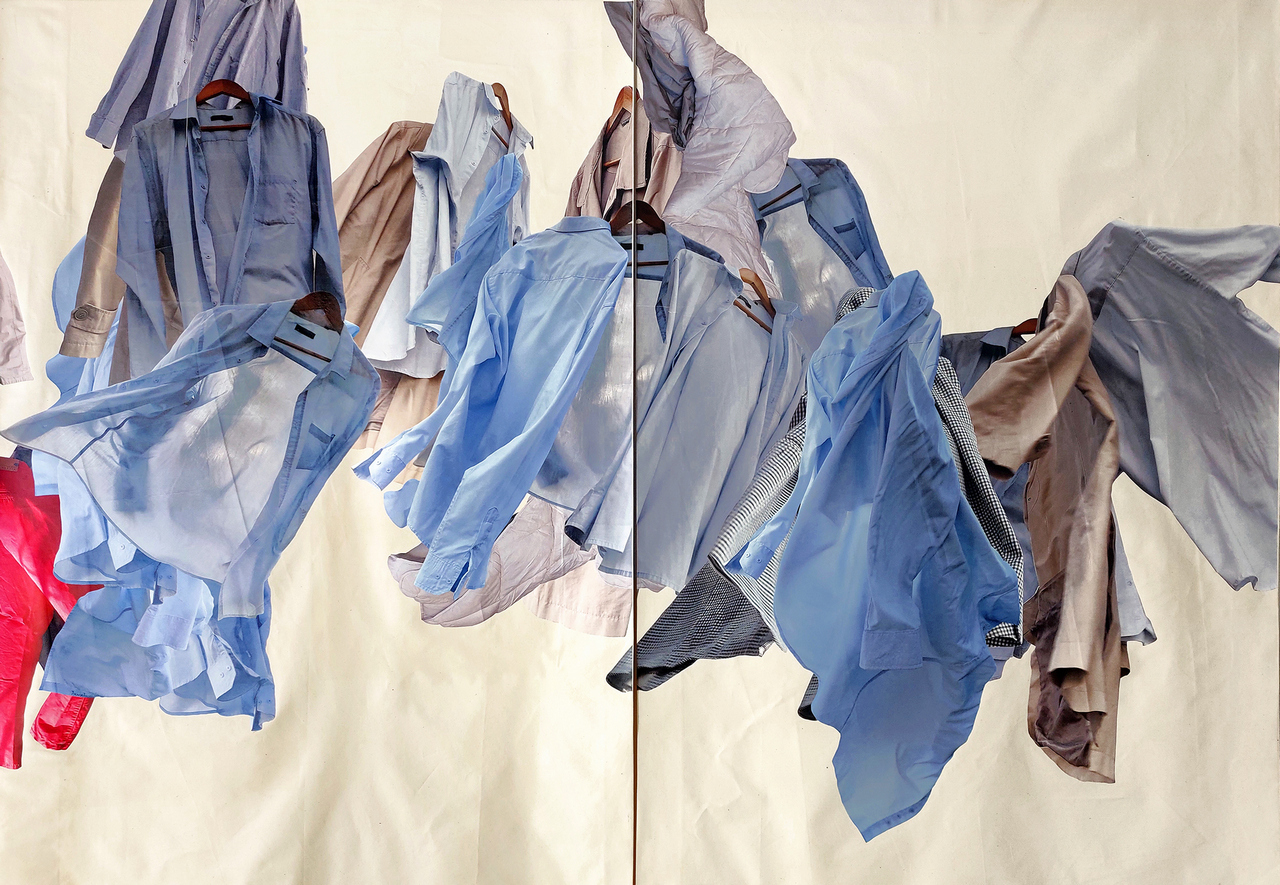
 On the occasion of his solo exhibition titled “The Wardrobe”, hosted at Batagianni Gallery until June 20, 2026, Giorgos Charvalias gives an interview to our magazine. The central theme of his new exhibition is “the vision of memory” and its visual exploration. For the artist, the “wardrobe” is not approached merely as a piece of furniture, but rather as a symbolic “topos” where traces of life, personal experiences, losses, and elements of personal identity are stored. It is an exhibition that is at the same time both personal and collective. The repeated use of essentially the same image suggests that there is no definitive interpretation or final answer. The “wardrobe” represents something different to each of us. Personally, I focus on absence and loss, whereas others may focus on something else entirely. After all, nothing is ever identical nor ever the same, as the artist himself characteristically states. In the interview that follows, we discuss concepts such as the image, memory, repetition, the autonomy of the artwork, as well as the role of Art today.
By Vicky Trochidou
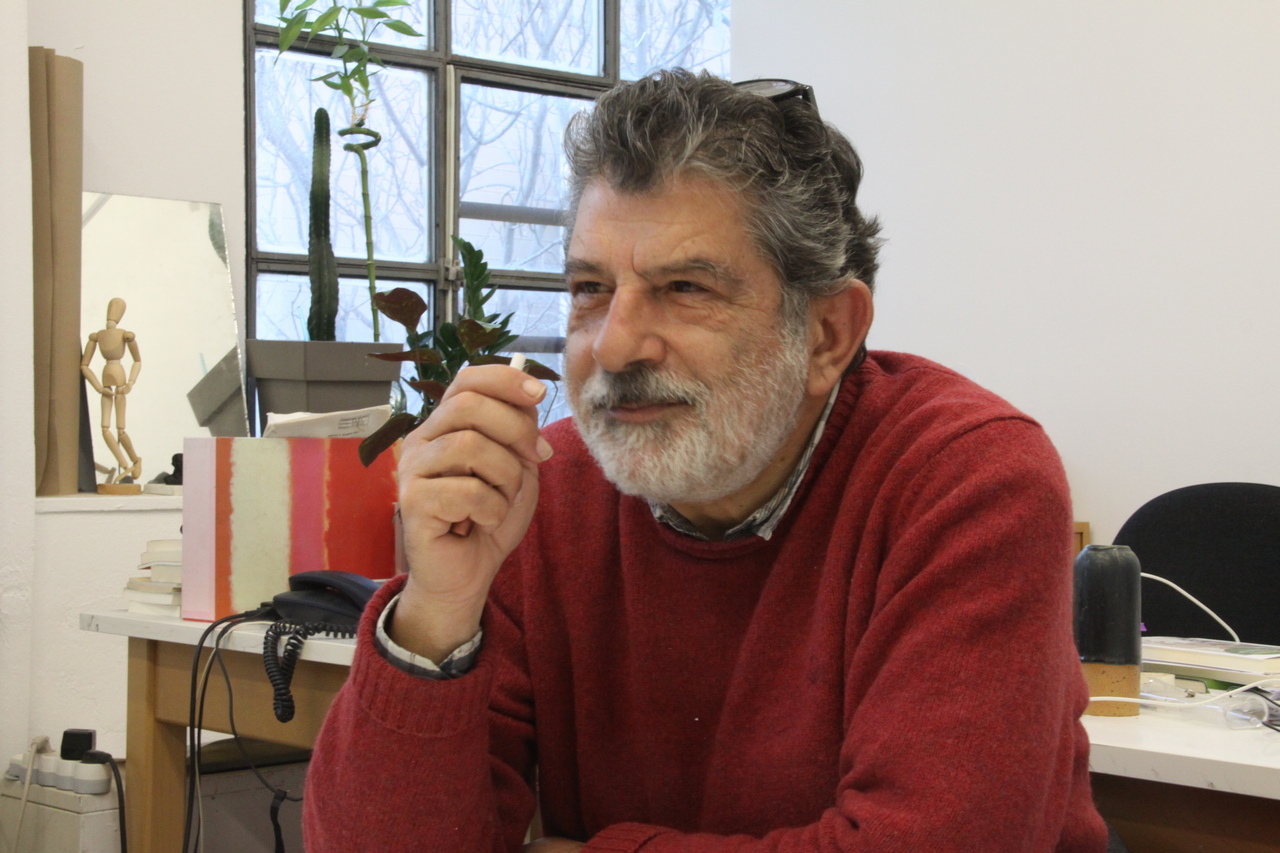
Photo: Portrait-Dimitris Lempesis
Artworks: George Harvalias’ Archive
Why did you choose the “Closet” as a conceptual space? When did you feel that this space could become the core of this exhibition?
It is an image that I had been obsessively resurfacing over many years, one I would repeatedly bury, repress, postpone, fold back into my own “Closet.” I had produced and exhibited some short versions of it, mainly videos of trousers falling, images functioning as counterpoints within a broader field of relations.
I find it difficult to accept and appropriate an object. It requires a prolonged process before it can be claimed as my own. As a visual motif, it has been inscribed since the early 2000s through fragmentary attempts and variations and I began to engage with it more systematically in 2024, investing myself more fully in its articulation.
I am usually preoccupied with a back-and-forth movement between the collective subject and the political body, and the fragmented subject. Having developed over many years a body of work with a clearly legible political character (stock exchange boards, war scenes, aircraft carriers, collateral damage- I came to feel that this work no longer needed me, as it is now performed daily in the news. Reality, when it finally confronts us, surpasses us in the most tragic way. What we used to fear, ithas already happened.
Therefore, I turned inward, giving space to my Closet. n any case, objects speak more about us than we do. . They are not merely – nor primarily- objects of use, but systems of codes, meanings, and signs.
In your works we encounter empty garments and traces of presence without bodies. Are you more interested in the notion of absence, or in the memory that persists through it?
“Empty shirts,” indeed. To be honest, I am not entirely sure what it is that interests me. Typically, I go through periods of crisis marked by hesitations, rational refusals, and rejections of the image/object I attempt to appropriate and work with. Yet at some point it begins to overwhelm me, to reappear, to surface from here and there, until I eventually accept it.
I do not know its meaning. I (we) become its carrier, like a “contaminated” host in which it settles and expands. I do not occupy a fixed position from which I oversee or detach myself from my work. In psychoanalytic terms, it resembles a form of “transference neurosis”. where the place of the analyst is taken by the work itself. This “misunderstanding,” so to speak, operates as a generative mechanism.
What concerned me here were is what remains, what is left behind: a shift from wholeness toward the “remnants” of the subject, what lies outside the Plan—“empty shirts,” both personal and collective.
What you are asking, of course, can be read in this way. The images of the works are polysemic: fixed as forms, yet like musical scores endlessly open to interpretation.
Reading begins precisely from what we see: a decisive moment, a cut within flow and continuity. Perhaps this is why the moment persists. To answer your question directly, what interests me is memory itself as a form of vision: what, how, and how much we see within it: curvatures, duration, a moment of impact, like a collision.
In the past, you have worked with a wide range of media and materials. Which medium do you consider best allows you to express yourself? In your current work, does the medium you use (heat transfer on fabric) serve its purpose?
Ideally, the conditions are set by the work itself, by the project as such, and, on the other hand, by reality. How much money I have, what space I have, what kind of support is available, how far I can push the work before I reach a financial dead end. How much I can allow myself to take away from my children’s own right to spend or invest in their own sense of autonomy. As I like to repeat, “life is a business that always runs at a loss.”
There is a functional elasticity between conditions, means, and possibilities. Life is not an entirely coherent, clean, theological proposition, nor, of course, is it entirely incoherent. Somewhere in between operates a necessary parameter of elasticity.
However, there are also things that cannot be painted, and therefore require other ways of working through them. The Futurists used to argue that the flight of an airplane cannot be represented as a still life. Yet consequences do not always unfold in a linear way either.
I often work with what could be described as a visual equivalent of “weight.” In this case, with the falling garments, I should, strictly speaking, have made a video, a temporal medium. However, it kept provoking me, urging me to inscribe this temporal dimension of an event within spatial coordinates: to produce a spatial visual situation of air, levitation, uncertainty, flight, fall, vortex, duration, like “an astronaut suspended without return.”
As I grow older, I return to what I have loved, what has shaped both my work and my character. I return to painting, to poetry, and I continue to be driven by curiosity.
As for the heat transfer process itself, I used it so that garments could be perceived instantly as legible, unequivocal images of objects, a condition for their function as a poetic metaphor.
You mention that images “no longer belong to you.” When do you consider that a work ceases to be personal and acquires an autonomous life?
I would say always: the artist is also a medium, a carrier , someone who does not so much oversee the work as become increasingly absorbed by it. The work -the experience of it- is not a construction. It does not follow the logic of instructions, like an IKEA manual. Even in its most constructed form, it remains a space, an experience, enigmatic by nature. And this, however metaphysical it may sound, is not necessarily so. It is perhaps an aspect that is often overlooked today, within the logic of pragmatism or political “realism,” and even within the field of art itself, just as Utopia has been abandoned as a way of living.
At best, the artist is is really grinding. Something begins to shift when the work itself starts to speak to us,when it takes its own voice. At that point, we can only listen and follow it. It moves away from us it becomes autonomous.
Why do you use repetition in this work?
Repetition establishes or exposes a condition inherent to the image. It is never identical, it is never singular. It is a difference within likeness, an uncertainty of resolution. The event remains unstable, shifting within difference like a psychic repetition compulsion that moves the spectator into an intrinsic condition of uncertainty, into the impossibility of a definitive state, of stabilization, destabilizing the image toward an optical shock. Toward the impossibility of closure.
In the exhibition text, you refer to Michelangelo Antonioni and T.S. Eliot. How do these references interact with your visual language? Do they form part of your creative process, or do they emerge afterwards as a way of structuring thought around the work?
I would say they function as a process primarily of the ‘before’ and ‘after,’ which actively continues and expands a periphery of references -texts, images, artworks, fragments, even imprinted or mnemonic personal “naiveties and remnants” – which, through their fragmentary nature, participate in the creative phase, yet more so as givens of the before and after.
As already mentioned, the work begins to speak for itself, it articulates its own language at the moment of its emergence.
Antonioni, in particular, has been a constant reference in my earlier works, especially in the series Domestic Economy (cut-up living rooms, the red kitchen, and now the Closet). For my generation, he is a formative figure: his sense of a hidden violence, of a transparency that conceals a pervasive underlying neurosis of uncertainty, remains deeply resonant.
When I once described the imagery of my work to a friend and colleague, he immediately said: “It reminds me of the ending of Zabriskie Point.” And I thought—how had I not seen that myself?
How would you describe the relationship between the viewer and the work? Are you interested in identification, unease, or in leaving interpretation open?
I would describe it as a kind of stumbling, both on my part and on the viewer’s, into the unseen side of the familiar, its blindness and its latent danger. It is something we encounter constantly, every day, and yet fail to register. Like a blind spot, a fold, an accident, like choking on powdered sugar.
I am certainly not interested in provocation. It has become one of the most overused gestures in contemporary art, almost banal in its repetition. Nor am I drawn to spectacle or social theatrics, which bring to mind Elias Canetti’s Party in the Blitz: The English Years.
What still feels essential in art today? What must not be lost?
What once seemed self-evident can no longer be taken as such, neither in art nor in life, where nothing remains stable or assured. Art itself, understood as poetry, remains at the core of this. As Jannis Kounellis used to say, it is essential to return to poetry by any means. From there unfolds the art’s relation to its own history, its independence and openness, and the figure of the artist as a creator, a critical and a political being.
Perhaps we still need a sense of the flâneur, and at heart I remain a romantic. I am wary of political realism because of its fragility and its tendency to slip into cynicism, as well as into forms of institutional management that operate as power, control and normalization.
Art ought to function as an open city without walls, and in doing so it is exposed to the pressures of both institutions and the market. Let us not forget that we do not live in a Hegelian ethical state, and when art is discussed in institutional terms, I am brought back, quite traumatically, to Dijsselbloem as a figure of sheer and shameless coercion.
It is difficult, and I do not have a clear agenda. Perhaps art can still be understood as occupying a position both inside and outside, operating through a democratic mode defined by collaboration and responsibility across political and social dimensions. Inherently vulnerable and unstable, I find myself neither fully integrated nor entirely outside, but navigating uncertainty within structures that nonetheless promise certainty and a false sense of self-realization.
Do you think art can still function politically as a field of contestation and reflection?
There is no other choice. Reversing Thatcher’s “there is no alternative,” which today returns in an even more dangerous, cynical and coercive form through “Trumpism”,I would say there is no alternative to art as a field of struggle, as well as to small political gestures as forms of everyday resistance. We should not surrender unconditionally. Regardless of intention, we are part of a complex and vast system of power, and it is essential to maintain a critical and ethical position.
In times of social and political instability, does the artist have a responsibility to take a stance, or does making art already constitute a form of stance?
What concerns me is not so much instability as social and political apathy. Although art is, to a certain extent, a distinct field, it cannot be separated from its social context. Nothing exists outside context. Yet today, decontextualisation has become both convenient and politically dangerous, a way of speaking that weakens, displaces and renders things seemingly harmless. This is the condition we are already living in.
What are your future plans?
There are still a few remaining works in my “Closet”. Α monographic catalogue of my work over the past thirty years is still pending. The selection and editing of the material, its design, the financial framework, and the publication process will all take time. And the work continues, with new works still to come.
Thank you very much for this interview.
Download Greek Version here!
Info: Batagianni Gallery, Antinoros Street 17, 116 34 Athens, Greece, Duration: 22/4-20/6/2026, Days & Hours: Tue=Fri 16:00-20:00, Sat 12:00-15:00, https://batagiannigallery.com/en
First publication: 11/5/2026
www.dreamideamachine.com
© Interview by Vicky Trochidou