PREVIEW: Georg Baselitz-Eroi d’Oro
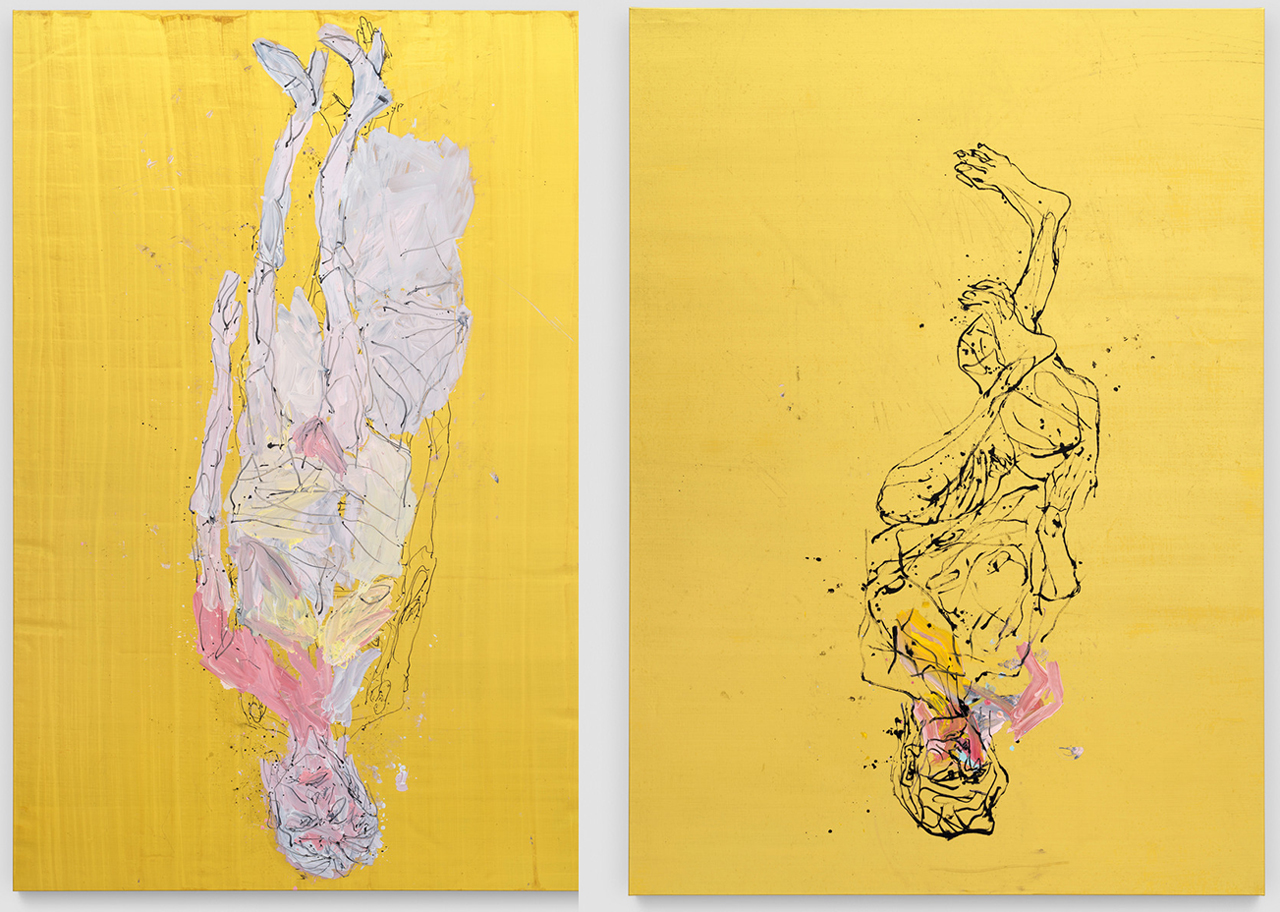
Coinciding with the 61st edition of the Venice Biennale, Georg Baselitz’s exhibition “Eroi d’Oro” unfolds as both a culmination and a reinvention. Presented at the Fondazione Giorgio Cini, the show gathers a new series of monumental paintings that interrogate surface, materiality, and the human figure through the radiant and destabilizing medium of gold.
By Efi Michalarou
Photo: Galerie Thaddaeus Ropac Archive
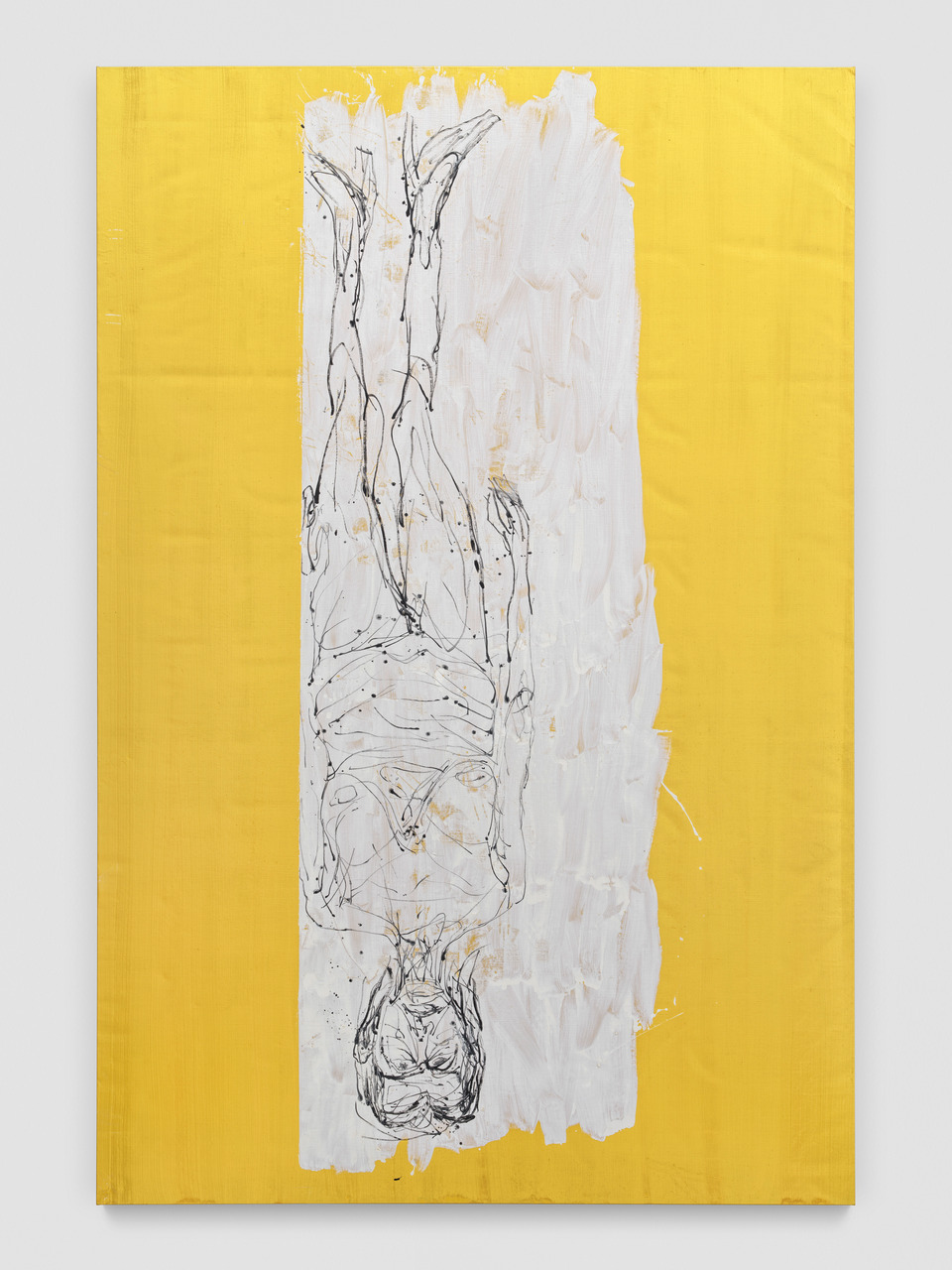
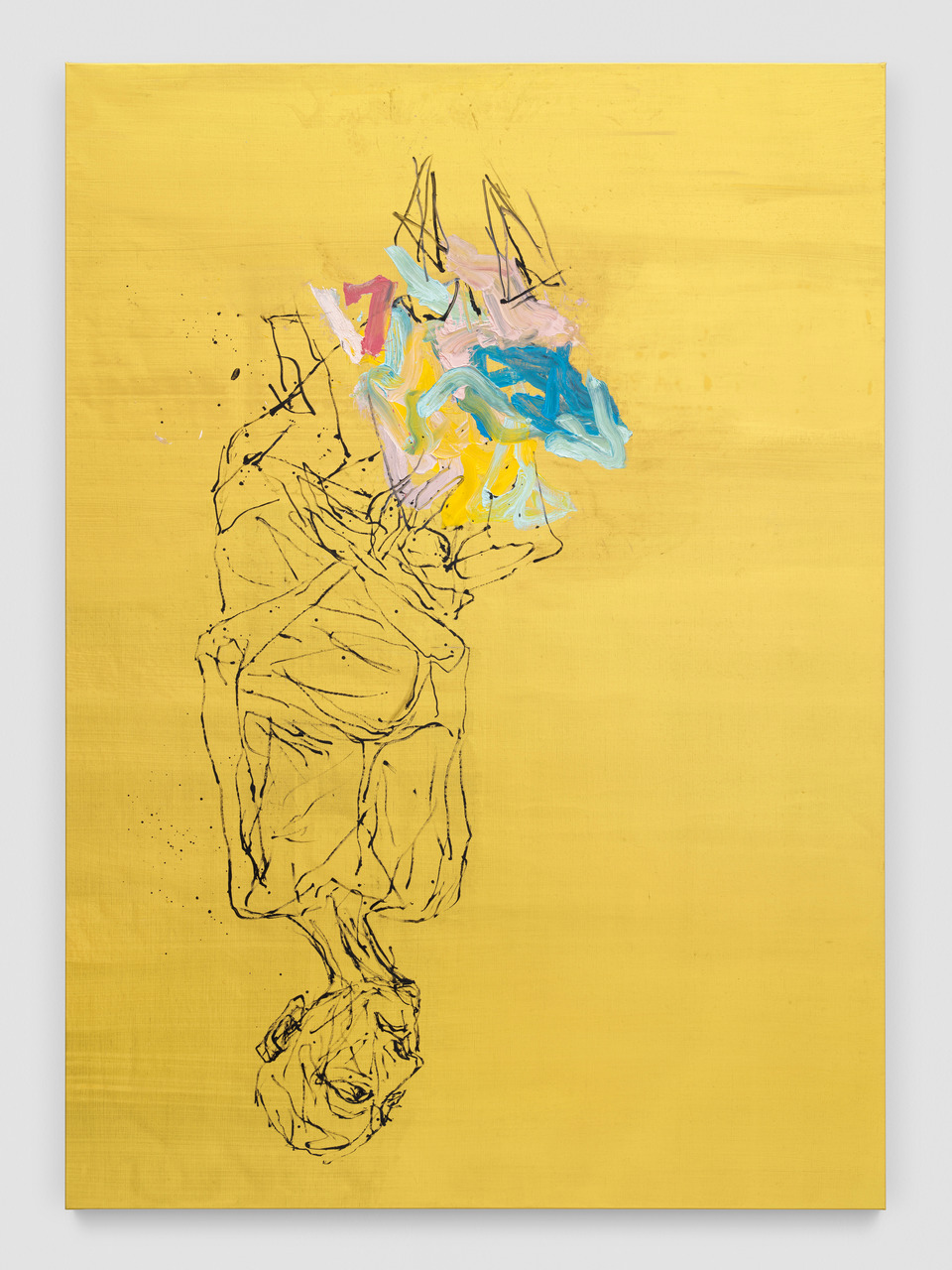
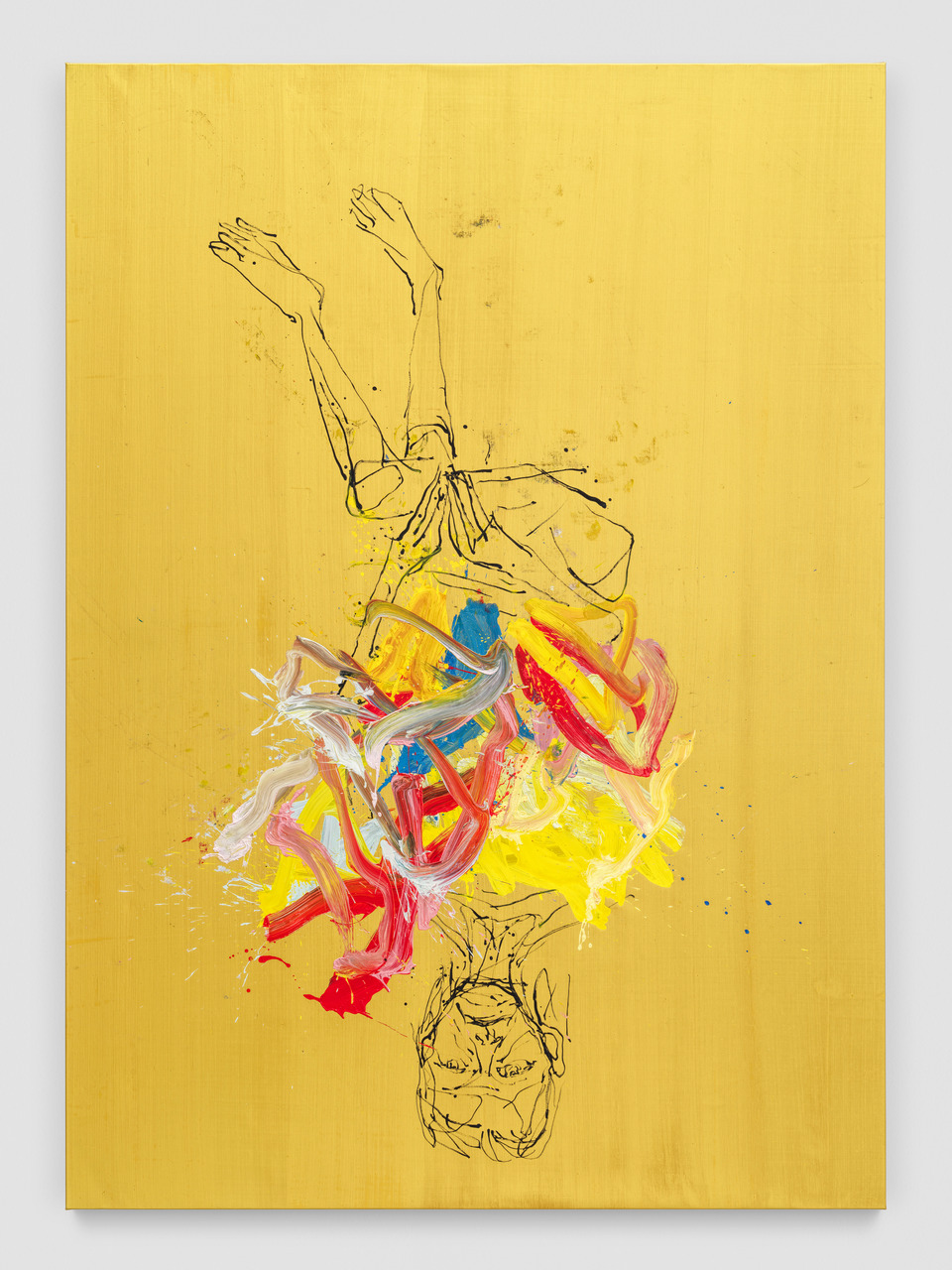
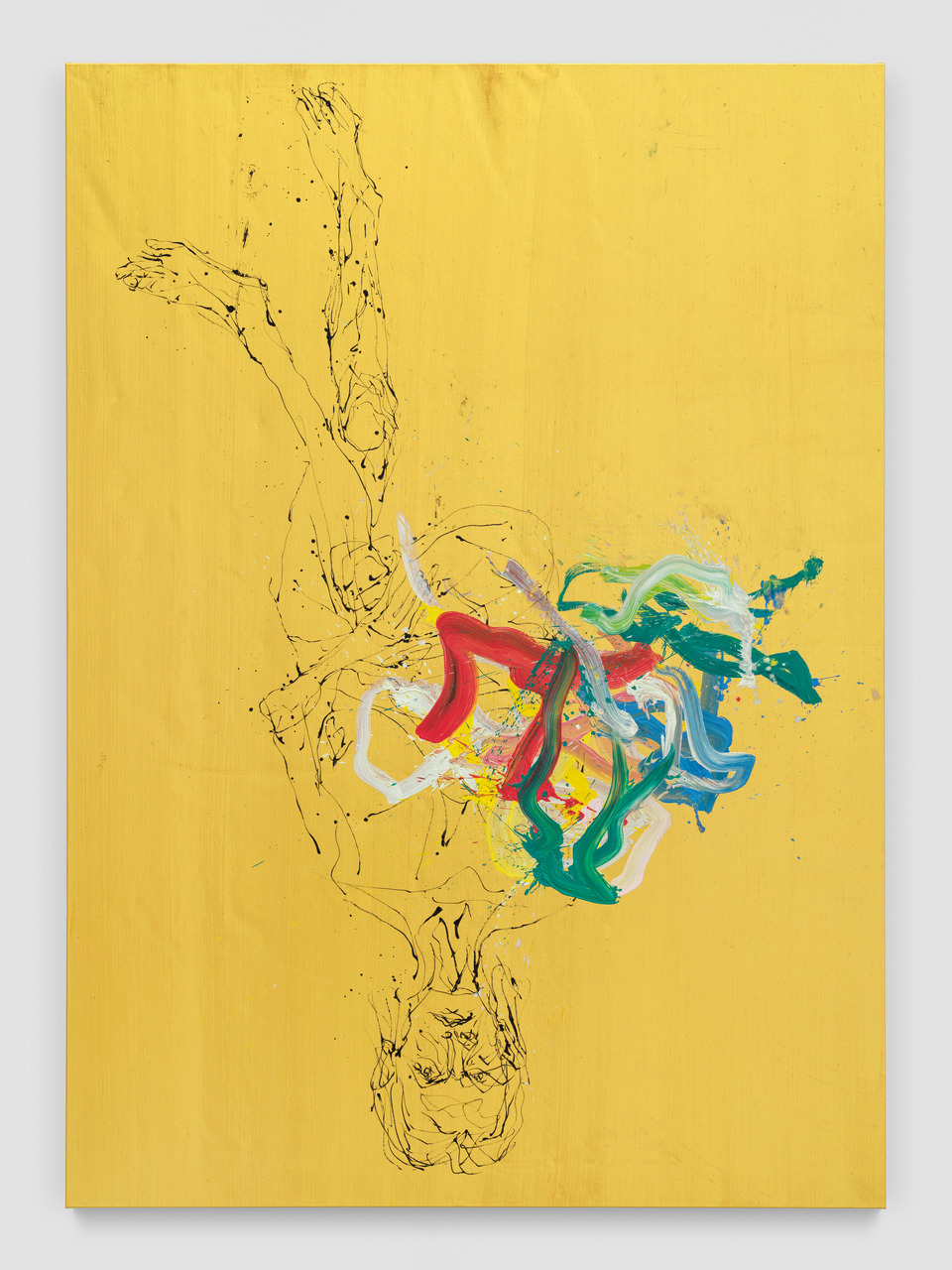
At the core of the works in “Eroi d’Oro” lies a paradox. Gold—traditionally associated with depthless transcendence—becomes, in Baselitz’s hands, an agent of both flattening and intensification. “Gold absorbs space, absorbs shadows, absorbs spatiality,” the artist notes, emphasizing its capacity to neutralize illusion. The result is a pictorial field that resists perspective, echoing the planar luminosity of medieval icon painting and recalling the gilded grounds of artists such as Stefan Lochner. Yet Baselitz disrupts any sense of sacred stillness by overlaying these surfaces with stark, linear figures—fragile bodies that appear to hover, stripped of narrative anchoring.
These figures, often self-portraits or depictions of his wife Elke, are rendered with a calligraphic economy. Applied in diluted black paint resembling ink, they evoke the gestural precision of Hokusai and the traditions of Japanese calligraphy. The bodies feel spectral, almost provisional, as though sketched rather than painted—an effect that underscores their vulnerability. In some compositions, Baselitz interrupts this delicacy with dense accumulations of impasto, introducing abrupt chromatic eruptions. He describes these as “de Kooning-in-the-wrong-place,” a nod to Willem de Kooning and his visceral engagement with flesh and paint. These gestures fracture the stillness of the compositions, injecting them with a sense of contingency and painterly risk.
Gold, however, remains the dominant force. Its reflective surface does not merely serve as a background but actively shapes the viewer’s experience. At the monumental scale Baselitz employs—canvases reaching up to four and a half meters—the gold becomes immersive, transforming optical shimmer into a spatial phenomenon. What was once surface becomes environment. This shift builds on experiments from the 1990s, when Baselitz began working with gold grounds and increasingly large canvases laid out on the floor, foregrounding the physical act of painting. As noted by art historian Diane Waldman, these earlier works already treated ornament and pattern as subjects in their own right. In “Eroi d’Oro,” that inquiry reaches a new level of intensity.
The exhibition’s title—“Heroes of Gold”—revisits Baselitz’s seminal “Hero” paintings of the 1960s, which depicted fictional, war-scarred figures inspired by postwar literature. Those early works were marked by raw expression and existential weight; here, the heroic is reframed. The contemporary figures are attenuated, almost emptied out, their fragility heightened by the grandeur of their gilded surroundings. Heroism becomes less about strength than endurance, less about action than presence.
This late body of work also continues Baselitz’s sustained meditation on time and mortality. Since his “Avignon” self-portraits—first shown at the 56th Venice Biennale and alluding to the late works of Pablo Picasso—the artist has confronted aging with increasing directness. The gold paintings from 2019 introduced a cosmic dimension, with figures seemingly suspended in luminous atmospheres. In “Eroi d’Oro,” that levitation persists, but the tone shifts. There is, as Baselitz himself observes, “a certain harshness, a certain loneliness.” The figures no longer float in expansive skies but cling to the surface, isolated within the reflective void.
This tension—between reverence and desolation, material richness and bodily frailty—defines the exhibition. The gold confers dignity, even sanctity, upon the figures, yet it also amplifies their isolation. Light plays across the surfaces, creating a devotional aura that feels both elevating and indifferent. In Venice, a city historically shaped by Byzantine aesthetics and the symbolic power of gold, these works resonate with particular intensity. They engage not only with Baselitz’s own past but with a broader art historical continuum.
“Eroi d’Oro” stands as a profound statement of late style. It is not a quiet summation but an active reconfiguration—an artist revisiting his own vocabulary under new existential conditions. Through gold, Baselitz strips painting to its essentials: surface, line, body. What remains is a stark, luminous confrontation with impermanence, where grandeur and vulnerability coexist without resolution.
Photo left: Georg Baselitz. Türkische Hose auf dem Treppchen, 2025, Oil and gold paint on canvas, 460 x 300 cm (181,1 x 118,11 in), Courtesy Galerie Thaddaeus Ropac, London · Paris · Salzburg · Milan · Seoul, © Georg Baselitz, Photo: Stefan Altenburger. Photo Right: Georg Baselitz, Die goldene Kittelschürze, 2025, Oil and gold paint on canvas, 300 x 215 cm (118,11 x 84,65 in), Courtesy Galerie Thaddaeus Ropac, London · Paris · Salzburg · Milan · Seoul, © Georg Baselitz, Photo: Stefan Altenburger
Info: Curator: Luca Massimo Barbero, Fondazione Giorgio Cini , Island of San Giorgio Maggiore, Venice, Italy, Duration: 6/5-27/9/2026, Days & Hours: Mon-Tue & Thu-Sun 11:00-19:00, www.cini.it/