PRESENTATION: The Social Life of Things
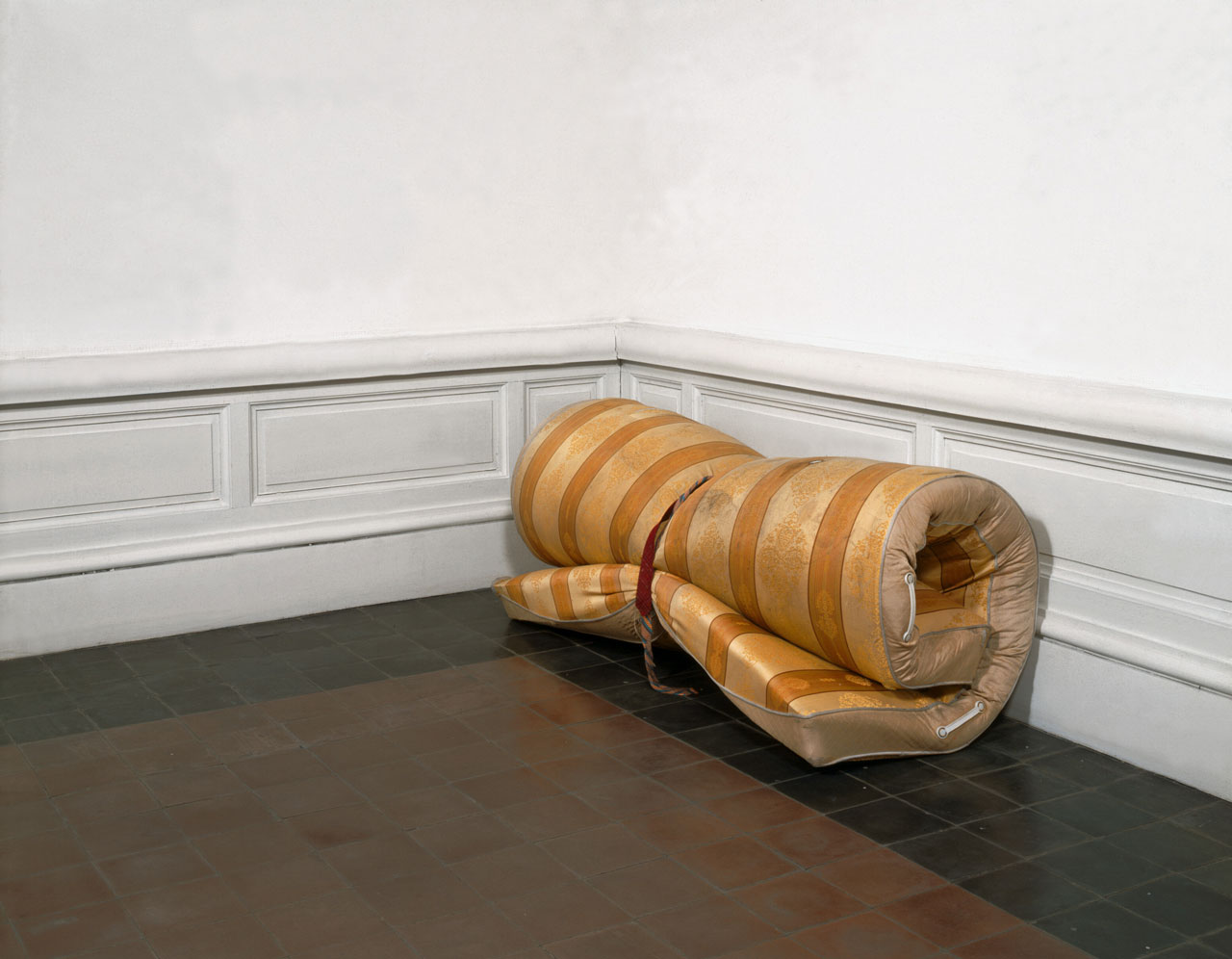
In an era increasingly defined by circulation—of images, commodities, and identities—the exhibition “The Social Life of Things” stages a precise and probing inquiry into how objects accrue meaning. Bringing together Nina Beier, David Hammons, and Zoe Leonard, the show unfolds as a cross-generational dialogue grounded in material culture. Across ten rooms, it presents works from the 1990s to the present, constructing an environment where the everyday—mattresses, washbasins, coffee mugs, taxidermy, dolls—becomes a charged site of social, political, and symbolic exchange.
By Efi Michalarou
Photo: Museum für Gegenwartskunst Siegen Archive
The premise is deceptively simple: objects are never neutral. They are embedded within systems of value, labor, desire, and power. What distinguishes this exhibition is not merely its thematic coherence, but the way each artist mobilizes objects differently to expose these embedded narratives. The result is a layered curatorial argument about how meaning is produced, circulated, and destabilized.
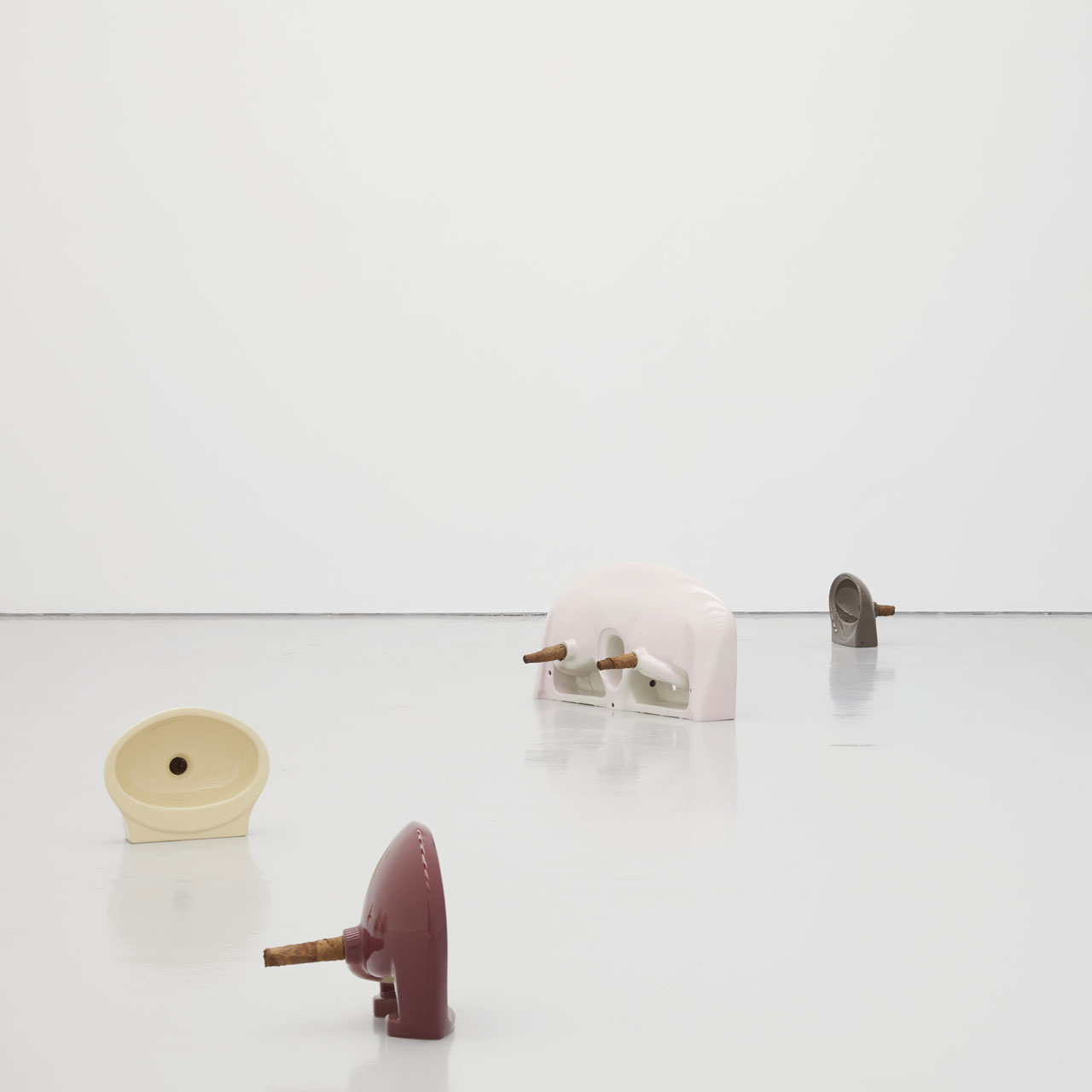
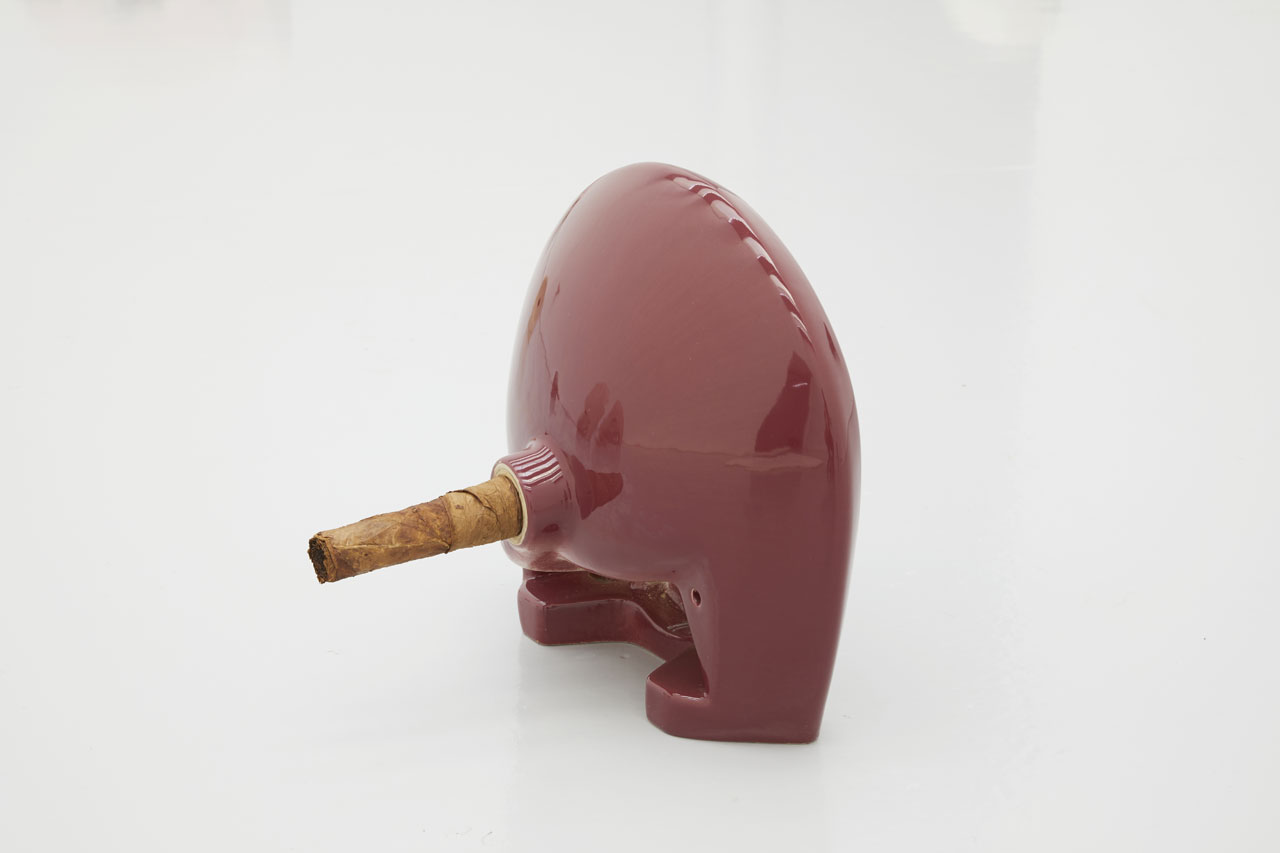
Nina Beier’s practice operates through the logic of displacement and recombination. Working primarily with found and collected objects, she interrogates the mechanisms through which commodities acquire and shed value. Her installations frequently hinge on unexpected pairings that reveal latent tensions within global systems of production and exchange. In “Plugs” (2018), pastel-colored washbasins—evocative of mid-20th-century domestic design—are arranged both on the floor and mounted on walls. Their drains are sealed with thick cigars, an intervention that is at once formal, symbolic, and unsettling.
This juxtaposition activates multiple interpretive registers. The washbasins, with their nostalgic hues—Bahama Beige, Bali Brown, Indian Ivory—invoke a history of middle-class aspiration and the commodification of “exotic” geographies. The cigars, by contrast, signal masculinity, ritual, and the exploitative economies of tobacco production. Together, they form a closed circuit: the basin cannot drain, the cigar cannot be smoked. Function collapses into symbolism. Beier’s gesture is not illustrative but diagnostic—she reveals how objects operate within overlapping economies of gender, colonialism, and consumption.
Her broader practice consistently returns to this interplay between objecthood and representation. Precious metals embedded in massage chairs, banknotes lodged in drains, or baby formula mounted on mechanical bulls—these configurations resist stable interpretation. They occupy a liminal space between sculpture and commodity, image and artifact. Beier’s work insists that objects “speak,” but never in a singular voice; instead, they articulate contradictions that remain unresolved.
If Beier dissects global circulation through quiet but incisive interventions, David Hammons approaches the object as a site of resistance. Widely regarded as one of the most influential living American artists, Hammons has, over six decades, developed a practice that is both materially grounded and conceptually expansive. Emerging in late 1960s Los Angeles with his “Body Prints”—impressions made by greasing his own body and pressing it onto paper—he foregrounded the body as both medium and subject. Following his move to Harlem in 1974, his work became increasingly attuned to the textures of urban African American life, shaped by systemic racism and political struggle.
Hammons’ use of found materials—hair, bottle caps, discarded objects—aligns him loosely with Arte Povera, though his practice is more overtly political. These materials are never neutral; they carry the imprint of social histories. His assemblages and installations transform urban detritus into charged signifiers, often employing humor, irony, and poetic ambiguity.
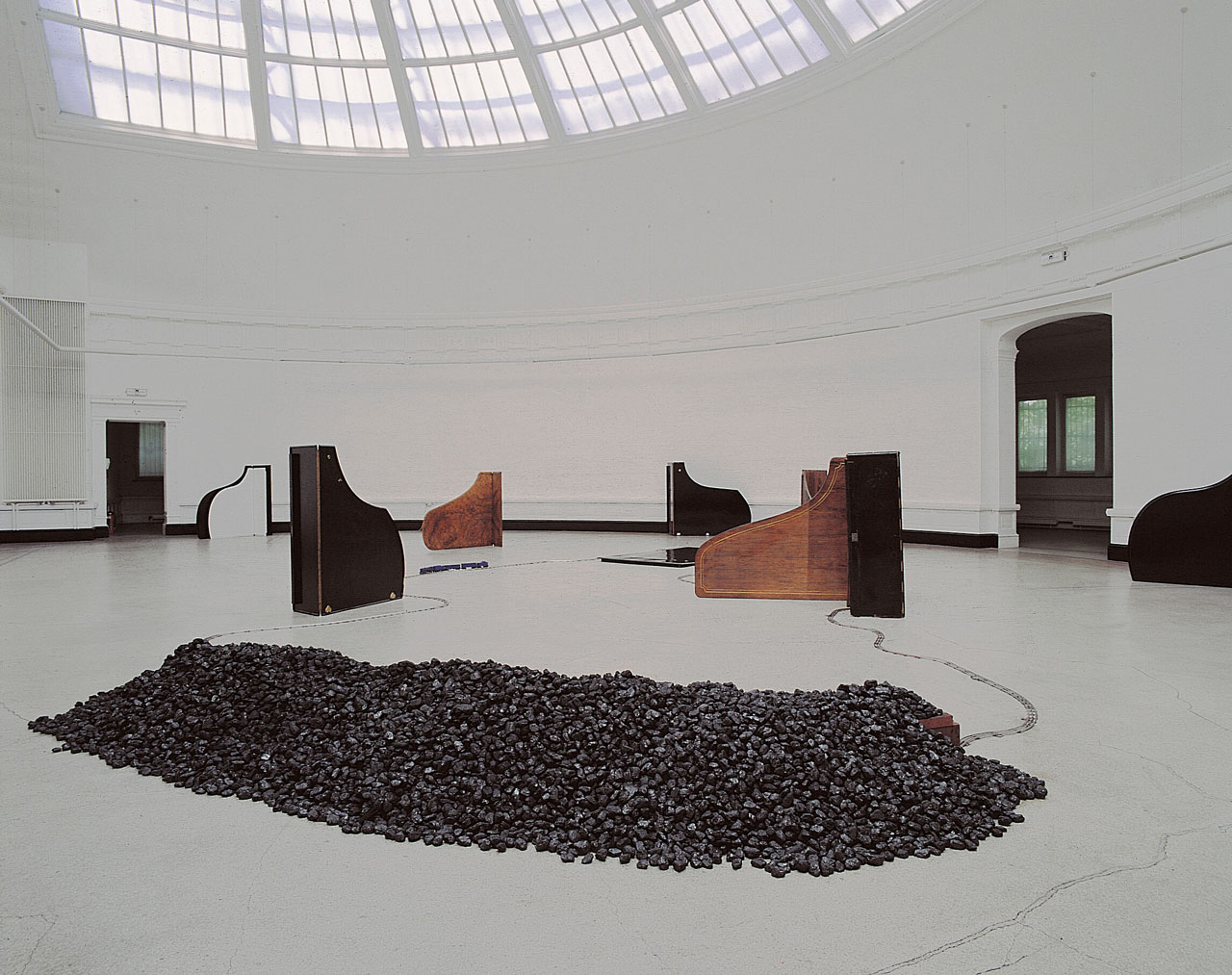
A defining example is “Chasing the Blue Train” (1989–1991), widely considered a masterpiece. The installation features grand pianos—black, brown, and a single white—arranged around a mound of coal through which a miniature blue train winds its path. Accompanied by the music of John Coltrane and Thelonious Monk, the work invites viewers to physically follow the train’s movement. The title references Coltrane’s compositions, but the imagery extends far beyond homage.
The coal evokes the labor histories of African Americans, particularly the migrations tied to mining industries in the early 20th century. The train recalls the A-line connecting Brooklyn to Harlem, embedding the work within a geography of Black urban life. The white piano, positioned among darker counterparts, becomes an unmistakable symbol of racial hierarchy and economic disparity. Hammons does not offer resolution; instead, he constructs a spatial and sonic environment where history, music, and material converge in tension.
Equally significant is Hammons’ strategic refusal of the art system. Actions like the “Blizzard Ball Sale” (1983), in which he sold snowballs on a New York sidewalk, challenge conventional notions of artistic value and commodification. His reluctance to exhibit within institutional frameworks underscores a critical stance toward the exclusivity of the art world—a stance that resonates throughout the exhibition.
Where Hammons foregrounds material and performative resistance, Zoe Leonard turns to the image as a site of inquiry. A self-taught artist with deep roots in activism—she was involved in ACT UP and co-founded the queer collective fierce pussy—Leonard has, for over three decades, examined the conditions under which images are produced and consumed. Her work spans photography, sculpture, and installation, but remains anchored in a rigorous conceptual framework.
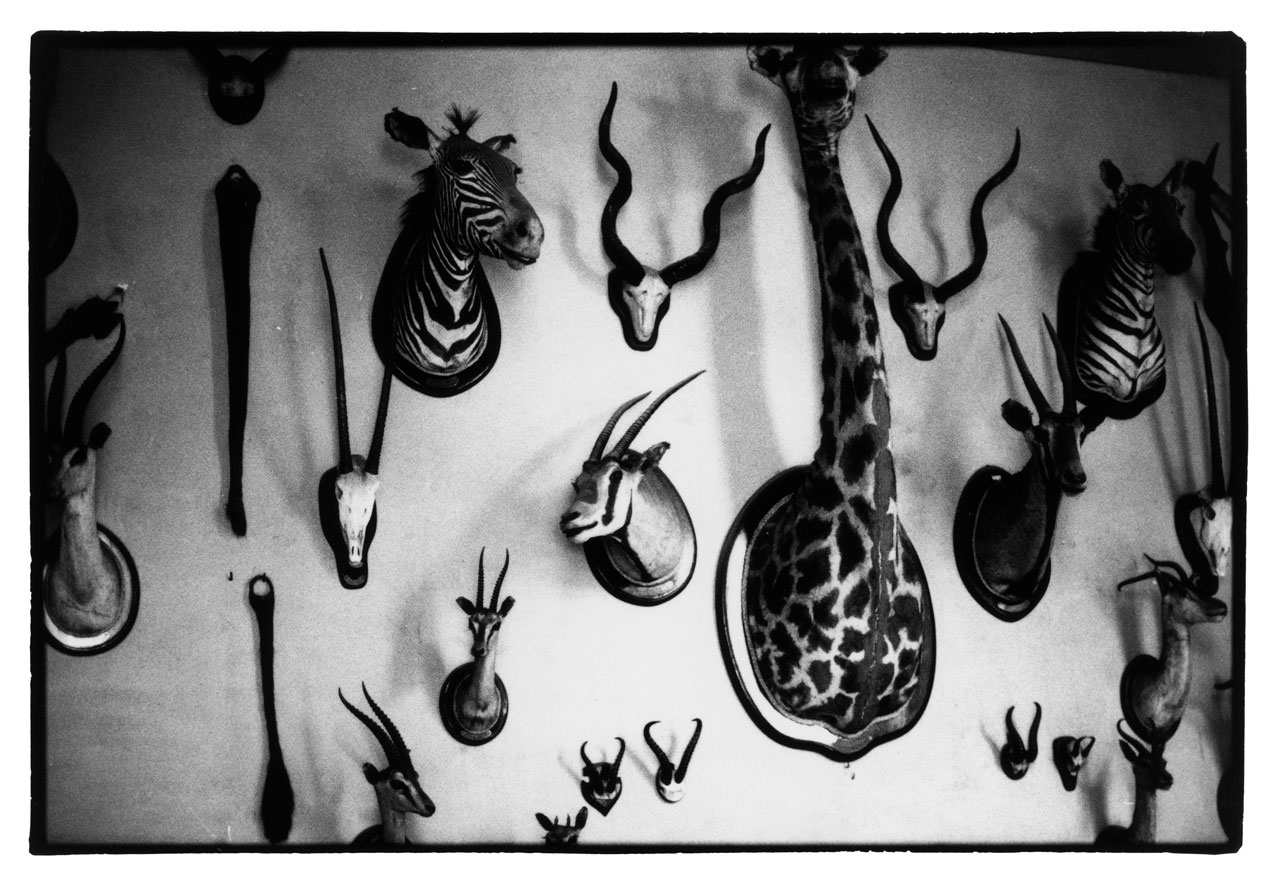
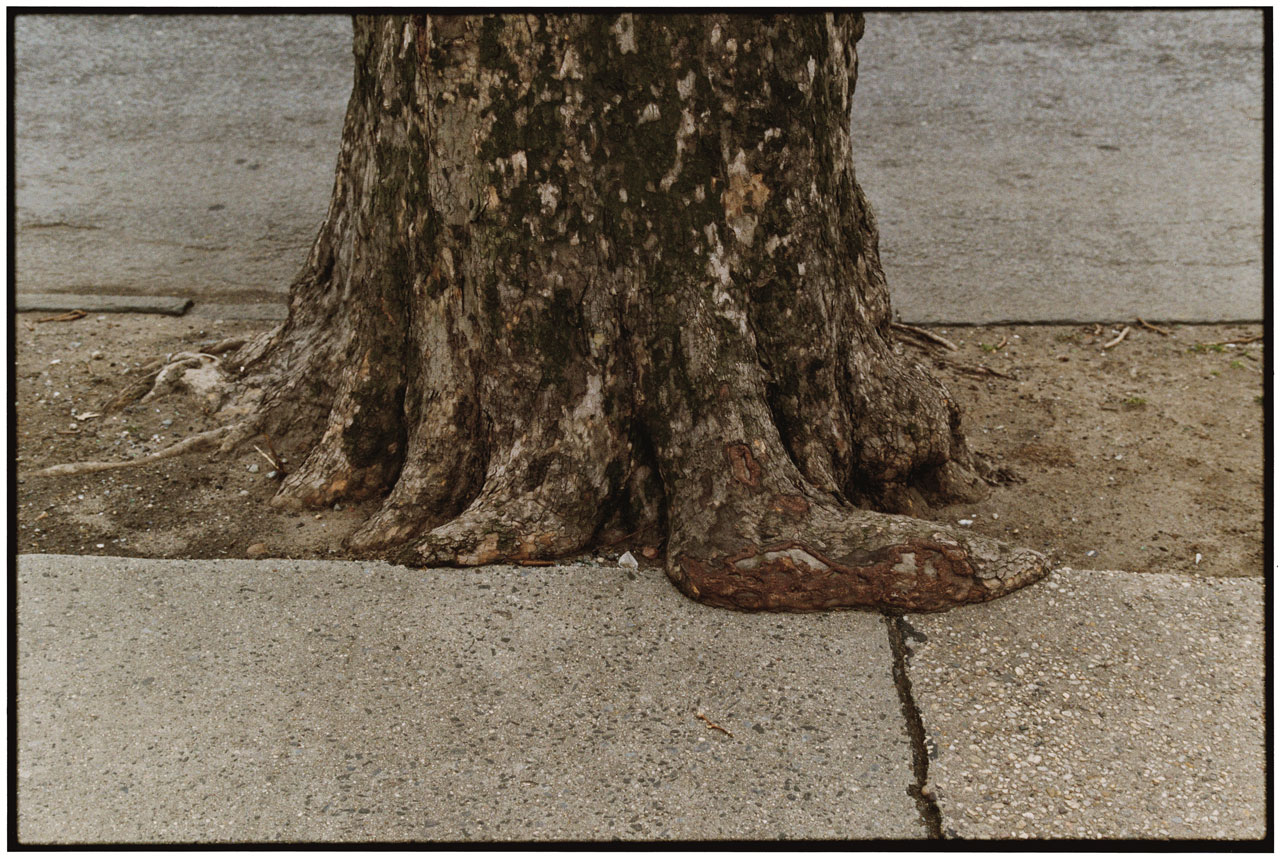
Leonard’s photographs are characterized by their attention to the overlooked. Whether depicting urban storefronts, natural landscapes, or museum displays, she isolates moments that reveal underlying contradictions—between nature and culture, authenticity and artifice, visibility and erasure. Crucially, she refuses the polished aesthetic often associated with photographic practice. Her images are uncropped, unretouched; scratches, dust, and imperfections remain visible, foregrounding the materiality of the medium itself.
In “Trophies” (1990), Leonard photographs taxidermied animal heads from natural history museums. These images oscillate between documentation and portraiture. The animals, once living beings, are now preserved as objects of display—symbols of human domination over nature. Yet Leonard’s framing imbues them with an uncanny presence. Their glass eyes seem to meet the viewer’s gaze; their frozen expressions suggest pain, dignity, or accusation. By presenting these photographs in sequences and varying perspectives, Leonard destabilizes the viewer’s position, implicating them in the act of looking.
A similar strategy operates in Two Toilets” (1994/1997), a photograph depicting a public restroom with two toilets placed side by side, without a dividing wall. One seat is black, the other white—a stark visual binary that immediately invokes racial coding. The absence of separation disrupts deeply ingrained social norms around privacy, gender, and bodily function. The mirror in the image reflects only part of the scene, further fragmenting perception. Leonard’s intervention is subtle yet incisive: she reveals how even the most mundane spaces are structured by invisible systems of regulation and meaning
What unites Beier, Hammons, and Leonard is not a shared aesthetic, but a shared methodology: each treats objects as active agents within social networks. Their works do not merely represent reality; they engage with it materially, revealing how objects mediate relationships between individuals, communities, and institutions.
“The ‘Social Life of Things” thus operates on multiple levels. It is, at one level, an exhibition about objects. But more fundamentally, it is an exhibition about the conditions under which those objects are seen, valued, and understood. By foregrounding the tensions inherent in material culture—between use and symbolism, circulation and stasis, visibility and obscurity—it invites viewers to reconsider their own relationship with the things that populate everyday life. In doing so, the exhibition achieves something rare: it produces a moment of recognition that is immediately unsettled. The familiar becomes strange, and in that estrangement, new forms of understanding emerge.
Photo: Nina Beier, Plug, 2018, Courtesy the artist, Photo Stuart Whipps
Info: Curator Thomas Thiel, Assistant Curator Jessica Schiefer, Museum für Gegenwartskunst Siegen, Unteres Schloss 1, Siegen, Germany, Duration: 17/4-27/9/2026, Days & Hours: Tue-Wed & Fri-Sun 11:00-18:00, Thu 11:00-20:00, www.mgksiegen.de/