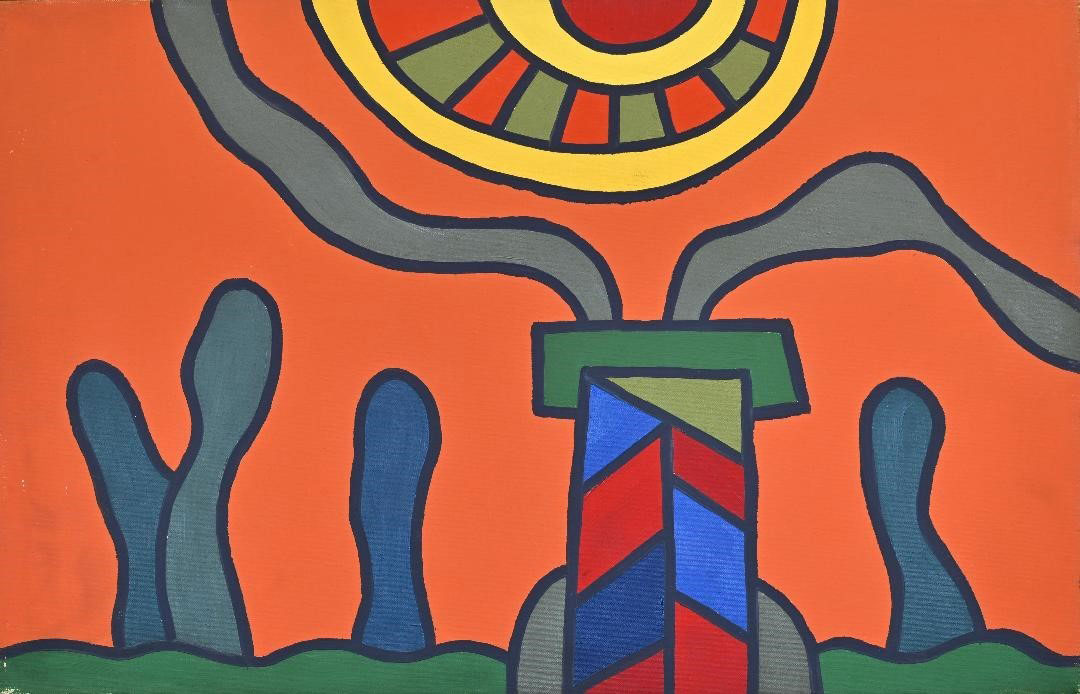
PRESENTATION: Alexis Akrithakis-A Line Like a Wave
The exhibition “A Line Like a Wave” at the Benaki Museum is an extensive retrospective of the work of Alexis Akrithakis, curated by his daughter Chloe Akrithaki and Alexios Papazacharias. Featuring more than 250 works from public and private collections, it attempts to present a comprehensive view of the artist’s trajectory and distinctive character, bringing together paintings, constructions, installations, and personal material such as small drawings, notes, poems, and fragments of thought.
By Vicky Trochidou
Photo: Benaki Museunm Archive
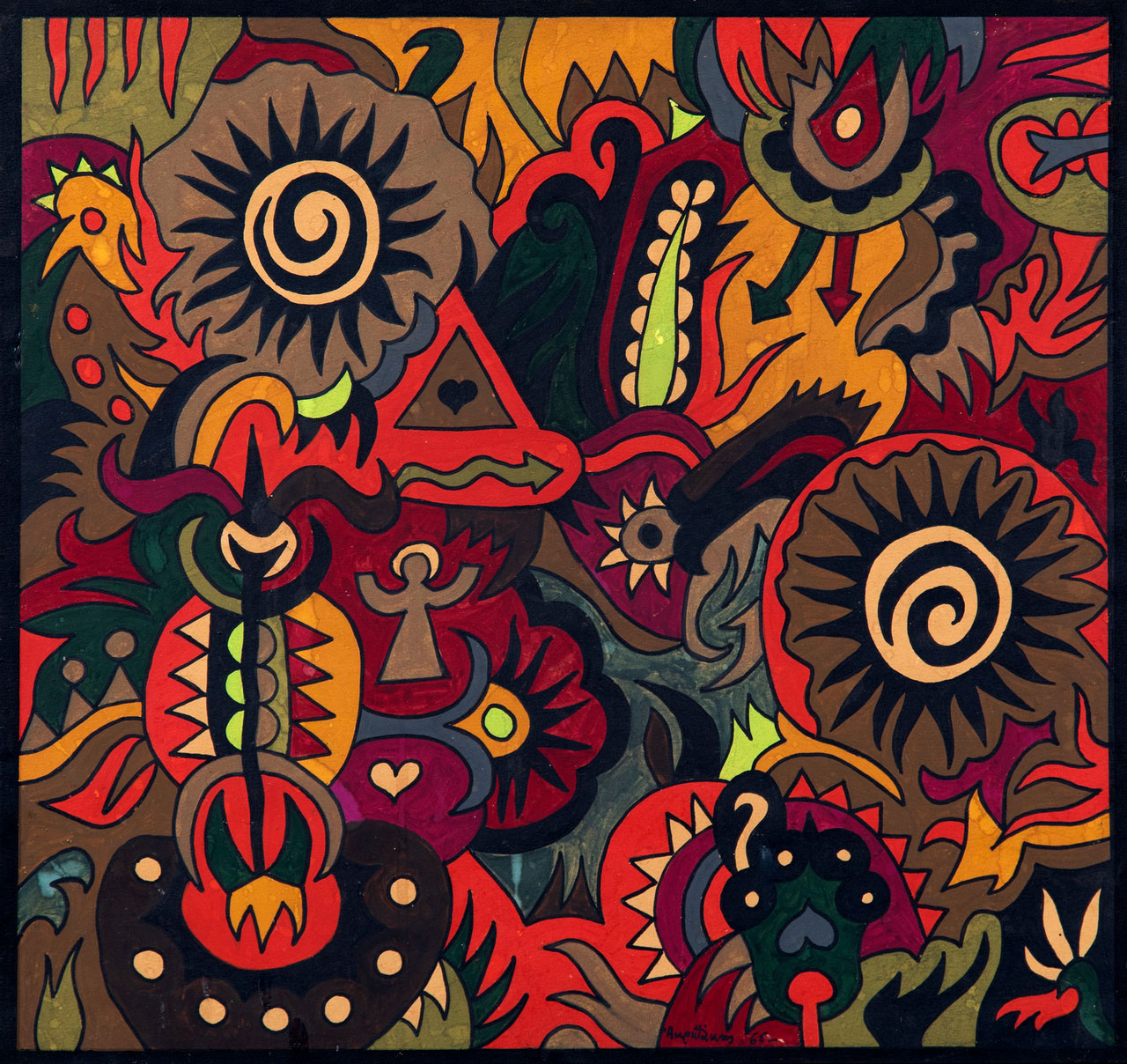
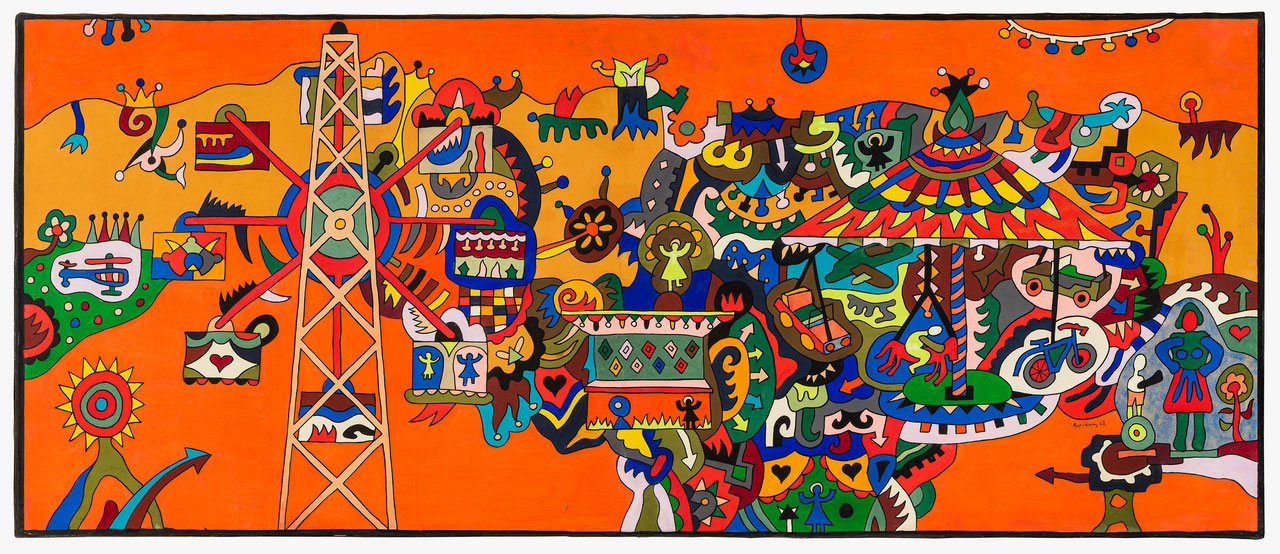
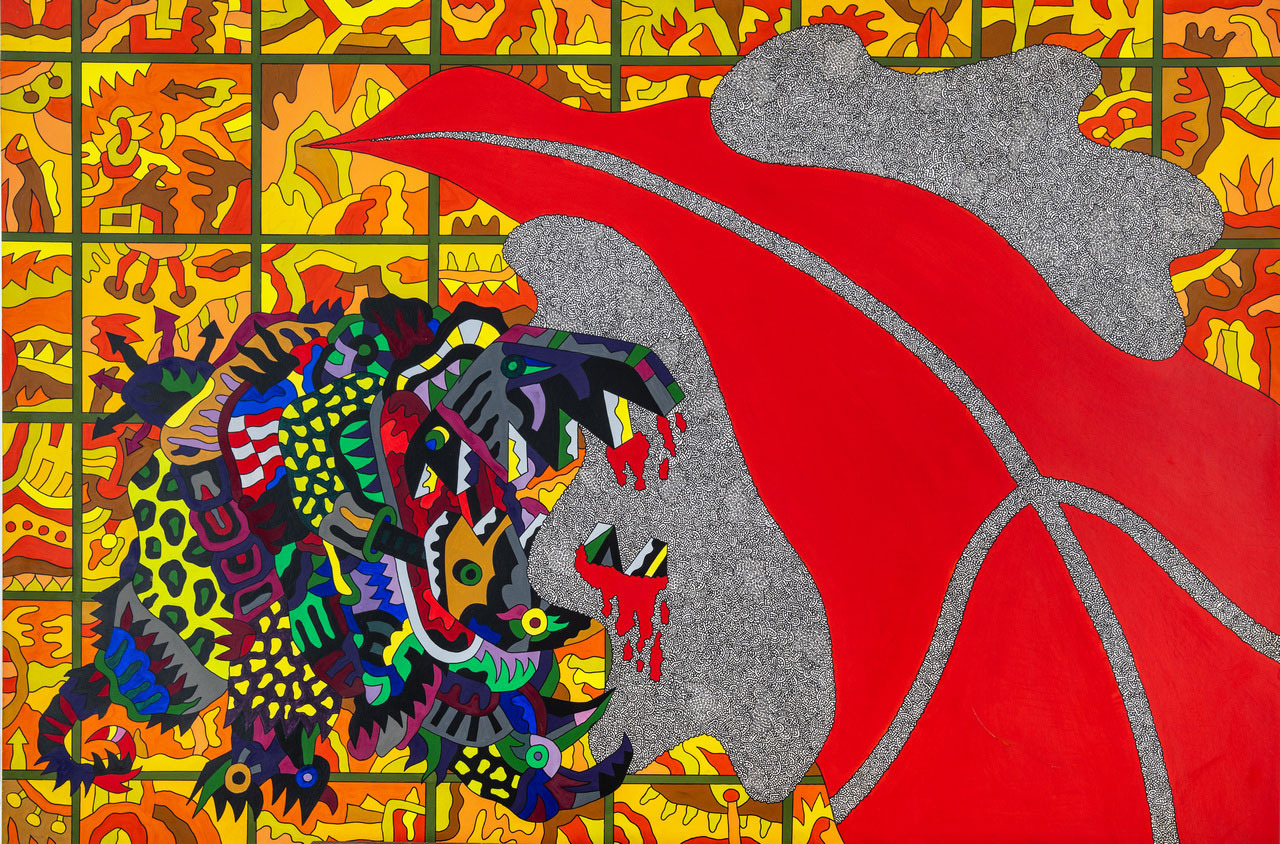
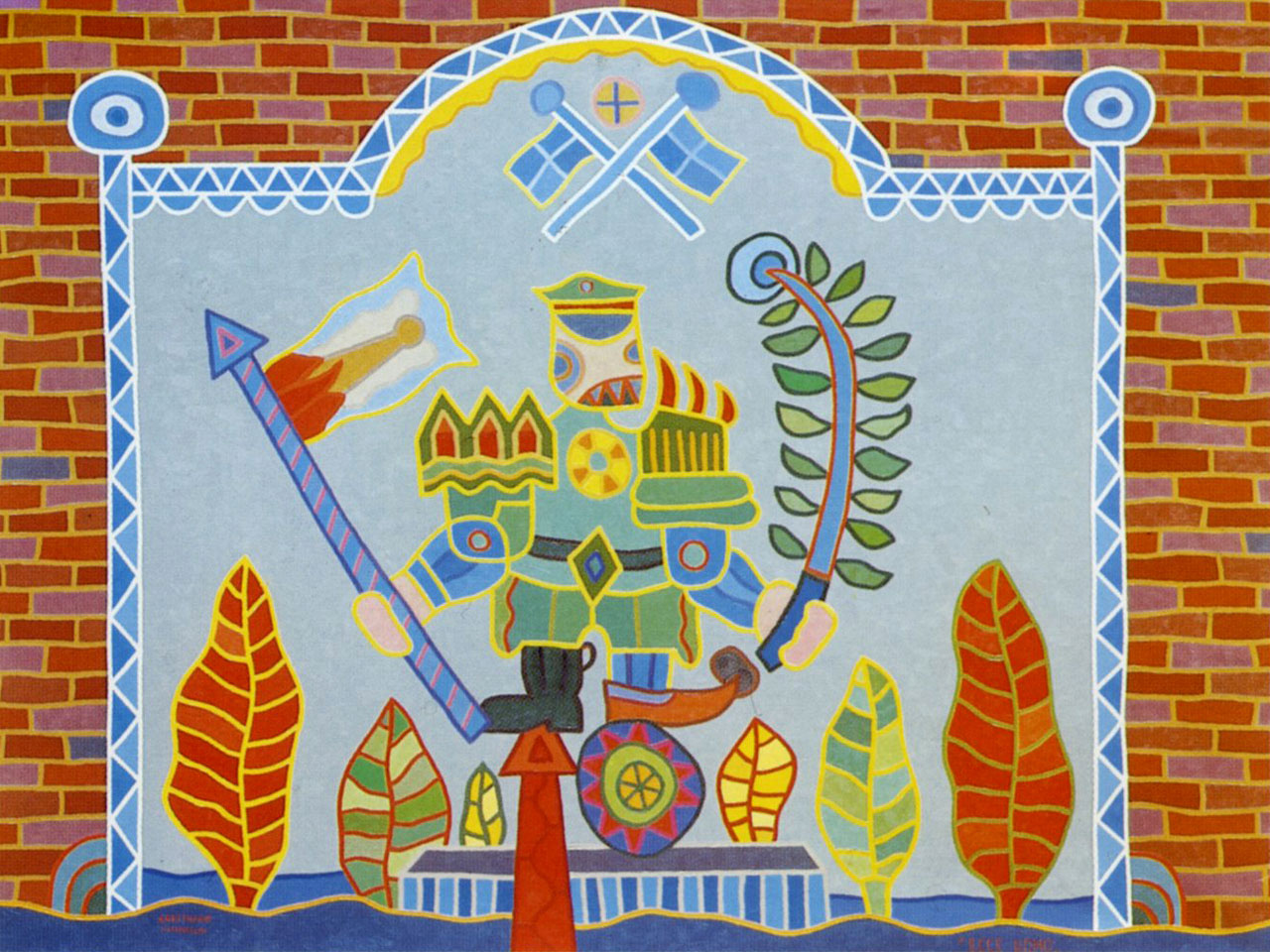
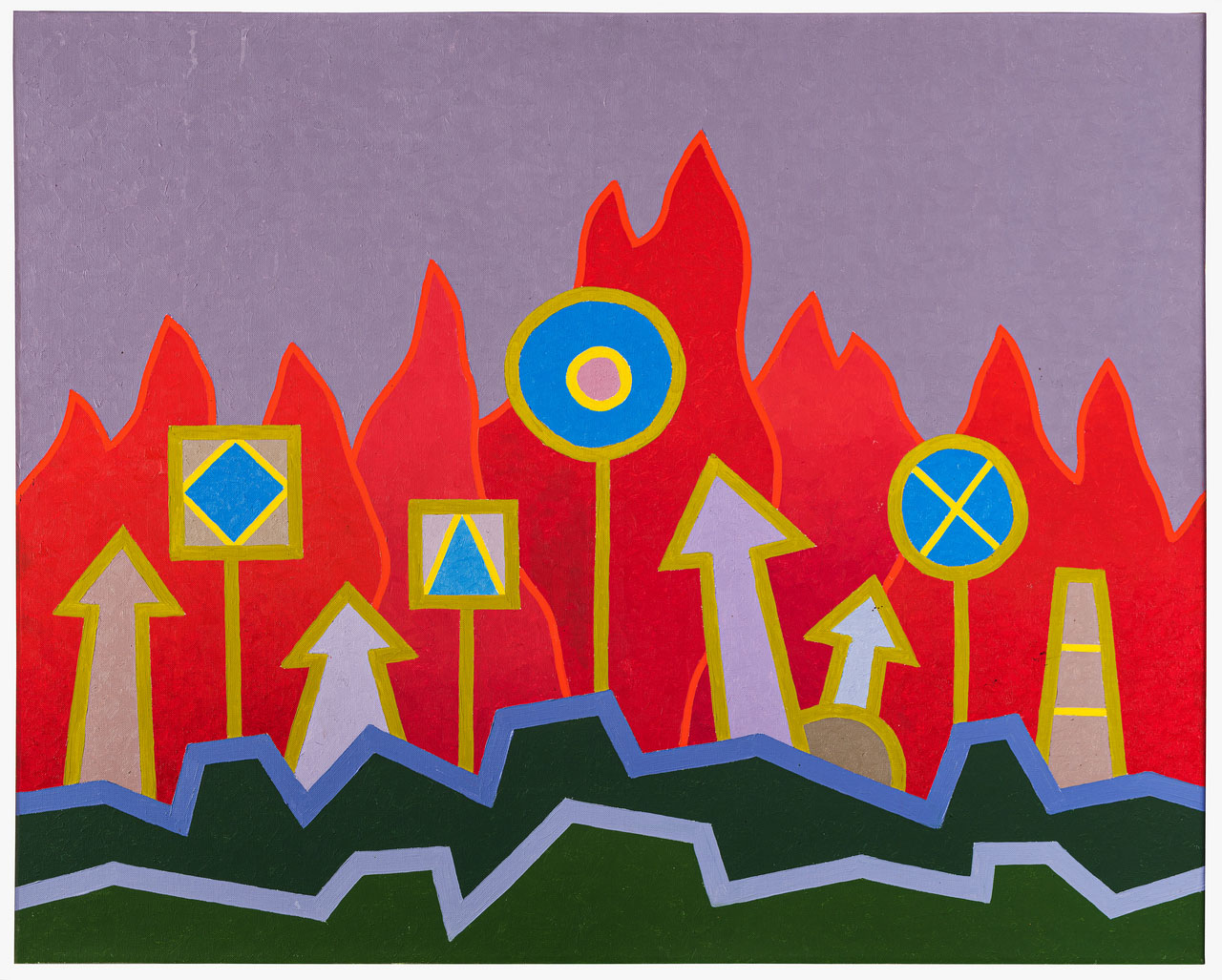
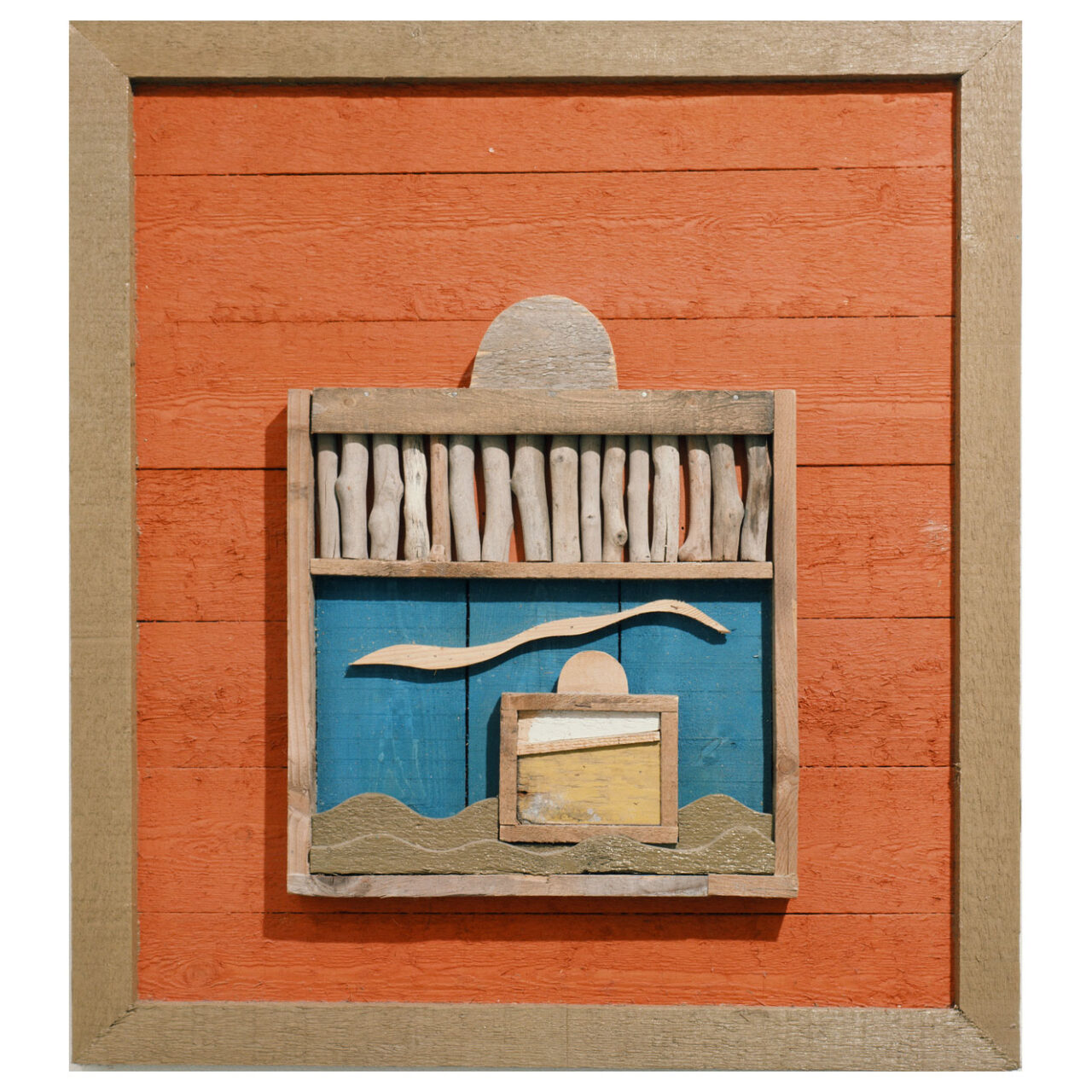
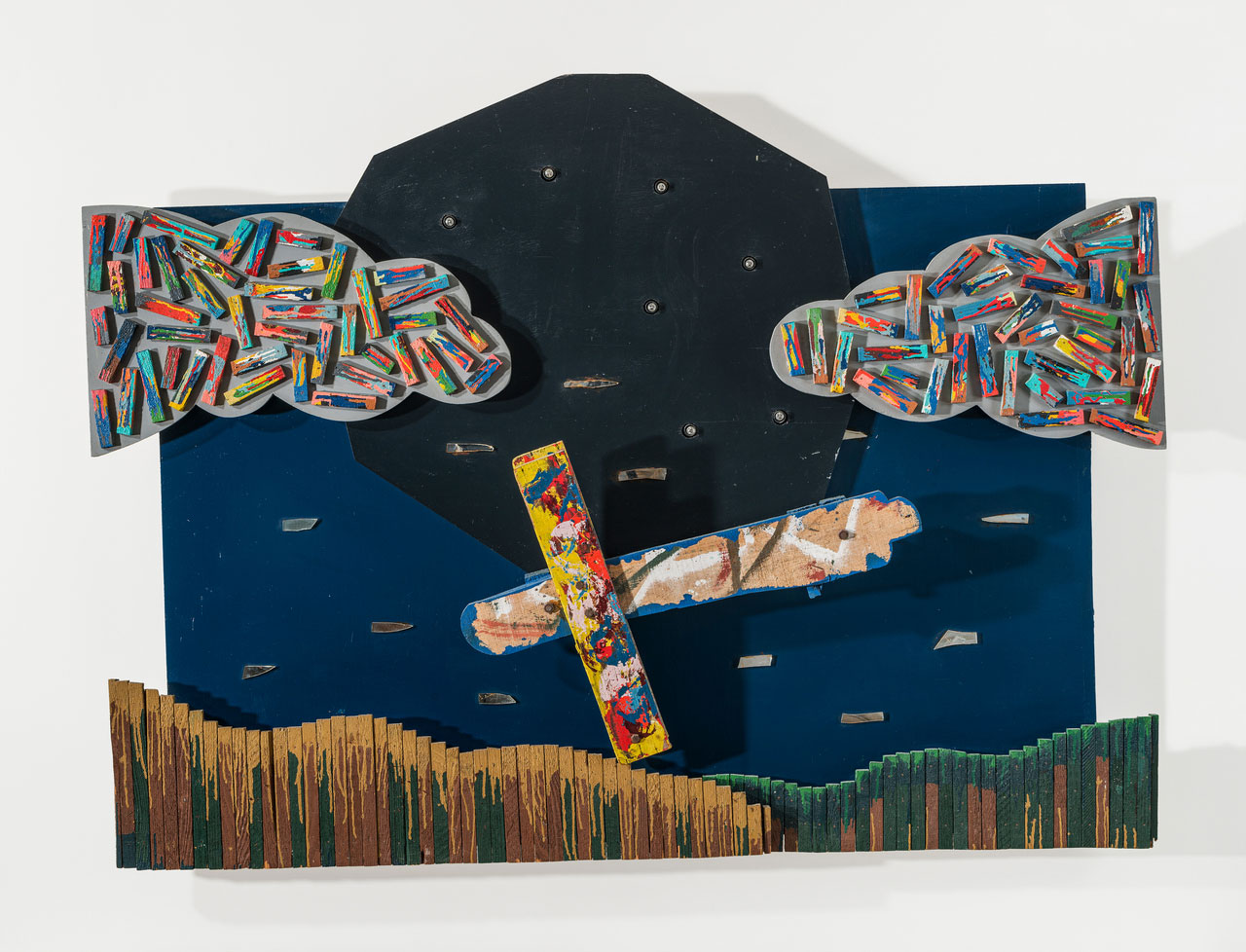
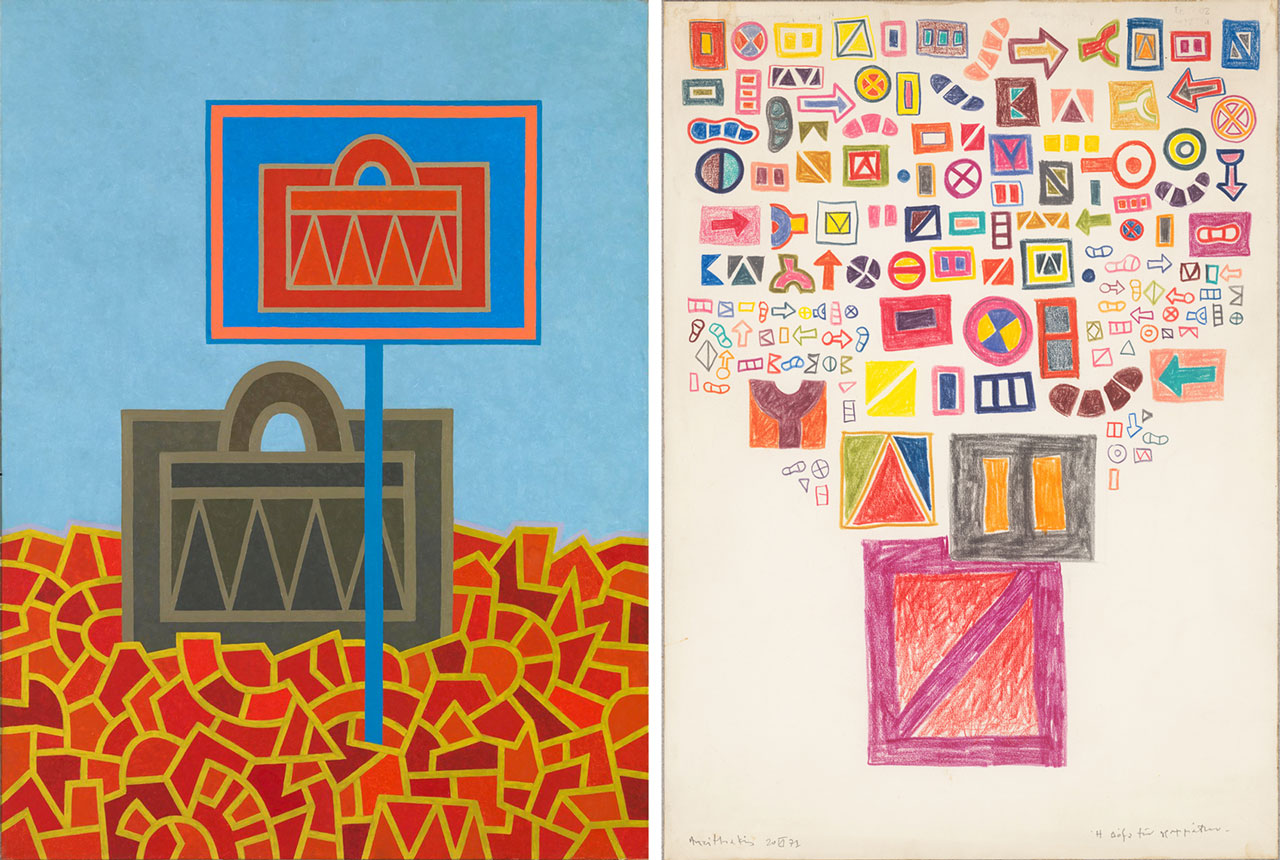
The exhibition “Alexis Akrithakis. A Line Like a Wave” is structured in a way that allows the viewer to follow the development of his work, from his early explorations, including his first oil paintings, to his later creations. The psychedelic works of the 1960s and the politically charged pieces of the early 1970s reveal an artist in constant dialogue with his time. At the same time, the iconic “suitcases” and his constructions using wood or light point to a gradual expansion of his practice toward more material and spatial forms.
Particular emphasis is placed on his constructions, such as the kites, which function not merely as visual elements but as autonomous works with a strong poetic quality. In them, one can recognize Akrithakis’ playful spirit, which is far from superficial and instead reflects a deeper desire for freedom and escape. In this context, Bar (1981) also stands out as a work I found especially compelling, where Akrithakis directly intertwines life and art, bringing everyday experience into the artistic space in an immediate and meaningful way.
A darker dimension of his work becomes evident in his later pieces, particularly in the portraits of patients from the Dromokaiteio psychiatric hospital. Here, his line takes on an intense emotional charge, moving away from the lightness often associated with his practice. These works leave a strong impression and reveal the underlying existential tension that runs through his work as a whole.
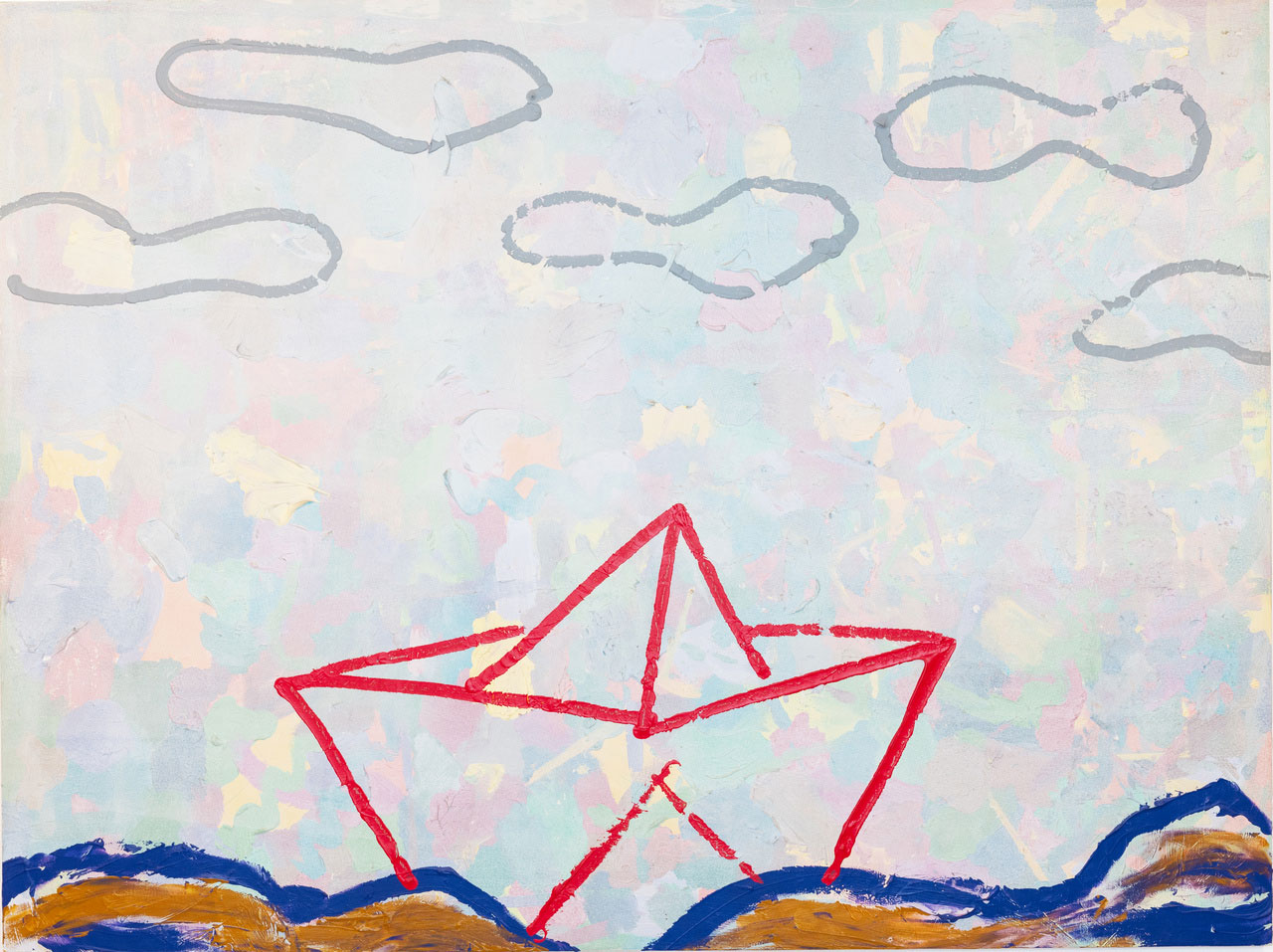
The title of the exhibition offers an insightful way of approaching his art. Akrithakis’ line appears fluid and unstable, as if in constant motion. This sense of fluidity reflects an inner fluctuation that characterizes his work, moving between spontaneity and reflection, lightness and intensity. In this way, the line ultimately becomes a direct vehicle of expression.
In curatorial terms, the exhibition is clearly structured and coherent. However, the lack of explanatory material significantly limits the experience. The viewer is left to fill in interpretive gaps, which may be stimulating for some, but ultimately weakens the overall narrative. In my view, additional texts or analyses would have enhanced understanding, especially for those not already familiar with the artist’s work.
Overall, the exhibition succeeds in highlighting the complexity of Akrithakis’ practice without losing the immediacy and vitality that define it. It is a meaningful experience that leaves the viewer with a deeper sense of the artist’s identity.
Photo Left: Alexis Akrithakis, Signal No 3, 1970, 146 x 110 εκ., Oil on canvas, © The Estate of Alexis Akrithakis. Photo Right: Alexis Akrithakis, The Glory of Letters, 1971, 42 × 30 cm, colored pencils on paper© The Estate of Alexis Akrithakis
Info: Curators: Chloe Akrithaki and Alexios Papazacharias, Benaki Museum, 138 Pireos Street, Athens, Greece, Duration: 12/2-24/5/2026, Days & Hours: Thu & Sun 10:00-18:00, Fri-Sat 10:00-22:00, www.benaki.org/