ART CITIES: Athens-New Voices (ASFA – March 2026 Degree Shows)
This year’s graduate exhibitions of the Athens School of Fine Arts (ASFA) returned to the School’s exhibition venue “Nikos Kessanlis” on Pireos Street 256, presenting a rich variety of expressive media and a wide spectrum of artistic inquiries. Over the course of three successive exhibition periods in March (4–6, 11–13 and 18–20), the public had the opportunity to engage with a multi layered body of work that clearly reflected key directions of contemporary artistic discourse through the creations of 38 emerging artists.
By Vicky Trochidou
Photo: Vicky Trochidou’s Archive
The presentations unfolded across a notably expanded field, ranging from painting, sculpture, and printmaking to installations, video art, performance, and works that incorporated Artificial Intelligence (AI). Many of the projects moved beyond the boundaries of traditional media, proposing new ways of seeing and understanding artistic practice, while installation-based works held a central position as narrative devices.
In terms of thematic focus, a significant number of works addressed issues of identity, personal experience, gender, memory, and loss, while references to technology and artificial intelligence were also present. These approaches articulated, either directly or implicitly, social and political concerns, highlighting both the experimental nature and the technical refinement of the artists.
However, certain organizational weaknesses were also evident. The uneven distribution of presentations, with 17 degree projects shown during the first two periods and only 4 in the last, affected the overall visitor experience. Particularly during the second week, where installations predominated, the density of works created a sense of visual saturation, making it difficult to fully engage with each piece individually. By contrast, the first week, although equally extensive, allowed for a more comfortable and fluid viewing experience.
Notably, the graduates made a considerable effort to accompany their works with explanatory texts, through which their intention to clearly define their artistic position and communicate their concerns became evident. In this context, the reintroduction of a printed catalogue for the degree shows would further strengthen the visibility and presence of the graduates, functioning both as a documentation of their work and as a means of connecting with a more specialized audience—curators, art historians, artists, and collectors.
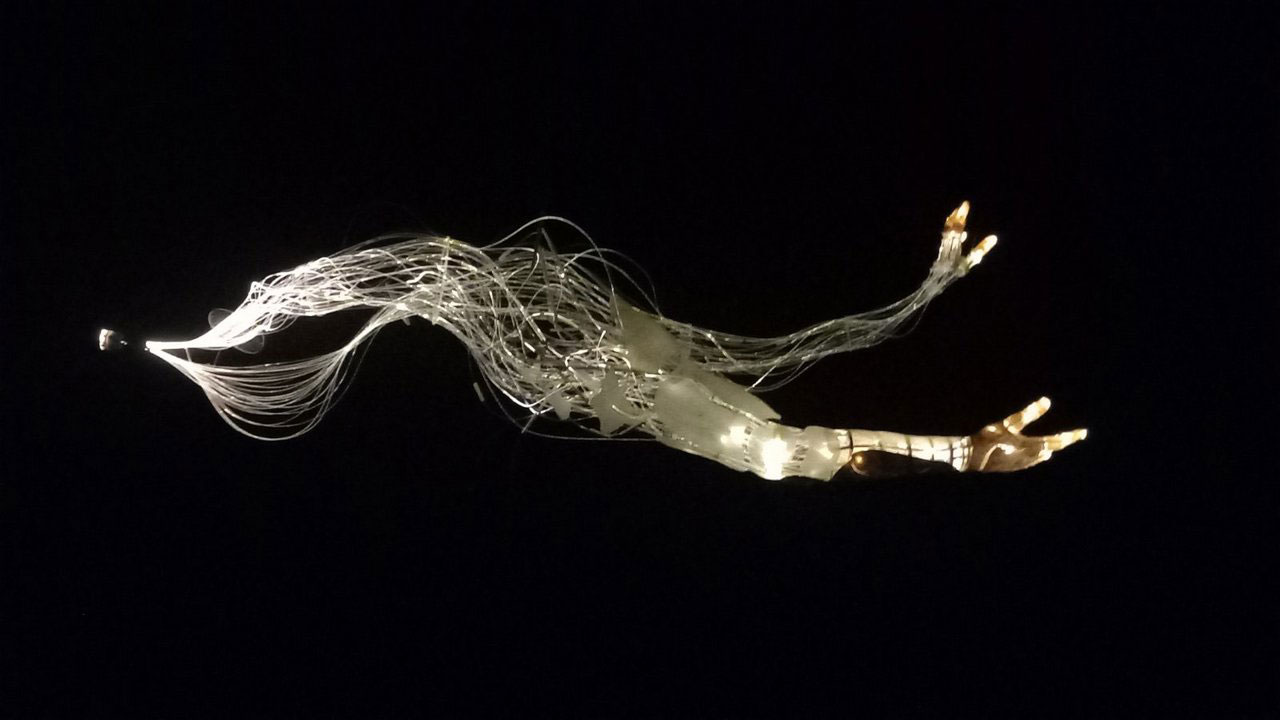
The first week presented a broad range of artistic practices, with a strong presence of sculpture, installation, and video art. Standout works included the sculptures of Eleana Demertzis (Don’t Ask Questions You Don’t Want to Know), Niko Orhani, as well as Maria-Ioanna Stravoulaki (Deadlock Balancing Act), which explored the notion of balance through fragile sculptural compositions. In the field of video art, works with a more poetic or experiential tone were presented, such as Anastasia Tsoutsouka’s (Spring), and Anhel Gonzales’ (a-mechano: an archaeology for the future), which proposed a speculative archaeology of the future. Of particular significance was Lydia Gianna’s deeply personal work (UnLIMBited), which traced an embodied narrative shaped by a serious health condition, using video and installation. Aikaterini Gioka developed a poetic and delicate visual language, focusing on the dandelion—known in Greek as the “thief”—emphasizing ephemerality and fragility. Alexia Karpanou (The Tools and Means of Beauty) critically examined aesthetic criteria, approaching beauty tools as objects charged with symbolic meaning within a context of mass consumption and standardized aesthetics. Finally, Alexia Palamida’s installation (Society Sculpture) functioned as a sharp commentary on society and human relationships, articulated through a powerful visual metaphor: a giant grater from which human skulls emerged.
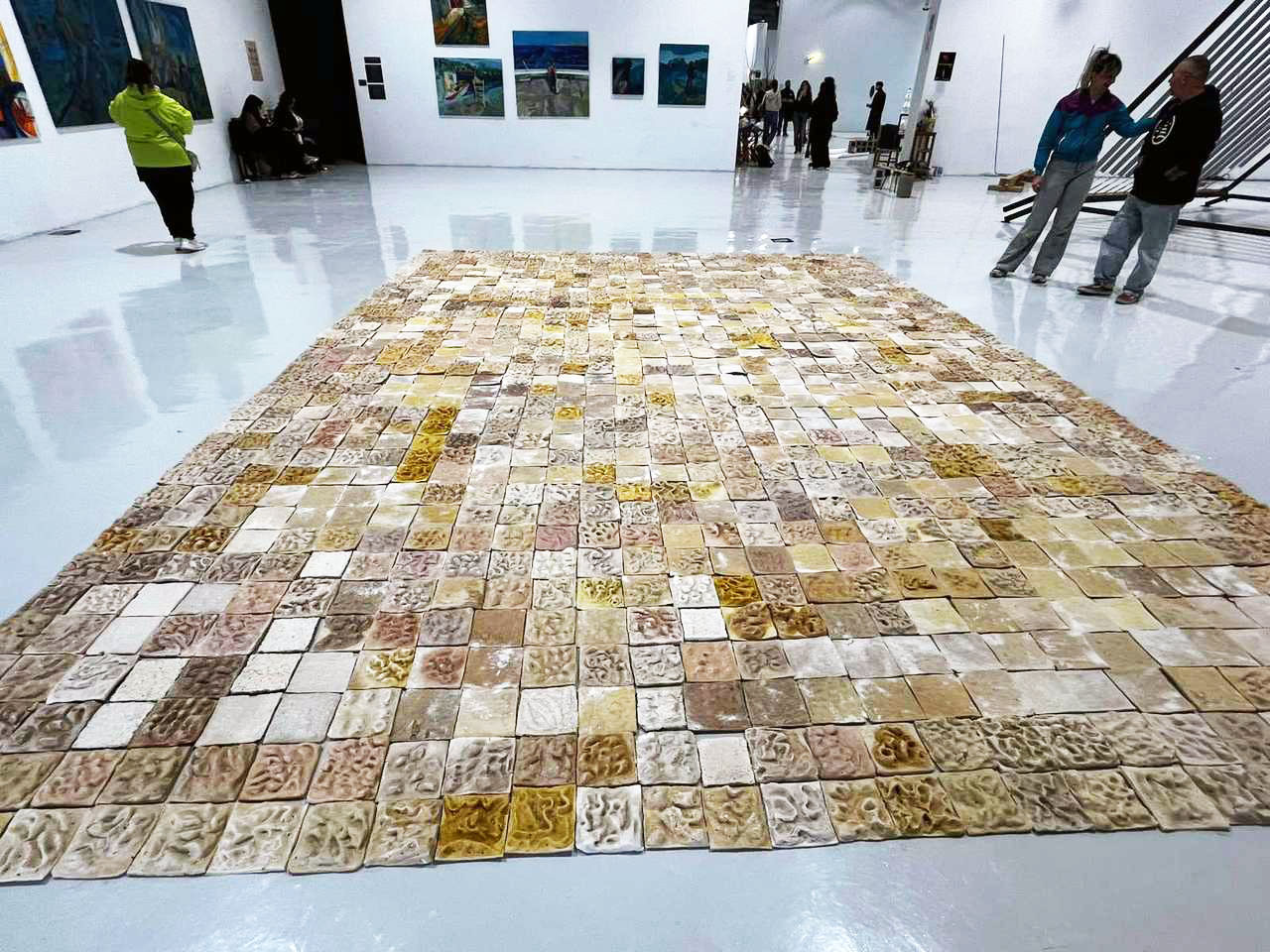
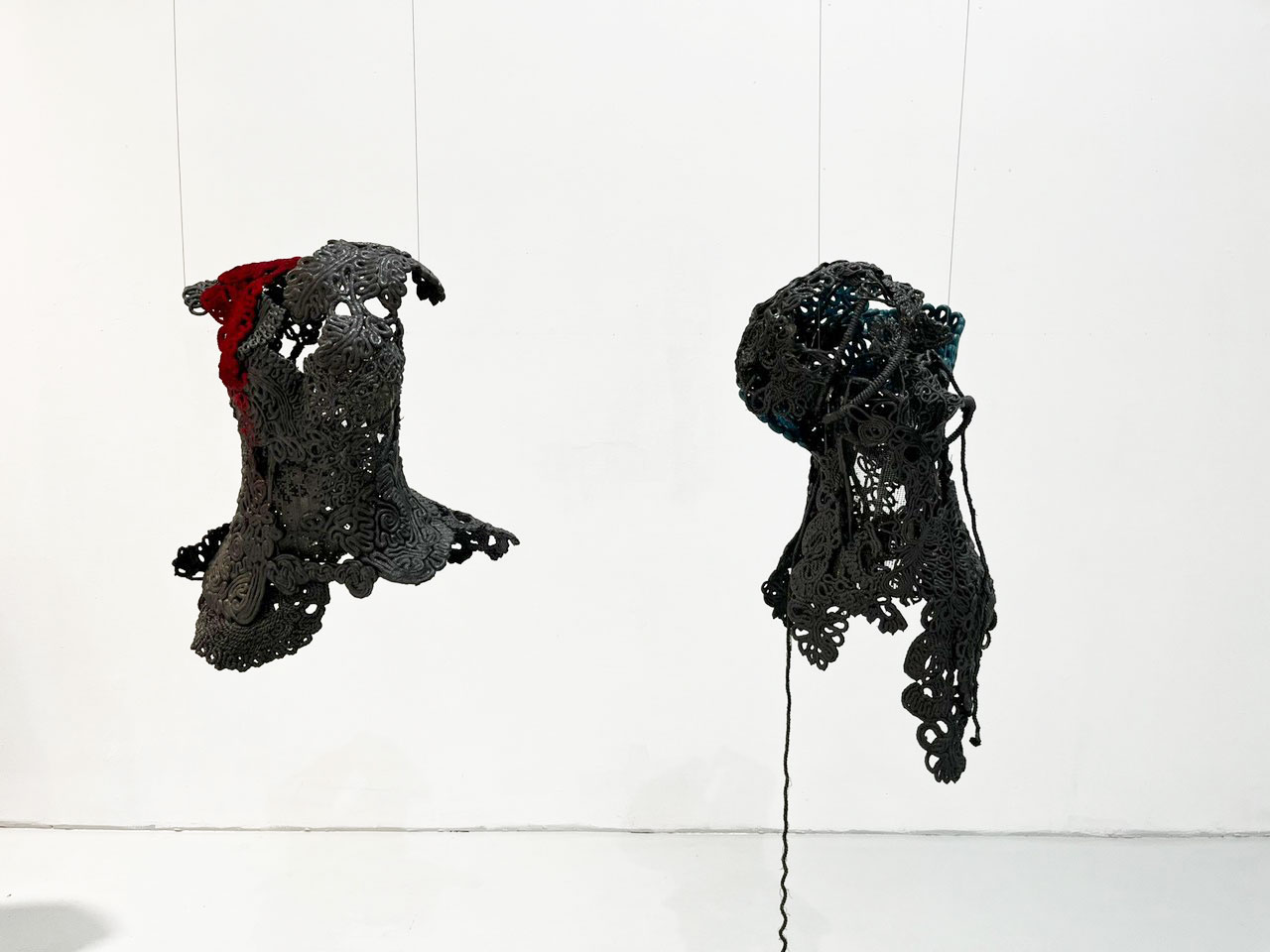
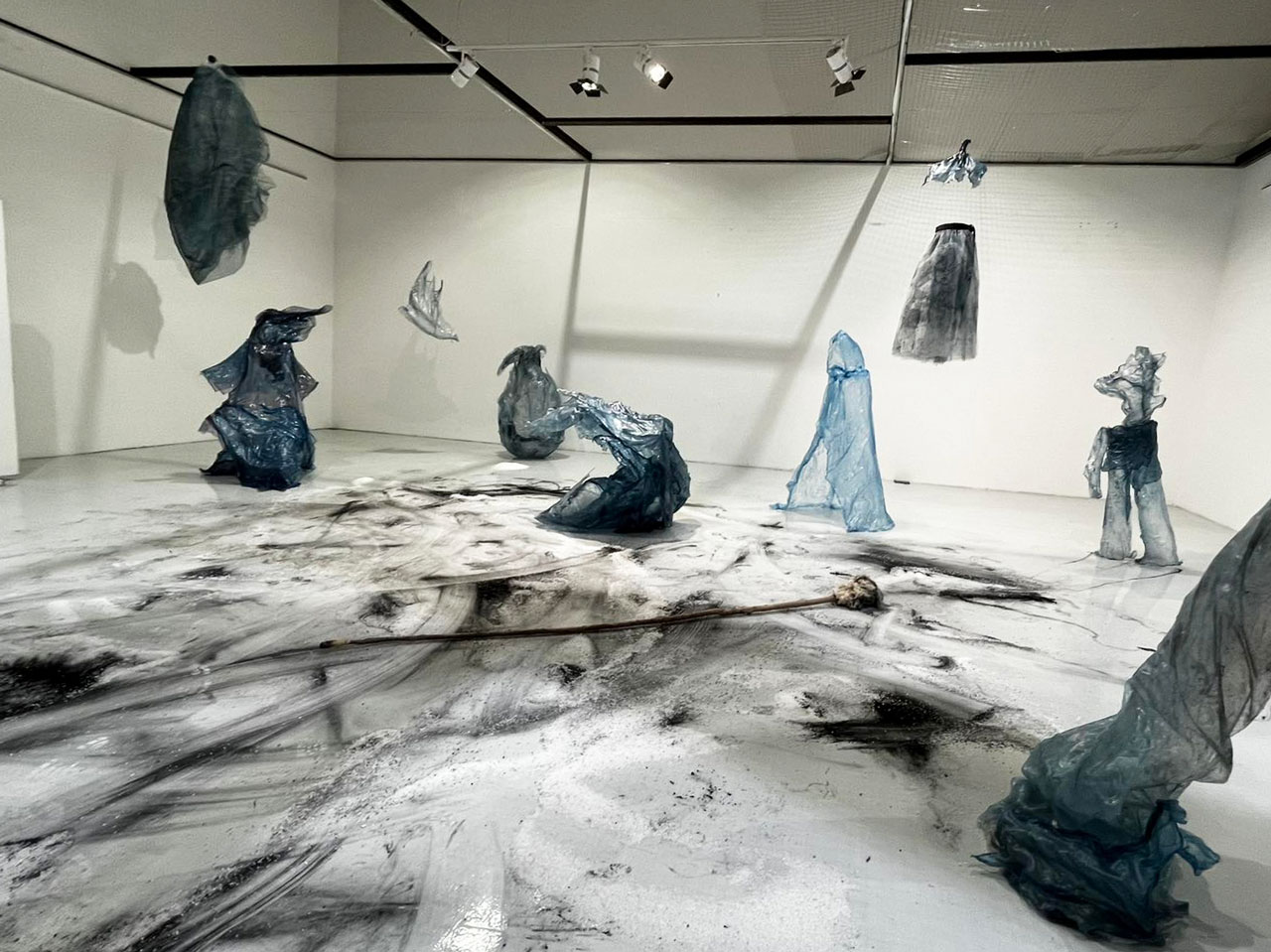
During the second week, works emerged that moved between memory, the body, and the materiality of everyday experience, with a strong presence of painting, installation, and sculpture. Giannis Antonopoulos (Reflections / Images) presented the series of painted portraits , in which the figure of a man is initially rendered clearly and gradually dissolves into a blurred image, addressing issues of memory and loss. Hyacinth Metzikoff, in her installation Corsets, explored the relationship between body and garment, mechanical movement, and the “silent” language of everyday care through a sculptural environment referencing clothing as both object and constraint. Katerina Koutrouli presented Breadscapes, an installation composed of tiles placed on the floor, forming a unified spatial work that referred to earthly materiality and surface as a field of reading. Finally, Vilhelmini Andrioti’s Hydro Corpus: Traces of Flow investigated the relationship between body, water, and memory through sculptural forms and material traces, also incorporating performance as an integral component.
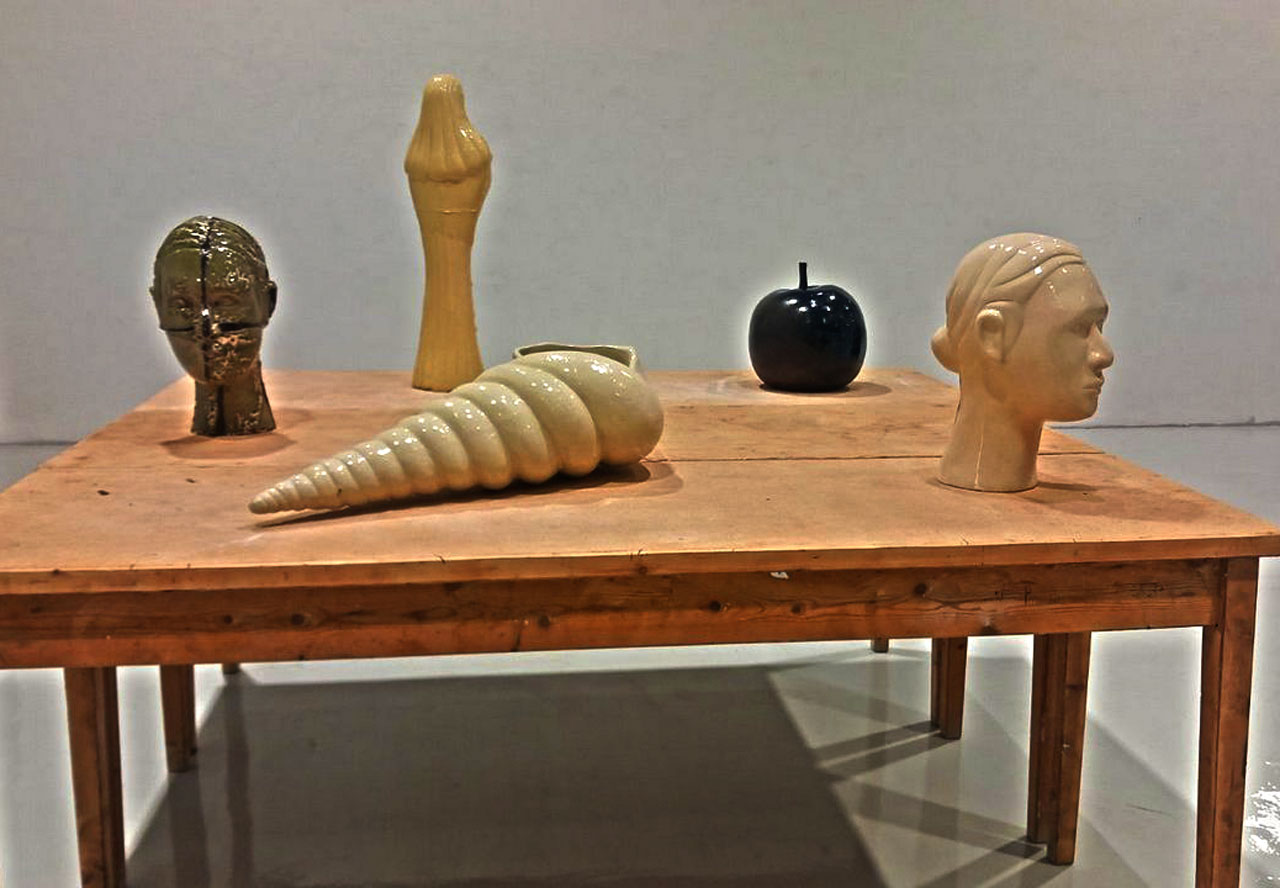
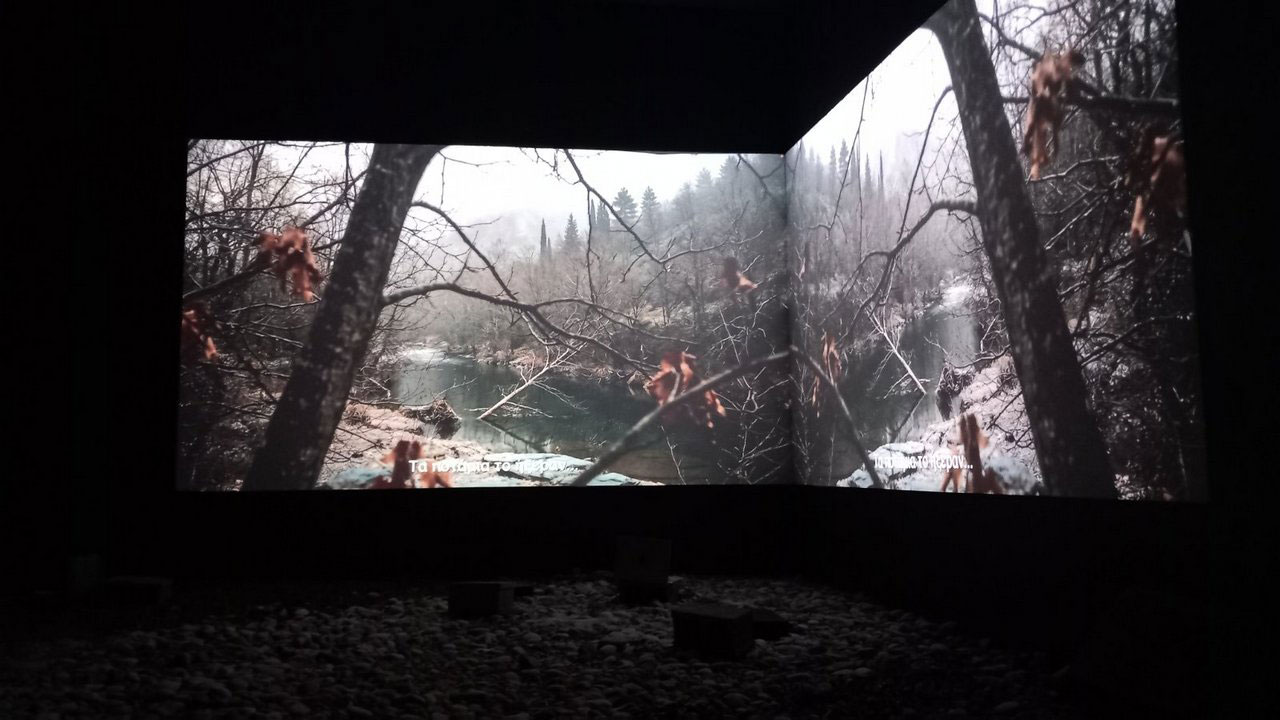
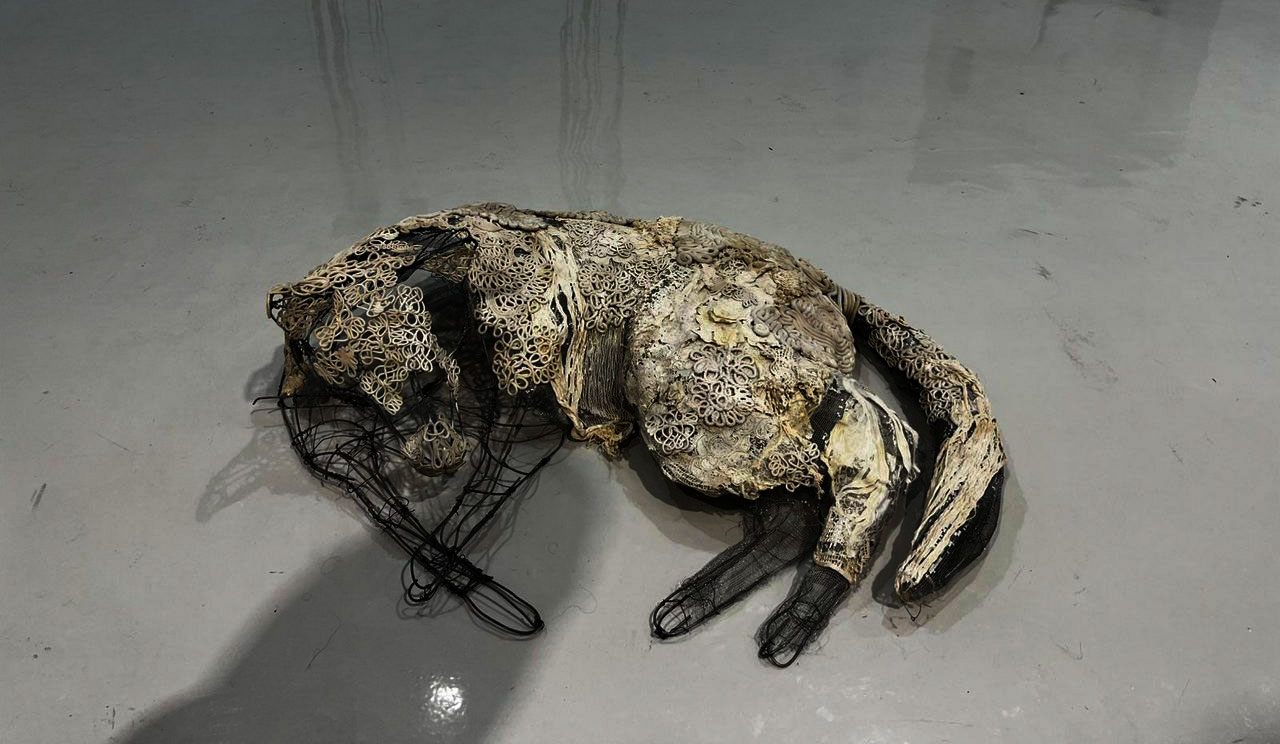
During the third week, sculpture, painting, and video art were particularly prominent. Notable were the sculptures of Liana Papalexi (Waterland), a series of hybrid forms referencing plants, marine creatures, and organisms bearing human traces, forming a surreal visual environment. Adriana Fakinou presented a composition of uniform wooden panels painted in oil, mapping the architectural mosaic of Athens through a highly structured visual narrative, with near-photographic precision in the depiction of apartment façades and architectural details. A particularly immersive experience was Konstantinos Papantonis’ installation (This looks more real than it did yesterday), where the viewer first passed through a corridor evoking a coral reef environment before entering a screening space with lounge seating placed on a floor covered in stones and soil, resembling an artificial beach. The video work (A trip to Sargasso Sea), created with the assistance of Artificial Intelligence, envisioned a future landscape in which AI dominates, and humans live within individualized simulations deeply tied to their DNA and origins.
Overall, this year’s degree shows confirmed that these emerging artists have already begun to develop a coherent artistic language, moving with confidence across different media, materials, and references. Through works that balance the personal and the collective, they assert their presence within the contemporary art discourse with clarity and consistency.
Photo: Hyacinth Metzikoff, Corsets, Installation view, ASFA – March 2026 Degree Shows- Athens, Photo: © & Courtesy Vicky Trochidou