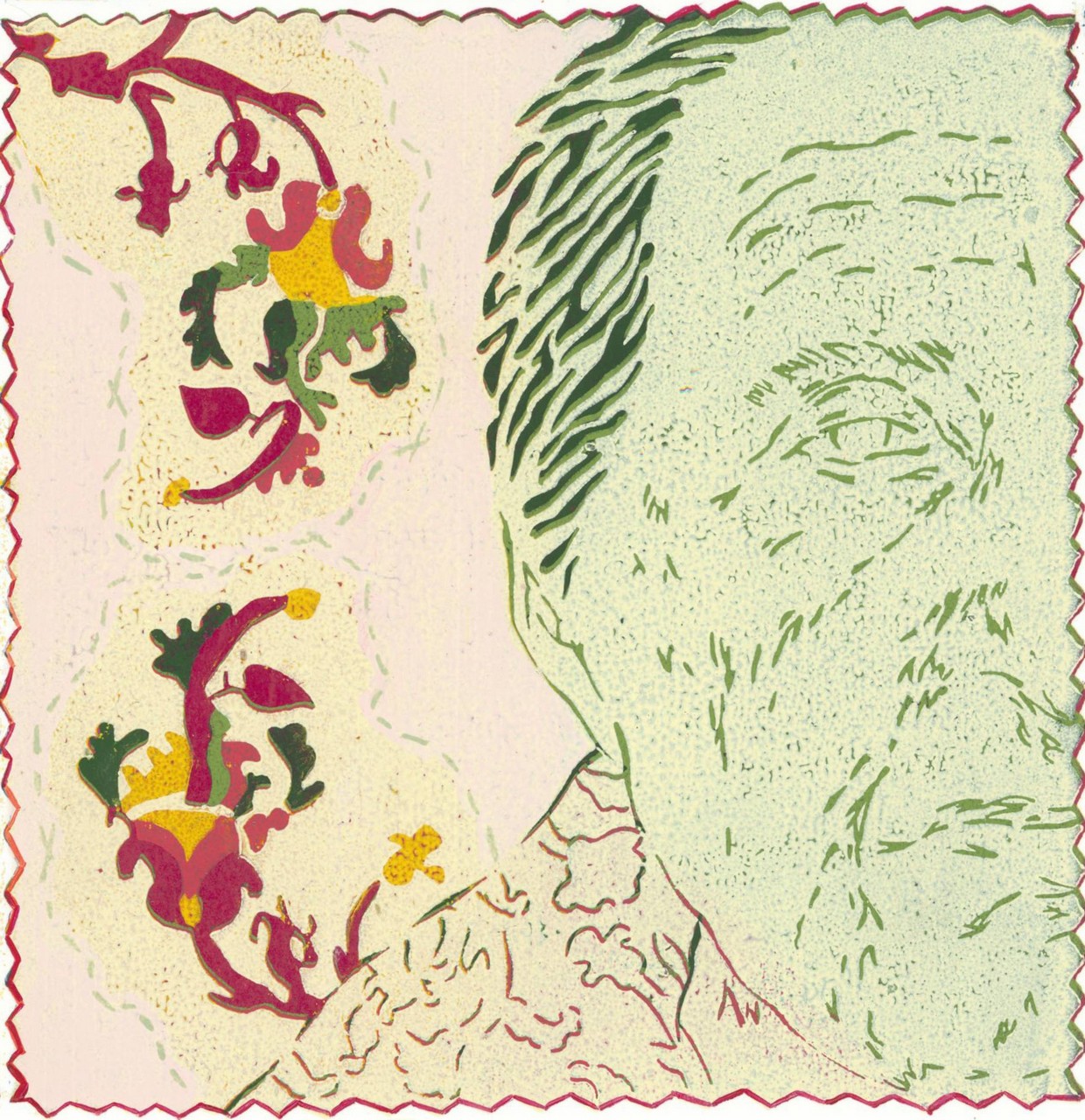
INTERVIEW: Marina Bompou
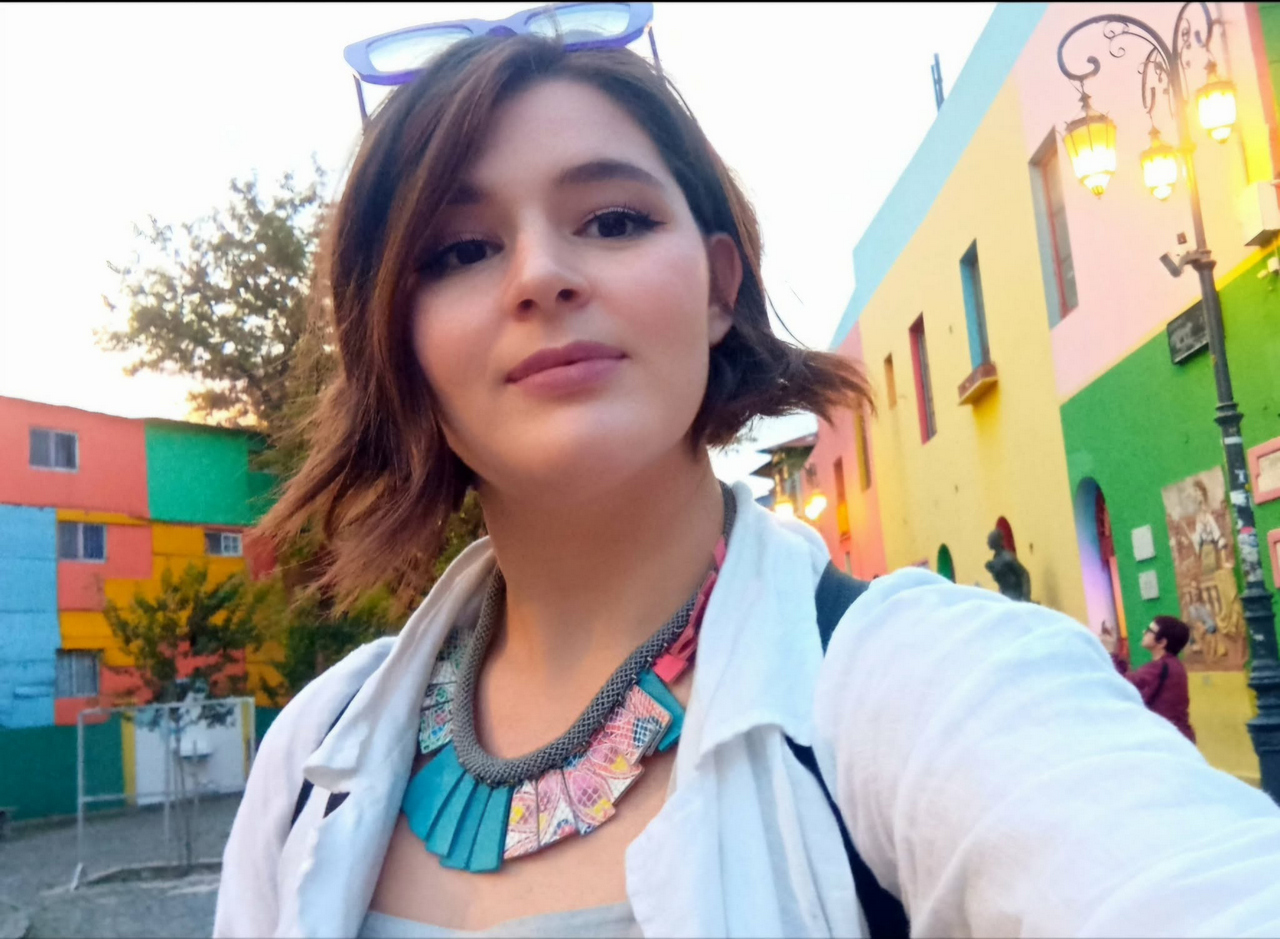 Marina Bompou is a printmaker of the younger generation, Her work focuses on themes of memory, identity, and lived experience, bridging the personal with the collective. In the interview that follows, she discusses her creative process, her sources of inspiration, and her perspective on the role of art today. Through layered processes and a sensitivity to material, she constructs images that evoke both fragility and persistence—echoes of past moments refracted through contemporary consciousness. In the interview that follows, she reflects on her creative methodology, the influences that shape her artistic vocabulary, and her critical perspective on the role of art in a world marked by constant social and cultural flux.
By Vicky Trochidou
Photo: Marina’s Bombou Archive
“No Matter How Many Years Will Pass” is a body of work that tells a very personal story. How did this project come about?
The thematic section “No Matter How Many Years Will Pass” was conceived during the years of confinement, amid the emergence of COVID-19, when my physical presence in the studio became extremely limited. As a result of these conditions, I returned to my family home in Nafplio. During this period, I decided to step out of the constantly shifting pace of time around me and stop being absorbed by everyday situations that were covering up the deeper issues I was concerned with. With this in mind, I began reflecting on what exists within the four walls of my home—both literally and metaphorically—from past to present. I revisited my grandparents’ photo albums and began to recall my childhood years. Nostalgic, and at times painful memories, surfaced, finding release only through expression. What interested me most was the vivid reactivation of the past. Memory reveals itself as fluid, transparent, and multi-layered, never static, but rather a continuous process of rewriting.
Which materials or means of expression do you prefer, and what role do they play in the artistic process and production?
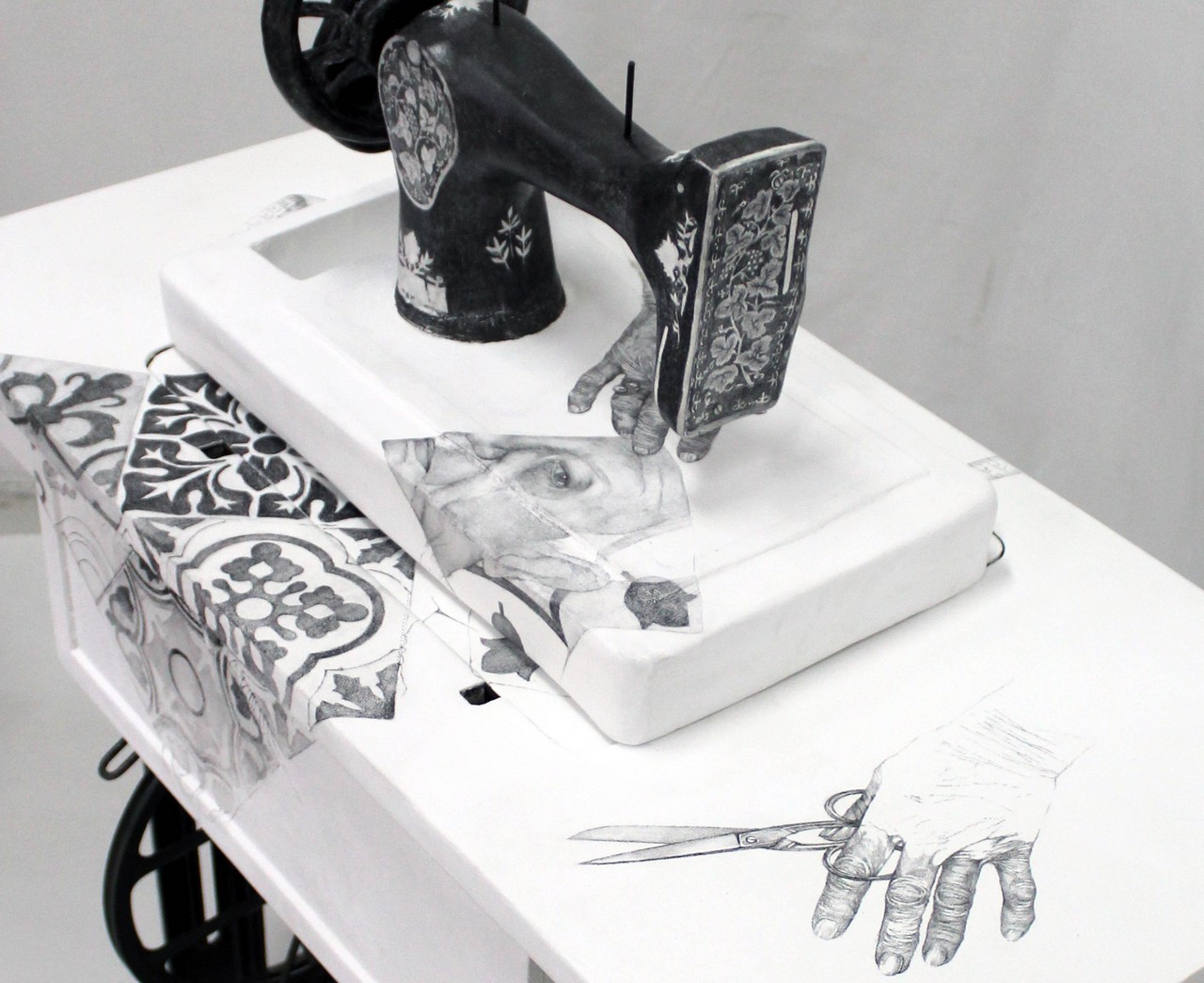
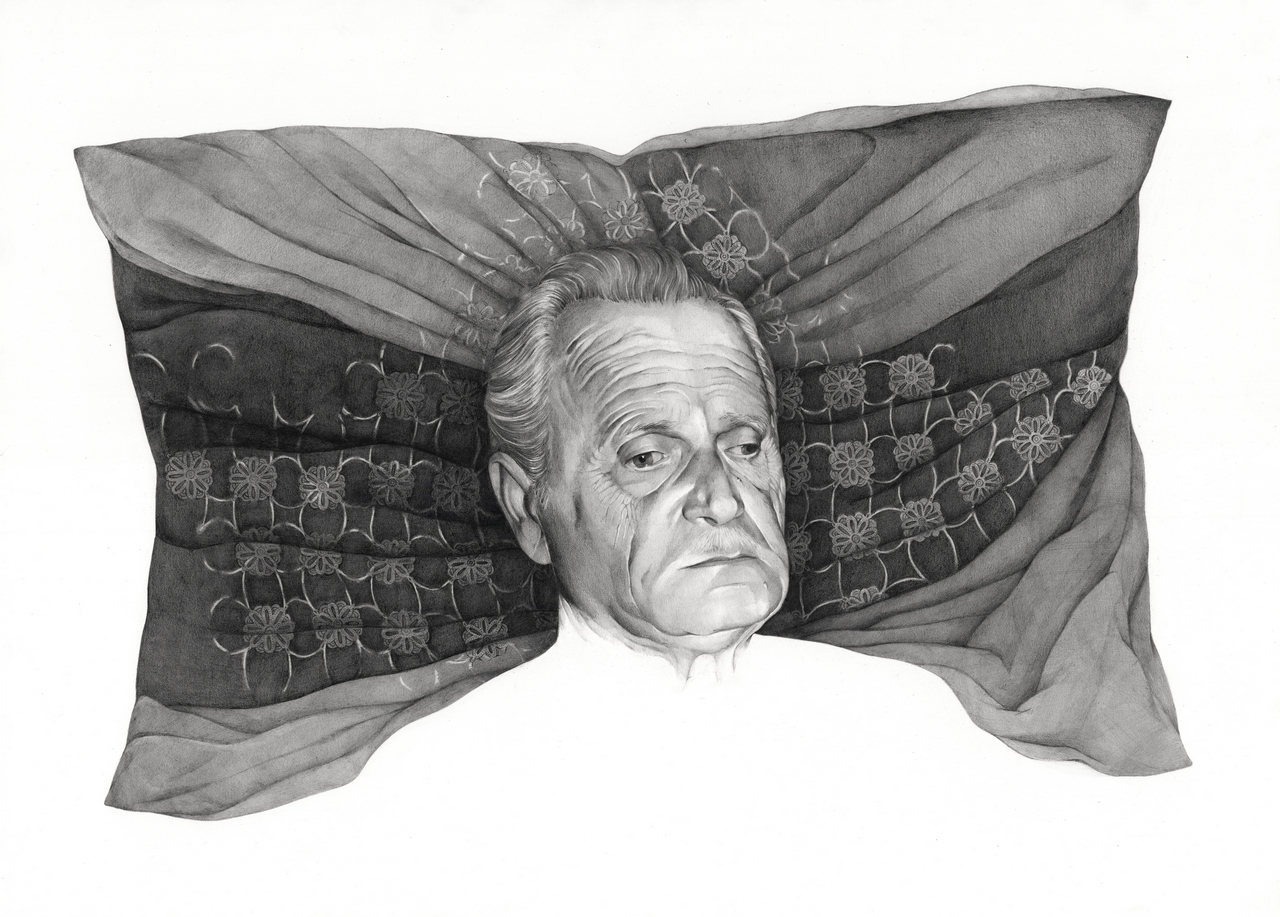
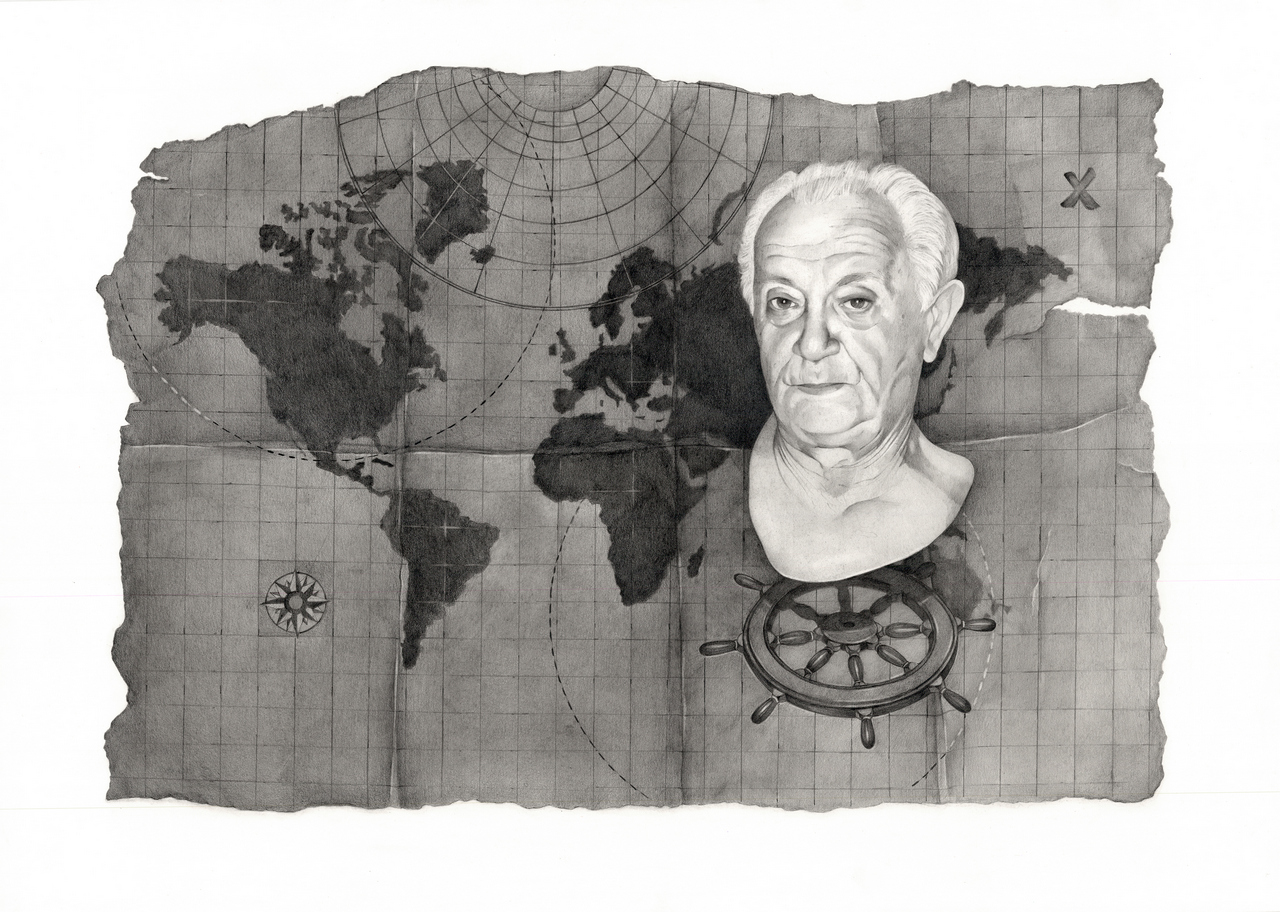
My studies at the School of Fine Arts took place in the Printmaking Studio under Associate Professor Xenophon Sahinis and Special Teaching Staff member (Μέλος ΕΕΠ) Ourania Fragoulidou, which strengthened my deep love for paper. The sensation of its fiber when I touch it, its smell, and its ability to transform have always fascinated me. Whatever technique I use, whether printmaking or paintin, I usually choose to apply it on paper. However, I have a particular affection for handmade Japanese paper, which I associate with the figure of my grandfather, Angelos. As a ship captain, he frequently travelled to Asian countries and brought back materials and textiles, which were later skillfully used by my grandmother. This marked my first encounter with Asian culture. Paper, fragile yet resilient, mirrors memory itself: it can tear or fade, yet through the right process it can remain intact over time—just as memories do. The more we hold on to them, the more indelible they become.
In the exhibition, you used pencil on paper. Why this choice? What does it allow you to do that other media do not?
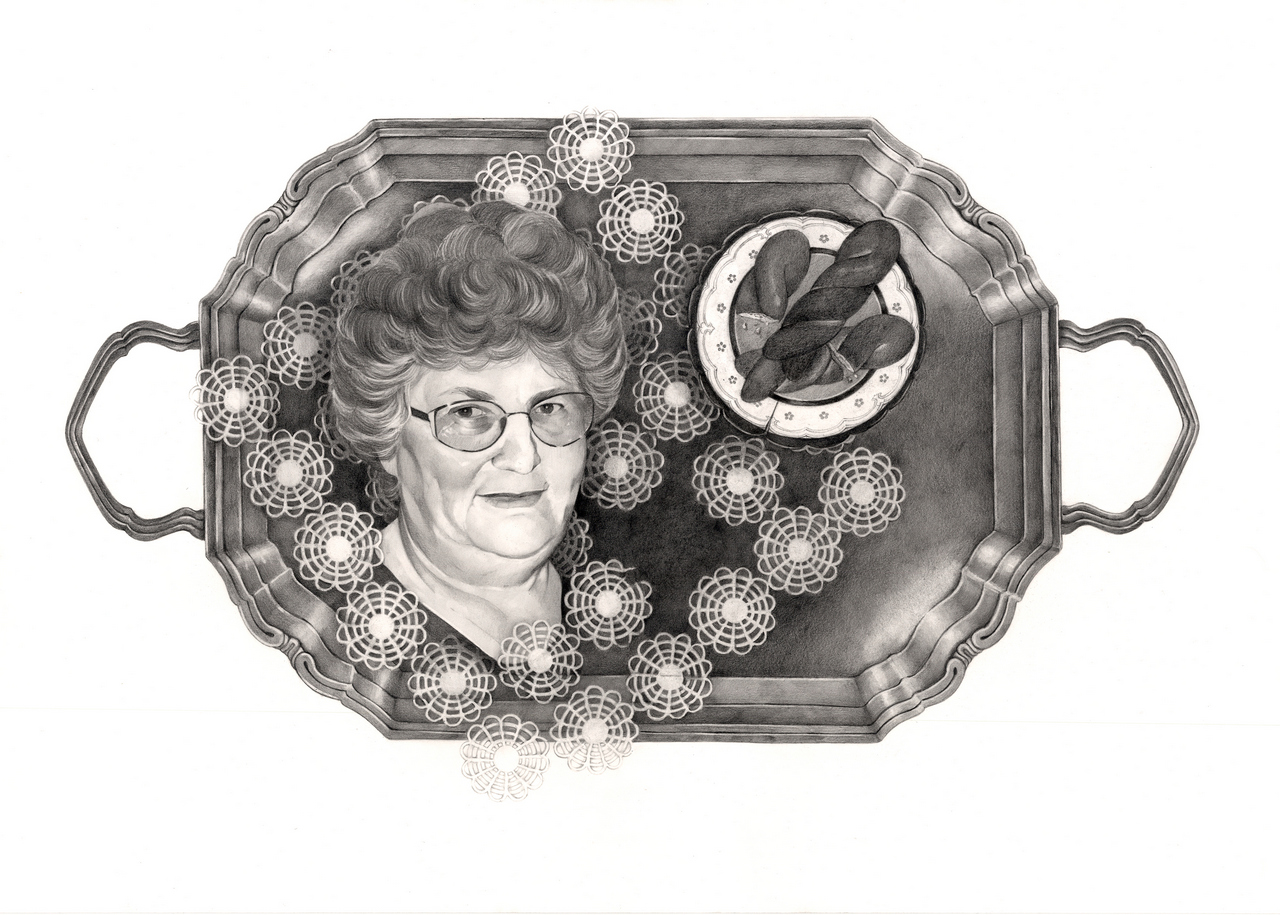
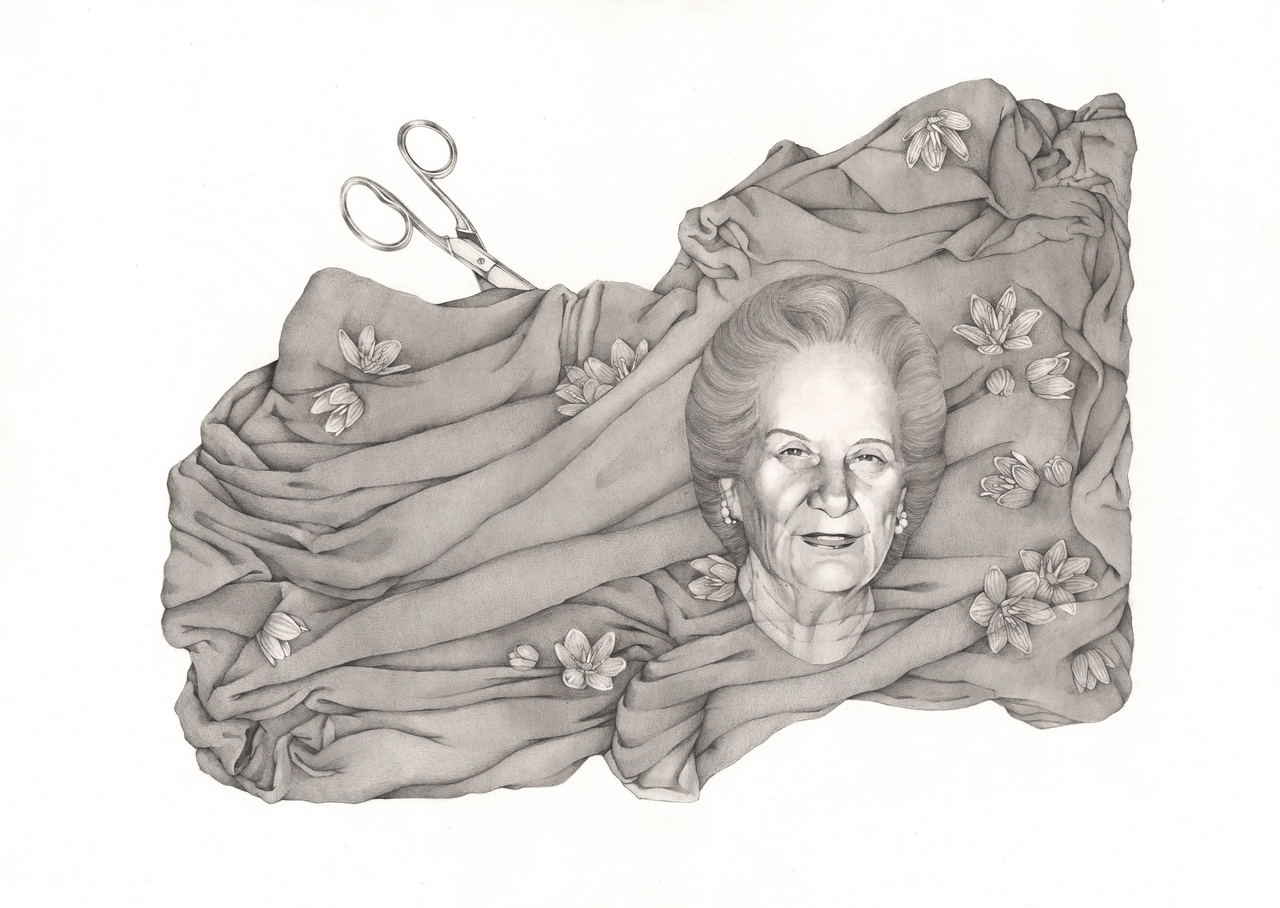
Pencil has a dual nature. It functions both as a means of expression and as a symbol. It is a simple, everyday, almost “ordinary” material, yet at the same time extremely sensitive, since one touch is enough to destroy what you have been working on for hours. Both paper and pencil are chosen with an awareness of fragility. Through their use, I aim to transport the viewer to a past era, when photographs and television were still black and white. Pencil, as an elemental medium, leaves its trace against objects we often perceive as stable, revealing that permanence contains fractures, history, and decay—and yet, through these fissures, memory persists.
When working with memory, what feels most present to you: nostalgia, loss, or something else?
Each of these is both a virtue and a blessing to be able to feel. They form a complex emotional field that is difficult to separate or prioritize. Nostalgia is certainly the dominant emotion throughout my creative process, as I recall beloved faces, childhood memories, gazes, smiles, embraces, games, scents, and tastes. However, when we speak about loss, we are not referring only to death itself, but also to the fading of an experience or a condition, to the loss of expression, and even to the loss of memory.My greatest fear is forgetting who I am, where I come from, where I am going. That “something else” is my role as an artist: the way memory is reconstructed. The work “Blossomed Memories” reflects this need. The armchair is not merely an object but an invitation to the viewer: to sit opposite the grandmother, to hear her story, and perhaps to recall their own family narratives. This work is not about loss, but about regeneration, the desire to once again confront and converse with our memories.
Is there a work in this exhibition that feels closer to you than the others?
I could not distinguish between the works in this series, as each responds to personal moments. However, two pieces feel especially close to me: “Four Steps into the Past” and “Blossomed Memories”.“Four Steps into the Past” is the only work that includes all four of my grandparents. It gives me the feeling of entering a neoclassical building from another era, encountering patterned tiles reminiscent of my grandmother’s house. These motifs, despite any wear, remain timeless—just like the memory of these people. At some point, drawing was no longer enough. I felt the need to reconstruct the space in which my grandparents lived, to reassemble a setting where I could walk through their home again and encounter them as if in a lived memory. From this need emerged “Blossomed Memories”, and subsequently the sculptural works. The armchair, apart from its wooden base, is almost entirely made of Japanese paper and painted with pencil. It explores the boundaries of my materials.
How do you respond to audience reactions and criticism when your work deals with something so personal as memory?
I do not expect specific reactions from the audience. What surprised me, however, was how many viewers, without prior explanation, identified with an era we collectively share, especially among older generations. Many of us had a mother or grandmother who worked with needle and thread, many of us have stories of displacement or migration, many of us have experienced significant loss. In the faces of my grandparents, viewers often recognize their own parents or grandparents. I was struck by how something so personal could evoke such strong emotional responses. I remember a man kneeling in front of the sewing machine ( on thw work “Oblivion”), holding it and crying, telling me it was identical to his mother’s, which she carried on her back during her escape from Asia Minor. That was the moment I understood that memory becomes collective.
What do you think is the role of art today, and what can it do in relation to memory and decay?
Today, art is perhaps more essential than ever. In an age of speed, over-information, and constant forgetting, it becomes a form of resistance.Art slows things down. It asks us to pause, observe, and listen to what tends to disappear in time. It does not merely record, it reactivates experience. Like memory, it is not static: it transforms and gains new meanings through each encounter with the viewer. It allows each person to renegotiate their own relationship with the past. As for decay, I do not see it as something to be avoided or beautified. Art does not conceal it, it reveals it. Decay is not an end, but a starting point. In traces and ruptures, new readings emerge. In this sense, decay is a process of transition, and art is the space where this transition becomes visible and meaningful.
When working on a piece, do you think of the viewer, or does your work begin from an inner impulse ?
It is inevitable not to think of the viewer during the creative process. However, when this begins to divide the artist’s attention, one must return to the personal need. Personally, I cannot create something “for the shake of appearance.” It must first be meaningful to me. Only then does it make sense to share it with others.
How do you feel now that the exhibition has been completed? How did you experience this journey from beginning to end?
Initially, I was anxious to see how the audience would respond to something so personal. To be honest, I believed people might not fully “understand” me. However, I now feel relief. My anxiety is greater during the making of the work than during its exhibition. Once it is shown, I feel I have “let go.” The viewer then takes over, and I am open to any response or critique. Memory and the human element have always been central to my practice, and I believe they will continue to return in new forms.
As we know, during this period a project for the Folklore Museum of Oreokastro is being completed, one that incorporates a great deal of color. What need led you to the use of color? Is it dictated by the theme, and what is that theme?
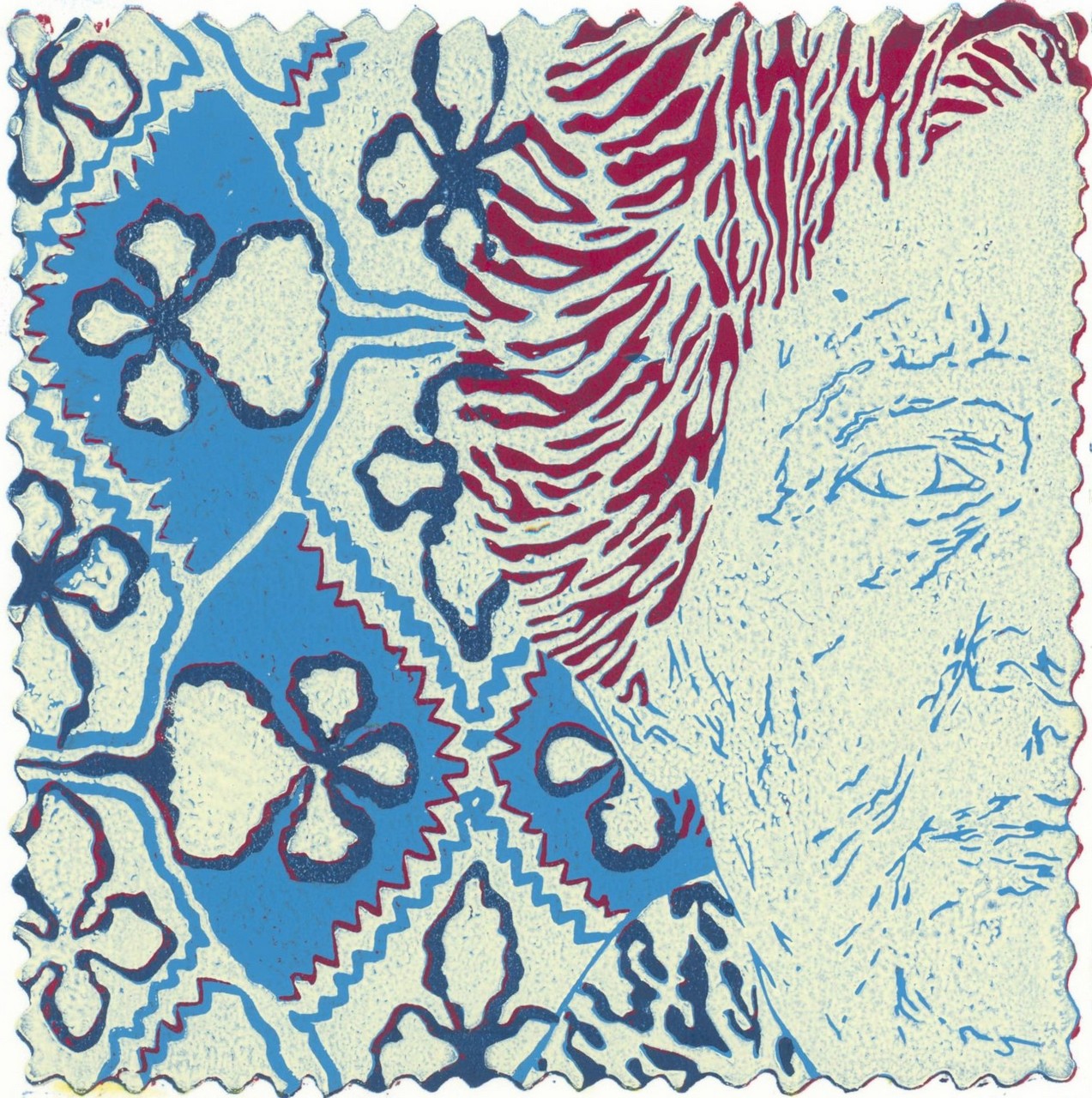
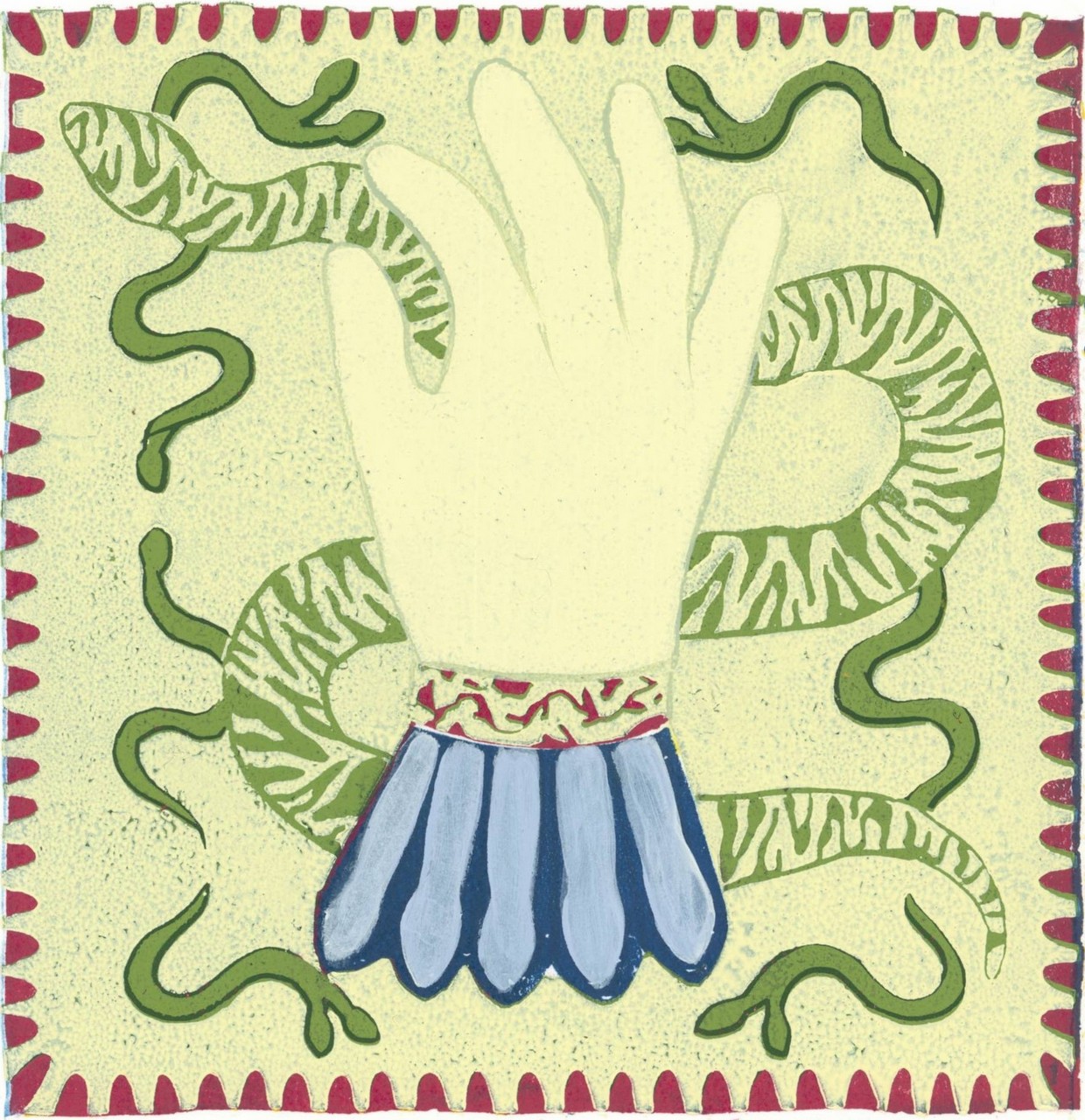
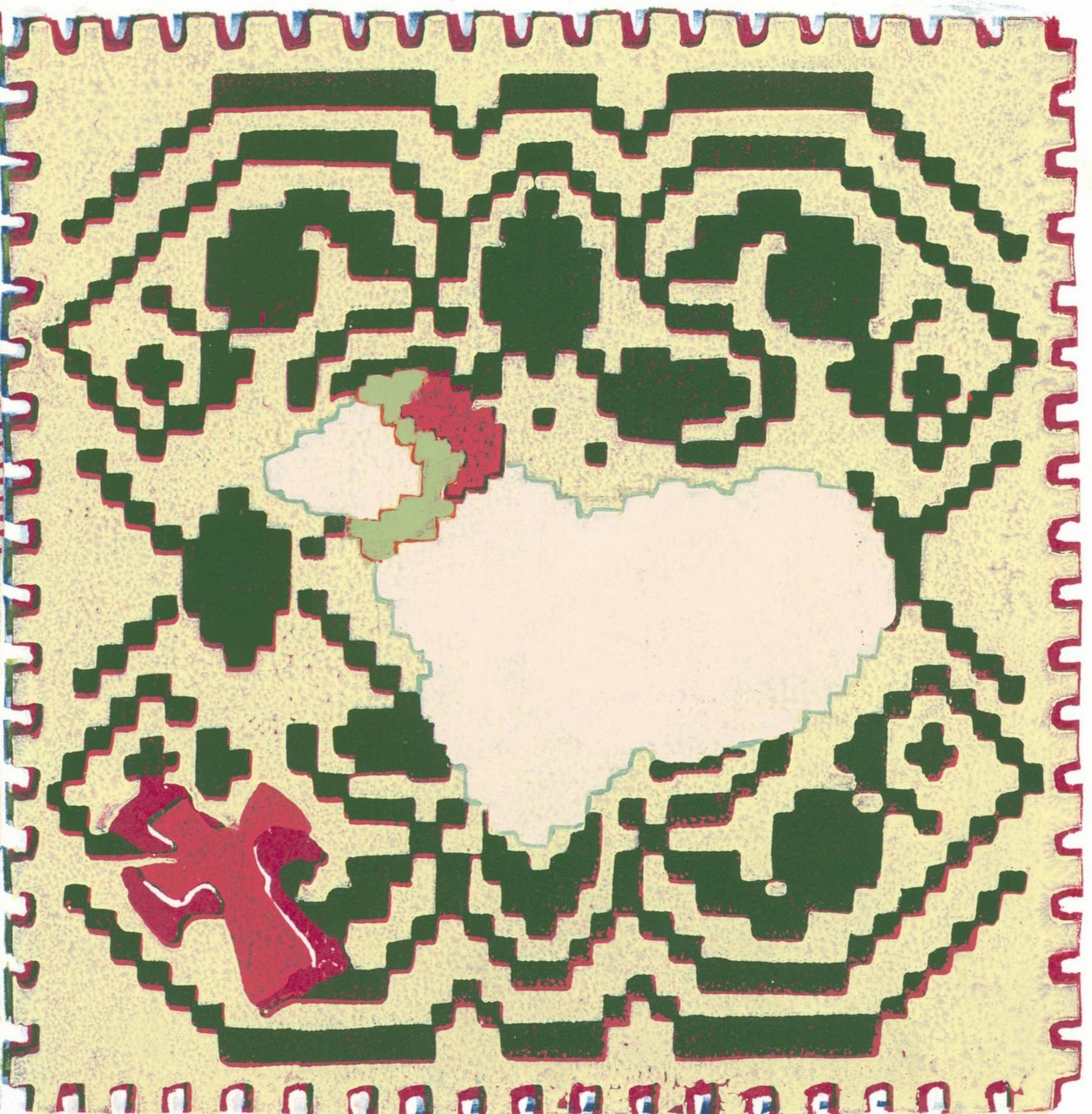
The transition to color emerged almost organically from the nature of the project itself. In the thematic section “No Matter How Many Years Go By,” my work moved mainly within a black-and-white, more introspective approach to memory; here, however, I found myself confronted with material deeply connected to collective experience, tradition, and the living memory of a place. The work “Echoes Through Generations (By Word of Mouth)” is based on oral testimonies and objects belonging to the residents of Drymos—elements that carry not only the trace of the past but also a strong experiential energy. In this case, color does not function decoratively, but as a carrier of that vitality. It contains the warmth, intensity, and polyphony of these narratives. In one case, black and white relates more to inner exploration and the distance of time, whereas in the other, color brings things closer to the present. The subject matter—concerning the memory of a place through the traces of its people—makes the use of color almost necessary. This is not a departure from what concerns me, but rather an expansion. Color constitutes a different way of approaching memory—less silent, perhaps more extroverted, yet equally experiential.
The exhibition “No Matter How Many Years Will Pass” took place on 19/7-17/8/2025 at the War Museum of Nafplio, curated by Efi Michalarou.
Download Greek version here
First publication: 26/4/2026
www.dreamideamachine.com
© Interview by Vicky Trochidou