BOOK:Loie Hollowell-Overview Effect, Pace Publishing
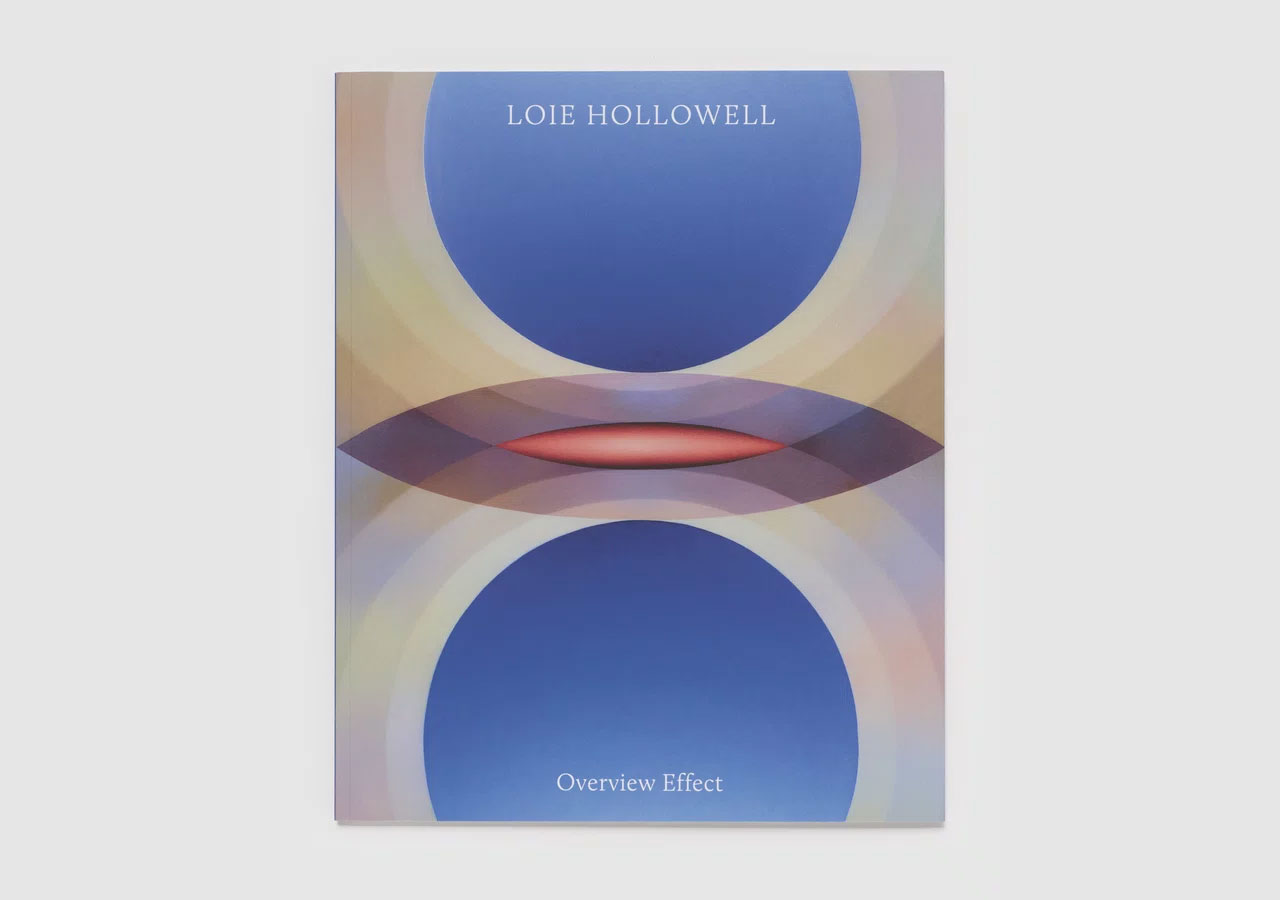
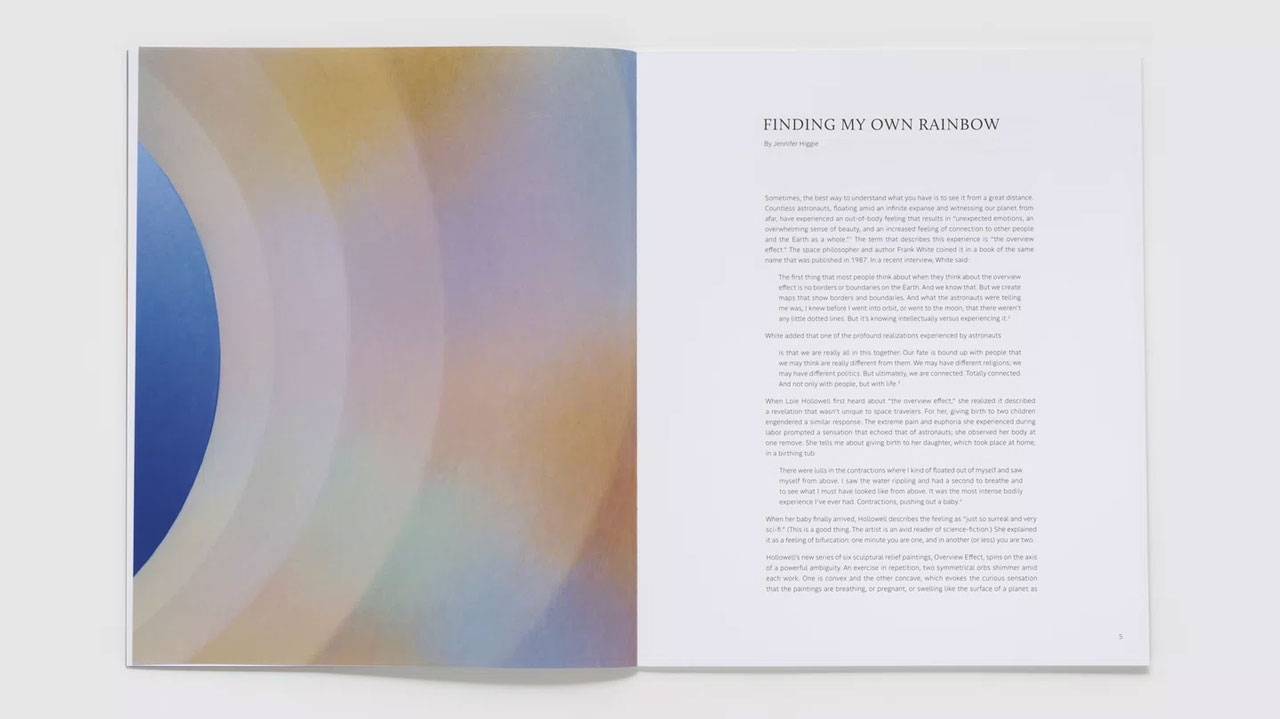
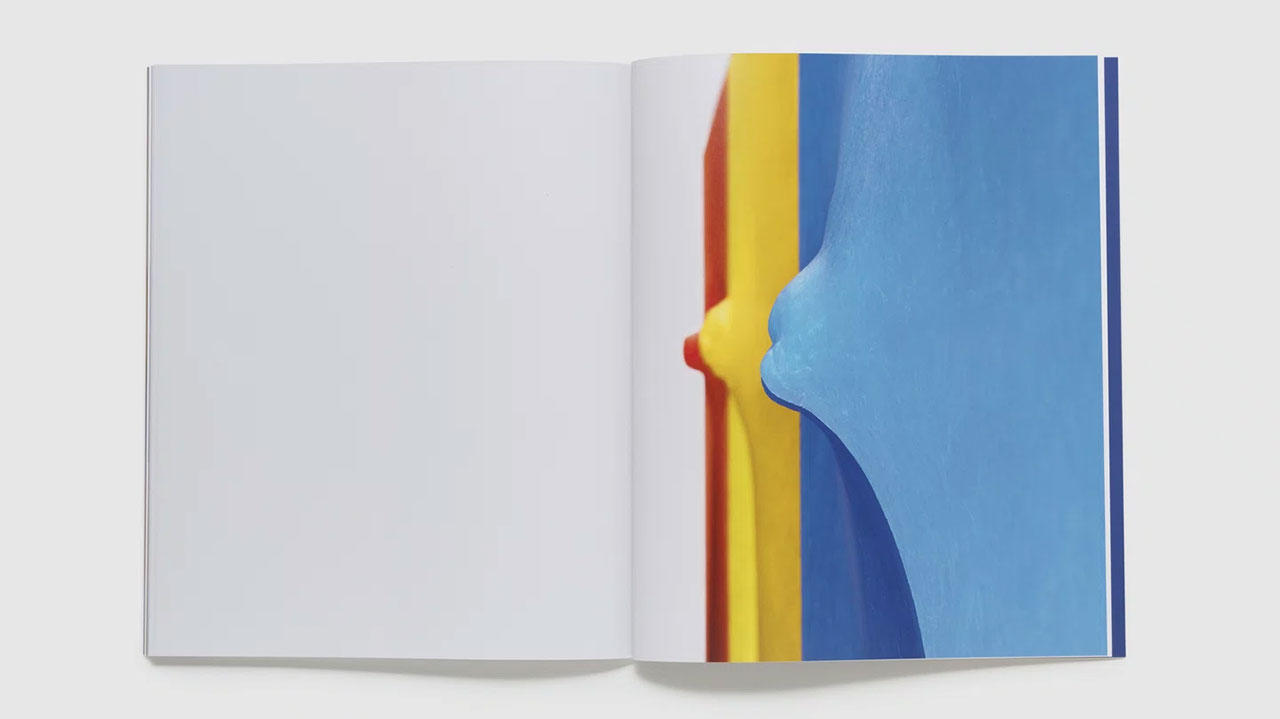
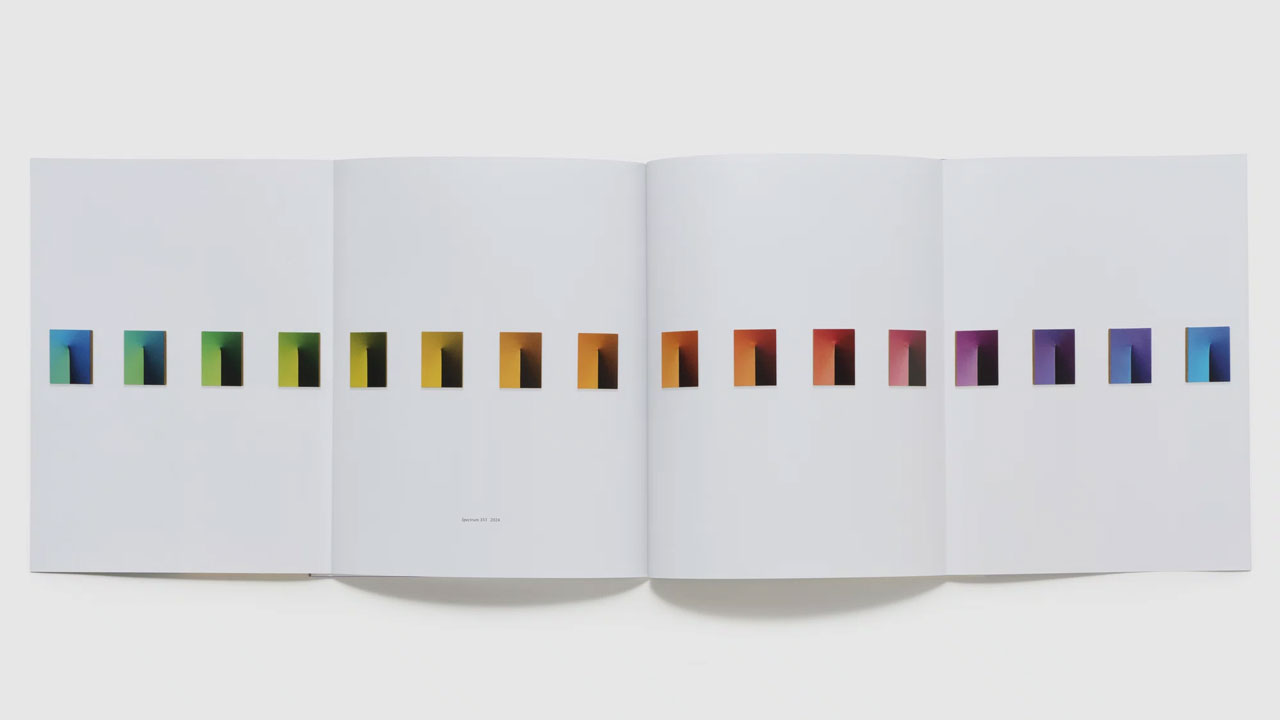
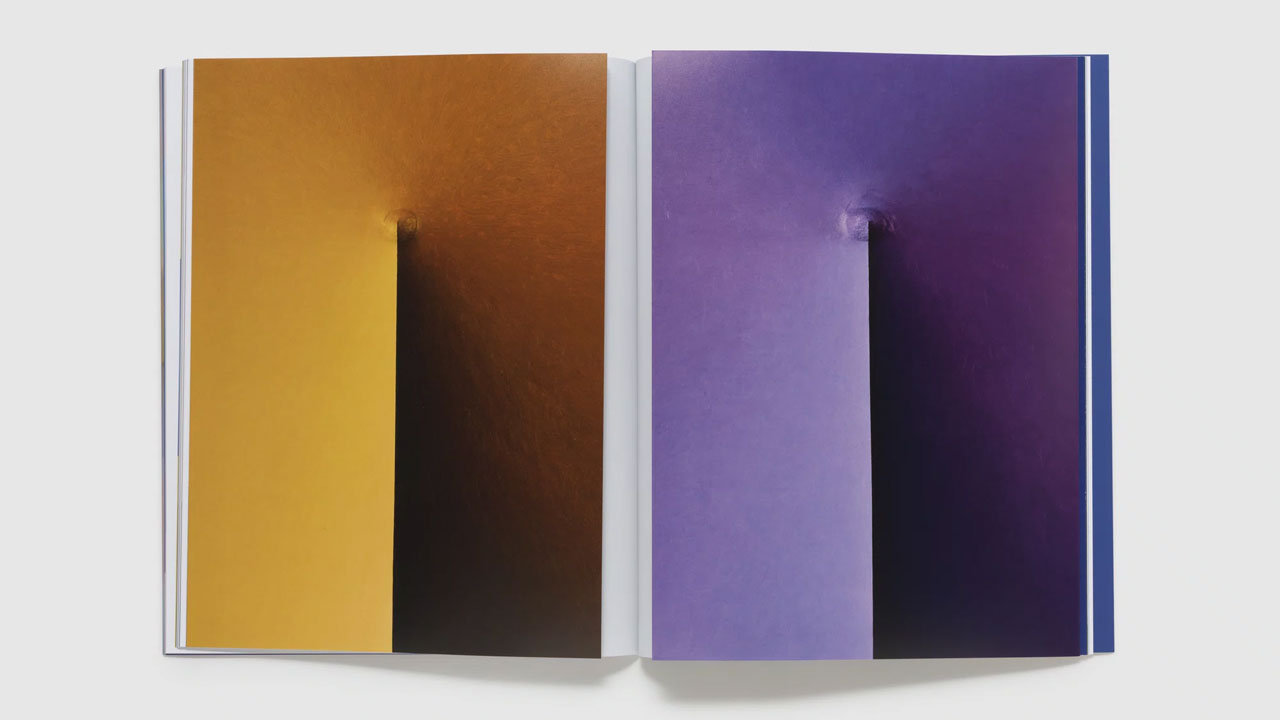
Loie Hollowell’s “Overview Effect” catalogue is a visually commanding and conceptually layered document that faithfully records the scale, color intensity, and bodily resonance of her largest paintings to date. Published for her first solo presentation in Southern California at Pace in Los Angeles, the book documents six monumental canvases (each eight by six feet) and two multi-part nipple paintings, pairing generous installation photography and close-up detail shots with two new essays by Jennifer Higgie and Sarah Lehrer‑Graiwer that trace the series’ origins and development.
By DimitrisLempesis
At first encounter “Overview Effect” delivers the same blunt sensory charge as the paintings themselves: searing color, extreme lighting, strict symmetry, and bold geometries that register like afterimages on the retina. The reproductions emphasize scale and luminosity so effectively that the reader can approximate the physical encounter with Hollowell’s orbs—luminous, primary-color fields that feel elemental and cosmic. Installation views reinforce how these canvases operate in space, while the limited palette and large formats suggest something basic and floating in a vast, chromatic expanse.
Beneath that immediate visual force, the publication makes clear that Hollowell’s work is not merely decorative spectacle. The essays and the detail photography reveal a productive tension between compositional order and localized mark-making: mathematical precision and symmetry contain areas of looseness and hand-painted chaos. What read from a distance as perfect, celestial orbs resolve up close into tangled, calligraphic loops and frenetic lines. That shift—between the “overview” and the intimate view—becomes the catalogue’s central argument: stability contains instability, and the macrocosmic image depends on microcosmic gesture.
Critically, the book frames the series’ title, the “overview effect,” not only as an astronaut’s sense of planetary unity but as a metaphor for bodily experience. Higgie and Lehrer‑Graiwer draw a convincing line from the cosmic vantage to reproductive and maternal imagery: stacked orbs, concentric ripples, and intersecting mandorlas that suggest contractions, bulges and cavities, nesting forms, and the intimate geometry of pregnancy and childbirth. This conceptual pivot—translating an out‑of‑body, planetary sensation into the language of the body—gives the catalogue its most compelling interpretive thrust.
The publication also foregrounds Hollowell’s mark-making as a form of inscription. The looping, kinky lines read like a private script or a record of sensation; they imply communication, rhythm, and bodily record-keeping. By documenting both the distant, luminous effect and the up-close, tactile gestures, the catalogue allows readers to experience how Hollowell’s paintings operate on multiple registers: optical, somatic, and symbolic.
As an object, the catalogue is both handsome and useful. Its layout privileges scale and detail in equal measure, and the two essays provide readable, incisive context without overwhelming the visual material. For readers who saw the exhibition, the book functions as a faithful and evocative record; for those encountering the work for the first time, it offers a clear entry point into Hollowell’s recent shift toward monumental, body-inflected abstraction.
Overview Effect succeeds as a critical companion to Hollowell’s paintings: it reproduces their sensory force, clarifies their conceptual stakes, and preserves the dialectic between cosmic overview and intimate detail that makes the series so resonant.