ART CITIES: Paris-Anselm Kiefer
The nymphs of classical mythology are elusive, belonging to the transient spaces where water meets land, where shadow clings to light. Now, in a suite of more than twenty monumental paintings, Anselm Kiefer has brought them surging back to life. In “Nymphäum” (2026), the 81-year-old German master transforms the vast industrial nave of the gallery into a contemporary sanctuary dedicated to the nature spirits of antiquity—a painterly nymphaeum that forges a new chapter in the interweaving of myth and matter that has defined his practice for more than five decades.
By Dimitris Lempesis
Photo: Thaddaeus Ropac Gallery Archive
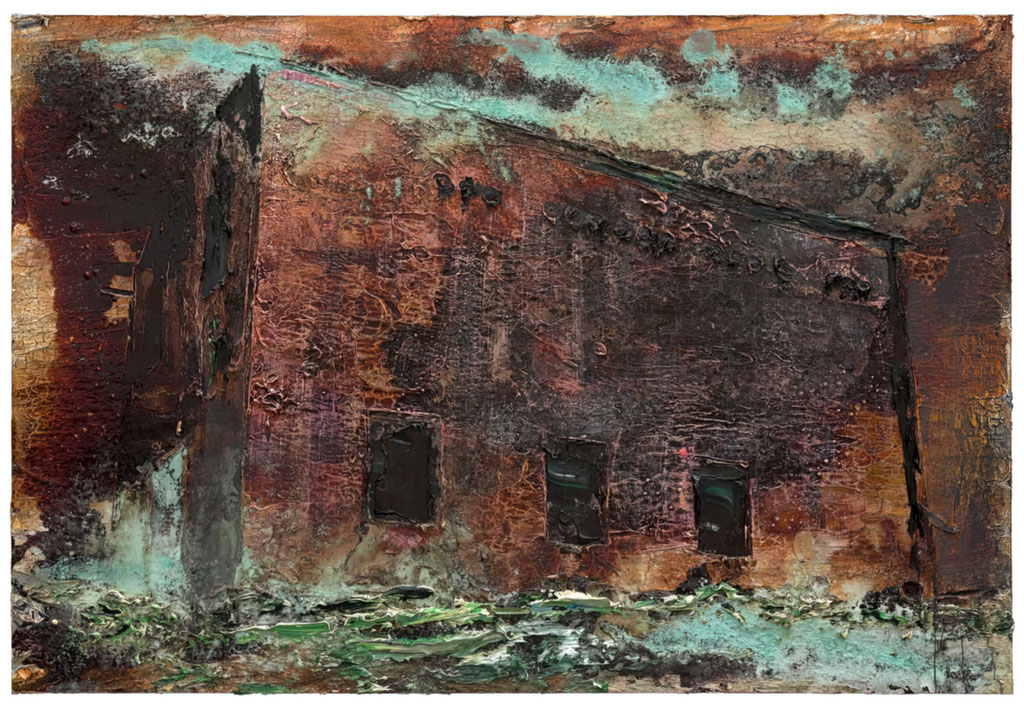
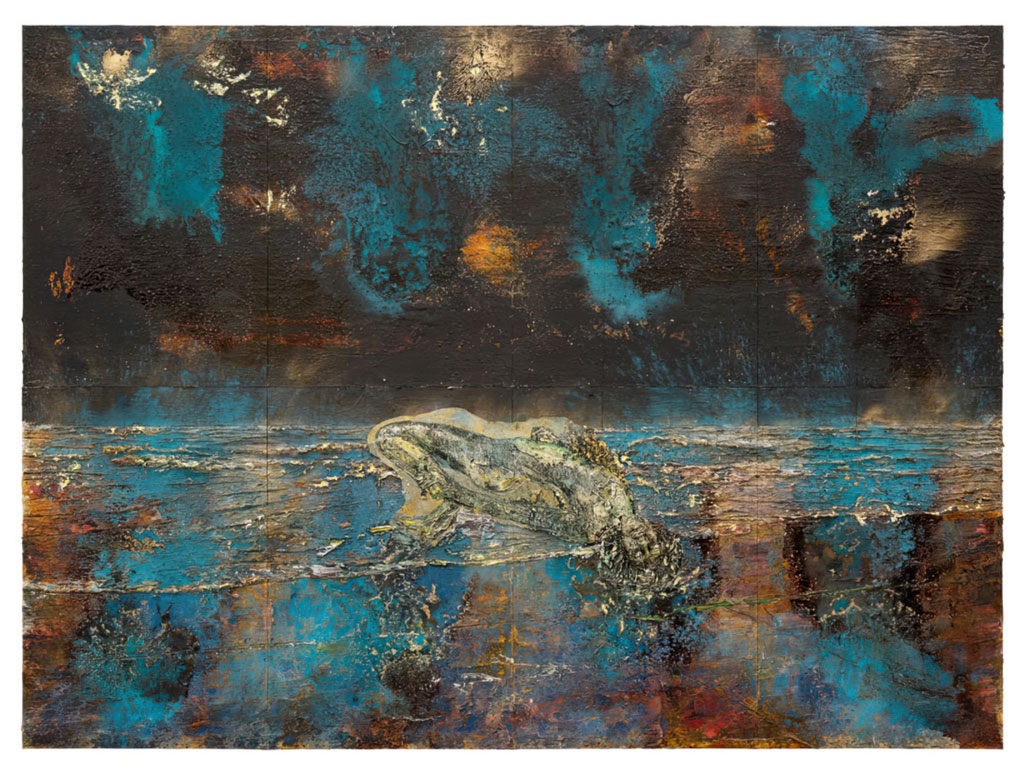
Anselm Kiefer has built a career on excavating the damaged terrain of post-war Europe, its scorched earth and haunted memories. In an era increasingly defined by ecological precarity, he now turns his gaze to the nymphs—embodiments of nature that are at once rooted in classical mythology and urgently contemporary. On his canvases, these figures become conduits for humanity’s profound entanglement with the cycles of the natural world, suspended between bucolic idyll and the stark realities of the modern age. The result is a body of work that feels less like a retreat into pastoral fantasy and more like a fierce, textured meditation on fragility, transformation, and resurgence. The language of material is the true protagonist of “Nymphäum”, each component steeped in symbolic and alchemical resonance. On canvases that teem with sumptuous collaged layers, rough shellac and delicate chalk give way to burnt straw, charcoal, and the vivid jade-coloured residue of electrolysis. This chemical sediment—the by-product of exposing metal to an electrical current—is brushed onto the surface like paint, conjuring the dense greenery of foliage or the murky flow of dark water. In Kiefer’s hands, it is an act of material alchemy. “Alchemy is a symbol for the artist,” he has remarked. “You have to destroy and then recreate.” The transmutation of base matter into gold, a recurring spiritual influence in his practice, is made literal in the opulent gold leaf that gilds his skies, recalling both Byzantine mosaics and the shimmering surface of Gustav Klimt’s “The Kiss” (1907–8). The works themselves appear to carry the silt and history of the waters they depict. In aquatic scenes such as “Thetis” (2022–25), “Nikaia” (2025) and “Actaea: (2021–25), the titular naiads, nereids and oceanids bathe in dark streams or dissolve into their surroundings, rendered through such dense impasto that the canvas seems to have been physically submerged. Here, the river—a foundational motif for Kiefer—carries, as curator Min Jung Kim writes, “historical, mythological, and symbolic weight”.
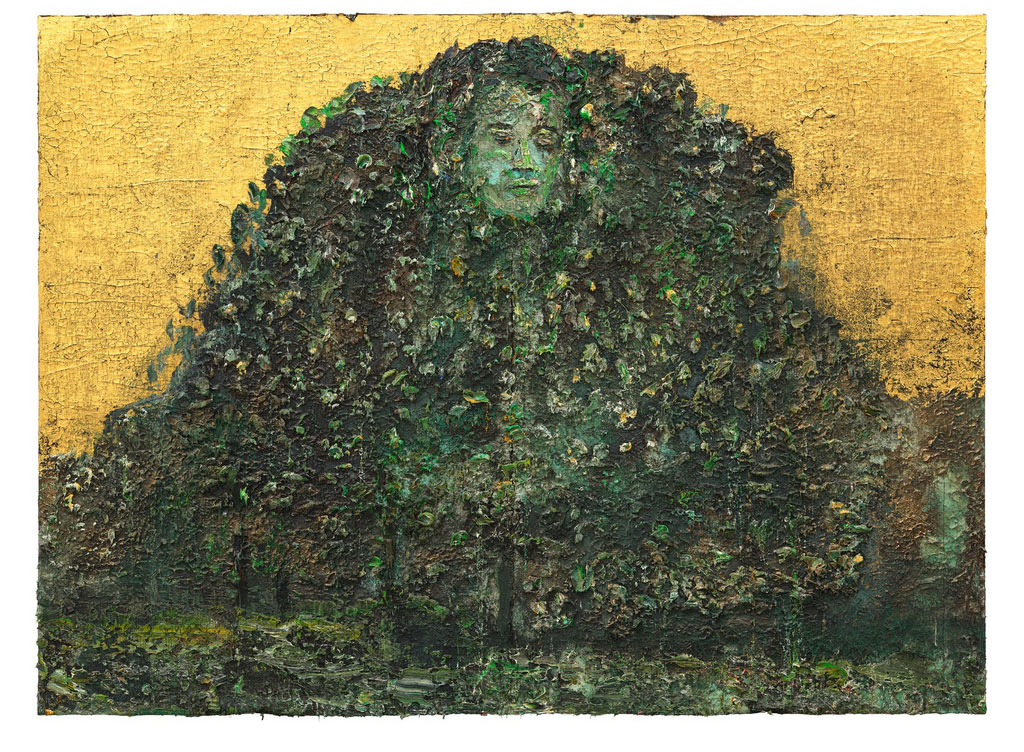
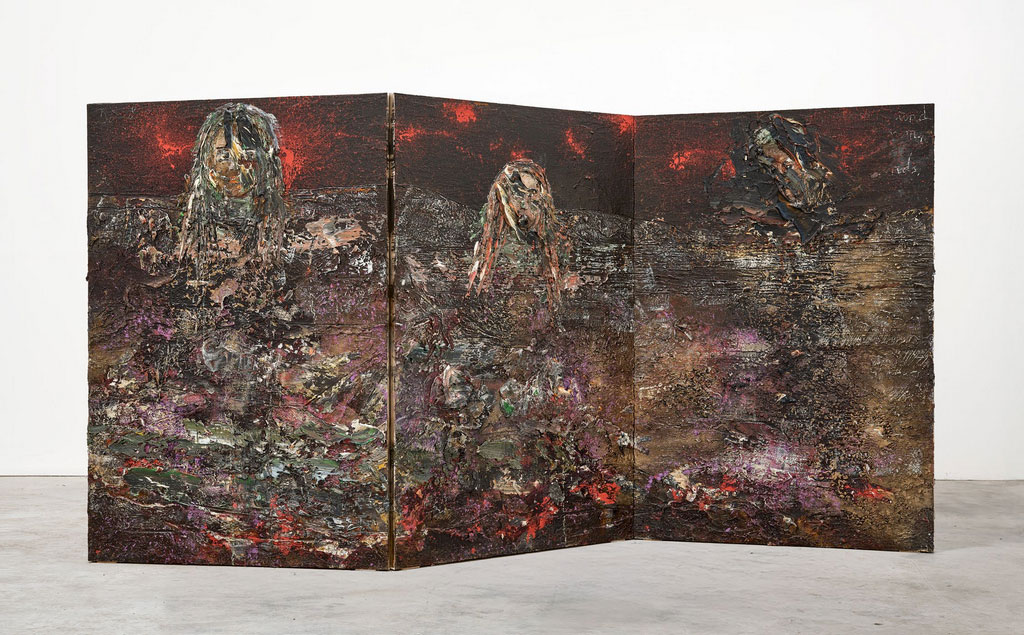
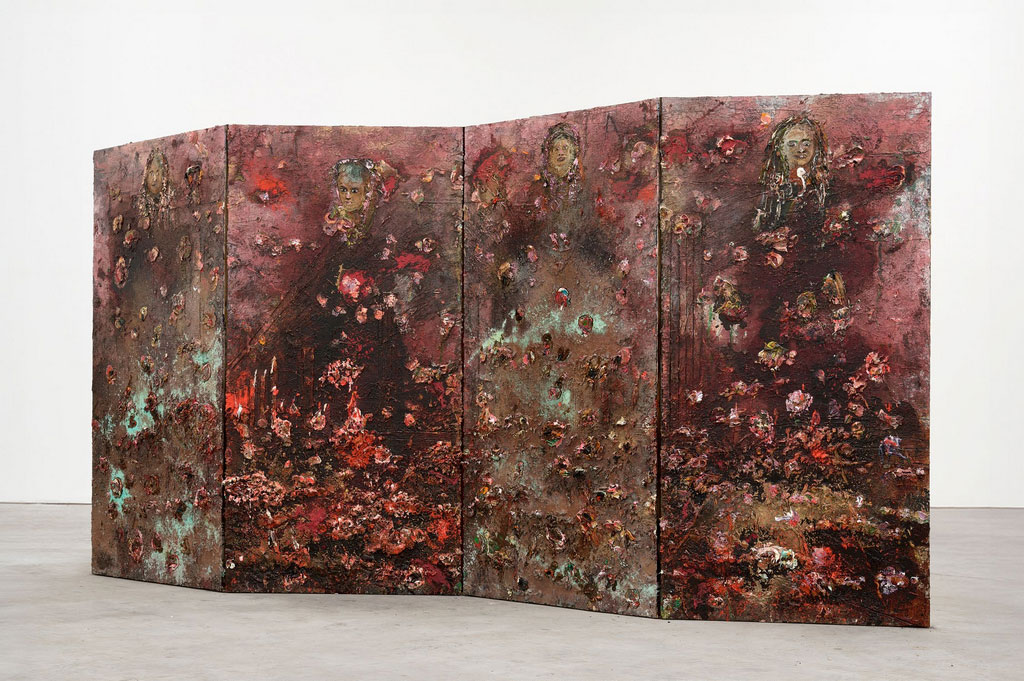
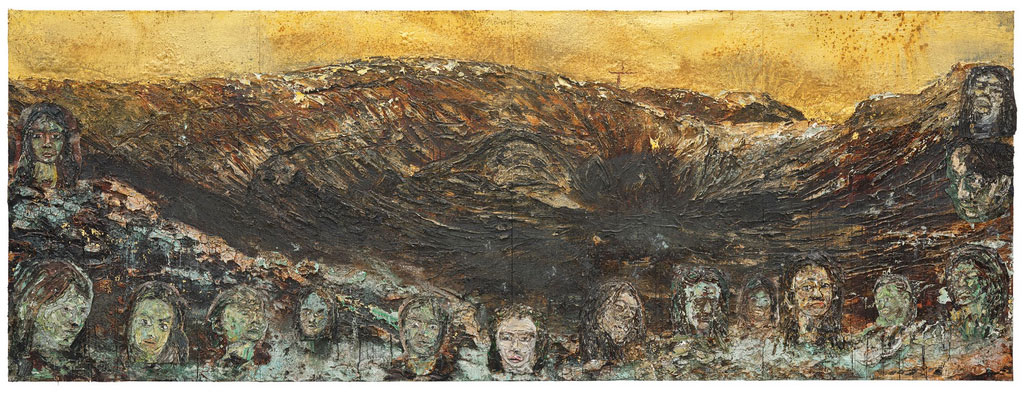
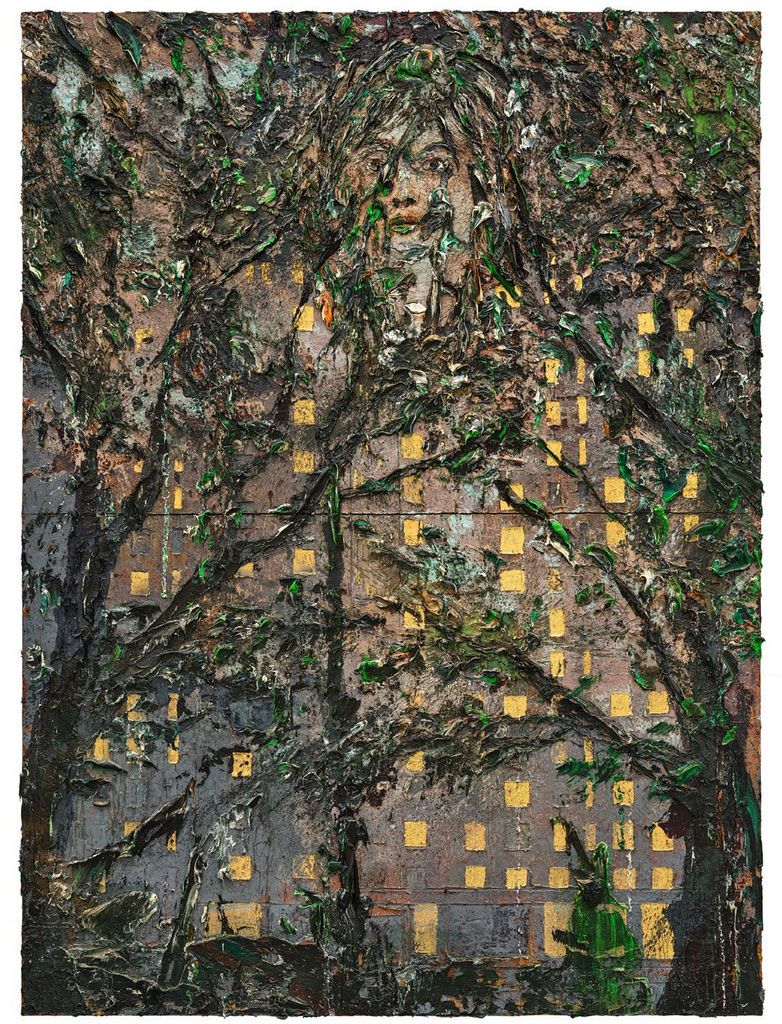
Yet these are not only nature spirits confined to grottoes. Moving through the exhibition, the viewer encounters a series of vertiginous cityscapes where Kiefer replaces his signature desolate landscapes with warmly glowing facades. Inspired by the dappled light falling through the trees of New York’s Central Park, these works identify a space for the otherworldly within the most urban of settings. Vine-like profusions tear through the foregrounds, rendered so texturally that they appear to pierce the canvas and reclaim the man-made world, forcing nature back into the frame. This battle for sovereignty—cyclical destruction and rebirth against the backdrop of a scarred, post-industrial landscape—has long been Kiefer’s metaphor. Nowhere is the tension between shelter and impermanence more palpable than in the monumental *Die Oreaden* (2025). Spanning almost eight meters in width, the painting translates the idyllic twilight scene of William Bouguereau’s “Les Oréades” (1902) into bleak, shadowy mountains silhouetted beneath a burnished, metallic sky. Elsewhere, two painted triptych screens stand as temporary shelters for these fleeting beings. “As if the painter wanted to offer the ephemeral beings refuge for a short while,” writes exhibition curator Corinna Thierolf, “albeit fully aware that even the slightest breath of air would be enough to drive them away again”. The theme of metamorphosis, key to Ovid’s classical literature, pulses at the core of the exhibition. In “Daphne” (2025), the eponymous river nymph materialises directly from the laurel tree into which she was transformed in Ovid’s account, while in “Carya” (2025), a bloom-like face emerges from the leaves of the walnut tree that bears her transfigured form.
These disembodied faces, almost camouflaged among the textural surfaces, are born directly from the dynamic chemical reactions occurring on the canvas. They recall the suspended portraits of Kiefer’s early landscapes, a compositional strategy through which, as art historian Sabine Schütz observed, “landscape turns into a soulscape”. Watching over the natural world, the nymphs weave a connection between figure and nature, softening the frontier between landscape and portraiture until the artist’s stratified “earth” becomes, as Thierolf writes, “a place of remembrance: overgrown, closed, but not silent”. In “Nymphäum”, Kiefer does not offer easy redemption. He offers shelter that is fleeting, radiance tinged with ash, and nature spirits that dissolve under close inspection. Yet in their ephemeral shimmer—caught between gold leaf, chemical residue and ruin—they suggest that even amid fragmentation, beauty persists. It is an alchemy that remains, as ever, sublimely his own.
Photo: Anselm Kiefer, Die Oreaden, 2025, Emulsion, oil paint, acrylic paint, shellac, gold leaf, electrolysis sediments, and canvas-to-canvas adhesion, 280 × 760 cm (110.24 × 299.21 in), © Anselm Kiefer, Courtesy the artist and Thaddaeus Ropac Gallery
Info: Thaddaeus Ropac Gallery, 69 avenue du Général Leclerc, Pantin, Paris, France, Duration: 25/4/2025-25/1/2026, Days & Hours: Tue-Sat 10:00-19:00, https://ropac.net/