ART CITIES: Shanghai-Sheila Hicks & Shi Hui
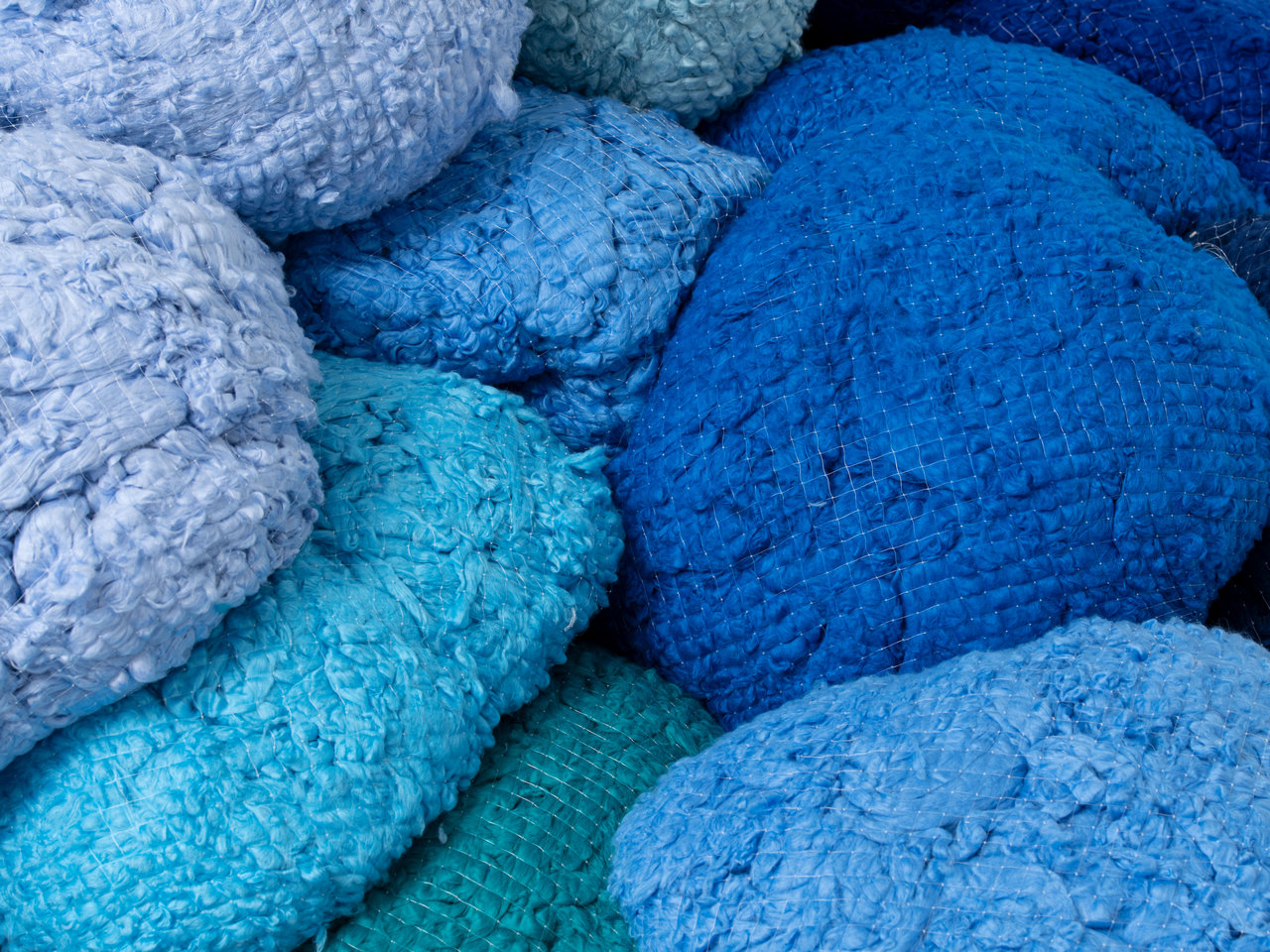
At the West Bund Museum, a rare and ambitious exhibition reframes the language of contemporary art through touch, labor, and material intelligence. “Hands Make It Felt: Sheila Hicks & Shi Hui” (brings together, for the first time, two pivotal figures in fiber art: Sheila Hicks and Shi Hui. This is more than a dual presentation—it is a structural dialogue between two artistic philosophies that have evolved independently across continents, yet converge in their insistence that material itself can think, speak, and shape perception.
By Efi Michalarou
Photo: West Bund Museum Archive
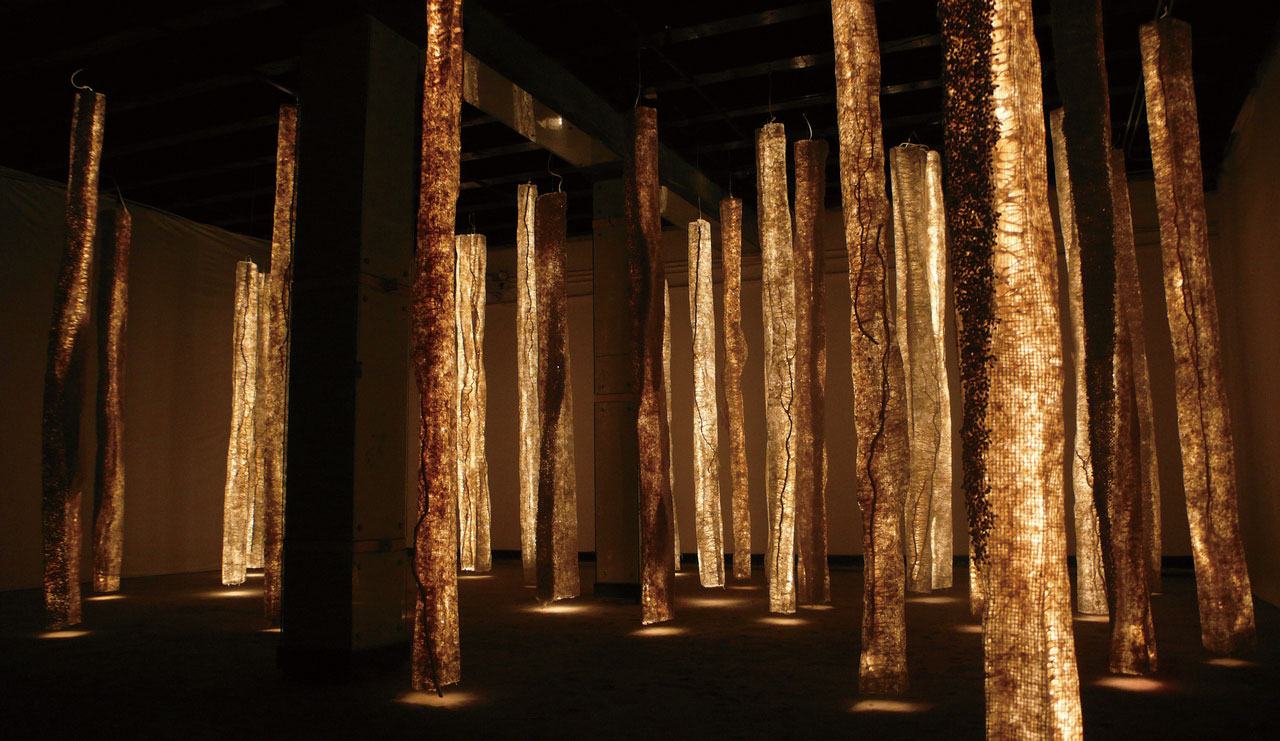
Rather than imposing a linear curatorial narrative, the exhibition unfolds as an experiential “theatre,” where space, texture, and movement guide the viewer. Divided into two sections—“Rivers Near and Far” (Sheila Hicks) and “A Song of Paper and Stones” (Shi Hui)—the exhibition Hands Make It Felt: Sheila Hicks & Shi Hui” avoids direct comparison. Instead, it stages a spatial conversation.
Fiber art, long relegated to the domain of craft, emerges here as a critical contemporary practice. The exhibition traces its evolution from the experimental ruptures of the 1960s—particularly in Western contexts—to its parallel reinvention in China during the 1980s. What binds these trajectories is a shared departure from utility toward abstraction, scale, and conceptual depth.
Few artists have expanded the possibilities of fiber as radically as Sheila Hicks. Associated with the postwar Fiber Art movement alongside figures like Lenore Tawney and Magdalena Abakanowicz, Hicks transformed weaving into an architectural and sculptural medium.
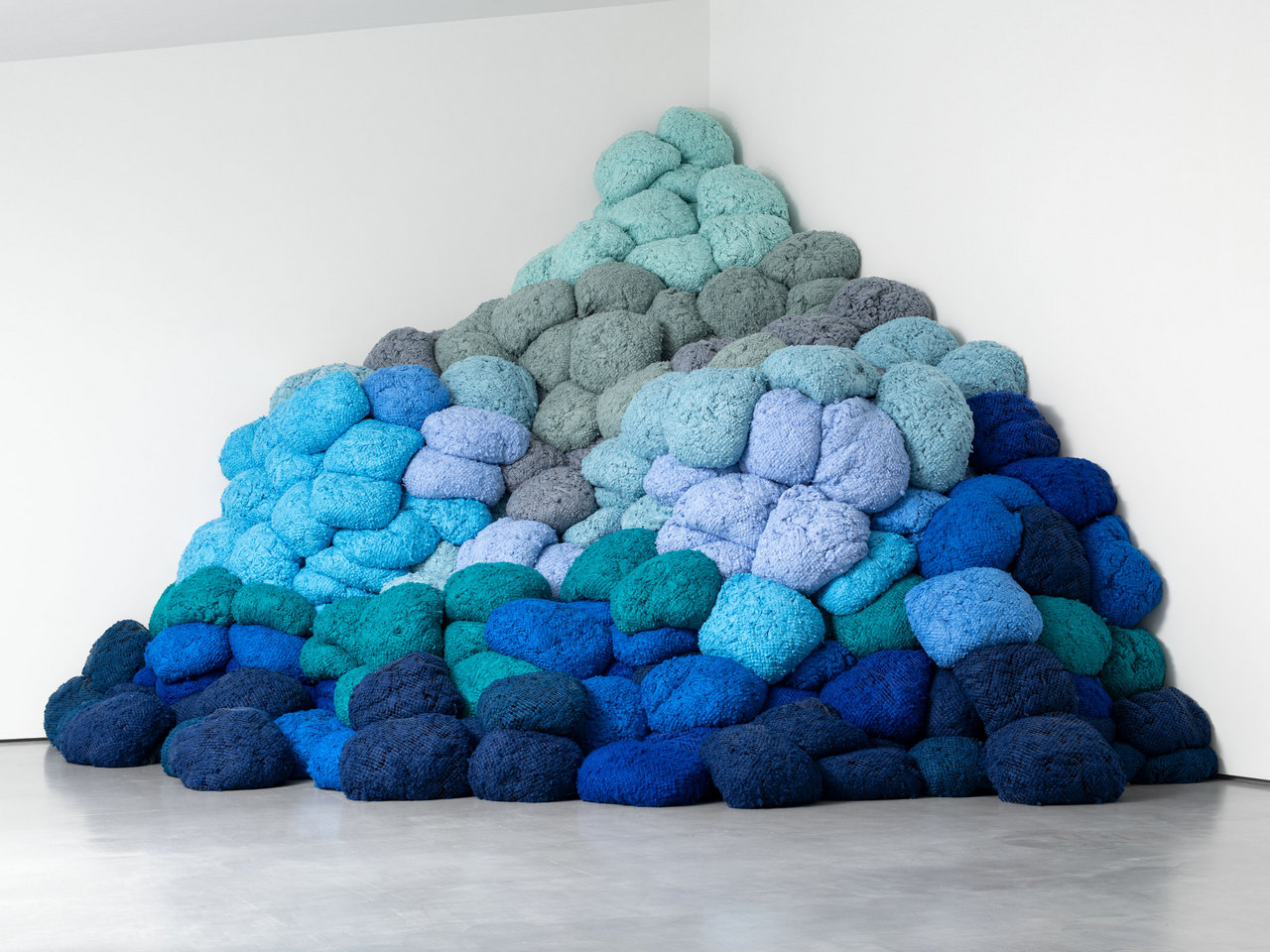
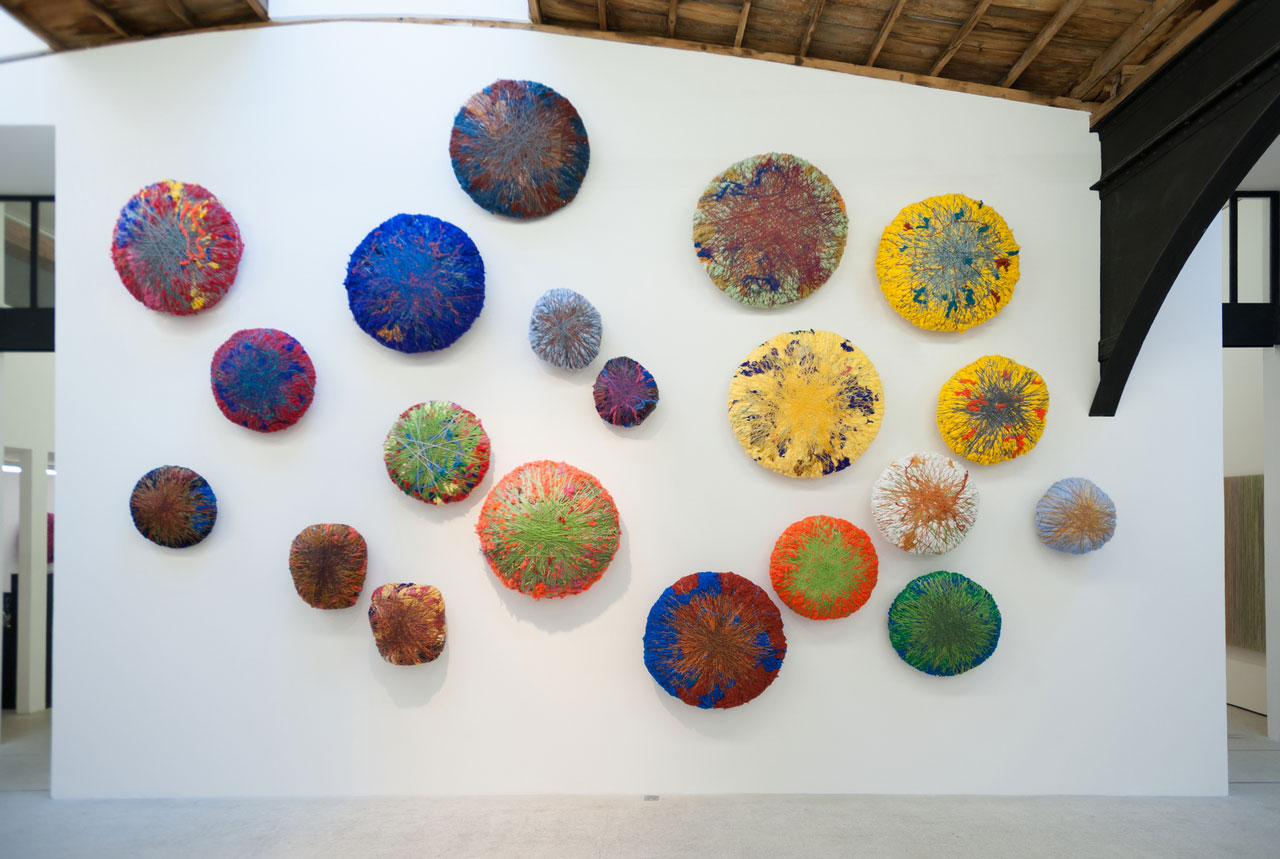
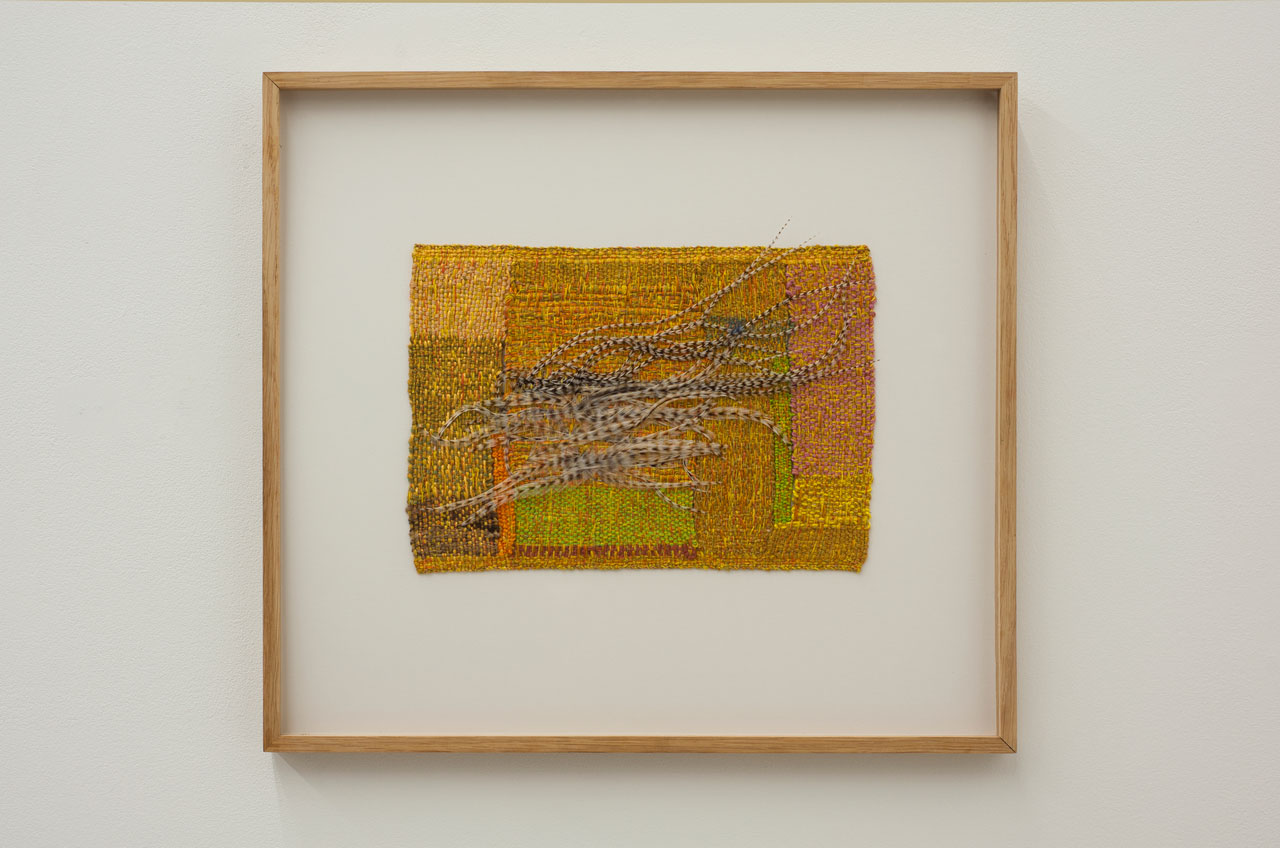
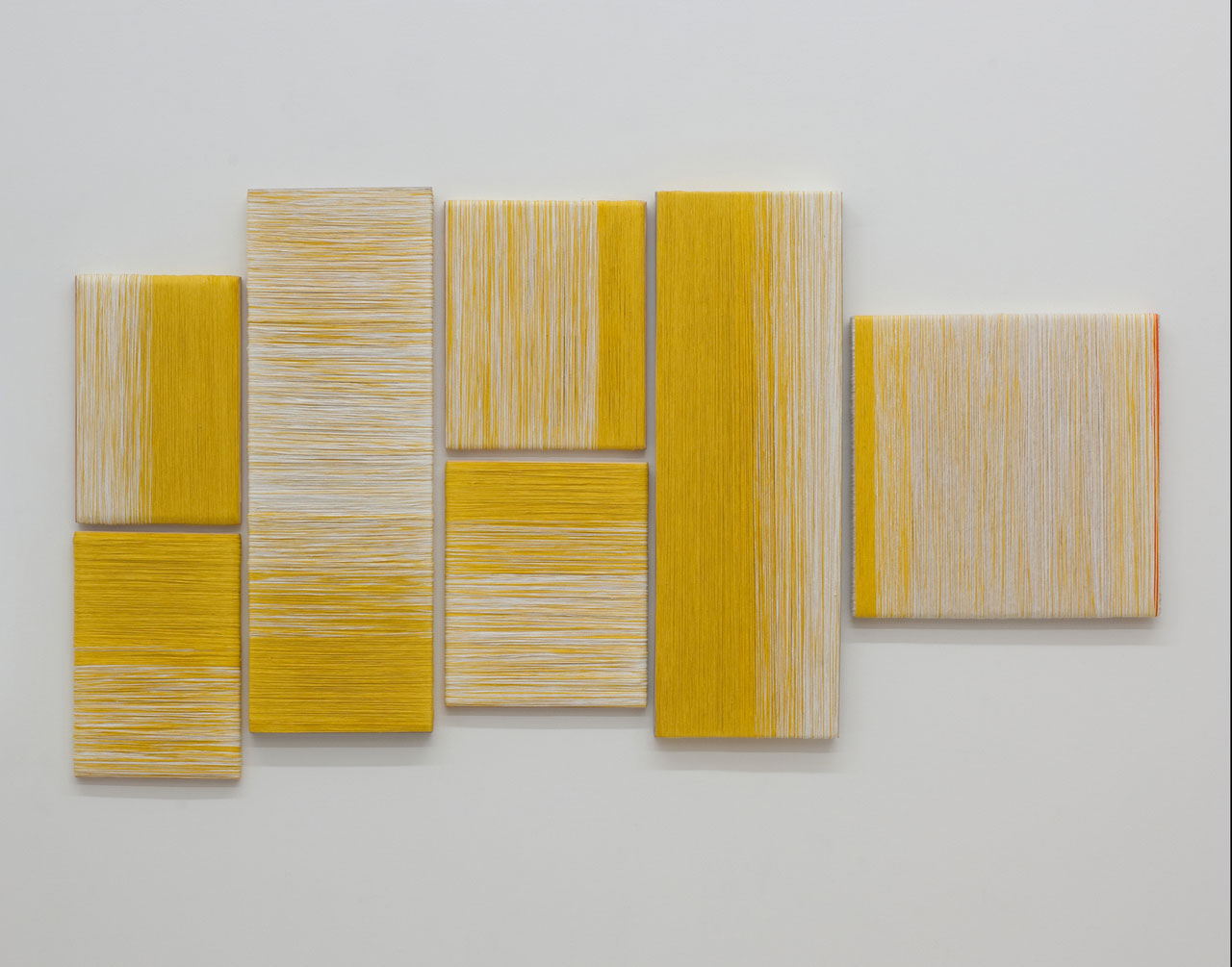
Her work oscillates between intimacy and monumentality. The small-scale “Minimes”—dense, tactile studies—contrast with vast installations that cascade, coil, or tower within the gallery. Hicks treats fiber as a spatial agent: it bends gravity, absorbs light, and constructs environments rather than images.
Color operates structurally rather than decoratively. Saturated hues form layered fields that feel almost geological, as if sedimented through time. The viewer does not simply observe these works but moves through them, navigating a terrain of softness and tension.
If Hicks expands outward, Shi Hui turns inward—toward material essence and cultural continuity. A graduate of the Zhejiang Academy of Art, Shi Hui emerged during a transformative period in Chinese contemporary art, when artists began redefining tradition through experimental form.
Her international recognition began with the International Lausanne Biennial of Contemporary Tapestry in 1987, marking a key moment for Chinese fiber art on the global stage.
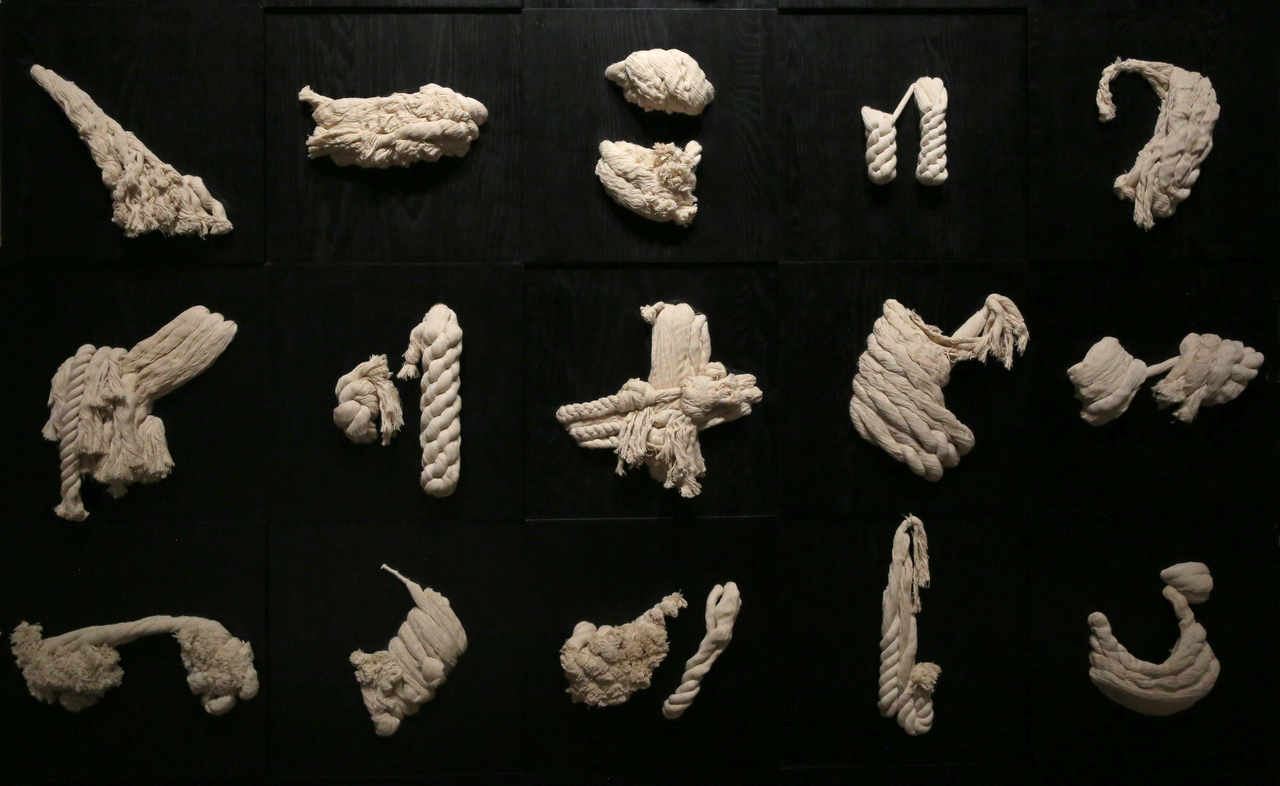
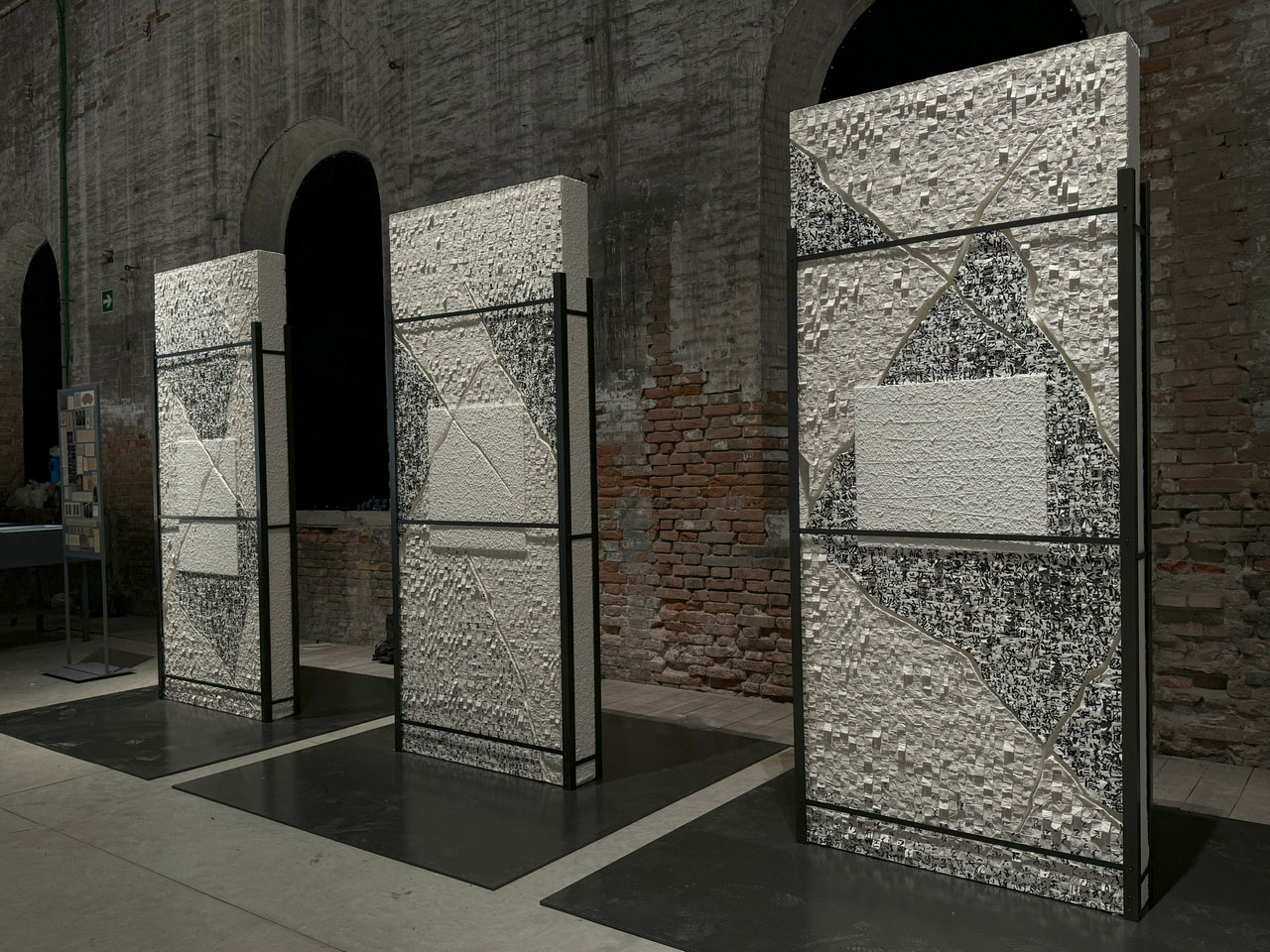
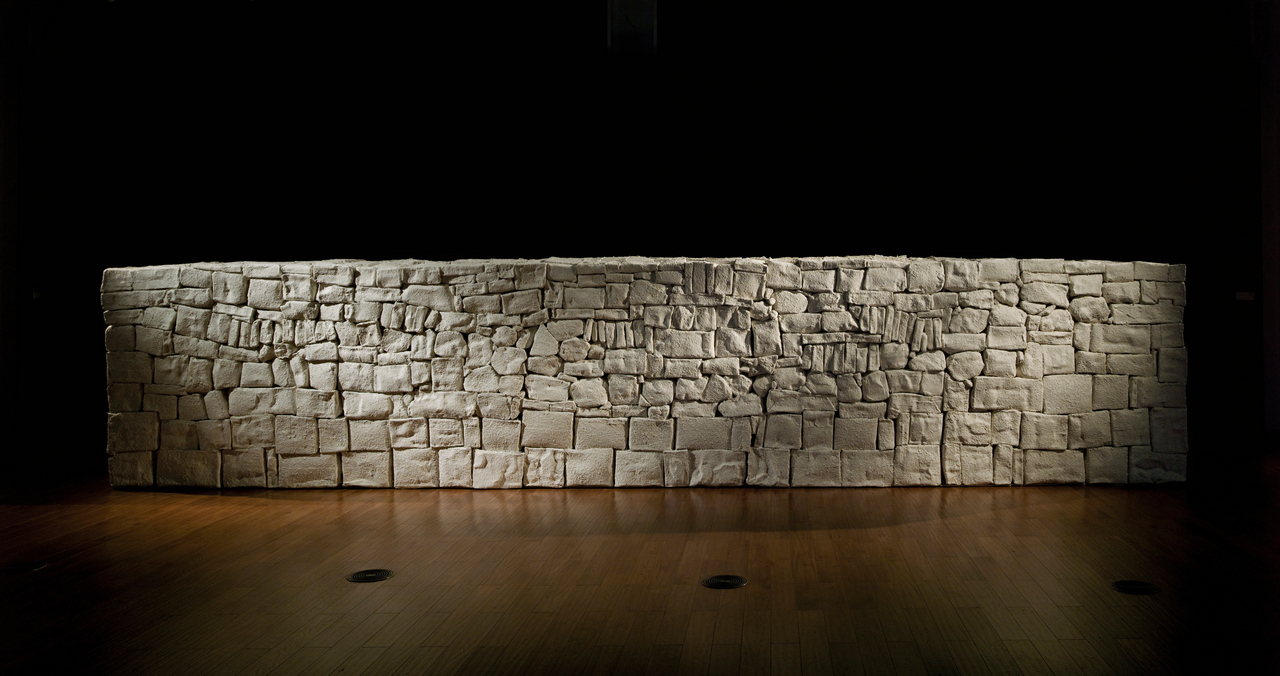
Shi Hui’s practice is grounded in natural and traditional materials—bamboo, hemp, cotton, and especially paper. Works such as “Knot,” “Pillars,” and “Old Wall” demonstrate her sensitivity to structure and decay, permanence and fragility. Paper pulp becomes sculptural, evoking erosion, memory, and time.
Critics often describe her approach as a form of “anti-form” or “restructured form,” where the artist relinquishes rigid control and allows material properties to guide the outcome. Her predominantly white palette emphasizes subtle variation—texture over color, silence over spectacle.
The exhibition’s title, “Hands Make It Felt” points to a shared philosophical core. In both practices, the hand is not merely a tool but a cognitive instrument. Repetition, touch, and physical engagement become forms of thinking.
In an era dominated by digital production and immaterial images, this emphasis carries weight. Hicks and Shi Hui reclaim slowness, resistance, and tactility. Their works insist on presence—on the viewer’s bodily relation to art.
Shi Hui has spoken of handwork as a means of reconnecting with inner experience, while Hicks’s lifelong engagement with global textile traditions underscores the universality of making. Across cultural differences, both artists articulate a deeply humanistic position: that material carries memory, and that making is a form of knowledge.
What makes this exhibition significant is not just the pairing, but the resonance it reveals. Without forcing equivalence, it highlights parallel evolutions in artistic language—one emerging from Western modernist experimentation, the other from a reconfiguration of Chinese cultural heritage.
At the West Bund Museum, these trajectories intersect. The result is neither synthesis nor contrast, but coexistence—a layered conversation about how art can be built, felt, and inhabited. In bringing together Sheila Hicks and Shi Hui, the exhibition doesn’t just revisit fiber art’s history. It proposes its future: one where material is not secondary to concept, but its very foundation.
Photo: Sheila Hicks, “Nowhere To Go” (detail), 2022, © Sheila Hicks, Courtesy the artist and West Bund Museum
Info: Curators : Clément Dirié, Liu Xiao, Co-curator: Chen Yangyi, West Bund Museum, 2600 Longteng Avenue, Xuhui District, Shanghai, China, Duration: 14/4-2/8/2026, Days & Hours: Tue-Sun 11:00-18:00, https://wbmshanghai.com/
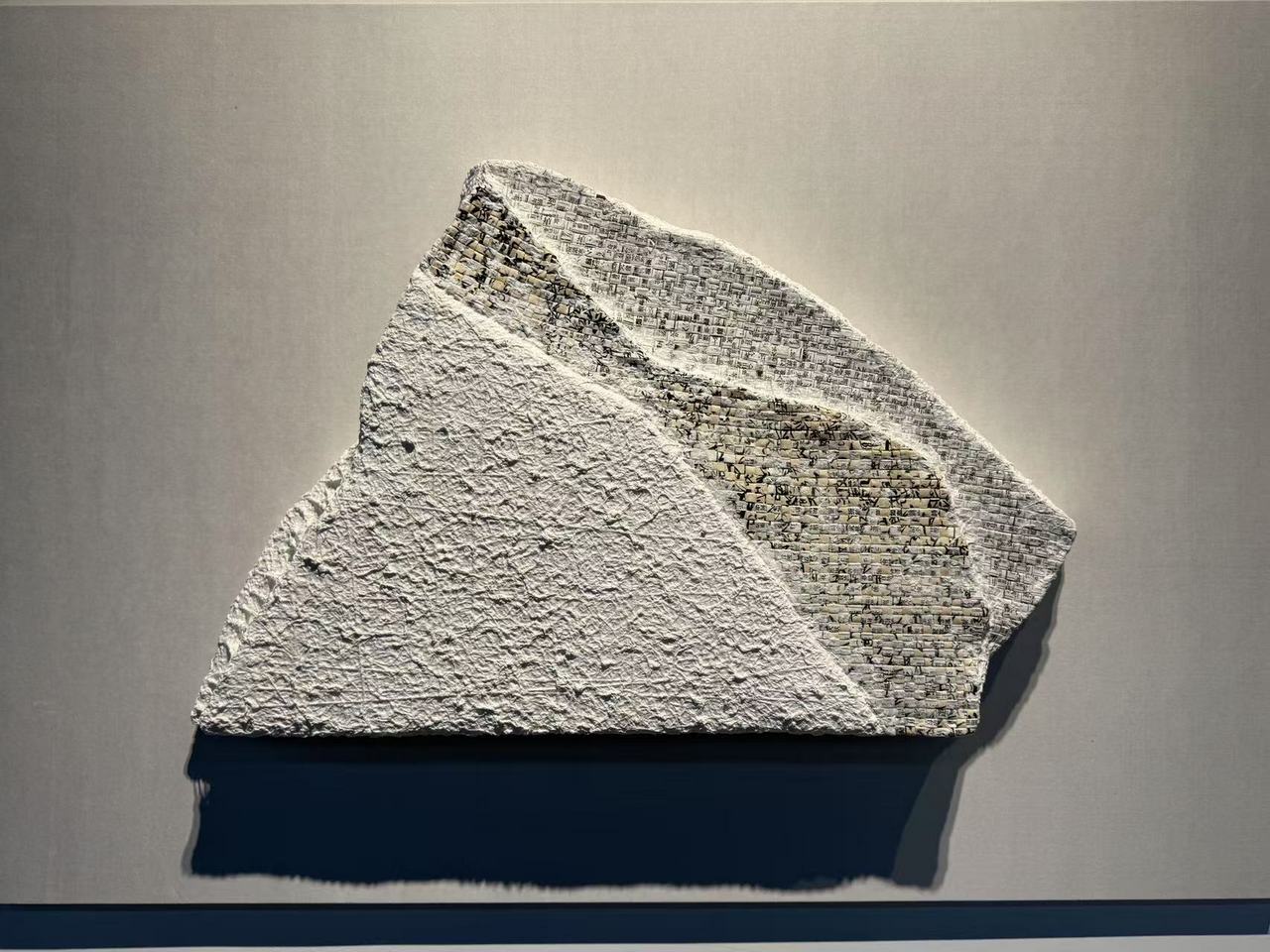
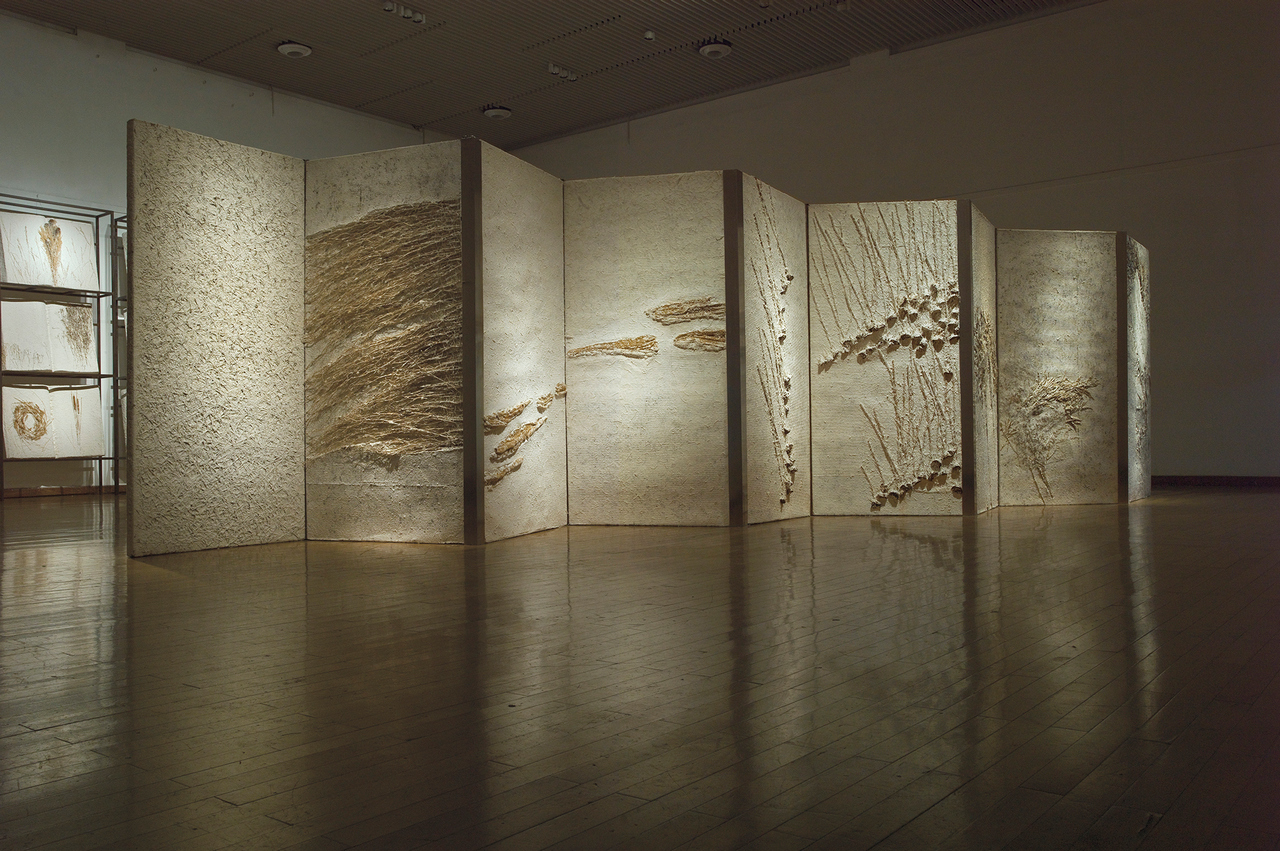
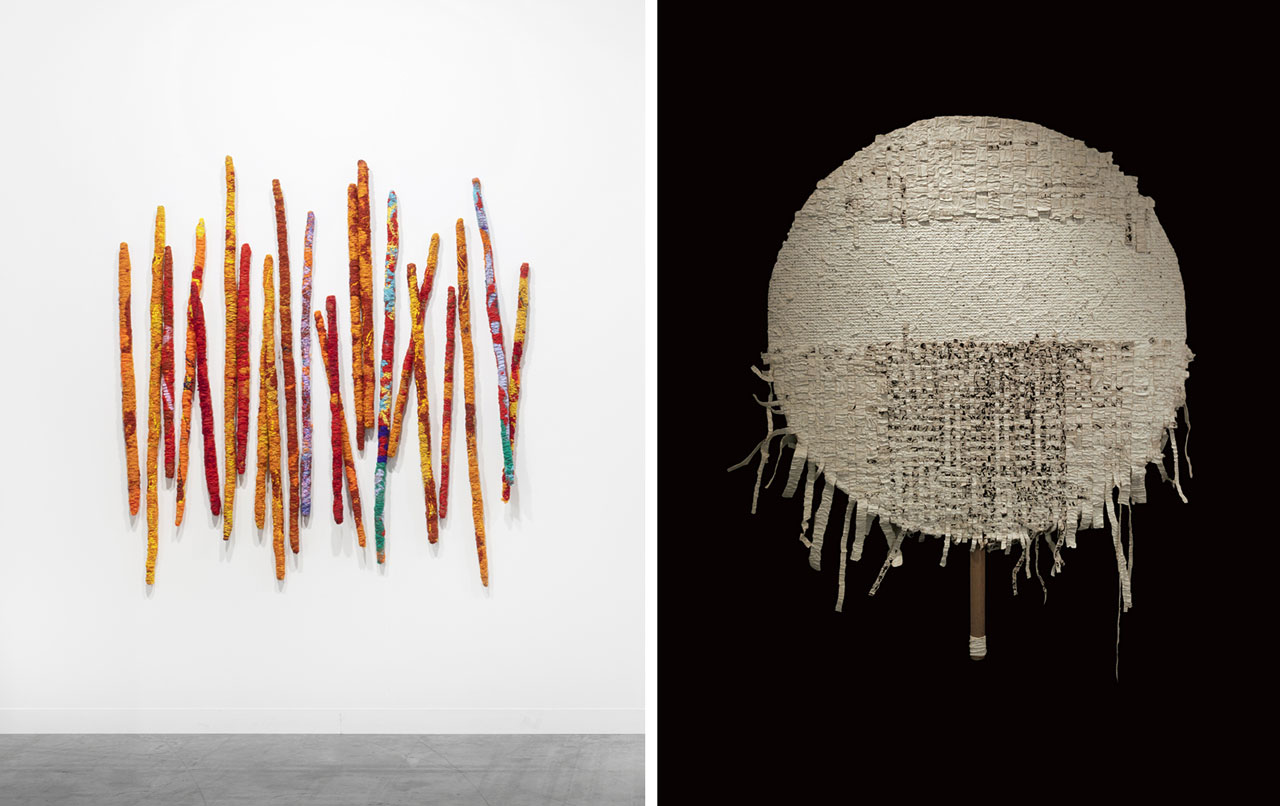
Right: Shi Hui, “Fan 2,” 2002-2006, © Shi Hui, Courtesy the artist and West Bund Museum