ART CITIES: N.York-Philip Guston
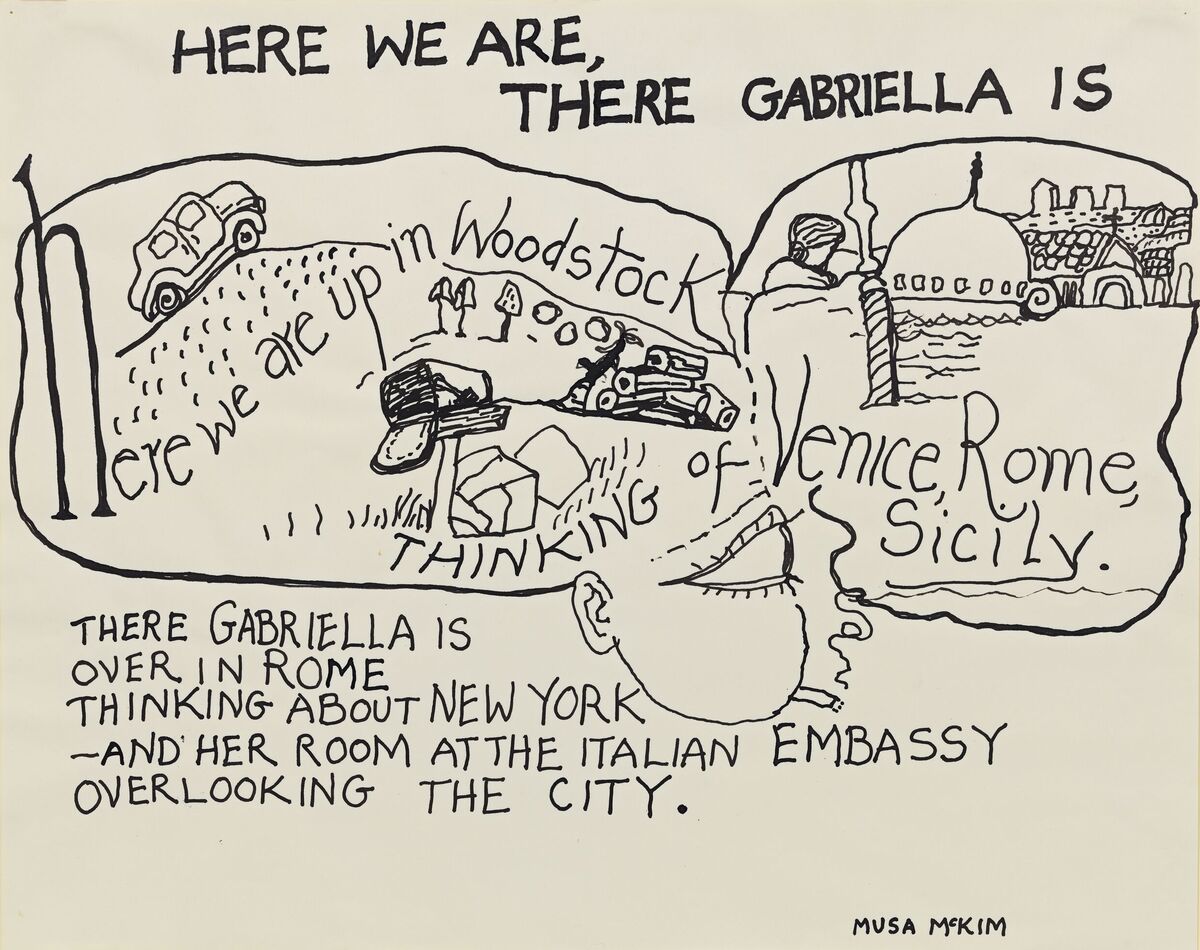
In contemporary art, the phrase “artist’s artist” carries a paradox: it signals the highest esteem from peers while often marking a career that remains marginal to mainstream acclaim. That description fits Philip Guston perfectly. Drawing from the “nightmarish world around him,” Guston forged startling imagery that kept him revered among painters, poets, and thinkers even as much of the art establishment turned away.
By Dimitris Lempesis
Photo: Hauser & Wirth Archive
Philip Guston’s trajectory was restless and provocative. He began as a celebrated Abstract Expressionist, known for luminous, painterly canvases. By the late 1960s, disillusioned by the Vietnam War and American politics, he abandoned abstraction. Retreating to Woodstock, he developed a raw, figurative vocabulary—cartoonish, fleshy forms that many critics saw as a betrayal of high modernism. Yet this rupture freed him to pursue a more immediate, candid art. As Guston observed, poets often perceive without the jargon that can blind visual artists, and that clarity shaped his new direction.
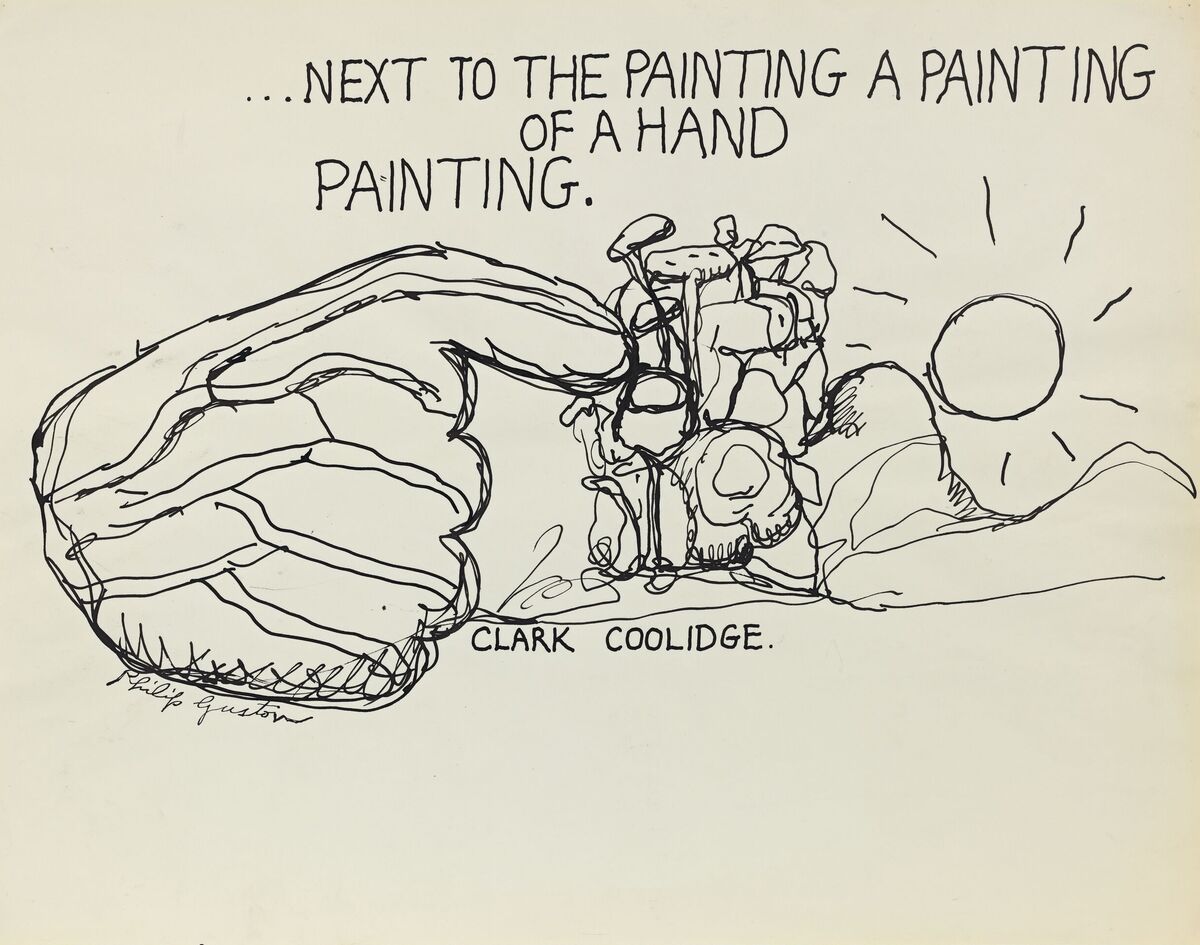
During his Woodstock years, Guston’s friendships with poets became central to his practice. Hauser & Wirth’s exhibition brings these “Poem-Pictures” into focus: drawings that converse with lines of poetry, chiefly by his wife Musa McKim and the poet Clark Coolidge. These works are not illustrations or captions; they are mutual provocations—image and text reading and reshaping one another across the page. Guston also collaborated with other poets, producing illustrations and covers for figures like William Corbett and Bill Berkson, and his cover for Coolidge’s “Ing” helped launch a decade of similar experiments with younger poets. These partnerships were integral, not incidental, to his evolving drawing language.
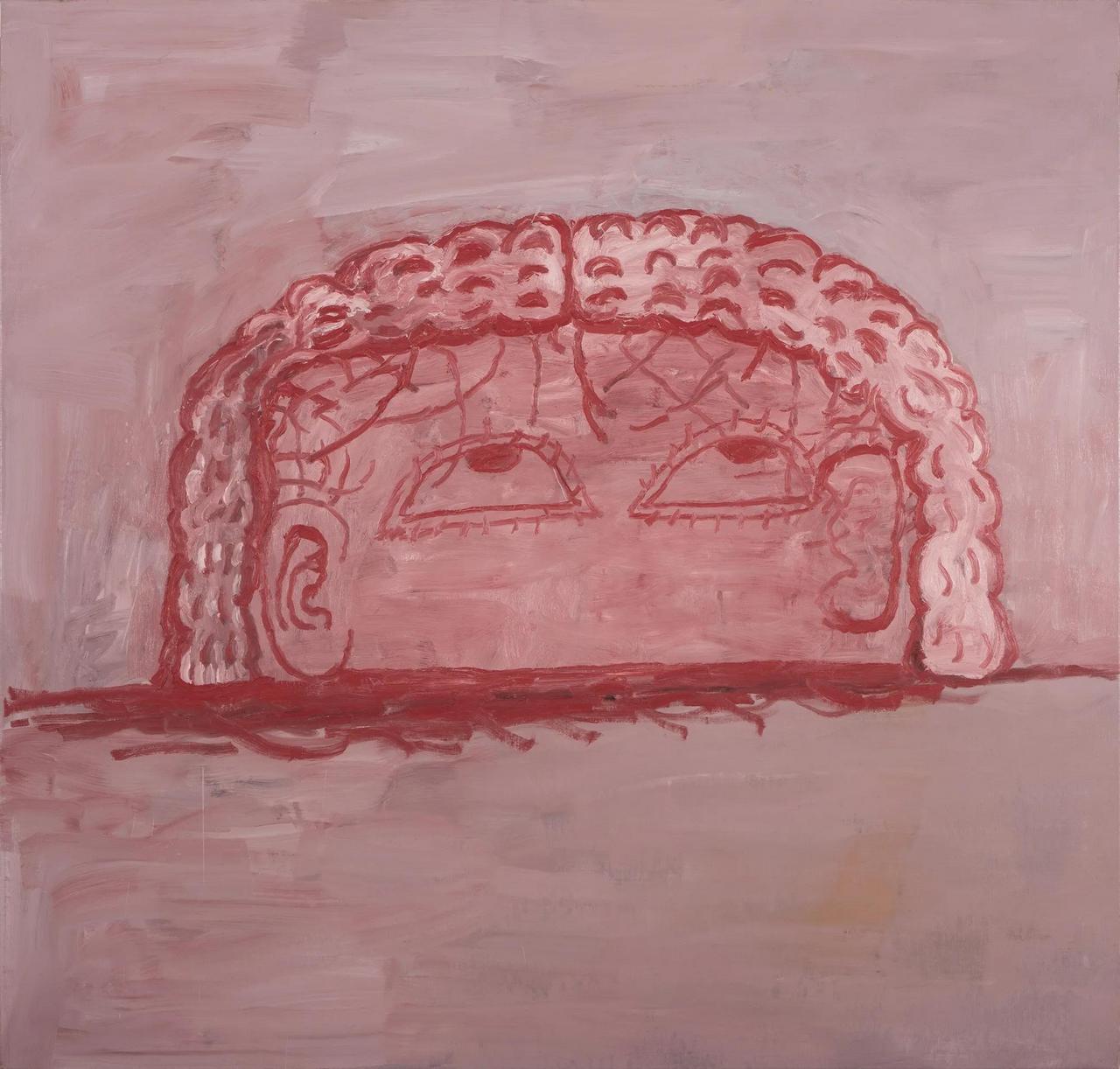
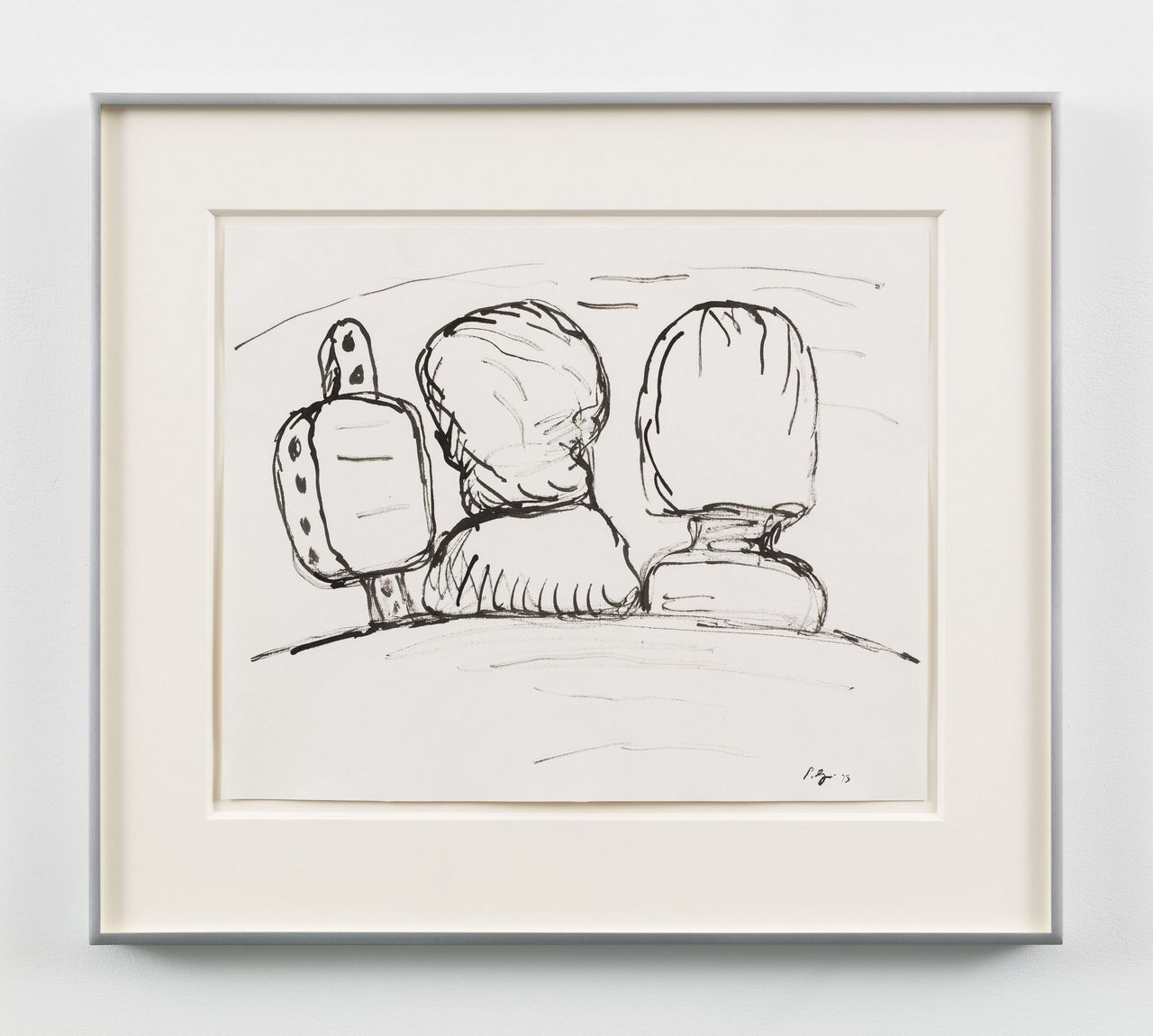
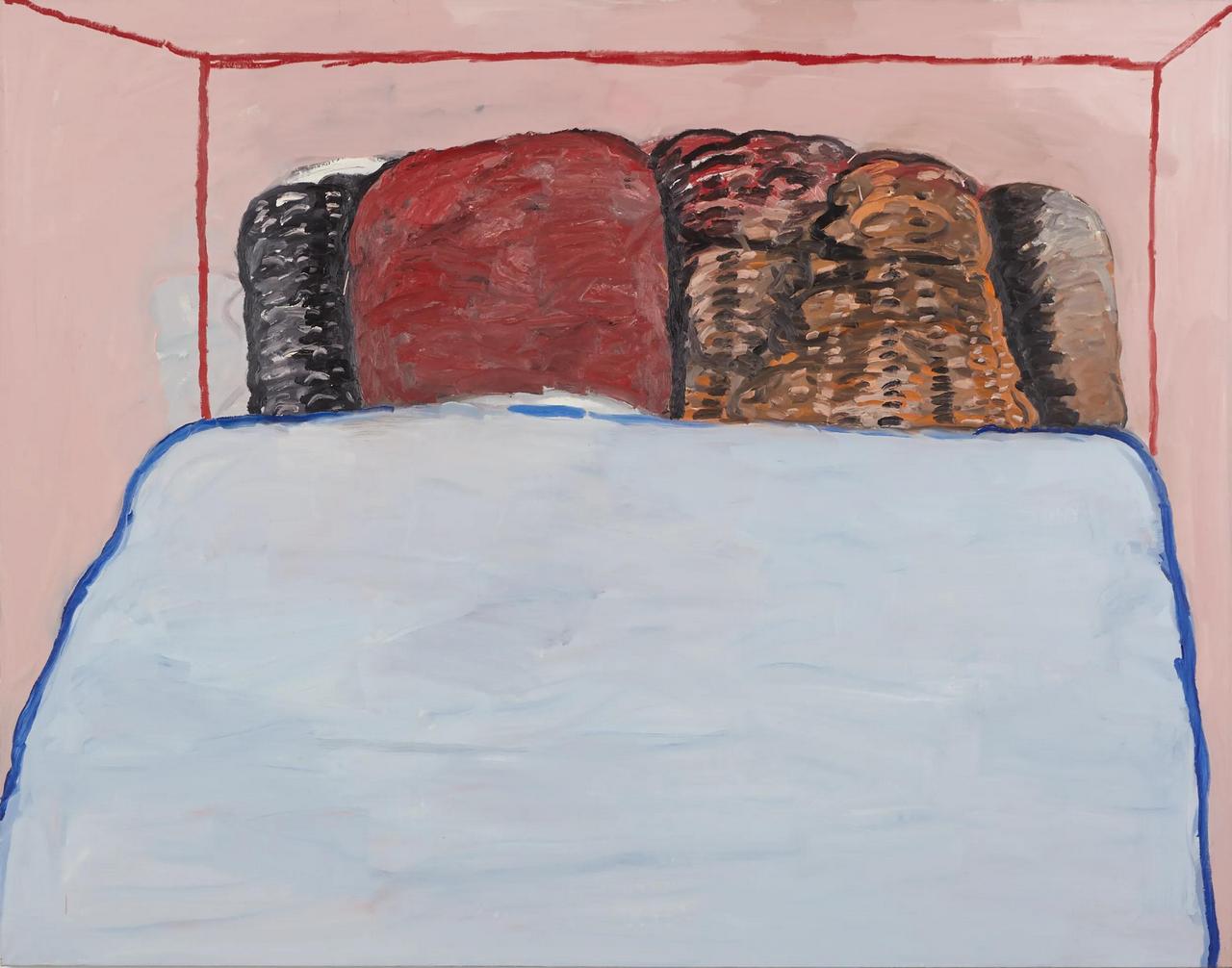
This exploration of Guston’s literary side arrives alongside two major releases. Hauser & Wirth London is showing rarely seen “Poem-Pictures” at the in the exhibition “Life With P. (Paintings and Drawings 1964 – 1978”, and at the same moment Penguin publishes “I Paint What I Want to See”, a collection of Guston’s writings, lectures, and interviews. In New York, Hauser & Wirth’s “Life with P.” examines intimate paintings and works on paper that chronicle Guston’s marriage to Musa McKim and their life in Woodstock. The show includes “Poem-Pictures” and three large figurative canvases never before publicly exhibited.
More than forty years after his death, Guston’s influence has intensified, especially among younger figurative painters. His embrace of transgressive comedy and violence, his rejection of slickness, and his insistence on emotional honesty have become touchstones for artists channeling personal and political anxieties. “The Poem-Pictures” underscore that Guston’s most potent tool was his intellect: by letting poets’ words share space with his heavy boots, light bulbs, and solitary eyeballs, he showed that art gains power through candid dialogue. The works now on view in London and New York reveal Guston not as an isolated genius but as an artist in conversation—proof that some of the most lasting images are born from friendship and exchange.
Photo: Philip Guston, Here We Are, There Gabriella Is, c. 1972-75, © The Estate of Philip Guston. Photo: Genevieve Hanson, Courtesy The Estate of Philip Guston and Hauser & Wirth Gallery
Info: Hauser & Wirth Gallery, 443 West 18th Street, New York, NY, USA, Duration: 21/4-10/7/2026, Days & Hours: Tue-Sat 10:00-18:00, www.hauserwirth.com/