INTERVIEW: Yiannis Ziogas
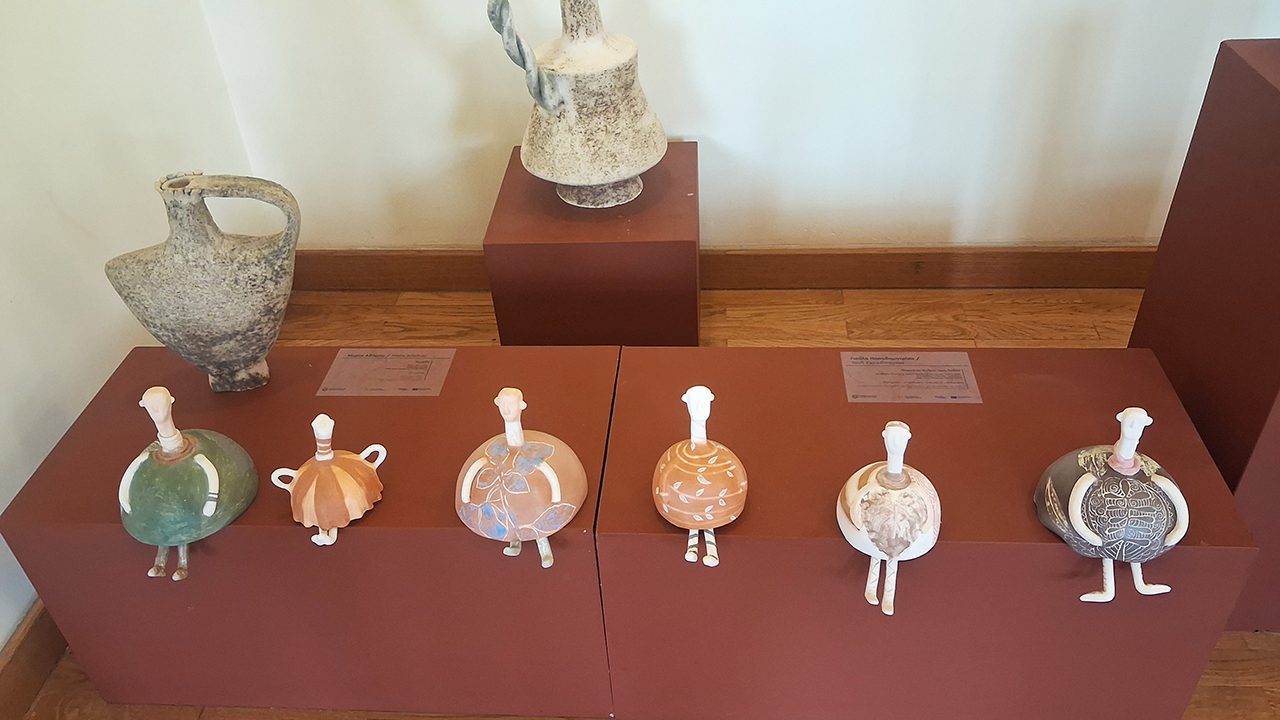
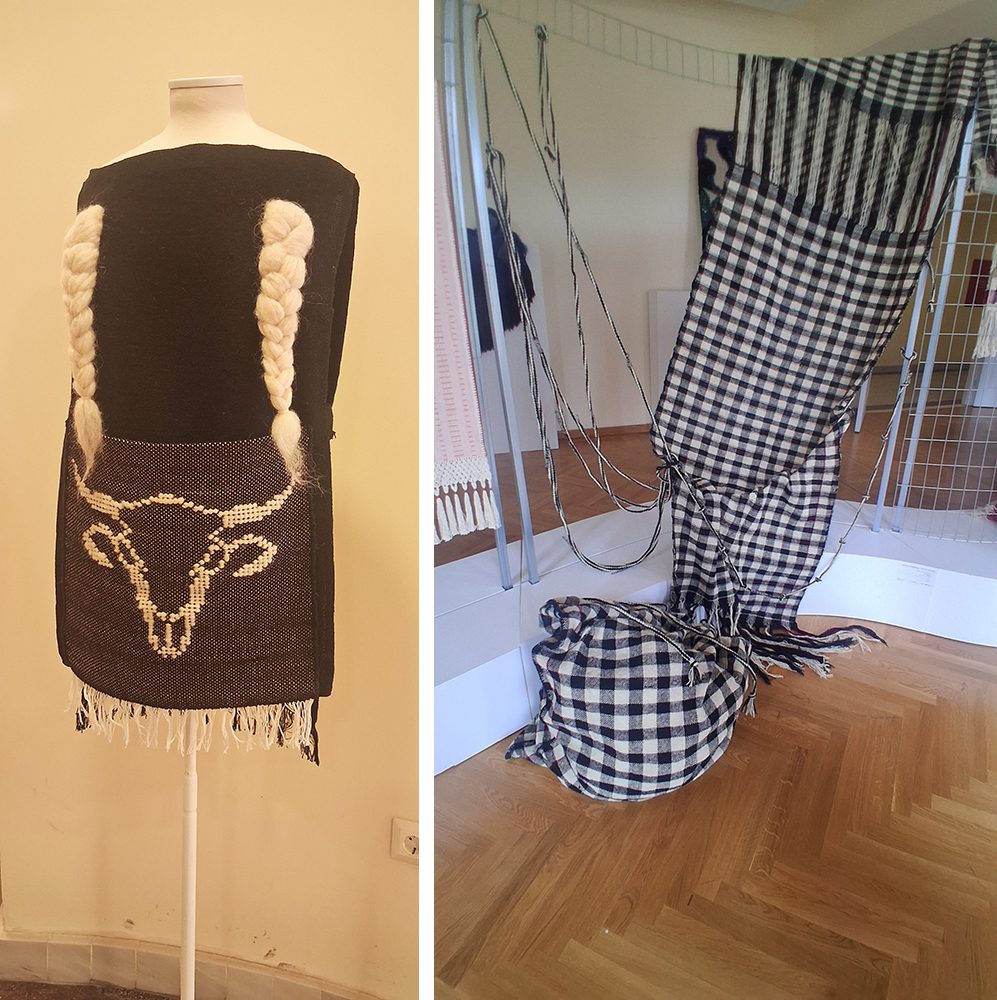
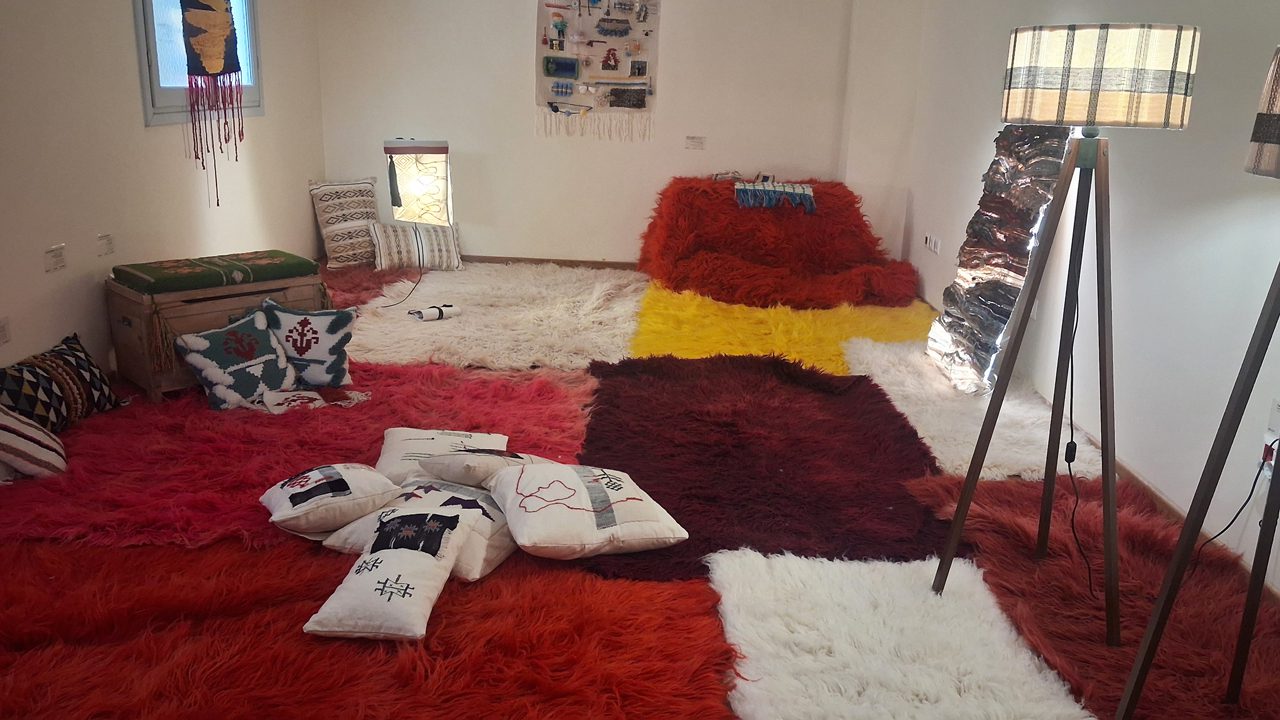
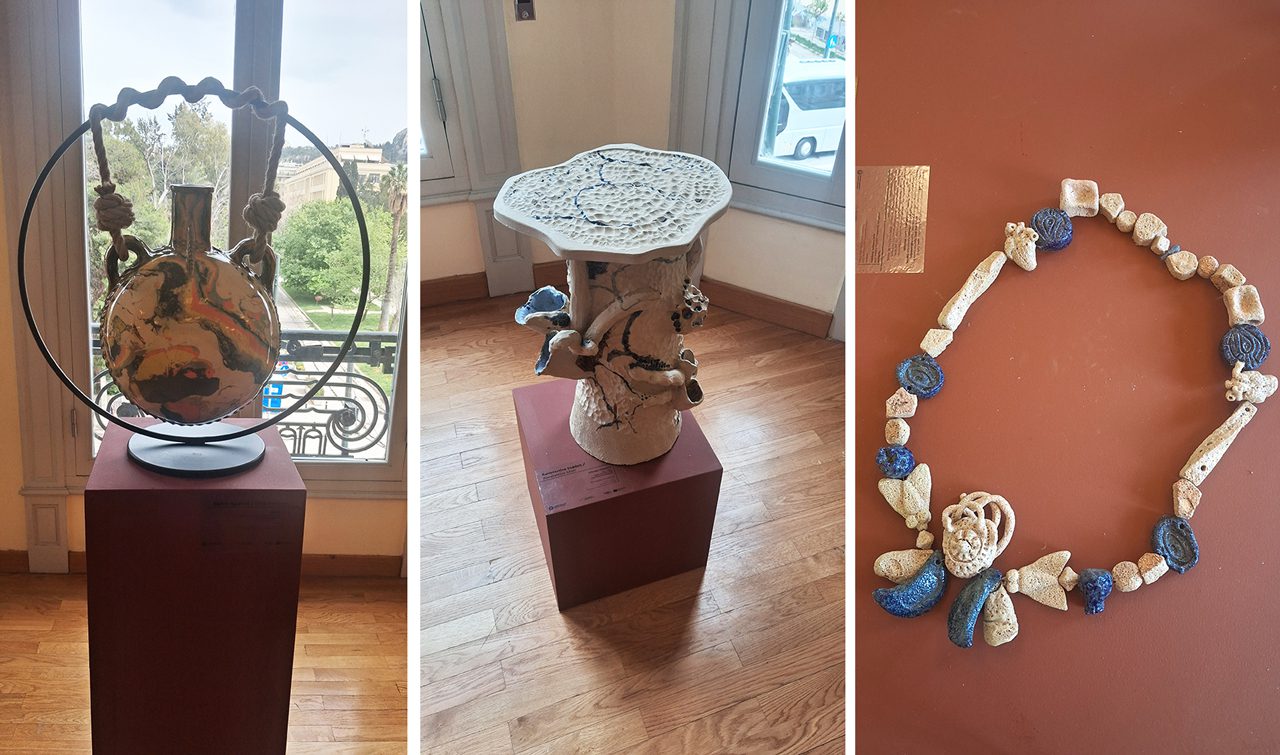
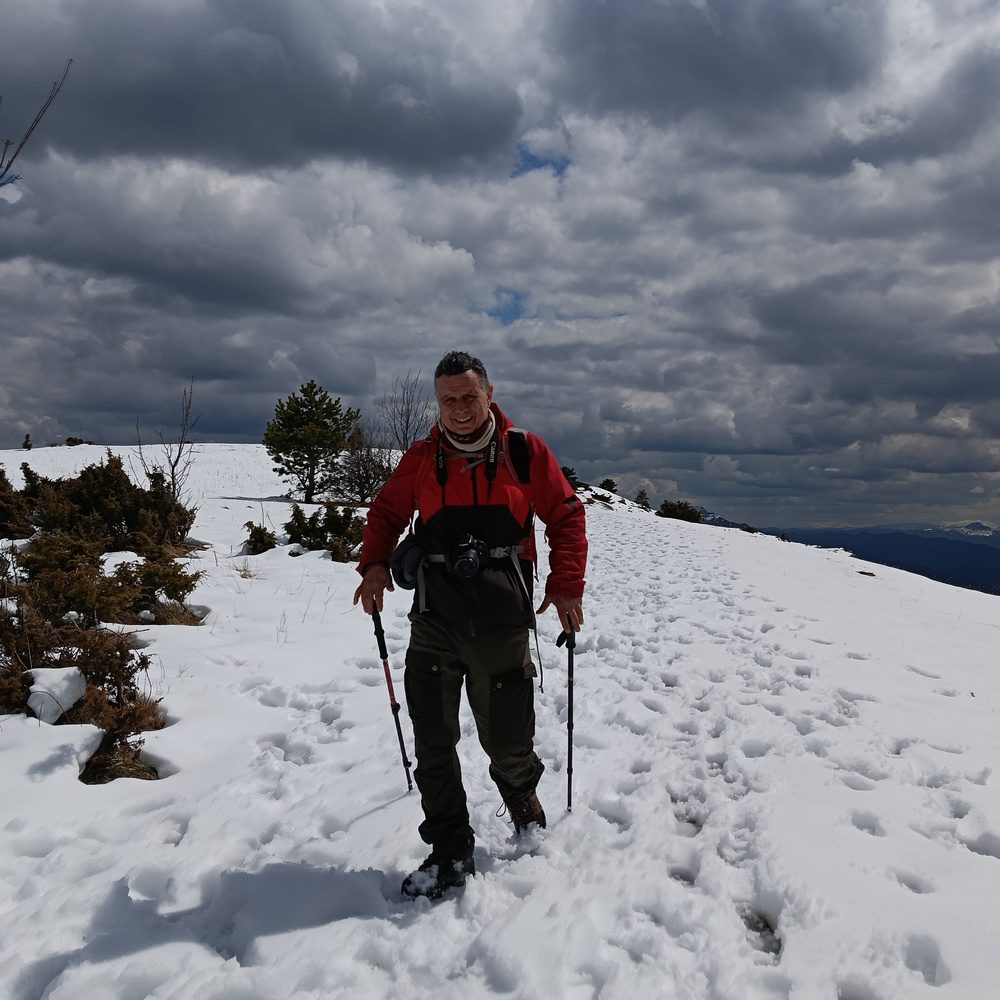 Yiannis Ziogas belongs to those artists who, from the very first moment you meet him, make you feel both great familiarity and awe at the same time—because of the projects he realizes. He is consistent, focused, concentrated, tireless, and above all practical. He is a category of his own! He is a traveler, as he himself states—and that is one of the points we have in common—but also a visionary who brings his visions to life. These visions are collective, since in his artistic practice the personal and the collective are intertwined. He is deeply interested in the community, and for this reason he has worked methodically, systematically, and on multiple levels with and within it over all these years. The occasion for the interview-portrait that follows is a major project in which we fully coincide artistically: the Group Exhibition of Graduates of the Craft Educational Structures, funded and organized by the Ministry of Culture at Acropol Palace, running until April 26, 2026. It presents works from the nineteen structures of the Program, from all over Greece, created over the past year and a half.
By Efi Michalarou
Photo: Yannis Ziogas’ & Efi Michalarou’s Archive
Mr. Ziogas, looking back at your personal trajectory, as far as we know, although you studied Mathematics at the University of Athens, you ultimately pursued art. What led you down this path?
“Ultimately” did not arise from any course of study or other decisions. Art for me—through painting—has had an ontological dimension (and continues to have one) for as long as I can remember myself. I have been painting continuously, always, since I was a very young child.
My engagement with painting is the means of an ongoing inner inquiry, a reflection on the “whys” of the world we live in—a mental and tangible spiritual process that concerns my very being. I have never done anything unrelated to the practice of painting; I never compromised the needs of my being with the demands of any given reality.
When, at sixteen, I was making plans to study at the university, four paths opened before me, all stemming from my devotion to painting: the School of Fine Arts, the Faculty of Philosophy, Architecture, and Mathematics. I believe that painting emerges through self-knowledge, part of which is the search for teachers and communities, rather than academic or other certifications.
I chose Mathematics because I felt it enriched my contemplative self: the abstract thinking of mathematics, the space that is not realized through objects but through ideas, the shapes that seem indeterminate yet constitute entities—these were what led me to study Mathematics.
My school for painting was the Exarchia area of Athens in the 1980s, and the teachers I encountered there. There, I had my studio basement on Solomou Street from the early ’80s. I actively participated in the Art Group ΣΥΝ (space of artistic creation) on Tositsa Street, and my teacher was Thodoros Pantos. We would meet people on the street like Ritsos, Tsarouchis, Asimos, these encounters were my school, we went to Tipoukeitos and listened to Yannis Pappas, to Ah Maria, we experienced the incredible collectivity of ideas of that period and that neighborhood. Most of those we met on the streets, in the taverns, in the demonstrations were older than us and most of them, if they had not been imprisoned and tortured by the Junta, and the previous governments, had lived for years in exile on islands or were hiding, persecuted. But there was no anger, only hope for the future.
In fact, initially in Detroit and then in Chicago, with honorary scholarships. What was the artistic landscape like in America at that time? How much did it help shape your later artistic career, as well as the organizational abilities we observe in very few Greek visual artists who manage large-scale projects like the ones you envision and implement.
The first city I found myself in in America was Detroit. Moving from Exarchia in 1980 to Detroit was a spatiotemporal leap that only art can activate. I had the opportunity, by chance, of course, to encounter other realities of America beyond the usual ones of the major center of New York. First, there was the terrain of what could be called the greatest ruin of contemporary archaeology: Detroit. One could step out of the Detroit Institute of the Arts and my school, the Center for Creative Studies, and find oneself in the heart of total abandonment, vast, I would say. Ruined skyscrapers, eerie desolation—these define the end of the modernist horizon.
In Chicago, I encountered Outsider Art, which was the starting point of the local artistic scene there, and I also had as a fellow student and friend Eduardo Kac, who established the term “bioart.” In New York, I encountered the “now” of realities. Everything in New York has a “now,” and this “now” was something I had not known until I arrived there.
And so much more…As for the second part of the question, I never think about creating something “huge.” What I think about each time is creating something “necessary” for the ontology of art. One of the most essential things I learned in America is to value the potential of everything I encounter—to exclude nothing because of blinkered ambitions or projections. This belief in potential activates organizing abilities as a necessary tool toward a goal. It also activates the risk of the unexpected—of what seems to have no chance at all, yet where the real perspective ultimately lies. At the same time, both in Exarchia and in America, I came to understand the importance of communal artistic practice and everything that matters for it.
Keith Sonier, a legend of the international art scene. What did it mean for a young artist to work in his studio at the age of 27?
I worked in New York in several artists’ studios, and that was an invaluable experience. In all of them, I noticed a humility and an acknowledgment that we were their peers, not their assistants. Keith Sonier had this approach, and I remember when we went to New Jersey to install a sculpture in a government building. My job was to connect the cables to the transformers, something I was doing for the first time, and I didn’t manage to do it correctly. He saw what I had done, realized it wasn’t right, and said to me, “You don’t have the technique,” then did it himself while I watched. Beyond the gentle way he responded to my inadequacy, what stayed with me—and what it taught me—was the way he carried out a task that I was supposed to do, without saying anything more. In purely artistic terms, it was the moment when the way he used the word “technique” shifted the conceptualization not only of the word itself but also of the practice—from something predetermined to something open and unforeseen—and it liberated me. Yes, connecting two cables is an artistic technique.
What was it that he passed on to you that you still remember and continue to follow?
I consider myself a traveler of ideas. I move through places to seek ideas, to discover conditions, to encounter the essence of images. The United States offered me an openness of ideas, of the world, and above all of people. In the places I found myself, I met individuals—many of whom became lifelong companions—who shaped and continue to shape the way I think and approach things. However, I considered New York to be just another stop on the journey of places and ideas. That’s why I returned a month after completing my postgraduate studies in Greece. I never wanted to become just another immigrant artist.
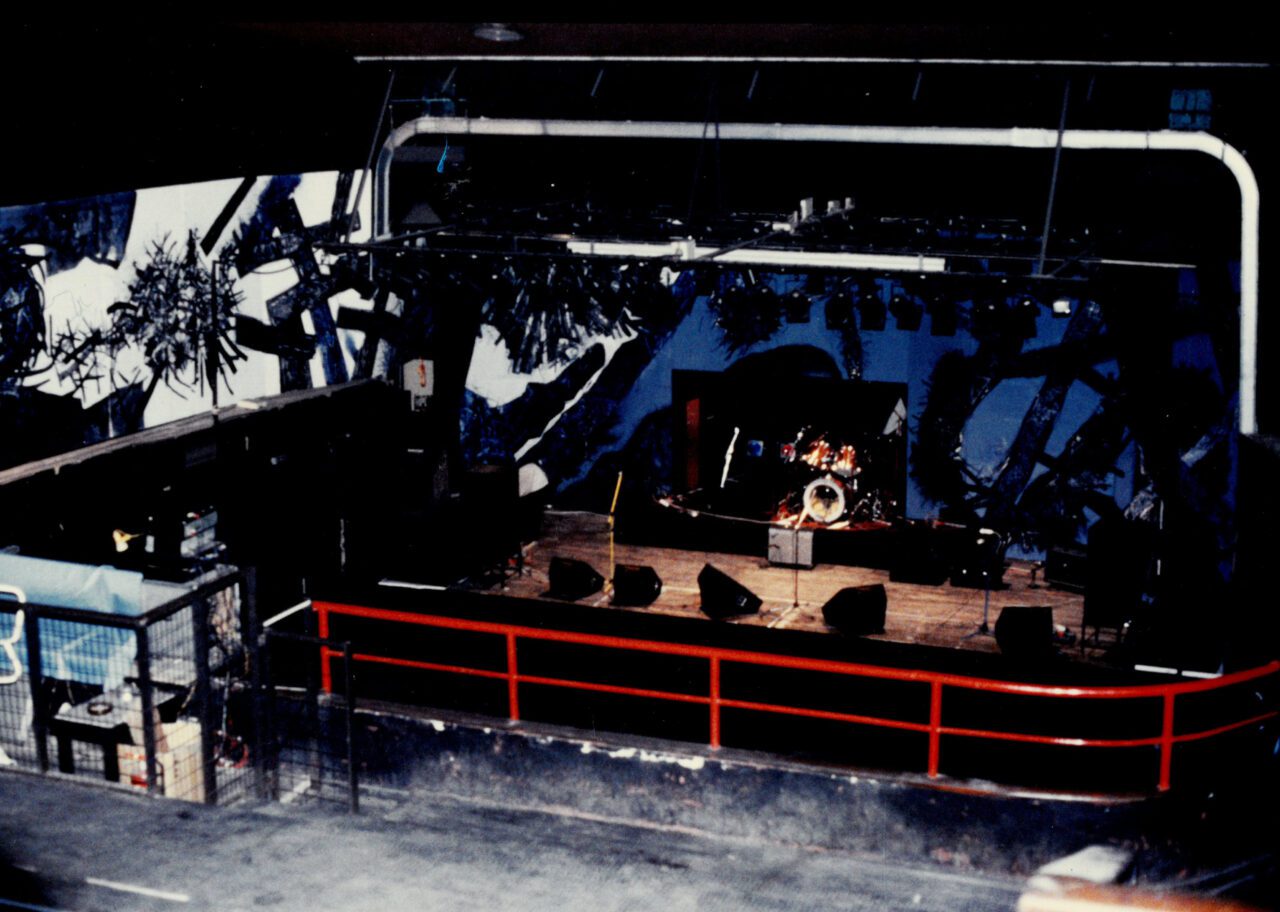
You returned to Greece in 1989 and created a 200 sq.m. mural for the RODON concert venue. How did this proposal come about, and what did it mean to you upon returning?
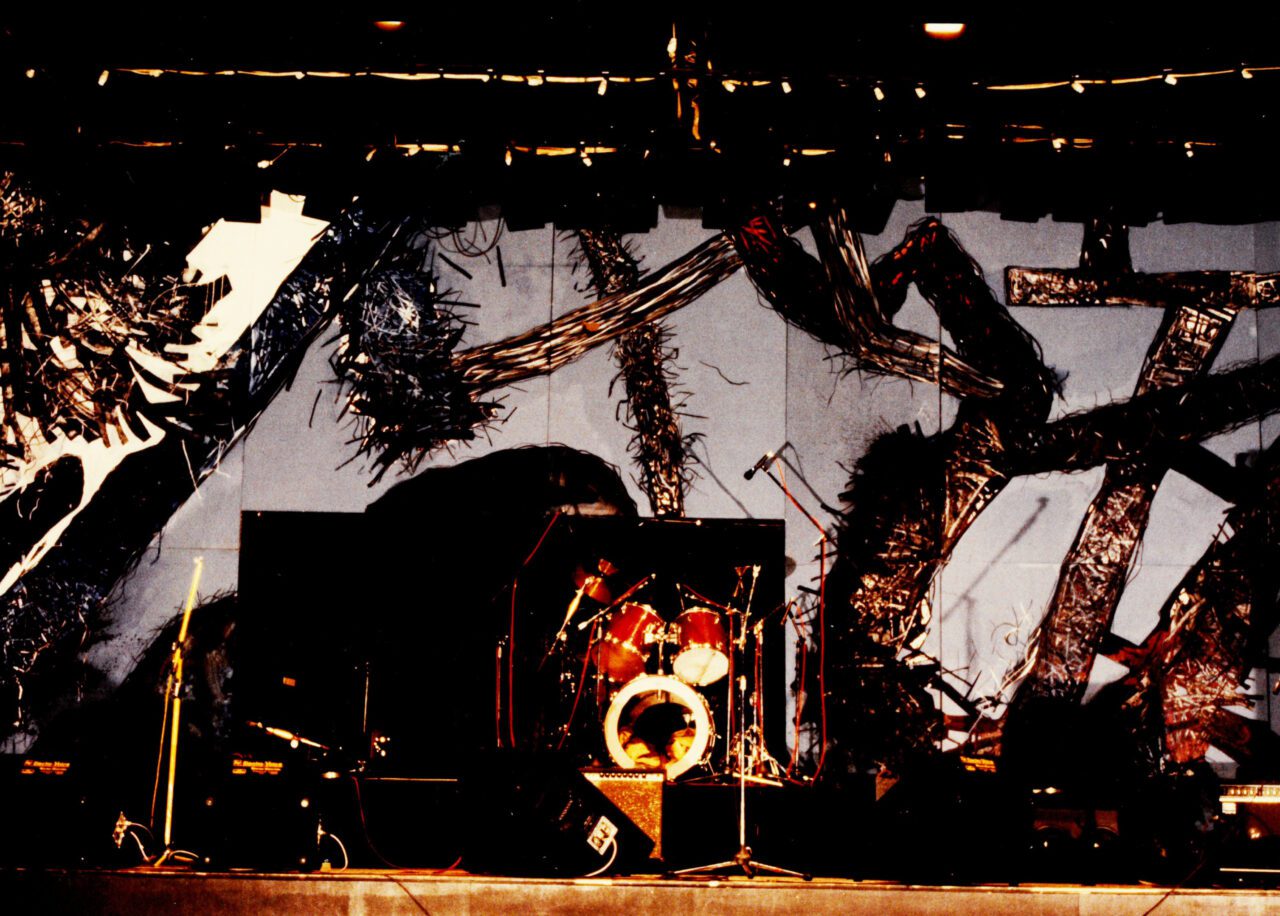
RODON was the iconic venue for the music scene of the 1980s and ’90s. The proposal I received was to create a mural that would embrace the space—both the stage and the side walls. It was a massive undertaking that had to be completed in the summer of 1989. I worked intensely, using the RODON space as a vast studio. There, painting, art, the body, and space became a unified whole total condition that, as an artistic experience, has never left me. The intensities of gesture had to meet the intensity of the music and the live performance, accompanying the experience of so many diverse musicians.
I worked endless hours, with the RODON sound systems blasting music, while I moved among paints and enormous canvases. Across Patision Street, in a building occupied by Fine Arts students, I was allowed to use a space as a studio and I worked on a relatively small canvas (90 × 200 centimeters), where I would take my breaks—painting yet again. The RODON work was vast, dominated by black. The work in the occupied space was colorful—this contrasting transition is something I still remember.
Observing your artistic journey and career, we notice that you are drawn to the challenge of space and time, large scale, the intangible and the immaterial, which nonetheless ultimately take form…
Indeed, all this is true, it stems from my need to open myself to wide horizons. To find myself where there are no boundaries, only continuous movement within the infinity of space, within chaos. My path is a journey that has taken me to both real places and to realms of ideas that sometimes seem strange yet are entirely real and tangible. I would distinguish two periods, as well as two ways of approaching the journey: before 2006 and my arrival in Florina as a member of the academic community. The journey had an abstract, poetic quality. After 2006, the journey became identified with the walking body—it became the route traversed, the body that explores, that moves, that grows tired as it crosses through space.
Richard Long’s work “A Line Made by Walking” (1967) is often cited as the first work of Walking Art, which you initiated in Greece in 2001. How was this term defined then, and how is it defined today, after a multitude of routes and collaborations?
Travel is decisive in my thinking and my work, yet until 2006, I had never truly encountered landscape. Up to that year (and I return to this important date for me), I was a studio-based artist who had lived in large cities—Athens, Thessaloniki, New York, Detroit, Chicago—all of them metropolitan environments with populations in the millions. That year, I found myself in Florina, and my journey continued in a small town. Personally, I underwent an expansion beyond the studio. I began walking in the mountains of Western Macedonia and beyond, because my body no longer accepted the limits of the white cube. Walking became the medium through which I continued my journey, moving through the spaces of the landscape. Half a century now separates us from Richard Long’s 1967 practice, and the way we perceive walking has changed. Long’s walking art was a process of exiting the established art system into the vastness of the landscape. For me, walking art is no longer only that—it is not merely an exit from the art world, but also an entry into communities, and into a perception of landscape beyond the sensory alone. A landscape that does not matter whether it is natural, urban, or even the interior of a room, but rather a space that awaits us for potentially decisive events. Walking: simultaneously an exit and an entry.
When did the artistic project “Walking Arts and Local Communities” (WALC) begin, how did it come about, and which institutions collaborate in it?
The artistic project WALC began in 2022 when, in a conversation with my fellow traveler Geert Vermeire, we considered exploring a possibility that would allow us to further support walking as an art practice and its relationship with communities.
I consider that walking art and practice have gone through three periods since 1967 and “A Line Made by Walking” which we mentioned. The first is defined by the contrasting relationship between the twin figures Richard Long and Hamish Fulton, and it extends until the late 1990s. The decades of the 2000s and 2010s are characterized by the writings of important thinkers, especially Rebecca Solnit, Francesco Careri, and Tim Ingold, who placed walking within a broader cultural and social framework, conceptually globalizing it. In the current period, walking practice is shaped through the communities that activate it, and how those communities are empowered by the condition of walking.
We conceived it within this framework, organized an implementation structure, and submitted it to Creative Europe (an extremely competitive program). It was accepted and received funding for the creation of an International Walking Art Center (unique in the world) in Prespa. This bold proposal found receptive ears in Brussels—another paradox of life. We are therefore building an international center in a place where the nearest international airport is 300 kilometers away, and public transport stops 60 kilometers away. We are shaping an international vision for the Walking of the future, one that emerges from communities and moves forward alongside them.
Why in Prespes lakes? A place symbolically charged as one of the most critical and bloodiest theaters of operation during the Greek Civil War (1946–1949)?
Because art meets us where one would least expect it to exist, precisely because it can be created anywhere that human desire leads us. Prespes lakes is such a place, because it lies at the boundary of my own inquiries: multiple borders are formed there, and the Civil War is only one of them.
In Prespa, three countries meet. Dalmatian pelicans fly there, cormorants as well; bears and wolves move among cedars, oaks, and beeches. And among all this, there are both presences and absences of people and populations.
I “discovered” Prespa when I walked there in 2007 from Florina into the hinterland, seeking the beyond of another condition, and since then, I have remained there, establishing Prespa as a place of return where everything can be discussed and placed into reflective dialogue and artistic practice: a space of openness and potentiality.
Prespa is an open laboratory of ideas that forms a model of artistic practice, allowing art to function as healing, allowing time for reflection, creating models of collaboration, and proposing chaotic possibility as a meaningful potential.
Grammos—another one of your projects, a work we collaborated on and more. To what extent is your artistic work shaped by the actions you organize, and vice versa?
Grammos is the complement of Prespa. Prespa is the internal openness of the lakes. Through the mountains, a vast water mass unfolds: the Small and Great Prespa lakes, as well as Lake Arhrid behind the mountains. It is not a static lake system but essentially a large river flowing from Albania to Greece and North Macedonia, and back again to Albania, before emptying into the Adriatic. In contrast, the Grammos mountain range functions as the stillness of sharp mountain intensity, the tension of summits. Yet Grammos also has fluidity: the terrain is highly unstable, with frequent and dangerous landslides. Grammos (like Prespa) is a reality in constant transformation. I covered the Plikati/Florina arc, which I walked in October 2024, traversing an area that constitutes an invisible monument to many European wars and events of the twentieth century—from the Macedonian Struggle to the passage of Albanian migrants. Walking for fifteen days across nearly 150 kilometers of this route, one feels the body becoming a sensor of human passions. All these experiences of the open laboratory influence my work either indirectly, by placing my mind within a climate of ideas and images, or directly through explicit references in the resulting artistic output.
You are among the pioneers of the University of Western Macedonia in Florina (2006). How did this vision—realized in a regional city that was not an artistic center and seemed almost forgotten, like the beautiful houses on the riverbanks—come about? Over time, however, both the University and the city have developed their own artistic trajectory and history, with graduating artists whose work and artistic approaches differ from other Schools of Fine Arts in Greece. What accounts for this, and how was it achieved?
Reality is certainly present for those who believe that Florina could become a creative condition. A few (a minority) among those of us who have been in Florina as academics and artists helped bring forth artistic impulses in the region of Florina and Western Macedonia to define the distinct character of the School. My personal motivation was to create in Greece an artistic condition and community in a rural setting. In Greece, art has developed within the urban environment and is shaped by artists living in cities. Florina, and especially the surrounding region, gave me the opportunity to work with my students in an unprecedented environment of contemporary creativity, where new educational processes were activated. Florina contained the element of risk that so deeply interests me, and, as I have already noted, I consider it a prerequisite for any honest act of creation.
Knowing that community participation and inclusion are very important to you—both in your personal and teaching work—you are among the first (and here we fully align artistically) to revive craftsmanship and give it new life at a university level. Would you like to explain how and what exactly took place?
As I mentioned earlier, landscape has been the structural feature of my artistic and educational work in Florina. A structural component of landscape consists of the materials that form it—soil, plants, and many others. The First Painting Studio that I coordinate in Florina was the first—and to my knowledge still the only one in Greece—that systematically integrated processes such as learning weaving, making adobe bricks, felt, plant-based dyes, soaps (to mention only a few), already from 2011, into the teaching of painting and more broadly of visual practice. As a Department of Fine and Applied Arts, our Department should have activated Crafts as a direction of study. Unfortunately, this has not been implemented for reasons that remain internally difficult to understand.
And the exhibition that takes place across the four floors of Acropole—how did it come about and what is its aim?
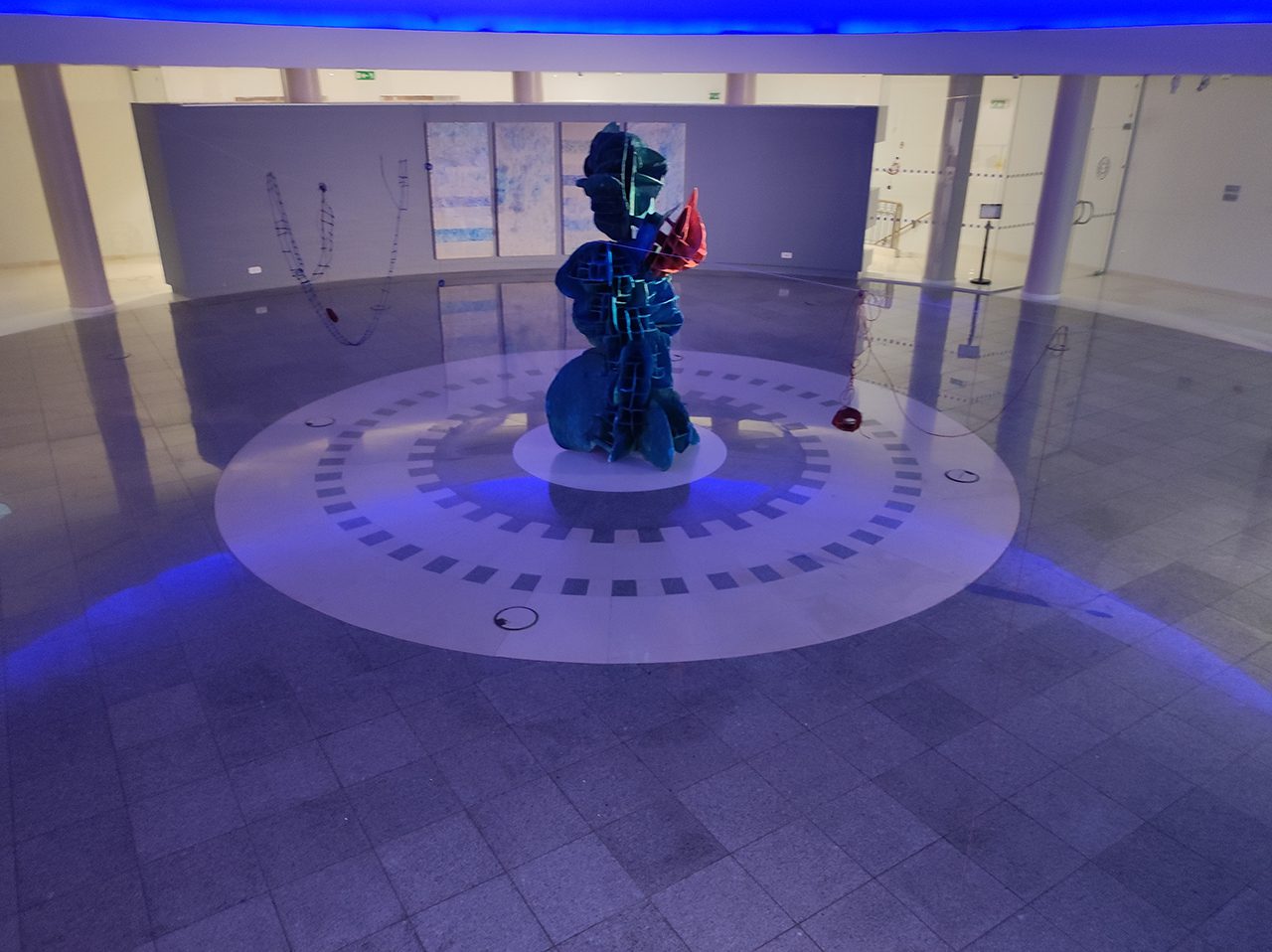
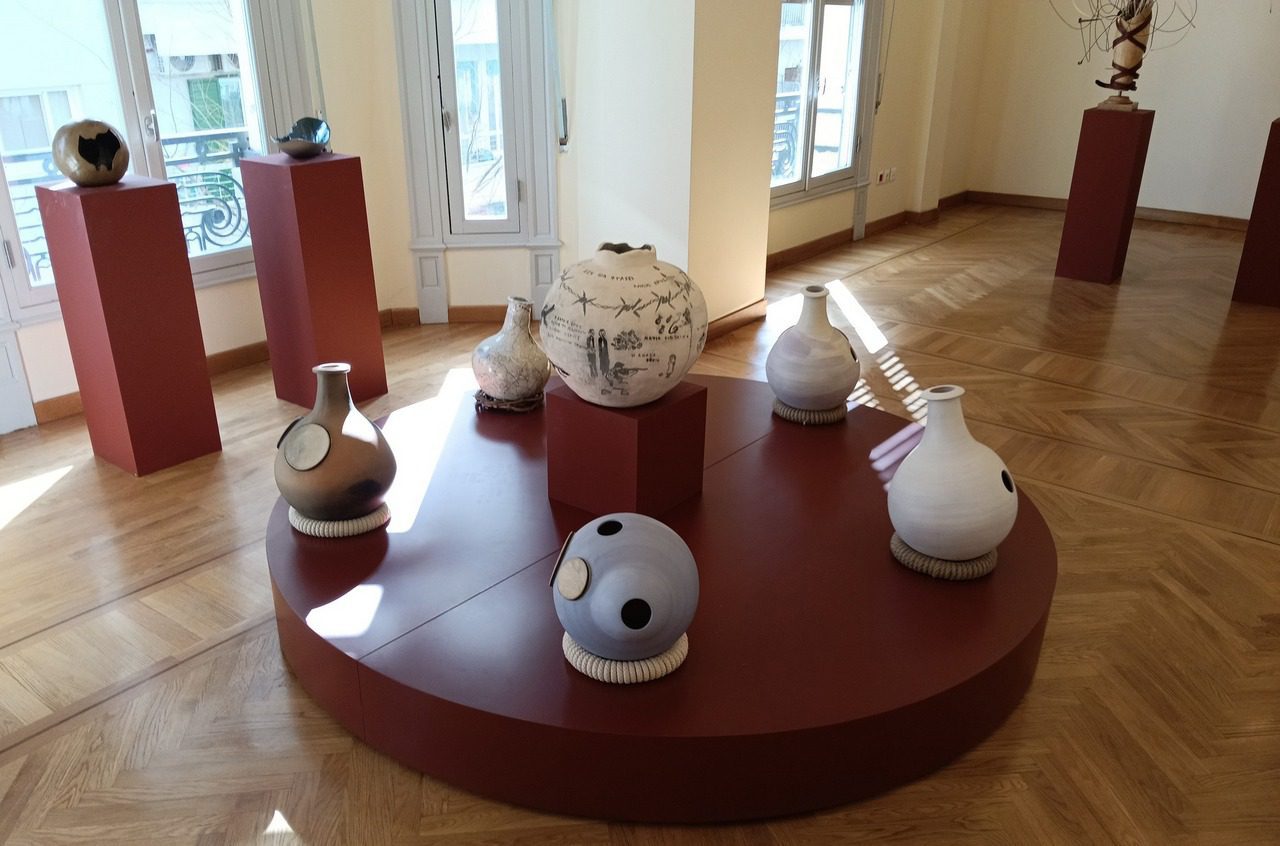
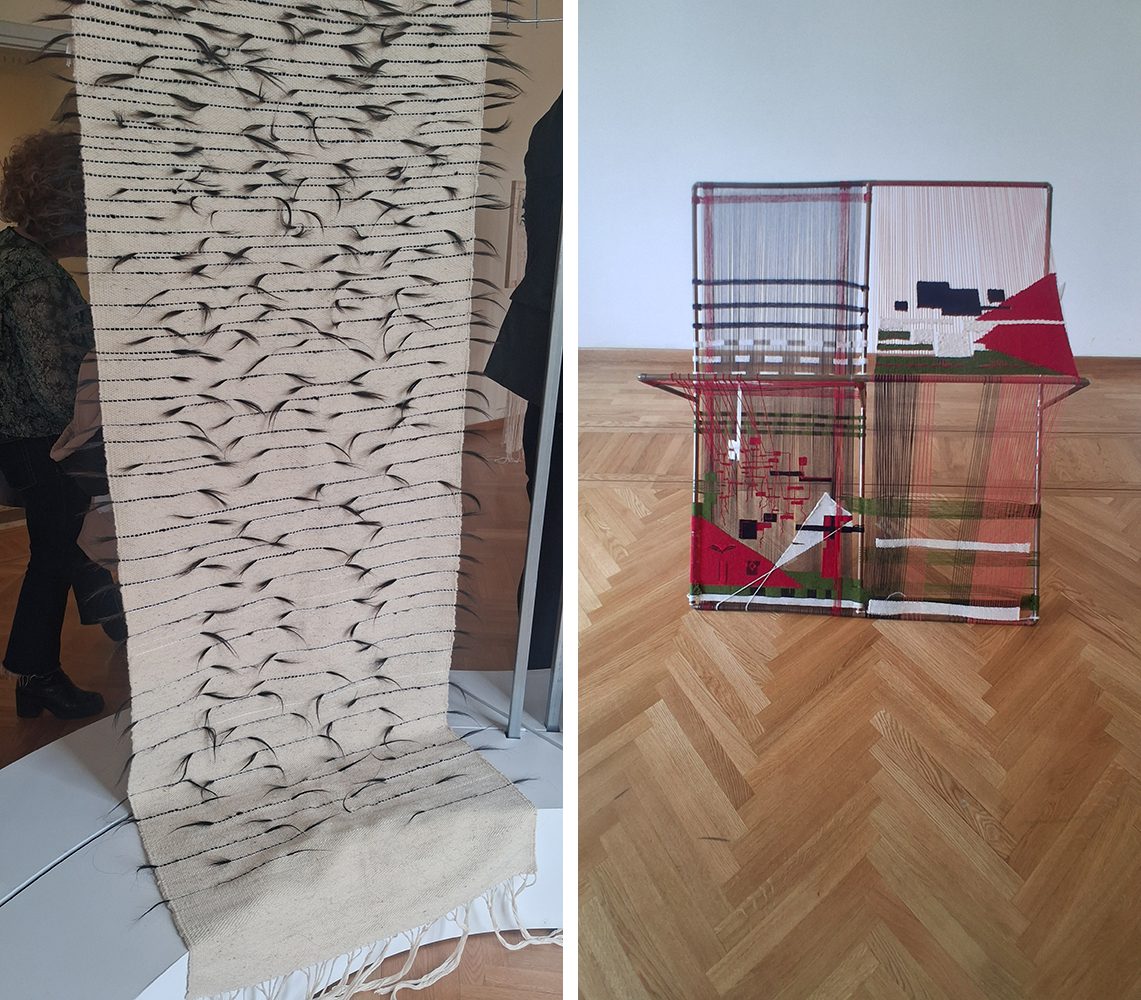
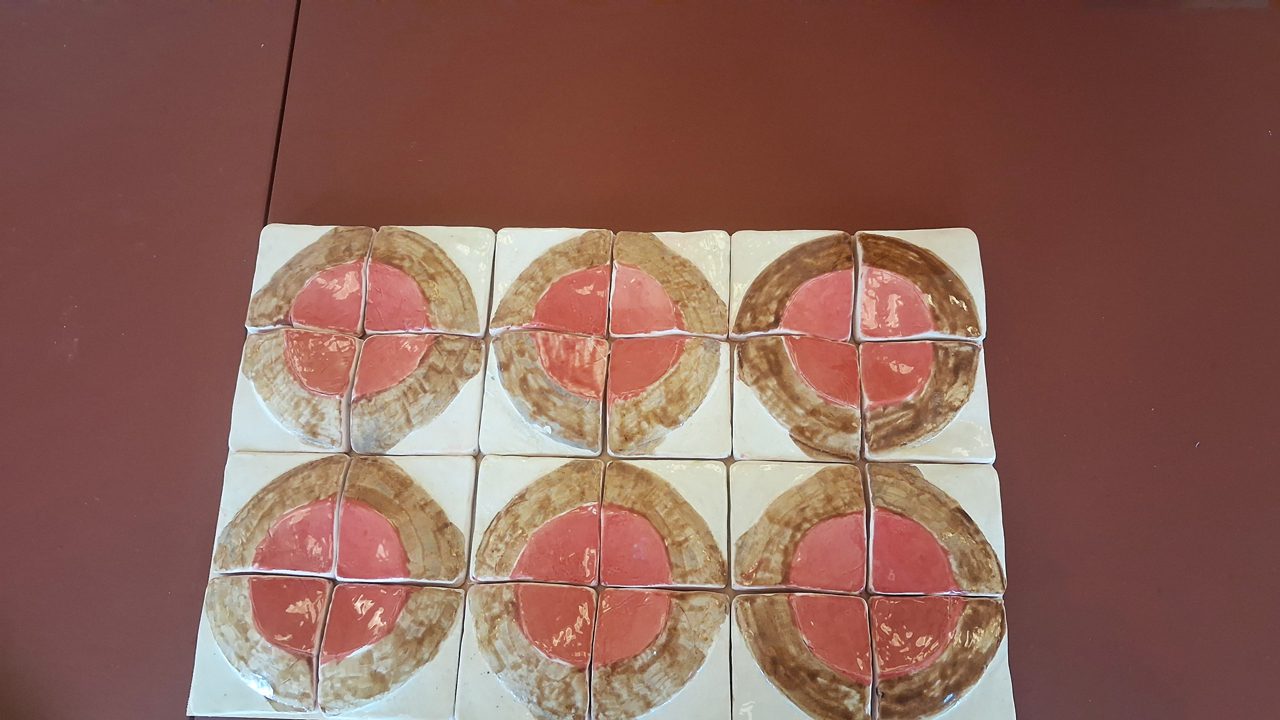
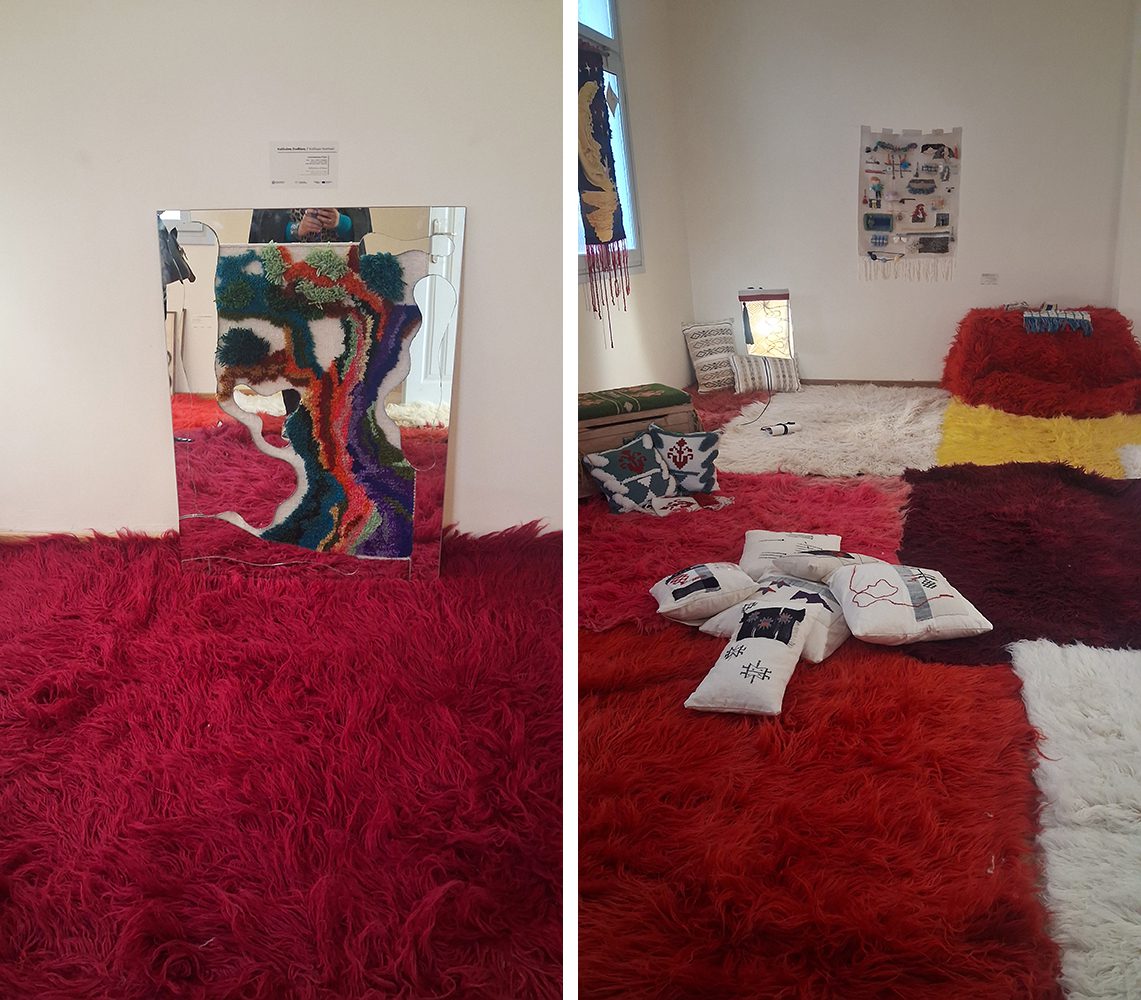
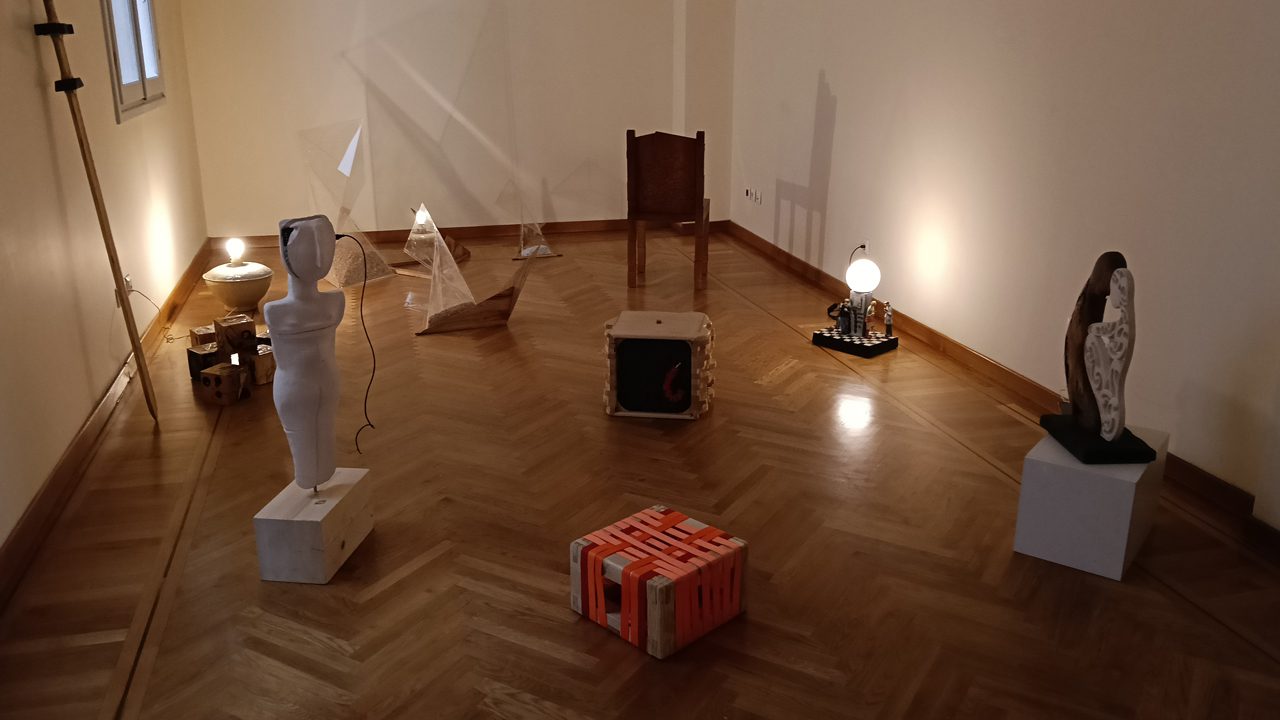
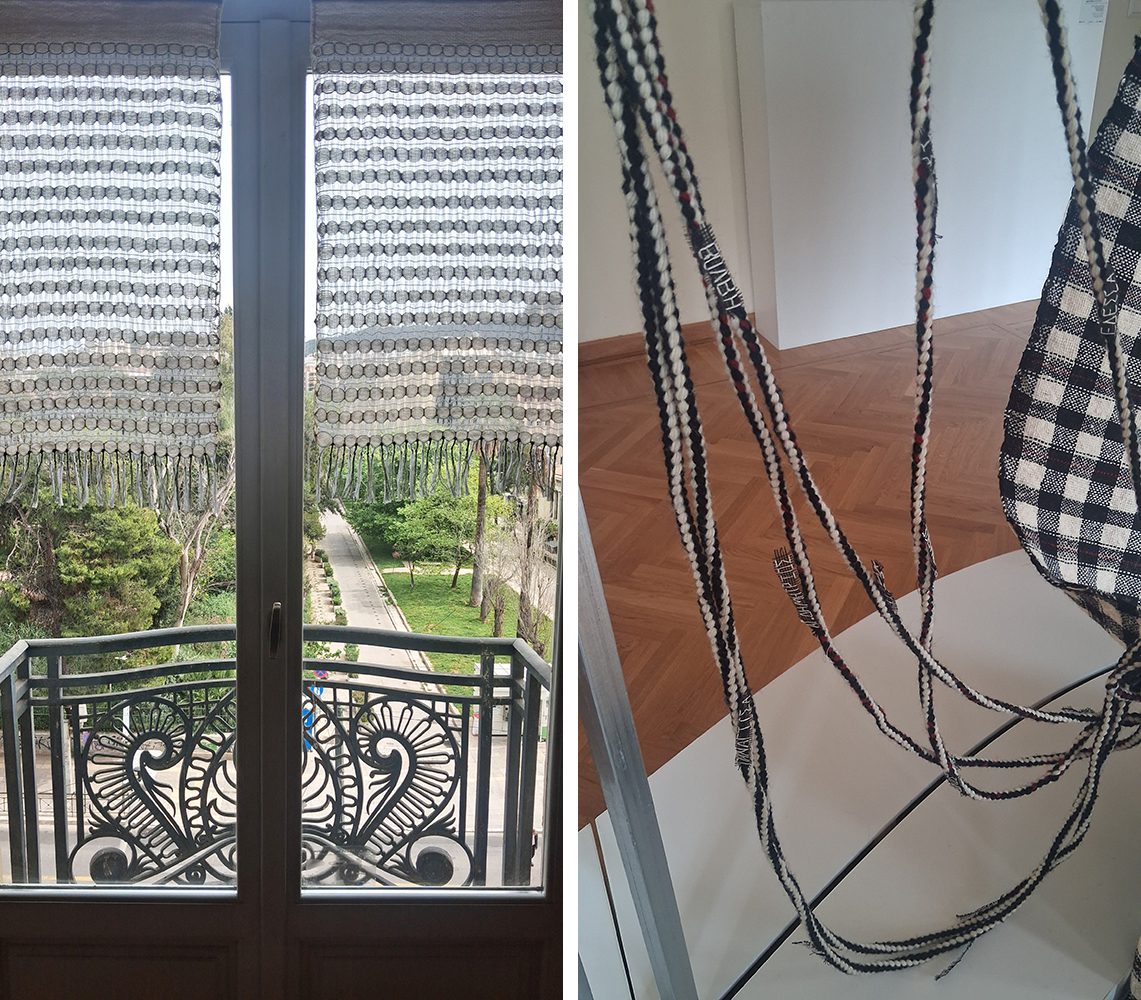
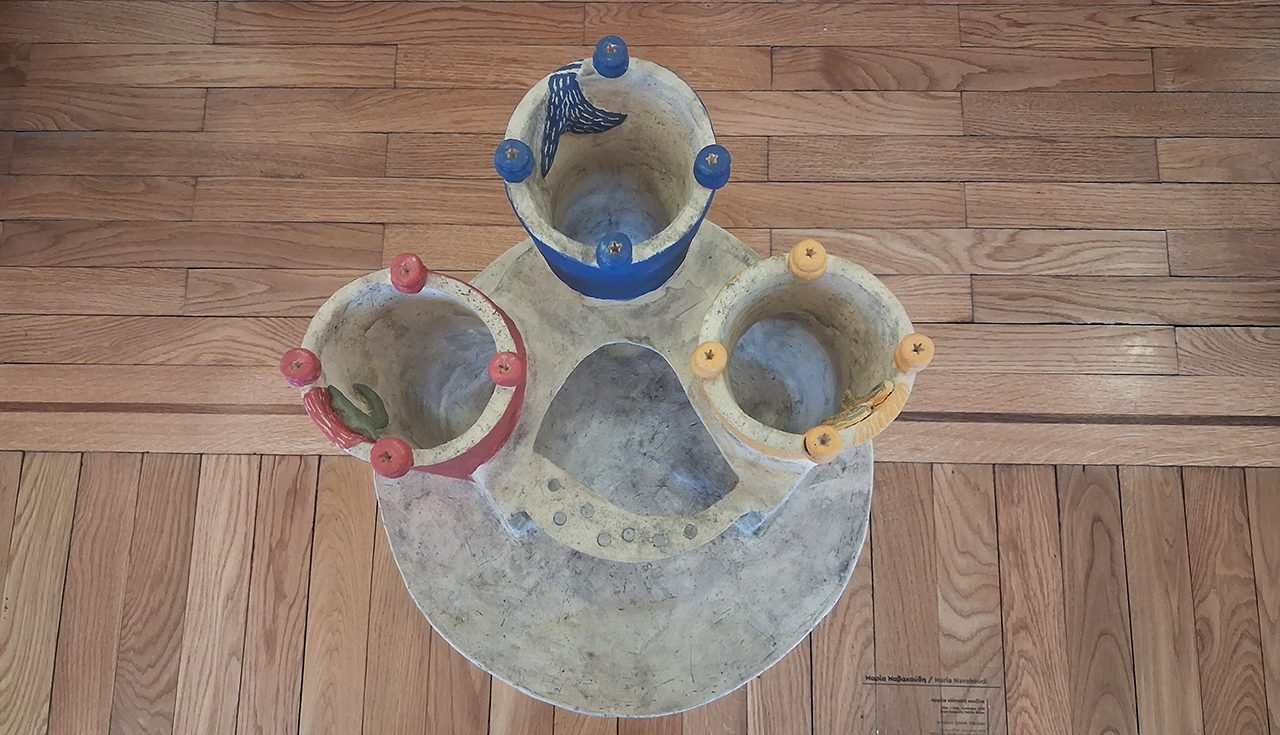
The Group Exhibition of Graduates from the Educational Facilities of Craftsmanship is funded and organized by the Ministry of Culture. It constitutes the final action of the Educational Program for the development of skills related to craftsmanship. It presents works from the nineteen facilities of the program that have been established across Greece over the past year and a half. It aims to document the outcomes of the educational process and to demonstrate how the program’s core objectives were implemented: the creation of craft works connected to Greece’s cultural heritage, the reactivation of that heritage through contemporary aesthetic approaches and techniques, and professional training in fields of craftsmanship. The exhibition also expresses the creative support of the communities in which these structures operate. Each work contains the affectionate contribution of its graduate, and when one considers that more than 600 artifacts by 208 creators from all over Greece are being exhibited, it becomes clear how, movingly, voices of previously untold stories are being given form. Craft practice has allowed all these narratives to gain the possibility of being addressed and heard.
Will this experimental, yet very promising and important project have a future, and what exactly is it?
We believe this will have an impact both because there is political will and also because it reflects a demand from the communities where these structures are being activated. Areas such as Nestorio and Prespa have limited prospects for economic survival, among other challenges—unless forms of development are established that can provide people with employment through a framework that draws on what the environment and tradition can offer, while orienting itself toward a sustainable future. Craft has the capacity to do this broadly and effectively. It brings communities together in collective practices, reminds people of what they once were, and provides them with a skill that leads to a meaningful professional condition extending beyond local boundaries.
Turning also to your personal work, I recall your solo exhibition in February 2024 at the Vafopoulio Cultural Center in Thessaloniki, where both your works and the exhibition setup seemed to reference and be closely connected to the actions you organize. Is that so? How much do they influence and inspire you, and where—if anywhere—lies the dividing line?
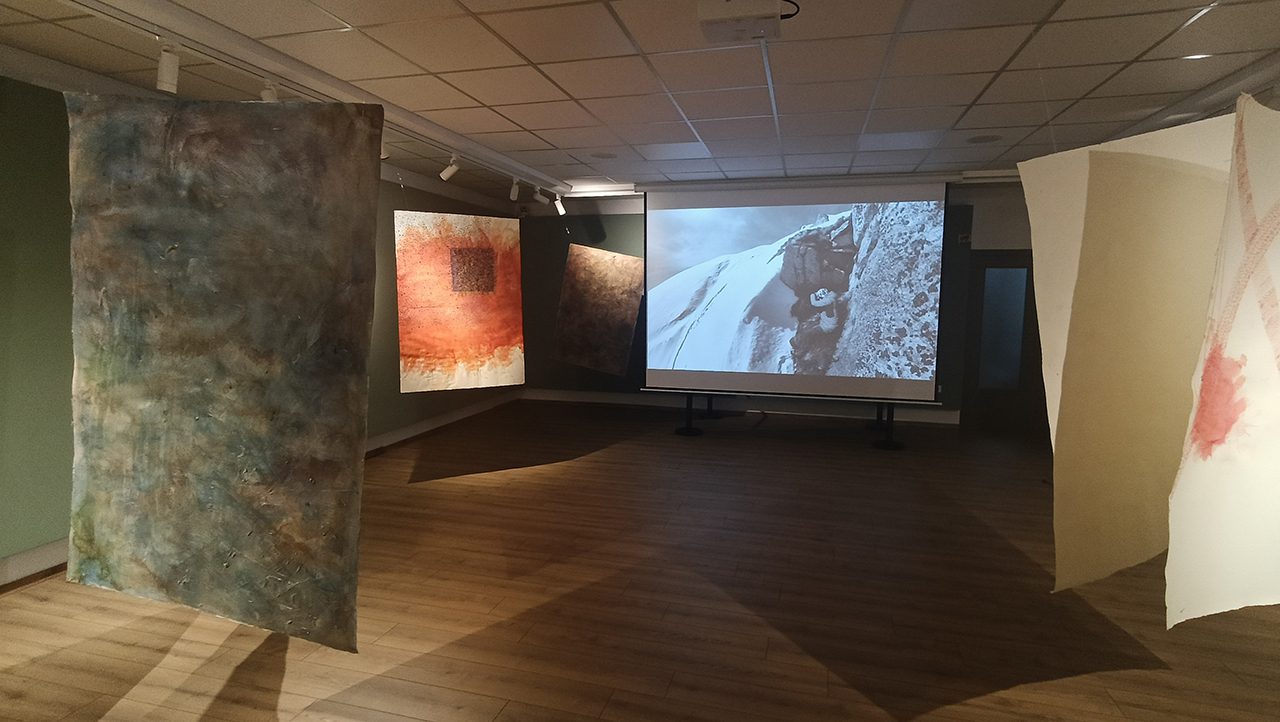
My work constitutes a unity; it is characterized by a “wholeness”. Within this wholeness, multiple expressive modalities meet and enter into dialogue: the creation of painted images, object-making, embodied walking experiences of landscape, community practices, conceptual analysis, and critical reflection. Each approach feeds and re-feeds the others: images acquire a conceptual status from objects, while material and immaterial by-products emerge through walking processes, all of which are then articulated through words and concepts within an integrated framework. In my exhibition at the Vafopoulio Cultural Center, a video documenting an ascent of Mount Varnountas—the highest mountain in Florina—was presented as the central image. From this strenuous ascent, painted images emerged, depicting the realities of physical effort. I chose to suspend large-scale watercolours from the ceiling, creating trajectories and additional horizons within space. At Vafopoulio in Thessaloniki, I titled the installation “Images carried away and brought back by the breeze.” Two years later, I further developed the installation at the hall of the Florina Literary Society “Aristotelis,” where I renamed it “Έπεα Πτερόεντα”* (Winged Words).” The two versions function complementarily and were activated by the way my thinking evolves each time.
At a time when we speak of an impending climate crisis, we would like you—as someone immersed in nature, whose work and projects center on it—to tell us what changes you have observed over the years.
My work has nature as one of its central axes—not the sensory perception of nature, but what lies beyond this initial interaction with what is recognizable and evident. Within this approach, the climate crisis also becomes a structuring axis of interest, as do phenomena such as the draining waters of a lake, the path that no longer exists, the cedar overtaken by the oak. I am not a biologist, geographer, or historian, but I draw on knowledge from many fields to effect a transition from the sensory to the non-recognizable. A factual piece of information can become liberating when it operates as a creative trigger and is not merely illustrated in the final work.
Is nature and natural resources exhausted?
Nature is and will remain inexhaustible because, like any act of creation, it is capable of transformation. Over the billions of years, we have traversed—five times so far—the forms of life as they were known at each stage ceased to exist, either because a meteor struck the Earth or because a fungus wiped out everything that had existed until then. Nature persisted, however, and continued to sustain life as it re-emerged and took new forms.
Concluding our interview, and thanking you for it, I would like to note that your work is closely related to that of Land Art and Earth Art artists, as well as many performers on the international visual arts scene. Nevertheless, it is different, because although in Greece we may have seen artists or groups dealing with this subject, they have not done so with consistency and continuity in space and time. What is the element that keeps you going?
Safe art does not interest me. What keeps me going is the fact that I have not objectified my artistic practice. I consider my work to stand in direct creative opposition to what you describe—or, I could say, in an antagonistic dialogue with it. I follow a “no-trace” policy in my work in nature, something that is not (or was not) the case in Land Art and Earth Art practices. Performance is an important field of artistic expression, but it is often realized through a programmed form of staging, which is not my practice. I move through space without a script. I often set a destination and create an intermediate space of lived experience through walking, which produces—or does not produce—the artistic outcome. I am entirely indifferent to the forced creation of objects, or to objects as an end in themselves and a form of completion. Ultimately, there are no objects at all. What drives me is the risk inherent in honest artistic practice, the practice that pushes us to the extremes, to the limits of body and mind, where one knows that one may never return, where one is dissolved into the necessity of the attempt.
* The phrase comes from Homer and is composed of the noun “epos” (epic) and the adjective “pteroëis” (winged, feathered).
Download Greek version here
First publication: 19/4/2026
www.dreamideamachine.com
© Interview-Efi Michalarou
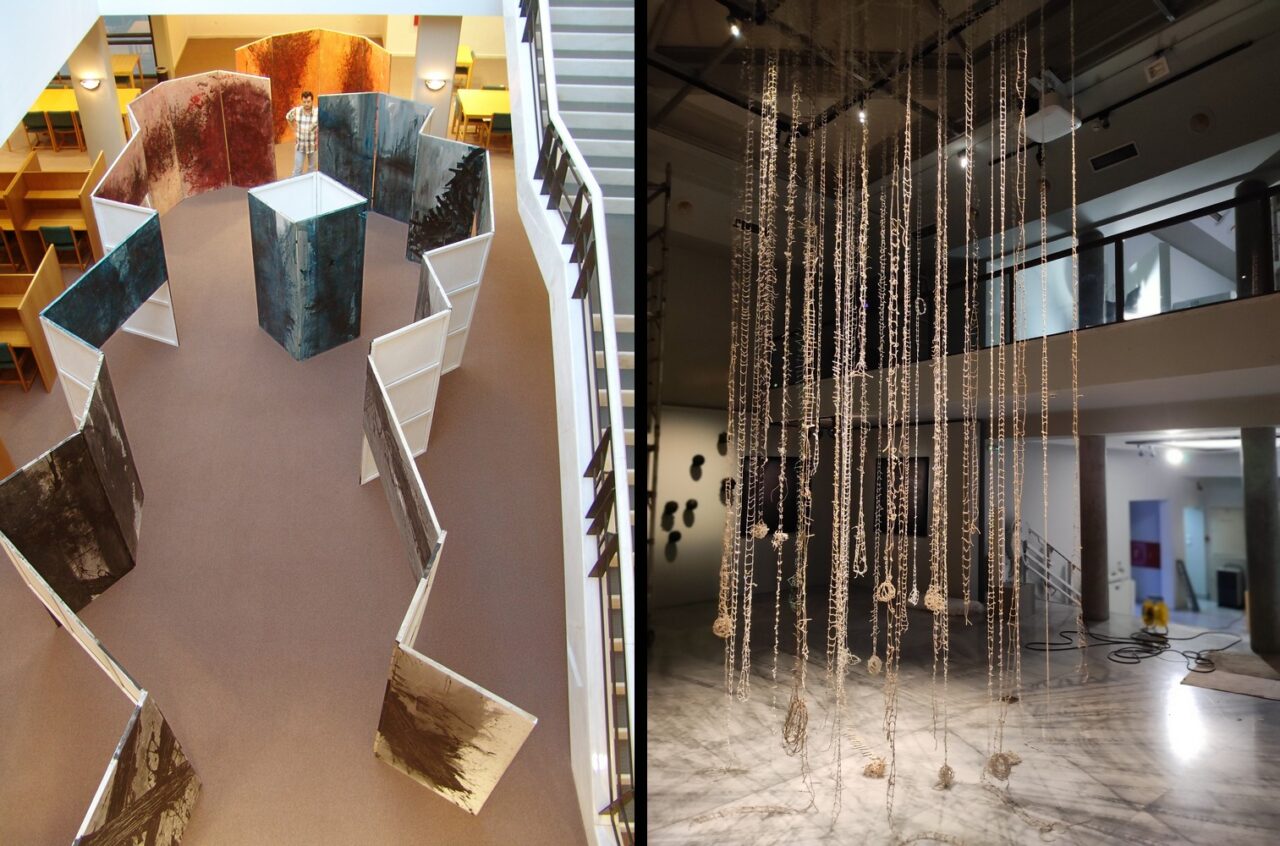
Right: Yannis Ziogas, 39 Ladders, installation, Museum of Byzantine Culture of Thessaloniki, 2023, © & Courtesy the artist
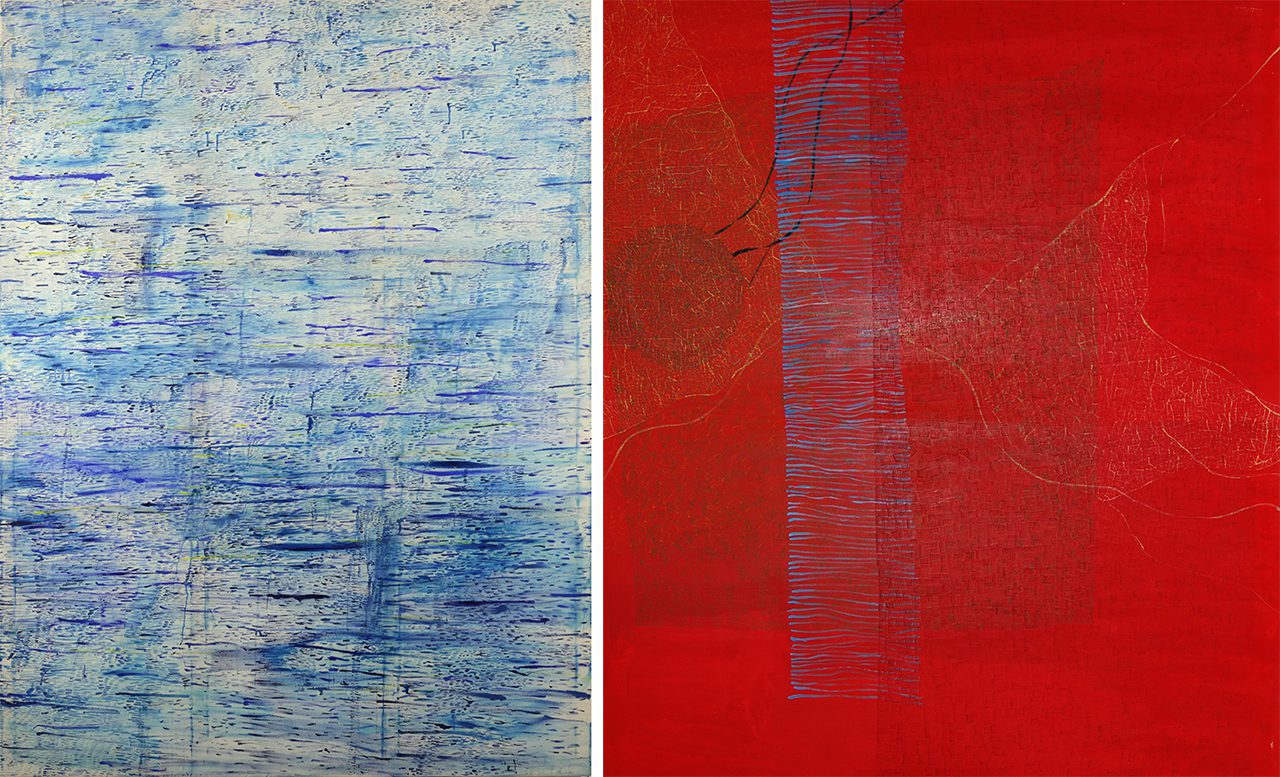
Right: Yannis Ziogas, Mystic Landscape 62, 218 x 184 cm, acrylic on canvas, 2004, © & Courtesy the artist