PREVIEW: Adam Pendleton-Can I Be?
The Langen Foundation, set within the serene landscape of the Museum Insel Hombroich, is set to open one of the season’s most anticipated contemporary art exhibitions. The foundation presents “Adam Pendleton: “Can I Be?” , a major solo exhibition that transforms Tadao Ando’s minimalist architecture into a crucible for exploring abstraction, language, and collective memory .
By Dimitris Lempesis
Photo: Langen Foundation Archive
The exhibition “Can I Be?” positions the New York-based artist—widely regarded as a central figure in contemporary American art—not merely as a painter, but as a theorist of form. Pendleton is celebrated for upending linear compositional logic, creating works that oscillate between expressionistic flourish and the rigid precision of Minimalism .
Central to Pendleton’s practice is the concept of “Black Dada” a critical framework he began defining in 2008. Coined from the ashes of historical avant-gardes—specifically Hugo Ball’s 1916 Dada Manifesto and Amiri Baraka’s 1964 poem “Black Dada Nihilismus”—this approach explores the tense relationship between Blackness, abstraction, and historical trauma .
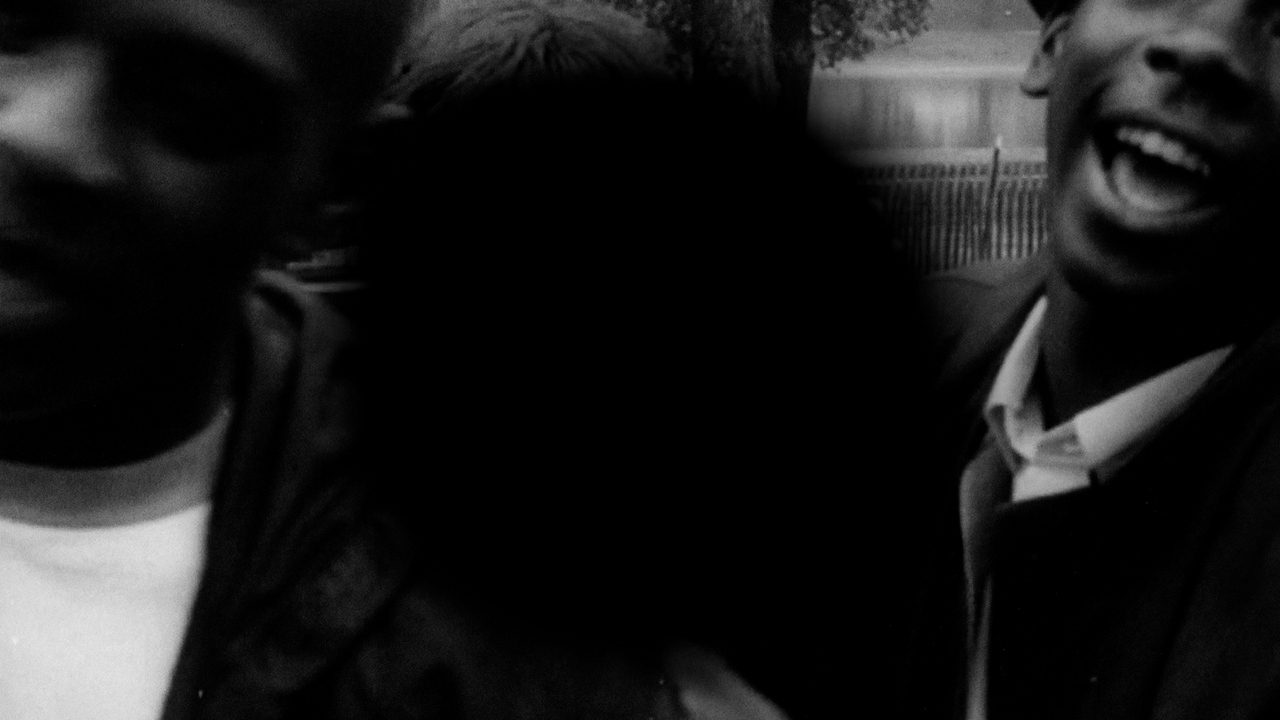
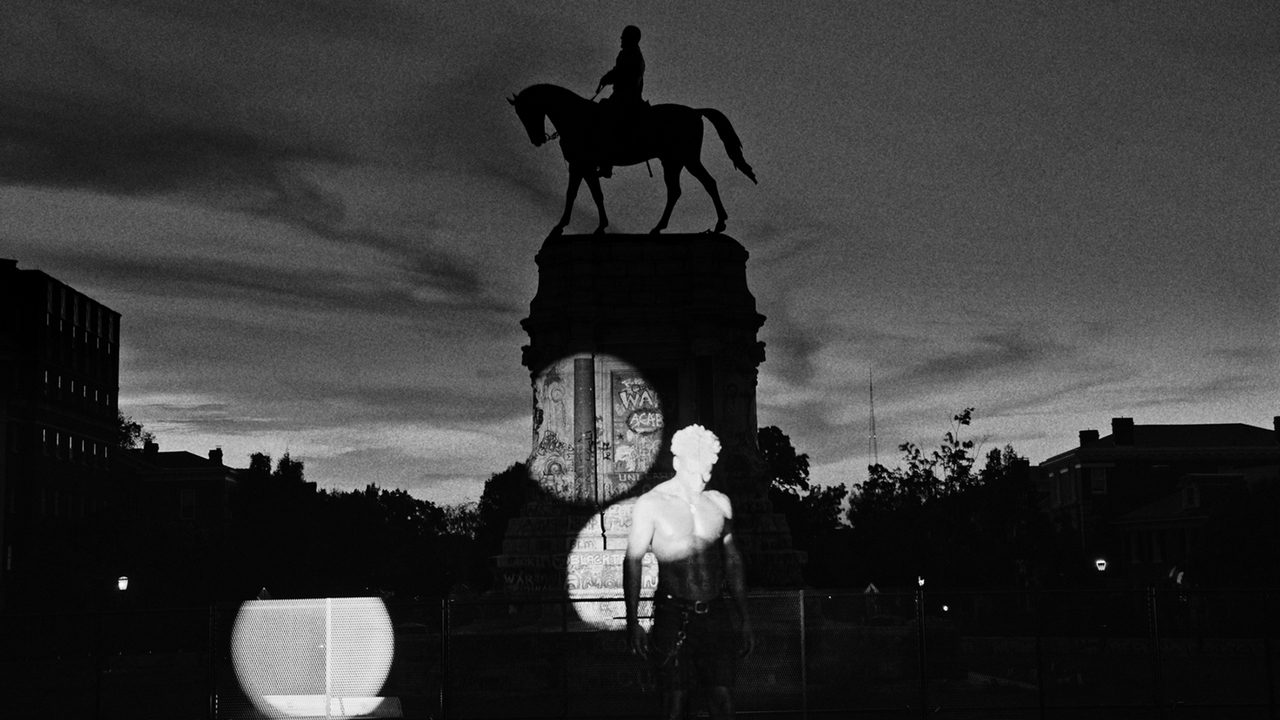
For Pendleton, history is not a static relic but “an endless variation, a machine upon which we can project ourselves and our ideas” . This philosophy is physically manifested in the exhibition’s opening salvo: a monumental black pavilion housing the video work “Toy Soldier (Notes on Robert E. Lee, Richmond, Virginia/Strobe)” (2021–22) .
In a powerful act of visual archaeology, “Toy Soldier” dissects the Robert E. Lee Monument that once stood in Richmond, Virginia—the former Confederate capital. Erected in 1890 and removed in 2021 following the racial justice protests sparked by the murder of George Floyd, the statue represented a century of contested public memory .
Pendleton subjects the fallen icon to stroboscopic fragmentation. The video breaks down the equestrian form, inverting and obscuring its presence until it becomes pure abstraction. The sonic landscape is equally charged, interweaving poet Amiri Baraka’s staccato reading of “Dope” (1980) with Hahn Rowe’s score of strings, woodwinds, and percussion . Here, the monument is not just removed but *deconstructed*—transformed from a symbol of the Lost Cause into raw, unstable data.
The exhibition moves fluidly between scales and media. Following the intensity of the pavilion, Pendleton offers a moment of intimate contemplation with “Untitled” (2026), a small black ceramic painting featuring three floating, silvery orbital forms that demand heightened perceptual awareness .
A significant portion of the exhibition is dedicated to Pendleton’s rigorous studio practice. The show includes a selection of paintings and drawings from his “Black Dada” and “Days” series. Pendleton’s process is unique: he begins on paper, accumulating drips, splatters, inky fragments, and geometric shapes over time. These palimpsests of the studio are then photographed and translated onto black canvas via screen-printing. This method treats painting not as a fixed object, but as “an evolving system of thought and action” .
In one of the building’s large rectangular volumes, visitors will encounter the artist’s most extensive presentation of “Days” drawings to date, arranged in a continuous horizon line that balances visual play with rigorous restraint .
A triangular pavilion houses “Resurrection City Revisited (Who Owns Geometry Anyway?)” (2024–25). The work revisits a pivotal, often overlooked moment in American history: the 1968 encampment of 3,000 A-frame structures on the National Mall in Washington, D.C. Conceived by Martin Luther King Jr. as the culmination of the Poor People’s Campaign, Resurrection City drew attention to economic inequity just weeks after King’s assassination . Pendleton layers archival documentation of the protest city with Baraka reading his poem *I Love Music: For John Coltrane*, intercut with abstract shapes that echo the formal language of his canvases .
Finally, the exhibition concludes with a gesture toward tactile, linguistic abstraction: a group of eight floor-based ceramic sculptures. Derived from a loose visual interpretation of Morse code, these painterly objects push the “universal” language toward pure form. Treating code as both method and material, they explore translation between language and signal, closing the show with spatial intimacy and rhythm .
The Langen Foundation provides a singular backdrop for this meditation. Tadao Ando’s building—a play of light, shadow, reinforced concrete, and glass—was constructed on the grounds of a former NATO rocket base . In dialogue with this architecture, Pendleton argues that abstraction is not an escape from reality but an active, critical mode. It is a way to hold history, politics, and perception in productive tension, “remembering” the past while casting powerful projections toward the future .
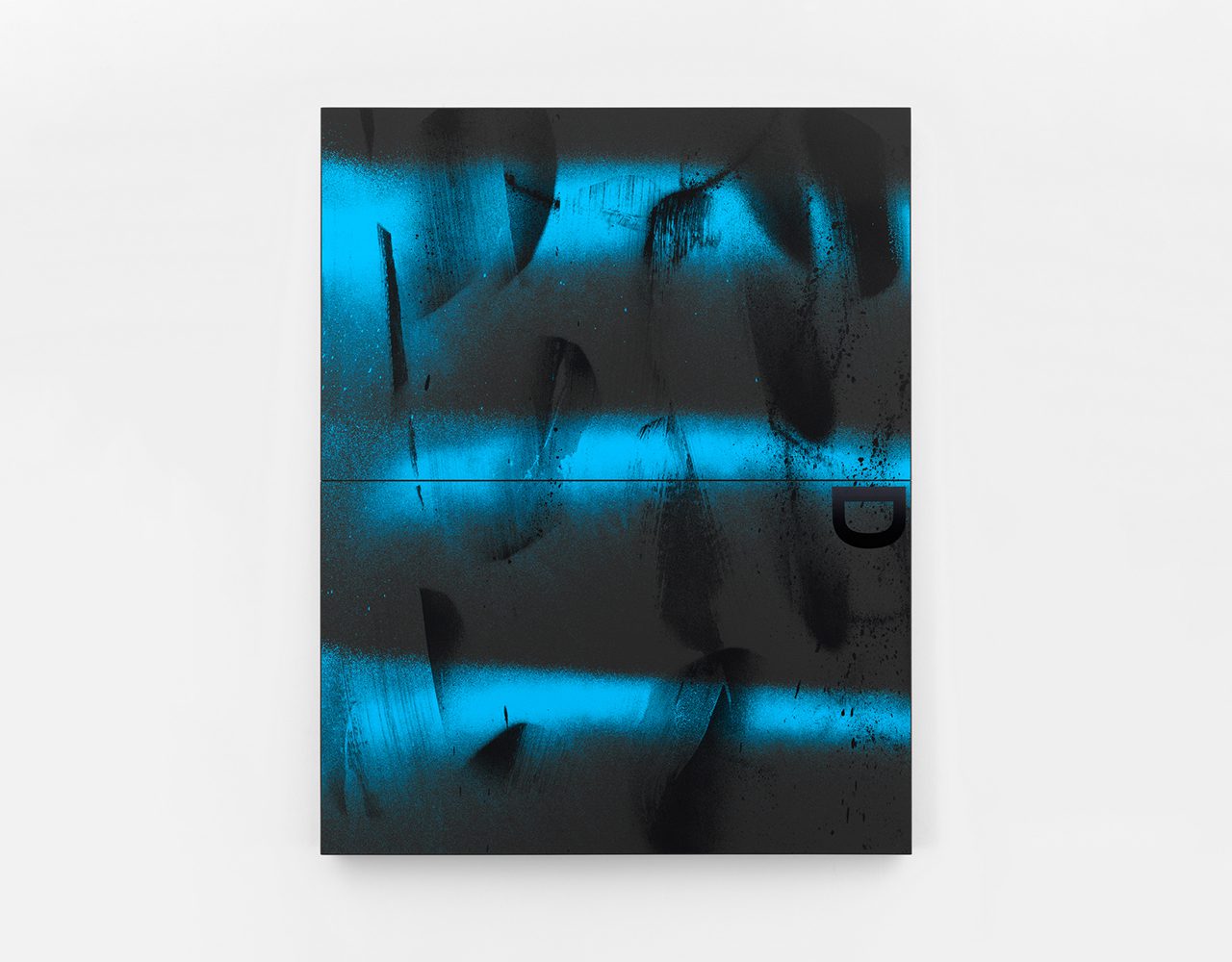
Photo: Adam Pendleton, Black Dada (D), 2025-26, Silkscreen ink and black gesso on canvas, two parts Overall: 60 x 47 ½ in. (152.4 x 120.7 cm) Framed: 63 ⅜ x 50 ⅝ x 3 ⅜ in. (160.7 x 128.6 x 8.6 cm), Courtesy Adam Pendleton Studio
Info: Curator: Nadim Samman, Langen Foundation, Raketenstation Hombroich 1, Neuss, Germany, Duration: 19/4-9/5/2025, Days & Hours: Tue-Sun 10:00-18:00, https://langenfoundation.de/
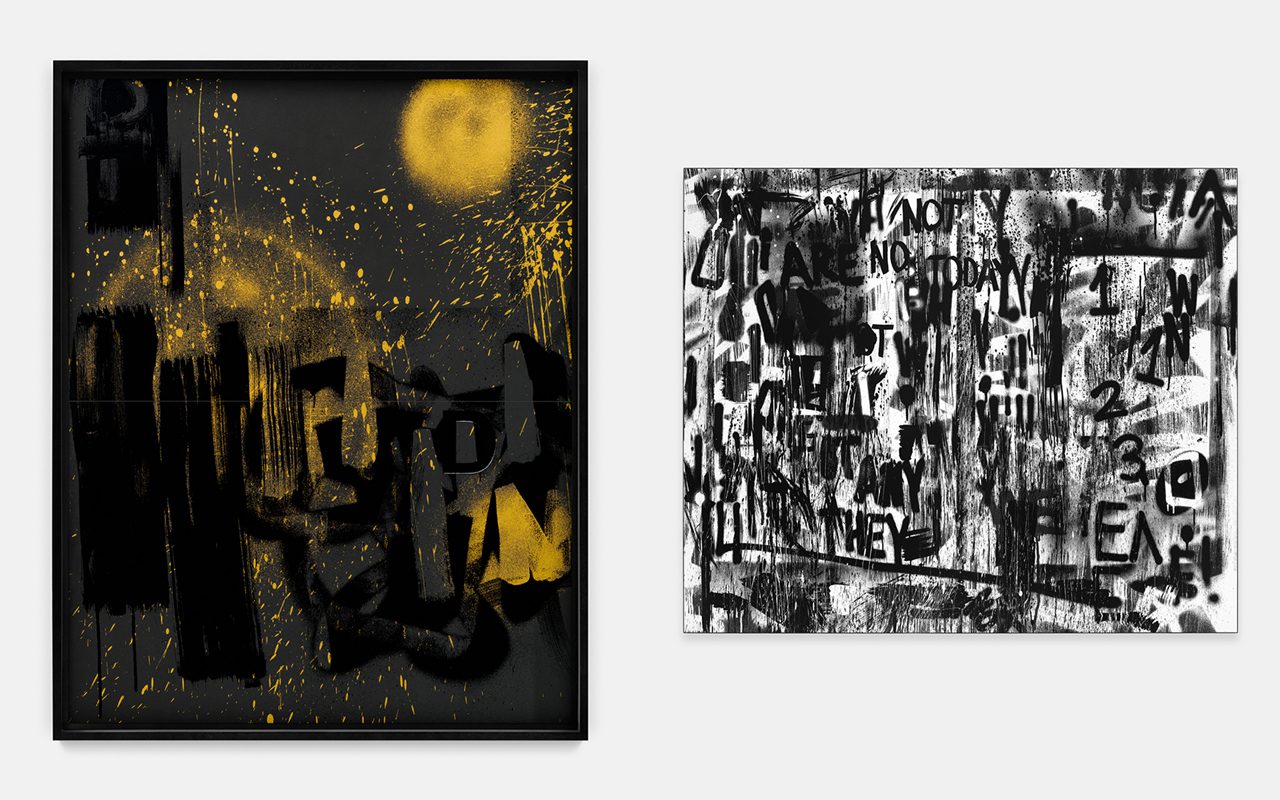
Right: Adam Pendleton, Untitled (Days), 2022, Silkscreen ink and black gesso on canvas 50 x 60 in. (127 x 152.4 cm), Courtesy Adam Pendleton Studio
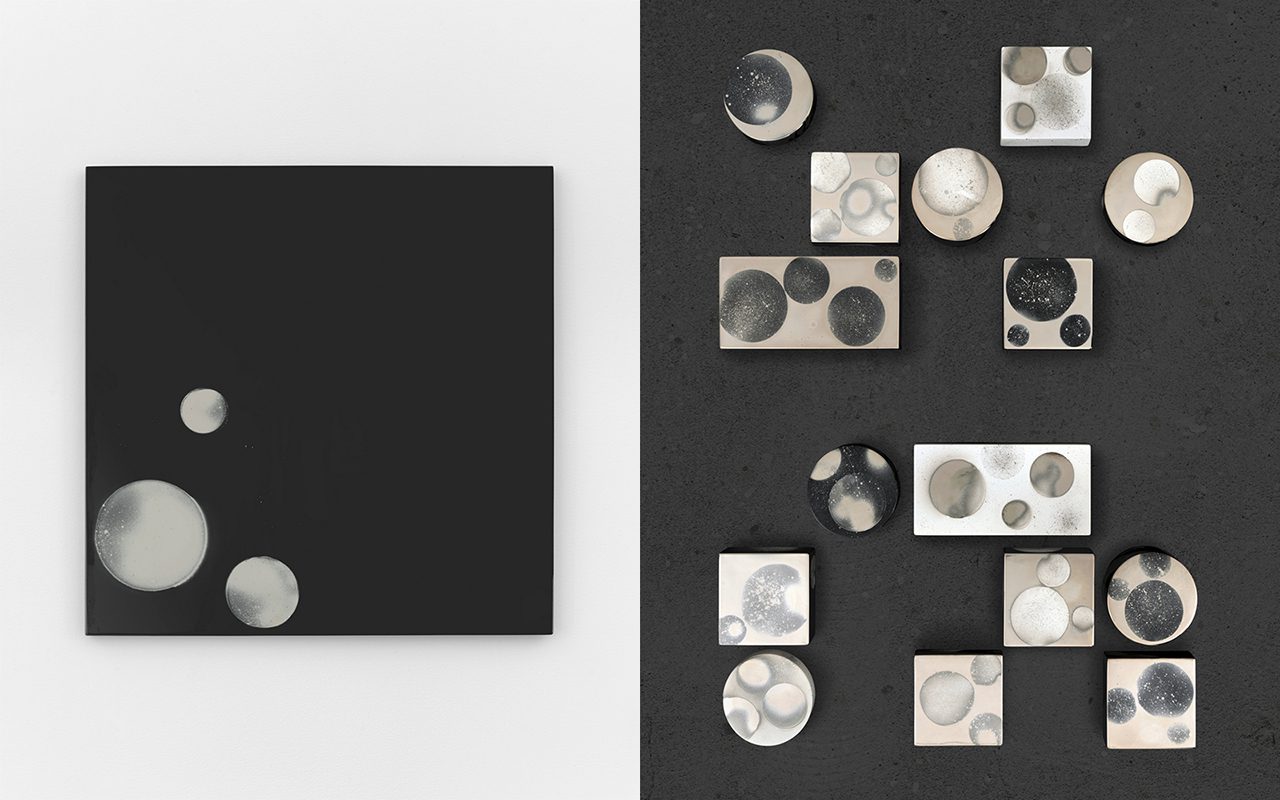
Right: Adam Pendleton, Untitled (Code Poem), 2023, Glazed ceramic (15 parts), 5 ¾ x 36 x 50 in. (14.6 x 91.4 x 127 cm), Courtesy Adam Pendleton Studio
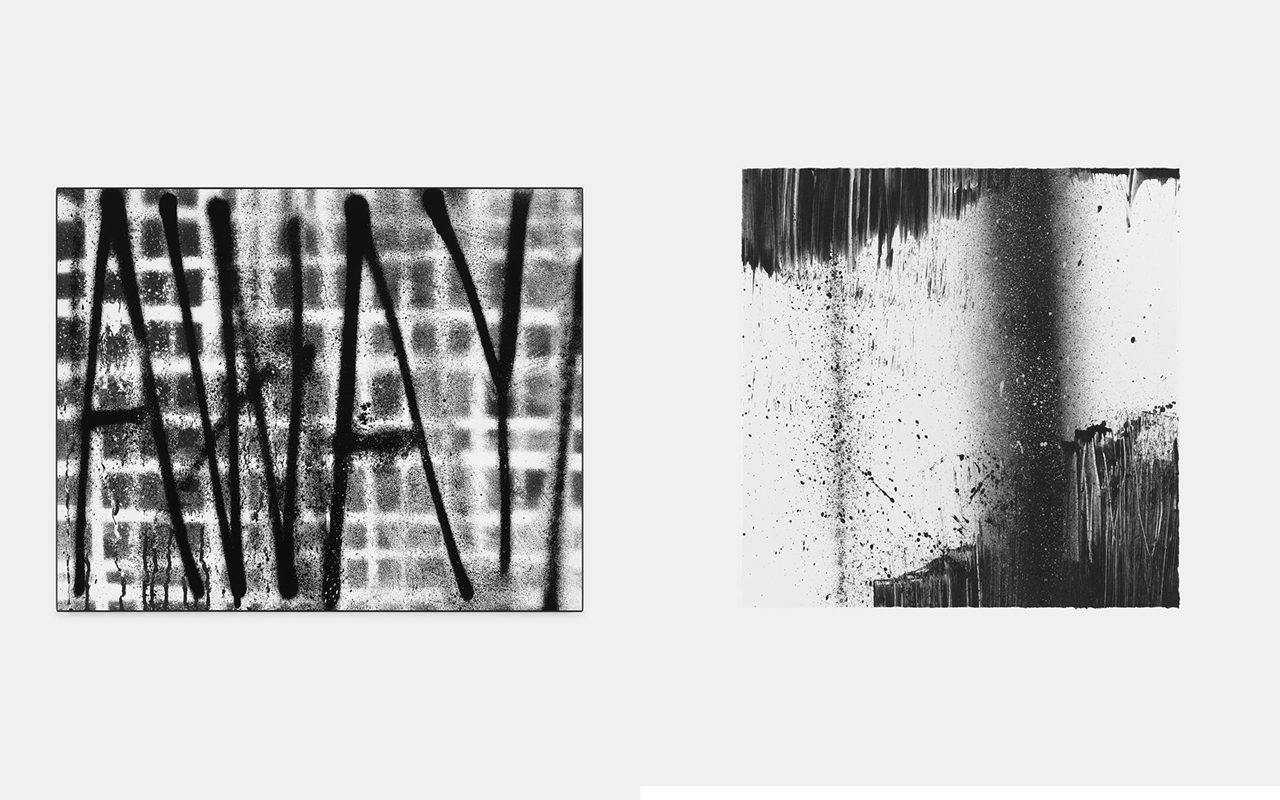
Right: Adam Pendleton, Untitled (days for drawing), 2025, Spray paint and oil on paper 12 x 12 in. (30.5 x 30.5 cm), Framed: 14 ½ x 14 ½ x 1 ½ in. (36.7 x 36.7 x 3.8 cm), Courtesy Adam Pendleton Studio