PRESENTATION: Magdalena Suarez Frimkess
An exhibition in Los Angeles brings renewed attention to the singular practice of Magdalena Suarez Frimkess, presenting a focused selection of ceramic sculptures and works on paper that distill decades of experimentation, cultural memory, and visual play. Organized by artist Shio Kusaka, the exhibition not only surveys Suarez Frimkess’s output but also stages an intergenerational dialogue through newly realized collaborative works between the two artists.
By Efi Michalarou
Photo: David Zwirner Gallery Archive
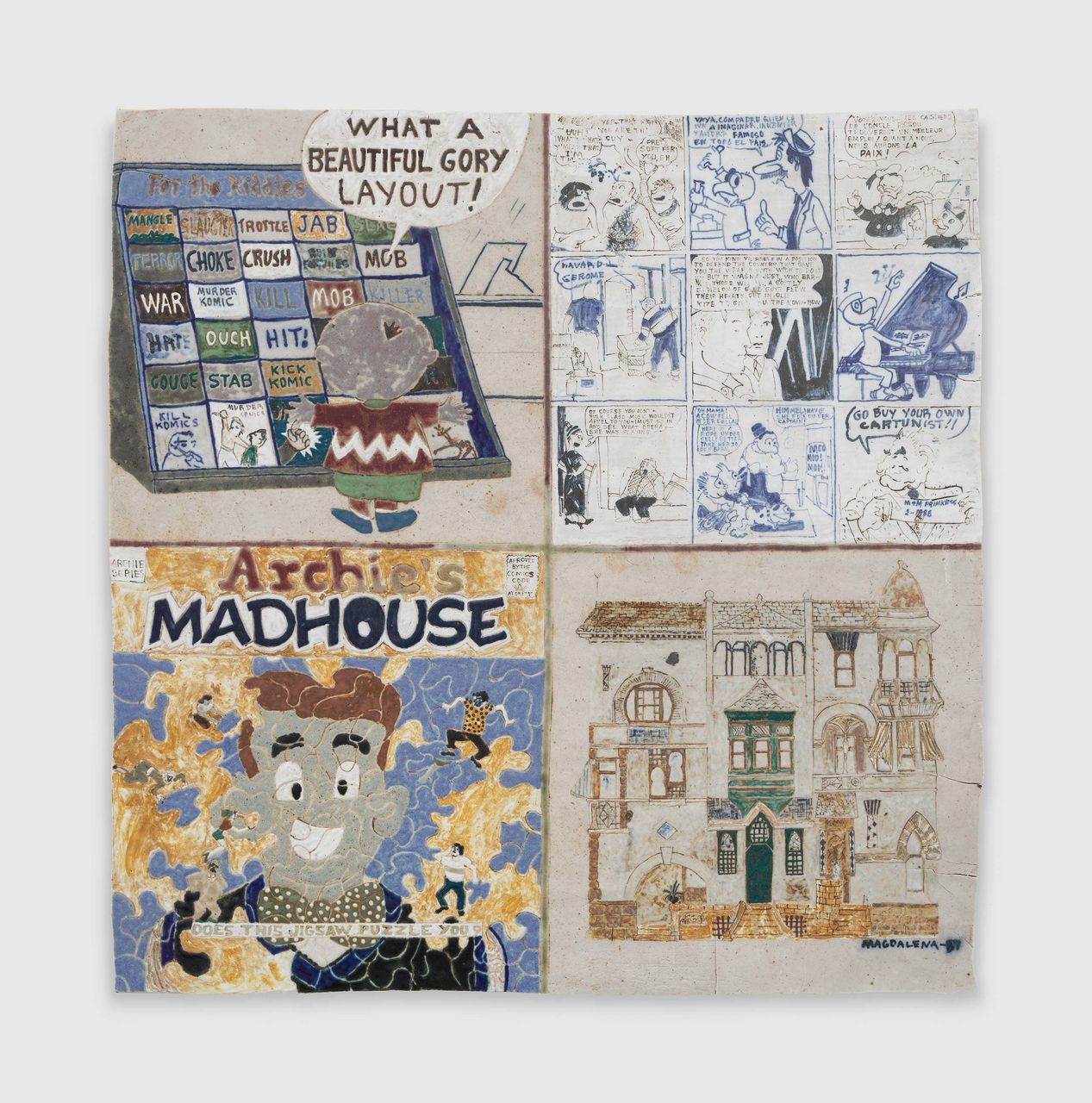
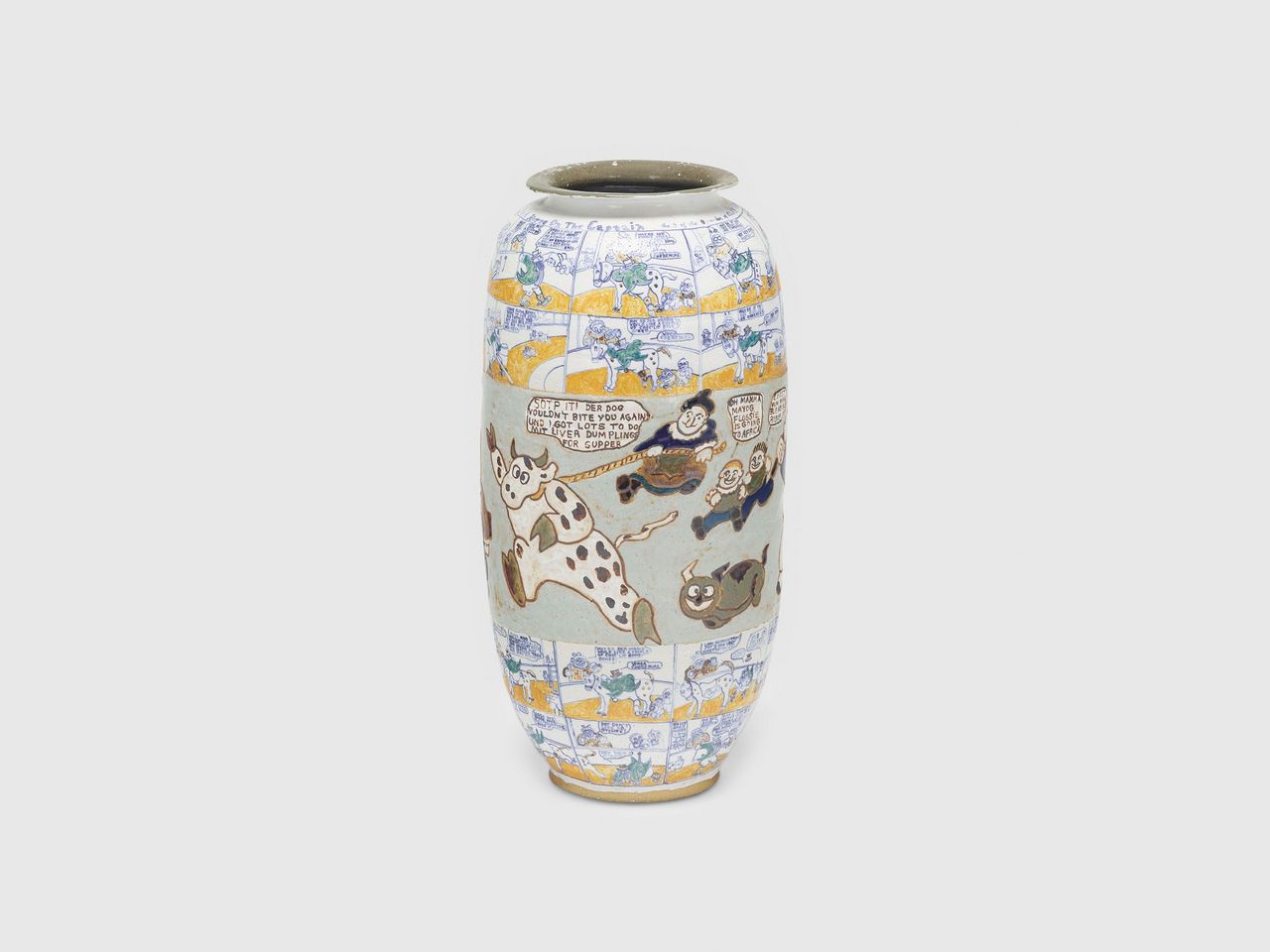
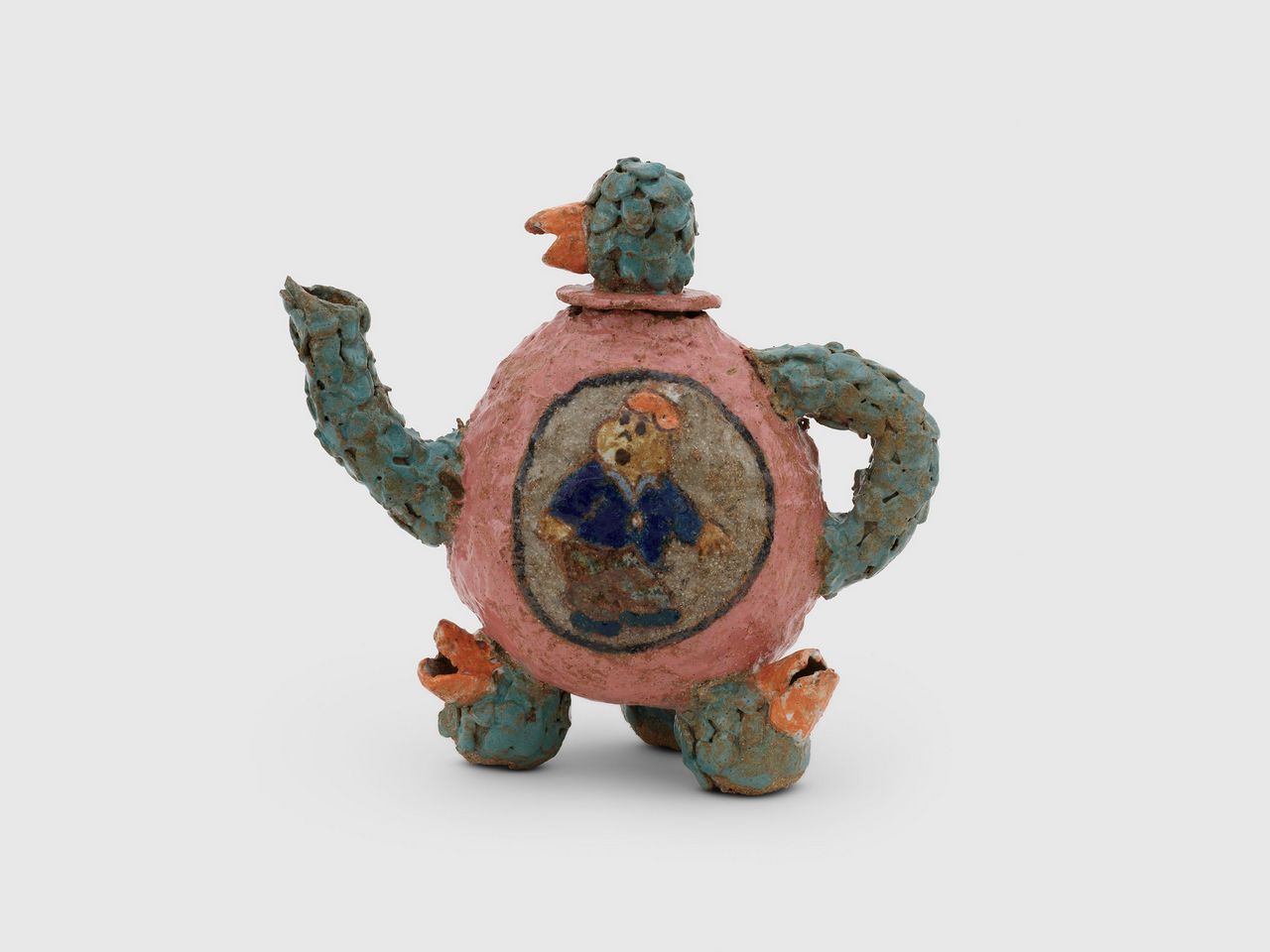
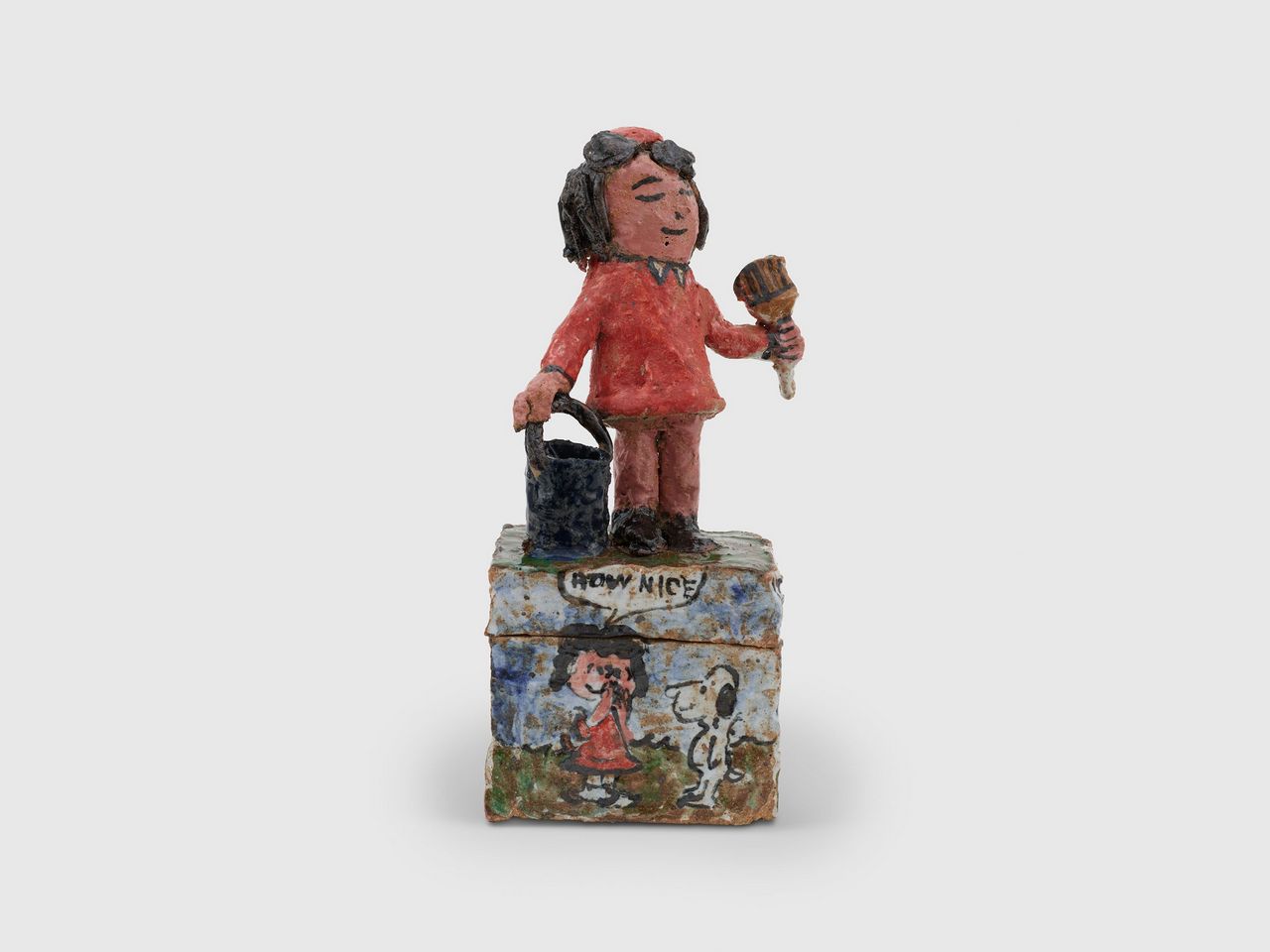
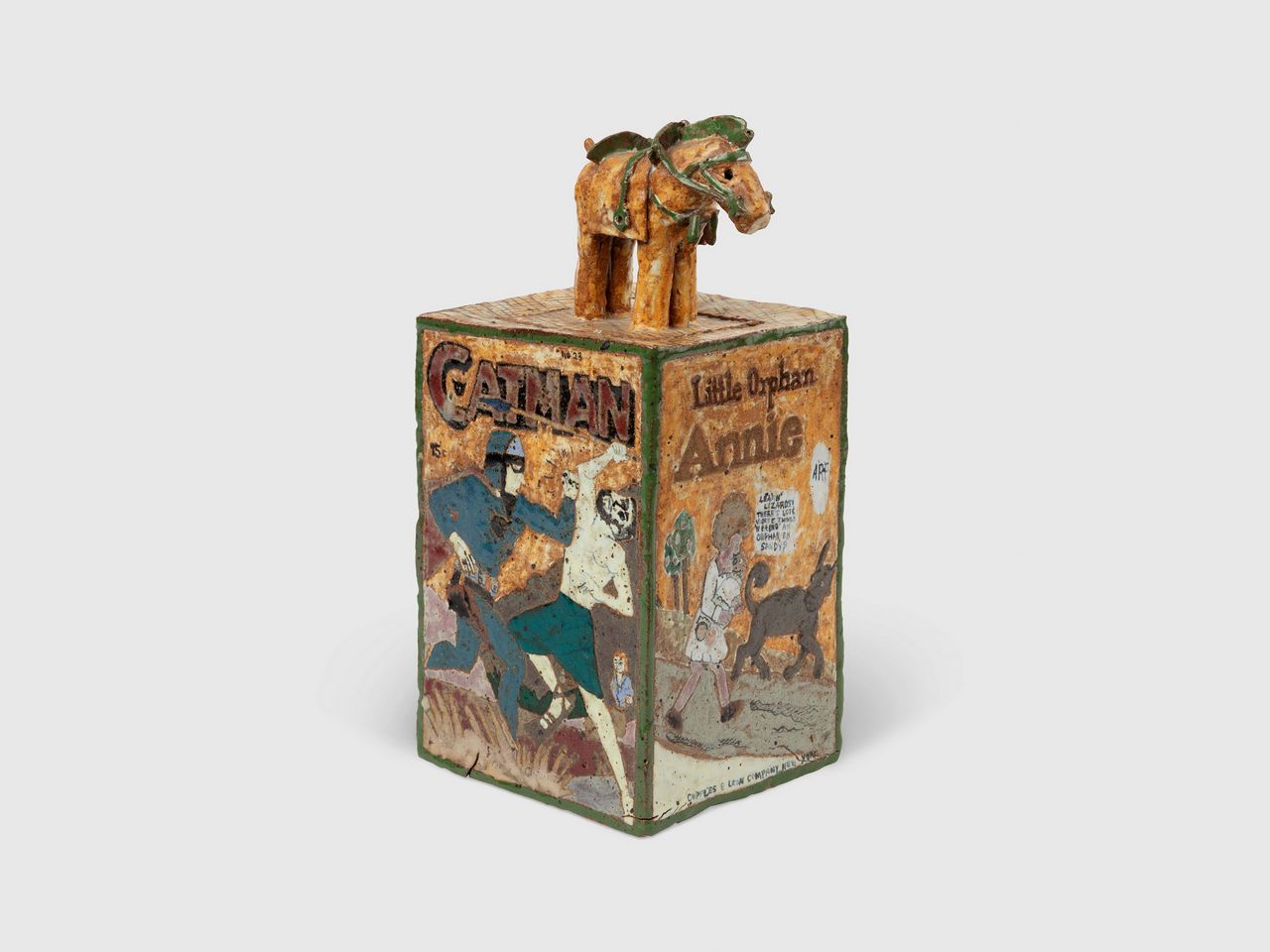
A longtime resident of Venice Beach, Suarez Frimkess has built a distinctive visual language rooted in both high and low culture. Her ceramics frequently incorporate familiar iconography—figures such as Mickey Mouse or the Chilean comic character Condorito*—alongside references to Latin American history, decorative traditions, and her immediate surroundings. The result is a body of work that is at once playful and deeply informed, collapsing boundaries between popular imagery and art-historical form.
Born in Venezuela in 1929, Suarez Frimkess was raised in Caracas, where she spent her childhood in a Catholic orphanage following her mother’s death. Her artistic abilities were recognized early, leading her to enroll at the Escuela de Artes Plásticas de Caracas, where she studied painting and printmaking.
In 1949, she relocated to Santiago to continue her education at the Pontifical Catholic University of Chile. There, she encountered visiting American artists such as Norman K. Carlberg, Paul Harris, and Sewell Sillman, whose teachings emphasized modernist principles of abstraction and color theory. Under their influence, Suarez Frimkess began exploring figurative sculpture and cast-plaster forms—work that Harris would famously describe as among the most daring in Chile at the time.
Her trajectory shifted again in 1962 when she moved to Port Chester to participate in a residency at the Clay Art Center. There she met Michael Frimkess, her lifelong partner and collaborator. The couple eventually settled in Venice Beach in 1971, where they established a studio practice that fused her graphic sensibility with his technical mastery of ceramics.
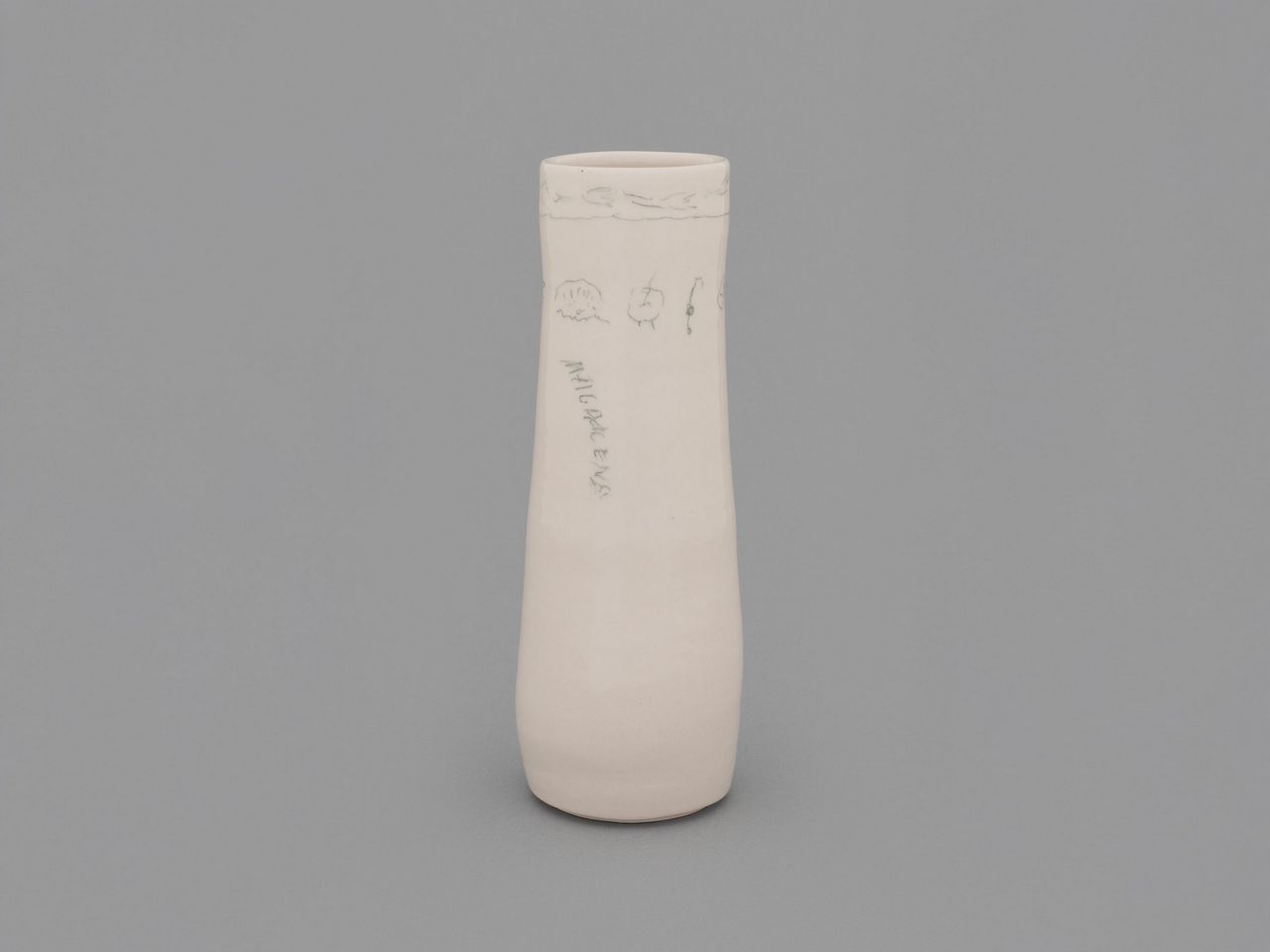
The exhibition foregrounds Suarez Frimkess’s handbuilt ceramics and her prolific drawing practice. Her sculptural works draw on a wide range of sources: botanical motifs such as magnolias and birds of paradise, ancient Mesoamerican art, portraits of figures like Simón Bolívar, and cartoon characters including Felix the Cat and Olive Oyl.
Equally significant are her works on paper. Produced daily, these drawings function simultaneously as preparatory studies and autonomous artworks. They reveal the centrality of line in her practice—fluid, confident, and often accompanied by inscriptions that underscore her intuitive approach to image-making.
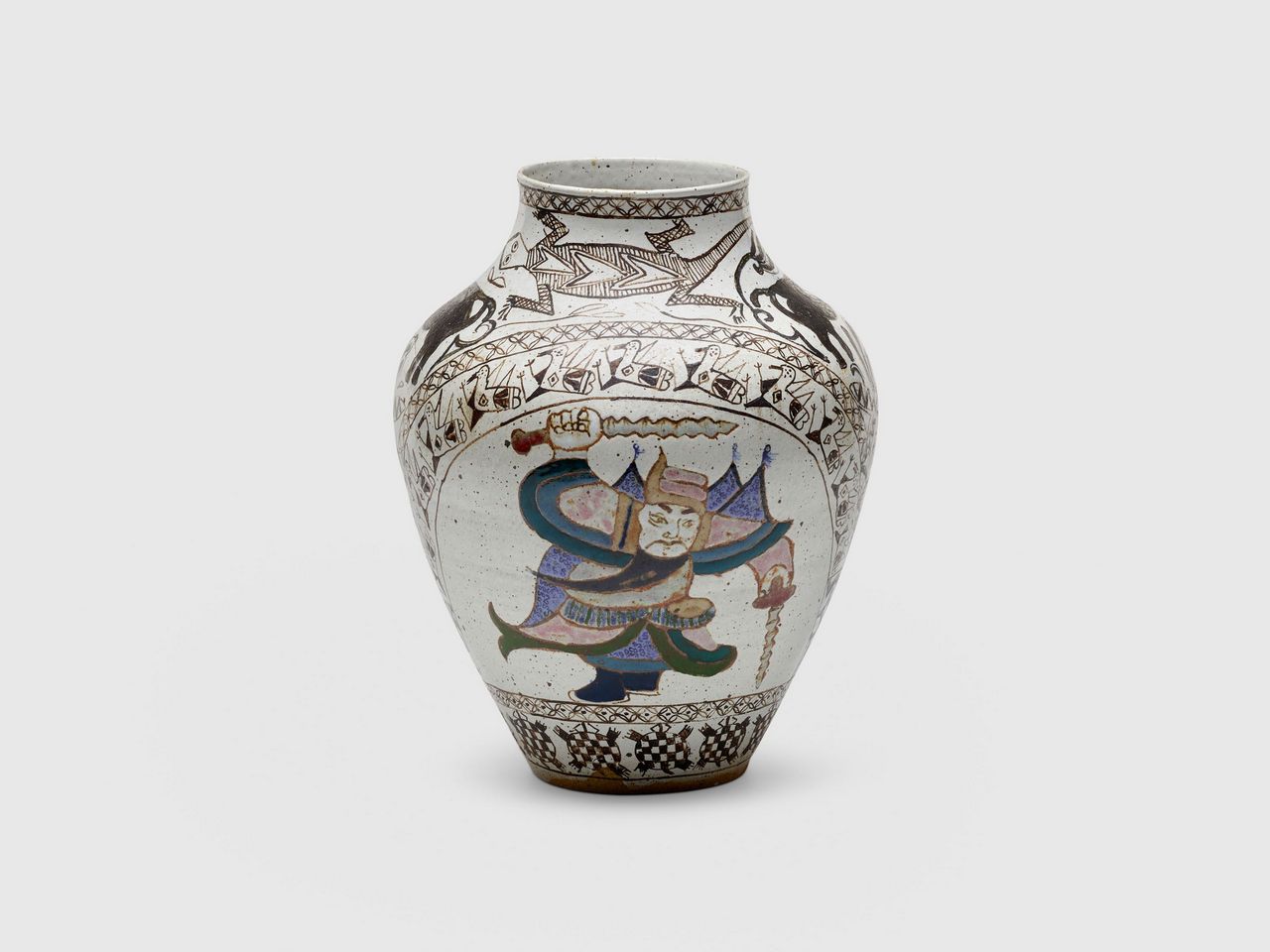
The collaborative works with Michael Frimkess demonstrate a productive tension: his wheel-thrown vessels, informed by classical forms such as Greek kraters and Chinese ginger jars, serve as a structured ground for her spontaneous, irreverent mark-making. This interplay between discipline and improvisation defines much of their shared output.
Kusaka’s role in this exhibition extends beyond that of curator. Known for her refined installation strategies, she arranges Suarez Frimkess’s works along a continuous pedestal, encouraging viewers to read them both individually and as part of a broader visual narrative. Her approach highlights the coherence of Suarez Frimkess’s line across disparate forms and subjects.
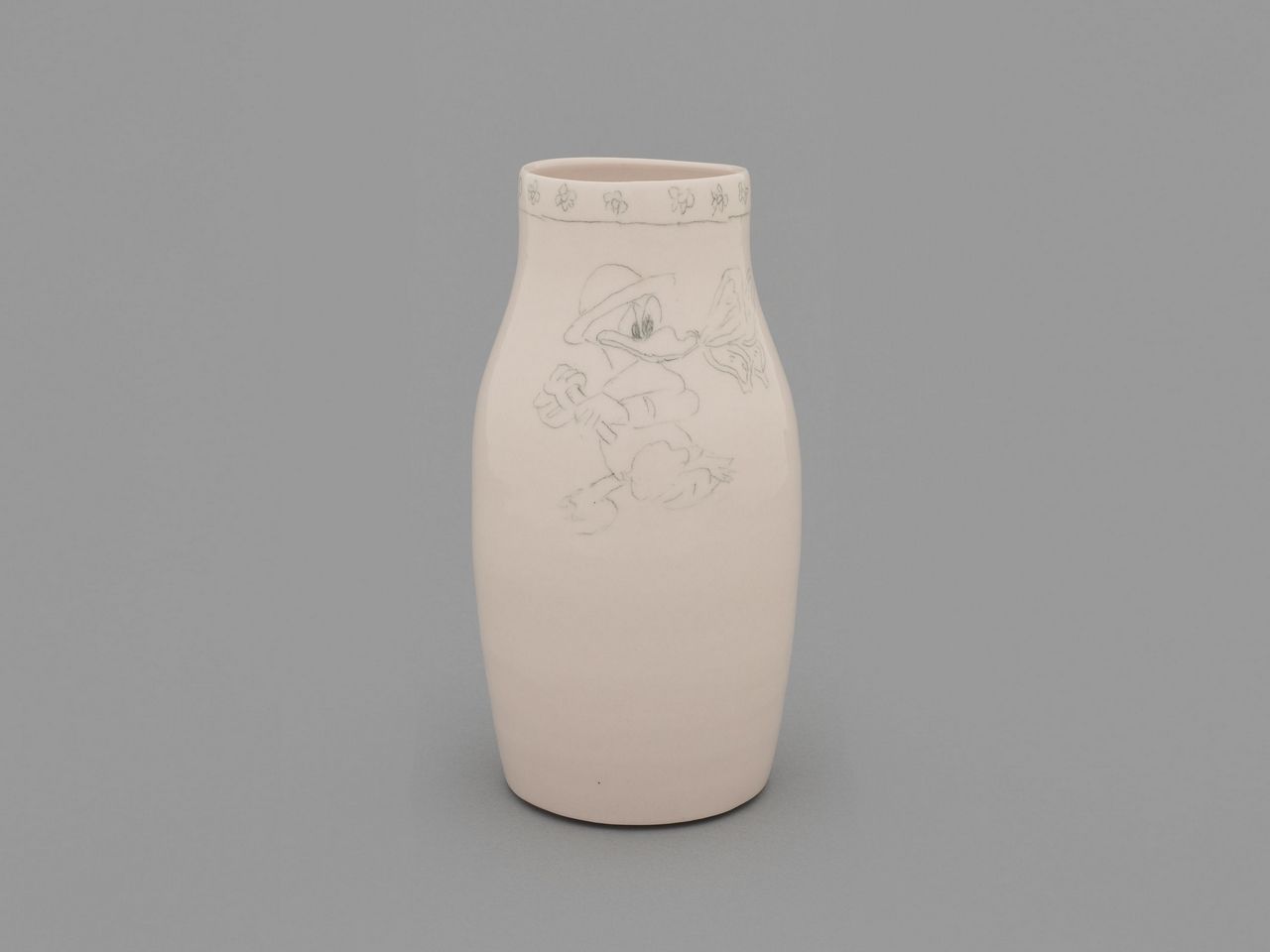
Their collaboration also carries a practical and symbolic dimension. When Suarez Frimkess was no longer able to produce ceramic forms herself, Kusaka stepped in to create vessels for her to draw upon. Using underglaze pencil, Suarez Frimkess continues to inscribe her imagery onto these surfaces—an adaptation that preserves the immediacy of her hand while introducing a new layer of artistic dialogue.
Although long respected within certain artistic circles, Suarez Frimkess’s work has gained broader recognition in recent years. Kusaka first encountered her work in Los Angeles in 2012, and subsequent exhibitions—such as “GRAPEVINE~” at David Kordansky Gallery—situated her within a lineage of California ceramicists including John Mason, Ron Nagle, and Peter Shire.
Support from contemporary artists like Jonas Wood and Mark Grotjahn has further amplified her visibility. In 2024, a major survey titled The Finest Disregard at the Los Angeles County Museum of Art cemented her position within the broader narrative of modern and contemporary ceramics.
This Los Angeles exhibition underscores the enduring vitality of Magdalena Suarez Frimkess’s practice. Through ceramics and drawings that bridge continents, traditions, and visual registers, her work resists easy categorization. Kusaka’s thoughtful presentation—and their collaborative exchange—ensures that Suarez Frimkess’s voice continues to evolve, even as it remains rooted in the unmistakable clarity of her line.
*Condorito (Little Condor) is a Chilean comic book and comic strip series that features an anthropomorphic condor living in a fictitious town named Pelotillehue, a typical small Chilean provincial town. He is meant to be a representation of the Chilean people.
Photo: Magdalena Suarez Frimkess and Michael Frimkess, Untitled, 1986, Glazed stoneware, 22 1/2 x 10 1/2 x 10 1/2 inches (57.1 x 26.7 x 26.7 cm), Initialed, Courtezy David Zwirner Gallery
Info: Info: Curator: Shio Kusaka, David Zwirner Gallery, 606 N Western Avenue, Los Angeles, CA, USA, Duration: 11/4-22/5/2026, Days & Hours: Tue-Sat 10:00-18:00, www.davidzwirner.com/
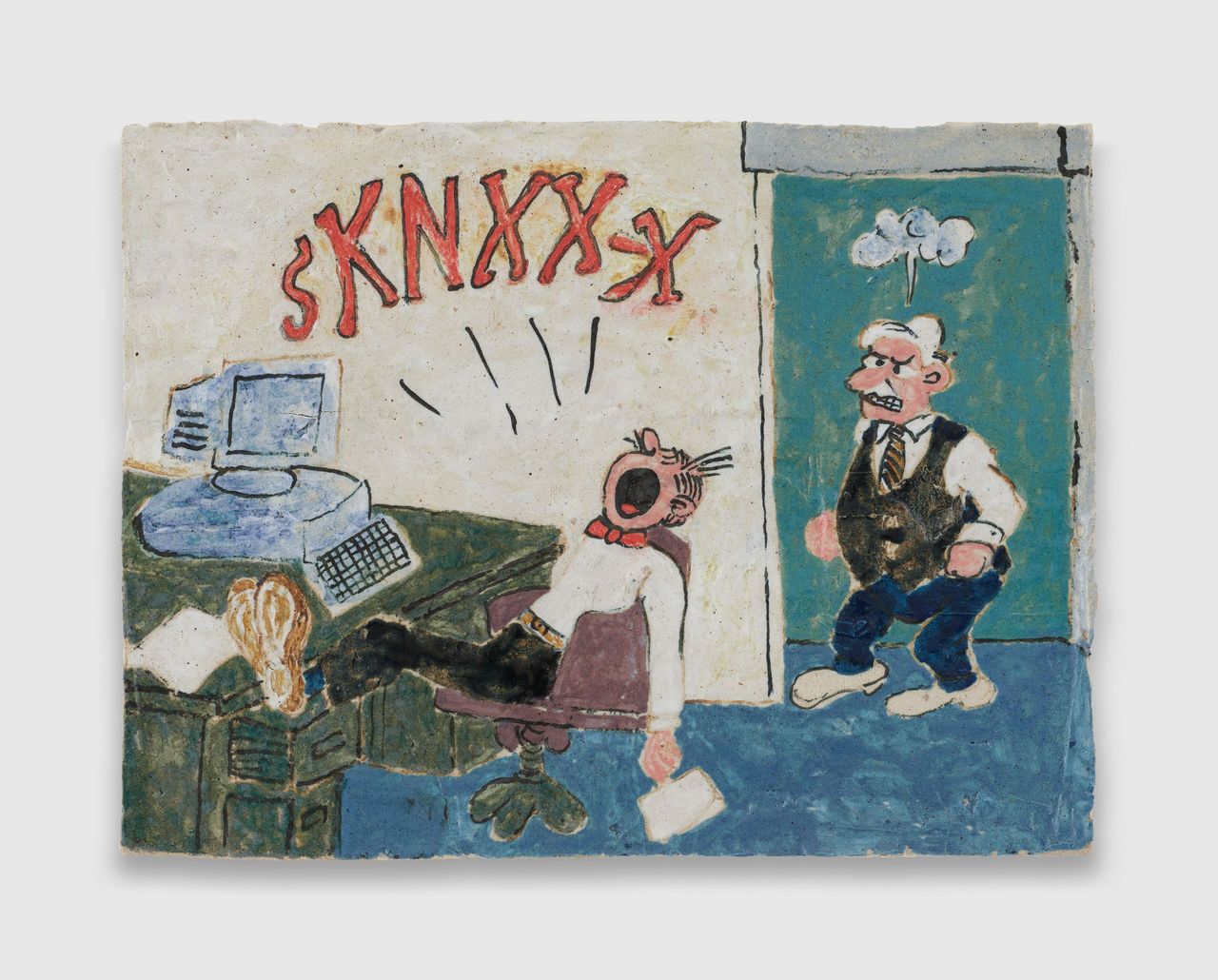
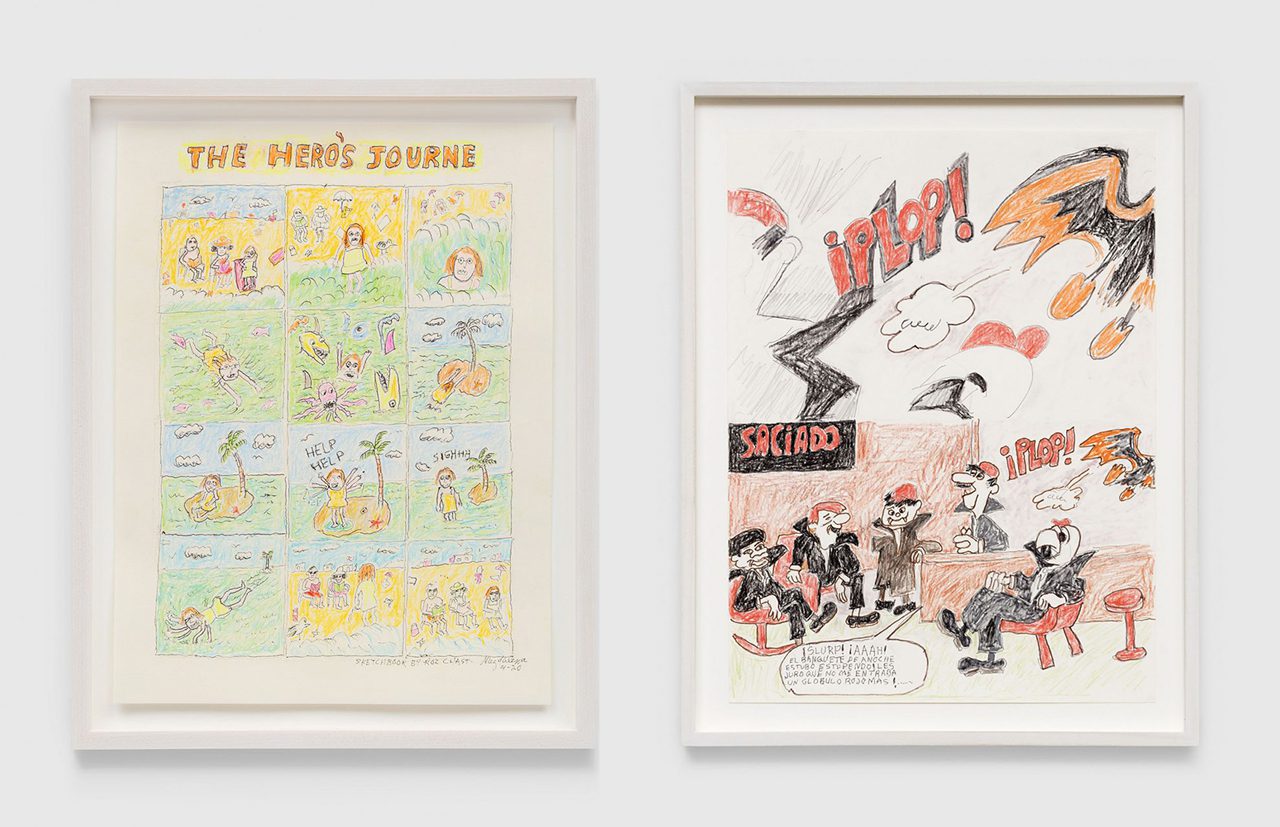
Right: Magdalena Suarez Frimkess, Untitled, 2017, Colored pencil, pen, marker, and graphite on paper15 3/4 x 11 3/4 inches (40 x 30 cm), Framed: 18 1/4 x 14 1/4 inches (46.4 x 36.2 cm), Courtezy David Zwirner Gallery