OPEN CALL: Curating, mediating, producing: the three strategic profiles of IED’s Art Master’s programs
 IED Firenze strengthens its advanced training in contemporary art with a set of Master’s programs designed to prepare new cultural professionals who can navigate, interpret, and actively shape today’s art ecosystem. In a field where it is no longer enough to simply “take part” in the processes, the programs emphasize critical thinking, practical competence, and hybrid profiles able to move between different roles, institutions, and production contexts.
The offer is structured around three main areas—Curatorial Practice, Museum Education, and Arts Management—each reflecting a distinct professional pathway while remaining deeply interconnected. Across all programs, students work on real projects and engage in ongoing dialogue with artists, curators, institutions, and cultural producers. This proximity to professional environments helps them understand how contemporary cultural work is built: from research and conceptual development to production, communication, and audience engagement.
Master’s in Curatorial Practice
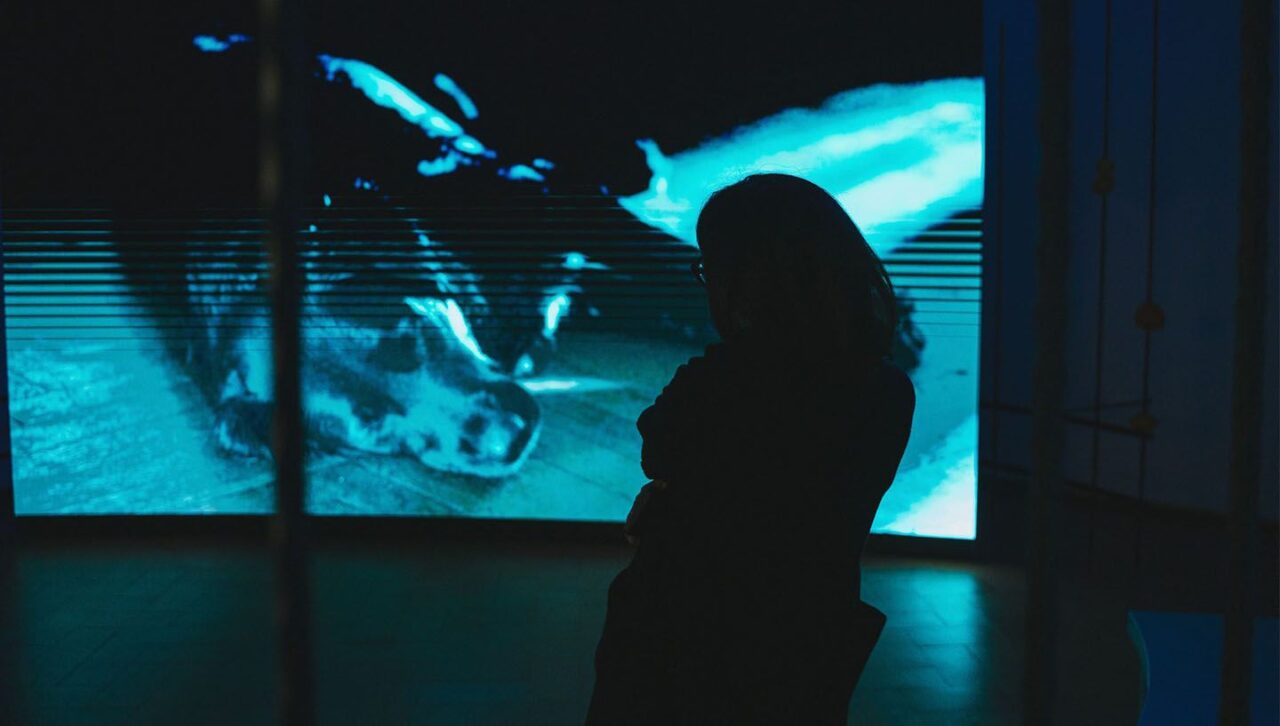
The Master’s in Curatorial Practice focuses on the curator as a producer of knowledge, rather than merely an organizer of exhibitions. Curating is treated as a critical tool for constructing narratives and creating meaning, capable of connecting artworks, spaces, and publics. A recent final project, Bones of Tomorrow, developed as a complex exhibition built around a reflection on time and its fractures. The show—an institutional solo presentation in Italy for Georgian artist Andro Eradze—was hosted between Fondazione Palazzo Strozzi’s Project Space and the former Teatro dell’Oriuolo, now home to IED Florence. Guided by Arturo Galansino and Daria Filardo, the project involved the class directly, allowing students to experience the full curatorial workflow, from research and concept definition to production and installation across multiple venues.
Master’s in Museum Education
At the core of the Master’s in Museum Education is mediation: the design of new narrative devices capable of activating relationships between artworks, audiences, and communities. Museum education is framed as a creative and strategic practice that can extend beyond the physical space of the museum and experiment with new formats. The final project Dominae took the form of a podcast series conceived as a sonic extension of an exhibition hosted at Museo Sant’Orsola. Working with archives, testimonies, and contemporary voices, the students brought forgotten women’s stories back into the public realm, demonstrating how museum education can operate in transmedia and participatory territories, where storytelling becomes a tool for inclusion and collective memory.
Master’s in Arts Management
The Master’s in Arts Management is oriented toward the organizational and production infrastructure of cultural projects. It trains professionals to work across project management, communication, fundraising, and event coordination—skills that are increasingly essential to sustain cultural initiatives and translate ideas into public experiences. In a recent final project, students contributed to the realization of the Videocittà Awards, a prize dedicated to audiovisual art promoted by Videocittà and hosted at the Palazzo dei Congressi. The experience offered an inside look at how large-scale cultural events are financed, planned, communicated, and delivered, highlighting the managerial expertise required to support artistic production in contemporary contexts.
Beyond the Master’s programs, IED Florence continues to expand its arts education portfolio through summer courses and the launch of a new three-year program in Illustration. Together, these pathways outline a training strategy that views the art system as a complex, evolving ecosystem—one that requires professionals able not only to interpret the present, but also to build the cultural infrastructures of the future.