PRESENTATION: Keith Mayerson-My American Dream (Rocky Mountain High)
In the vast, chaotic sprawl of contemporary painting, where irony often overshadows intimacy, the work of Keith Mayerson stands as a radical act of sincerity. For over two decades, the Cincinnati-born, Riverside-based artist has constructed an expansive visual cosmology that refuses to distinguish between the personal snapshot and the political icon. From the Muppets to gay activists, from the sublime vistas of national parks to the quiet interiors of family life, Mayerson paints a portrait of a nation that is as fractured as it is hopeful.
By Dimitris Lempesis
Photo: Aspen Art Museum Archive
As a major new chapter of Keith Mayerson’s lifelong project, “My American Dream (Rocky Mountain High)”, opens at the Aspen Art Museum we look back at the unique alchemy of semiotics, psychology, and painterly devotion that defines one of America’s most distinctive voices . Mayerson’s practice is informed by a seemingly paradoxical duality: a rigorous academic background in semiotics at Brown University and a lifelong affection for the “low” art of cartooning . Where a strict postmodernist might deconstruct an image to the point of cynicism, Mayerson reconstructs it with affection.
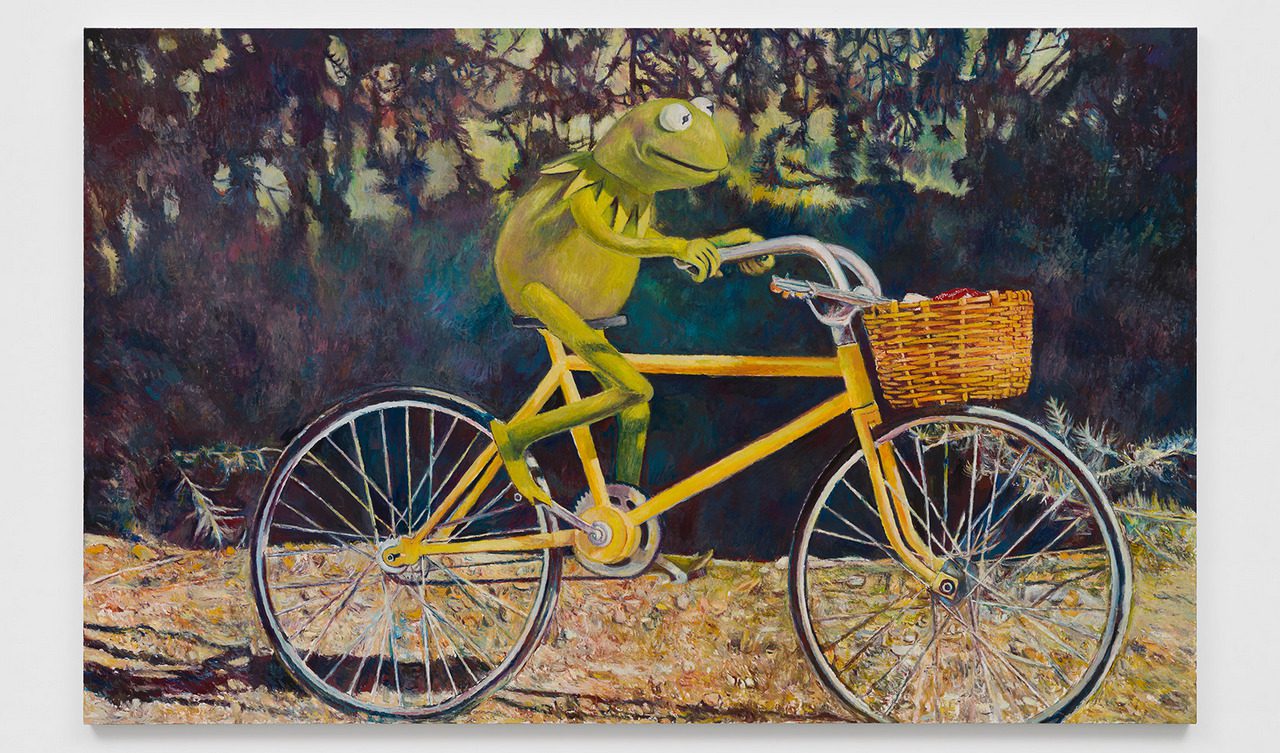
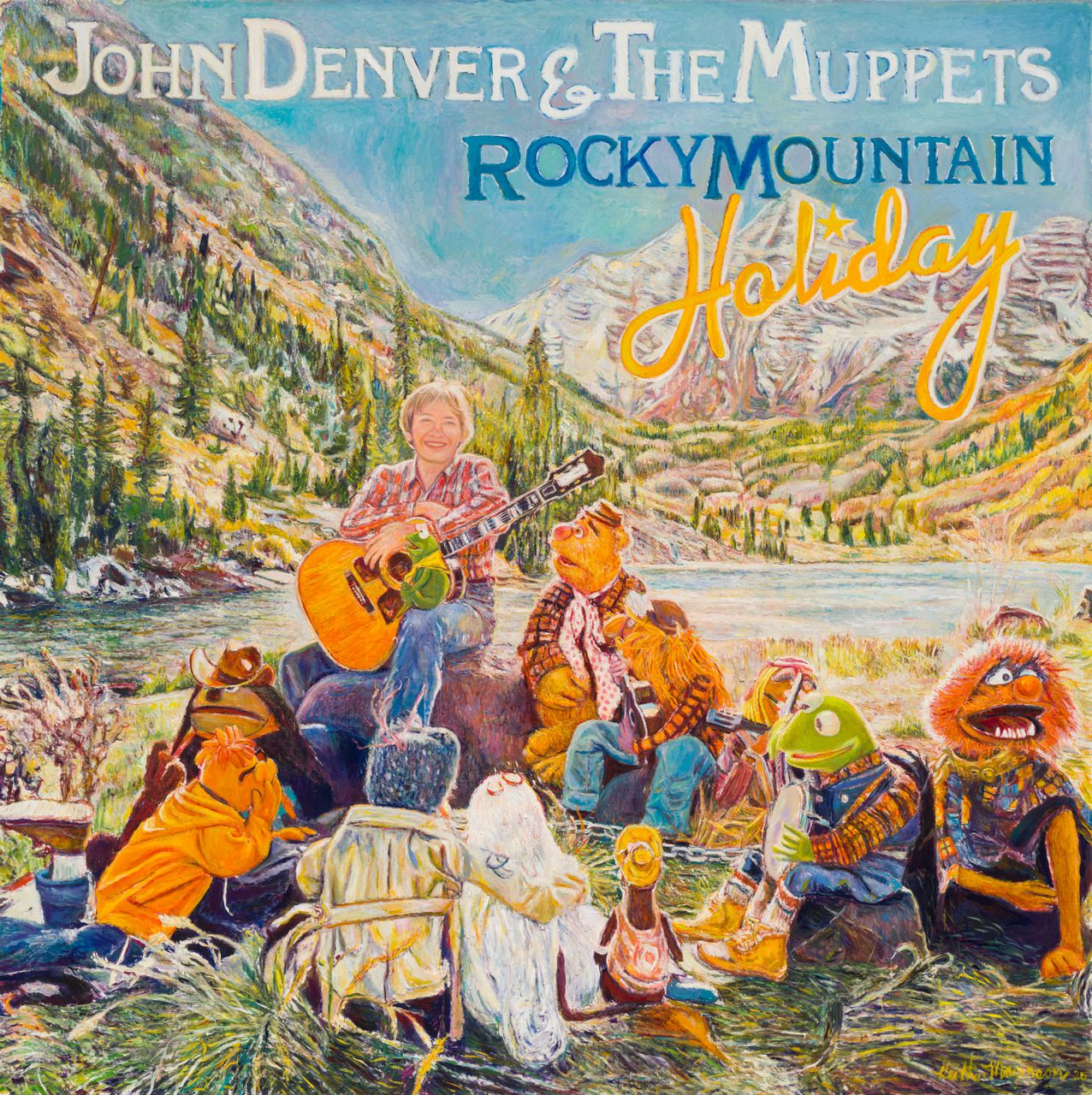
He mines the cultural resonance of his subjects—be it Jim Henson’s diverse cast of monsters or Billie Jean King’s athletic triumph—and transforms them into allegories of resilience . For Mayerson, the Muppets are not just childhood nostalgia; they are a cipher for queerness and a celebration of deviation from the norm. Likewise, a portrait of John Denver serenading those same Muppets at the base of Aspen’s Maroon Bells is not kitsch, but a genuine exploration of 1970s utopian idealism .
To categorize Mayerson strictly as a representational painter would be to miss the point. His brushwork is meditative, channeling the ghosts of art history—the light of the French Impressionists, the structure of American Modernists, and the grandiosity of the Hudson River School .
Yet, his process is distinctly modern. Mayerson approaches a painting like a method actor. While he works, he immerses himself in media related to his subject, allowing his subconscious to take over. This results in a practice that is simultaneously research-heavy and psychologically raw. As Roberta Smith once noted, each of his paintings stands alone as a painted image, yet functions as a single panel in a larger, non-linear graphic novel . This is the logic of a comic book artist applied to the language of high art, a synthesis he has cultivated during his tenure as a professor at USC’s Roski School of Art and Design .
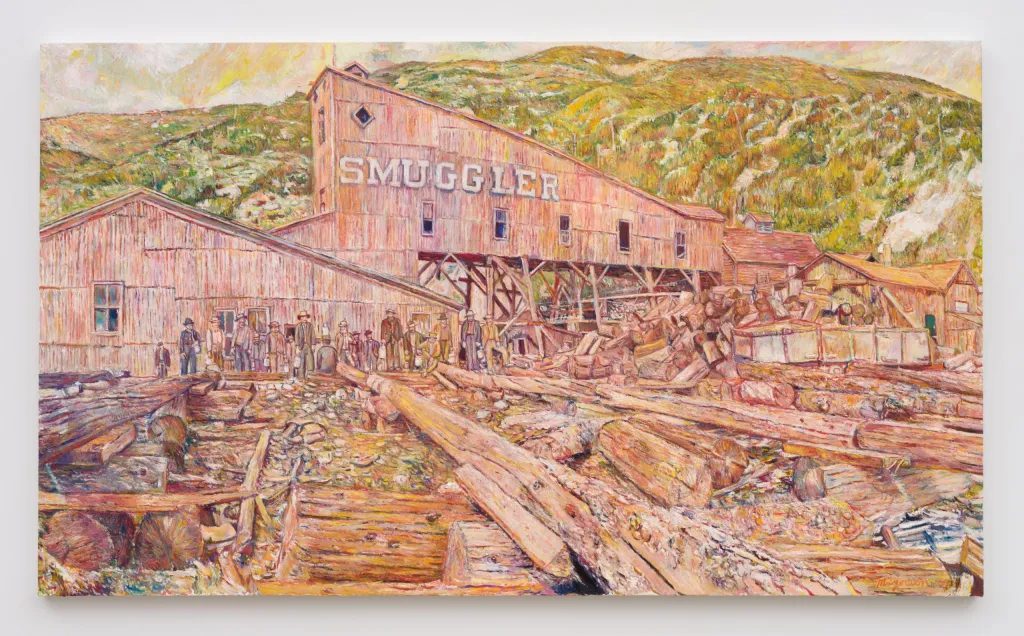
The Aspen exhibition serves as the latest verse in this ongoing narrative. For Mayerson, who grew up in 1970s suburban Denver, the mountains of Colorado represent a foundational mythology. Titled after the John Denver anthem, *My American Dream (Rocky Mountain High)* pays tribute to the “Aspen Idea”—the post-war concept of uniting mind, body, and spirit for collective betterment .
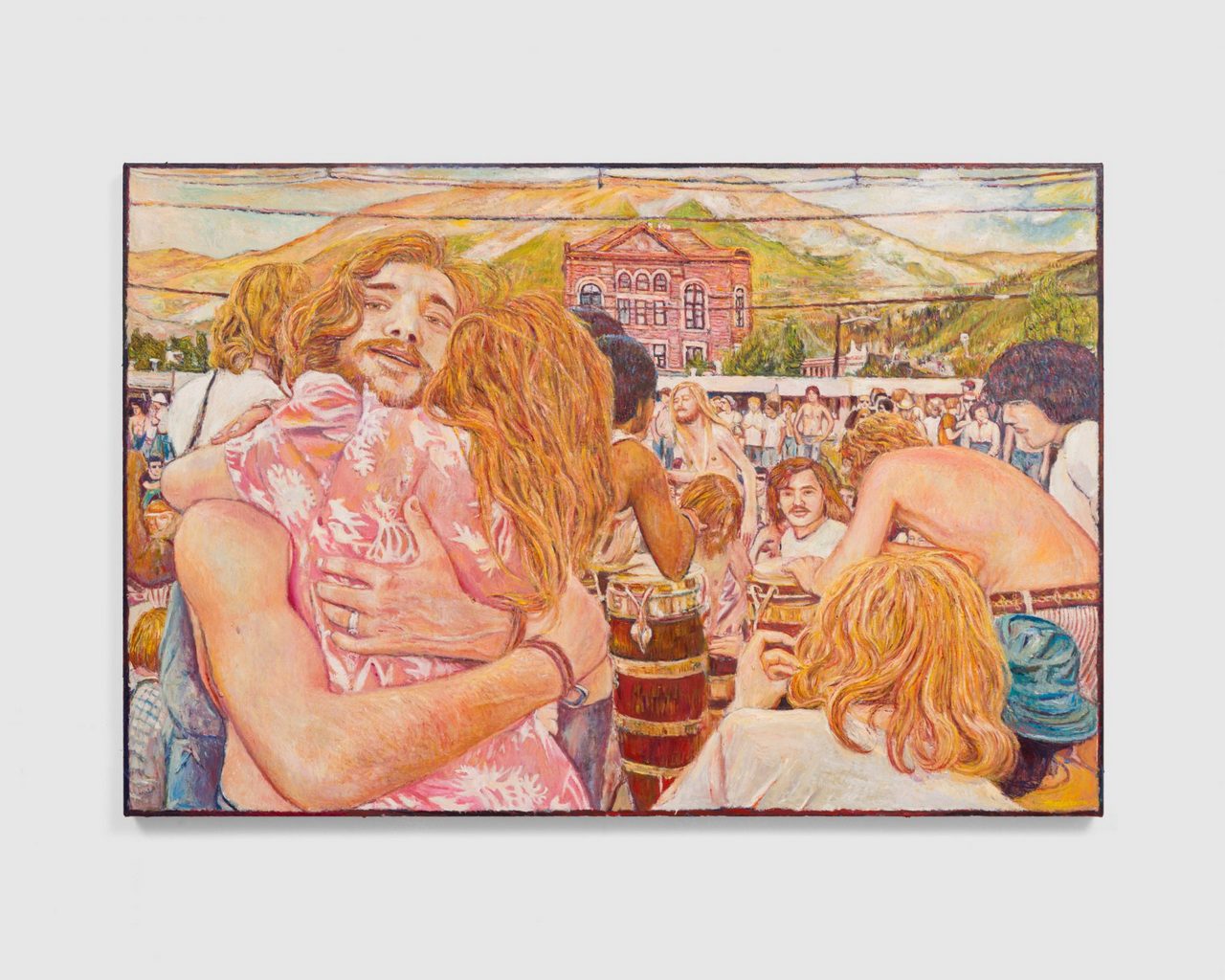
The gallery becomes a time machine. One canvas depicts long-haired youths lounging in front of the Jerome Hotel, a direct appropriation of a 1971 Henri Cartier-Bresson photograph . Another features the Grateful Dead playing their inaugural show at Red Rocks, while elsewhere, Charlie Brown and the Peanuts gang ice skate under a galactic canopy.
Mayerson acts as an archivist of analog memory. He paints directly from his own photographs shot from the tops of Aspen’s ski mountains, transforming the snowy peaks into majestic, sublime landscapes. These works offer an antidote to a world inundated with digital images; they are analog moments long ago erased, rendered vivid again through polychromatic brushstrokes .
While “Rocky Mountain High” focuses on a specific geographic locale, it echoes the broader themes of Mayerson’s 2024 Los Angeles exhibition, *City of Angels*. There, he juxtaposed portraits of Cheech and Chong with harrowing depictions of climate change in Joshua Tree, concluding with UFO sightings over the desert .
Whether looking at a ski slope in Aspen or a “Gimbal UFO” off the coast of California, Mayerson is searching for the same thing: the sublime. He uses a technique he calls “micro-management,” painting each pixel of a source photograph as if it were a real entity, giving his landscapes a hallucinatory, vibrating quality .
Now living in Riverside, California, Mayerson remains a tenured professor and a relentless creator. His work resides in the permanent collections of the Whitney Museum, MoMA, and the Lucas Museum of Narrative Art . Yet, his influence is perhaps felt most strongly in his insistence that painting can still matter—that it can still be a vehicle for “truth, justice, and the American Way,” to borrow the Superman ethos that peppers his work .
In a political climate often defined by division, Keith Mayerson insists on looking at America through a lens of wistful complexity. He sees the flaws, the violence, and the kitsch, but he paints the hope. *My American Dream* is not a history lesson; it is an emotional geography of a nation trying to find itself.
*Hudson River School was a loosely organized group of mid–19th century Americans shared an interest in landscape painting. Not limited to depicting New York’s Hudson River Valley, they traveled and painted throughout the US, South America, and Europe. Works by second-generation artists expanded to include other locales in New England, the Maritimes, the Western United States, and South America.
Photo: Keith Mayerson, John Denver and the Muppets: Rocky Mountain Holiday, 2025, 2025, Oil on linen 70 × 70 in, © & Coourtesy Keith Mayerson
Info: Curators: mone Krug and Daniel Merritt, Aspen Art Museum, 637 East Hyman Avenue, Aspen, CO, USA, Duration: 21/3-31/5/2026, Days & Hours: Tue-Sun 10:00-18:00, https://aspenartmuseum.org/