
ART CITIES: Berlin-Portrait(S)
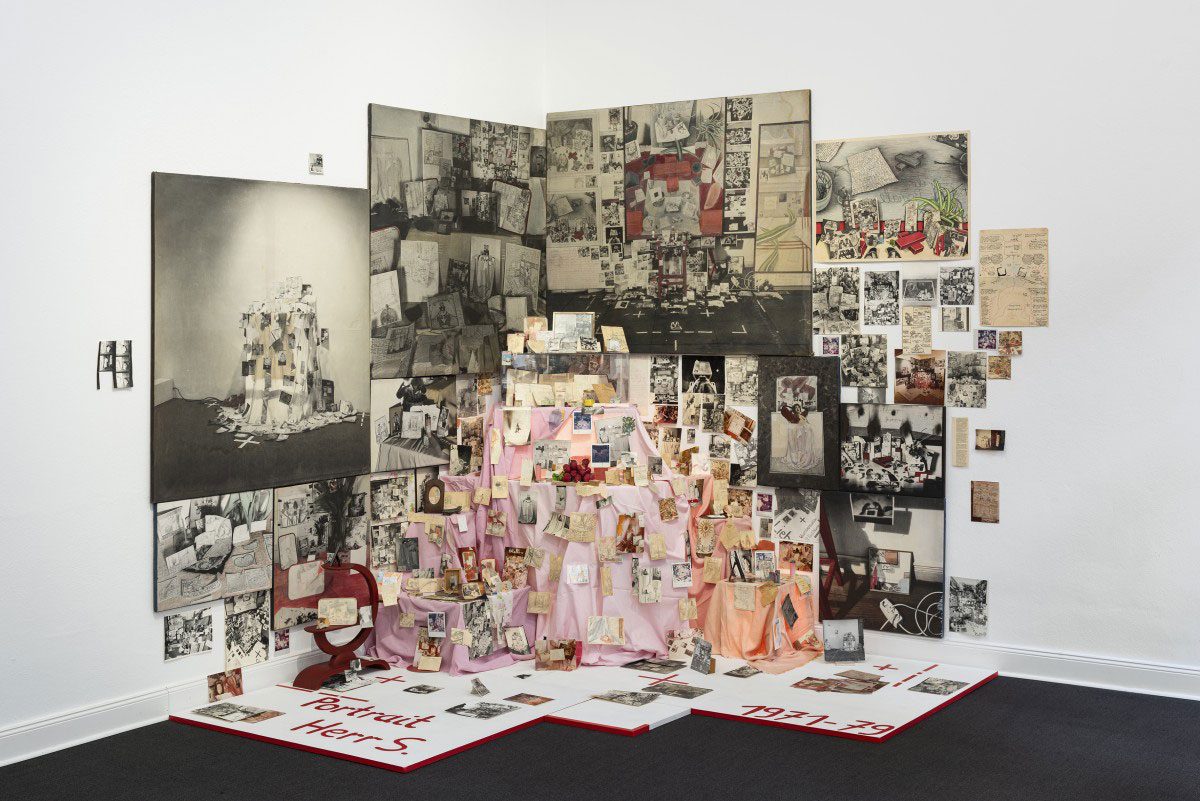
The exhibition “Portrait(S)” brings together the practices of Loretta Fahrenholz, Tishan Hsu, and Anna Oppermann in a dense exploration of the body as both subject and system. Across generations, their works trace a shift in how artistic production registers technological, social, and perceptual change—transforming the portrait into a site of instability, mediation, and inquiry.
By Dimitris Lempesis
Photo: : Galerie Max Mayer Archive
At the core of the exhibition “Portrait(S)” lies the idea of syntax: not as a fixed structure, but as an evolving grammar shaped by media conditions. In Oppermann’s sprawling “ensembles,” begun in the late 1960s, this grammar emerges as an open-ended, processual network. Her installations—composed of notes, photographs, objects, and texts—refuse closure, instead documenting thought itself as it unfolds. The work becomes a living archive, where perception is stretched across time and space, demanding an active, durational engagement from the viewer.
Hsu’s practice, developing in the early era of digital technology, reflects a turning point in this syntax. His work examines the entanglement of body and technological systems, often rendering the human form as fragmented, hybrid, and permeable. Here, the portrait is no longer stable but distributed—caught between flesh and interface, sensation and data. His early engagement with computing situates economic and technological constraints as formative conditions, foregrounding the body not only as a biological entity but as a site shaped by labor, infrastructure, and pain.
With Fahrenholz, this condition becomes fully internalized. Her performative documentaries collapse distinctions between fiction and reality, staging social environments where individuals operate within pre-structured, media-saturated systems. Unlike Oppermann’s relative stillness or Hsu’s tension between embodiment and digitization, Fahrenholz’s work is mobile and cinematic: production itself unfolds through movement, collaboration, and situated social contexts. The group becomes the unit of analysis, reflecting a contemporary condition in which identity is continuously negotiated through networks and shared performances.
Across the exhibition, the “work-body” is transferred between systems: from Oppermann’s introspective constellations to Hsu’s techno-organic surfaces and finally to Fahrenholz’s post-cinematic environments. In each case, the artwork is treated as a body—material, vulnerable, and relational. This equivalence destabilizes the traditional notion of portraiture. Rather than presenting an external likeness, the portrait becomes an expression of internal and systemic conditions: psychological, technological, and social.
Crucially, this syntax does not resolve into coherence. Instead, it produces a kind of visual dysphoria—a network of images that resists immediate readability. The viewer encounters a polyphonic field in which meaning emerges only provisionally, through navigation rather than recognition. In Oppermann, this takes the form of proliferating ensembles; in Hsu, of bodies dissolving into digital abstraction; in Fahrenholz, of narratives unfolding across layered temporalities.
Loretta Fahrenholz is a Berlin-based filmmaker and visual artist whose work probes the shifting conditions of contemporary media. Her practice resists conventional cinematic frameworks, instead adopting a post-cinematic approach that reflects the fragmented, mediated nature of present-day experience. By blending elements of documentary and fiction, she constructs hybrid narratives that challenge distinctions between authenticity and fabrication. Drawing on familiar mainstream genres such as science fiction, romantic comedy, and fantasy, Fahrenholz recontextualizes their visual language to examine how individuals navigate increasingly programmed environments. Her films often position the screen not merely as a surface for representation, but as an interface—one that mediates relationships between subjects and larger institutional or technological systems. In this sense, her work engages with the tension between lived reality and its digital or scripted counterparts. Characters appear both self-directed and constrained, operating within structures that shape behavior, perception, and identity. Through improvisation and layered storytelling, Fahrenholz reveals how contemporary life is continuously negotiated across overlapping realms of the real and the constructed. Her practice invites viewers to reconsider the role of media in shaping social reality, highlighting the instability of truth and the porous boundaries between observation, participation, and simulation.
Tishan Hsu’s practice conveys an embodied technology, centered on the cognitive and physical effects of transformative technologies on our lives. To address these issues, Hsu consciously chooses to use traditional media, such as painting and sculpture, which evoke a feeling of ‘slowness’ that resonates with the viewer’s direct physical experience in perceiving the works. The works create a sense of illusion of body and screen, while at the same time becoming objects in their own right. It is in this paradoxical situation that a hybrid experience of two and three-dimensional spaces begins to take shape. Often, Hsu’s works seem to float, at times hovering over the floor, detaching from the walls or mounting on wheels. Their curved corners, already introduced in the 80s, feel like precursors to the app icons on our smartphones.
Throughout her career Anna Oppermann, who died in 1993 at the age of 53, faced considerable criticism. Standing in front of the thousands of paper scraps, notes and photographs that make up her self-styled ‘Ensembles’, it’s not hard to see why. At first they appear to be intimate archives exposed to public scrutiny, and it soon becomes apparent that a detailed examination would require a magnifying glass and endless amounts of time. Any attempt to gain a clear overview of the works is bound to fail, as the Ensembles consist to a large extent of drawings and photographs of yet other Ensembles. This kaleidoscopic fragmentation creates a bewildering repetition that leaves the eye hankering for more despite the abundance on offer – a frustration overcome only by abandoning the desire to comprehend the works in their entirety. Explaining the origins of her method, the artist stated that she once assembled all of the sketches and preliminary stages for a painting into a ‘still life’. So in the late 1960s, as the term ‘environment’ was being replaced by ‘installation’, Oppermann coined the expression ‘Ensemble’ to underline the specificity of her method. In one piece of her writing she distinguishes between meditation, catharsis, reflection and analysis as phases of dealing with a ‘problem’ that her working practice is concerned with – steps that recall Sigmund Freud’s model of ‘working through’. In place of a psychoanalytical interpretation, however, Oppermann, who studied philosophy at university, took recourse to a wider range of theoretical sources, which she integrated into her work in the form of quotations from Theodor Adorno, Umberto Eco, Peter Sloterdijk and others.
Works by: Loretta Fahrenholz, Tishan Hsu and Anna Oppermann
Photo: Anna Oppermann, Portrait Herr S., 1971 – 1979, installation with photo, linen and various objects, 300 × 300 × 300 cm, © Anna Oppermann, Courtesy the artist and Galerie Max Mayer
Info: Galerie Max Mayer, Hardenbergstraße 9A, 2nd backyard, Berlin, Germany, Duration: 13/3-18/4/2026, Days & Hours: Wed-Sat 11:00-18:00, www.maxmayer.net/
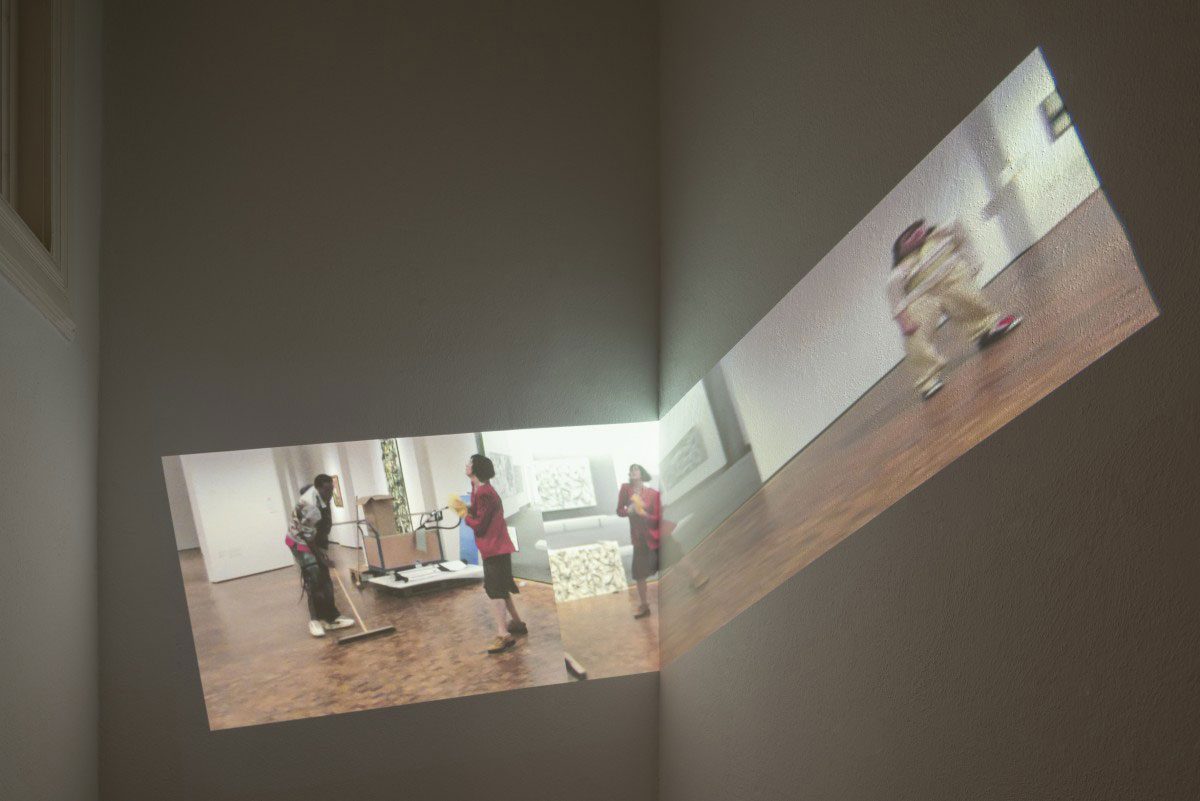
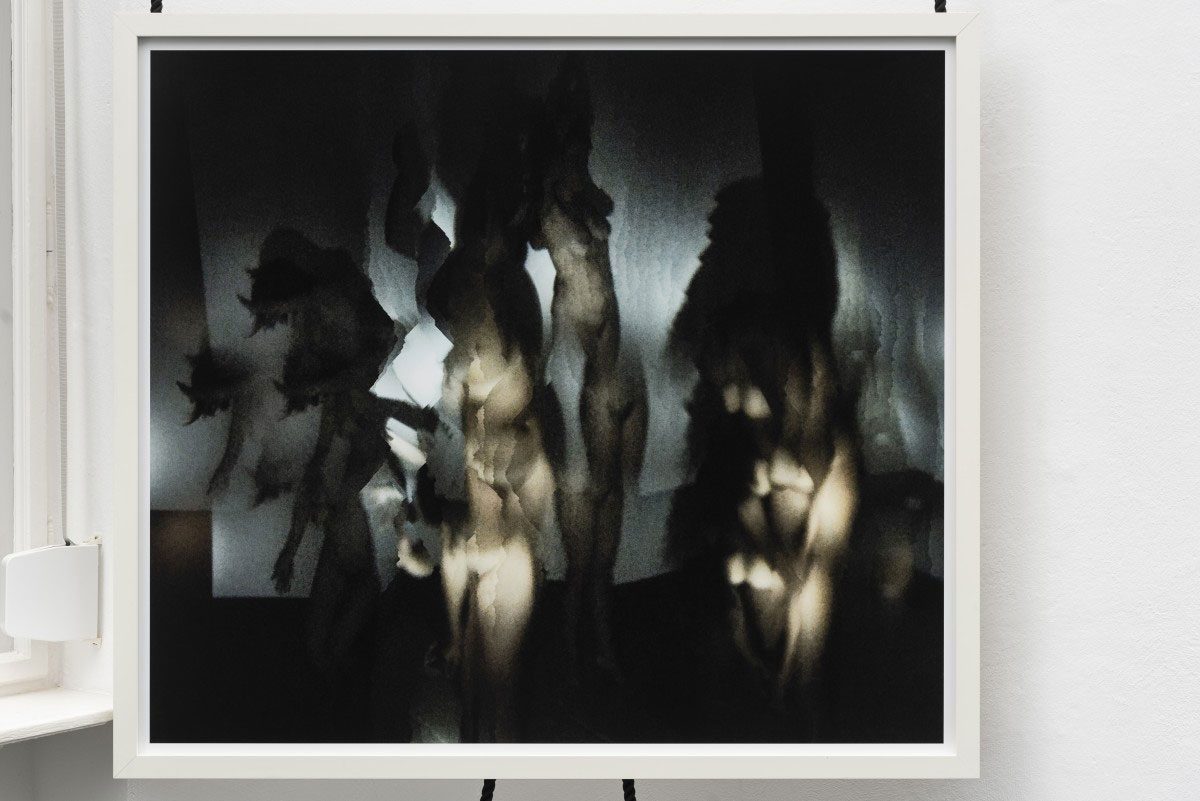
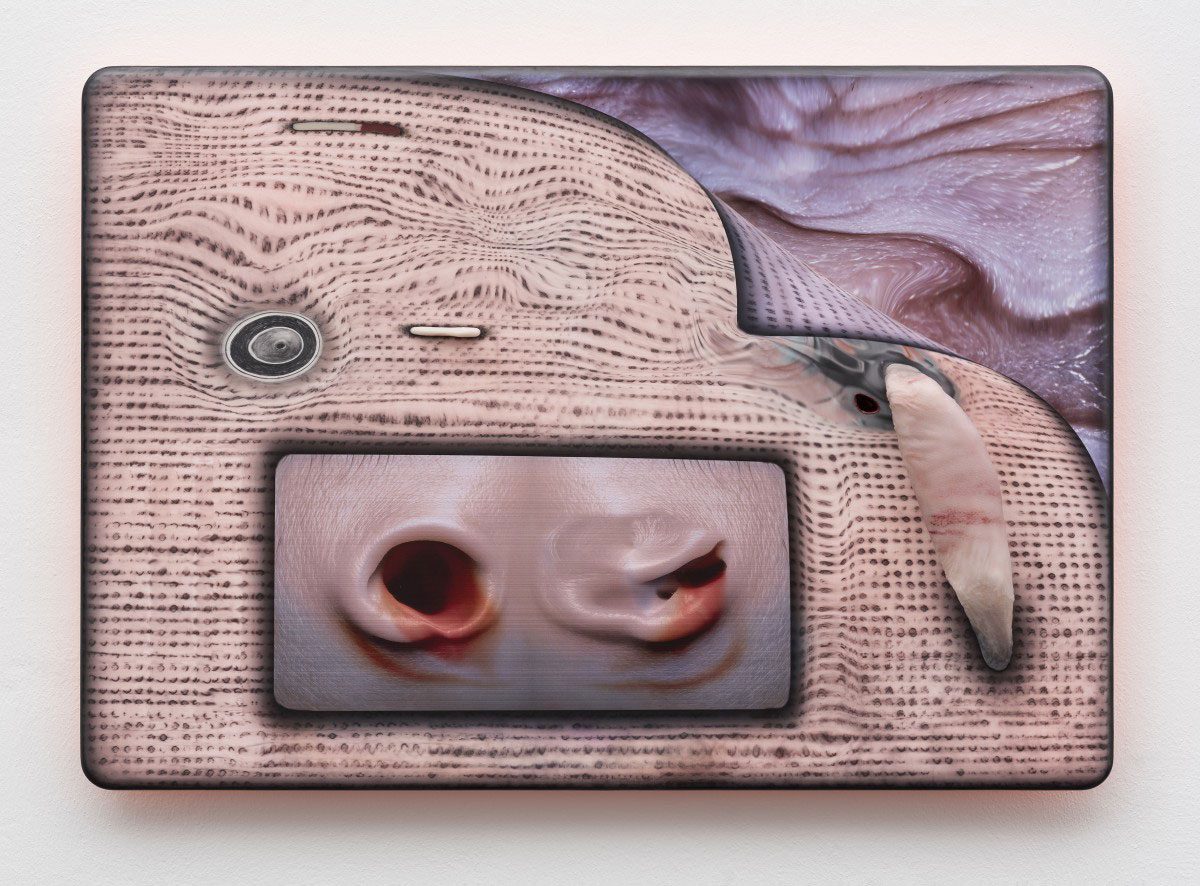
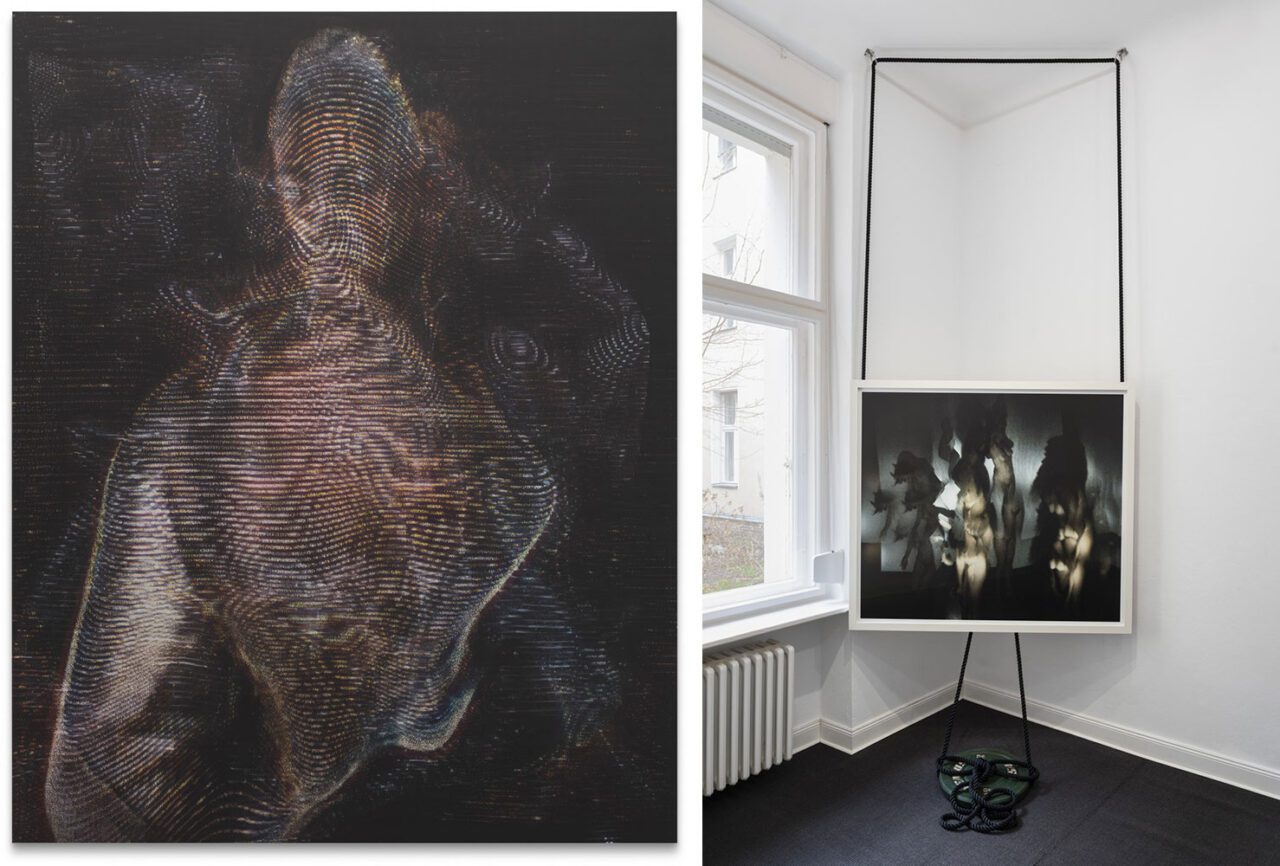
Right: Installation view: Portrait(S): Loretta Fahrenholz, Tishan Hsu and Anna Oppermann, Galerie Max Mayer, Berlin, 2026. Photo by Ingo Kniest
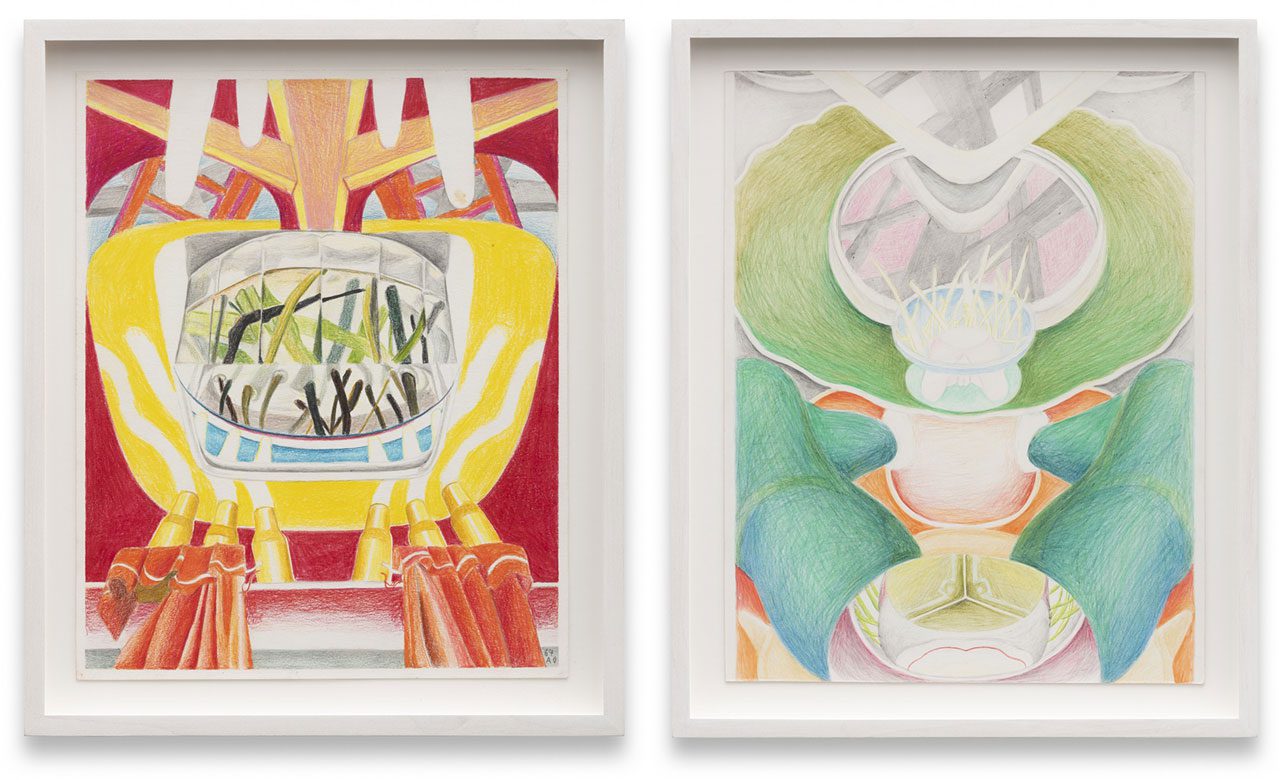
Right: Anna Oppermann, Untitled, ca. 1968, pencil and colored crayon on paper, 38.1 × 30 cm; 44.2 x 36 cm (framed), © Anna Oppermann, Courtesy the artist and Galerie Max Mayer