PRESENTATION: Franz Wanner-Suspended Presences
Franz Wanner is a German artist whose research-driven practice examines historical continuities between Nazism and the present. Focusing on forced labor, institutional complicity, and memory politics, he investigates how past systems of exploitation persist in modern societies. His work combines archival research and installation to challenge official narratives and expose gaps between history and representation.
By Dimitris Lempesis
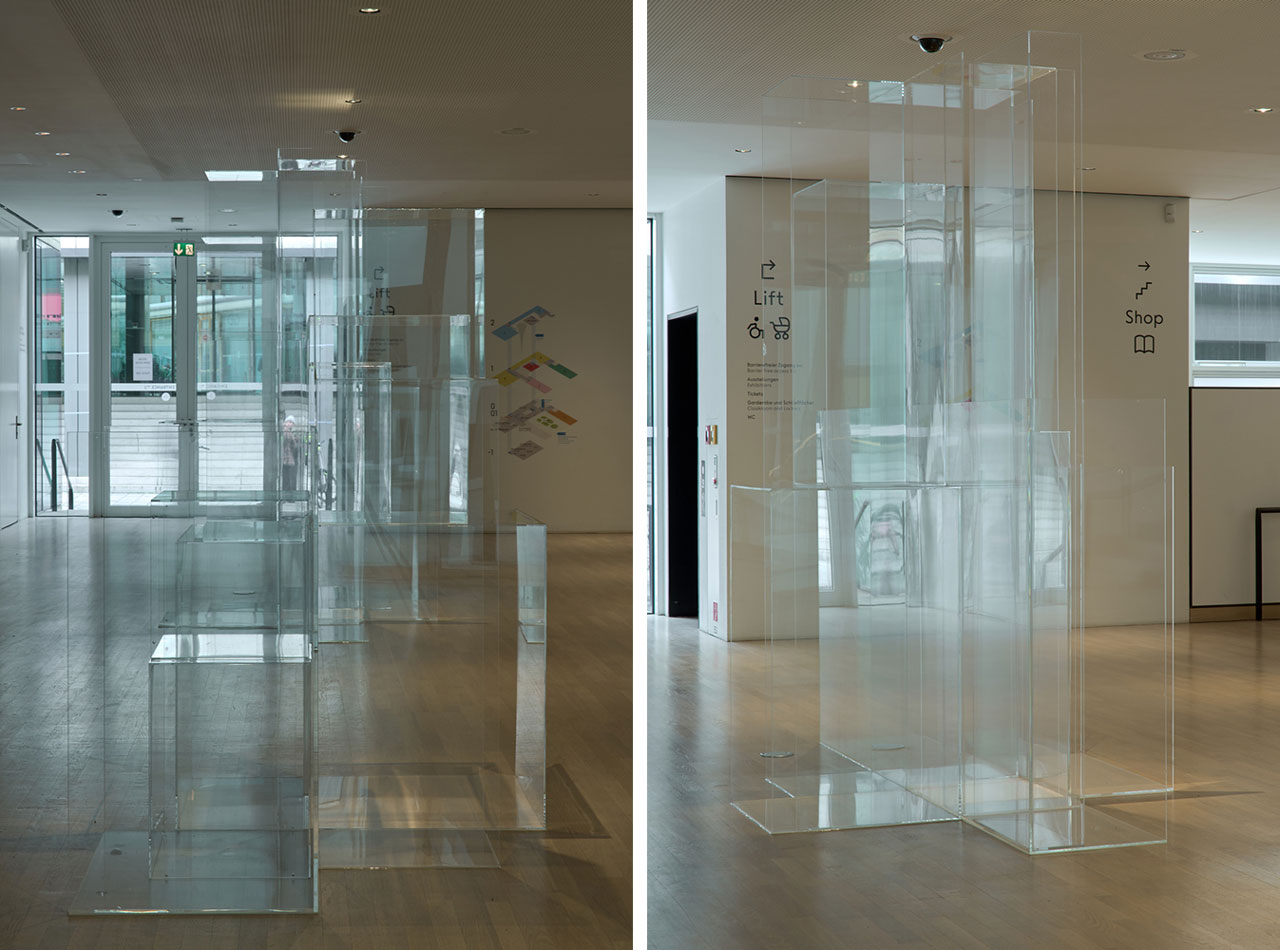
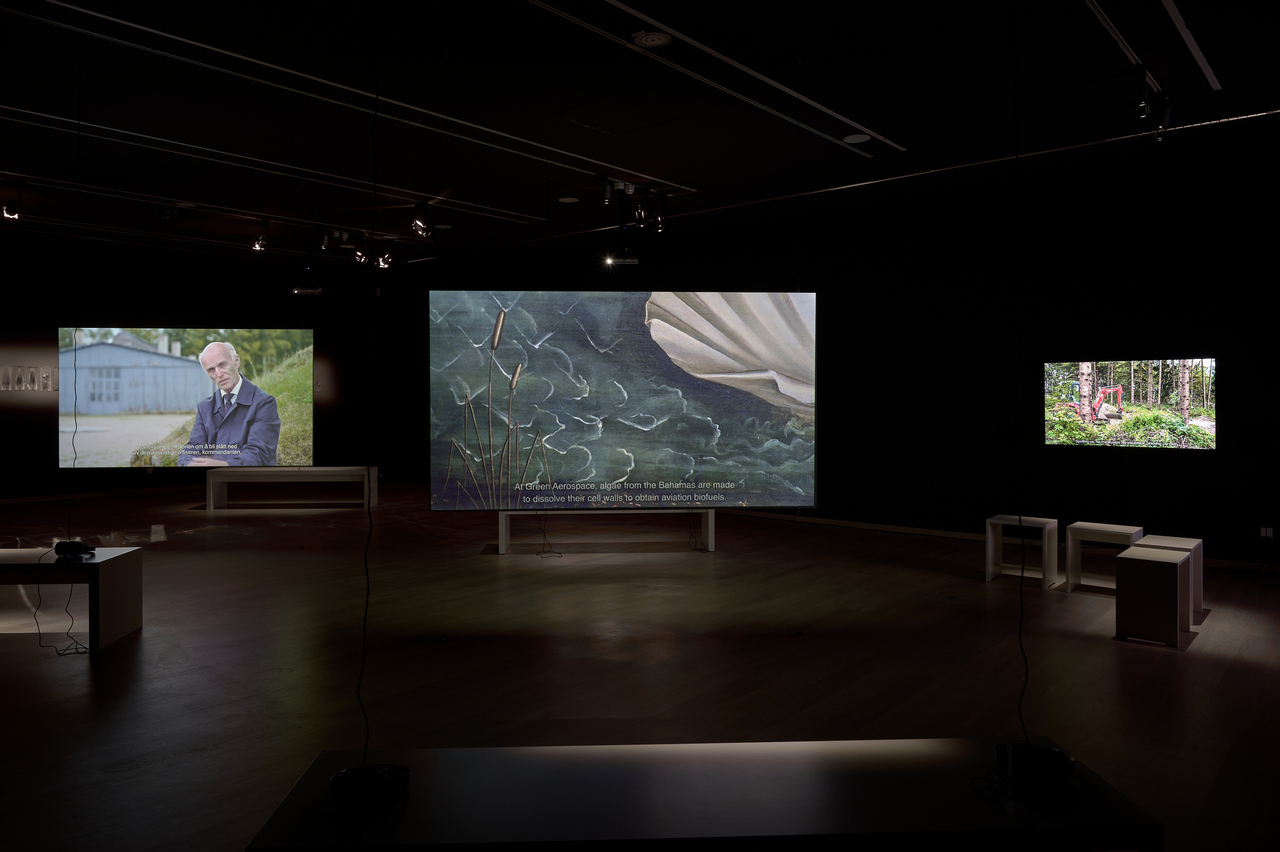
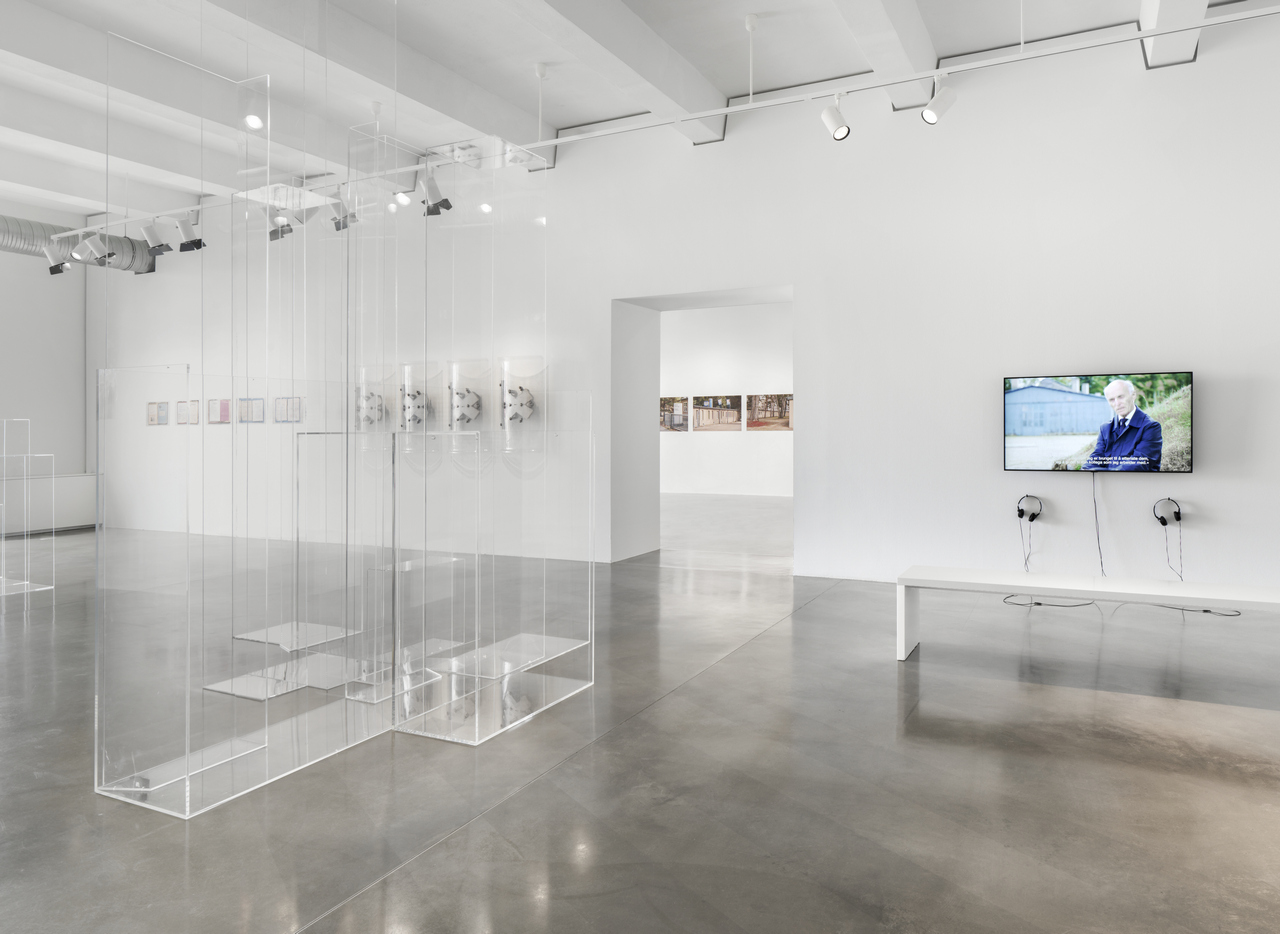
Photo: Städtische Galerie im Lenbachhaus Archive
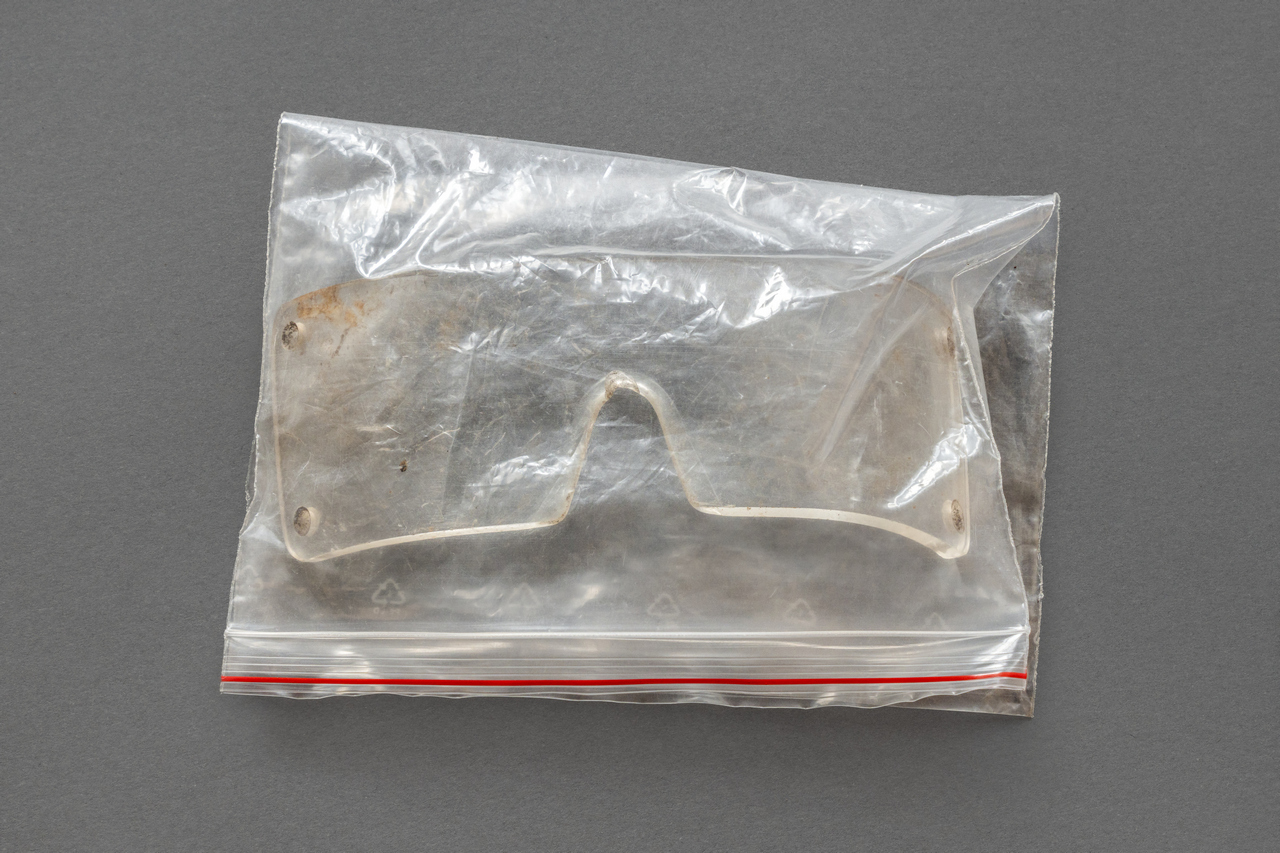
A pair of Plexiglas safety glasses greets visitors at the entrance to Franz Wanner’s exhibition “Suspended Presences”. Unearthed during excavations at the former Sachsenhausen concentration camp, the glasses are at once ordinary and haunting. They once belonged to an anonymous forced laborer, someone compelled to work in the Nazi arms industry. No archival trace of this individual survives—no name, no biography—yet the object bears witness to a simple, deeply human impulse: the desire to protect oneself in the midst of coercion and violence.
This small artifact anchors Wanner’s broader artistic and historical inquiry. It condenses multiple layers of meaning: industrial production, wartime exploitation, technological modernity, and the enduring gaps in collective memory. By foregrounding such an object, Wanner transforms the exhibition space into what he conceptualizes as a “scene of crime,” where everyday materials become evidence of systemic injustice.
The material itself—Plexiglas—carries its own historical weight. Introduced in 1933 by the German chemical company Röhm & Haas, Plexiglas (polymethyl methacrylate) was initially a cutting-edge synthetic prized for its clarity and durability. During the 1930s and World War II, it was largely reserved for military applications, particularly aircraft windows and cockpit canopies. Its “shadowless” transparency became a symbol of technological progress, heavily promoted in exhibitions staged by the Nazi regime to showcase industrial innovation and national strength.
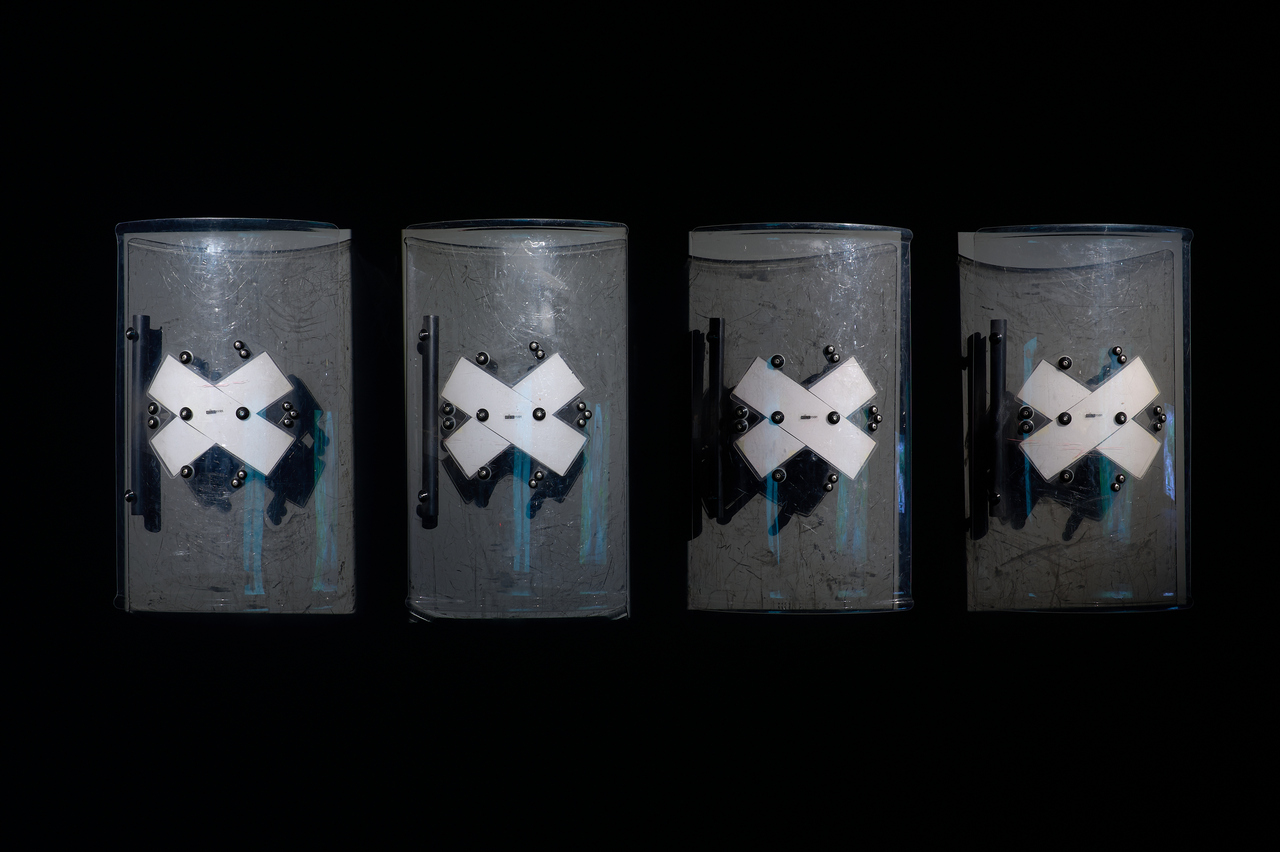
Today, Plexiglas is ubiquitous—used in everything from riot shields to museum vitrines. Wanner’s intervention lies in stripping such materials of their functional neutrality and re-situating them within a historical framework of violence and exploitation. In doing so, he forces viewers to confront the continuity between past and present: how materials, infrastructures, and institutional practices persist even as their meanings are obscured or sanitized.
Central to the exhibition is the history of forced labor under National Socialism. Between 1939 and 1945, approximately 26 million people across Europe were subjected to forced labor under Nazi rule. In the German Reich alone, around 13 million individuals were exploited, including roughly 8.4 million civilians deported from occupied territories. These laborers were distributed across an extensive network of approximately 30,000 camps—an infrastructure so widespread that it rivaled everyday commercial networks in scale.
The scope of participation in this system is particularly striking. Forced labor was not confined to a handful of state-run enterprises; it permeated nearly every sector of society. Corporations, small businesses, agricultural operations, universities, research institutes, cultural institutions, and even private households benefited from coerced labor. Institutions that are often associated with cultural preservation, such as the Lenbachhaus, were also implicated. As Wanner’s research reveals, forced laborers were employed there under the pretext of “art protection,” tasked with evacuating artworks during air raids.
This widespread complicity complicates contemporary narratives of historical responsibility. Surveys indicate that a significant majority of Germans today believe their ancestors were not involved in forced labor practices. Wanner’s work directly challenges this perception by juxtaposing documented historical realities with present-day self-representation. The dissonance between these two perspectives—what is known and what is believed—forms a central tension in his practice.
Two surviving forced labor camp sites serve as key reference points in Wanner’s exploration: Berlin-Schöneweide and Munich-Neuaubing. These locations remain as architectural remnants of a vast system that has otherwise largely disappeared from the physical landscape. Their continued existence underscores the uneven processes of remembrance and erasure that shape public history.
Wanner extends this historical inquiry into the postwar period, tracing continuities that are often overlooked. After 1955, West Germany entered into labor recruitment agreements with countries such as Italy, Turkey, Greece, and Yugoslavia. These agreements, which facilitated the migration of so-called “guest workers,” were partly built upon administrative and legal frameworks established during the Nazi era. In some cases, migrant workers were even housed in former Nazi barracks—spaces rebranded as “guest worker camps.”
This continuity raises uncomfortable questions about the foundations of postwar economic growth and the persistence of exploitative labor structures. Rather than representing a clean break from the past, the Federal Republic’s economic miracle appears, in Wanner’s analysis, to be entangled with earlier systems of coercion and inequality.
Wanner’s broader artistic project is concerned with what he identifies as the gap between reality and self-representation in contemporary Germany. His work interrogates how histories are curated, narrated, and instrumentalized—how certain aspects are emphasized while others are minimized or omitted altogether. This involves a critical examination of state institutions, including intelligence services and law enforcement, as well as the intersections between academic research and the arms industry.
These inquiries are not confined to the past. Wanner also addresses Germany’s role within the European Union, particularly in relation to migration policy. By drawing parallels between historical and contemporary forms of labor exploitation and border control, he suggests that elements of the past persist within present-day neoliberal frameworks. The question he poses is not simply whether history repeats itself, but how its structures are transformed and embedded within new contexts.
The exhibition “Suspended Presences” builds upon Wanner’s earlier project “Mind the Memory Gap,” developed during his residency at the Harun Farocki Institute and presented at the KINDL – Centre for Contemporary Art. Both exhibitions reflect a sustained engagement with the politics of memory, the materiality of history, and the role of art as a form of critical inquiry.
Ultimately, the Plexiglas glasses at the entrance to the exhibition encapsulate the stakes of Wanner’s work. They are a fragment of a life erased, a trace of suffering that resists full recovery. Yet they also testify to resilience—the insistence, however limited, on self-preservation in the face of systemic dehumanization. By bringing such objects into the gallery, Wanner does not simply memorialize the past; he activates it, compelling viewers to reckon with its ongoing implications.
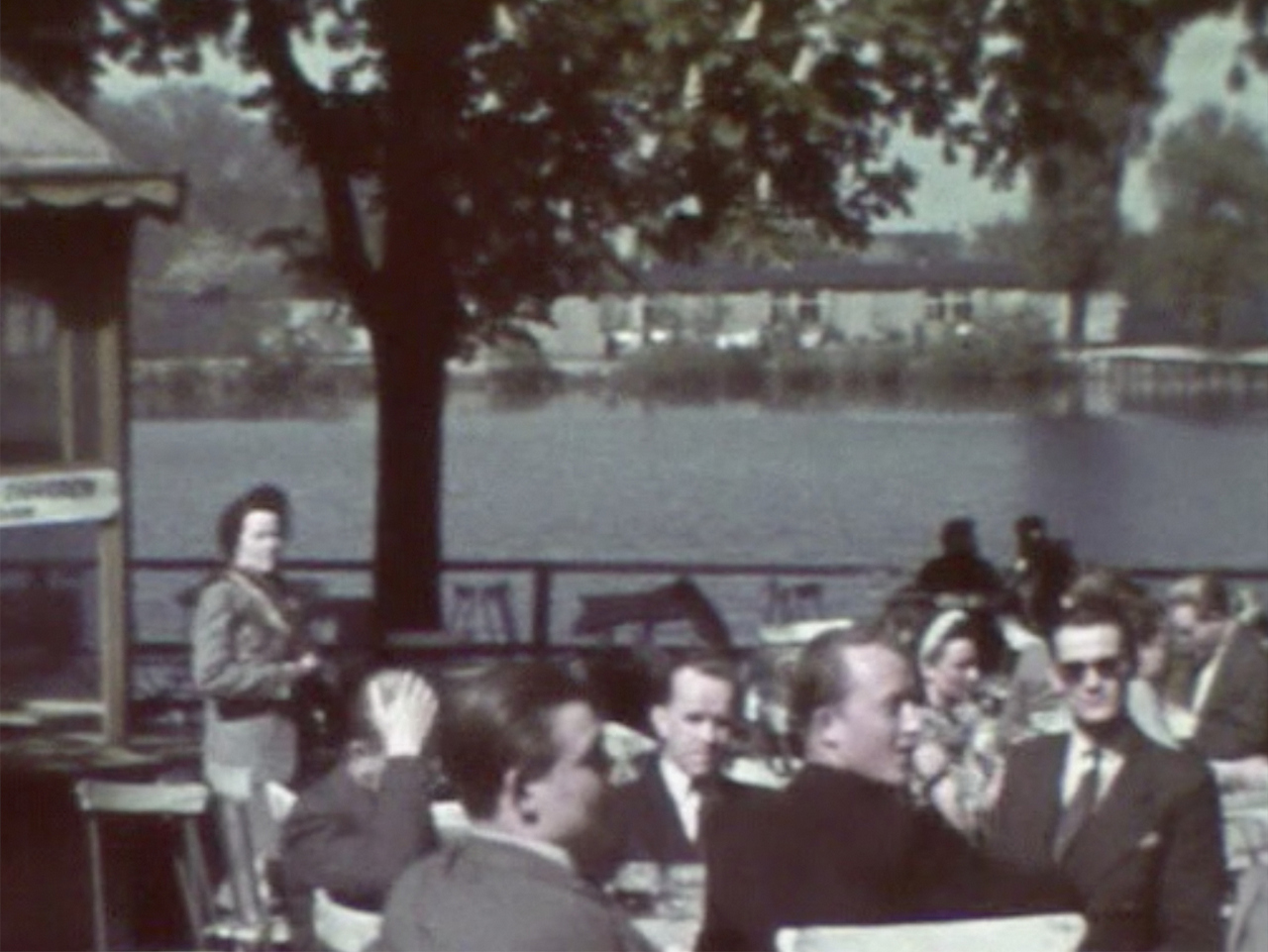
Photo: Franz Wanner, From the series, Musterfolien (Sample Slides), 2024-2025. © Franz Wanner
Info: Curator: Stephanie Weber, Städtische Galerie im Lenbachhaus, Luisenstraße 33, Munich, Germany, Duration: 24/3-19/7/2026, Days & Hours: Tue=Wed & Fri-Sun 10:00-18:00, Thu 10:00-20:00, www.lenbachhaus.de/en/