
PRESENTATION: Oscar Murillo-Collective Osmosis
Oscar Murillo is known for an inventive and itinerant practice that encompasses paintings, works on paper, sculptures, installations, actions, live events, collaborative projects, and videos. His works examine conceptions of collectivity and shared culture, demonstrating his commitment to the power of material presence, as well as his critical perspective, through which he seeks to open new possibilities for contemporary society. Taken as a whole, his body of work demonstrates a sustained emphasis on the notion of cultural exchange and the multiple ways in which ideas, languages, and even everyday items are displaced, circulated, and increasingly intermingled.
By Efi Michalarou
Photo: DAS MINSK Kunsthaus Arcjive
At DAS MINSK Kunsthaus and Museum Barberini in Potsdam, Oscar Murillo’s solo exhibition “Collective Osmosis” unfolds as an immersive and socially charged environment—less a static display than an evolving experiment in exchange, perception, and community. The project situates painting not as an isolated aesthetic act, but as a living process shaped by dialogue, participation, and the movement of ideas across borders.
Murillo transforms the museum into a permeable space where distinctions between artist and audience, interior and exterior, dissolve. The exhibition operates as a multi-layered meditation on visibility, landscape, and the political implications embedded in artistic production today. Central to this inquiry is a conceptual and visual dialogue with Claude Monet, whose late works serve as both historical anchor and conceptual counterpoint.
Murillo’s engagement with Monet begins with biography but expands into metaphor. In his later years, Monet’s struggle with cataracts profoundly altered his perception, leading to radical shifts in color, composition, and atmospheric rendering. For Murillo, this transformation becomes an allegory for the “blind spots” that structure contemporary society—what is seen, what remains invisible, and who controls that distinction. Darkness, in this context, is not absence but potential: a speculative space from which new visual and political realities might emerge. By reframing Impressionism through this lens, Murillo interrogates the act of seeing itself as a historically and politically conditioned process.
The exhibition’s title draws from the scientific concept of osmosis—a process in which particles move across a semi-permeable membrane toward equilibrium. Murillo adopts this principle as a metaphor for a more egalitarian and interconnected world. “Collective Osmosis” thus becomes both a conceptual framework and a curatorial strategy: the museum opens itself to flows of participation and exchange, linking Potsdam to broader global networks. The boundaries between artwork, viewer, and environment become fluid, emphasizing interdependence rather than separation.
This ethos is most clearly articulated through the exhibition’s participatory dimension. Murillo foregrounds the act of mark-making as a universal form of communication—accessible, immediate, and inherently political. Visitors are invited to contribute gestures using brush, hand, or pen, reinforcing the idea that artistic creation is not confined to the individual genius but distributed across a collective body. In this sense, freedom is expressed not through representation alone but through the act of inscription itself.
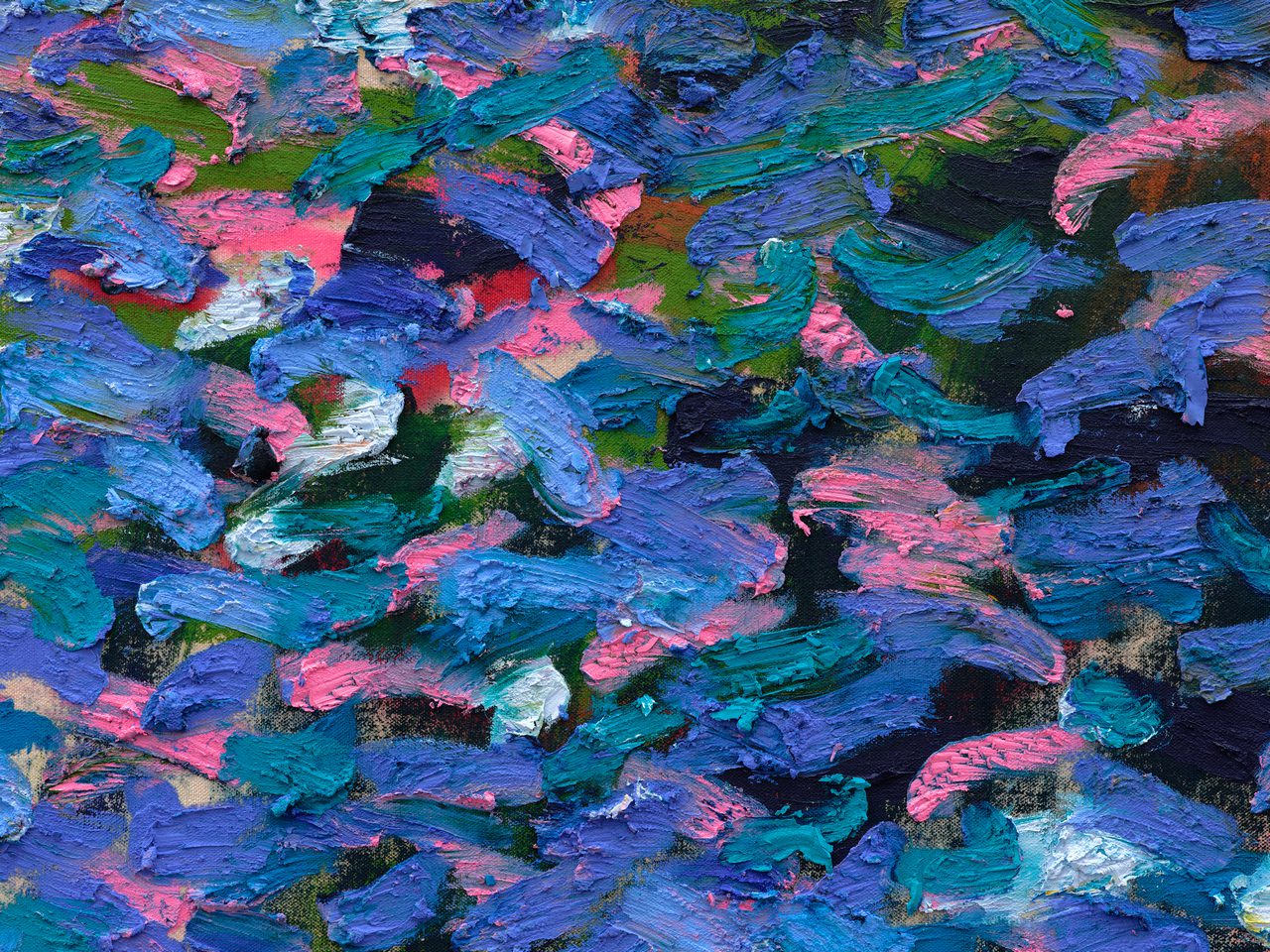
The dialogue with Monet is materially realized through the juxtaposition of Murillo’s works with key paintings from the Hasso Plattner Collection. Monet’s serial depictions—of the Houses of Parliament in London, grainstacks, and the water lilies at Giverny—are placed in conversation with Murillo’s “Frequencies” series and new works from “Disrupted Frequencies”. This encounter bridges temporal, stylistic, and conceptual divides: Monet’s atmospheric figuration meets Murillo’s dense abstraction, generating a space where perception is continually renegotiated.
Surrounding these works is “The Institute of Reconciliation” (ongoing since 2014), an installation of black canvases that envelops the historical paintings in a contemporary field of political, social, and ecological resonance. The effect is both immersive and disorienting, situating Impressionism within the urgent realities of a globalized present.
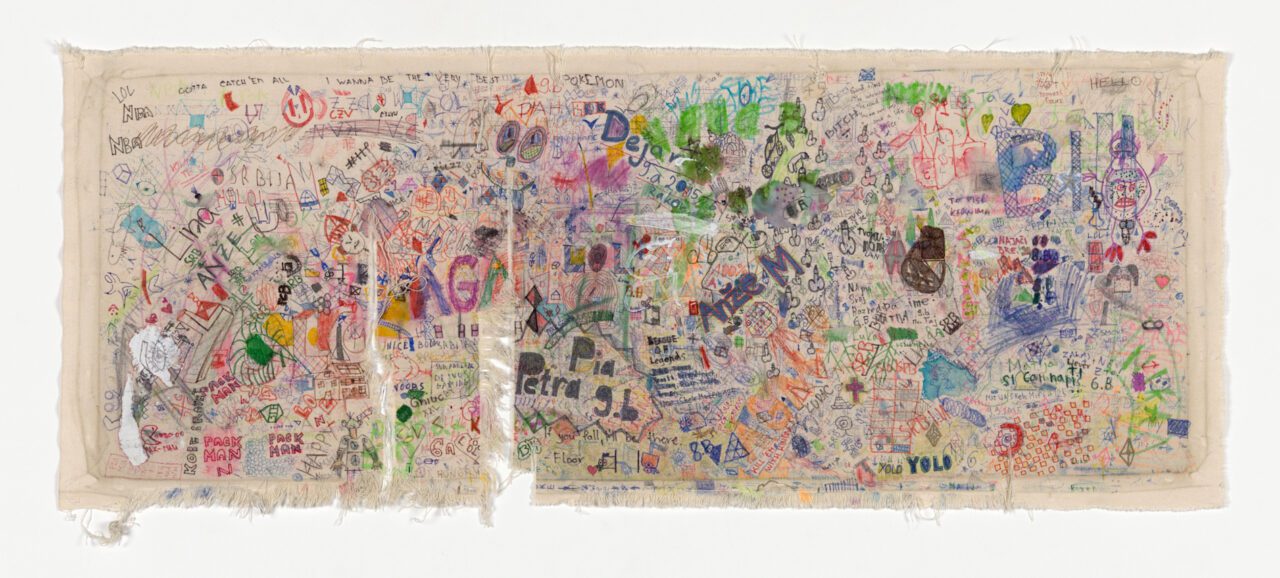
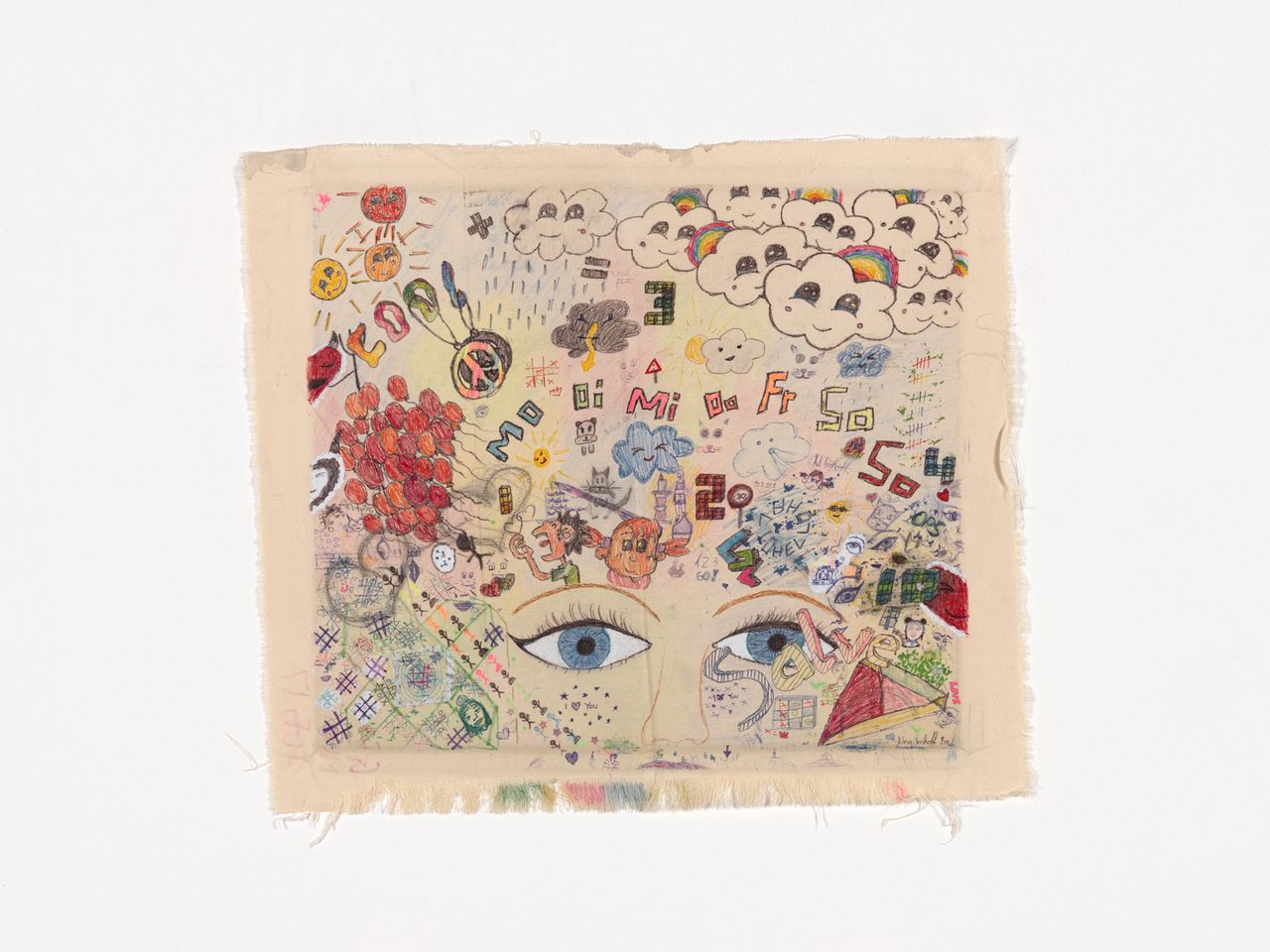
Murillo’s long-term “Frequencies” project further expands the exhibition’s scope. Initiated in 2013, it involves schoolchildren worldwide drawing on canvases attached to their desks over extended periods. The resulting surfaces accumulate traces of daily life—marks that collectively form a global visual language of an emerging generation. For Collective Osmosis, new iterations of the project were realized in schools across Potsdam and Brandenburg, reinforcing the exhibition’s commitment to local engagement within a global framework.
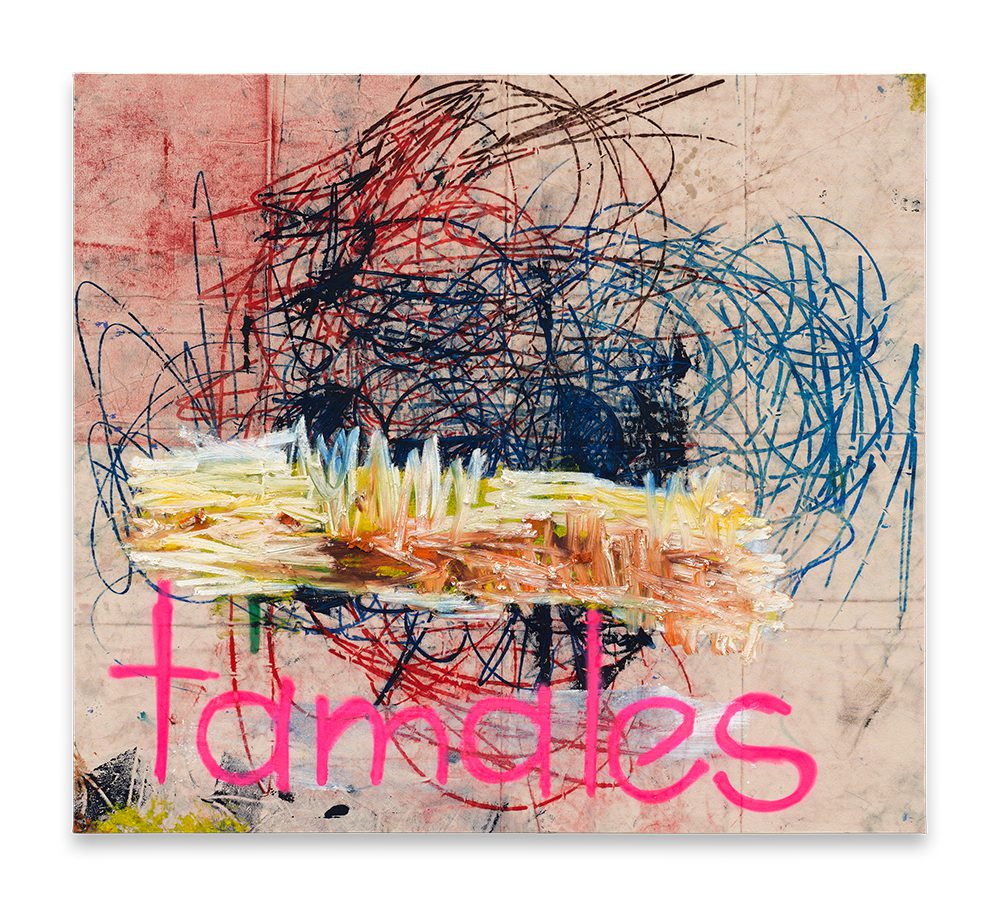
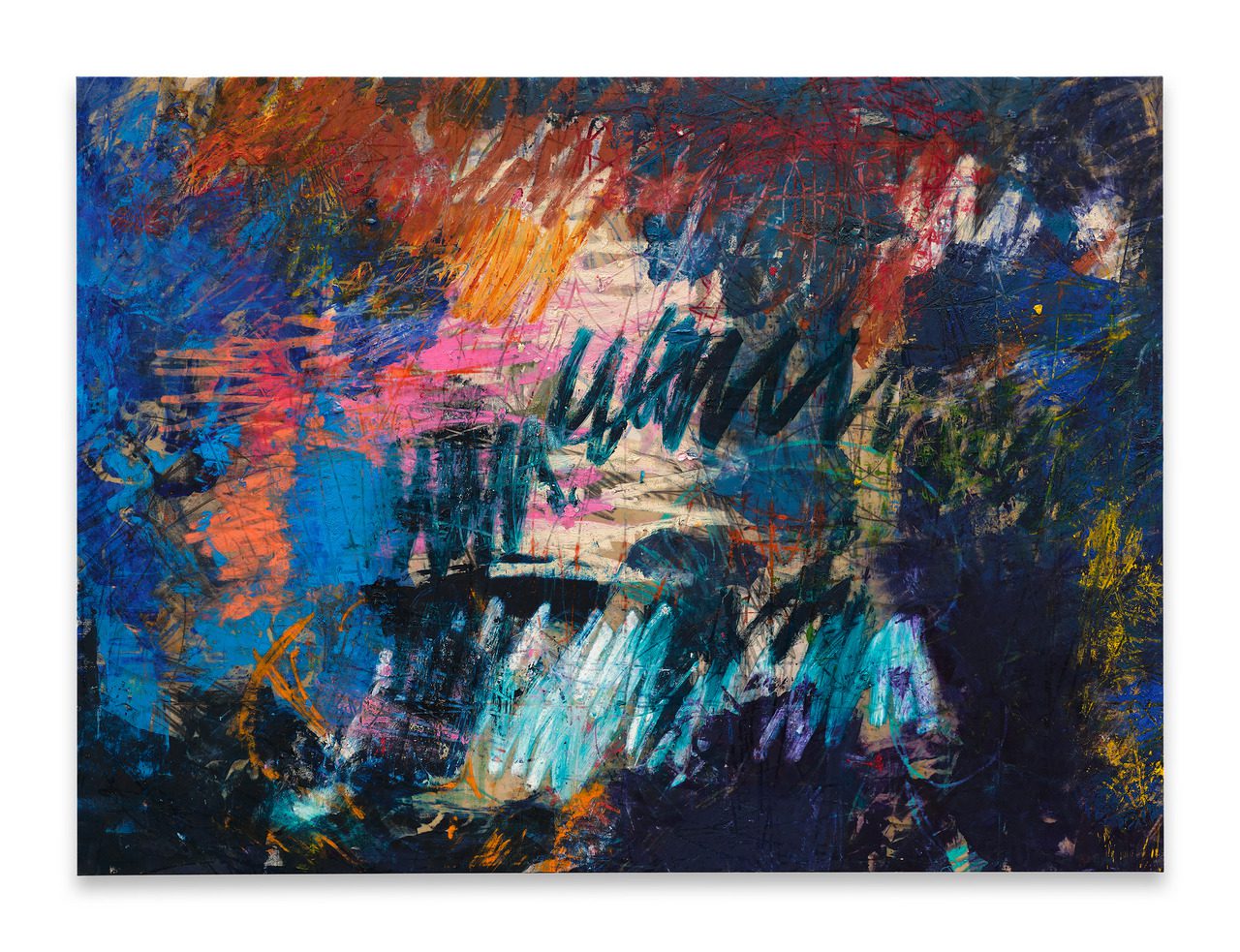
On the ground floor of DAS MINSK, Murillo’s painterly processes come to the fore. Works from the “Scarred Spirits” series reveal surfaces built through layers of gestural marks and erasures—palimpsests of movement and memory. These are not images to be read in a conventional sense, but fields of activity that record time, labor, and transformation.
Complementing these works are two participatory methodologies Murillo has developed in recent years: “Social Mapping” and “Collective Painting”. In the former, participants contribute drawings to large-scale canvases; in the latter, these surfaces are reworked in exhibition contexts by visitors. Projects such as “The Flooded Garden” (2024) at Tate Modern and “A Song to a Tearful Garden” (2025) in São Paulo’s Ibirapuera Park demonstrate how these processes unfold across different geographies, generating layered, collaborative artworks. Documentation and resulting canvases from these initiatives are presented at DAS MINSK, emphasizing continuity between sites and participants.
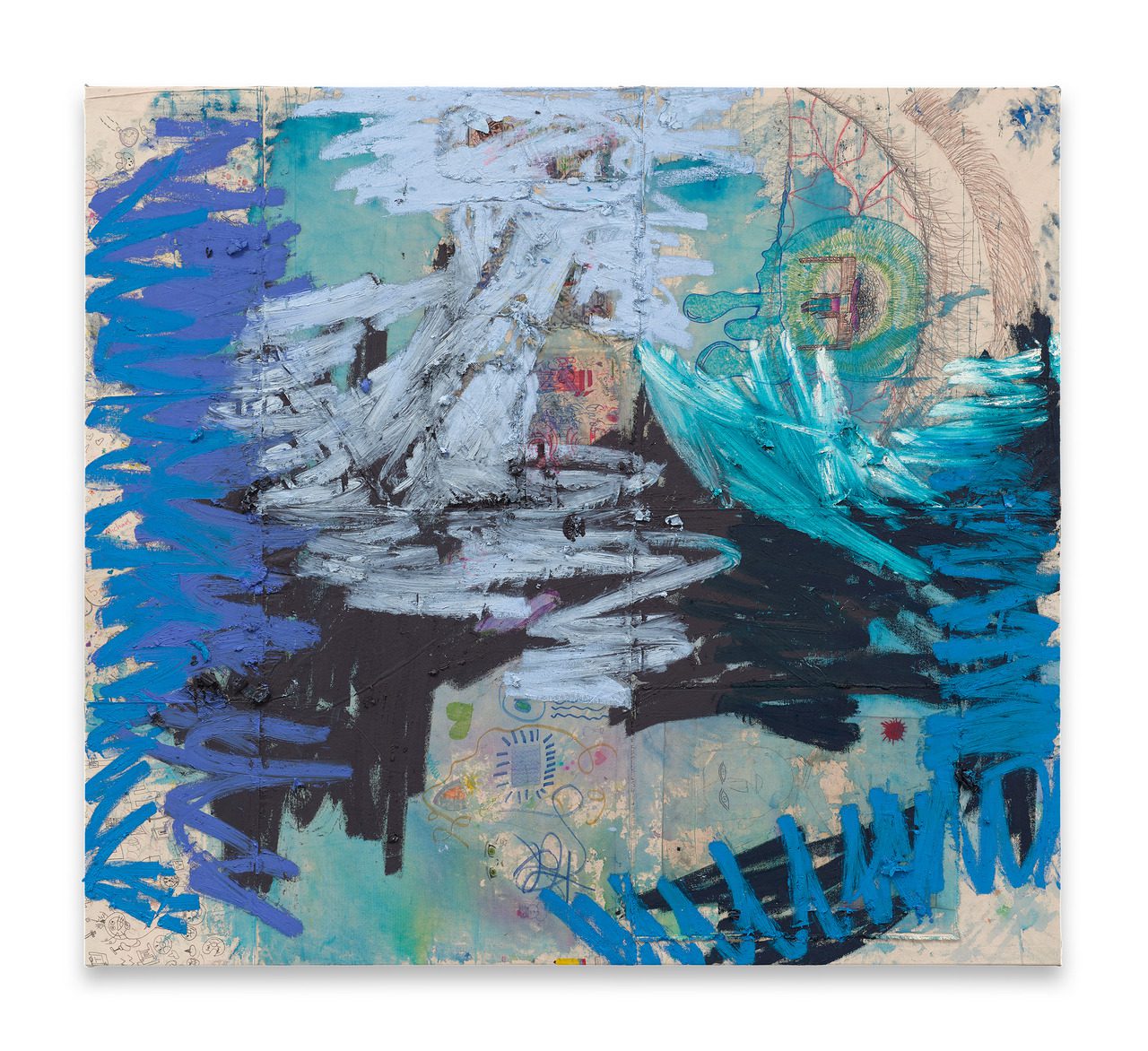
The exhibition extends beyond a single venue. At the Museum Barberini, Murillo presents the large-scale triptych “surge (social cataracts)” alongside Monet’s serial works. This juxtaposition sharpens the exhibition’s central concern: how painting mediates perception. Monet’s luminous depictions of landscape are set against Murillo’s heavily textured abstractions, which, as the artist notes, emerge from a tension between beauty and existential unease. Monet’s celebrated harmony coexists, in Murillo’s reading, with a deeper “cosmic anguish”—a duality that informs the fragmented, layered surfaces of his own work.
The exhibition positions art as a dynamic system of exchange—material, perceptual, and social. By weaving together historical painting, contemporary abstraction, and participatory practice, Murillo constructs an environment in which meaning is not fixed but continuously negotiated. The exhibition proposes that seeing is never neutral, that community is always in formation, and that art, at its most vital, operates as a shared language capable of bridging divides while exposing the structures that sustain them.
Photo: Oscar Murillo, Frequencies, 2013—ongoing, Ljubljana, Slovenia, ballpoint pen, fountain pen, graphite, felt tip pen, highlighter pen, permanent marker, paint, crayon, staples, natural pigments, debris and other mixed media on canvas, 55 × 141 cm, Courtesy of the artist © Oscar Murillo. Photo: Tim Bowditch
Info: Curators: Anna Schneider and Daniel Milnes, Assistant Curator: Luisa Bachmann, 1. DAS MINSK Kunsthaus in Potsdam, Max-Planck-Straße 17, Potsdam, Germany, Duration: 14/3-9/8/2026, Days & Hours: Mon & Wed-Sun 10:00-19:00, https://dasminsk.de/ & 2. Museum Barberini, Alter Markt, Humboldtstraße 5–6, Potsdam, Germany, Duration: 14/3-9/8/2026, Days & Hours: Mon & Wed-Sun 10:00-19:00, www.museum-barberini.de/
![Claude Monet, Nymphéas [Water Lilies], 1914–1917, oil on canvas, 200 × 200 cmHasso Plattner Collection, Museum Barberini, Potsdam](http://www.dreamideamachine.com/web/wp-content/uploads/2026/03/05-2.jpg)