TRIBUTE: Simon Fujiwara-A Whole New World
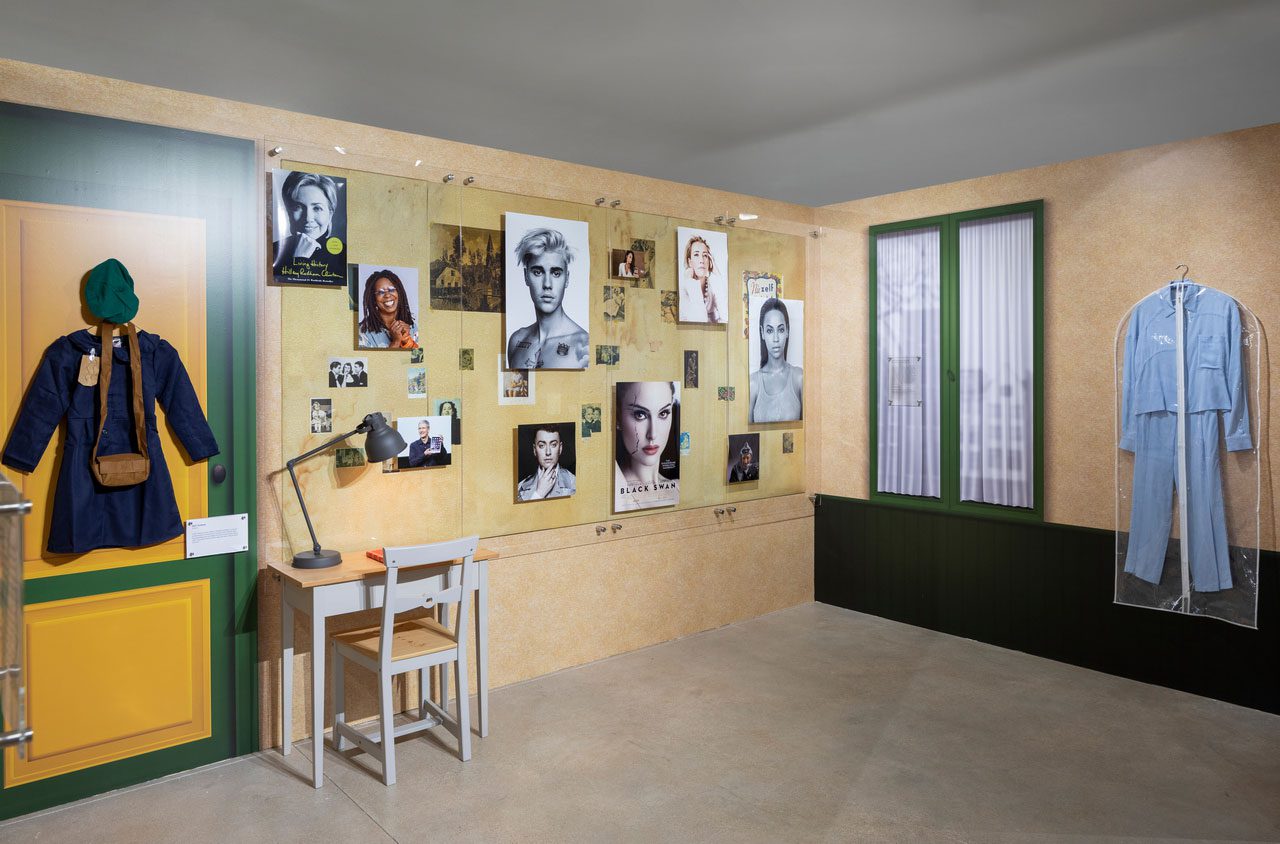
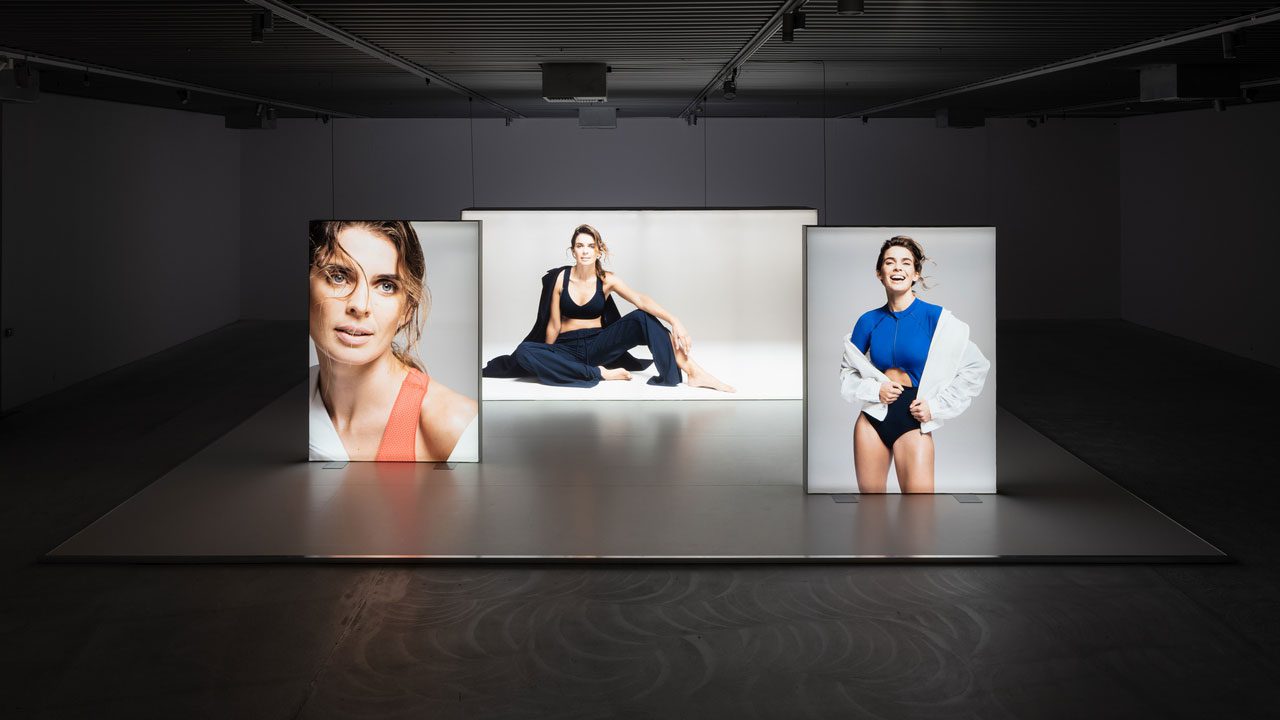
The work Simon Fujiwara offers a unique view into the mechanics of identity construction and the ‘industry of the individual’ in contemporary life. His works emerge from a personal grappling with the contradictions of inherited racial, national, historical, cultural values. In his most ambitious projects that range from a full reconstruction of the Anne Frank House (Hope House, 2016–18) to the “re-branding campaign” for his former high school art teacher after a nude media scandal (Joanne, 2016), Fujiwara deftly navigates culturally potent topics with enigmatic and surprising approaches that broaden conversations and avoid didacticism.
By Dimitris Lempesis
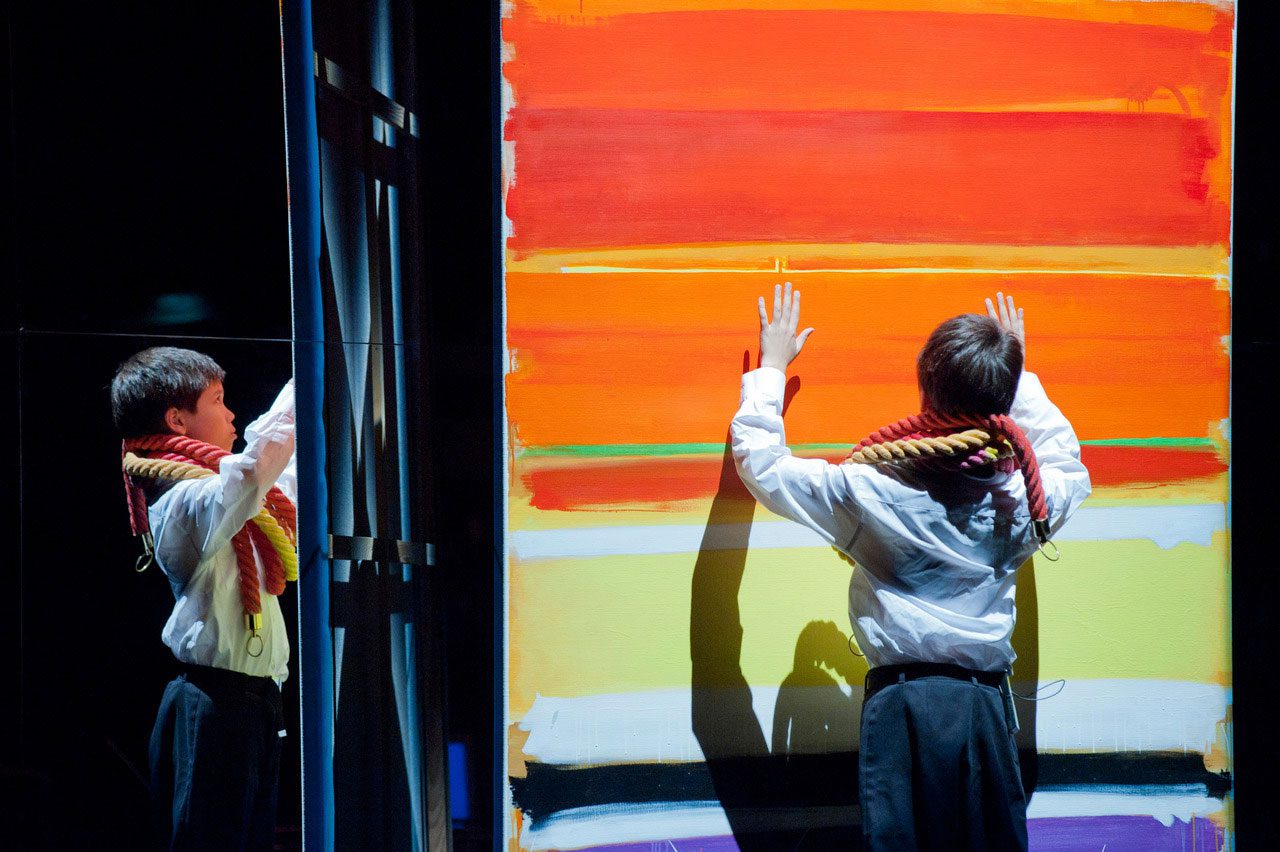
Photo: Mudam Archive
In “A Whole New World”, the work of Simon Fujiwara unfolds as a vivid, layered exploration of contemporary life—one that is as seductive as it is disquieting. Moving fluidly across mediums and narratives, Fujiwara constructs immersive environments that invite viewers to confront a world shaped by images, desires, and contradictions. His practice acts as a reflective surface, mirroring a reality defined by speed, spectacle, and constant reinvention.
Over the past two decades, Fujiwara has developed a distinctive visual and conceptual language that merges the autobiographical with the collective. Drawing on fields as varied as mythology, psychoanalysis, art history, and anthropology, his work resists fixed categorization. Instead, it operates through association and accumulation, weaving together fragments of personal memory with broader cultural references. This interplay allows the artist to examine how identities—both individual and societal—are constructed, performed, and consumed.
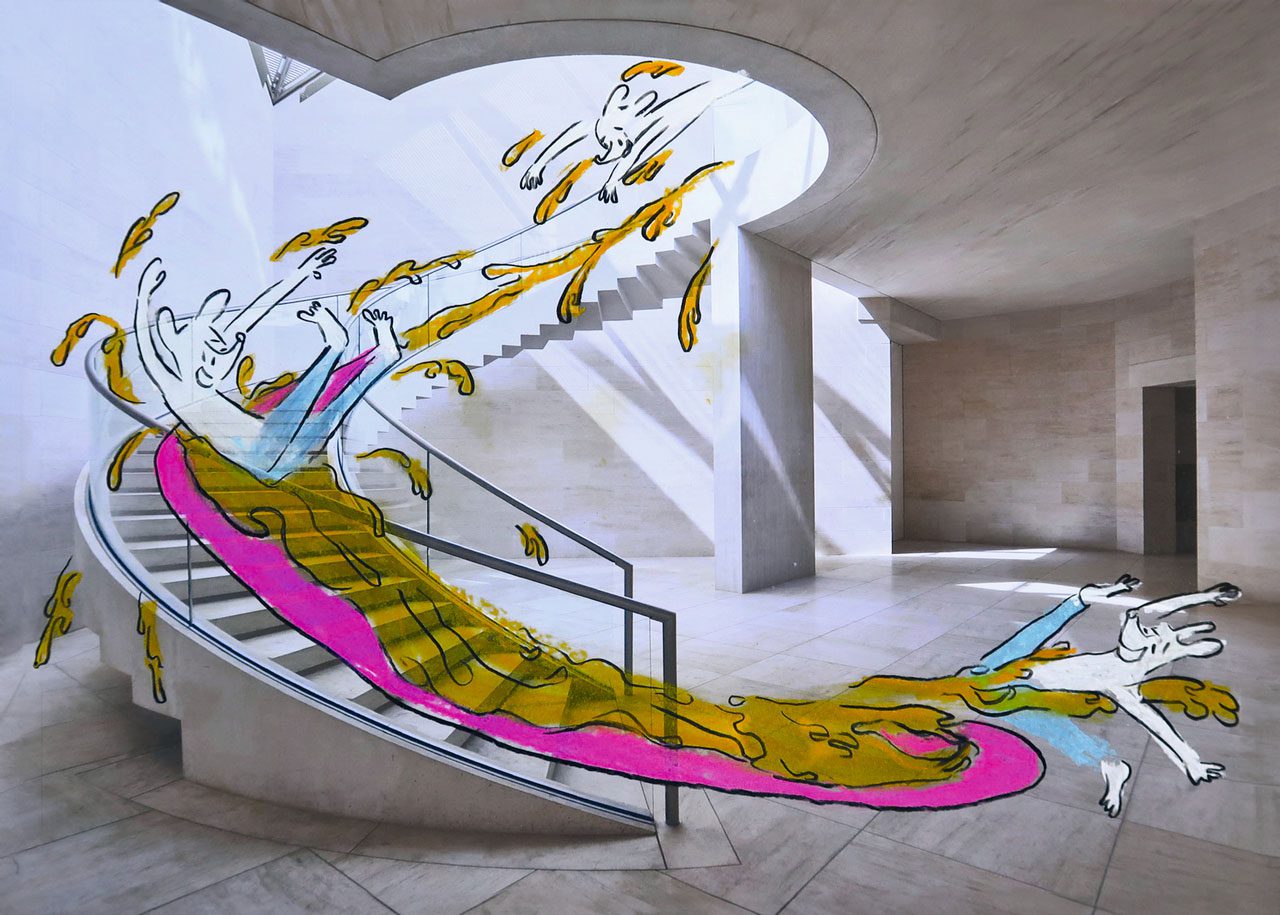
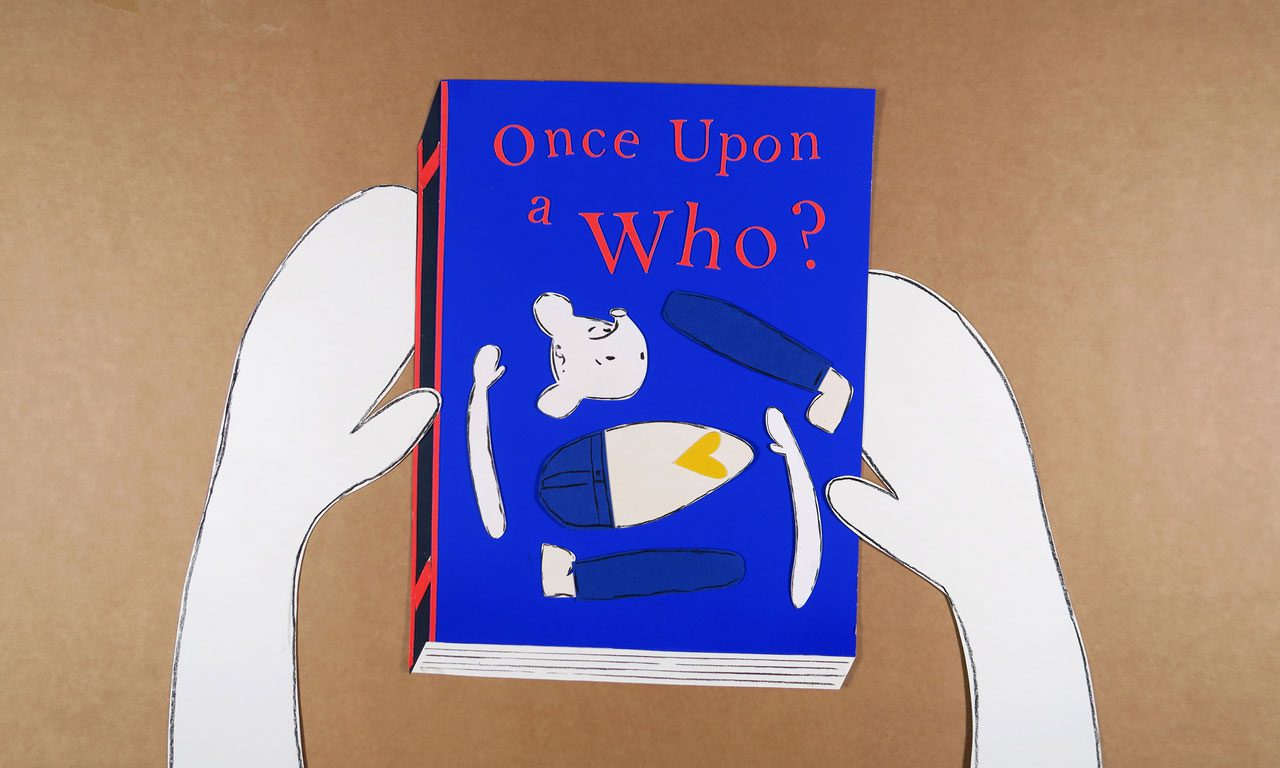
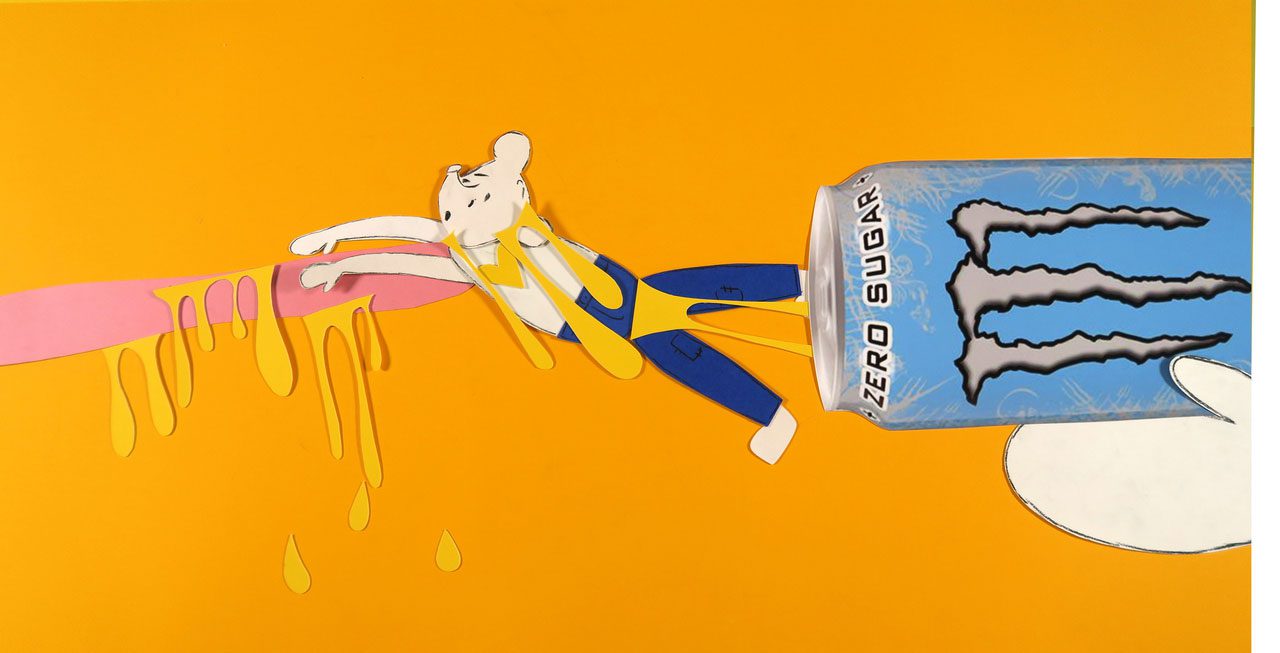
A key entry point into Fujiwara’s practice is the evolving project “Who the Bær”, centered on the fictional character Who the Bær. This cartoon-like bear—deliberately empty, without fixed identity or narrative—acts as a vessel onto which meaning is projected. Appearing across installations, animations, and sculptures, Who the Bær inhabits scenarios ranging from museum displays to global tourist sites. In works such as “Who the Bær at the Venice Biennale”, Fujiwara places the character within the mechanisms of the art world itself, exposing how identity and value are constructed through institutional framing. The figure’s cheerful simplicity masks a deeper provocation: in an age of endless representation, is identity something we possess, or something continuously assigned to us?
This inquiry continues in “The Happy Museum”, an immersive installation that mimics the architecture and didactic language of contemporary museums. Visitors encounter playful displays, bright colors, and seemingly accessible narratives, only to realize that the promise of “happiness” is itself carefully staged. Here, Fujiwara interrogates the authority of cultural institutions, questioning how they shape collective memory and emotional experience. The work reflects a broader tension in his practice between seduction and critique—between what is shown and what is concealed.
Fujiwara’s earlier works often draw more directly from personal history. In “Welcome to the Hotel Munber”, the artist reconstructs, through film and storytelling, the hotel once run by his father on the Spanish coast. What begins as a seemingly intimate family narrative expands into a complex meditation on globalization, migration, and the performance of identity within spaces of tourism. The hotel becomes a microcosm of cultural exchange, where authenticity is both sought after and staged for consumption.
Similarly, in “Joanne”, Fujiwara turns to his own biography to explore themes of desire, aspiration, and the influence of popular culture. Through a layered narrative involving a childhood tutor obsessed with Madonna, the work examines how identities are shaped through imitation and fantasy. Personal memory is filtered through collective imagery, revealing the porous boundary between lived experience and cultural construction.
Across these works, recurring motifs—cartoons, theme parks, iconic figures, museums, and mass tourist destinations—emerge as critical sites of investigation. Fujiwara is drawn to places and images that promise authenticity while simultaneously fabricating it. In projects such as “Revolution”, where historical narratives are re-staged through installation and performance, he reveals how even the most foundational stories of identity and nationhood are subject to reinterpretation and myth-making.
His works frequently oscillate between the playful and the unsettling. Bright, exaggerated aesthetics coexist with moments of ambiguity or discomfort, prompting reflection on the systems that shape contemporary experience—from global tourism and consumer culture to the circulation of images in digital space. Beneath their surface charm lies a persistent and poignant inquiry: why does the desire for authenticity endure in a world increasingly defined by simulation?
Bringing together nearly twenty years of artistic production, “A Whole New World “offers a comprehensive view of Fujiwara’s multifaceted practice. Spanning painting, film, performance, animation, and storytelling, the exhibition reveals an artist deeply attuned to the complexities of the present. Rather than offering definitive answers, Fujiwara constructs spaces of encounter—sites where viewers are encouraged to question, reflect, and reconsider the narratives that shape their understanding of reality.
In this way, the exhibition does not simply depict the twenty-first century; it actively stages it. Through figures like Who the Bær, reconstructed memories, and immersive environments, Fujiwara invites us to navigate a landscape where fiction and reality collapse into one another—where identity is fluid, authenticity elusive, and meaning always in flux.
Photo: Simon Fujiwara, Whodam – A Museum of Art for Who?, 2026 (Detail), Courtesy of the artist and Esther Schipper, Berlin/Paris/Seoul, Photo: CHROMA
Info: Curator: Léon Kruijswijk, Assistant Curator: Nicole Wittman, Mudam Luxembourg – Musée d’Art Moderne Grand-Duc Jean, 3 Park Dräi Eechelen, Luxembourg-Kirchberg, Duration: 20/3-23/8/2026, Days & Hours: Tue & Thu-Sun 10:00-18:00, wed 10:00-21:00, www.mudam.com/
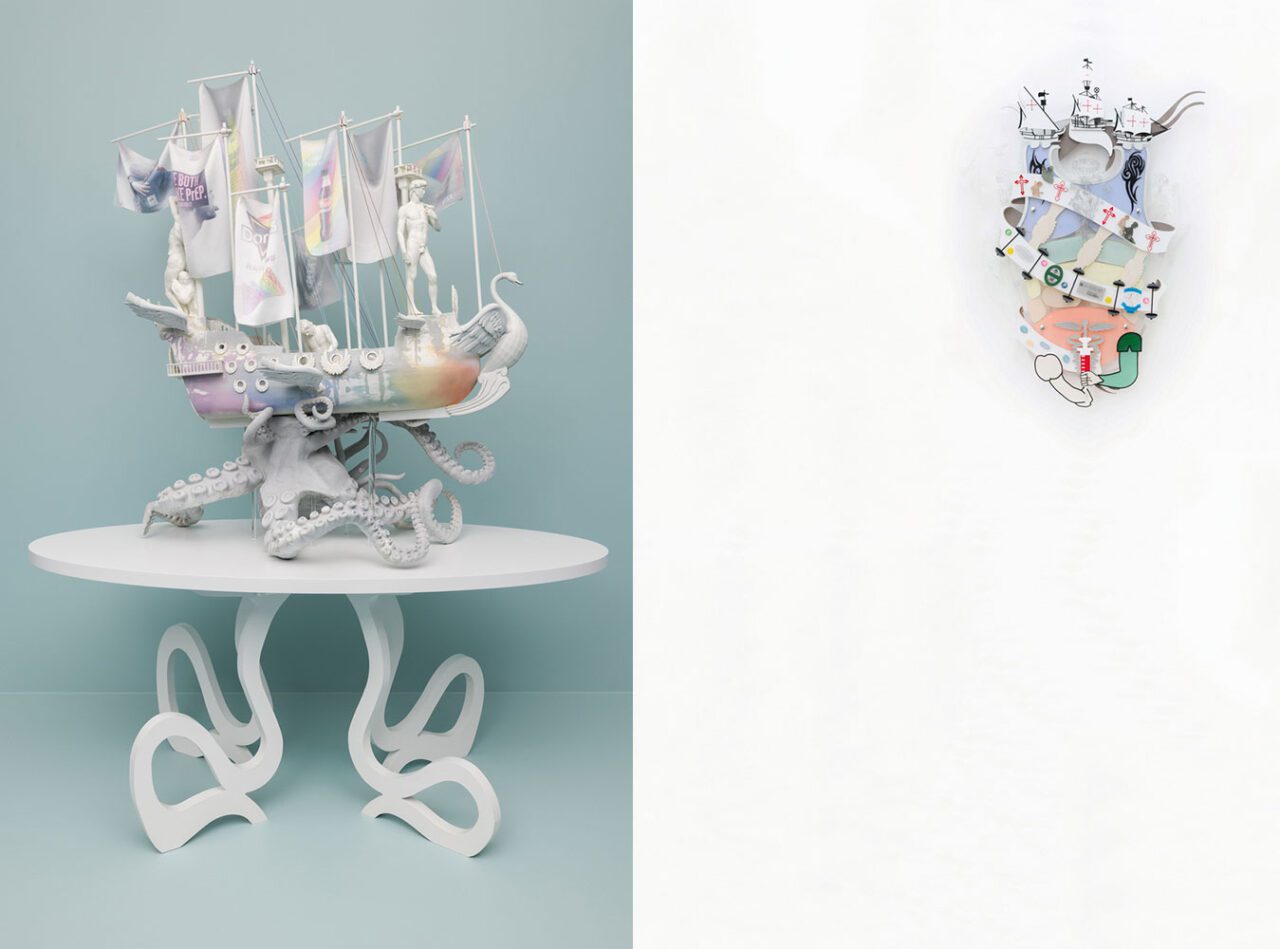
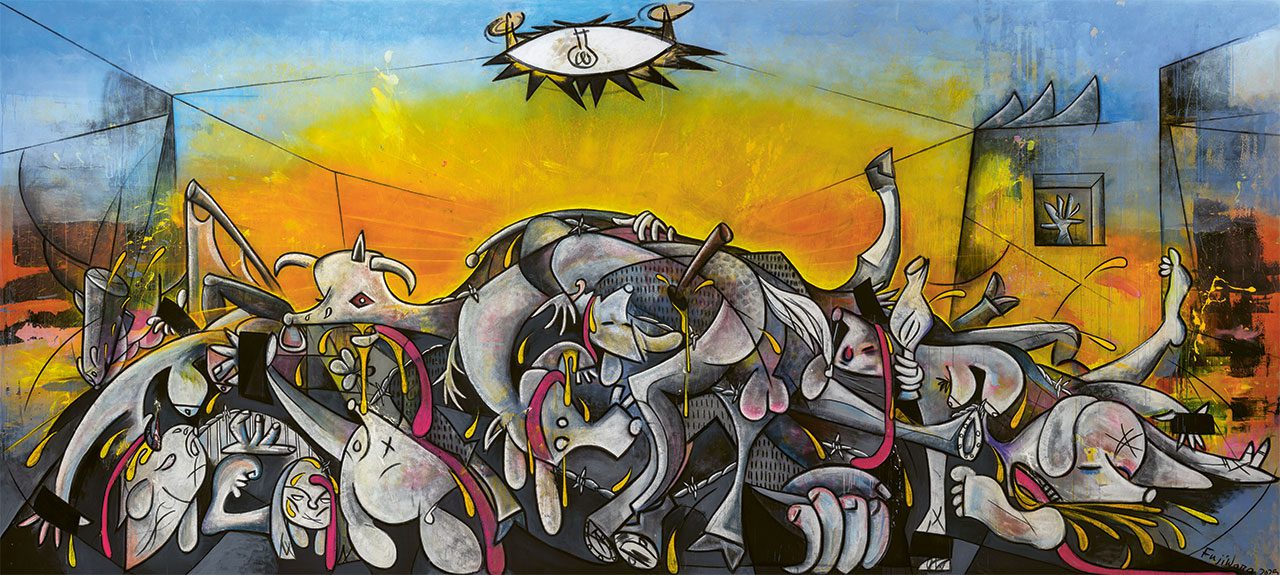
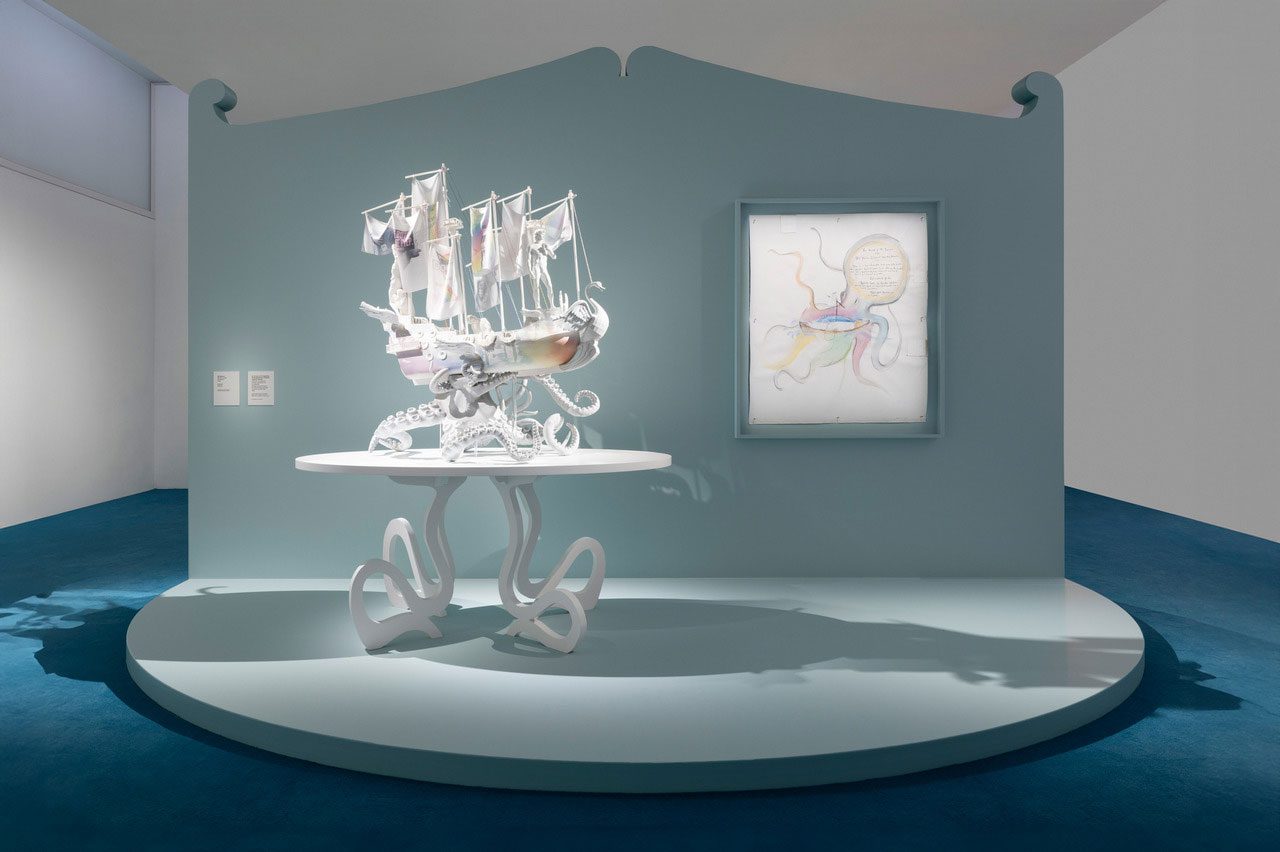
Right: Simon Fujiwara, Syphilis: A Conquest, 2020, Courtesy of the artist and Dvir Gallery