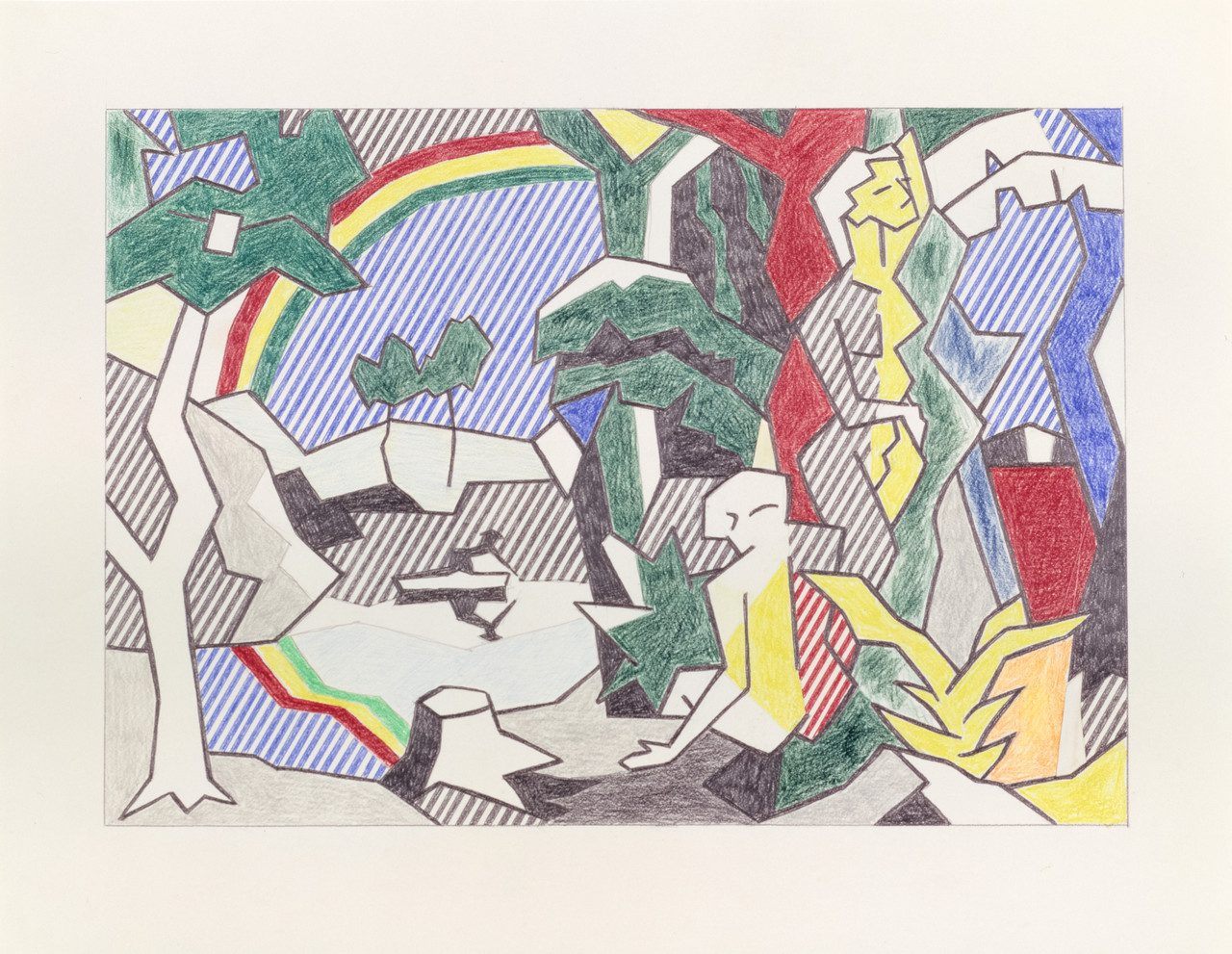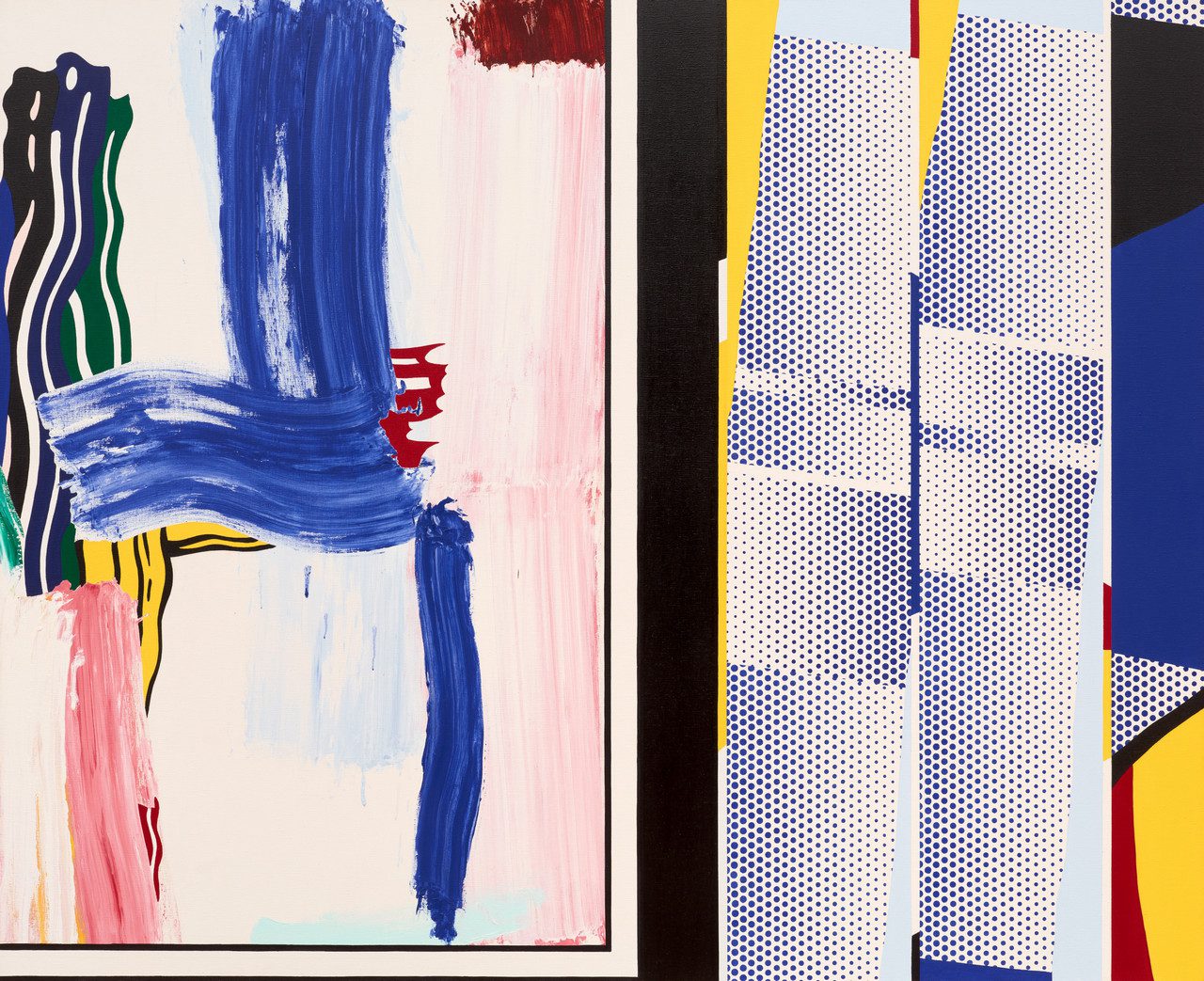
ART CITIES: N.York-Roy Lichtenstein
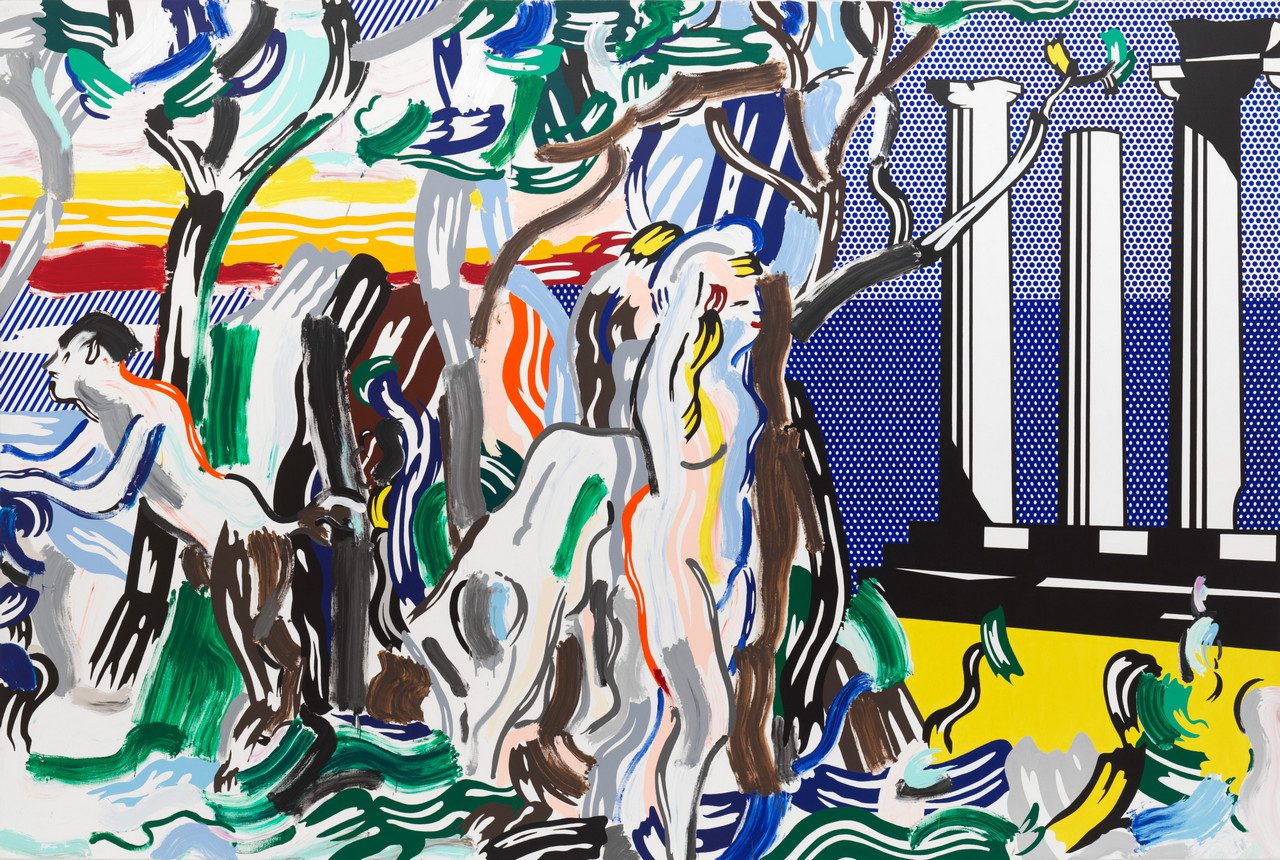
A defining figure of the Pop Art movement, Roy Lichtenstein forged a career built on a provocative paradox: the pursuit of originality through imitation. Rising to prominence in the early 1960s, he drew unapologetically from the visual language of comic strips and commercial advertising, appropriating and transforming mass-produced imagery into the realm of fine art.
By Efi Michalarou
Photo: Gagosian Archive
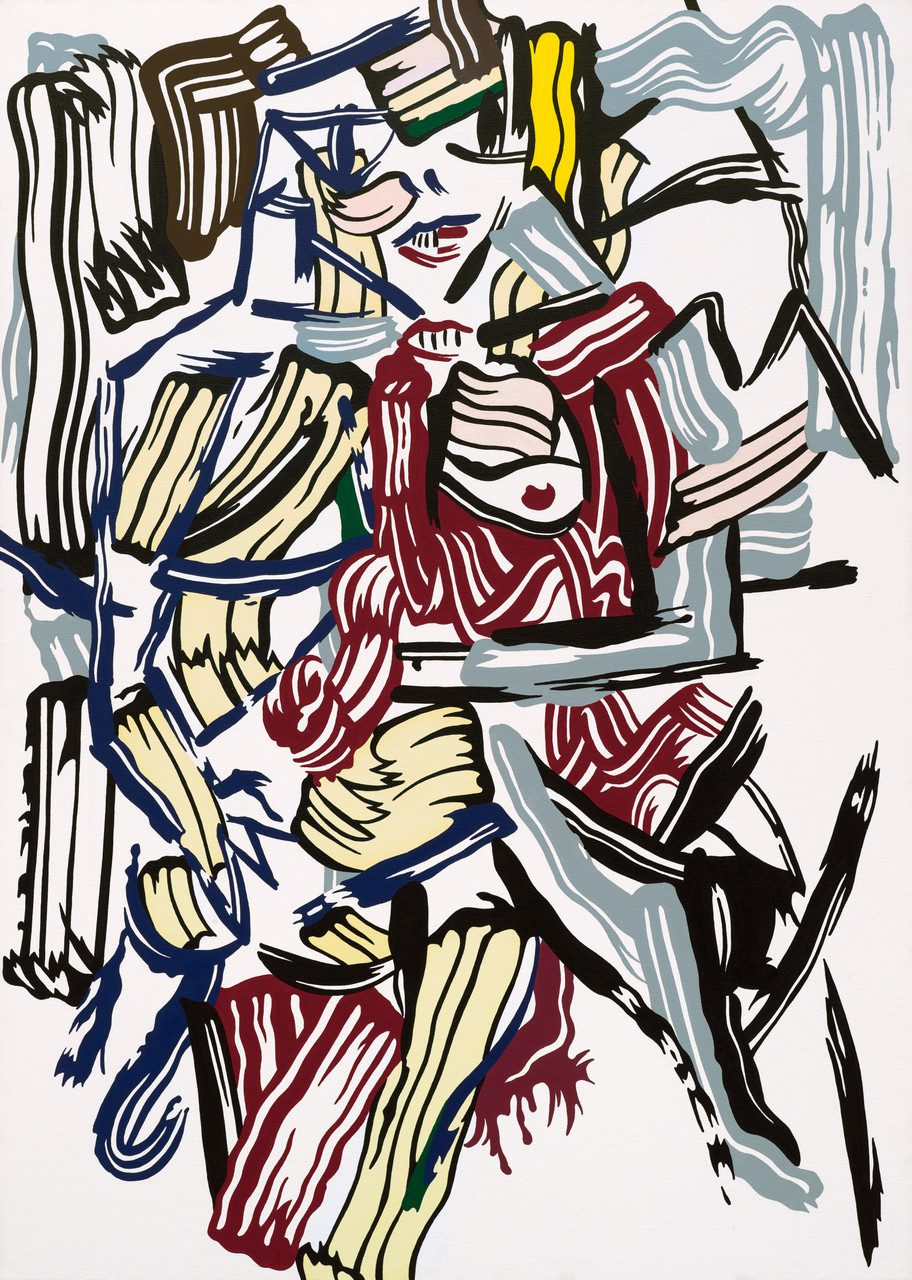
Yet to characterize Roy Lichtenstein’S work as mere borrowing would be to overlook the conceptual precision that underpinned his practice. Lichtenstein did not simply replicate images—he reframed them, stripping them of context and re-presenting them in ways that challenged entrenched hierarchies between “high” and “low” culture. This principle of “equalizing treatment,” in which all sources—whether a comic panel, an art historical reference, or an everyday object—are subjected to the same formal rigor, lies at the heart of his oeuvre. It is also the conceptual anchor of the exhibition “Painting with Scattered Brushstrokes”, which brings renewed attention to a pivotal aspect of Lichtenstein’s artistic inquiry. Comprising a carefully selected group of paintings, a sculpture, watercolors, and works on paper drawn exclusively from the Collection of the Lichtenstein Family, the exhibition offers an intimate yet expansive view of his work during the 1970s and 1980s. The exhibition takes its title from the 1984 painting “Painting with Scattered Brushstrokes”, a work that encapsulates Lichtenstein’s sustained engagement with one of the most fundamental elements of painting: the brushstroke. Traditionally regarded as the ultimate trace of the artist’s hand, the brushstroke has long been associated with authenticity, immediacy, and emotional expression—qualities that reached their apotheosis in Abstract Expressionism. For painters such as Jackson Pollock and Willem de Kooning, the brushstroke functioned as a direct conduit of the psyche, an index of spontaneous gesture and individual presence.
Lichtenstein’s treatment of the brushstroke, however, is marked by a distinctly critical distance. Beginning in 1965, he reconceptualized the brushstroke as an image rather than an action. In doing so, he effectively inverted its traditional meaning. His brushstrokes are not gestural traces but stylized forms—bold, graphic, and meticulously outlined. Rendered in flat, uniform colors and often enlarged to monumental proportions, they possess a mechanical clarity that stands in stark contrast to the expressive turbulence they ostensibly evoke. This tension between appearance and execution is central to the works featured in the exhibition. Throughout the 1970s and 1980s, Lichtenstein revisited the motif with increasing sophistication, exploring its formal and symbolic potential across multiple media. The paintings from this period reveal a heightened complexity in composition, as brushstrokes intersect, overlap, and disperse across the canvas, creating dynamic visual fields that oscillate between abstraction and representation. At the same time, these works deepen Lichtenstein’s ongoing engagement with questions of style and originality. By appropriating the visual vocabulary of Abstract Expressionism—a movement that had defined itself through notions of individuality and authenticity—he exposes the extent to which even the most “personal” artistic gestures can be codified, reproduced, and ultimately commodified. In Lichtenstein’s hands, the brushstroke becomes both subject and critique, a motif that simultaneously embodies and undermines the myth of artistic genius.
The exhibition also highlights the importance of works on paper within Lichtenstein’s practice. These pieces, which include both independent compositions and preparatory studies, offer valuable insight into his working process. Far from being secondary to his paintings, they function as sites of experimentation, where ideas are tested, refined, and reconfigured. Their inclusion underscores the iterative nature of Lichtenstein’s approach, revealing the careful planning that lies behind even his most seemingly spontaneous images. Among the works connected to this body of material is “Mural with Blue Brushstrok”e, a large-scale public commission originally installed at 787 Seventh Avenue. In this ambitious project, the brushstroke motif is expanded to architectural scale, transforming into a cascading waterfall that merges abstraction with environmental imagery. The work exemplifies Lichtenstein’s ability to adapt his visual language to different contexts, extending his exploration of the brushstroke beyond the confines of the canvas and into public space. What emerges from “Painting with Scattered Brushstrokes” is a portrait of an artist deeply engaged with the history of painting, yet equally committed to questioning its conventions. Lichtenstein’s work resists easy categorization: it is at once playful and analytical, ironic and reverential. By isolating and reimagining the brushstroke—arguably the most elemental component of painterly practice—he transforms it into a vehicle for critical inquiry, a means of examining how meaning is constructed within visual culture.
In the broader context of contemporary art, Lichtenstein’s investigations remain strikingly relevant. His interrogation of authorship, originality, and the circulation of images anticipates many of the concerns that continue to shape artistic production today. In an era defined by digital reproduction and visual saturation, his work serves as a reminder that even the most familiar forms can be reexamined and redefined. The exhibition does more than revisit a single motif; it illuminates the conceptual coherence of Lichtenstein’s practice as a whole. Through his sustained engagement with imitation, he reveals the generative potential of repetition and the transformative power of reinterpretation. In Lichtenstein’s hands, the brushstroke is no longer a mere mark—it is an idea, a symbol, and a site of endless possibility.
Photo: Roy Lichtenstein, Forest Scene with Temple, 1986, Acrylic, oil, and graphite pencil on canvas, 120 x 180 1/4 inches (304.8 x 457.8 cm), © Estate of Roy Lichtenstein, Photo: Maris Hutchinson, Courtesy Gagosian
Info: Gagosian, 541 West 24th Street, New York, NY, USA, Duration: 19/3-25/4/2025, Days & Hours: Tue-Sat 10:00-18:00, https://gagosian.com/