ART CITIES: Athens-Tom Wesselmann
In the early 1960s, Tom Wesselmann emerged as a pivotal figure within Pop Art, turning away from the gestural intensity of Abstract Expressionism toward a radically different project: the reinvention of figuration through the visual language of consumer culture. His ambition was not to reject abstraction, but to rival its immediacy—producing images that could match its scale, force, and psychological charge while remaining resolutely representational.
By Efi Michalarou
Photo: Gagosian Archive
The tension—between image and object, body and sign—defines Tom Wesselmann’s oeuvre. His nudes, still lifes, and landscapes occupy a distinct territory where classical genres are filtered through mass media, advertising aesthetics, and a rigorously controlled formal vocabulary. Collage elements, industrial materials, and appropriated imagery enter the pictorial field not as embellishments, but as structural components. The result is a body of work that is at once seductive and analytical, sensuous and self-aware. Now, with the exhibition “Seascapes, Still Lifes, and Nudes” at Gagosian Athens, Wesselmann’s work is presented in Greece for the first time in a solo context. Spanning his entire career, the show offers a concentrated view of an artist who persistently redefined the terms of modern figuration. At the center of the exhibition is “Great American Nude #1” (1961), a foundational work that inaugurates one of Wesselmann’s most significant series. The painting stages a reclining female figure across a flattened, vividly colored field. Its visual economy—unmodulated tones, crisp contours, and simplified curves—recalls the legacy of Henri Matisse, yet its compositional logic is distinctly American. Behind the figure, fragments of national and artistic identity collide: a collaged landscape, the French tricolor, and a constellation of stars evoking the American flag. These elements do not merely decorate the scene; they articulate Wesselmann’s project of embedding high art within the visual syntax of popular culture. Crucially, the body here is not individualized. Wesselmann avoids portraiture, reducing identity to form, color, and erotic signification. This strategy aligns with what he termed “erotic simplification”—a process of distillation that transforms the nude into both an object of desire and a formal device.
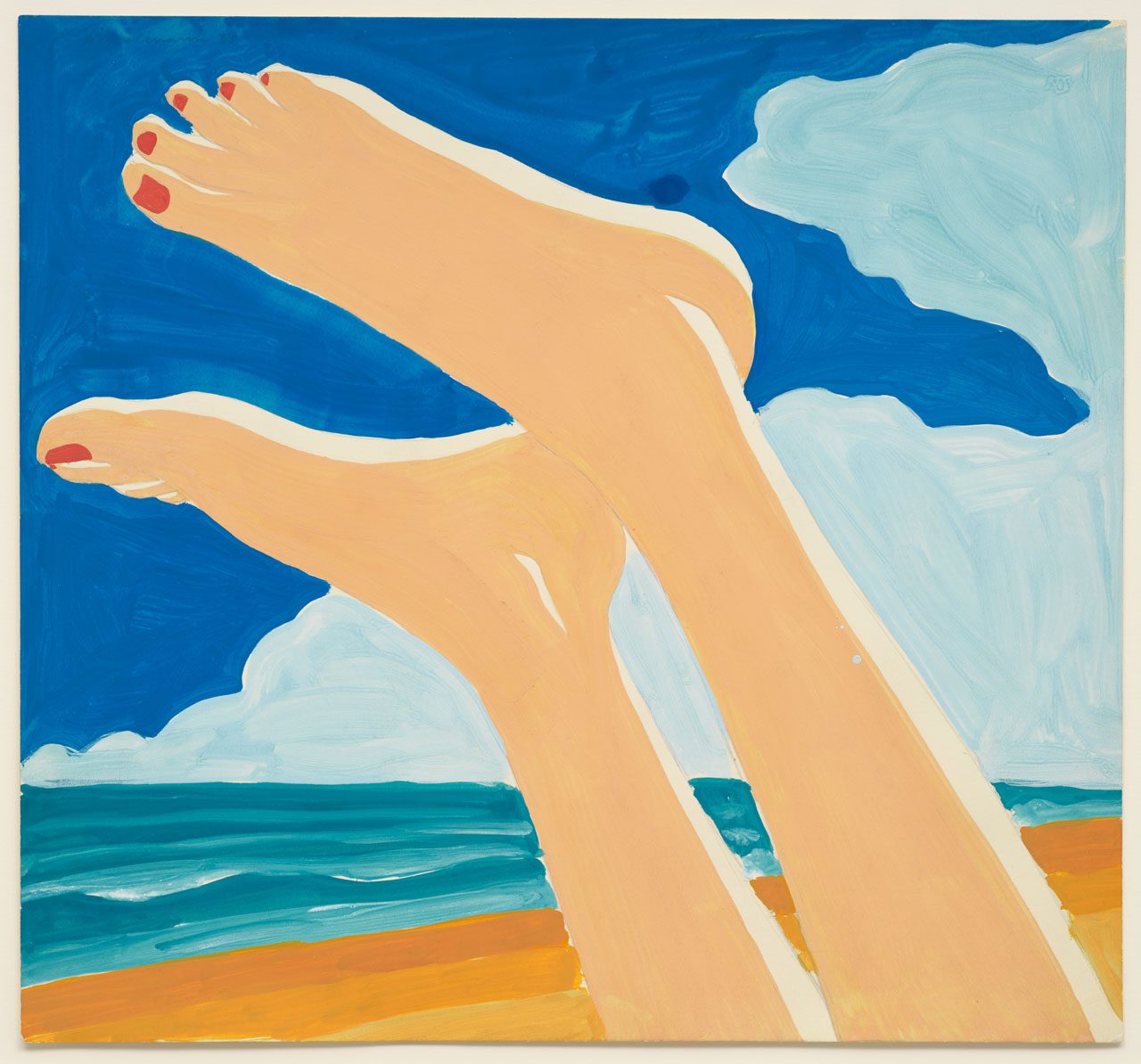
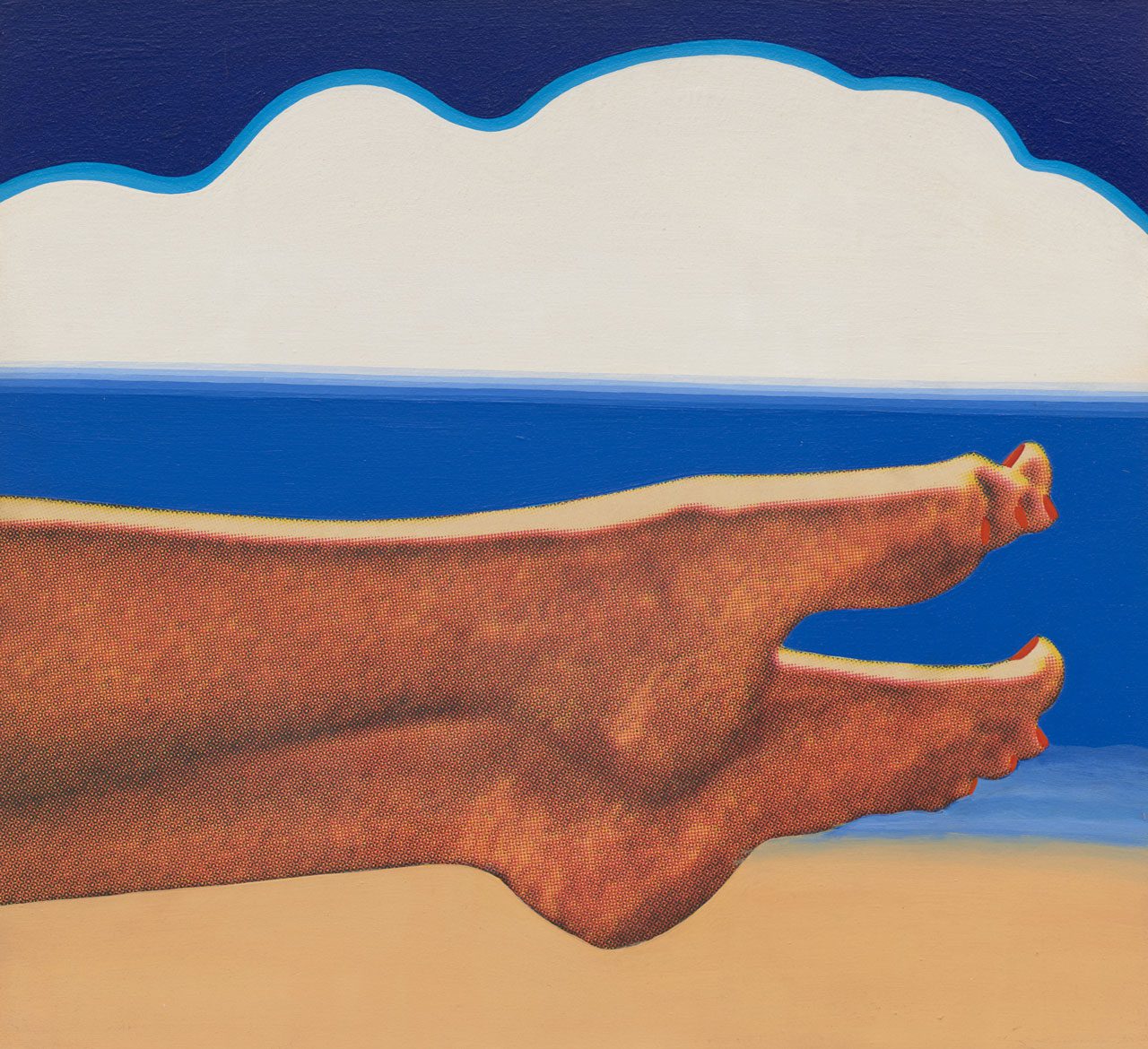
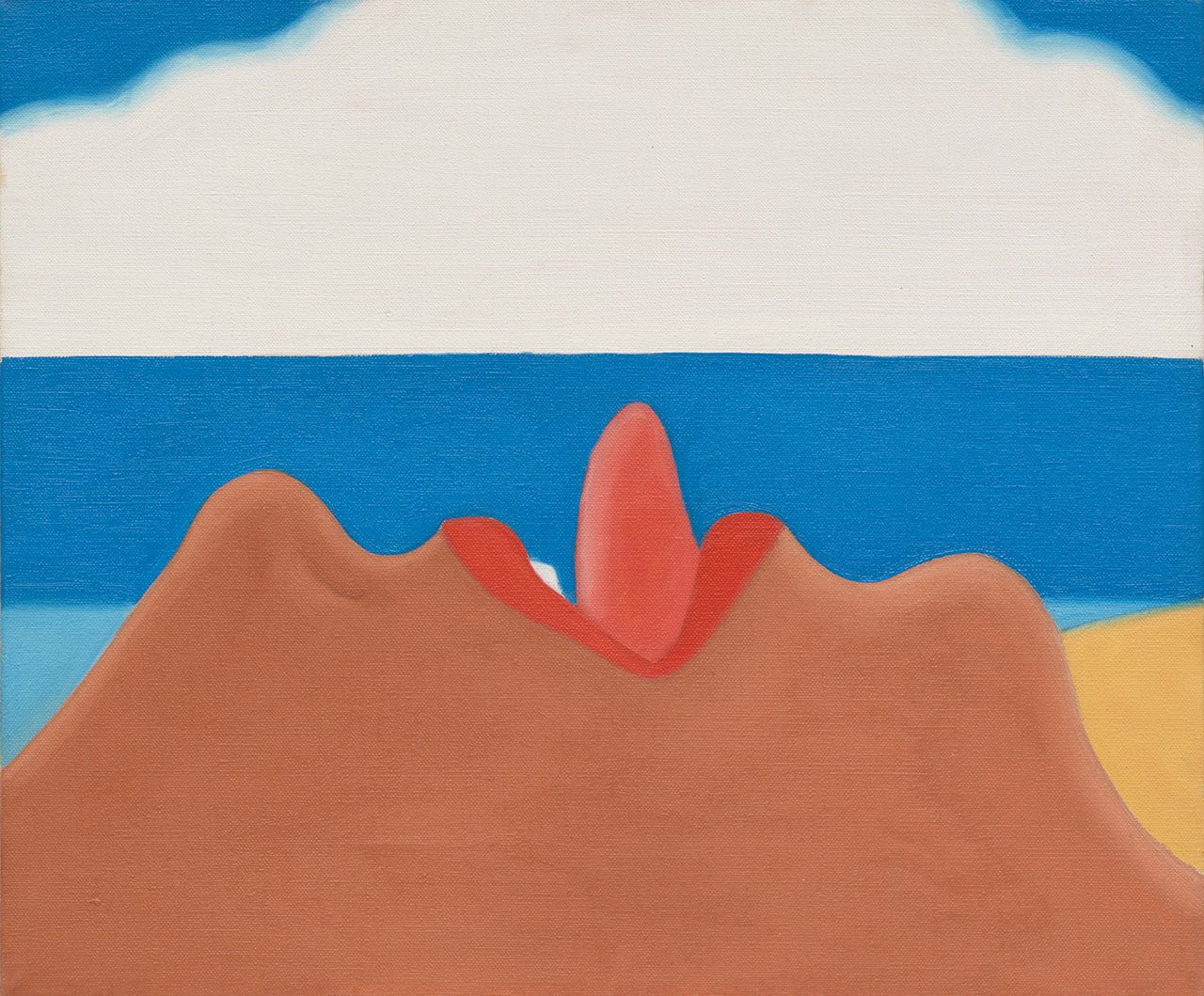
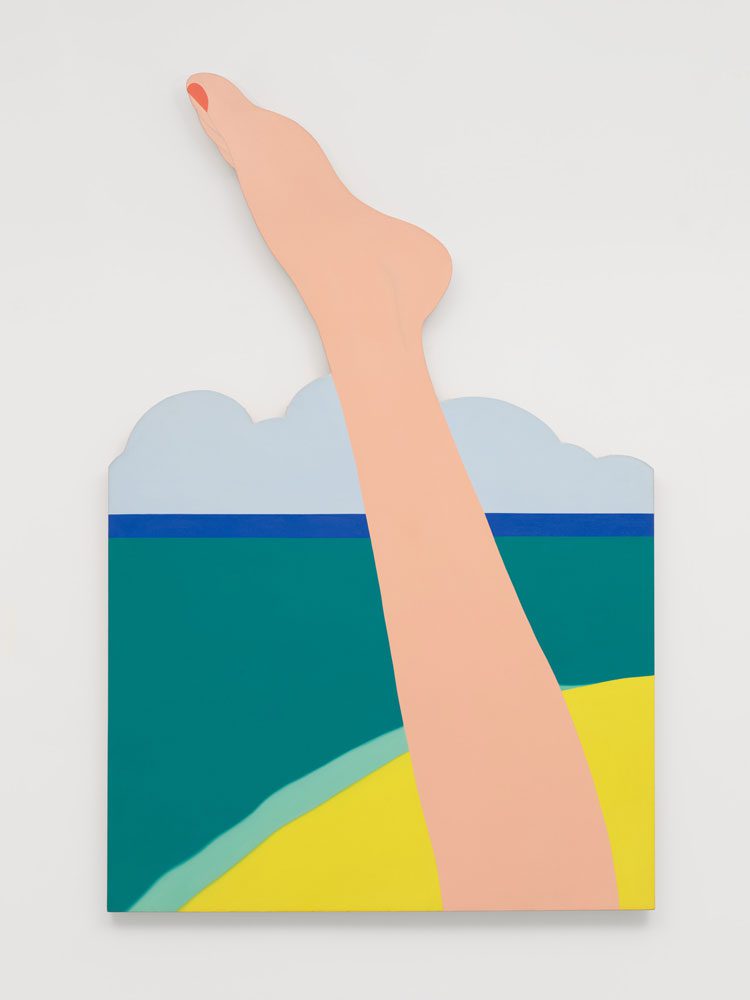
By the mid-1960s, Wesselmann extended this logic into his seascapes, a series that fractures the body into partial views—feet, breasts, profiles—set against bands of saturated color representing sky, sea, and sand. These compositions operate through omission as much as presence. In “Seascape #24” (1967–71), for instance, the female breast is paradoxically emphasized through its absence. The surrounding chromatic fields intensify perception, directing attention to what is no longer fully depicted. As Wesselmann noted, the experience mirrors the perceptual disorientation of a sunlit beach, where vision oscillates between figure and environment. Here, the natural landscape is not a backdrop but an active participant in the construction of meaning. The body dissolves into its surroundings, becoming a site of perceptual and erotic tension. Wesselmann’s still lifes further complicate the boundary between representation and objecthood. Incorporating real materials and later evolving into laser-cut steel constructions, these works transform line drawings into physical structures. Pieces such as “Still Life with Daffodil, Rose and Green Plate” (1985) and “Country Bouquet with Hibiscus” (1989) demonstrate his ongoing commitment to formal innovation. In later works like “Still Life with Blonde and Two Goldfish” (1999) and “Blue Nude #0”8 (2000), Wesselmann revisits his core motifs—abstraction, vivid color, and the interplay between figure and object—with renewed clarity. Across decades, his practice remains remarkably consistent in its concerns, even as its materials and techniques evolve.
The arrival of Wesselmann’s work in Athens is more than a geographical milestone. It situates his distinctly American visual language within a different cultural and historical context—one where classical figuration has its own deep lineage. The exhibition underscores how Wesselmann’s art, while rooted in the specific conditions of postwar America, engages broader questions about representation, desire, and the status of the image. Produced during a period when consumption, sexuality, and visual culture were undergoing profound transformation, Wesselmann’s works continue to resonate. They do not merely reflect their time; they anticipate the conditions of image saturation and commodified desire that define contemporary visual experience. In “Seascapes, Still Lifes, and Nudes”, the viewer encounters not just a retrospective, but a sustained inquiry into what it means to see—and to construct meaning—through images. Wesselmann’s answer is neither purely abstract nor traditionally figurative. It is something in between: a precise, controlled, and enduringly provocative synthesis.
Photo: Tom Wesselmann, Little Seascape #7, 1965, Acrylic on shaped canvas, 10 x 12 inches (25.4 x 30.5 cm), © The Estate of Tom Wesselmann/Licensed by ARS/VAGA, New York, Photo: Owen Conway, Courtesy Gagosian
Info: Gagosian, 22 Anapiron Polemou Street, Athens, Greece, Duration: 17/3-30/5/2026, Days & Hours: Tue-Wed & Fri-Sat 11:00-19:00, Thu 11:00-20:00, https://gagosian.com/