PRESENTATION: Peter Saul-Peter Saul’s Art History
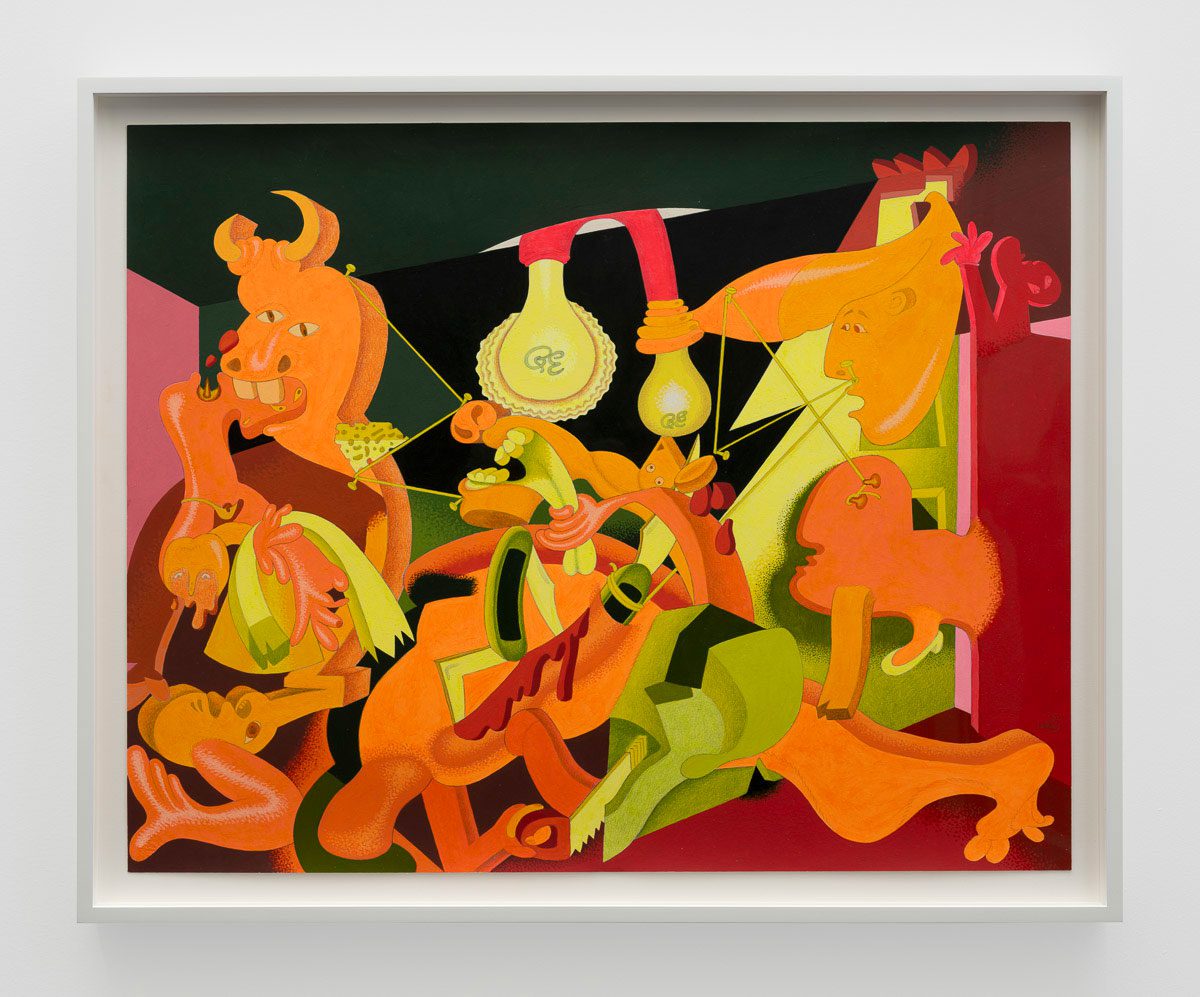
In the years when Abstract Expressionism dominated American painting, intensity and philosophical depth were often measured by gesture and abstraction. For the young Peter Saul, however, this reigning aesthetic felt overly cerebral. Rather than pursuing the heroic language of abstraction, Saul veered toward a peculiar form of realism—though only barely. His canvases filled with cartoon steaks spilling from refrigerators, bulbous consumer goods, and rubbery superheroes with serpentine limbs proposed an entirely different visual logic: flat, crowded compositions where satire and painterly discipline collided.
By Dimitris Lempesis
Photo: Gladstone Gallery Archive
Though critics frequently grouped him with Pop Art, Peter Saul resisted the label from the outset. “As soon as I realized it existed, I wanted out of it,” he once remarked, wary of being used as an example of the movement. The impulse to evade categories would become a defining trait of his career. Over more than six decades, Saul has cultivated an unmistakable visual language—acidic color palettes, grotesque caricature, and cartoon-inspired figuration—used to examine politics, consumer culture, and the absurdities of power.
Born in San Francisco in 1934, Saul emerged in the late 1950s at a moment when the American art world was undergoing profound change. Inspired equally by comic books, the anarchic humor of Mad Magazine, and the gestural force of painters such as Willem de Kooning, Saul developed a hybrid style that merged cartoon imagery with painterly exuberance.
His early “Icebox” paintings exemplify this synthesis. Refrigerators—icons of postwar prosperity—burst open in chaotic displays of consumer abundance. Yet within their gleaming interiors, Saul packed absurd narratives: grotesque meats, bulging products, and contorted bodies that parody the promises of American consumer culture. These works share Pop Art’s fascination with everyday imagery but diverge sharply from the cool detachment of figures like Andy Warhol or Roy Lichtenstein. Saul’s paintings are not slick reproductions of mass culture; they are feverish, hand-painted spectacles where the grotesque and the comic coexist.
Critics often describe Saul’s canvases as manic orchestrations of overlapping figures rendered in jarring reds, greens, and blues. Beneath their cartoonish surfaces lies a painter deeply engaged with the formal possibilities of the medium. The works are densely composed, their swirling figures recalling the all-over structure of Abstract Expressionism even as they mock its solemnity.
From the 1960s onward, Saul’s painting became increasingly political. The Vietnam War, American imperialism, and the psychological theatrics of political leaders provided fertile ground for his grotesque imagination. Politicians appear as monsters, clowns, or mutated heroes—figures stretched and distorted into images of moral absurdity.
Yet Saul has always insisted that his political paintings are not moral lectures. Instead, they operate as destabilizing spectacles, pushing satire into territory that is deliberately uncomfortable. Critics have described his canvases as a form of “cartoon violence,” rendered in Day-Glo color and charged with anarchic humor.
The exhibition “Peter Saul’s Art History” presents a survey of thirty-four works spanning seven decades of this relentless experimentation. The show places Saul in dialogue with the very tradition he has spent a lifetime questioning.
Central to the exhibition is a monumental reinterpretation of “Guernica” by Pablo Picasso, the iconic anti-war painting created in response to the bombing of the Basque town during the Spanish Civil War. For Saul, the work’s political urgency remained potent decades later, particularly amid the turmoil of the Vietnam War.
His response—”Little Guernica (Liddul Guernica)”—translates Picasso’s solemn tragedy into Saul’s unruly visual language. The composition becomes exaggerated, grotesque, and openly irreverent. Reflecting on the process, Saul admitted that his first attempt felt “too tame,” prompting him to paint a second version that was deliberately “more cartoony” and less respectful of artistic convention. The result is both homage and provocation: a painting that acknowledges the authority of Picasso’s masterpiece while simultaneously dismantling its aura.
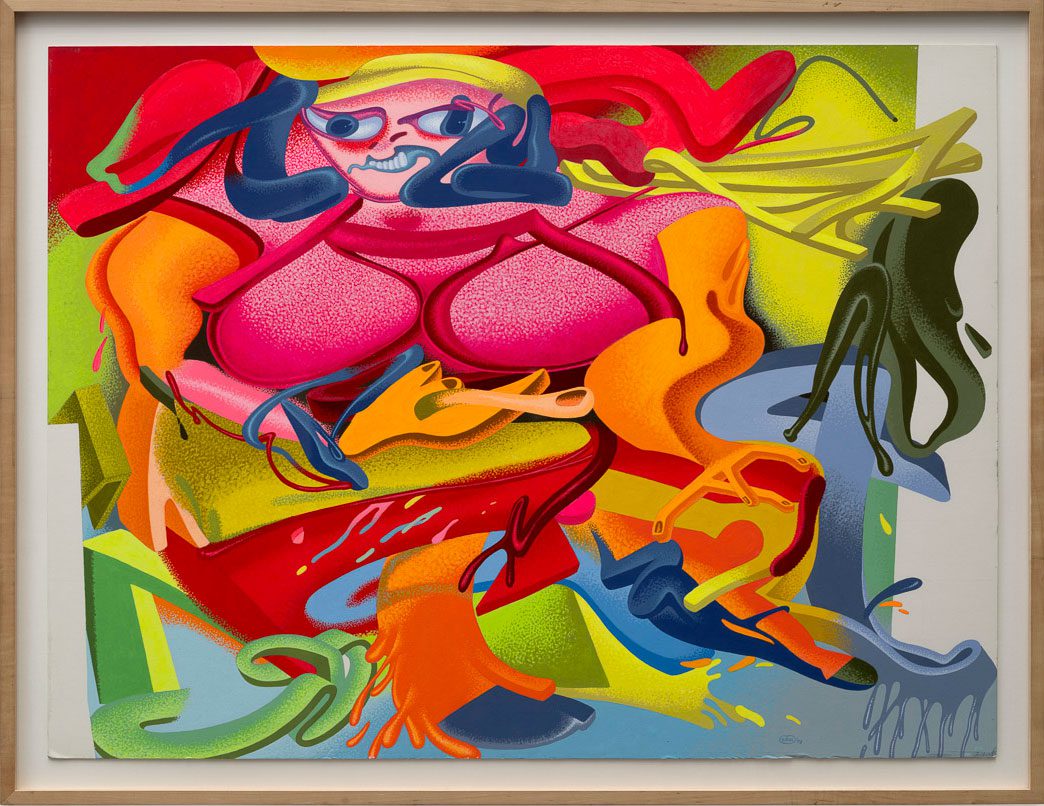
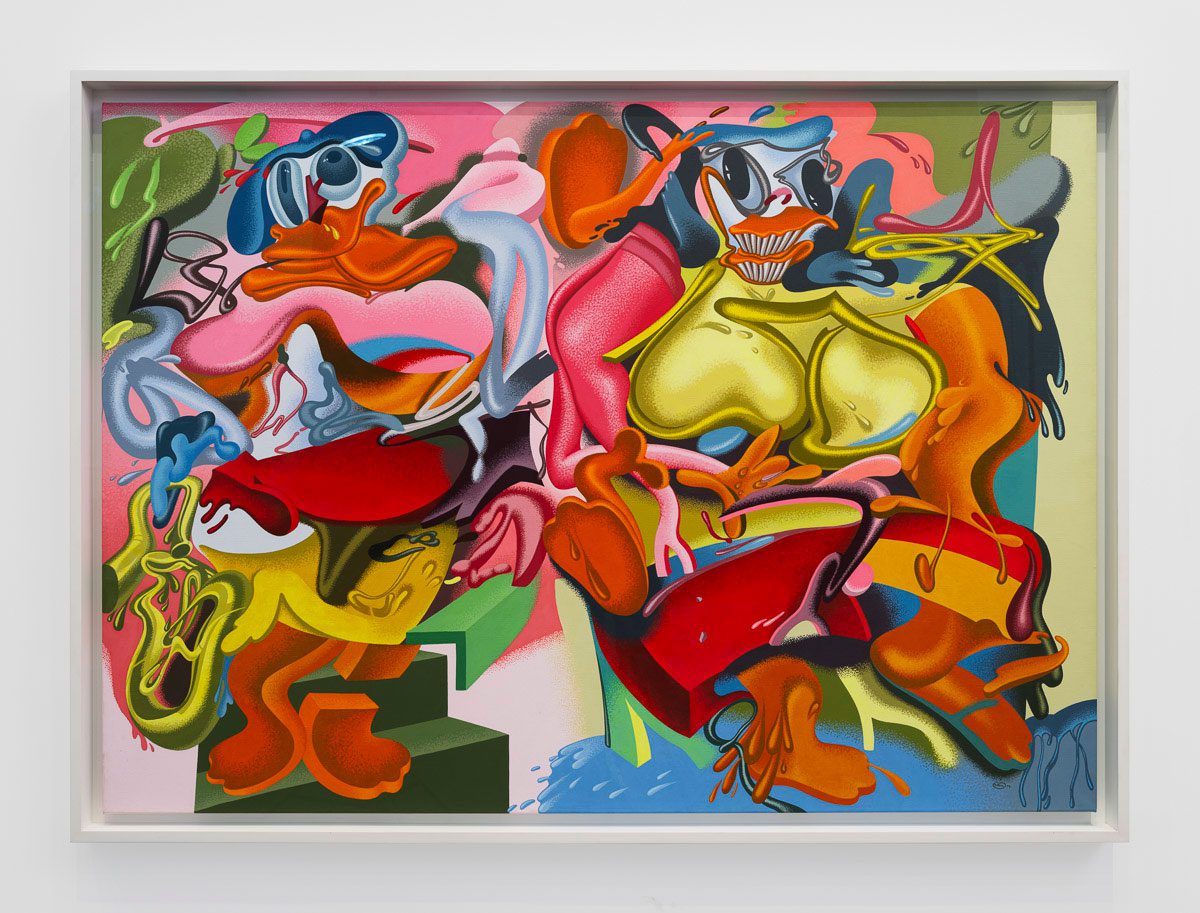
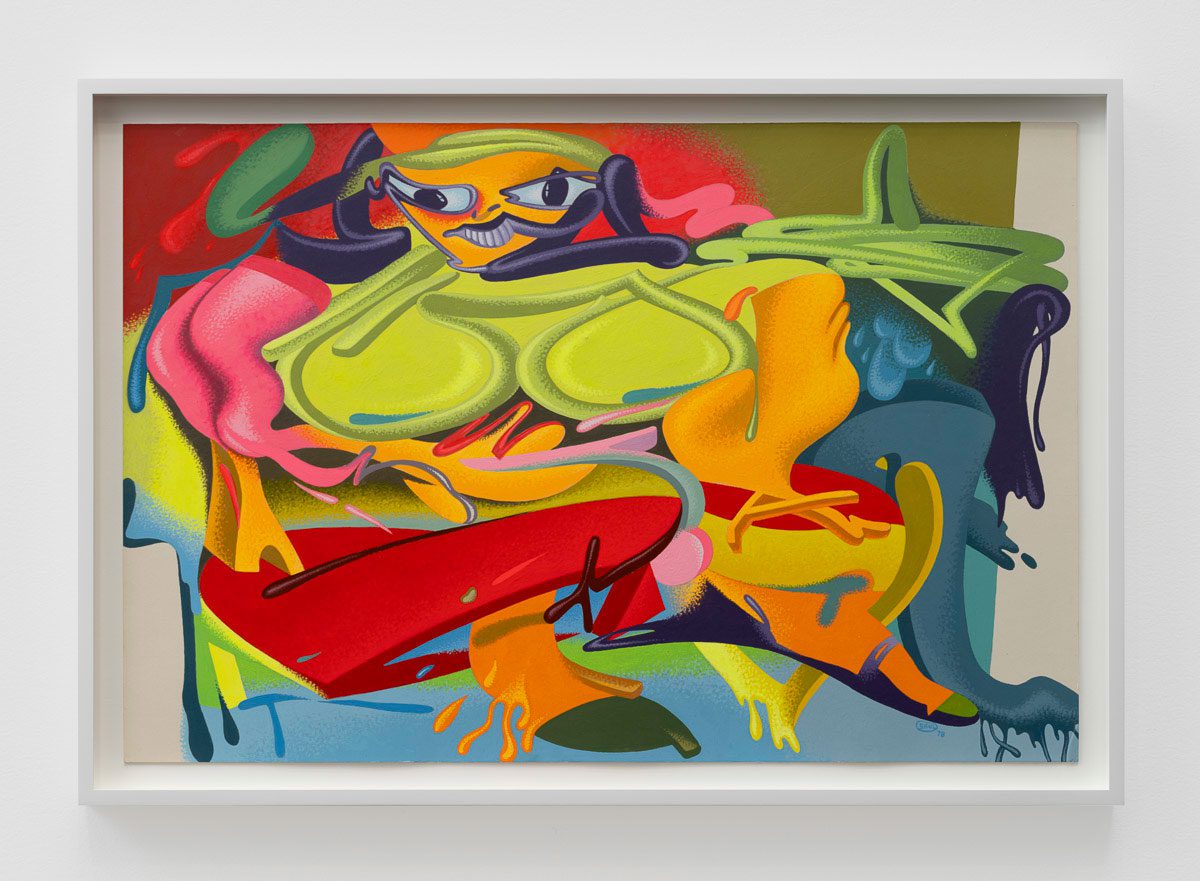
Saul’s engagement with art history does not end with Picasso. The exhibition also presents works in which he reimagines canonical paintings by artists such as Marcel Duchamp, Willem de Kooning, and Salvador Dalí. Among them are reinterpretations of “Nude Descending a Staircase, No. 2”,” Woman I”, “Woman and Bicycle”, and “The Persistence of Memory”.
These works are not straightforward tributes. Instead, Saul transforms them through exaggeration, humor, and distortion—strategies that reveal both his deep knowledge of the canon and his skepticism toward its authority. What might initially appear to be exercises in painterly bravura become, on closer inspection, a critique of modernism’s heroic narratives.
Despite the wild imagery and outrageous humor, Saul’s work has long been admired by fellow artists for its formal rigor. The late artist Mike Kelley once described him as “one of the most important formalist painters,” an assessment that underscores the paradox at the heart of Saul’s practice. Beneath the cartoon grotesquerie lies a meticulous painter deeply invested in composition, color, and the history of the medium.
In this sense, Saul’s rebellion is not simply stylistic but historiographic. By reworking masterpieces and caricaturing cultural icons, he exposes the instability of art-historical hierarchies. His paintings suggest that the canon itself—so often treated with reverence—is open to parody, mutation, and reinvention.
After more than seventy years of painting, Saul remains an artist who refuses easy classification. Neither fully Pop nor entirely Expressionist, neither purely political nor purely comic, his work occupies a singular position within contemporary art. It is painting that laughs at authority—even as it demonstrates an intimate understanding of the traditions it mocks.
Photo: Peter Saul, Untitled (de Kooning Woman), 1978, Oil on board, 27 x 36 x 2 inches (68.6 x 91.4 x 5.1 cm) framed, © Peter Saul / Artists Rights Society (ARS), New York, Courtesy the artist and Gladstone Gallery
Info: Gladstone Gallery, 530 West 21st Street, New York, NY, USA, Duration: 7/3-18/4/2026, Days &Hours: Tue-Sat 10:00-18:00, https://gladstonegallery.com/
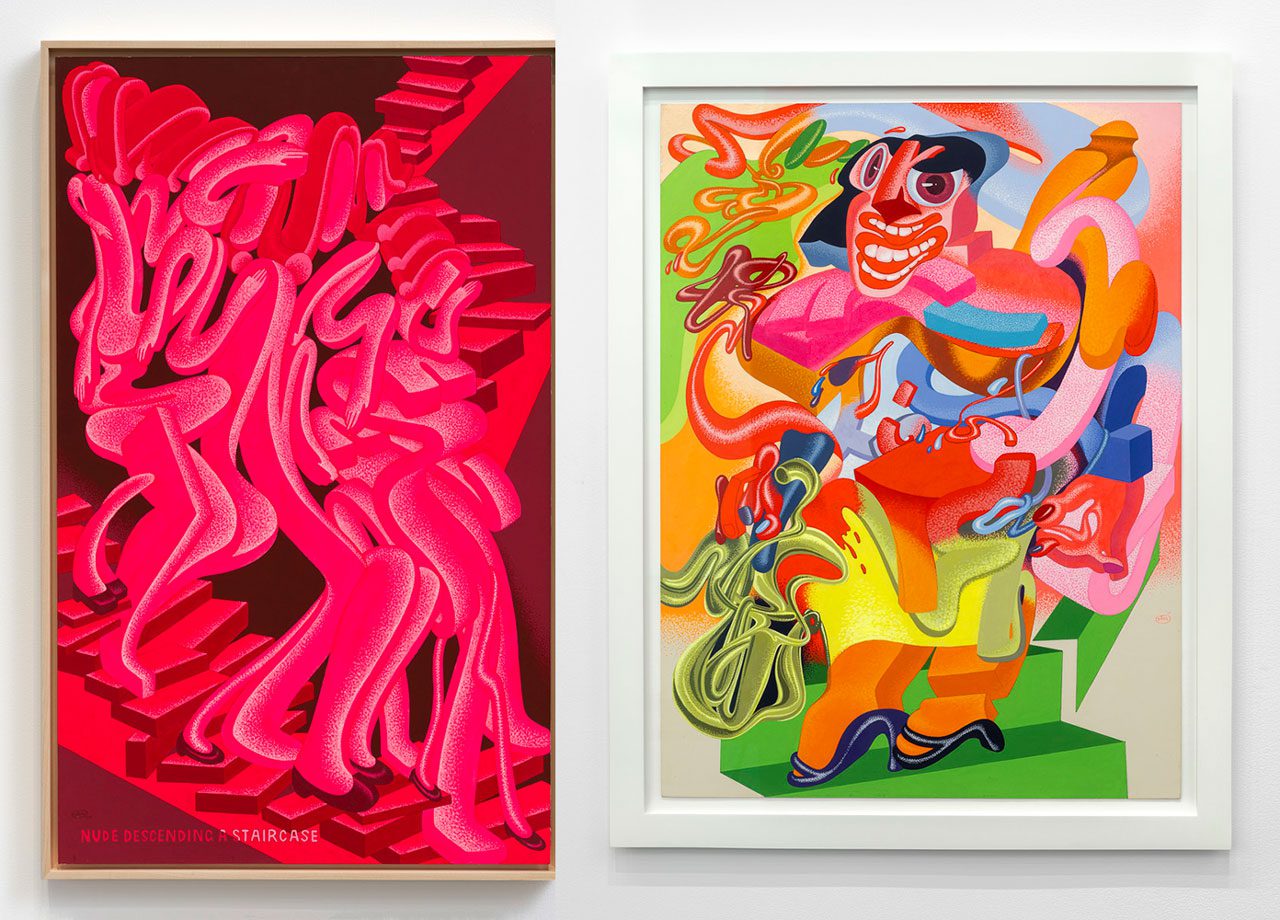
Right: Peter Saul, De Kooning’s “Woman with Bicycle”, 1977, Acrylic on museum board, 40 1/8 x 30 1/8 inches (101.9 x 76.5 cm), © Peter Saul / Artists Rights Society (ARS), New York, Courtesy the artist and Gladstone Gallery
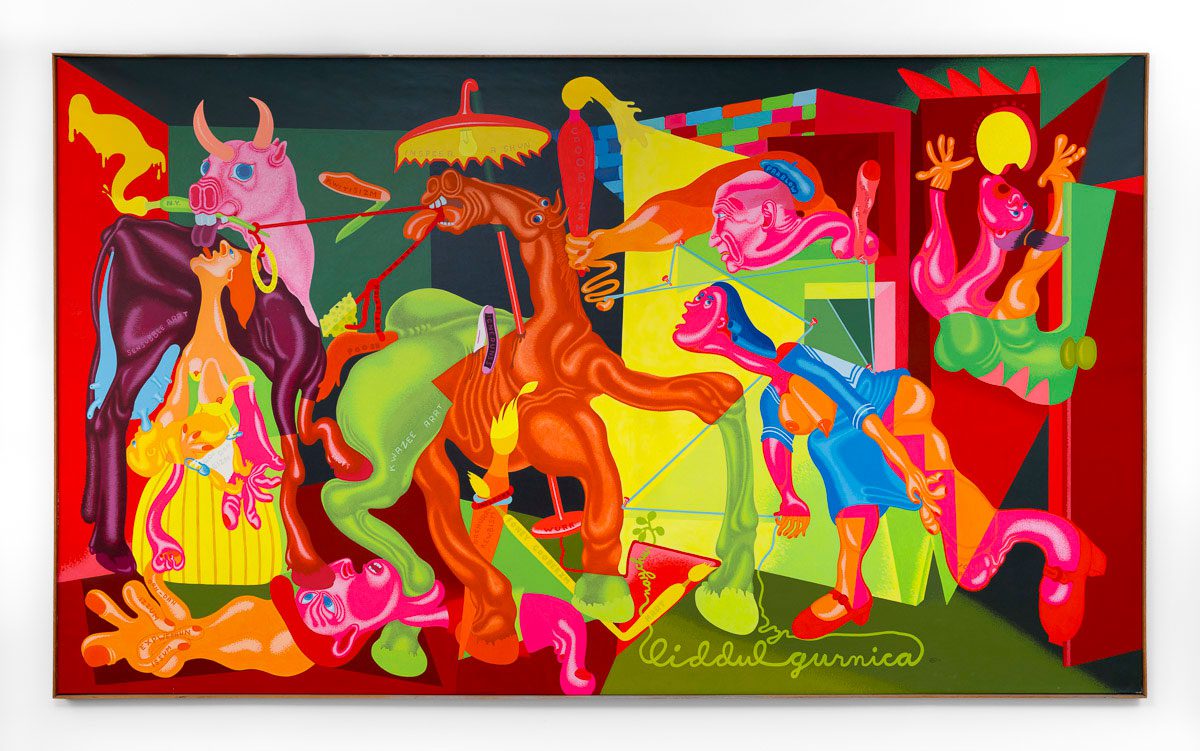
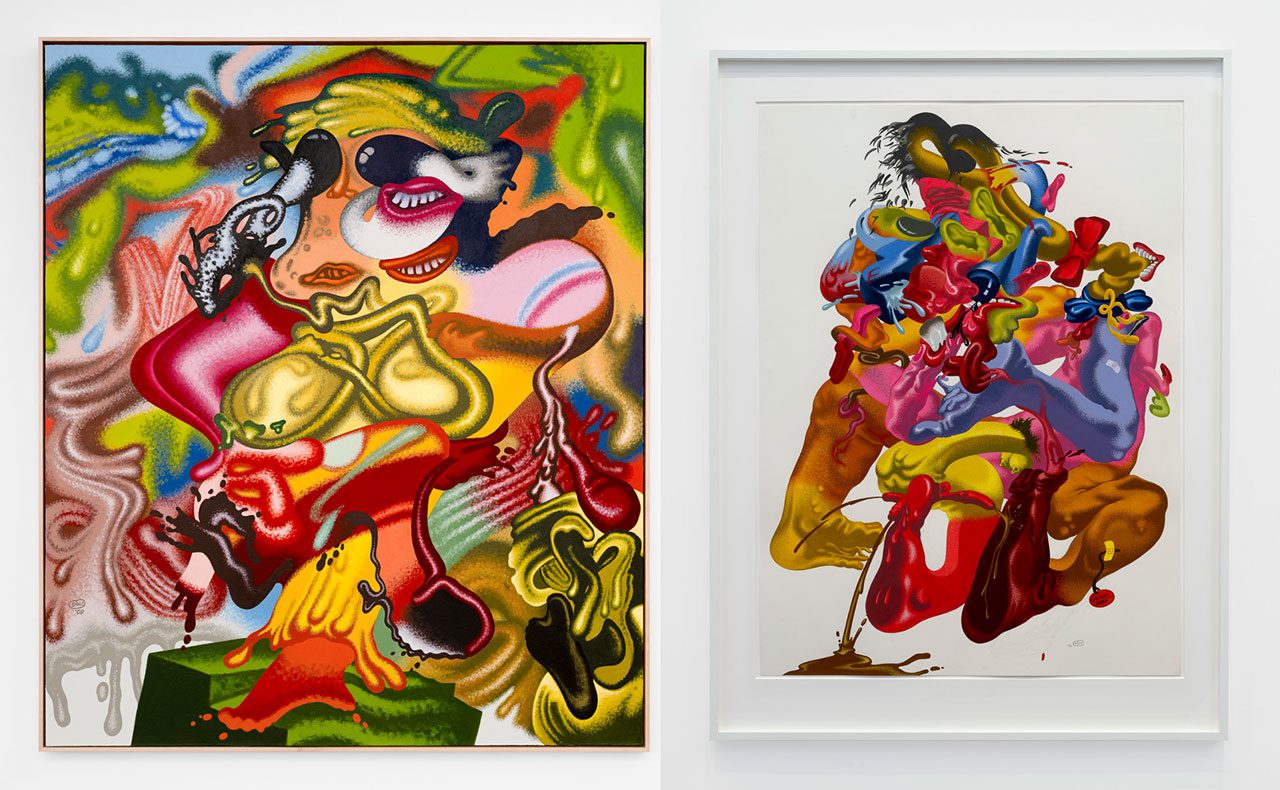
Right: Peter Saul, Untitled, 1980m, Acrylic and oil on paper, 50 ¾ x 37 ¾ inches (128.9 x 95.9 cm), © Peter Saul / Artists Rights Society (ARS), New York, Courtesy the artist and Gladstone Gallery
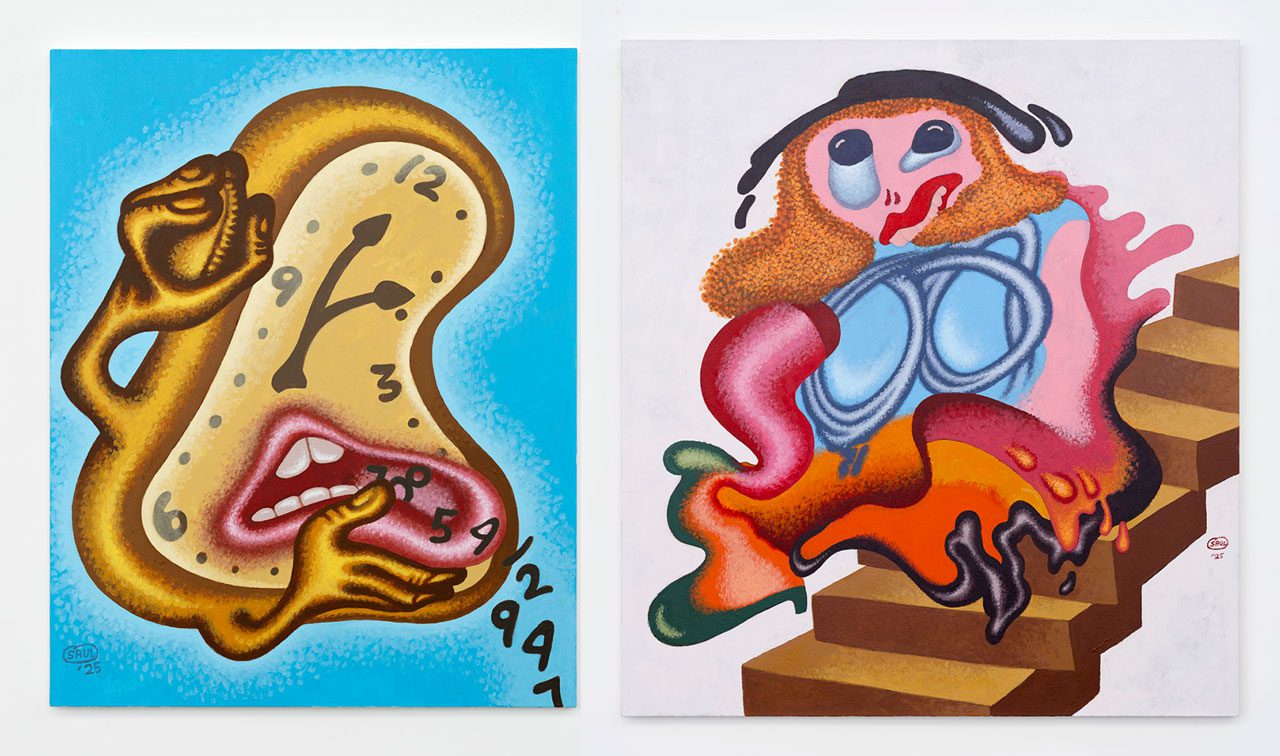
Right: Peter Saul, De Kooning’s woman descends the staircase, 2025, Acrylic on canvas, 55 x 60 inches (139.7 x 152.4 cm), © Peter Saul / Artists Rights Society (ARS), New York, Courtesy the artist and Gladstone Gallery
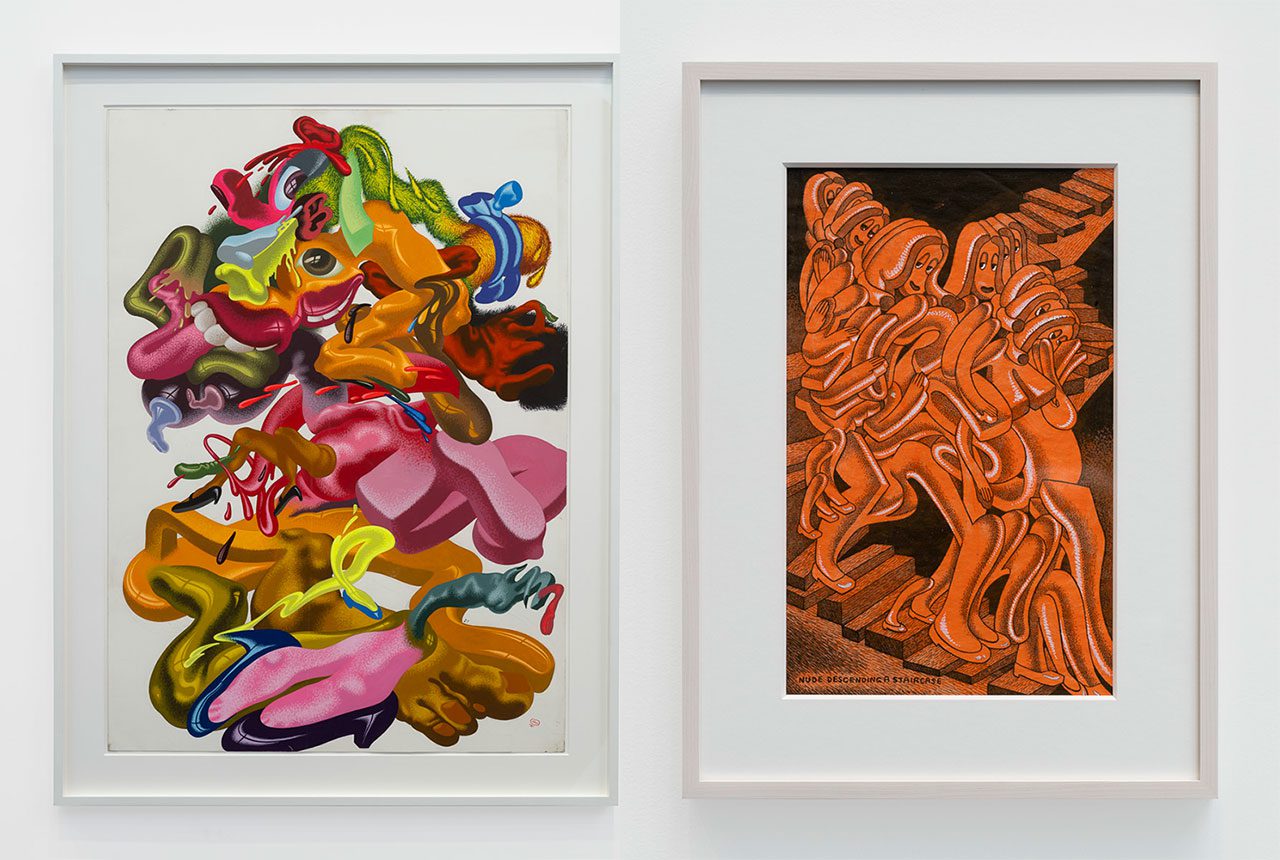
Right: Peter Saul, Nude descending the staircase 1977, Mixed media on paper, 18 x 11 7/8 inches (45.7 x 30.2 cm), © Peter Saul / Artists Rights Society (ARS), New York, Courtesy the artist and Gladstone Gallery