ART CITIES: N.York-Sam Gilliam
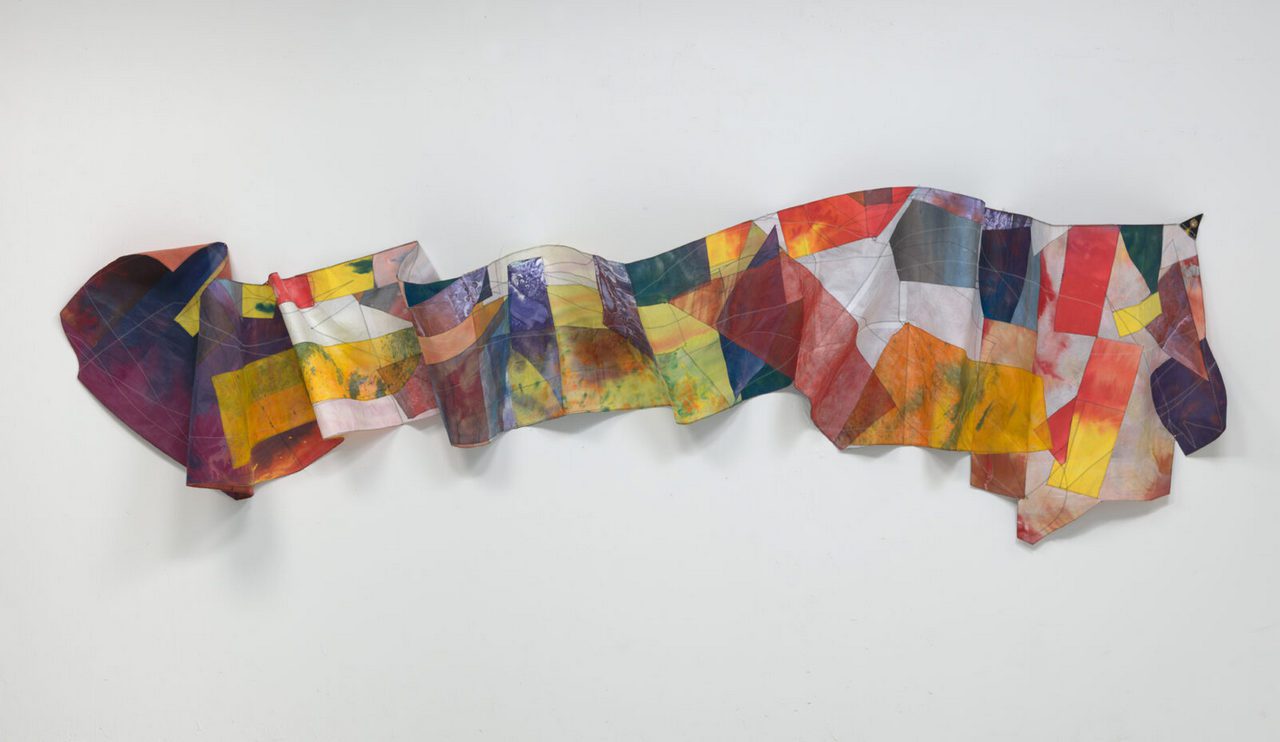
Widely recognized as one of the boldest figures of postwar American painting, Sam Gilliam emerged from Washington, D.C. in the mid-1960s as a radical voice within the city’s Color School movement. His work both elaborated upon and disrupted the ethos of Color Field painting, pushing abstraction into new spatial and material territories. Drawing inspiration from the improvisatory rhythms of jazz and the deep history of modern art, Gilliam cultivated a practice defined by experimentation, transformation, and continual reinvention.
By Efi Michalarou
Photo: Pace Gallery Archive
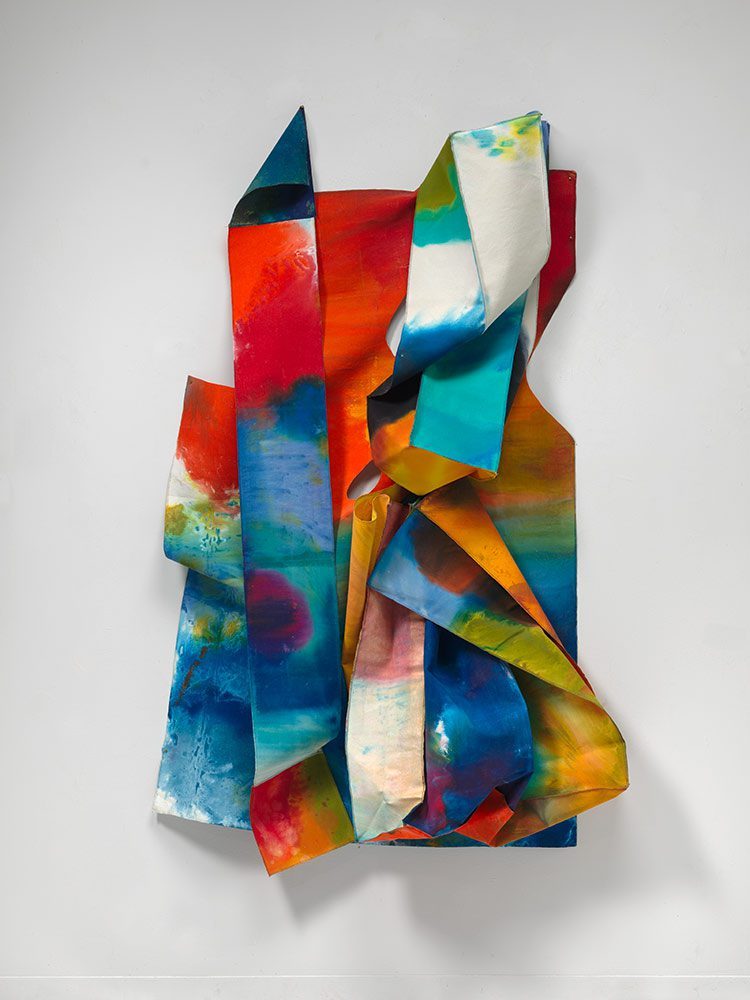
Across decades of production, Gilliam pursued an expansive inquiry into the expressive, aesthetic, and philosophical capacities of abstraction. Through investigations of technique, gesture, materiality, color, and spatial form, he repeatedly redefined what painting could be. His work is perhaps most famously associated with the “Drape” paintings of the late 1960s, in which he removed the canvas from its stretcher and suspended painted fabric directly within architectural space. These works dissolved the conventional boundary between painting and sculpture, transforming the canvas into a dynamic, sculptural presence that could shift and reconfigure with each installation.
Gilliam’s artistic philosophy was grounded in improvisation. Much like the musicians he admired, he approached abstraction as a process of variation and discovery rather than repetition. His paintings often emerged through staining, pouring, folding, and layering pigments onto canvas, producing fields of luminous color that appeared simultaneously spontaneous and carefully orchestrated.
This approach aligned him with broader developments in postwar abstraction, yet Gilliam consistently resisted stylistic confinement. Instead, he treated each body of work as an open proposition—an opportunity to test new relationships between surface, structure, and environment. Over time, this restless experimentation led him to incorporate unconventional materials and processes such as cutting, collaging, stitching, and layering painted fabrics into complex compositions.
One of the most remarkable chapters in Gilliam’s career began in 1993, when he was invited to participate in an artist residency at the Ballinglen Arts Foundation on the rugged west coast of Ireland. The residency presented an unforeseen challenge: aviation regulations prevented him from transporting his usual petroleum-based paints to the site.
Rather than abandon the project, Gilliam transformed the limitation into an opportunity. Working in his studio in Washington, D.C., he prepared large loose canvases by staining and painting them in advance. These monumental fabrics were then folded, shipped across the Atlantic, and brought to Ballinglen as raw material for an entirely new artistic process.
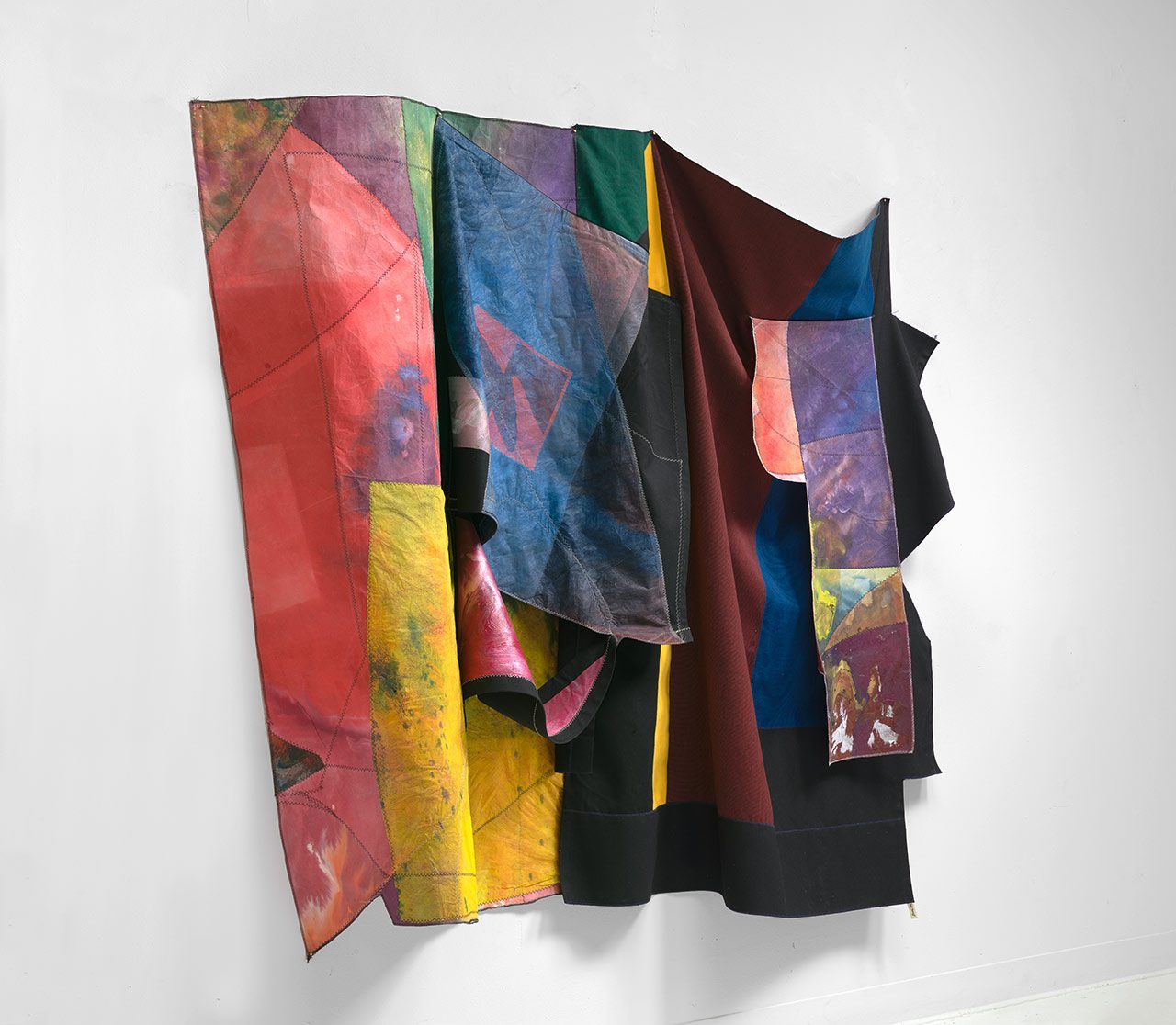
Once in Ireland, Gilliam hired a local seamstress and collaborated with her daily, cutting and stitching the painted fabrics into new compositions. In effect, he conducted a painting residency during which no traditional painting occurred. Instead, he constructed artworks from the fragments of his own earlier gestures, transforming pre-painted canvases into hybrid objects assembled through sewing, layering, and collage.
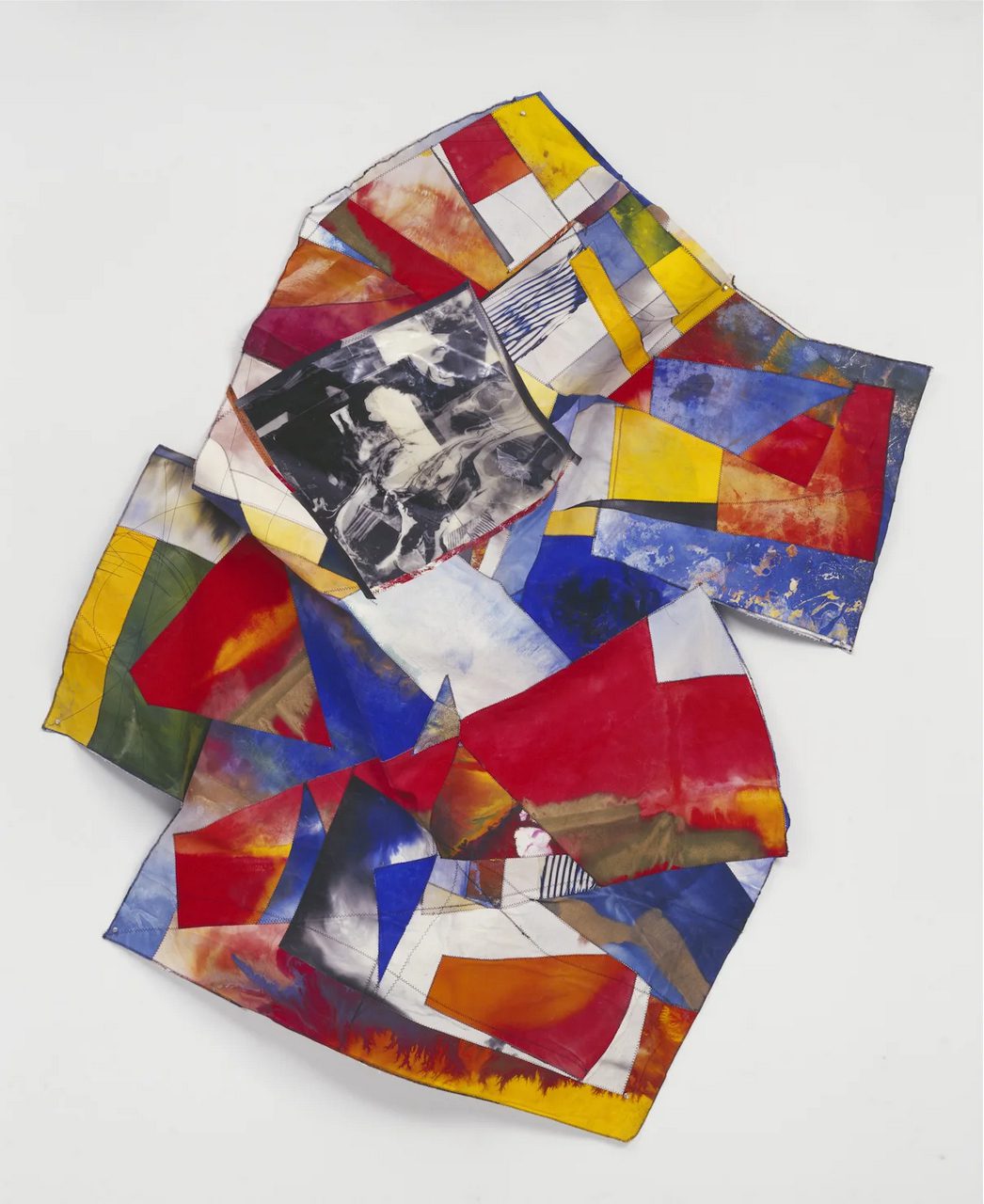
The resulting works were strikingly three-dimensional. Angular panels of fabric collided and interlocked in vibrant arrangements of color and geometry, creating wall-mounted constructions and hanging forms that blurred distinctions between painting, textile, and sculpture.
These stitched works from the early 1990s occupy a distinctive position within Gilliam’s oeuvre. While deeply connected to the chromatic intensity of his earlier Color School paintings, they also reflect an affinity with the structural principles of Constructivism. The sewn canvases operate less as flat images than as constructed objects—assemblages whose form emerges from the interaction of color, geometry, and material.
Many of the works combine rigid geometric panels with folds, pleats, and suspended fabric edges that animate the surrounding space. Some resemble topographical maps or fragmented architectural plans, while others expand outward into sculptural volumes that occupy the gallery environment.
Seen in relation to Gilliam’s earlier draped canvases, the stitched works can be understood as a continuation of his lifelong project of liberating painting from its traditional constraints. If the drapes freed the canvas from the stretcher, the sewn works reassembled it into a new form altogether—one built through fragmentation, reconstruction, and collaboration.
For decades, many of these Irish works remained little known. Their significance has only recently come into focus through the exhibition “Sewing Fields”, presented at the Irish Museum of Modern Art in Dublin in 2025. The exhibition brought together a rare group of the sewn and collaged fabric works produced during and after Gilliam’s Ballinglen residency, highlighting a pivotal yet underexplored moment in his career.
These works reveal how profoundly the Irish environment influenced Gilliam’s thinking. Curators have noted that the region’s shifting light, coastal landscapes, and atmospheric weather resonated with his evolving use of color and material. The paintings’ translucent hues and flowing forms echo the unpredictable rhythms of the surrounding landscape, creating an intuitive dialogue between abstraction and place.
A subsequent exhibition, “STITCHED”, further expanded this body of work by presenting wall pieces alongside volumetric hanging sculptures from the same period, some shown publicly for the first time.
Throughout his career, Gilliam resisted being defined by any single movement or ideology. Instead, he described himself as a kind of reflective surface—absorbing ideas from across art history and reorienting them into new configurations.
“I’d call myself a mirror,” he once said. “A mirror that reflects, borrows, and steals from different art movements, reorienting them in order to squeeze out new life.”
That statement encapsulates the driving force behind Gilliam’s practice. Whether draping canvases from ceilings, staining vast fields of color, or sewing together fragments of painted fabric, he approached abstraction as a constantly evolving language.
The stitched works born from his Irish residency stand as a powerful testament to that philosophy. Born out of logistical necessity, they demonstrate how constraint can become a catalyst for invention—and how Gilliam’s restless imagination continually expanded the possibilities of painting itself.
Photo: Sam Gilliam, Silhouette on Template, 1994, © 2026 Sam Gilliam / Artists Rights Society (ARS), New York, Courtesy Pace Gallery
Info: Pace Gallery, 510 West 25th Street, New York, NY, USA, Duration: 12/3-25/4/2026, Days & Hours: Tue-Sat 10:00-18:00, www.pacegallery.com/