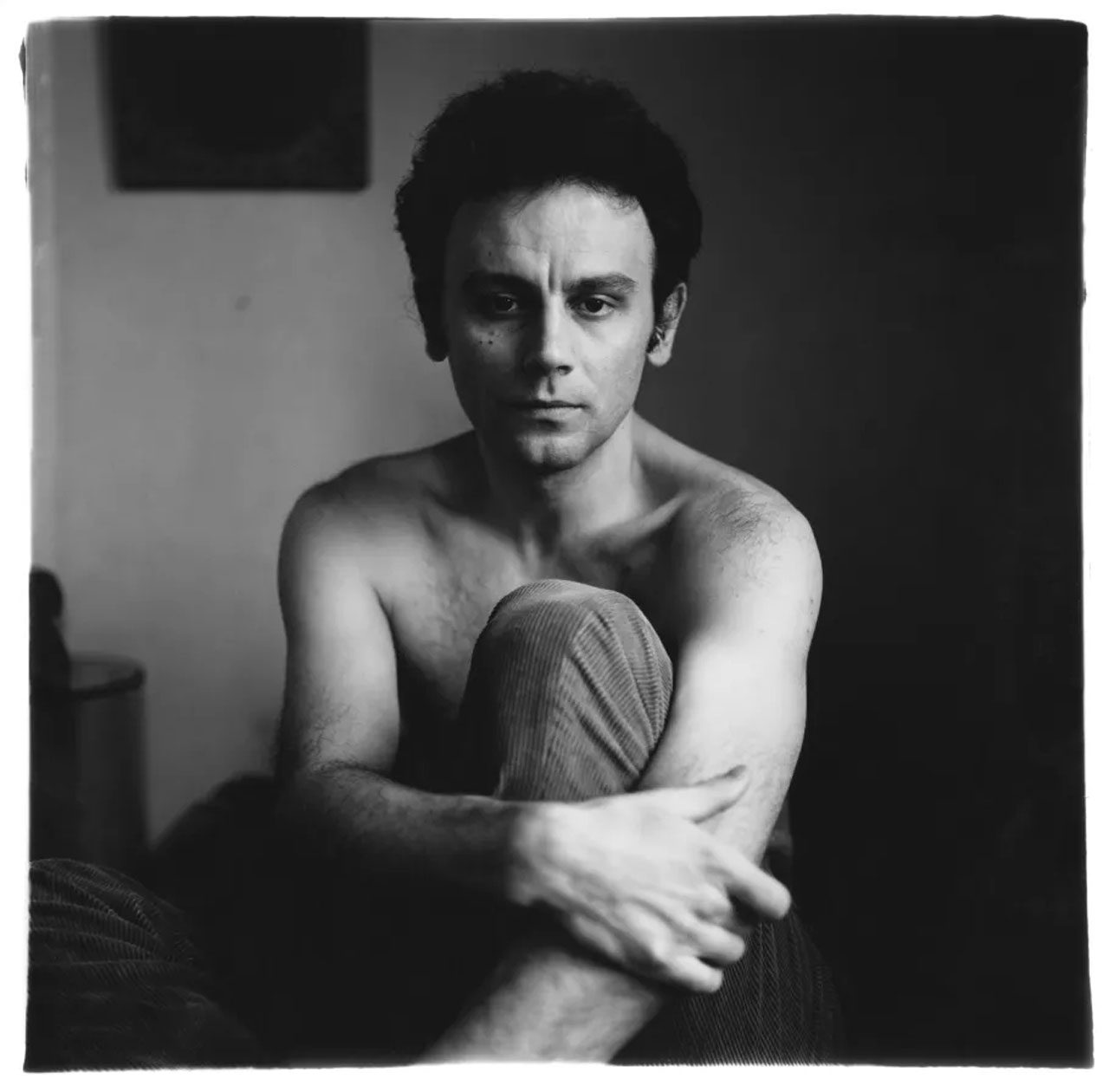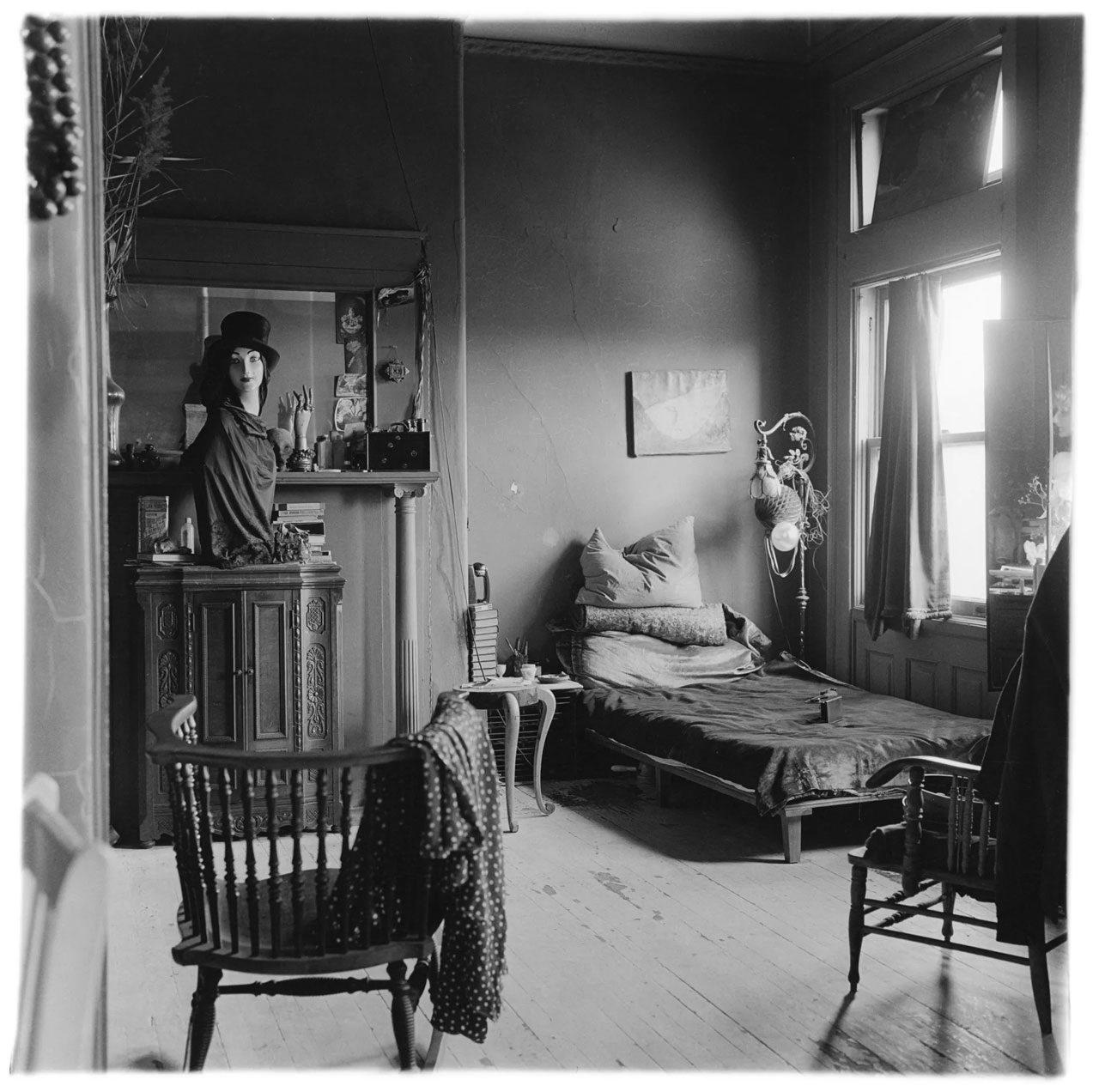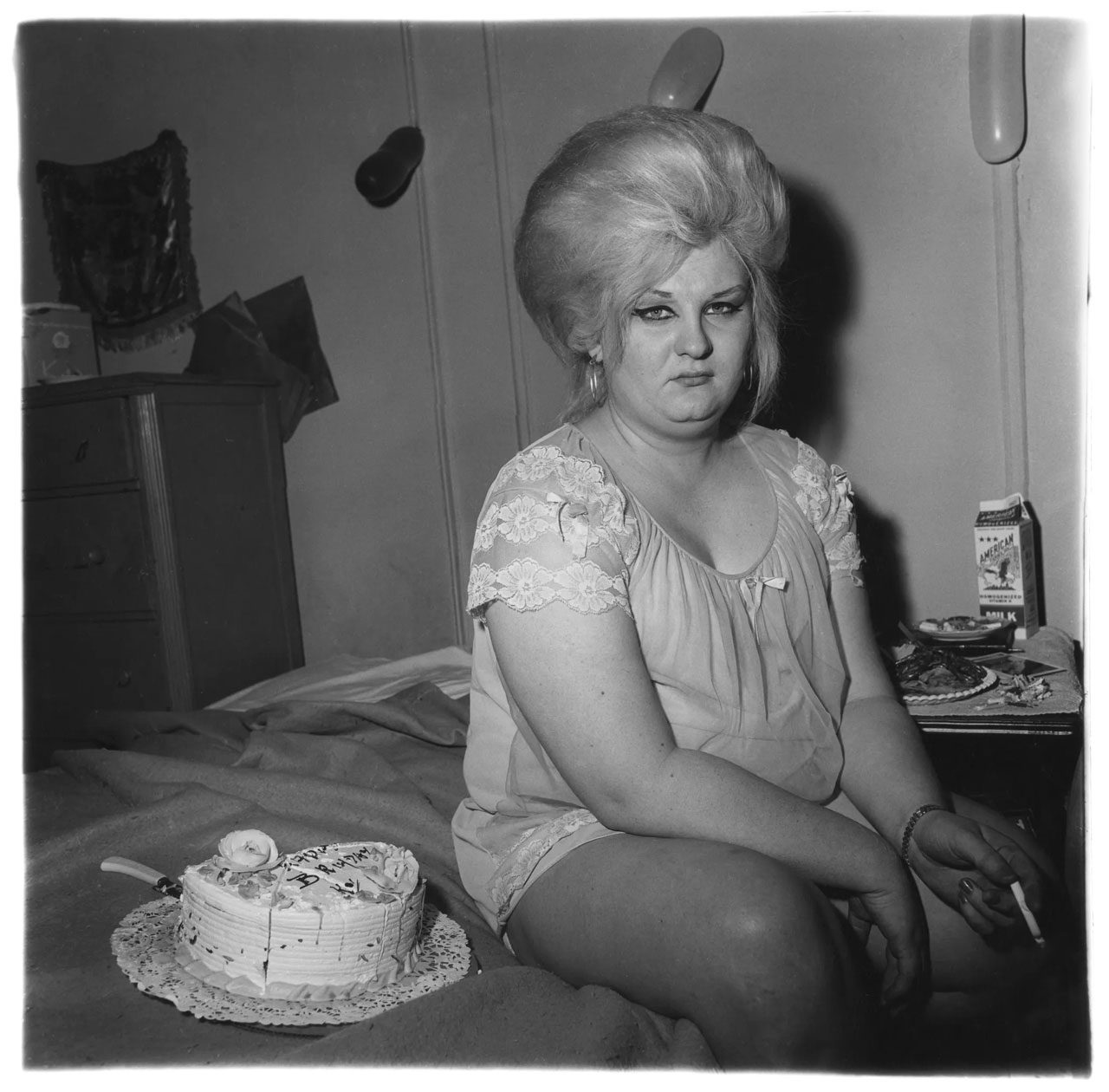
PHOTO: Diane Arbus-Sanctum Sanctorum
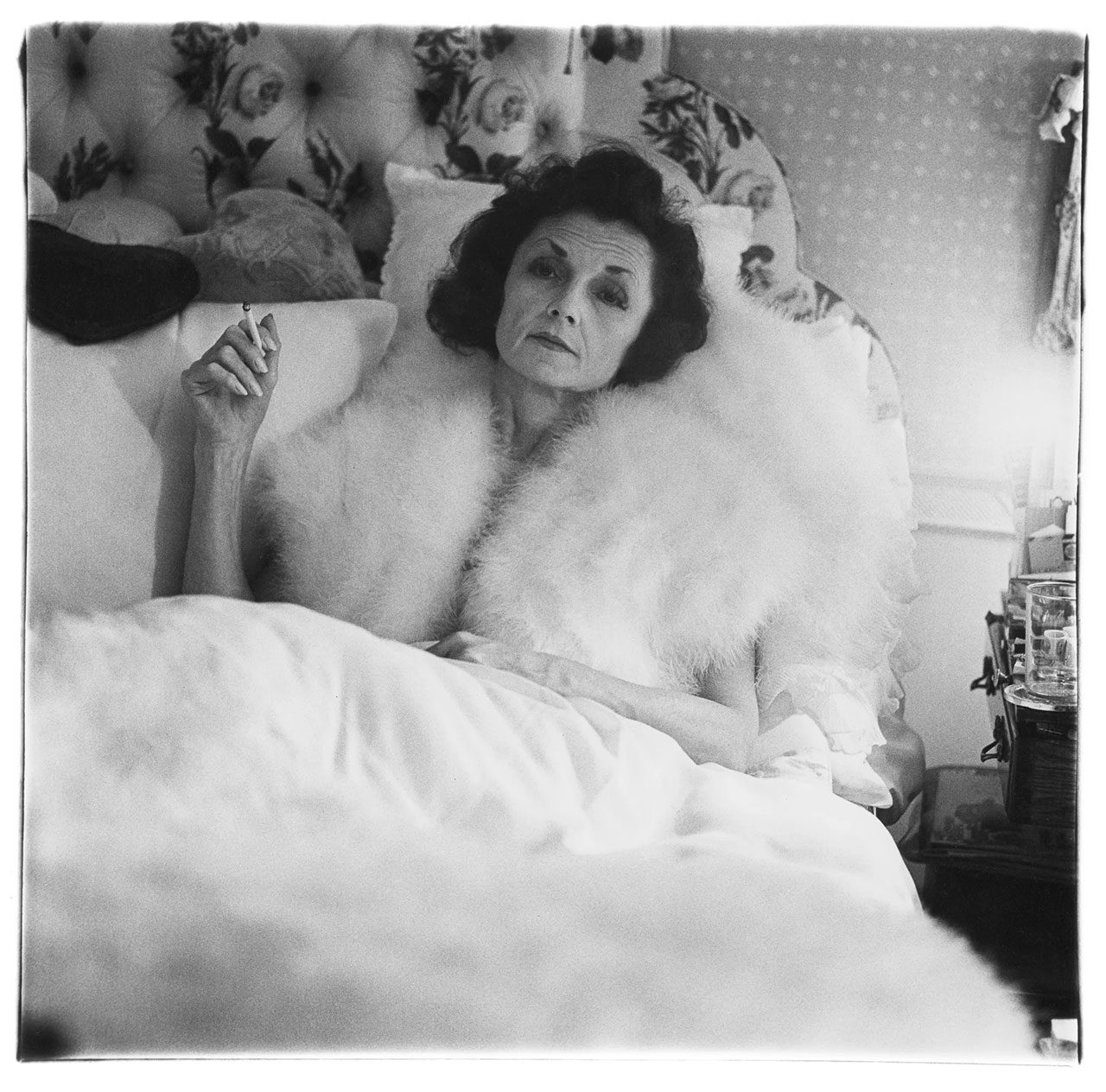
Few photographers have probed the human condition with the curiosity and unsettling clarity of Diane Arbus. Throughout the 1960s, Arbus turned her camera toward people who existed both at the center and at the margins of society—individuals whose lives rarely appeared in the carefully polished imagery of postwar America.
By Dimitris Lempesis
Photo: Fraenkel Gallery Archive
The exhibition “Sanctum Sanctorum” revisits this distinctive vision, bringing together photographs made between 1961 and 1971 in deeply private settings across New York, New Jersey, California, and London.
The title itself evokes intimacy. “Sanctum sanctorum” refers to a sacred inner chamber, a place of inviolable privacy. That notion lies at the core of Arbus’s practice. Her photographs often unfold in bedrooms, hotel rooms, trailers, or living rooms—spaces typically closed to outsiders. Yet the resulting images rarely feel invasive. Instead, they suggest a tacit agreement between photographer and subject, a moment of recognition in which both parties acknowledge the camera’s presence and the vulnerability it reveals.
Arbus’s desire to know people embraced an astonishing range of humanity. Her subjects include debutantes and nudists, celebrities and aspiring celebrities, socialites, transvestites, babies, widows, circus performers, lovers, female impersonators, and even a blind couple photographed in their bedroom. The diversity is not incidental; it reflects her belief that identity is never fixed or singular. Each portrait functions as an encounter—between photographer, sitter, and viewer—where familiar social categories dissolve into something far more complex.
The exhibition juxtaposes little-known works with some of Arbus’s most iconic images. Among the more rarely seen photographs are “Girl sitting in bed with her boyfriend, N.Y.C.” (1966), “Ozzie and Harriet Nelson on their bed, Los Angeles” (1970), and “Interior decorator at the nudist camp in his trailer, New Jersey” (1963). These appear alongside celebrated works such as “Mexican dwarf in his hotel room, N.Y.C.” (1970) and “A naked man being a woman, N.Y.C.” (1968). Together they reveal the breadth of Arbus’s fascination with intimacy, performance, and the fragile boundary between private and public identity.
What unites these disparate subjects is not spectacle but presence. Arbus approached each individual with a mixture of curiosity and candor, allowing her sitters to confront the camera directly. Her signature square-format portraits—often made with a medium-format camera—heighten this sense of confrontation. The viewer is not allowed the comfort of distance; instead, we meet the subject eye to eye.
This dynamic has long fueled debates around Arbus’s work. Critics such as Susan Sontag famously accused her of voyeurism, arguing that her photographs exploited vulnerable individuals. Yet others see something profoundly empathetic in her approach: a refusal to sanitize human difference or disguise the tensions that define social life. In Arbus’s world, awkwardness, eccentricity, pride, and loneliness coexist within the same frame.
Seen today, decades after the photographer’s death in 1971, these images continue to shape how we think about portraiture. Many of them entered the public imagination following her landmark retrospective at The Museum of Modern Art in 1972. Within the context of “Sanctum Sanctorum”, however, even familiar photographs take on new resonance. Displayed together as explorations of private space, they reveal subtleties that can easily go unnoticed when encountered in isolation.
Ultimately, the exhibition underscores what made Arbus one of the most radical portrait photographers of the twentieth century: her conviction that the extraordinary resides within ordinary human encounters. By entering bedrooms, hotel rooms, and other intimate spaces, she exposed the fragile theater of identity—where people present themselves, however imperfectly, to be seen. In Arbus’s photographs, that act of being seen becomes both unsettling and deeply human.
Photo: Diane Arbus , Brenda Diana Duff Frazier, 1938 Debutante of the Year, at home, Boston, Mass. 1966, 1966, Gelatin silver print, Image: 14 3/8 x 14 3/4 inches (36.5 x 37.5 cm), Sheet: 20 x 16 inches (50.8 x 40.6 cm), Framed: 24 3/4 x 20 3/4 inches (62.9 x 52.7 cm), Edition of 75 , © The Estate of Diane Arbus, Printed by Neil Selkirk, Signed verso in ink by Doon Arbus for the Estate of Diane Arbus; estate stamp verso, Courtesy Estate of Diane Arbus and Fraenkel Gallery
Info: Fraenkel Gallery, 49 Geary Street, 4th Floor, San Francisco, CA, USA, Duration: 12/3-22/5/2026, Days & Hours: Tue-Fri 10:30-17:30, Sat 11:00-17:00, https://fraenkelgallery.com/
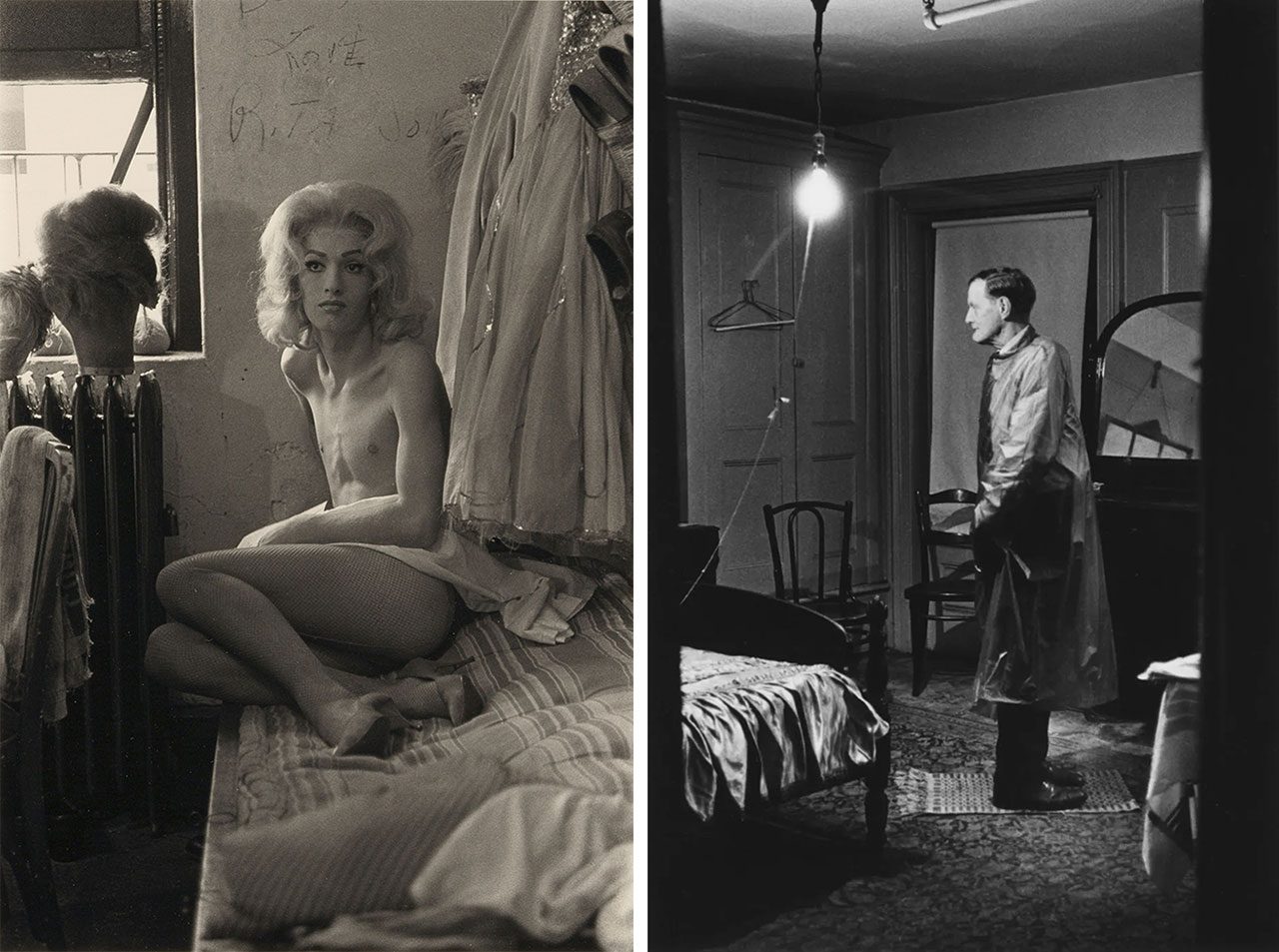
Right: Diane Arbus , The Backwards Man in his hotel room, N.Y.C. 1961, 1961, Gelatin silver print, Image: 9 1/8 x 6 inches (23.2 x 15.2 cm), Sheet: 14 x 11 inches (35.6 x 27.9 cm), Framed: 16 x 12 3/4 inches (40.6 x 32.4 cm), Edition of 75 , © The Estate of Diane Arbus, Printed by Neil Selkirk, Signed verso in ink by Doon Arbus for the Estate of Diane Arbus; estate stamp verso, Courtesy Estate of Diane Arbus and Fraenkel Gallery