ART NEWS: March 01
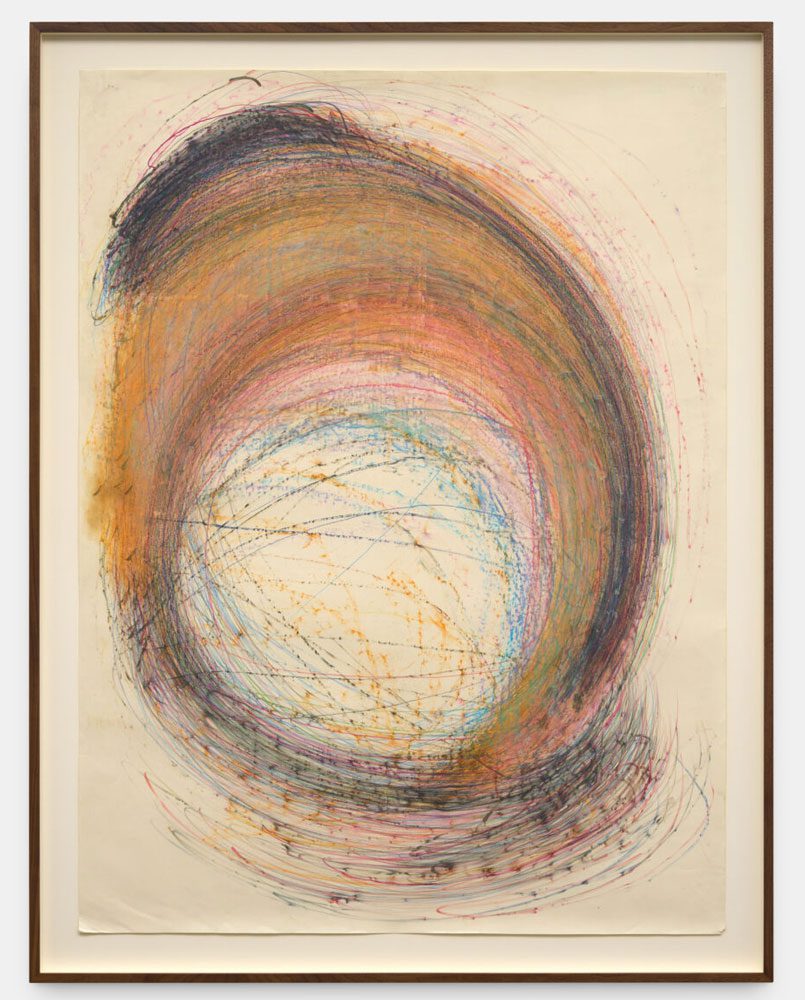 Nnena Kalu’s solo exhibition “INDEX” brings together selected works on paper from 2018, and focuses on Kalu’s early “Vortex Drawings” and traces the development of a practice grounded in movement, repetition and intuitive mark-making. Within these works, color emerges as an active force, amplifying the sense of motion and transforming the surface into a field where gesture and time accumulate. The exhibition’s title refers to the idea of the “index,” a concept articulated by philosopher Charles Sanders Peirce, who described indexical signs as marks produced through direct contact with their source. In Kalu’s drawings, this idea becomes visible through the repeated gestures that structure each composition. Rather than depicting external subjects, the works record the artist’s physical engagement with the surface. Lines build through sustained movement, forming dense, swirling terrains that convey both rhythm and tension. Through this process, gesture functions as a language in itself. Repetition generates structure while also allowing moments of release, creating compositions that appear both ordered and spontaneous. In certain drawings, the density of marks shifts from heavy pressure to lighter movement, making the body’s motion legible within the work. Color operates alongside line as a kinetic element. Reds, blues, greens and pinks layer and drift across the paper, forming subtle mosaics that emerge gradually from the accumulation of marks. The result is a sensory field where movement, emotion and material presence converge. Info: Arcadia Missa Gallery, 35 Duke Street, London, United Kingdom, Duration: 5/3-25/4/2026, Days & Hours: Tue-Sat 12:00-18:00, https://arcadiamissa.com/
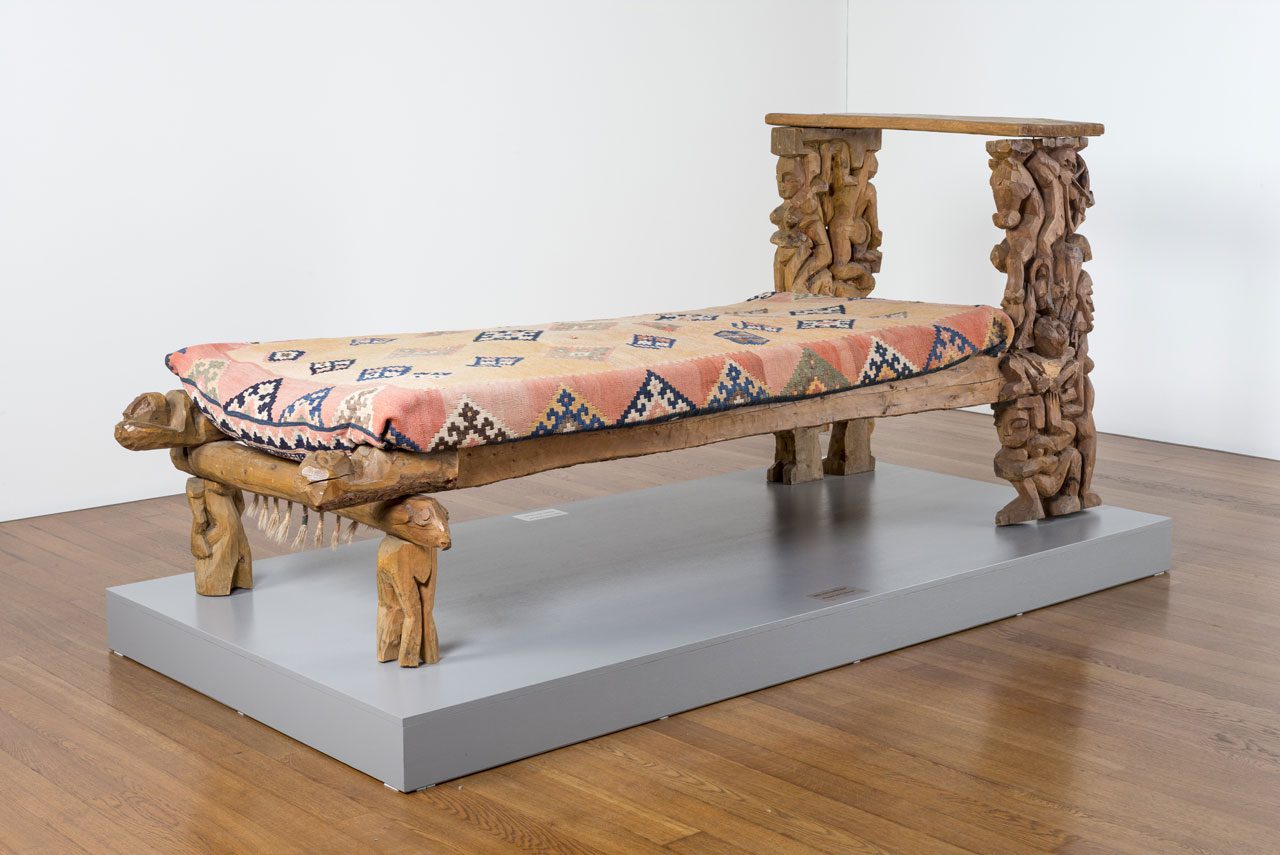 With “The Applied Arts of the Brücke Artists”, the Brücke-Museum is dedicating a comprehensive exhibition to the applied arts of the Brücke group. Until now, this area of the artists’ group’s work has been little researched and rarely exhibited. Through this extensive research project, which includes an exhibition, the digitisation of its collection, and a comprehensive publication, the Brücke-Museum intends to address this shortcoming, breaking new ground in the interdisciplinary collaboration between craft and art. The diverse works in wood, metal and textiles are presented in three material rooms designed by Andrea Faraguna, Jerszy Seymour, Kasia Fudakowski and Santiago da Silva. The extensive exhibition at the Brücke-Museum uses around 170 works to illustrate how radically the artist group combined art and life. The characteristic style for which the Brücke is known in its graphics and paintings is also reflected in this creative field: fast, direct and with a desire to experiment. Examples of this creative drive include Ernst Ludwig Kirchner’s elaborately carved bed, Karl Schmidt-Rottluff’s cushion adorned with abstract shapes and Erich Heckel’s silver-sheet-metal peacock brooch. In both Dresden and Berlin, they designed their rooms as Gesamtkunstwerk, incorporating murals, textiles, homemade furniture and sculptures. This exhibition offers direct insight into the intersection of art, craftsmanship, and private living spaces. Works by: Max Pechstein, Fritz Bleyl, Ernst Ludwig Kirchner, Otto Gussmann, Karl Schmidt-Rottluff, Emy Schmidt-Rottluff, Erich Heckel, Emil Nolde, Ada Nolde, Lise Gujer, Erna Schilling, Julia Staub-Oetiker, Jeane Flieser, Helene Spengler, Leny Spengler Info: Curators: Lisa Marei Schmidt with Daniela Bystron, Christiane Remm, Anika Reineke and Aya Soika, Assistant Curator: Valentina Bay, Brücke-Museum, Bussardsteig 9, Berlin, Germany, Duration: 6/3-21/6/2026, Days & Hours: Wed-Mon 11:00-17:00, www.bruecke-museum.de/
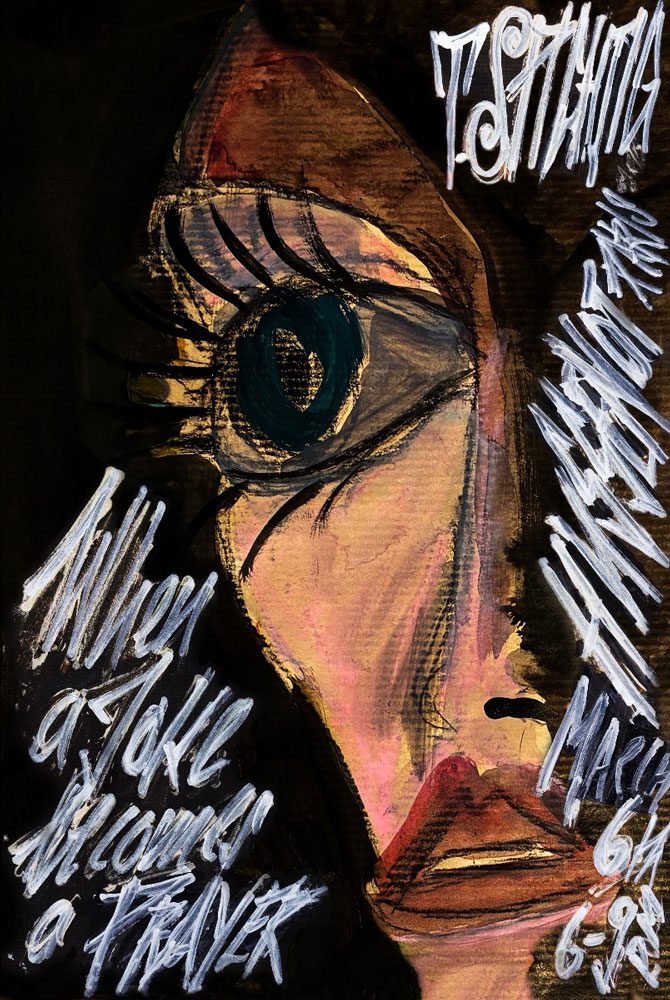 “When a Joke Becomes a Prayer” the first solo exhibition in Paris by Tobias Spichtig, brings together a group of new paintings created in the city. The works focus on moments of intimacy and quiet observation: lovers sitting by an open window, a pianist emerging from shadow, someone walking through the streets of Paris, or flowers carried as small gestures of affection and memory. These scenes move fluidly between portrait, landscape and narrative, united less by subject than by a consistent emotional tone. The exhibition space itself contributes to this atmosphere. Black stage curtains and a carpeted floor create a setting that feels closer to a backstage environment than to a conventional gallery. Rather than spectacle, the space evokes preparation and vulnerability — a place where emotions unfold quietly, like a love song played after the audience has left. Spichtig’s paintings rely on simple but deliberate motifs: a candle, a dried rose, a fleeting landscape. These images are not treated as symbols of loss or decay but as markers of duration, suggesting feelings that persist beyond a single moment. Their directness carries a subtle humour, yet the works remain sincere, resisting irony in favour of a kind of devotion. Across the exhibition, Spichtig maintains a perspective that is openly emotional and attentive. Whether depicting lovers, friends or solitary figures, his gaze remains earnest, holding together humour, tenderness and the fragile intensity of lived experience. Info: Galerie Hussenot, 5 bis rue des Haudriettes, Paris, France, Duration:06/3-25/4/2026, Days & Hours: Tue-Sat 11:00-19:00, www.galeriehussenot.com/
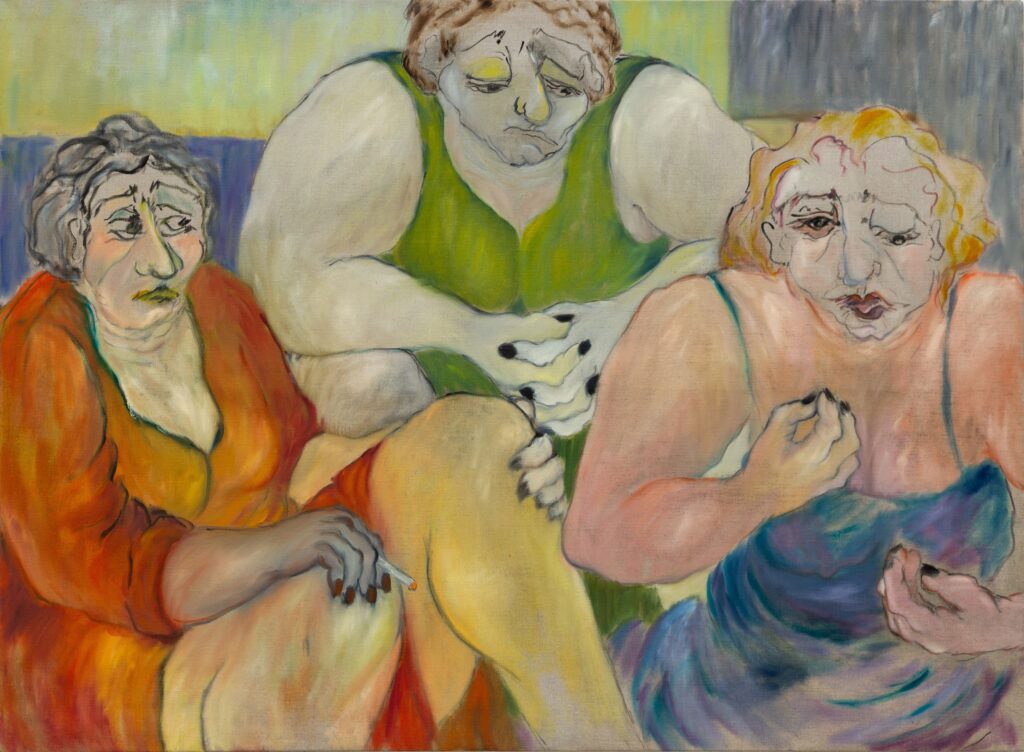 Alexandra Christou’s paintings insist on presence: the presence of women who desire, wait, work and inhabit space on their own terms. Bringing together works from the late 1980s and 1990s, the exhibition “The Gravity of Desire” reveals an artist committed to rendering visible what is often marginalised — female sexuality and the everyday realities of women’s lives. The works unfold across two interconnected directions. On one side are Christou’s erotic paintings and drawings from the mid-1990s, where bodies meet with immediacy and reciprocity. These compositions are often sparse, set against raw linen, with confident and economical lines that emphasise physical closeness rather than idealised beauty. Desire is not stylised or distanced; it appears tangible, expressed through touch, weight and proximity. Importantly, these scenes articulate female desire from within, presenting women not as objects of observation but as active participants. Alongside these intimate encounters are portraits of women Christou observed in central Athens, many of them sex workers. Standing outside hotels, smoking beneath streetlights or leaning against cars, these figures occupy the canvas with quiet authority. Christou neither romanticises nor moralises their circumstances. Instead, she grants them visibility and presence within the urban landscape. Seen together, the two bodies of work connect intimacy with public existence. Lovers entwined and women waiting in the street become part of the same visual inquiry: a sustained attention to women’s lives, their agency and their enduring presence. Info: The Breeder, 45 Iasonos st, Athens, Greece, Duration: 12/3-9/5/2026, Days & Hours: Tue-Fri 11:00-19:00, Sat 11:00-17:00, https://thebreedersystem.com/
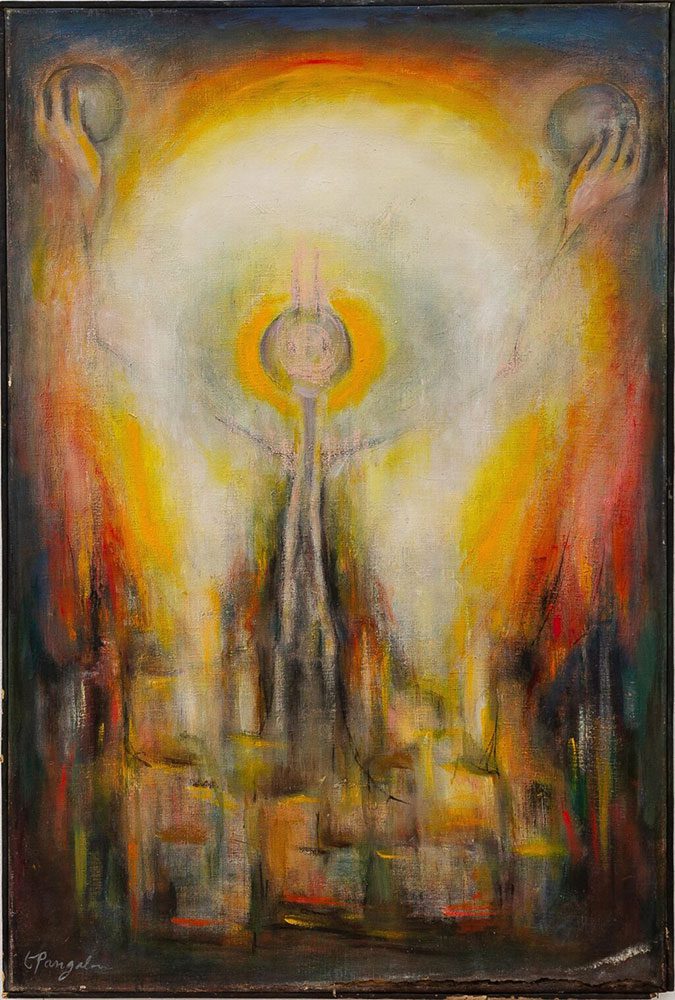 Eleni Pitari-Pangalou’s work unfolds as a coherent and layered visual universe in which drawings and oil paintings operate as complementary parts of a single artistic language. Through floating figures, otherworldly landscapes and scenes suspended in ambiguous time, she constructs images that blur the boundaries between reality and imagination. The painted surface becomes a space where lived experience and inner visions condense, transforming representation into a contemplative and psychological narrative. Born in Istanbul in 1905 into a wealthy Greek diaspora family, Pitari-Pangalou grew up in an environment where travel and exposure to European art were integral to everyday life. After the Asia Minor Catastrophe, her family relocated to Athens, where she enrolled in the Athens School of Fine Arts in 1926—an uncommon choice for a young woman at the time. Her studies with Nikolaos Lytras and, especially, her time in Konstantinos Parthenis’ workshop shaped an artistic language that balanced symbolism, expressionism and a gradual move away from strict representation. While her oil paintings gained recognition through exhibitions in Greece and abroad, her most personal work emerged in the 1960s and 1970s through dense black-and-white ink drawings. These compositions resemble internal maps, filled with hybrid forms, repeating patterns and immersive surfaces that oscillate between control and spontaneity. Across both mediums, Pitari-Pangalou creates luminous, symbolic spaces where landscape becomes a state of mind and the human figure dissolves into energy, ritual and memory. Info: The Breeder, 45 Iasonos st, Athens, Greece, Duration: 12/3-9/5/2026, Days & Hours: Tue-Fri 11:00-19:00, Sat 11:00-17:00, https://thebreedersystem.com/
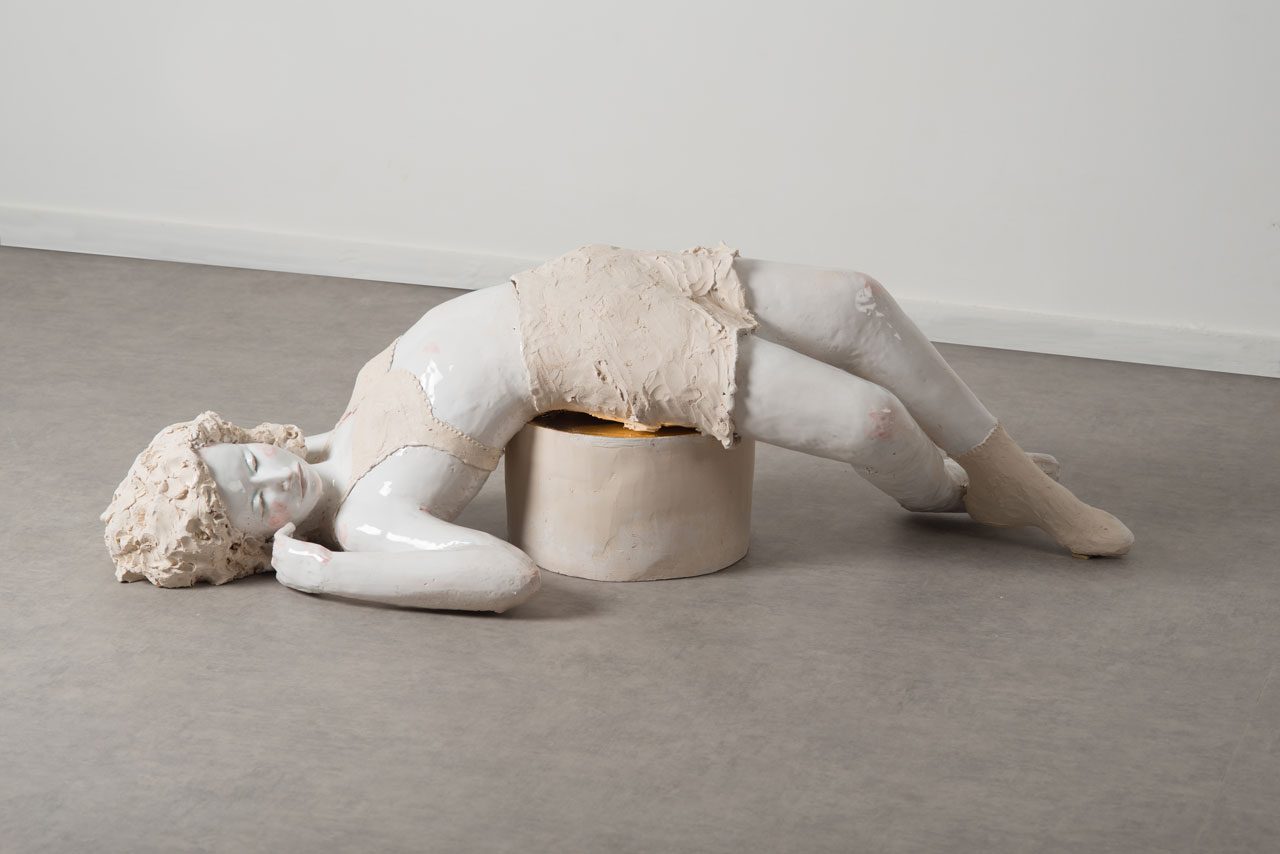 Julia Haumont’s solo exhibition “Dans ma robe, couleur du temps” explores that delicate moment when childhood shifts, suspended between fears and desires, unspoken thoughts and discoveries. On the ground floor, sculpture takes center stage. The same feminine, youthful figure engages in gymnastic exercises with a certain nonchalance, evident in the relaxed postures or the mismatched socks, despite their harmonious tones. The viewer observes, unseen, a session of stretching or posing, in which several moments seem to have been captured and brought together in the same space, following the practice of doubling bodies and episodes in painting. The move to the upper floor marks a transition as crucial as it is subtle. It is about the individuation of the body, for at first only a single sculpture appears, and, as at the edge of Eden, one cannot tell whether it is entering or leaving, revealing a new consciousness: that of nudity, of desires, and of gazes. The young girl, melancholic and serene, has just put on a wedding dress, perhaps her mother’s, who may have allowed her to wear it, for example to brighten her birthday. But then she suddenly realizes that the extraordinary garment, the one for the most beautiful day of one’s life, is torn at the knee. In the exhibition, the thread of an adolescence weaves itself through the progression of the works, knotting even as it slips away, a moment of engagement with the female body that is shaped and discovered, through it or despite it, in or against the other. Info: Les filles du calvaire Gallerie, 17 rue des Filles du Calvaire, Paris, France, Duration: 12/3-25/4/2026, Days & Hours: Tue-Sat 11:00-18:30, https://www.fillesducalvaire.com/en/
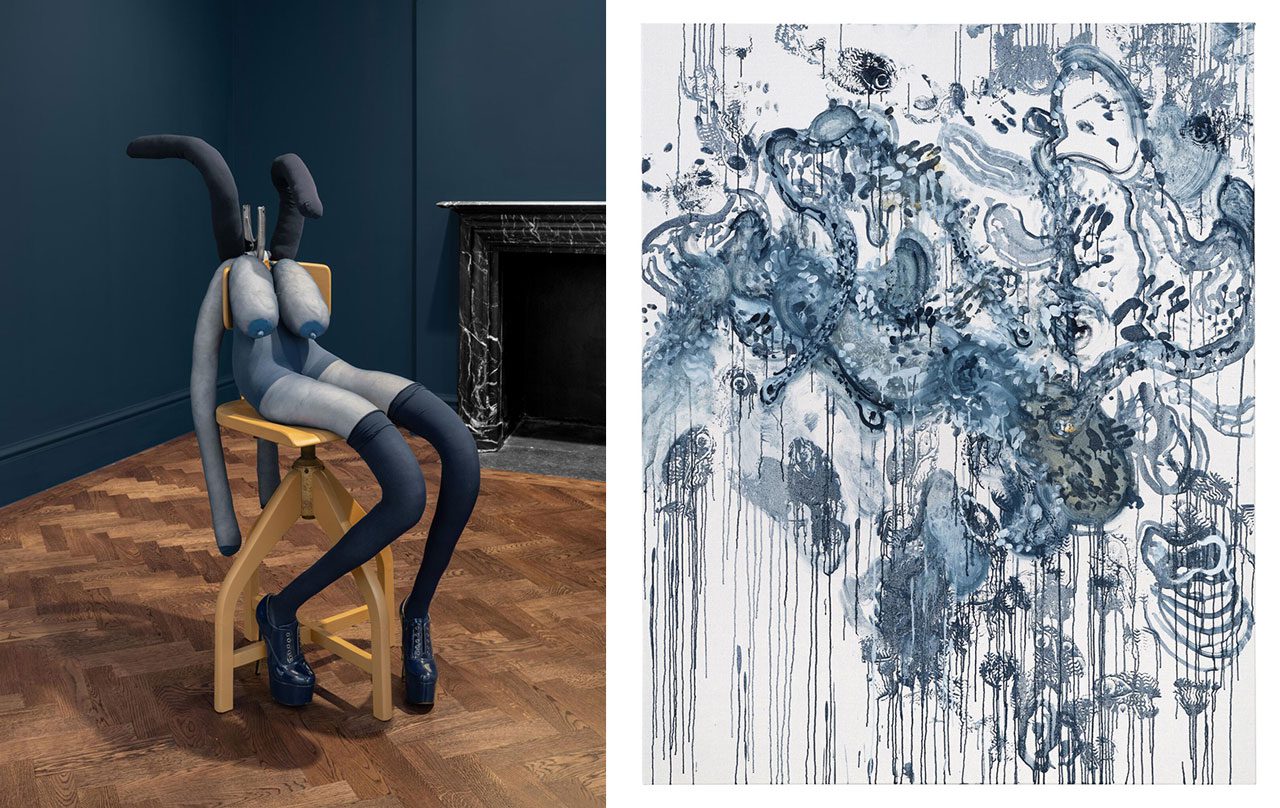 The exhibition “OOO LA LA”, brings together Maggi Hambling and Sarah Lucas. Hambling and Lucas first met in 2000 at the Colony Room Club—on the day they discovered they shared the same birthday. Over the following decades their friendship developed through mutual admiration, frequent conversation and a shared life in rural Suffolk. This long relationship forms the foundation of the exhibition, showing how two independent artistic practices can resonate with one another. The exhibition explores their shared sensitivity to the coexistence of sex and mortality, themes approached with candour and dark humour. The works were created separately, yet when brought together they appear to converse across mediums, with Hambling’s paintings and Lucas’s sculptures arranged in close dialogue. Lucas contributes works that extend her distinctive sculptural language, often transforming everyday materials into figures that evoke the body with irreverent wit. Hambling, meanwhile, approaches painting as an intimate engagement with the medium, using expressive gestures to evoke presence, memory and desire. Portraiture becomes a central motif, with each artist depicting the other in her own style. Through these exchanges, “OOO LA LA” becomes less a collaboration than a vivid encounter—an exhibition shaped by friendship, humour and the ongoing vitality of artistic practice. Info: Contemporary Fine Arts Galerie GmbH, Grolmanstraße 32/33, Berlin-Charlottenburg, Germany, Duration: 13/3-15/4/2026, Days & Hours: Mon-Fri 10:00-18:00, Sat 12 :00-18 :00, https://cfa-gallery.com/
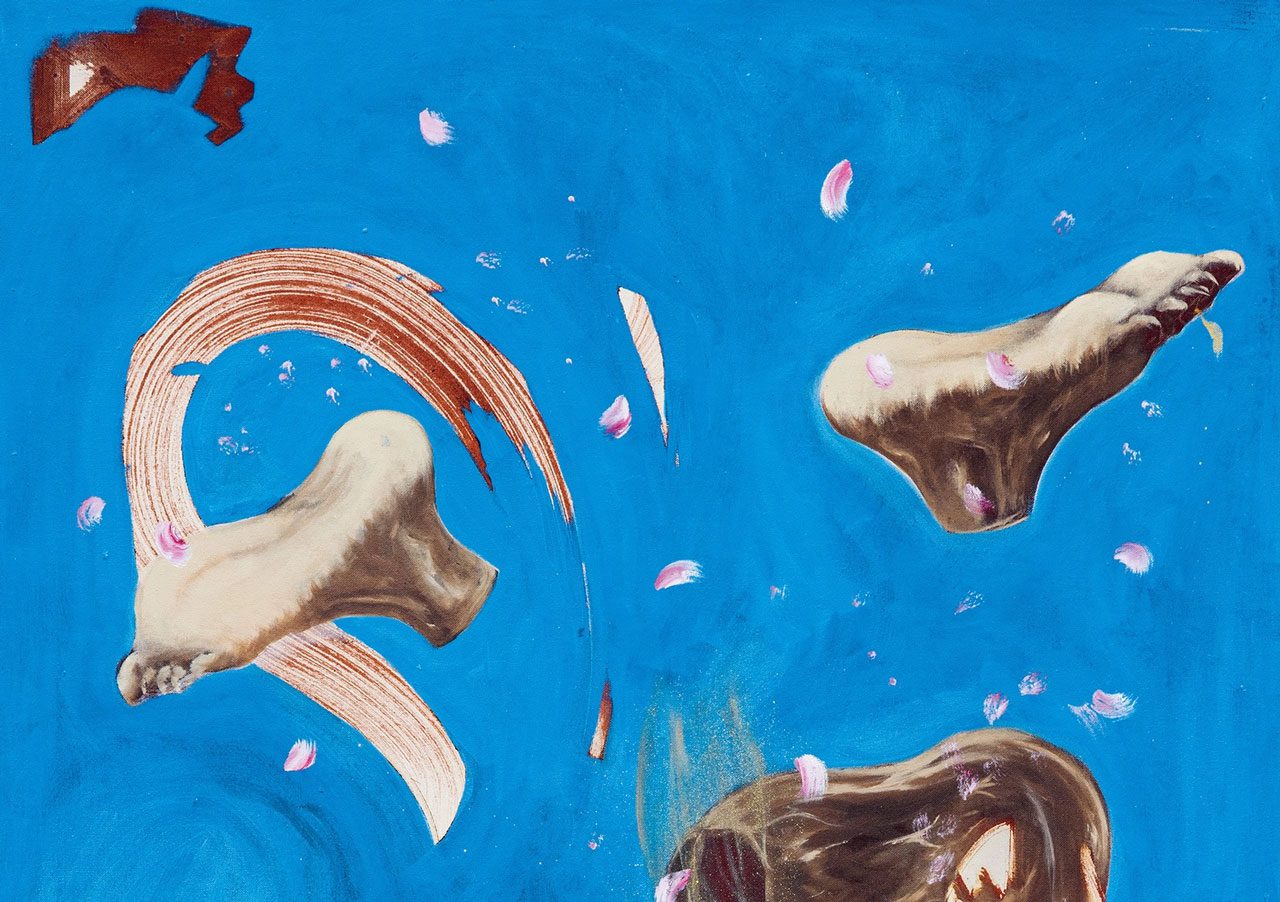 Thomias Radi presents new paintings and sculptural works in his solo exhibition “Echoes of KA”. Born in Guadeloupe and raised in France, Radin draws on cultural influences that span the Caribbean and Europe. His practice moves fluidly between painting, sculpture and dance, weaving together references from European art history with ancient Egyptian, Greek and Christian mythologies. The exhibition’s title refers to the ancient Egyptian concept of Ka, an invisible life force believed to move beyond time and geography. Radin adopts this idea as a metaphor for cultural circulation—tracing how energies, gestures and traditions travel between Africa, the Caribbean and Europe. Language also plays a role in this framework. In Creole, the word ka functions as a marker of action and becoming, suggesting continuity and transformation across bodies and communities. For Radin, this notion informs his approach to gesture and rhythm. His paintings often depict figures in motion, their dynamic poses recalling sequences of movement and echoing the relationship between dance and visual form. The exhibition space is conceived as a courtyard, with wooden arches and fresco-like seascapes creating a setting for reflection and encounter. Sculptural elements, including hand-carved wooden structures and bench-like forms, extend the work into space. Together, the paintings and sculptures create an environment where movement, memory and cultural exchange resonate across histories and geographies. Info: Esther Schipper Gallery, Potsdamer Strasse 81E, Berlin, Germany, Duration: 13/3-18/4/2026, Days & Hours: Tue-Sat 11:00-18:00, www.estherschipper.com/
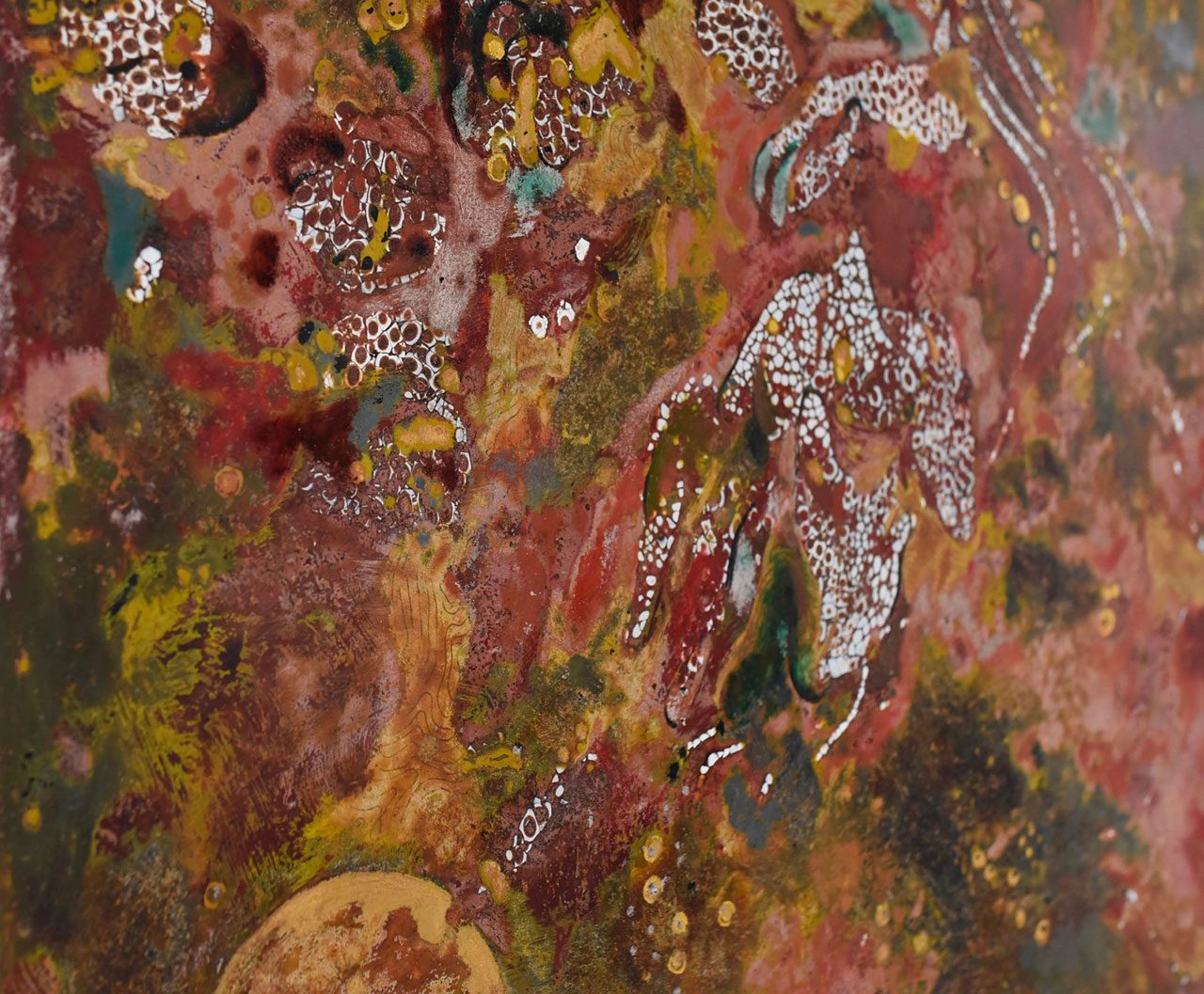 Abstraction in Vietnam is not simply a legacy of Western modernism but a dynamic and evolving approach that continues to shape the country’s contemporary art. Although long absent from official art histories, abstraction became an important space where artists experimented with new visual languages in response to the cultural, political, and economic changes initiated by the Đổi Mới reforms of 1986. Following this period of transformation, abstraction offered artists a way to move beyond the didactic frameworks of socialist realism and reclaim a sense of creative autonomy. For some artists in Southern Vietnam who had abandoned abstraction after 1975, returning to it also meant resuming a practice that had been interrupted by political and historical upheaval. In this context, abstraction functioned both as an aesthetic exploration and as a subtle form of resistance. The exhibition “RE:FORM – A glimpse of abstraction in Vietnam since Đổi Mới”, presented in Paris, brings together several Vietnamese artists who have revisited abstraction while reshaping its possibilities. Early figures such as Nguyễn Tấn Cương and Đỗ Hoàng Tường developed distinct trajectories: one turning toward atmospheric, introspective compositions, the other toward expressive figurative forms. A younger generation, including Thảo Nguyên Phan and Trương Công Tùng, expands abstraction into conceptual and ecological practices, incorporating installation, archival research, and organic materials. Across these diverse approaches, abstraction becomes a flexible framework through which artists reflect on history, environment, and memory. Rather than adopting a universal style, Vietnamese artists transform abstraction into a language capable of addressing the complexities of contemporary life. Info: Curator: Lê Thiên-Bảo, galerie frank elbaz, 66 rue de Turenne, Paris, France, Duration: 14/3-25/4/2026, Days & Hours: Tue-Sat 11:00-19:00, https://galeriefrankelbaz.com/
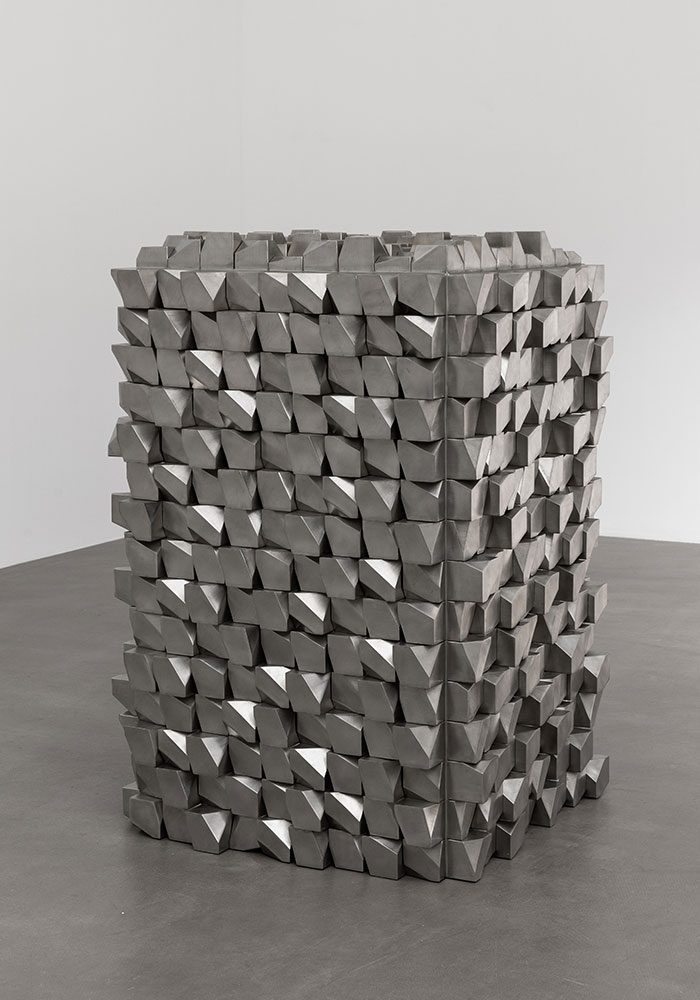 Yang Mushi’s solo exhibition “Crisscross” transforms the gallery space through a series of welded metal structures composed of sharply defined geometric elements. These components are interlaced and reassembled into sculptural systems that appear orderly yet subtly unstable. The title Crisscross reflects Yang’s method of constructing works from numerous separate fragments that are integrated into unified forms while deliberately misaligned, creating tensions within an otherwise regulated structure. Central to the exhibition is “Materialization – Lying Flat Is a Crime, Rat Race Forever” (2025), a figurative sculpture formed from recycled stainless steel. The work references the Chinese internet terms “lying flat” (a refusal of relentless social pressure) and “involution” (a cycle of endless competition without progress). Rendered as a rigid geometric object resembling an industrial slogan or manifesto, the sculpture critically addresses a social environment in which endurance and overwork are often celebrated as virtues. Its jagged metallic lettering turns language into a confrontational physical presence that evokes the architecture of contemporary urban life—office buildings, schools, monuments and residential complexes. Another key body of work, the “Assembly” series, consists of installations created from recycled metal collected from demolished buildings and abandoned construction sites. Yang dissects these materials into thousands of fragments before reassembling them through processes of symmetry, rotation and overlap. The resulting structures appear stable yet internally unsettled, reflecting the tension between social discipline and the persistence of individual subjectivity within collective systems. Info: Galerie Urs Meile, D10, 798 East Street, 798 Art District, No. 2 Jiuxianqiao Road, Chaoyang District, Beijing, China, Duration: 14/3-3/5/2026, Days & Hours: Tue-Sun 11:00-18:30, www.galerieursmeile.com/