ART CITIES: Copenhagen-Małgorzata Mirga Tas
In recent years, few artists have transformed the language of textile art with the political clarity and poetic force of Małgorzata Mirga‑Tas. Working across large-scale textile collage, embroidery, and installation, Mirga-Tas constructs vivid visual narratives that challenge centuries of stereotypical and stigmatizing depictions of Roma communities—particularly Roma women. Through scenes drawn from daily life and collective memory, her work proposes an alternative iconography of Roma culture: intimate yet monumental, political yet grounded in lived experience.
By Dimitris Lempesis
Photo: Kunsthal Charlottenborg Archive
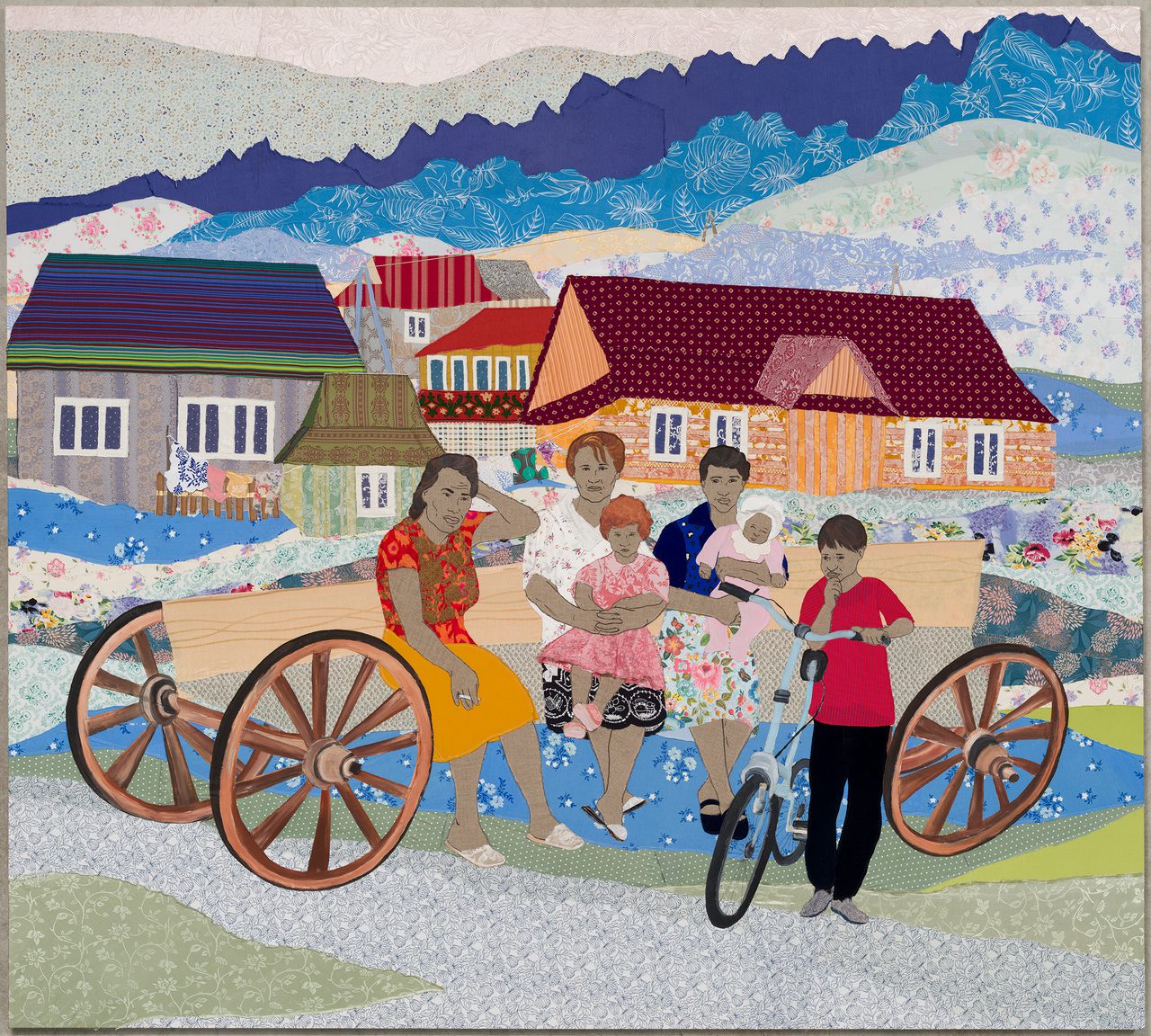
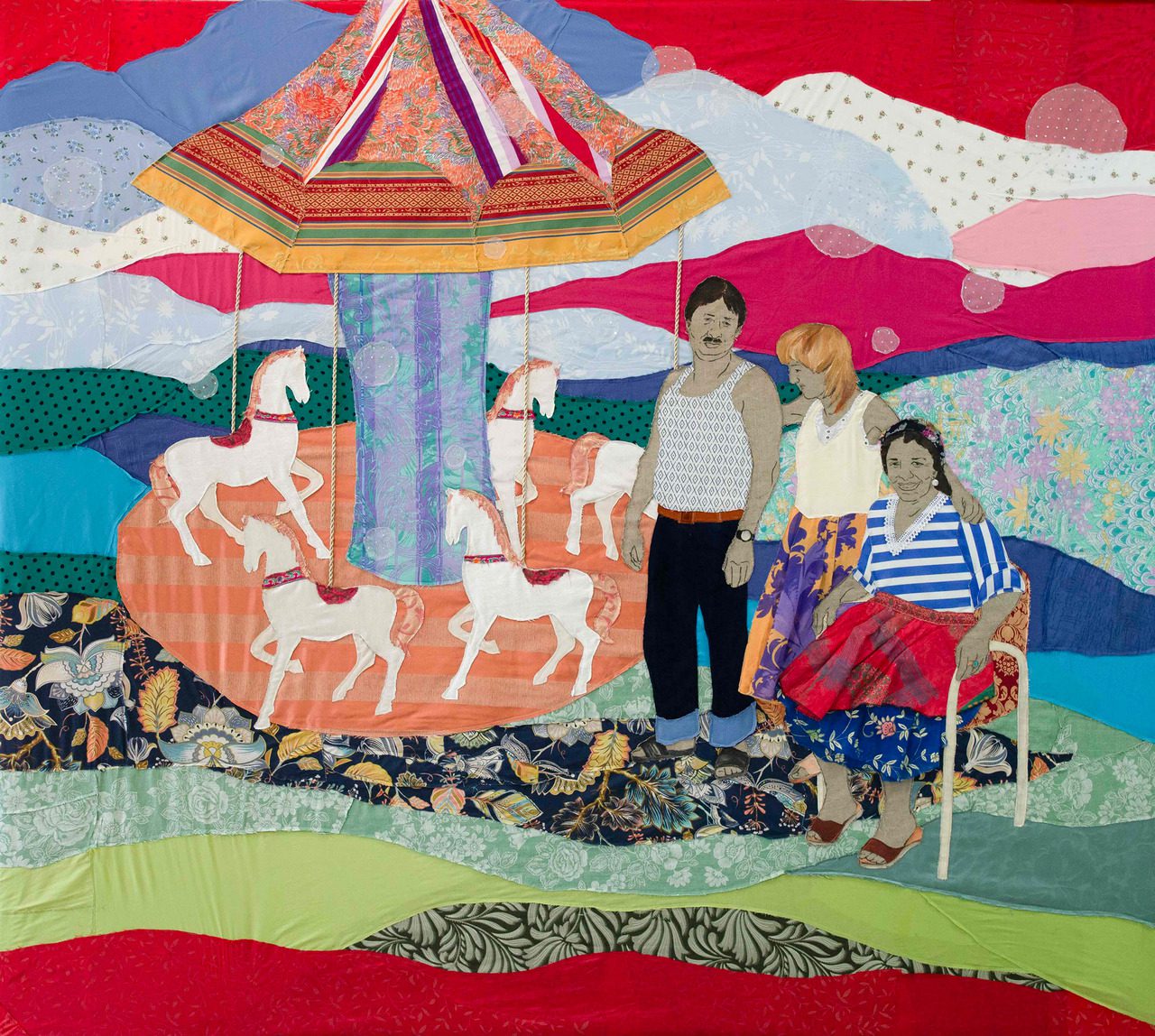
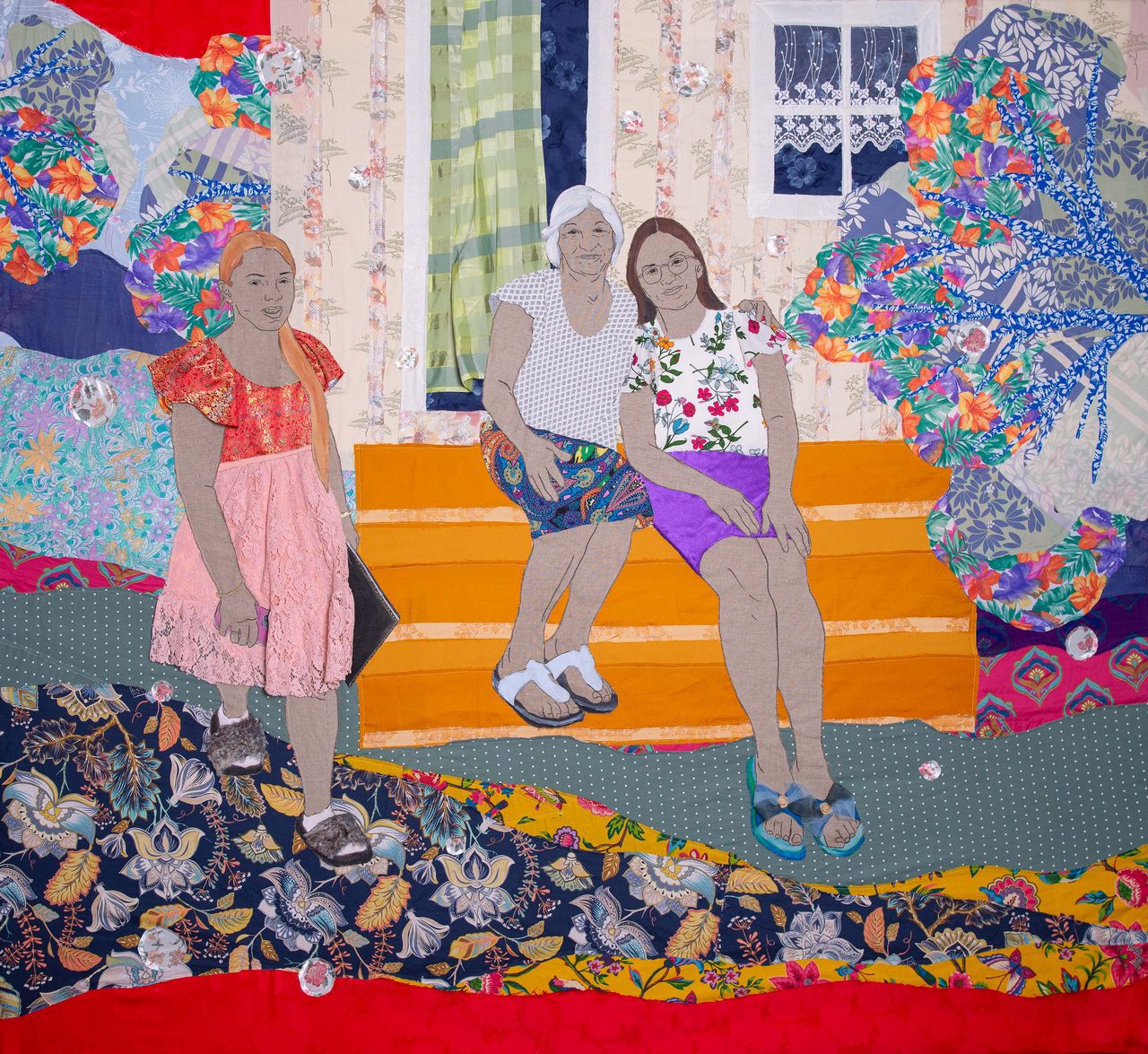
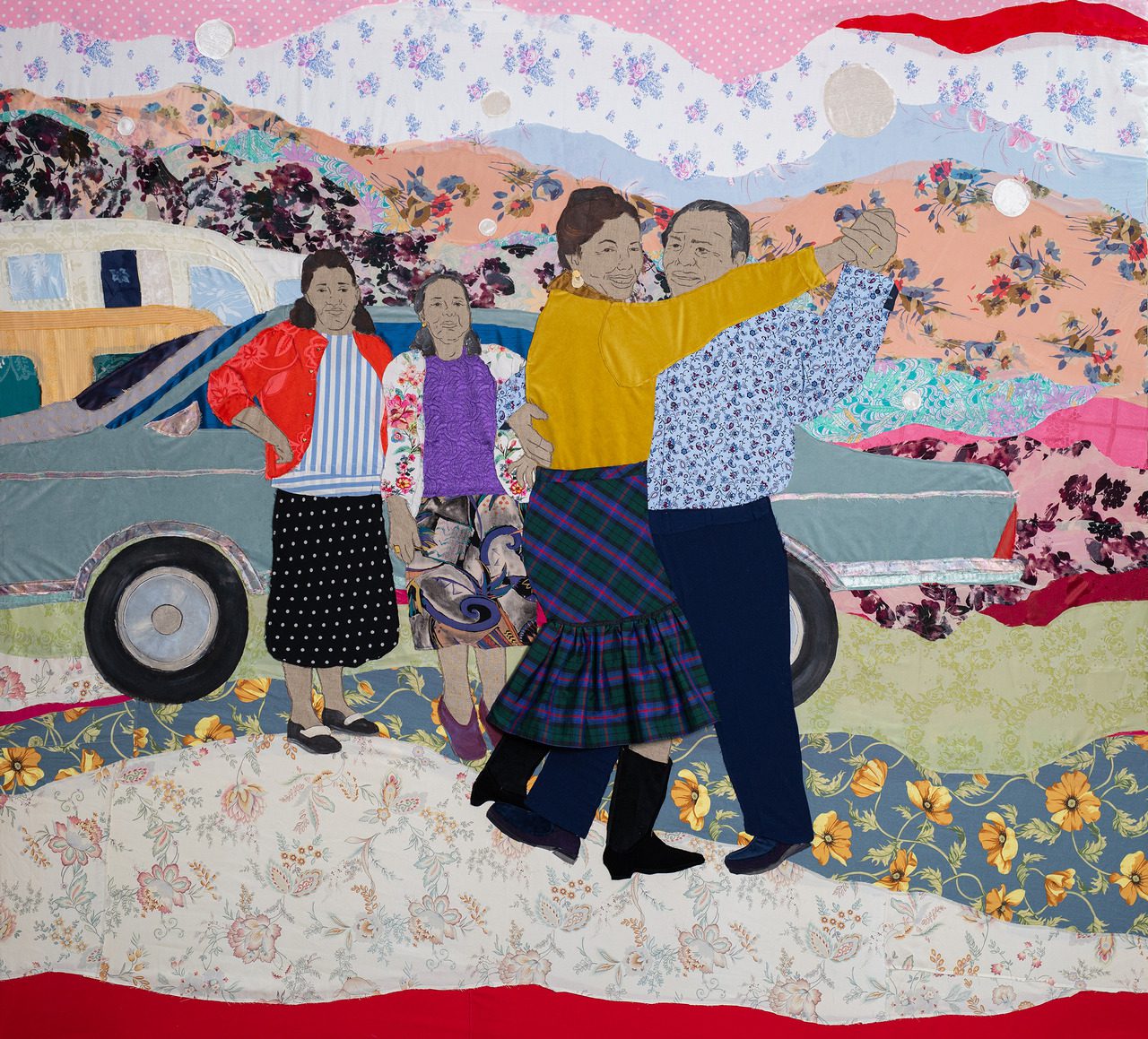
Rooted in the artist’s own community and heritage, Mirga-Tas’ practice centres on everyday moments—women talking, hanging laundry, resting, or gathering together. These seemingly ordinary scenes are interwoven with recurring motifs such as suns, flowers, animals, and constellations, transforming the rhythms of daily life into symbolic archetypes. The result is a visual language that merges storytelling, mythology, and social history. Through this approach, Mirga-Tas reframes the Roma experience not as a marginal narrative, but as an integral part of European cultural history.
Textiles lie at the core of Mirga-Tas’ practice. Rather than treating fabric merely as material, she approaches it as a repository of personal and communal memory. Curtains, jewelry, shirts, and bed linen—often sourced from family members and friends—are cut, sewn, and layered into richly textured collages. The artist describes these fragments as “micro-carriers” of history: objects that contain traces of lived experience.
This process transforms the works into deeply relational artefacts. In many cases, fabrics once worn by the people depicted are incorporated directly into the portrait, allowing the physical material of a life to become part of the artwork itself. The technique not only challenges the traditional hierarchy between craft and fine art but also foregrounds collective participation. Many pieces are produced with the help of women from Mirga-Tas’ community, reinforcing the collaborative and communal ethos at the center of her practice.
Through these layered surfaces, Mirga-Tas constructs complex tableaux that weave together personal narrative, historical memory, and cultural identity. Her work becomes both archive and testimony, addressing themes such as migration, belonging, and the transmission of cultural knowledge across generations.
Mirga-Tas’ work is deeply informed by a form of “minority feminism,” a perspective that foregrounds the strength and agency of Roma women while remaining grounded in cultural tradition. Rather than adopting confrontational rhetoric, her feminism unfolds through storytelling and representation.
Women appear throughout her compositions as protagonists, collaborators, and custodians of knowledge. Scenes of conversation, care, and everyday labor reveal networks of solidarity that sustain communities across generations. In these works, the domestic sphere—often dismissed as mundane—becomes a site of political meaning and historical continuity.
By elevating textile practices historically associated with domestic labor, Mirga-Tas simultaneously challenges the marginalization of craft within art history and reclaims it as a powerful artistic medium. Her works demonstrate how embroidery and sewing can function as tools of resistance and cultural affirmation.
Mirga-Tas achieved international recognition in 2022 when she became the first Roma artist to represent any country at the Venice Biennale, serving as Poland’s official representative at the 59th International Art Exhibition. The presentation, titled “Re-enchanting the World”, filled the Polish Pavilion with monumental textile panels that reimagined Renaissance visual traditions through a Roma perspective.
Inspired by the fresco cycle of the months in Ferrara’s Palazzo Schifanoia, the installation consisted of twelve large-scale textile compositions corresponding to the calendar year. Each panel was organized into three registers: scenes of contemporary Roma life, portraits of influential women, and narratives tracing the historical migration of Roma people across Europe.
By appropriating a canonical reference from European Renaissance art, Mirga-Tas inserted Roma histories into a visual tradition from which they have largely been excluded. The project sought to expand European art history by incorporating representations of Roma culture, thereby challenging long-standing narratives that have ignored or exoticized Europe’s largest ethnic minority.
At the heart of Mirga-Tas’ work lies the ambition to construct what she describes as a “positive iconography” of Roma life. For centuries, images of Roma communities in European art were shaped largely by non-Roma artists, often filtered through stereotypes of exoticism, nomadism, or marginality. Mirga-Tas reverses this gaze.
Her portraits and scenes depict Roma individuals as active agents in culture and history—figures embedded within complex networks of family, tradition, and collective resilience. Through vibrant color, layered fabric, and intricate stitching, the works convey a sense of dignity and vitality that resists reductive narratives.
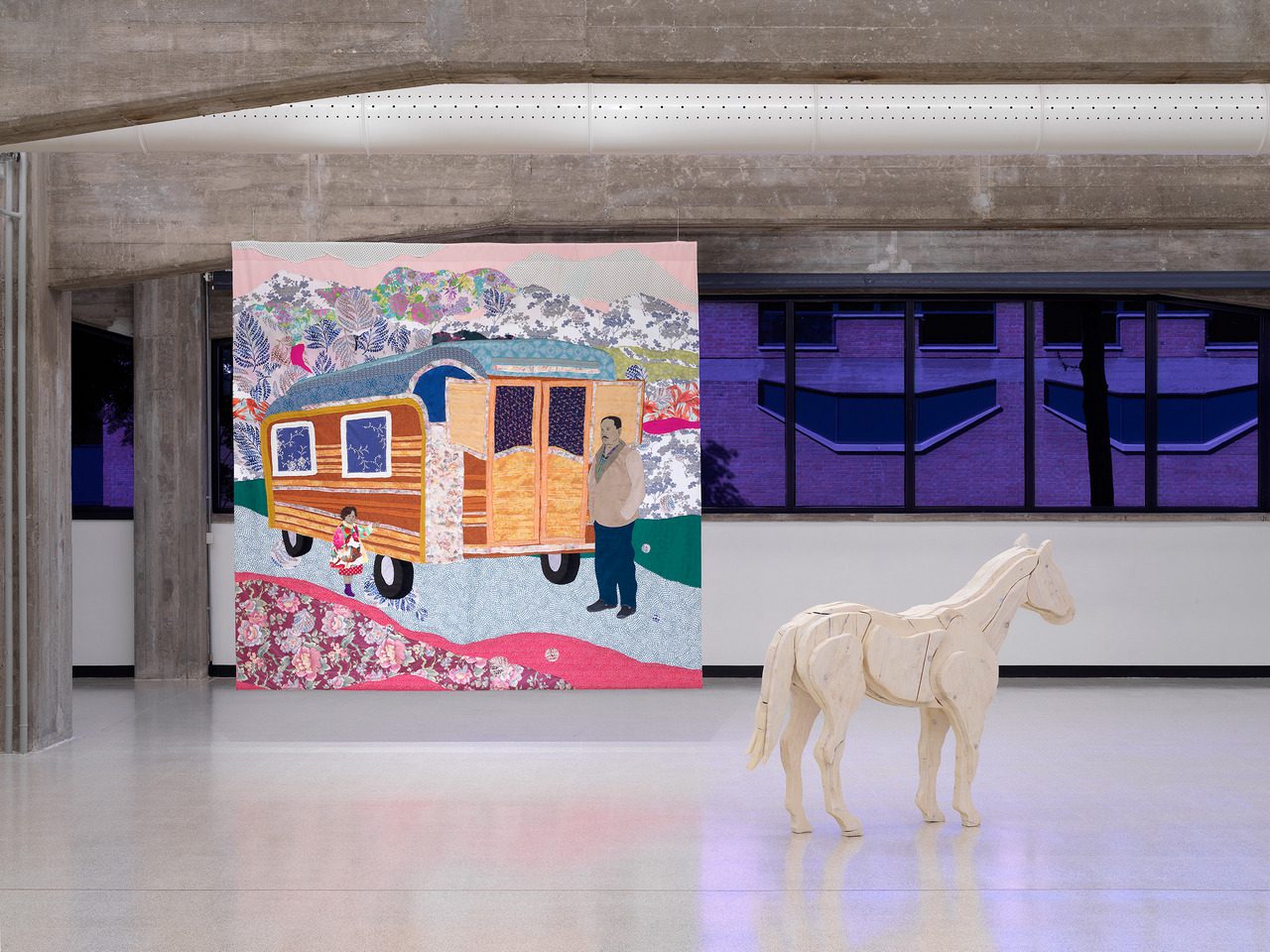
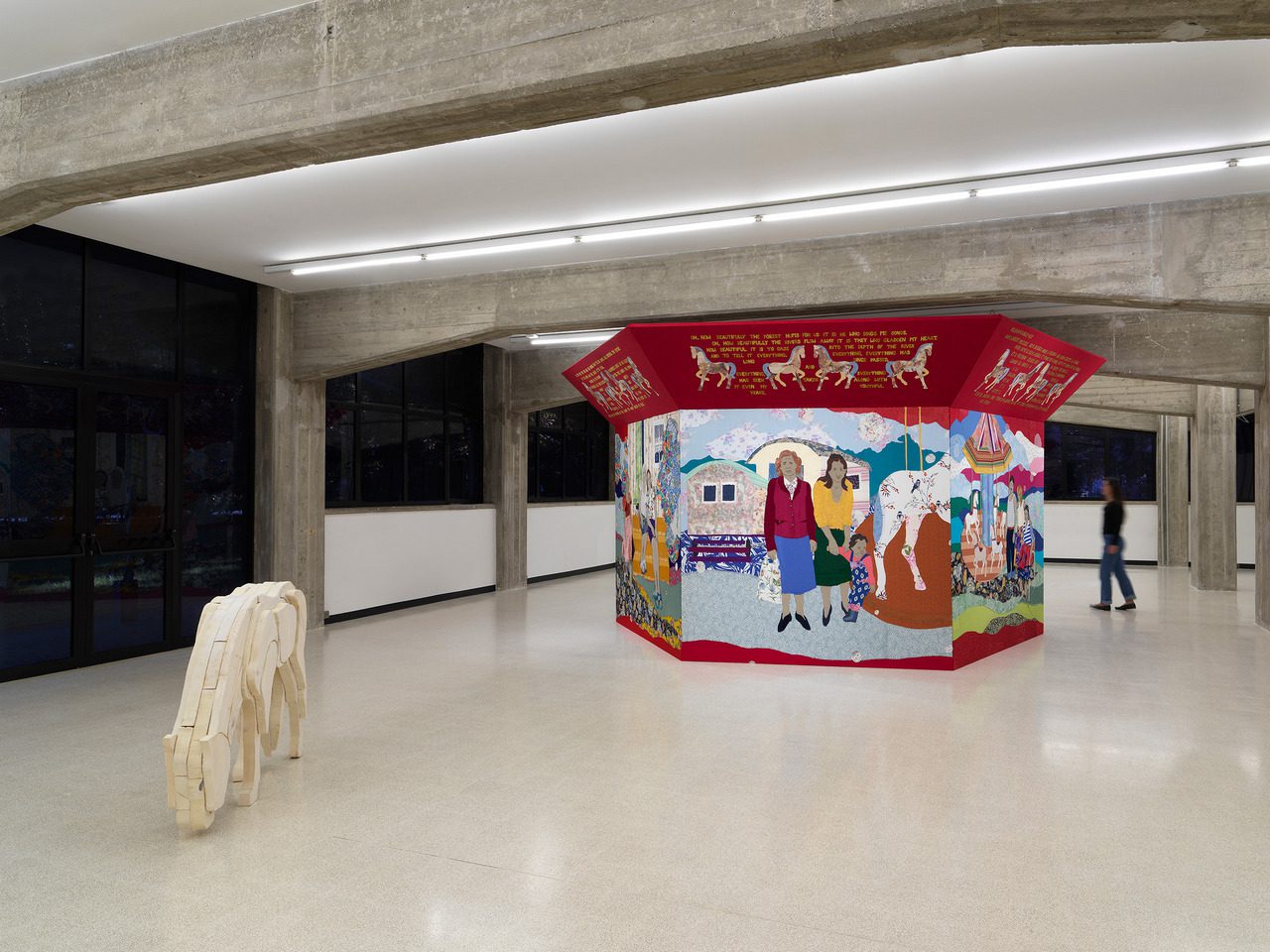
The exhibition “Pani, so tradeł / Water that Wanders”, presented at Kunsthal Charlottenborg, marks the first solo presentation of Mirga-Tas’ work in Denmark. Coinciding with the opening of the documentary film festival CPH, the exhibition unfolds as an expansive journey through Roma histories and contemporary realities.
Bringing together monumental textile collages and newly commissioned works, the exhibition foregrounds community, cultural heritage, and women’s lived experiences. Two new pieces respond directly to historical artworks held in Danish museum collections. By weaving Roma narratives and personal memory into these canonical images, Mirga-Tas reinterprets them and introduces new layers of meaning.
This act of reinterpretation is central to her practice: she revisits historical imagery not to replicate it, but to transform it—placing Roma lives and perspectives at the center of narratives from which they were previously absent.
Structured as a visual journey through time and space, the exhibition moves between archival material, memories of the Roma Holocaust, and scenes from contemporary life. Along the way, it celebrates women who have shaped Roma cultural and political life—trailblazers whose stories continue to influence future generations.
In Mirga-Tas’ hands, textile becomes both medium and metaphor: threads binding together past and present, personal memory and collective history. The resulting works operate simultaneously as artwork, archive, and act of cultural reclamation.
Ultimately, Mirga-Tas does more than represent Roma communities; she reshapes the frameworks through which they are seen. By stitching together fragments of fabric, memory, and history, she constructs a living visual language—one that insists on the presence, complexity, and enduring vitality of Roma culture within contemporary art.
Photo: Małgorzata Mirga-Tas, Pani, so tradeł / Water that Wanders, Exhibition view, Kunsthal Charlottenborg- Copenhagen, 2026, Courtesy the artist and Kunsthal Charlottenborg
Info: Curator: Henriette Bretton-Meyer, Kunsthal Charlottenborg, Kongens Nytorv 1, Copenhagen, Denmark, Duration: 12/3-16/8/2026, Days & Hours: Tue-Fri 12:00-20:00, Sat-Sun 11:00-17:00, https://kunsthalcharlottenborg.dk/