
PRESENTATION: Giuditta Branconi Cannon Fodder
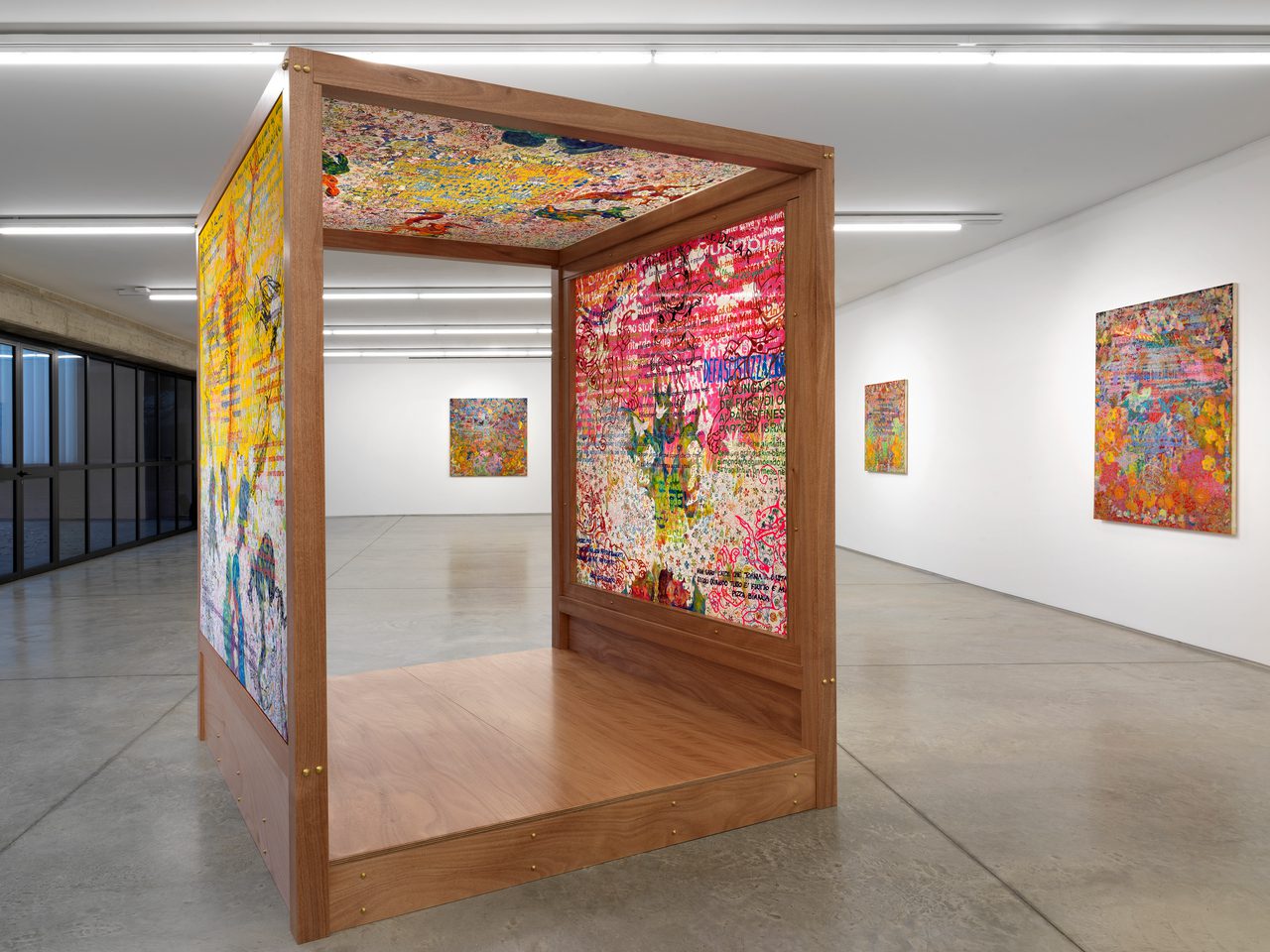
![left & right: Giuditta Branconi, Se seguissi le molliche di pane (non torneresti qui mai più) / If you followed the breadcrumbs (you'd never get back here) [detail], 2026, oil on linen, wooden structure, © Giuditta Branconi, Courtesy the artist; L.U.P.O Gallery, Milan, Photo. Dario Lasagni](http://www.dreamideamachine.com/web/wp-content/uploads/2026/03/01a-1.jpg)
Giuditta Branconi’s artworks are loud and bombastic, realised in a blaring painting that smiles open-mouthed and whispers. The one staged by the artist is a theatrical mise-en-scène where rare species and rich fauna often surround the characters who smile at us with timeless eyes. The lively composition plays between stolen glimpses and vast horizons where the gaze gets lost, but only up to a certain point before being driven back.
By Efi Michalarou
Photo: Collezione Maramotti Archive
The exhibition “Cannon Fodder” by Giuditta Branconi unfolds at the Collezione Maramotti, marking the artist’s first solo show in an institutional context. Conceived specifically for the space, the project brings together a new body of paintings and a large immersive installation made of painted canvases through which visitors can physically walk.
The exhibition signals an important step in Branconi’s trajectory, presenting her expansive painterly language within an environment where painting becomes not only an image but also a spatial and experiential field.
The title “Cannon Fodder” refers to the notion of expendable bodies—individuals treated as disposable material within larger systems of power. Originally a military expression, the term historically described soldiers sent into battle with little regard for their survival. Branconi appropriates this phrase and translates it into a visual and symbolic dimension.
In her work, images function like projectiles: compressed, charged and ready to explode across the surface of the canvas. The paintings become vehicles for expressing the violence and oppression embedded in contemporary society. Rather than presenting a controlled composition, Branconi embraces excess—an overload of visual information that destabilizes the viewer and rejects aesthetic restraint. Painting here becomes both emotional discharge and political gesture, an act that resists order and composure.
Branconi’s practice is characterized by an extraordinary visual density. Her paintings swarm with images and signs that extend across both sides of the thin textile supports she often uses. By painting on the front and back of the fabric, she multiplies the layers of meaning and invites the viewer to consider the work as an open and permeable structure.
The iconography in her compositions draws from a wide range of cultural sources. References to high art coexist with elements of popular culture, fragments of literature, comics, newspapers, song lyrics and even text messages. Within these crowded surfaces, images and words intertwine in a way that resembles a visual stream of consciousness. The result is a hybrid and contradictory universe—a semiotic labyrinth where disparate symbols coexist freely, generating unexpected associations.
Behind the apparent spontaneity of Branconi’s compositions lies a highly meticulous stylistic investigation. Each mark, letter or decorative motif derives from processes of appropriation and reinterpretation.
Her references range widely: Asian art, Victorian engravings, children’s books, ornamental arabesques, comics, tattoos and illustrated manuals all contribute to the vocabulary of forms she deploys. Through this method, Branconi extracts fragments from heterogeneous visual traditions and recontextualizes them, transforming familiar codes into new signs.
This accumulation of iconography saturates the viewer’s gaze and dissolves conventional hierarchies between subject matter and style. Hearts, chains, hunting scenes, clouds, faces, stars, letters, flowers, birds, skeletons and butterflies populate her canvases. These motifs merge into what could be described as contemporary grotesques—visions where disparate elements fuse into an eccentric, layered and almost medieval imagination.
For “Cannon Fodder”, Branconi intensifies the role of text within her practice. Words appear throughout the paintings in a proliferation of languages, alphabets and fonts, transforming writing into a central visual element.
Rather than functioning as clear messages, these textual fragments behave like traces of an internal diary. They invite viewers to wander through the work, tracing possible connections between dispersed signs. In this sense, reading becomes an exploratory act: the meaning of the work emerges through navigation rather than linear interpretation. Language is therefore not simply content—it becomes a material component of the image.
At the center of the exhibition stands a large installation composed of painted canvases arranged as an unusual three-dimensional triptych. Both sides of the fabrics remain visible, exposing surfaces that in traditional painting would remain hidden.
Visitors are invited to physically move through this structure, effectively entering the pictorial space. The installation transforms painting into an environment—an immersive architecture of images where the viewer becomes part of the visual field. This configuration opens a new perspective on Branconi’s universe: a vision without concealed sides or privileged viewpoints, where the tensions of the surface unfold openly in space.
Throughout the works presented in Cannon Fodder, marks and figures accumulate to the point of near collapse. Images overlap, texts proliferate and symbols multiply until the composition seems on the verge of implosion.
Yet this visual overload is not destructive. Instead, it suggests a generative process in which meaning emerges from conflict. The canvas becomes a battlefield where fragments collide and recombine, producing new narratives out of chaos.
What remains after this pictorial detonation is not ruin but possibility: the potential for new interpretations, new relationships between images and words, and new ways of understanding the present through painting.
Photo left & right: Giuditta Branconi, Se seguissi le molliche di pane (non torneresti qui mai più) / If you followed the breadcrumbs (you’d never get back here) [detail], 2026, oil on linen, wooden structure, © Giuditta Branconi, Courtesy the artist; L.U.P.O Gallery, Milan, Photo. Dario Lasagni
Info: Collezione Maramotti , Via Fratelli Cervi 66, Reggio Emilia, Italy, Duration: 8/3-26/7/2026, Days & Hours : Tue-Fri 14:30-18:30, Sat-Sun 10:30-18:30, www.collezionemaramotti.org/
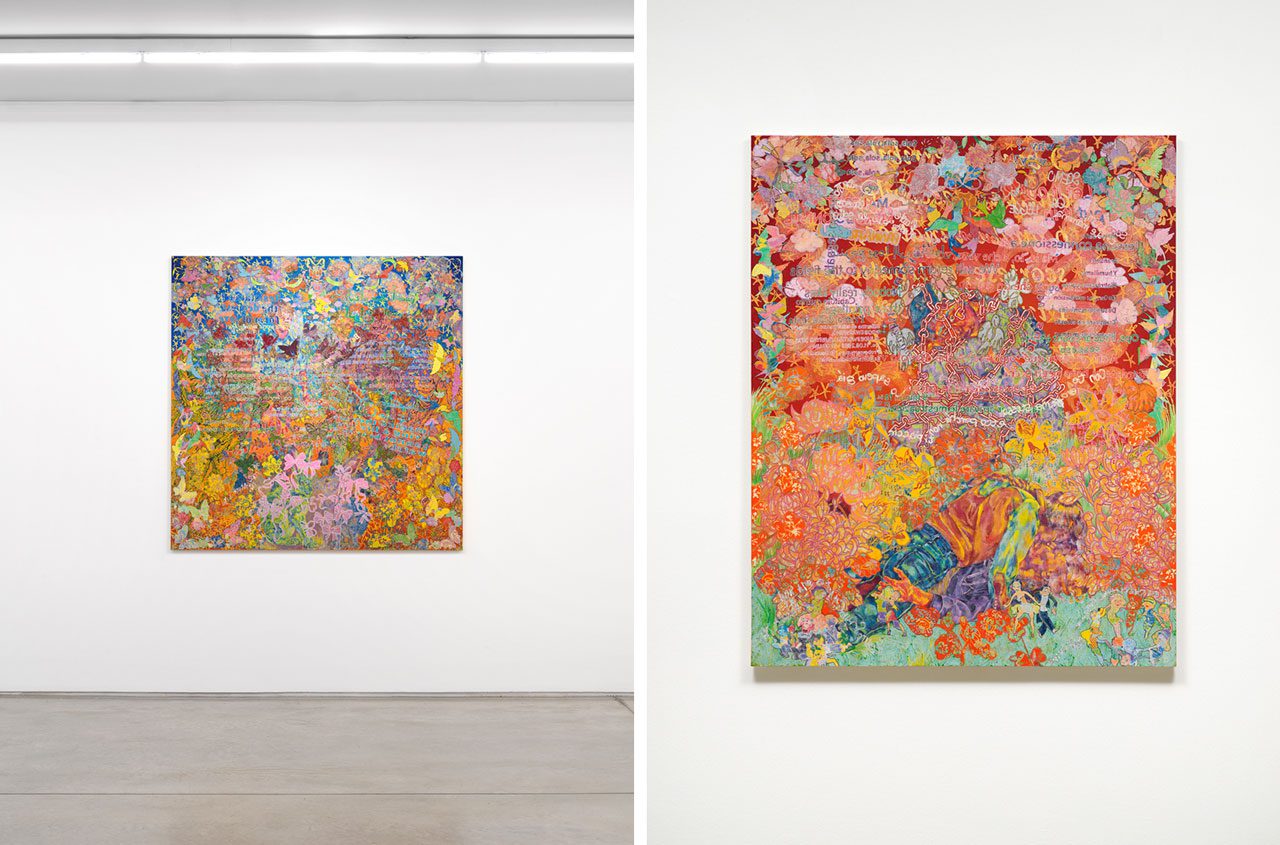
Right: Giuditta Branconi, Mi ricordavo più felice di così / I remembered being happier than this, 2025,oil on linen, © Giuditta Branconi,Courtesy the artist; L.U.P.O Gallery, Milan, Photo. Dario Lasagni
![Left: Giuditta Branconi, Se seguissi le molliche di pane (non torneresti qui mai più) / If you followed the breadcrumbs (you'd never get back here), 2026, wooden structure, oil on linen, © Giuditta Branconi, Courtesy the artist; L.U.P.O Gallery, Milan, Photo. Dario Lasagni Right: Giuditta Branconi, C’est la panik sur le Périphérik / There’s panik on the Périphérik [detail], 2026, oil on linen, © Giuditta Branconi,Courtesy the artist; L.U.P.O Gallery, Milan,Photo. Dario Lasagni](http://www.dreamideamachine.com/web/wp-content/uploads/2026/03/16.jpg)
Right: Giuditta Branconi, C’est la panik sur le Périphérik / There’s panik on the Périphérik [detail], 2026, oil on linen, © Giuditta Branconi,Courtesy the artist; L.U.P.O Gallery, Milan, Photo. Dario Lasagni