ART CITIES: Paris-Yvan Salomone
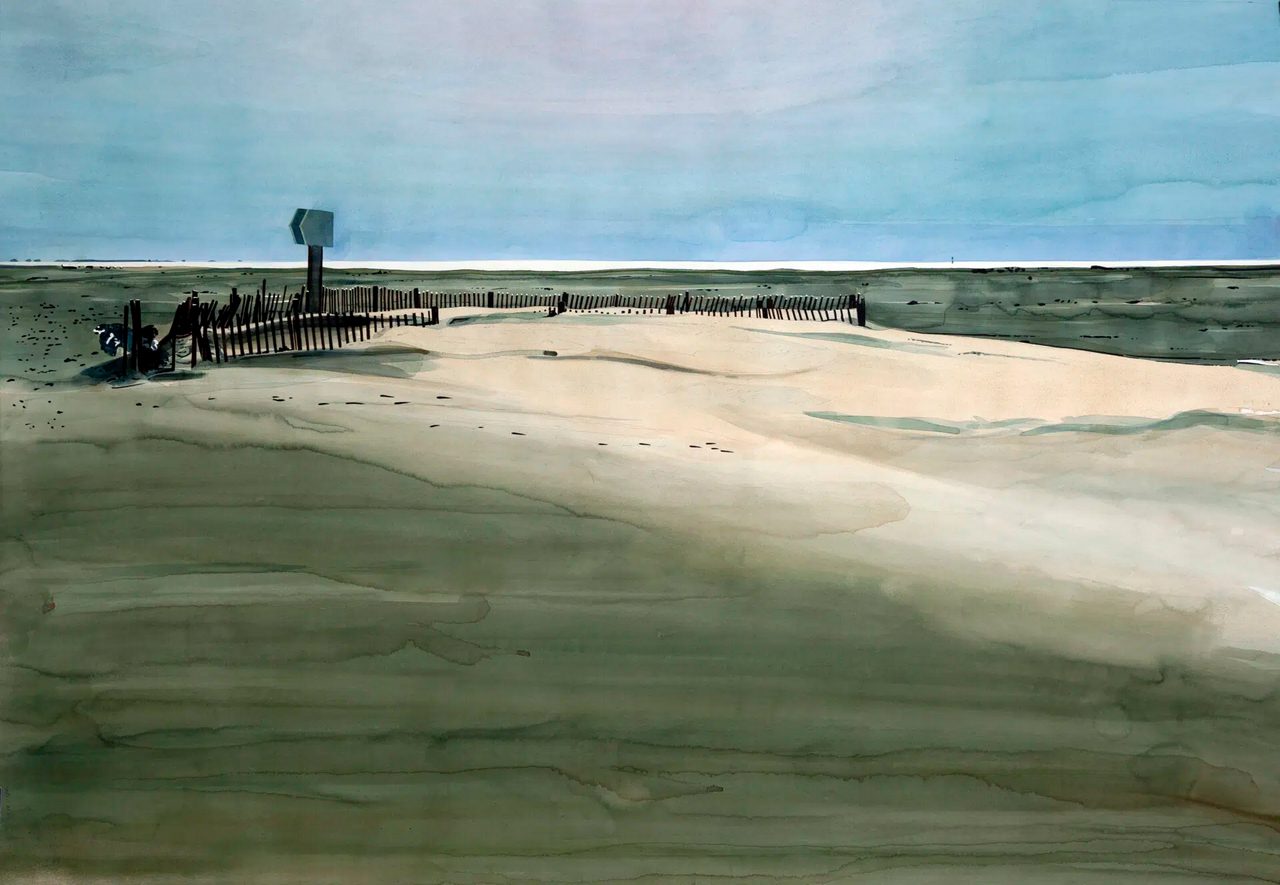
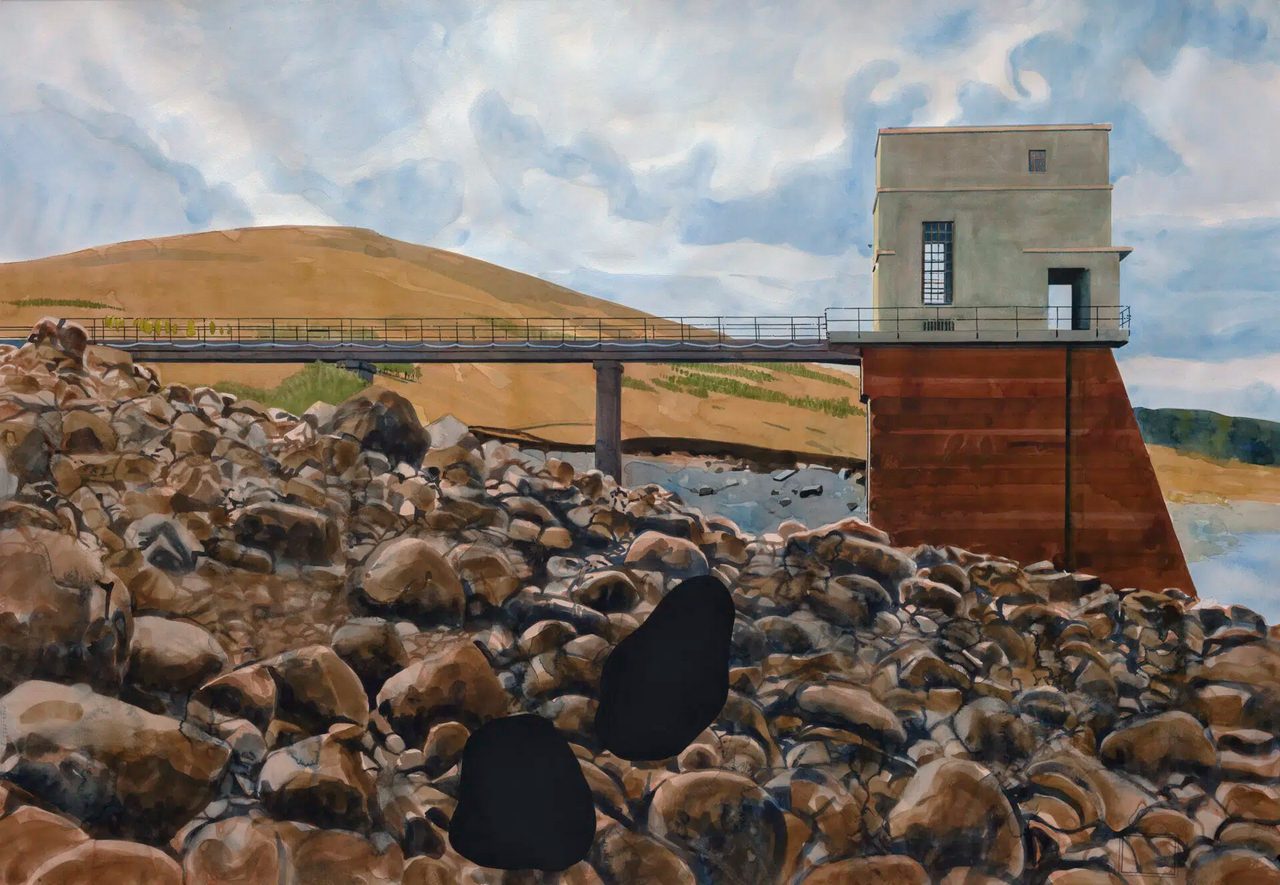
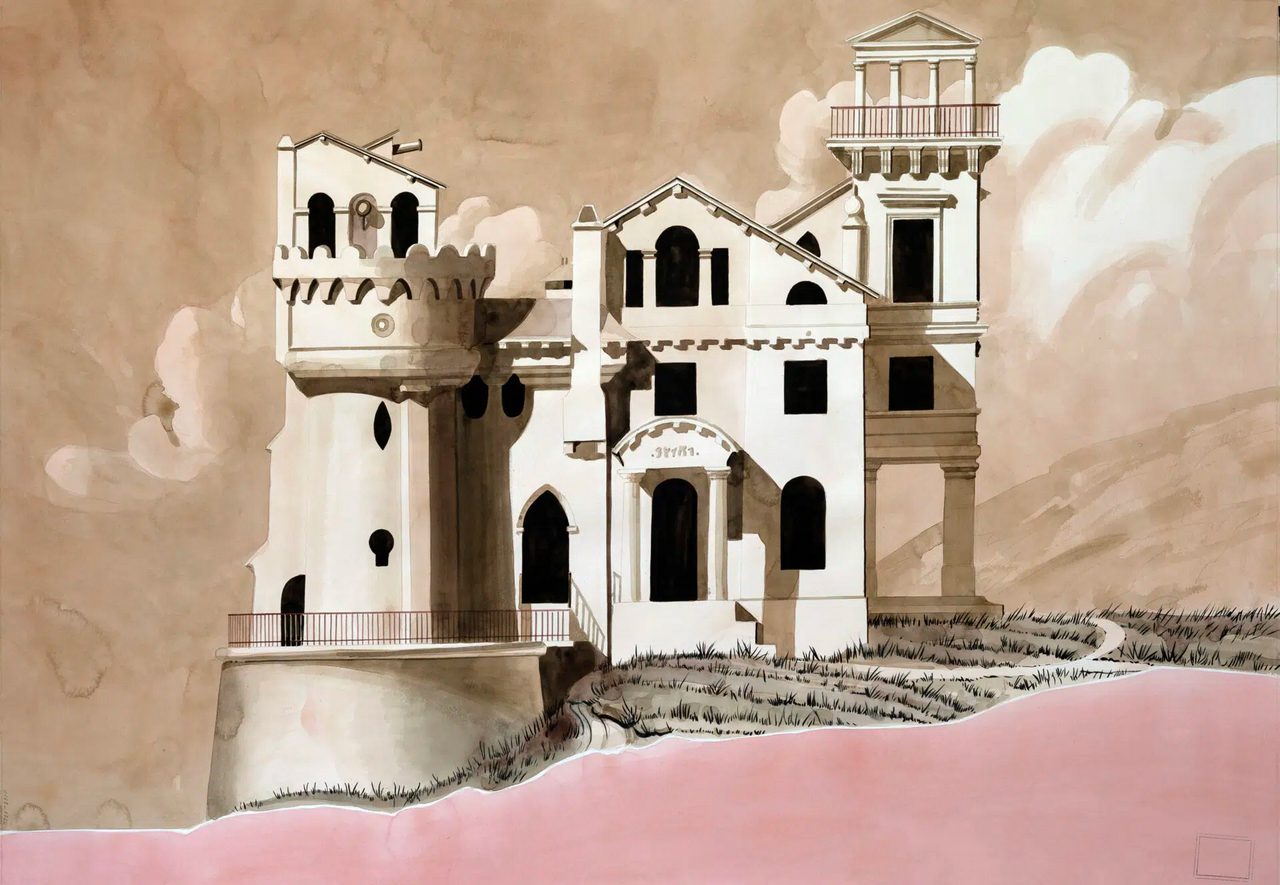
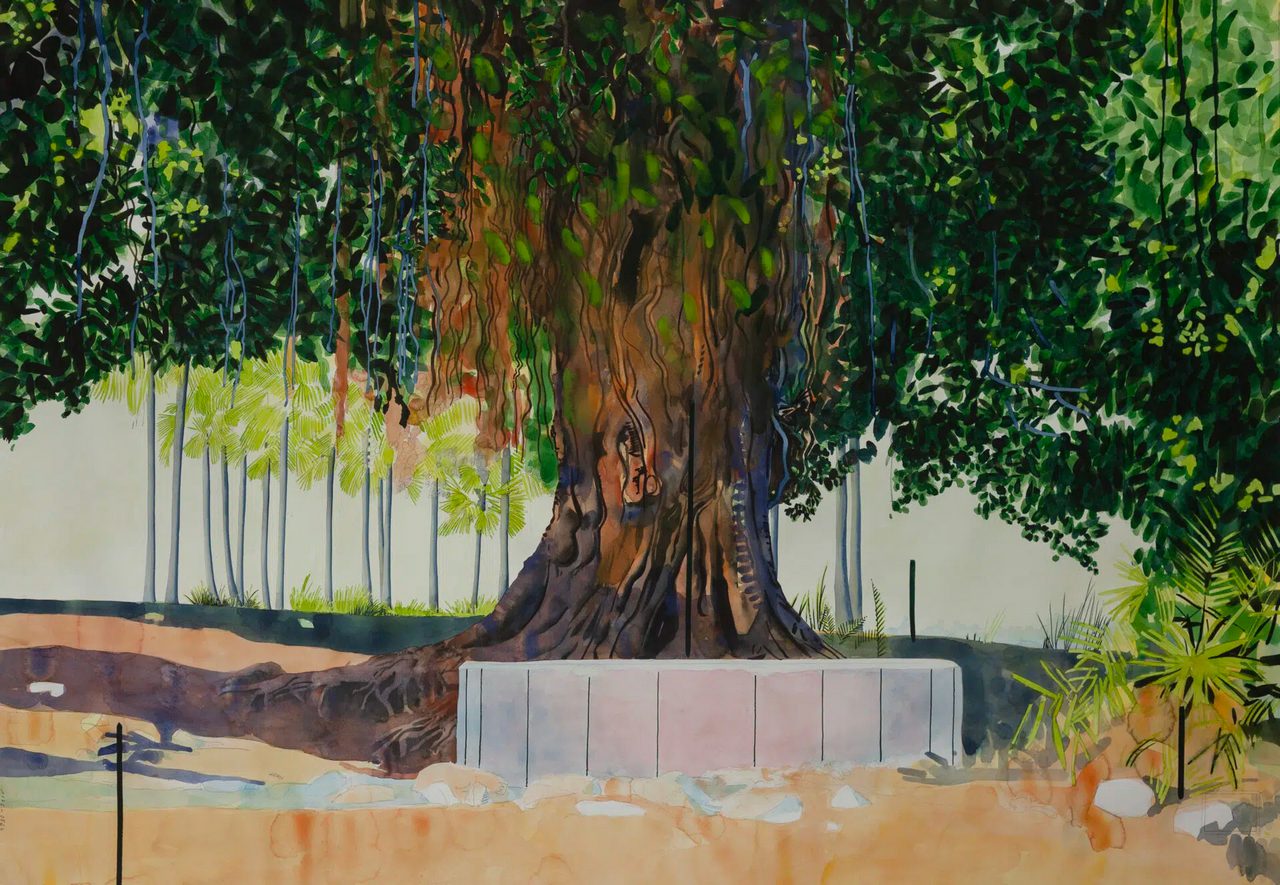
In 1991, Yvan Salomone set the framework of his practice and devoted himself to watercolor painting by composing on identical formats. A name for each work thus embodies a regular rhythm of production. He paints in his studio based on preliminary photographs taken from the four corners of the planet. He doesn’t reproduce the photographs in his works, but liberally interprets them; these images being just a visual starting point.
By Dimitris Lempesis
Photo: Xippas Gallery Archive
Industrial landscapes rarely occupy the center of painting’s poetic imagination. Ports, construction sites, logistics platforms, and suburban wastelands are generally associated with function rather than contemplation. Yet the work of Yvan Salomone transforms precisely these environments into sites of visual and conceptual tension. In his large-scale watercolors—dedicated almost exclusively to ports, infrastructures, and peri-urban territories—raw materials such as containers, cement, steel, and rusted barrels confront the transparency of watercolor. From this contradiction emerges the distinctive atmosphere of Salomone’s work: landscapes that remain anchored in reality while appearing strangely suspended.
The artist’s recent exhibition “quand même,” presented at Xippas Gallery, gathers a selection of new works that continue this long exploration of industrial modernity. Through a meticulous and disciplined practice, Salomone converts the ordinary architecture of contemporary infrastructure into enigmatic pictorial spaces where material weight dissolves into light.
Born in 1957 in Saint-Malo, where he still lives and works, Salomone has devoted the greater part of his career to a singular motif: the landscapes produced by globalized industry. Since 1991 he has followed a strict program—one watercolor per week, always in the same large format, derived from photographs taken during his travels through ports and industrial zones around the world.
This disciplined structure functions as both constraint and liberation. By limiting the parameters of production—format, rhythm, absence of human figures—the artist creates a framework within which subtle variations can unfold. The resulting body of work, now numbering in the hundreds, resembles an archive of contemporary peripheral spaces: docks in Rotterdam, shipping terminals in Shanghai, storage facilities, roundabouts, abandoned construction sites.
Yet Salomone’s aim is never documentary description. The photograph serves only as a point of departure. Once in the studio, the image is transformed through the slow accumulation of translucent washes of pigment. Industrial structures remain recognizable but gradually shift toward something less stable—somewhere between representation, memory, and abstraction.
The essential tension in Salomone’s work lies in the collision between subject and medium. His motifs belong to the vocabulary of heavy industry: container ships with massive linear profiles, cylindrical barrels marked by corrosion, reinforced concrete platforms, metallic infrastructures. These objects signify durability, weight, and economic circulation.
Watercolor, by contrast, is historically associated with immediacy, transparency, and fragility. The pigment dissolves in water, spreads across paper, and dries into luminous stains that resist correction. This medium produces a sense of volatility—an effect seemingly incompatible with the solidity of industrial matter.
Salomone exploits this contradiction deliberately. The depiction of raw materials through watercolor generates a metamorphosis: the heaviness of steel and concrete appears to evaporate into atmosphere. Containers become blocks of color suspended in space; warehouses dissolve into luminous gradients; rust stains expand into painterly clouds.
Rather than neutralizing the industrial motif, watercolor intensifies it. The medium reveals latent energies within these structures, giving them a strange expressive presence. The massive lines of a cargo ship or the stacked geometry of containers begin to resonate almost like figures in a silent narrative.
Another striking aspect of Salomone’s work is the systematic absence of human figures. Ports and industrial zones—places normally imagined as sites of continuous activity—appear in his paintings emptied of workers, vehicles, or movement.
This absence produces an unsettling stillness. The landscapes seem to exist after the departure of those who built them, leaving behind the material traces of labor. Warehouses stand closed, cranes remain idle, parking lots stretch out under an indifferent sky.
Yet the human presence is paradoxically everywhere implied. These structures are the result of collective activity, global commerce, and technological systems. By removing the visible actors, Salomone emphasizes the silent monumentality of the infrastructures themselves. They become witnesses to human activity rather than stages for it.
The images that later become watercolors originate in the artist’s physical wandering through these environments. One might imagine Salomone moving through ports and industrial outskirts by bicycle, car, or on foot, pausing when an ordinary element arrests his attention: a wall, a shed, a façade, an isolated tree.
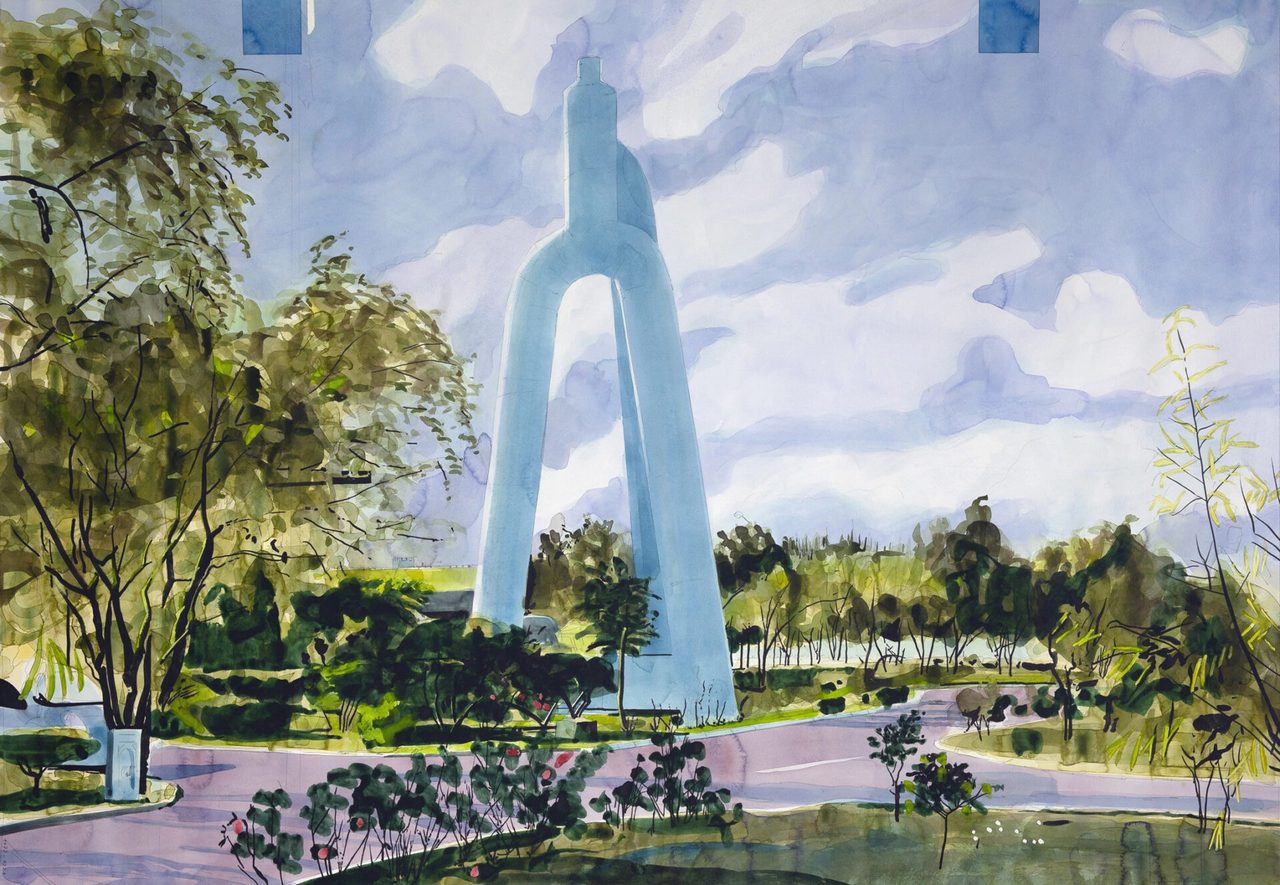
The process begins with observation. A water tower may suddenly cut through the horizon like an aluminum vertebra. A small construction toy lying abandoned on asphalt may take on monumental scale. A glass curtain wall becomes partially invaded by vegetation.
These details appear banal at first glance, yet something in their configuration triggers a shift in perception. The everyday object begins to resemble something else—an architectural relic, a symbolic structure, a fragment of an unknown narrative. In this moment of hesitation, the motif becomes an image.
The transformation continues in the studio. Salomone projects the chosen photograph onto paper and begins a patient process of painting in successive layers. The watercolor technique demands precision and acceptance of accident: once a wash dries, it cannot be erased.
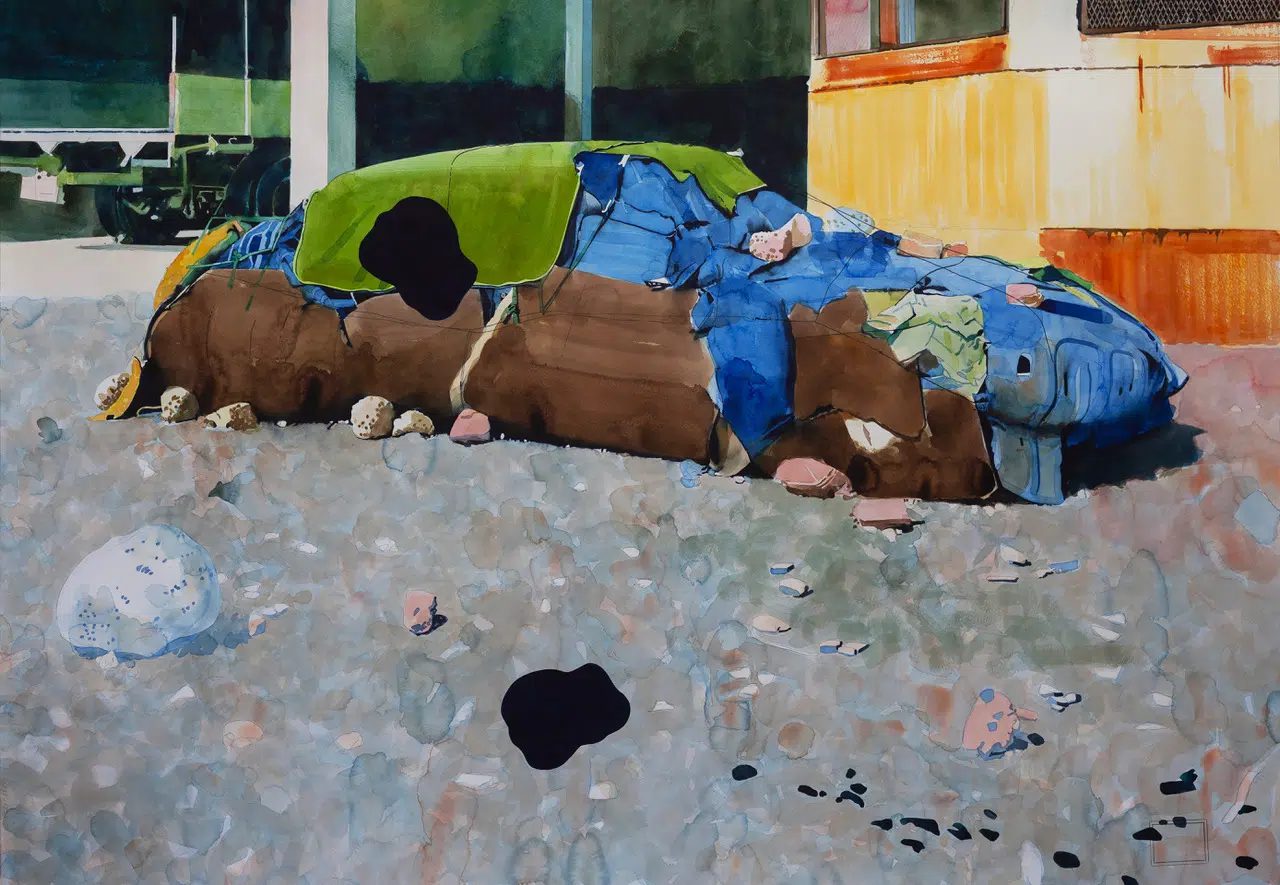
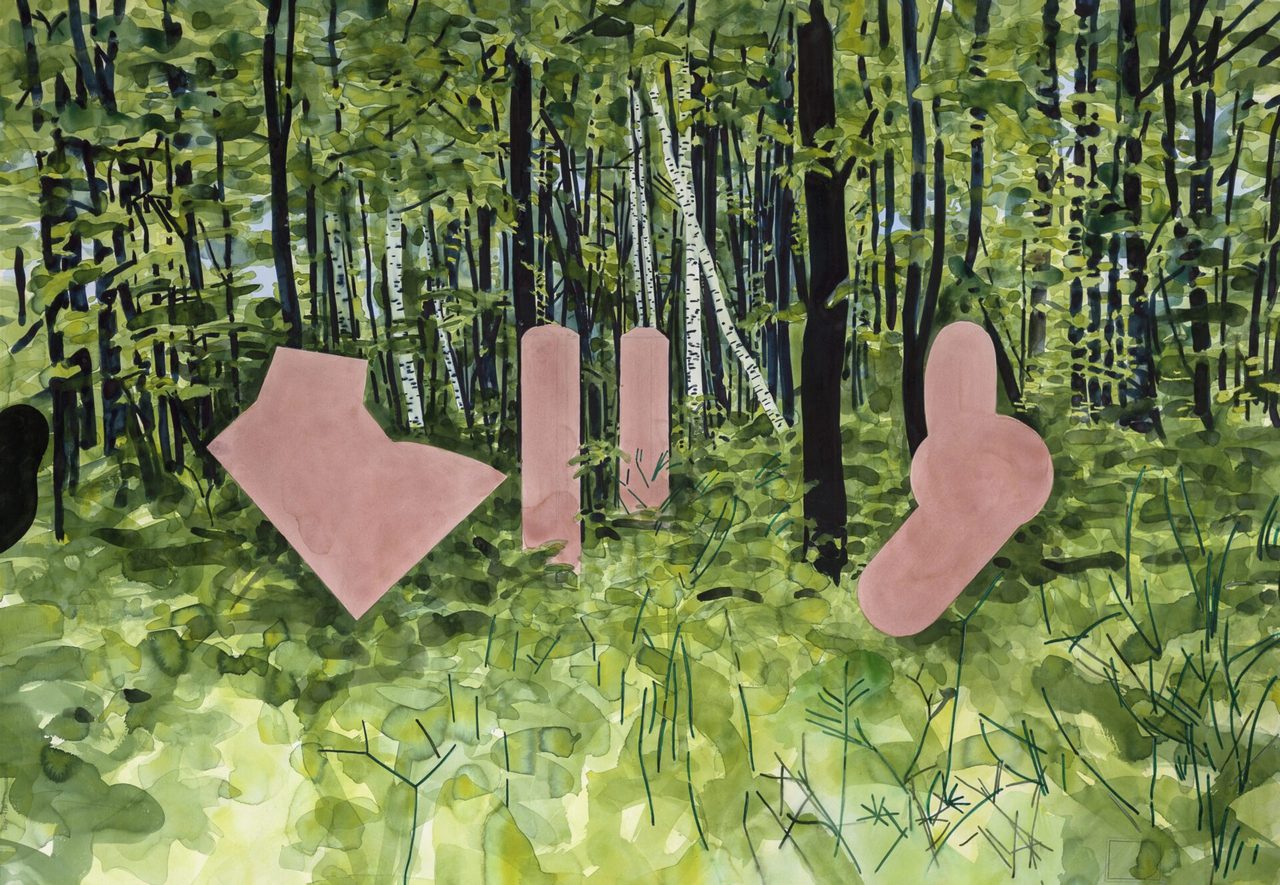
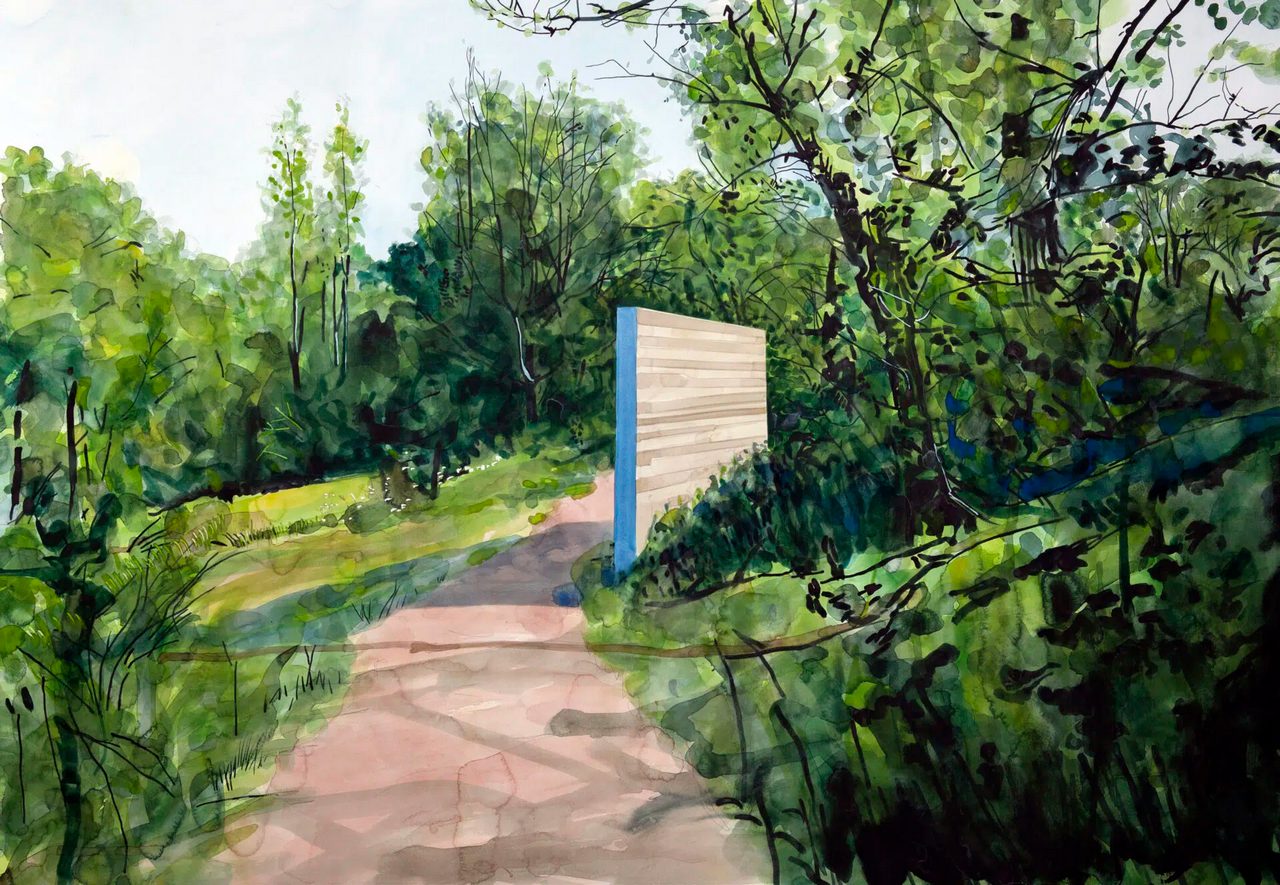
Certain areas of the paper remain deliberately untouched. These blank reserves function as sources of light within the composition. Rectangles, geometric planes, and sometimes unexpected dark shapes interrupt the continuity of the image, introducing moments of abstraction within the landscape.
Through this process the chaotic complexity of the original scene is gradually simplified. The painting does not reproduce the photograph but distills it—extracting a more legible structure from the visual noise of the industrial environment. Light, in Salomone’s watercolors, often comes from what has been spared rather than what has been painted.
What distinguishes these works from simple industrial studies is the way they activate deeper layers of meaning. The viewer confronting one of Salomone’s images may experience a strange displacement: the container yard begins to resemble a battlefield, the stacked blocks evoke a tomb, a flooded dock suggests the aftermath of an ancient catastrophe.
Such associations are never explicit. Instead, they hover at the edge of perception, as if fragments of collective memory had become embedded in the architecture of the present.
Salomone’s landscapes thus operate as thresholds between temporal registers. The contemporary industrial site becomes a place where myths, historical images, and personal memories intersect. A surface illuminated by the autumn sun may feel at once radiant and ominous; a horizon darkened by clouds may suggest both meteorological change and psychological unease.
Film scenes, fragments of music, literary echoes—these cultural residues cling to the objects depicted. The landscape becomes a repository of visual memory.
Salomone’s strict working method—one watercolor per week, identical format, systematic titling—creates a rhythm that structures his entire oeuvre. Each work receives a numerical identifier and a title composed of eleven letters, often a condensed or invented word.
This serial logic places his work within a broader lineage of conceptual practices where repetition becomes a form of inquiry. The constraint does not limit invention; instead, it creates a temporal framework within which subtle shifts accumulate.
Over decades, the paintings form a vast sequence of variations on the same subject: the industrial landscape as seen through the lens of painting.
Despite their apparent realism, Salomone’s landscapes never fully resolve into narrative or interpretation. Objects remain partially mute. Images feel deliberately incomplete.
The artist does not attempt to explain the scenes he depicts. Instead, painting becomes a device for organizing perception—a space where reality, memory, light, and darkness coexist without conclusion.
This ambiguity gives the works their distinctive atmosphere. They appear suspended: neither purely descriptive nor entirely abstract, neither documentary nor symbolic. The viewer is invited to wander within the image, just as the artist wandered through the landscapes that inspired it.
In an era saturated with spectacular imagery, Salomone directs attention toward the overlooked territories of modern life: shipping terminals, parking lots, industrial fringes, zones of logistical circulation. These spaces, often considered visually unremarkable, become sites of unexpected beauty when filtered through the fragile medium of watercolor.
Heavy materials—steel, concrete, containers—undergo a quiet dematerialization. Industrial infrastructure becomes atmospheric, almost dreamlike. The contemporary world, stripped of noise and activity, reveals a strange poetic charge.
In the works presented in “quand même,” Yvan Salomone continues to explore this paradox with remarkable consistency. His paintings defend the reality of the modern landscape while simultaneously dissolving it into something more elusive: a suspended space where matter becomes light and the ordinary becomes enigmatic.
Photo: Yvan Salomone, 1082_0421_stabatmater, 2021, Watercolour on paper, 96,5 x 137,3 cm, © Yvan Salomone, Courtesy the artist and Xippas Gallery
Info: Xippas Gallery, 108 rue Vieille-du-Temple, Paris, France, Duration: 7/3-18/4/2026, Days & Hours: Tue-Sat 11:00-19:00, www.xippas.com/