ART CITIES: Vienna-Ndidi Dike
Born in London and based in Lagos, Dike is internationally acknowledged for her multidisciplinary sculptural practice, which spans painting, collage, photography, video and installation. Her work operates at the intersection of materiality and social critique, exploring how the legacies of colonialism, global capitalism and forced migration shape contemporary life. In Rare Earth Rare Justice, these long-standing concerns find new urgency in the context of Africa’s central role in the global extractive economy.
By Efi Michalarou
Photo: Secession Archive
In a moment when the environmental and human costs of extractive industries are increasingly impossible to ignore, “Rare Earth Rare Justice”, the first major solo exhibition by British-Nigerian artist Ndidi Dike at an Austrian institution, stakes an uncompromising claim. The exhibition presents a large-scale, research-driven installation that confronts the ecological devastation and endemic violence embedded in global resource extraction.
Born in London and based in Lagos, Dike is internationally acknowledged for her multidisciplinary sculptural practice, which spans painting, collage, photography, video and installation. Her work operates at the intersection of materiality and social critique, exploring how the legacies of colonialism, global capitalism and forced migration shape contemporary life. In Rare Earth Rare Justice, these long-standing concerns find new urgency in the context of Africa’s central role in the global extractive economy.
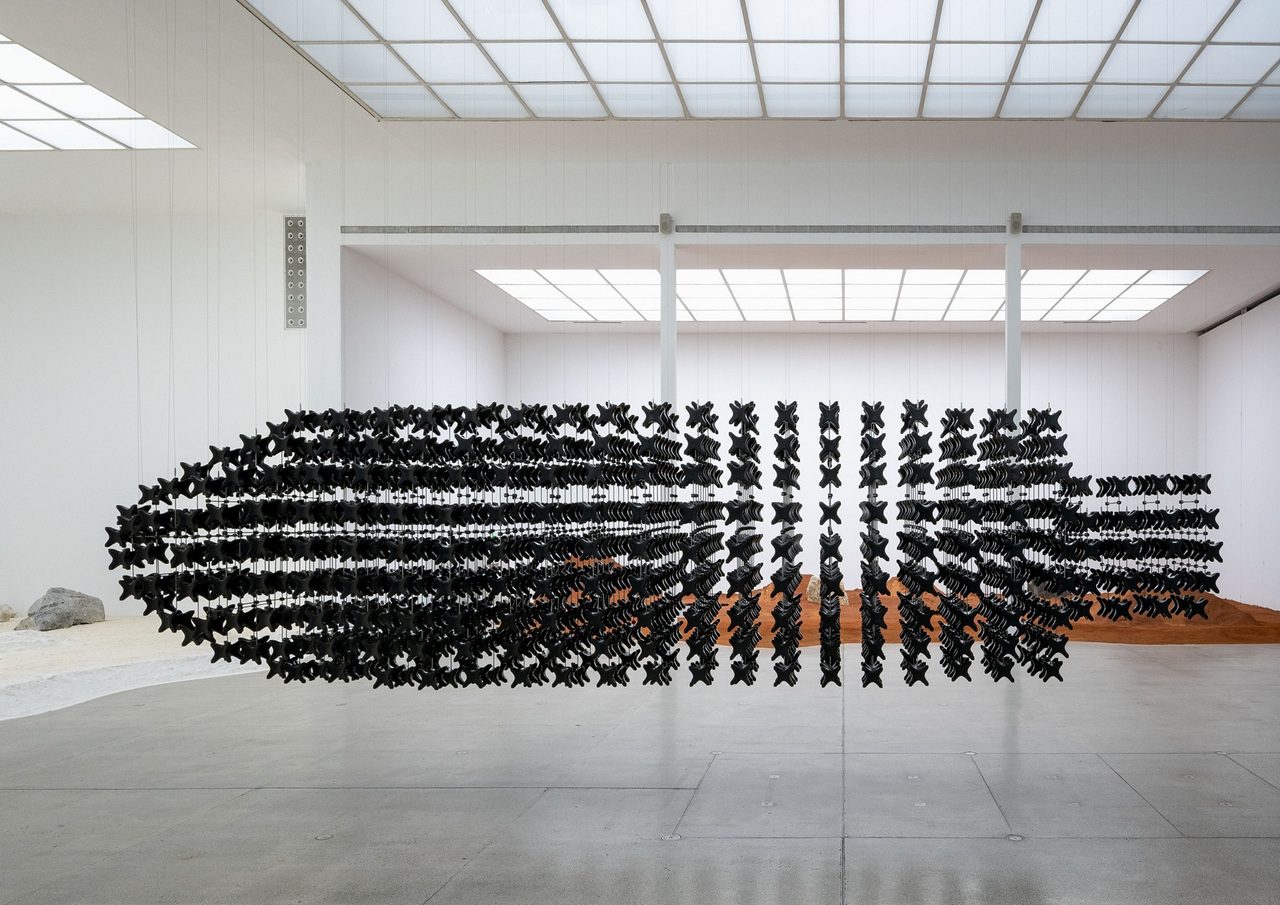
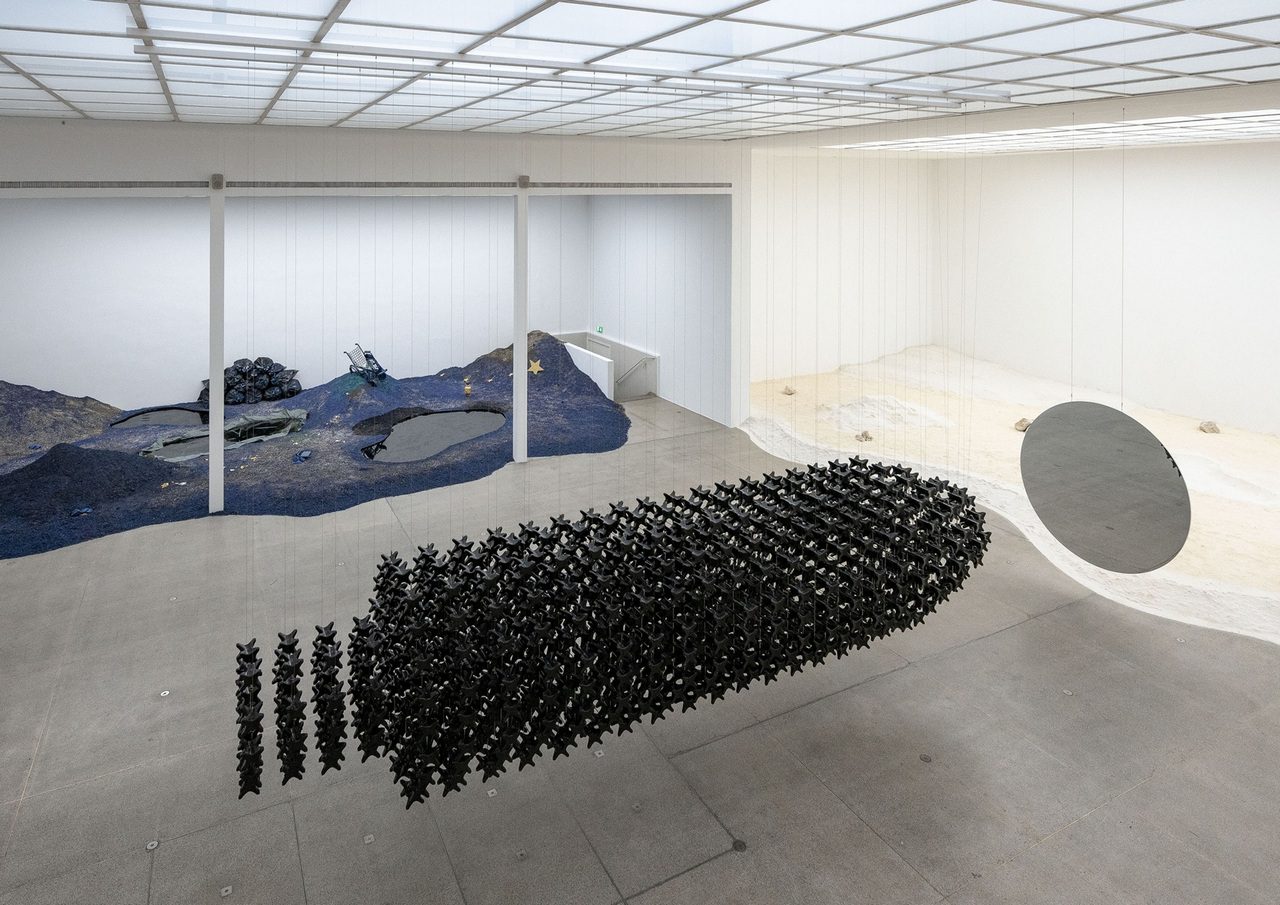
At the conceptual core of the exhibition is a monumental suspended sculpture formed from roughly nine hundred autopsy neck rests, arrayed into a bullet-like mass that confronts a large circular mirror. While the work never depicts violence directly, its charged formal presence activates memory and imaginative association: the dense, lethal geometry recalls historical slave ship loading plans as well as contemporary systems of violence. In Dike’s own articulation, the piece resonates across moments of state and systemic brutality — from George Floyd and the #EndSARS protests to the deaths and disappearances of activists and students worldwide. This genealogy situates extractive violence within a broader continuum of dispossession and racialized harm.
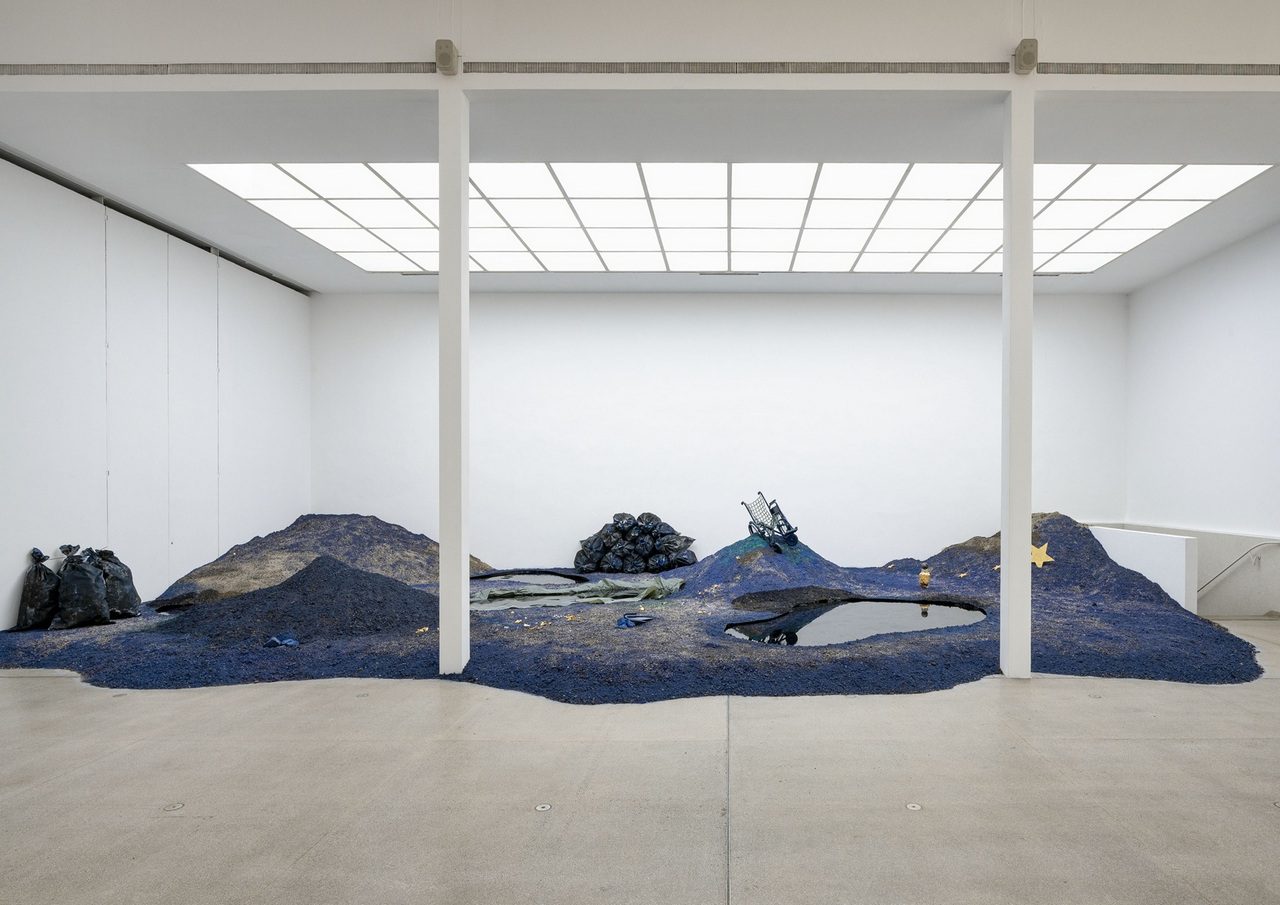
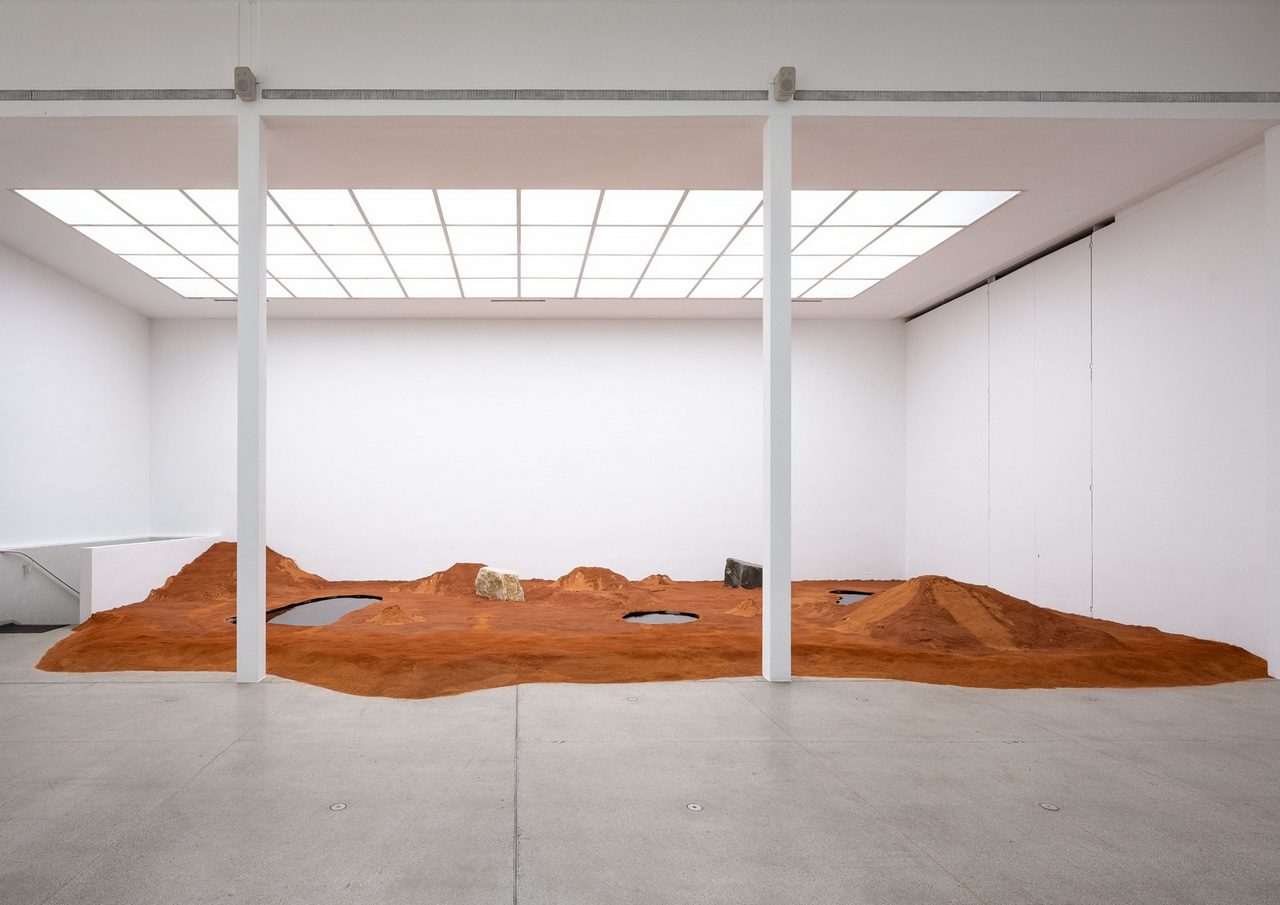
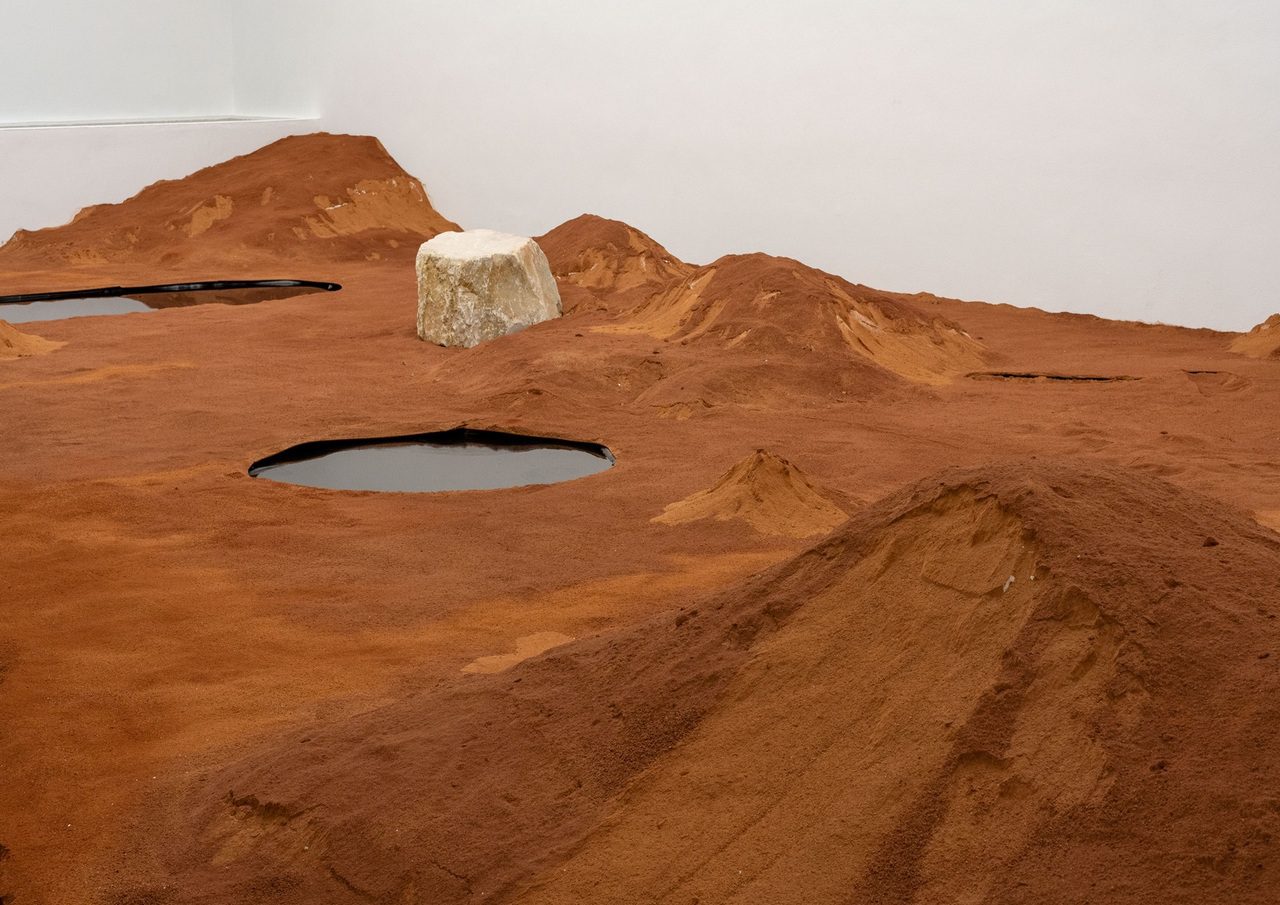
Encircling this central form is a landscape of artificial topographies in white, red and blue — hues that operate as condensed signifiers. White alludes to white hegemony, kaolin and sand; red references the distinctive soil of Dike’s southeastern Nigerian homeland; and blue evokes cobalt mining sites in the Democratic Republic of the Congo, where young people, women and children engage in hazardous labor to supply minerals for global technology markets. These colours also gesture toward the national identities of major mining investors, implicating Global North states and China in the ongoing circuits of extraction and inequality.
The installation’s atmosphere is shaped not only by form but by sound. A relentless rhythm of money-counting machines reverberates throughout the exhibition space, a cold and mechanical pulse underscoring how abstract financial logics detach economic systems from their material consequences. This auditory layer underscores Dike’s insistence that extractive capitalism is sustained not merely by physical removal of resources but by the invisible infrastructures of global markets and capital flows.
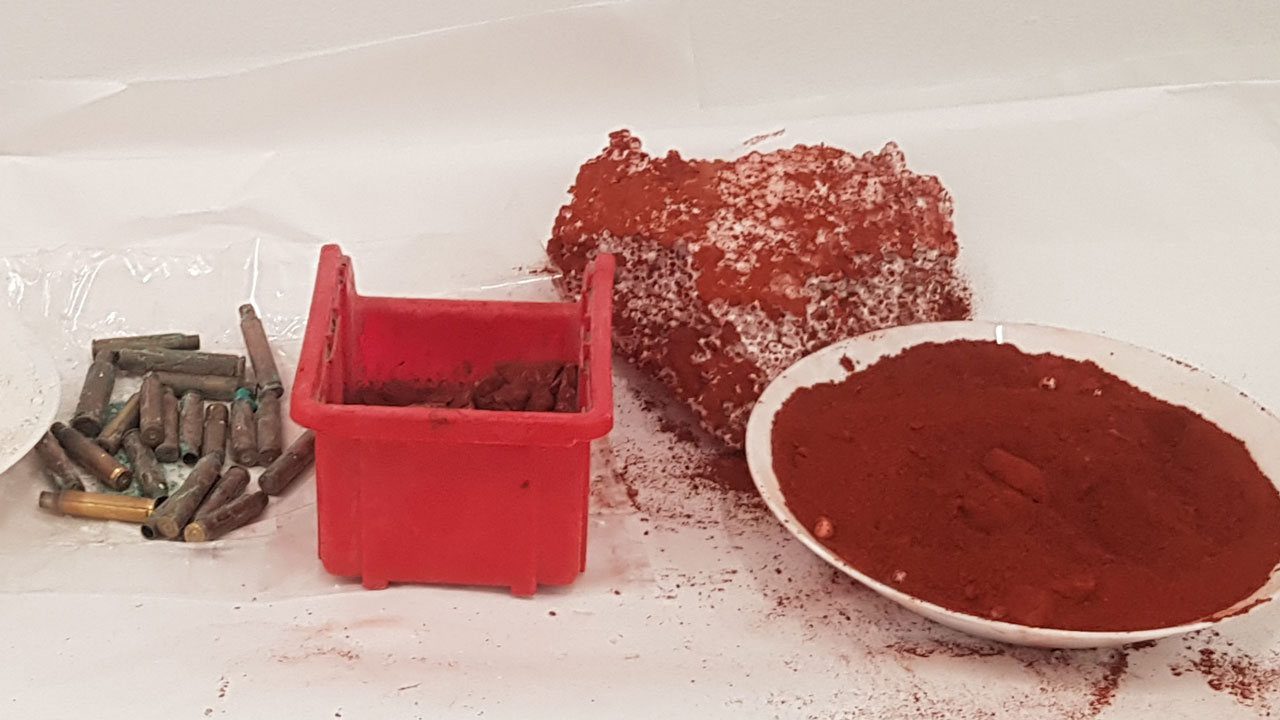
Among the exhibition’s most poignant gestures is a wheelchair whose seat and backrest are meticulously braided from spent bullet casings. This transformed object collapses binary notions of harm and healing, suggesting how extraction permanently disable communities, landscapes and lives — leaving behind physical, ecological and socio-cultural impairments that outlast any single conflict.
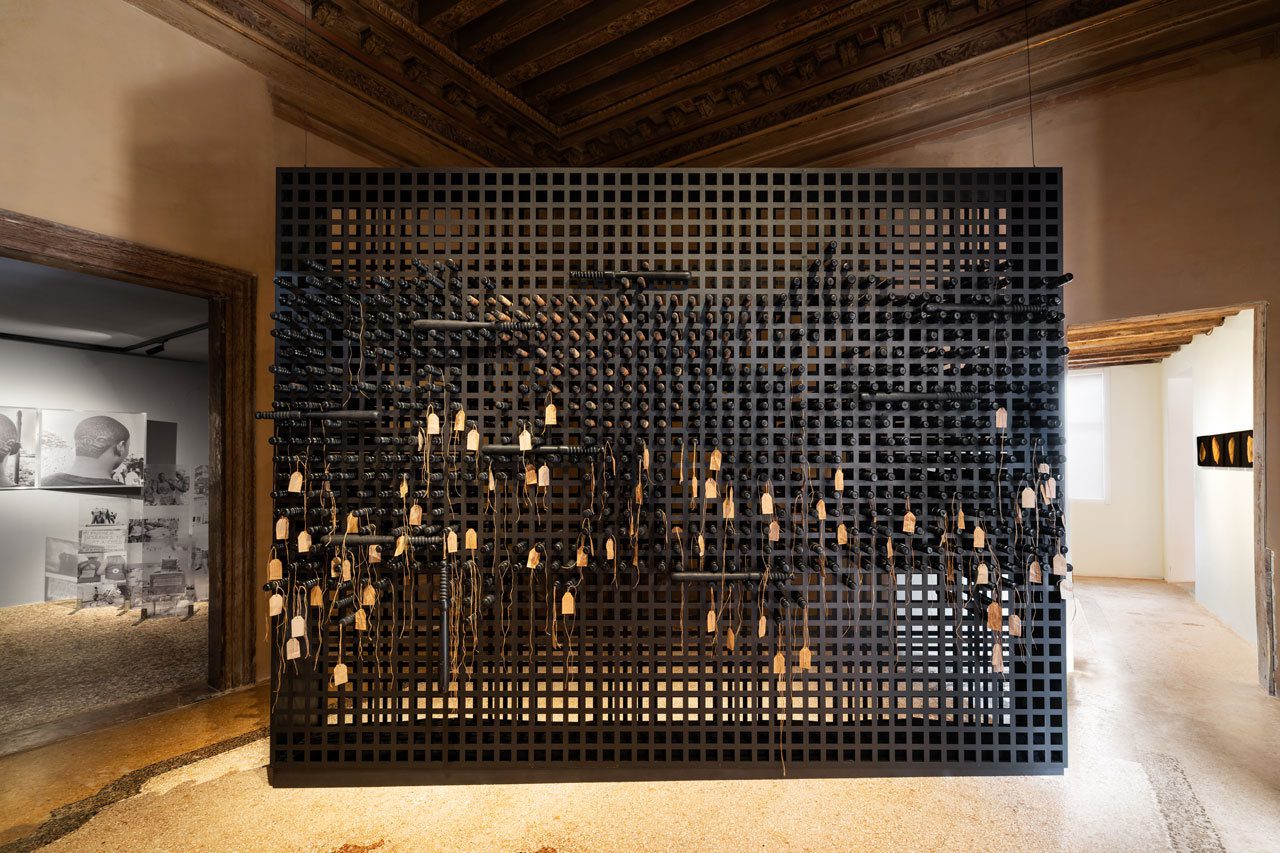
Materiality is not ancillary in Dike’s work; it is the very medium through which histories of violence, labor and trade are made tangible. Objects carry the trace of former lives — economic, social and political — and act as conduits into entangled histories spanning the transatlantic slave trade and contemporary neocolonial economies. In the friction between impulse and memory, between attraction and repulsion, “Rare Earth Rare Justice” confronts its audience with a crucial question: Where is justice for the people whose land, labour and lives are continuously extracted in the name of progress?
Photo: Ndidi Dike, Rare Earth Rare Justice, Exhibition view, Vereinigung bildender Künstler*innen Wiener Secession-Vienna, 2026, Courtesy the artist and Vereinigung bildender Künstler*innen Wiener Secession
Info: Curator: Jeanette Pache, Vereinigung bildender Künstler*innen Wiener Secession, Friedrichstraße 12, Vienna, Austria, Duration: 6/3-31/5/2026, Days & Hours: Tue-Sun 10:00-18:00, https://secession.at/en/