PRESENTATION: Igshaan Adams-Between Then and Now
Born in Bonteheuwel, a suburb in Cape Town, South Africa, Igshaan Adams draws upon his background to contest racial, sexual and religious boundaries. This intersectional topography remains visible throughout his practice and serves as a palimpsest upon which traces of personal histories are inscribed and reinscribed. Adams approaches materiality through his own subjectivity, often using cultural and religious references in conjunction with surfaces that have always been present throughout his life.
By Efi Michalarou
Photo: Mudam Luxembourg Archive
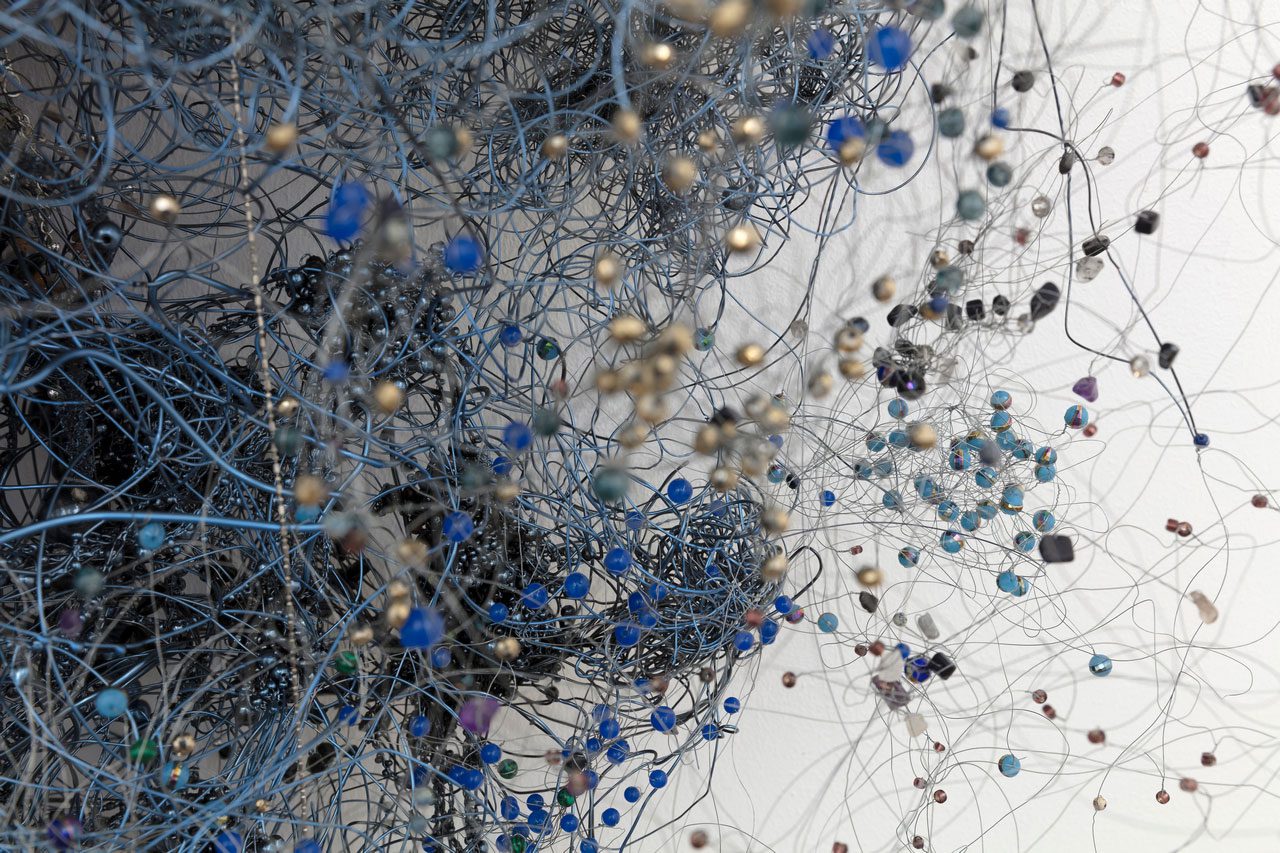
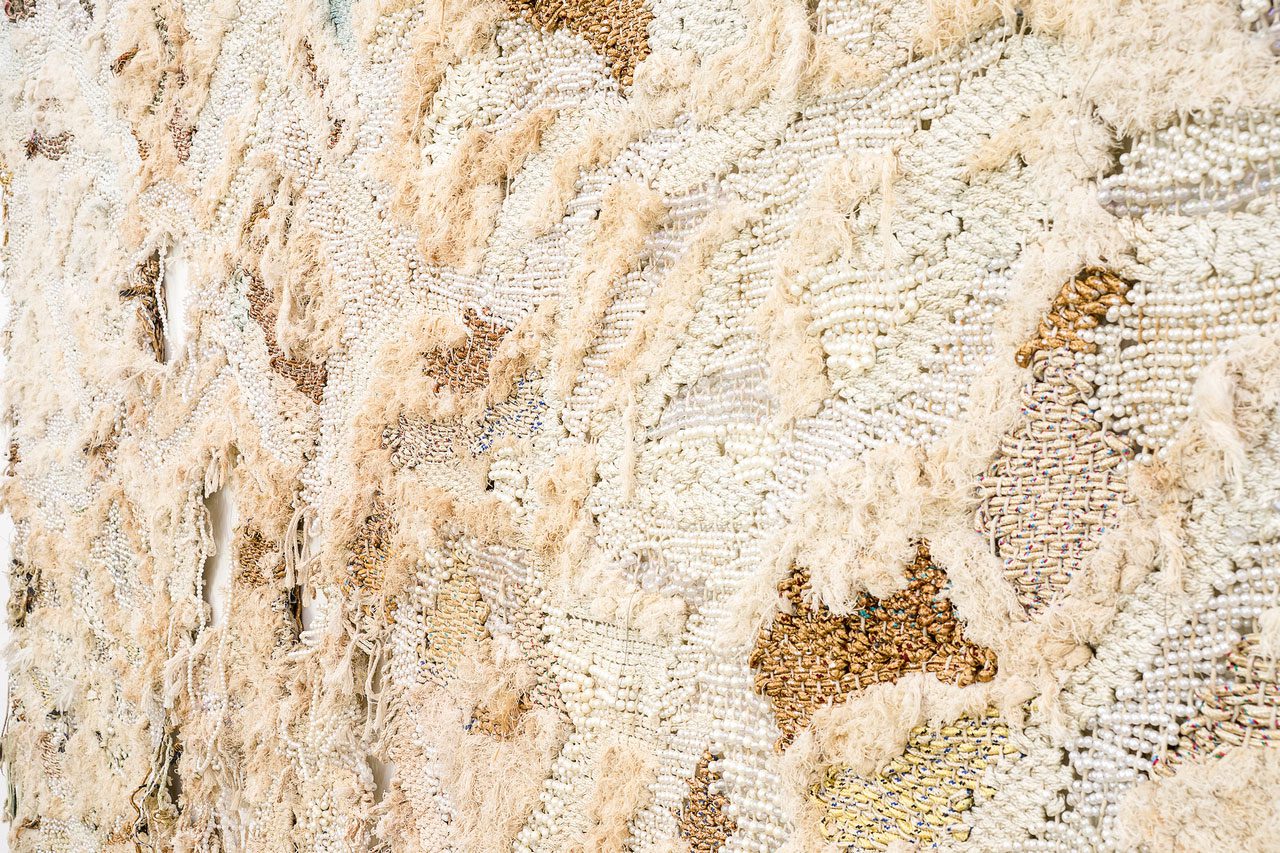
Igshaan Adams’ work interrogates how everyday materials can carry the weight of history, identity, and affect. Across his career, he has consistently drawn on humble elements — beads, chains, rope, fabric remnants — transforming them into compositions that defy hierarchical distinctions between craft and fine art. These materials, often overlooked, are elevated into conduits of complex reflection on racial, sexual, and spiritual life in South Africa and beyond.
Born in 1982 in Bonteheuwel, a township on the Cape Flats shaped by apartheid’s racial segregation, Adams grew up amid a braided lineage of cultural memory and structural violence. His early fascination with weaving emerged from the handmade baskets his family collected — objects that rooted him in a tactile history of making and belonging. Rather than pursue formal training in weaving, Adams embraced a self-taught, intuitive mode of practice, one he describes as working from “not knowing.”
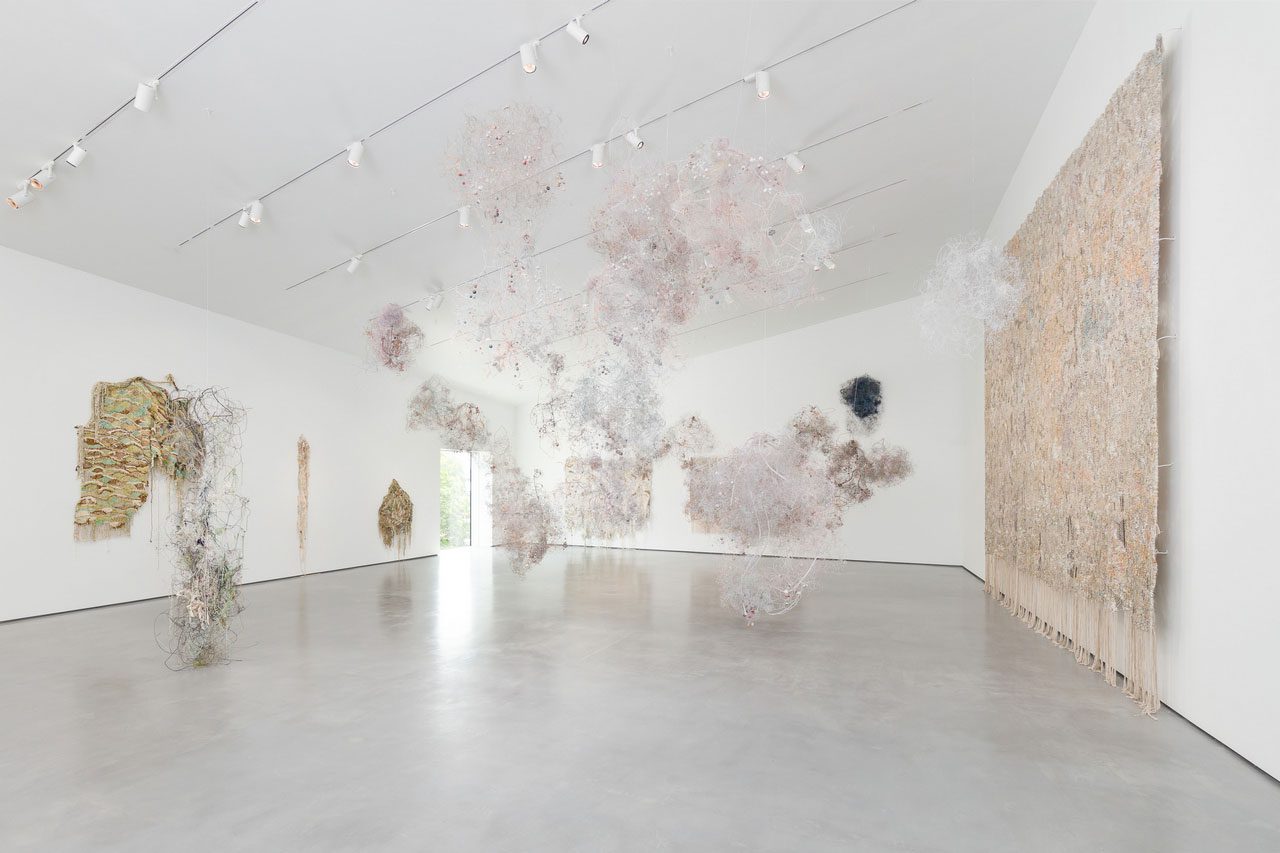
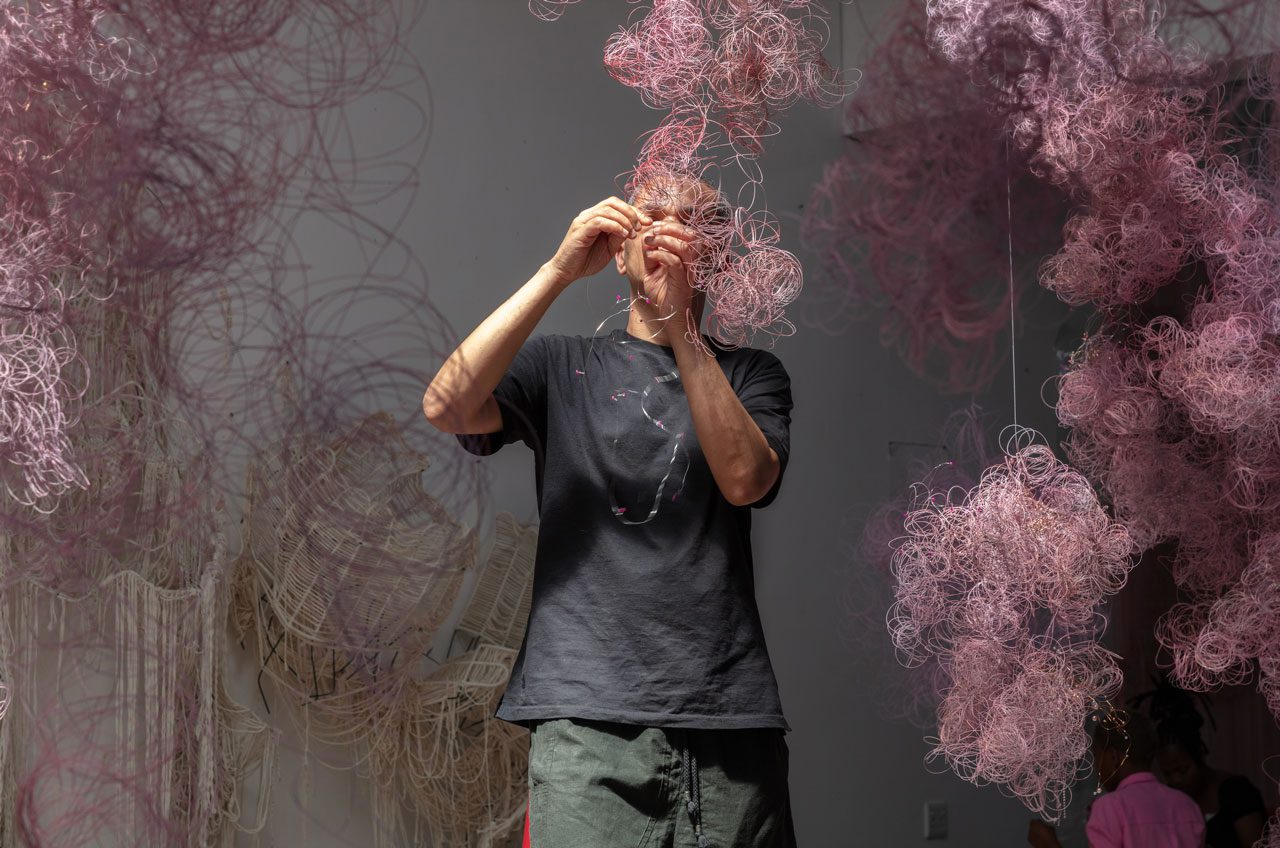
Central to his solo exhibition “Between Then and Now”, is the newly conceived installation “Gebedswolke III” (Prayer Cloud, 2025), suspended in Mudam’s luminous foyer. Radiant with charms, wire, and metallic disks, this constellation of floating forms embodies the artist’s long engagement with the cloud as metaphor — at once ephemeral and dense with affect. Emerging from drawn scribbles in his studio, Adams’ cloud sculptures have evolved into aggregates of detritus and studio residue, embodying traces of movement, ritual, and memory.
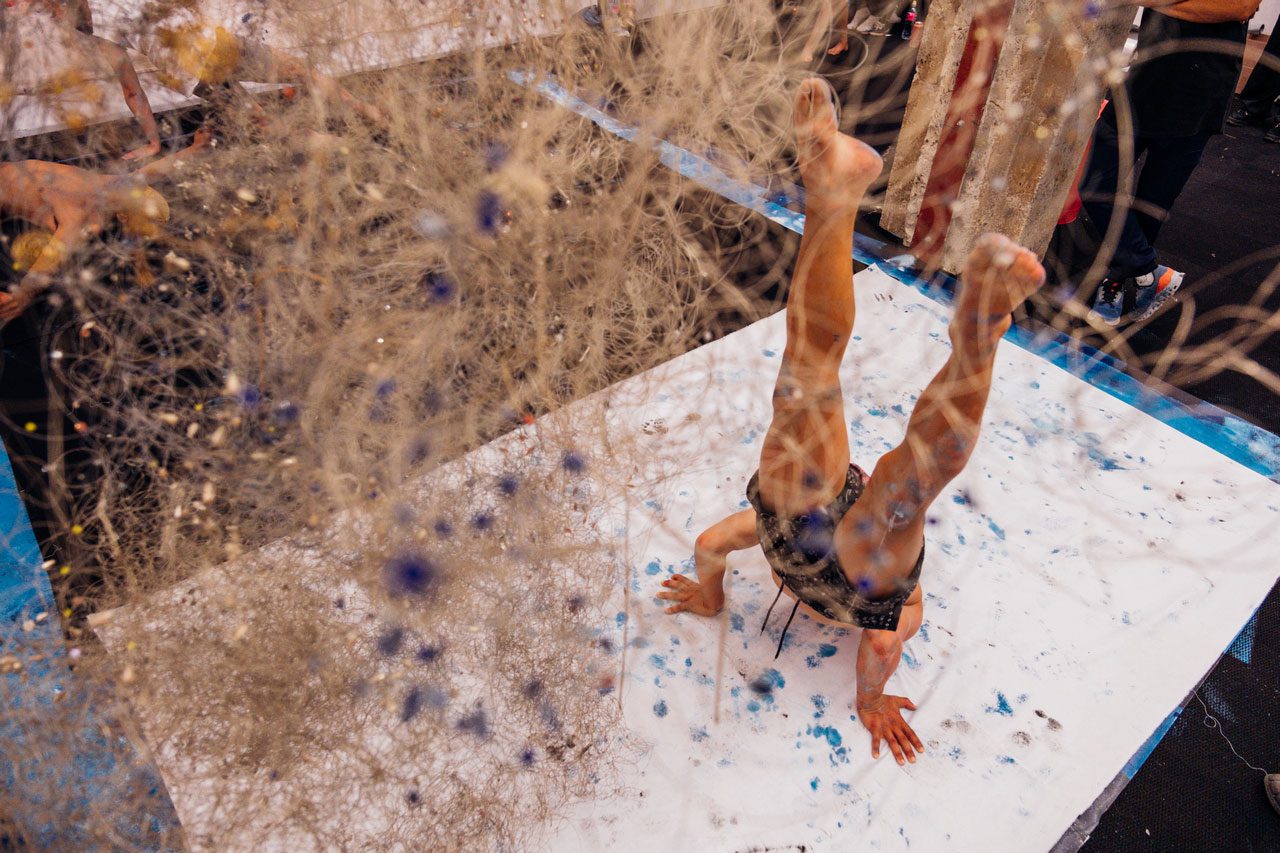
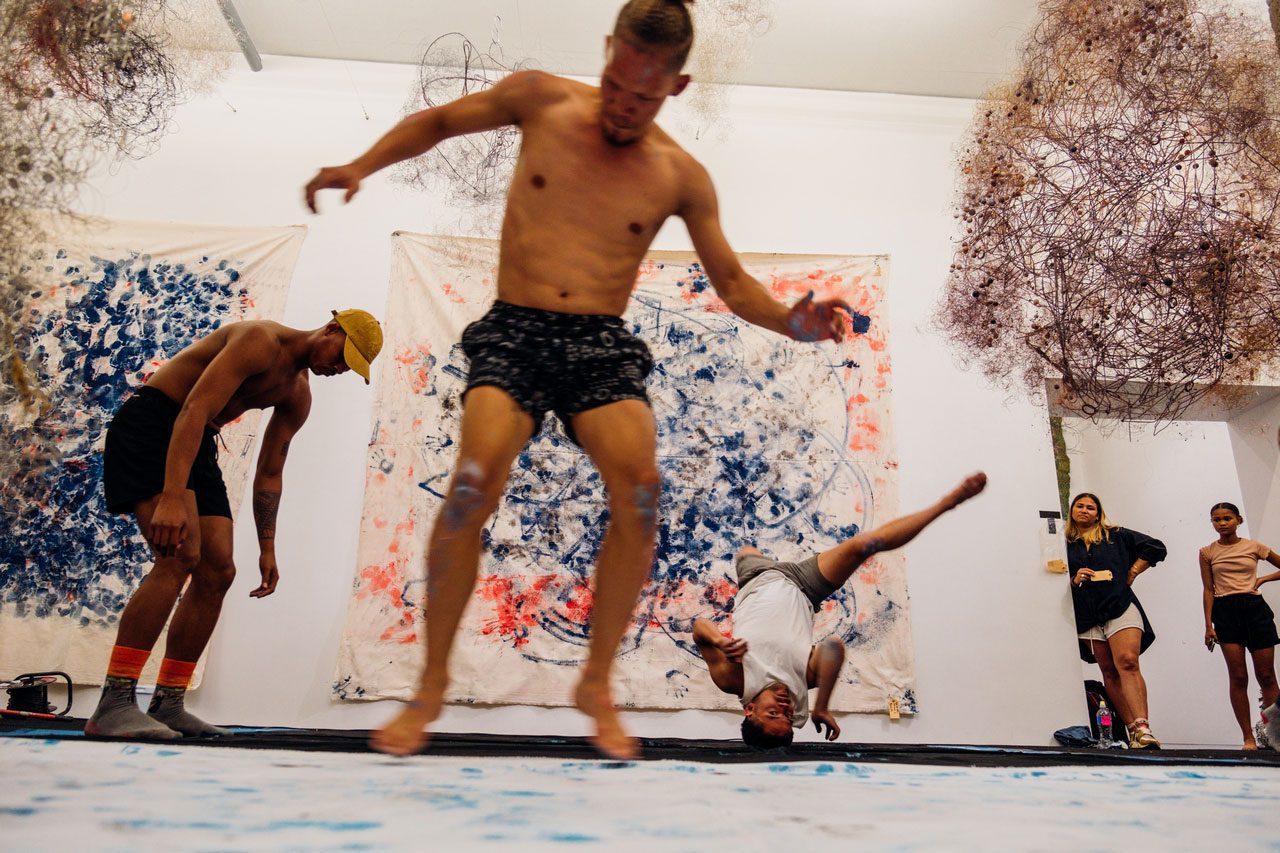
In “Weerhoud” (2024), the sweeping gesture of the traditional communal Rieldans (a southern African dance) is captured in the swirl of dust stirred by dancers’ feet. Here dance becomes a living drawing — an imprint of gesture that vaults the ephemeral into permanence while preserving the logic of movement itself.
For the first time, Adams’ dance prints fill a gallery as a large-scale environment. Produced by performers moving freely across canvas, these works transfer paint via the performative imprint of hands and feet, acknowledging the body as both subject and medium of expression. Suspended from the ceiling, these canvases enact a silent choreography: movement as language, history as form.
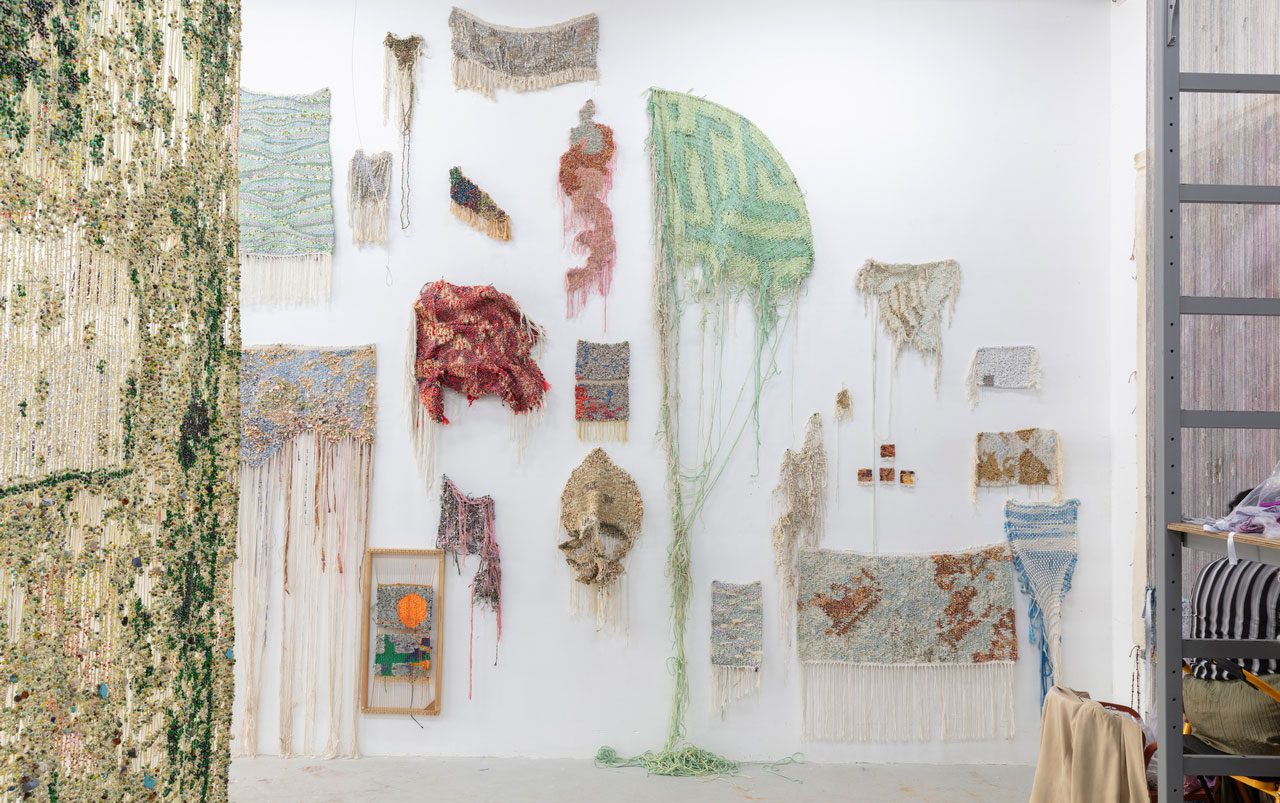
The exhibition’s opening invites visitors to touch expansive installations of textile swatches — a radical invitation that blurs the boundary between viewer and maker. Audio recordings of conversations with Adams’ assistants and technicians further animate the studio as a collective site of thought and becoming. In his own words, Adams describes his practice as improvisational, born of a desire to make and think through materials without preconceived technique.
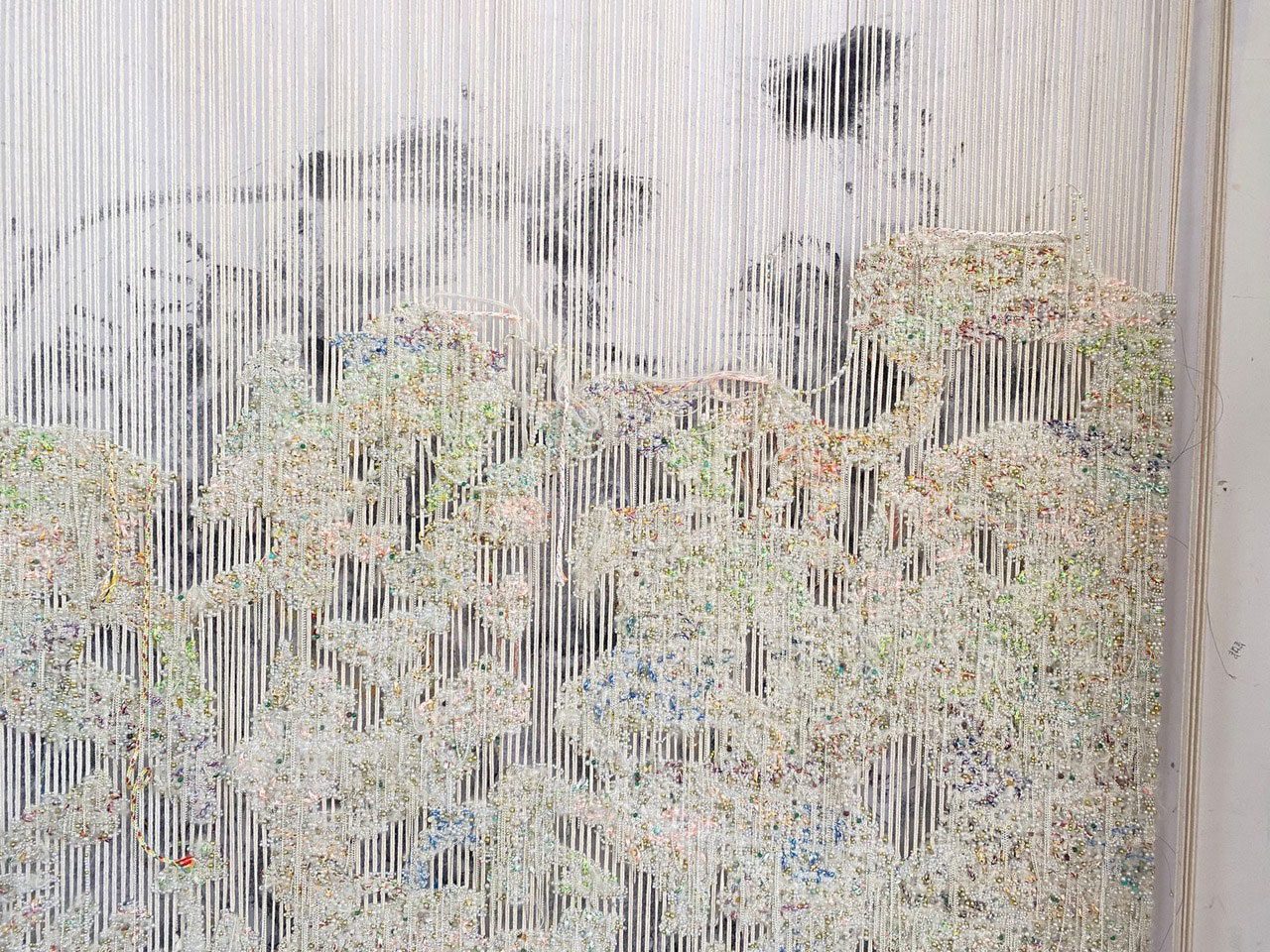
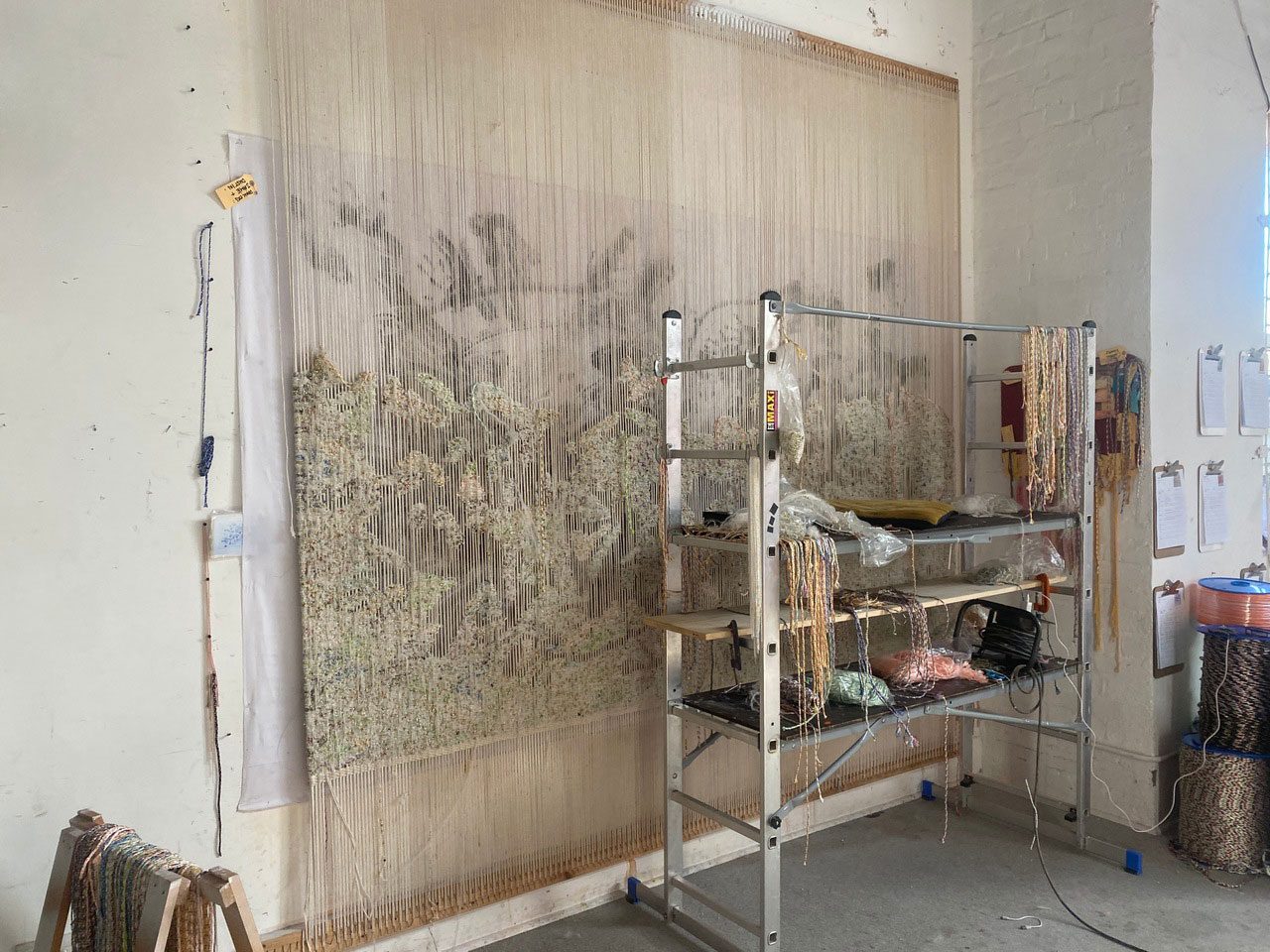
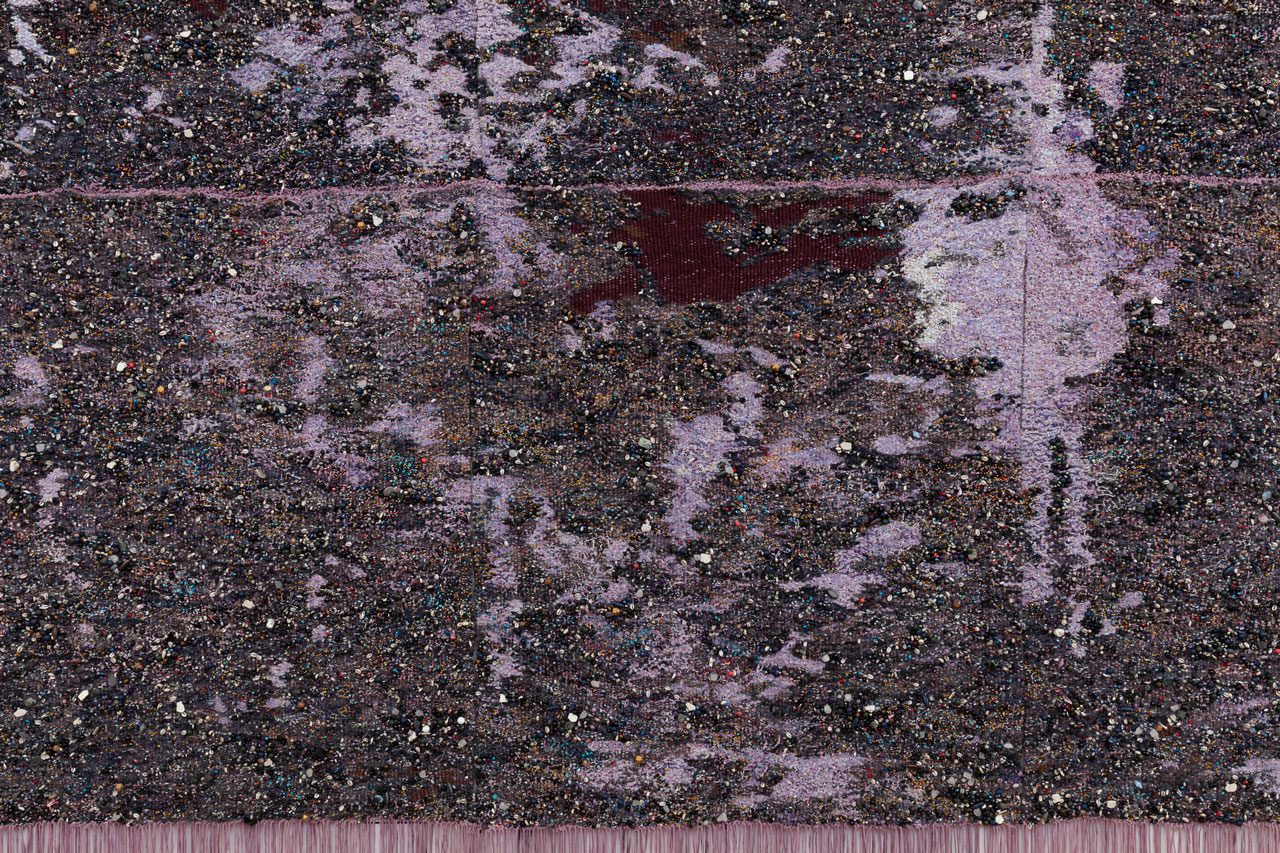
The monumental tapestries anchoring the exhibition — such as “Holy Terrain” (2024) — are composed of cotton, twine, plastic, and stone. Their constituent parts, materials often devalued in conventional hierarchies, are re-imagined here as repositories of spirit and memory. The weaves articulate histories of constraint and the possibility of transcendence, challenging the viewer to reconsider the value assigned to materials — and to lives — shaped by systems of inequality.
Across more than sixty works drawn from a decade of practice, Between Then and Now unfolds not only as a retrospective but as a living landscape of embodied belonging and collective inheritance. Here, weaving is more than craft: it is a way of reframing time itself, a means of stitching together the discontinuities of personal and collective history into patterns that resonate far beyond the museum walls.
Photo: Studio installation of swatches, 2025, Courtesy of the artist, Thomas Dane Gallery and blank projects, Cape Town, Photo: Mario Todeschini, © Igshaan Adams
Info: Curator: Florence Ostende, Assistant Curator: Anaël Daoud, Mudam Luxembourg – Musée d’Art Moderne Grand-Duc Jean, 3 Park Dräi Eechelen, Luxembourg-Kirchberg, Duration: 10/2-23/8/2026, Days & Hours: Tue &Thu-Sun 10:00-18:00, Thu 10:00-21:00, www.mudam.com/
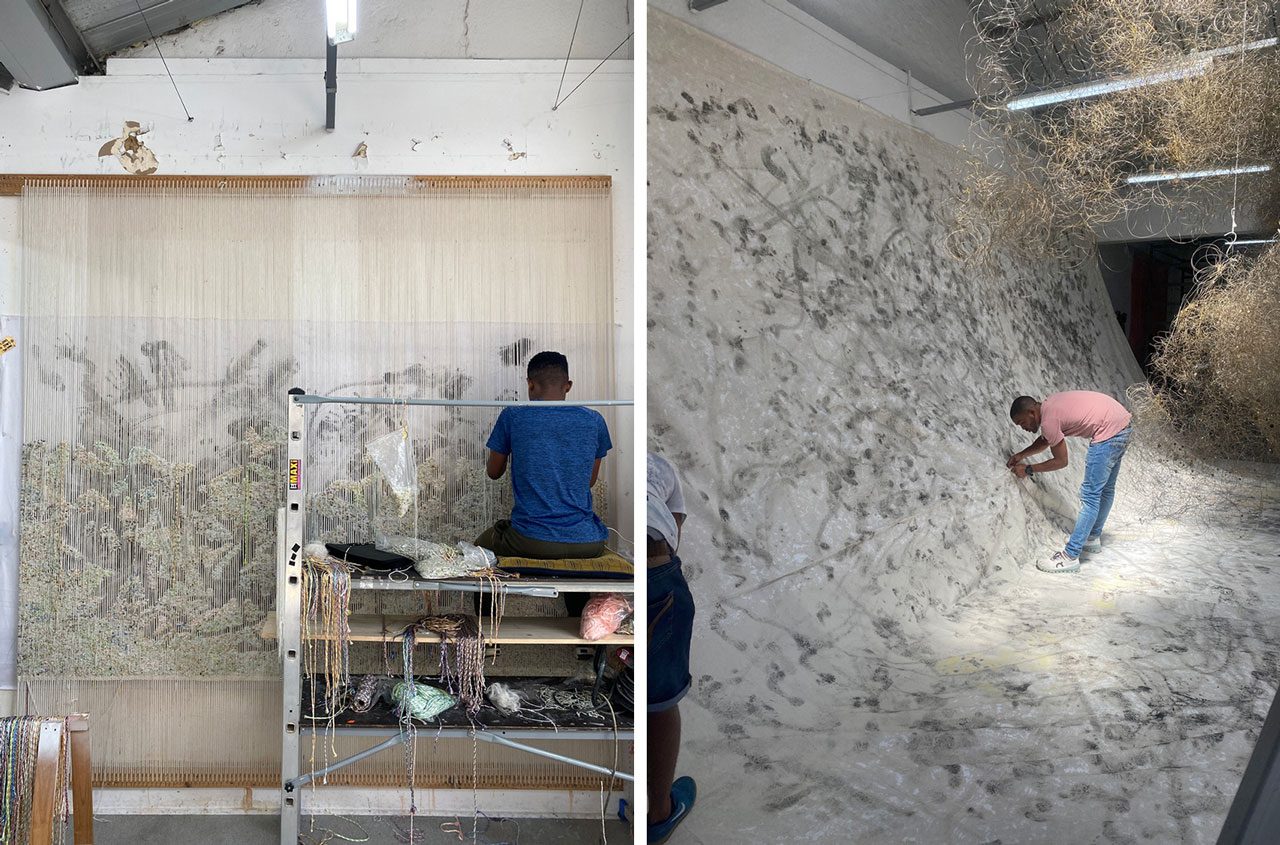
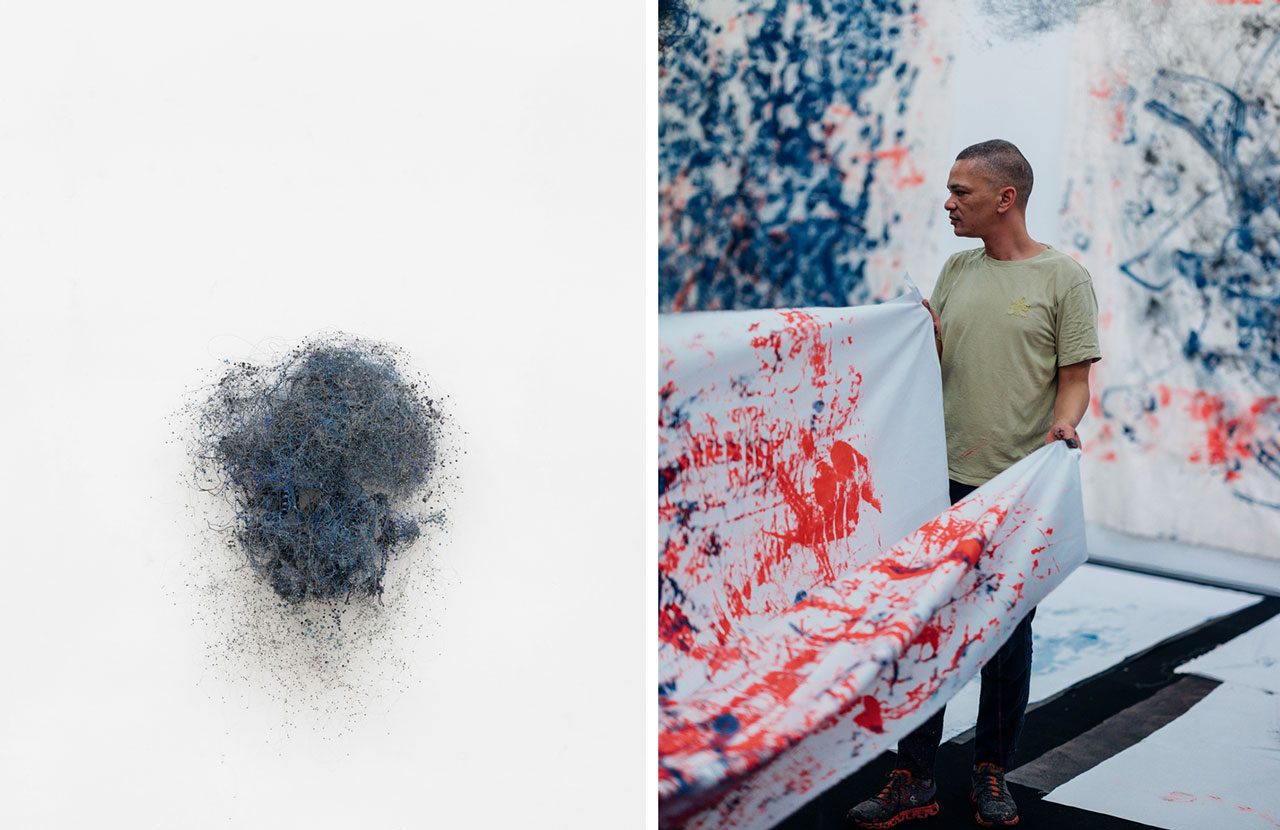
Right: Igshaan Adams, Workshop with Garage Dance Ensemble, Zeitz Museum of Contemporary Art Africa, Cape Town, South Africa, 2022, Courtesy the artist, Thomas Dane Gallery, Photo: Lindsey Appolis, © Igshaan Adams