
PRESENTATION:Antoni Tàpies-The Perpetual Movement of the Wall
In the 1950s, Tàpies did not simply paint walls—he mobilised them. He turned them into sites of memory, violence, silence, and inscription. This exhibition demonstrates that those gestures were inseparable from the spaces in which they appeared. To revisit these exhibitions today is to encounter the wall once more in motion: as matter, as metaphor, and as a stage upon which modern art continually renegotiates its terms. Over this decade, Antoni Tàpies developed languages of his own, in both artistic and exhibition terms, and his work reached maturity with widespread international recognition.
By Dimitris Lempesis
Photo: Museu Tàpies Archive
In the decade of the 1950s, the wall became both surface and subject for Antoni Tàpies. Not merely a support for painting, it was activated as a field of inscription, abrasion, sedimentation, and resistance. The exhibition “Antoni Tàpies: The Perpetual Movement of the Wall” examines this crucial period through a rigorous reassessment of how the artist presented his work in a series of landmark exhibitions. Rather than tracing a linear stylistic evolution, the project reconstructs exhibitionary contexts—display strategies, critical frameworks, photographic documentation, and circulation in print—to reveal how Tàpies constructed his own artistic identity in real time.
Conceived as a continuation of the 2025 exhibition “Antoni Tàpies: The Imagination of the World”, the current project shifts the focus from origins to transformation. It proposes that the 1950s were not simply a decade of material experimentation, but one of acute self-positioning. In the absence of the now-familiar figure of the curator, Tàpies staged himself: each exhibition marked a rearticulation of authorship, yet retained a visual and conceptual coherence that made his work immediately recognisable.
The exhibition unfolds through four case studies—two at Galeries Laietanes (1950 and 1954), one at Galerie Stadler in Paris (1956), and one at Sala Gaspar (1960). Together, they form what might be called an “exhibition of exhibitions,” a meta-curatorial project that reconstructs wall colors, hanging systems, lighting schemes, and original formats. These reconstructions are accompanied by archival materials—catalogues, posters, flyers, critical texts—restoring the discursive ecosystems within which the works first appeared.
The first case study returns to Tàpies’ inaugural solo exhibition in Barcelona at Galeries Laietanes. Installed against dark walls, the paintings asserted a charged dialogue between abstraction and chromatic intensity. The original poster, designed by the artist and now on view, signalled a deliberate positioning within postwar avant-garde discourse.
The catalogue text by the poet and critic Juan Eduardo Cirlot framed the exhibition within a metaphysical and symbolic register, while figures such as Joan Brossa and Joan-Josep Tharrats participated in shaping the intellectual climate around the show. Works including “El foc encantat de Farefa” (1949), “Bodegó de Sirefala” (1950), and “Composició / A, desert. B, solitude” (1950)—the latter from the Museu Carmen Thyssen Barcelona—are presented as they originally were. The installation foregrounds the density and opacity of the surfaces, already anticipating the material gravitas that would define the decade.
Tàpies’ 1954 return to Galeries Laietanes coincided with “Indústria i Arquitectura”, a project by the architects of Grup R (Oriol Bohigas, Josep Pratmarsó, and Antoni de Moragas) which integrated modern furniture and interior design into the exhibition space. The dialogue between painting and design underscored Tàpies’ engagement with contemporaneity: material painting confronted modernist functionalism.
Accompanied by a flyer featuring “Tàpies o la transverberació” by Alexandre Cirici i Pellicer, the exhibition presented 36 works suspended from the ceiling by taut cables, tilted slightly forward and illuminated almost directly from above. This staging accentuated the dramatic topographies of his surfaces—cracked, incised, and thickened—transforming each canvas into a quasi-architectural relief. The alternation of dark and light wall colors imposed a rhythmic sequence that structured the viewer’s movement and perception.
In the current reconstruction, paintings such as “Meditació epicúria” (1953) and “Amorós” (1953) are installed according to the original display logic, accompanied by period furniture from the Disseny Hub Barcelona collection. The result is not nostalgic reenactment, but critical reactivation: the exhibition space itself becomes an interpretive device.
A decisive shift occurred in 1955 when the critic Michel Tapié introduced Tàpies to the gallerist Rodolphe Stadler in Paris. Tapié’s first monographic article on the artist not only consolidated his international profile but also shaped the reception of his work through a specific rhetoric of art informel and material abstraction.
The third case study centers on Tàpies’ first solo exhibition at Galerie Stadler in 1956. Here, the format of reproduction—how works were photographed, cropped, and published—played a critical role in constructing meaning. Paintings such as “Pintura” (1955), from the Museo Nacional Centro de Arte Reina Sofía, and “Gris amb traços negres. N. XXXIII” (1955), from the Fundació la Caixa Contemporary Art Collection, exemplify a tightening of palette and gesture. The wall, increasingly, becomes an arena of inscription—scratched signs, muted greys, and emphatic blacks articulating a language both archaic and modern.
Paris functioned not merely as a geographical relocation but as a discursive amplification. Through Tapié’s framing, Tàpies was inscribed into a broader European network of postwar abstraction, altering how his work was perceived both abroad and back in Spain.
The final case study examines the 1960 exhibition at Sala Gaspar in Barcelona, where Tàpies orchestrated a kaleidoscopic display that expanded the scale and ambition of his local presentations. Granted unprecedented spatial freedom, he exhibited a larger body of work than ever before in the city, including three large canvases commissioned for a municipal venue.
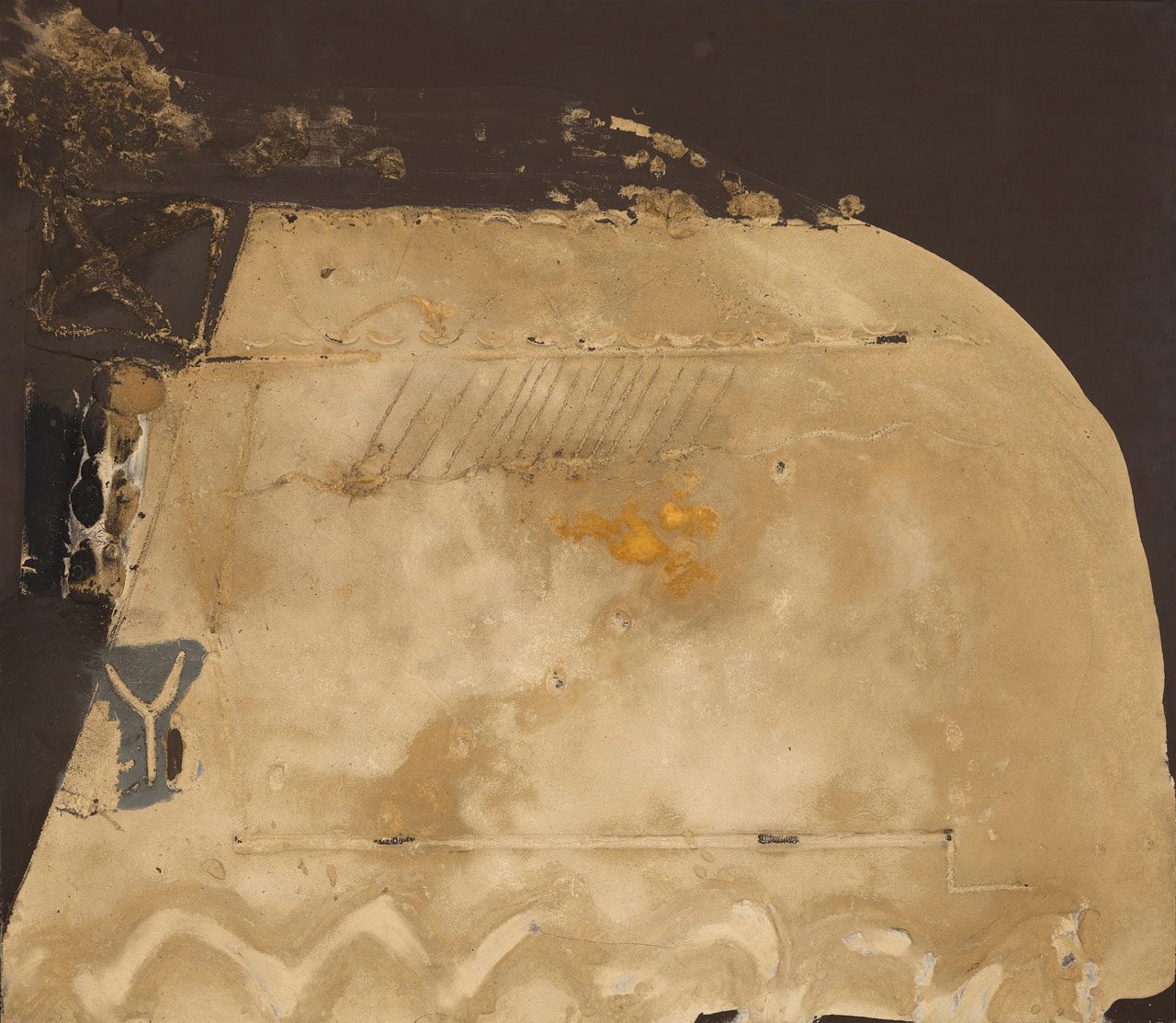
The reconstruction includes “Quatre quadrats grisos sobre fons marró” (1959) and “Pintura ocre” (1959), both now in the MACBA Collection, as well as “Marró i ocre” (1959) from the Fundación Juan March – Museo de Arte Abstracto Español. Installed in their original configuration, these works demonstrate how the wall itself became contextual frame and conceptual anchor. Earthy ochres and greys, monumental formats, and emphatic quadrilateral structures assert the painting as both object and environment.
By partially reconstructing these four historical moments, the Museu Tàpies foregrounds exhibition-making as an active component of artistic practice. Wall color, hanging systems, lighting, graphic design, and critical mediation emerge as constitutive elements of meaning. The “perpetual movement” evoked in the exhibition’s title refers not only to stylistic transformation, but to the shifting conditions under which art becomes visible and legible.
Photo: Antoni Tàpies. Marró i ocre (1959). Collection of the Juan March Foundation, Spanish Museum of Abstract Art, Cuenca. © Tàpies Committee / VEGAP, 2026
Info: Curator: Imma Prieto, Museu Tàpies, Carrer Aragó, 255, Barcelona, Catalonia Spain, Duration: 13/2-6/9/2026, Days & Hours: Tue-Sat 10:00-19:00, Sun 10:00-15:00, https://museutapies.org/
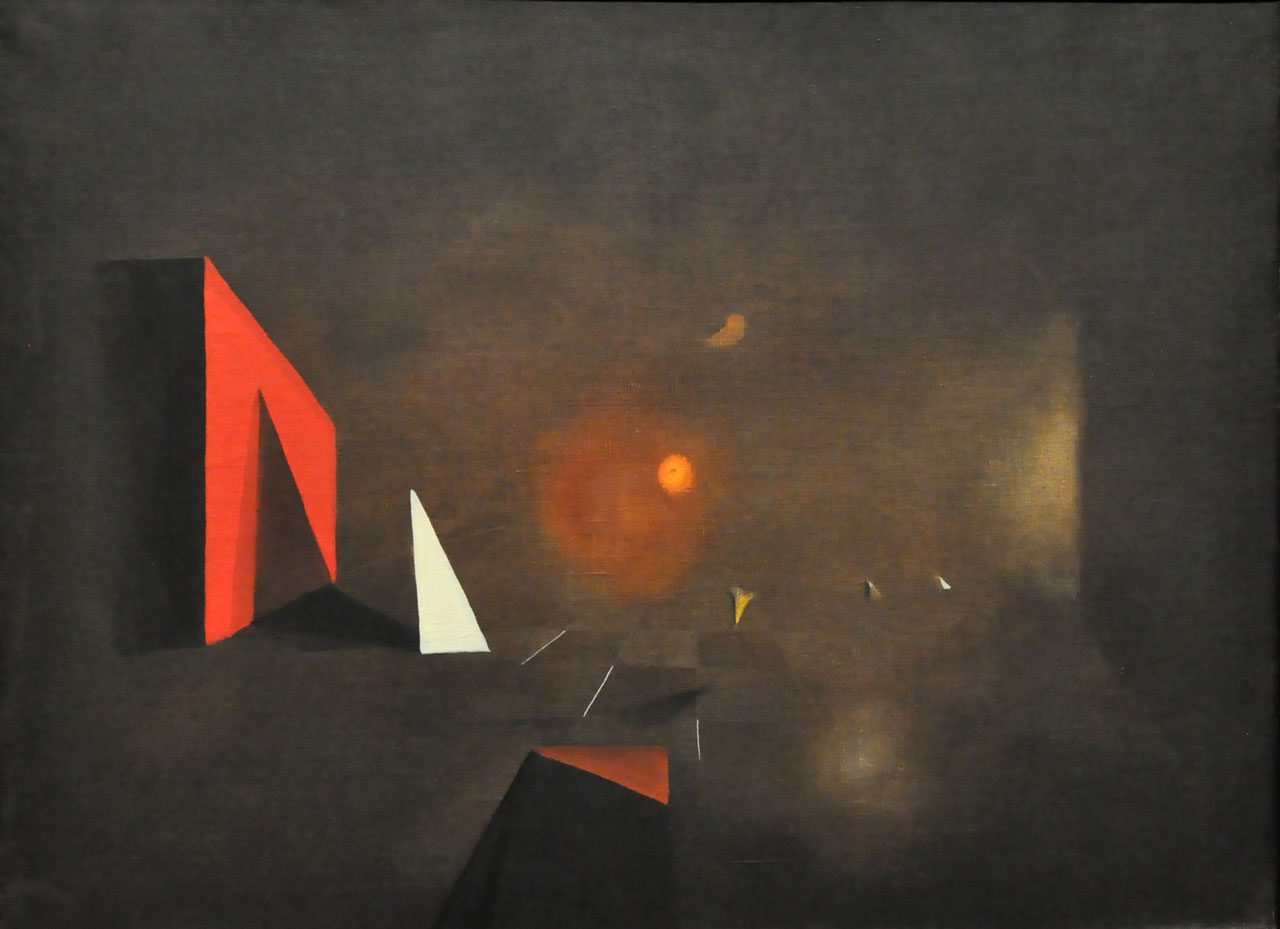
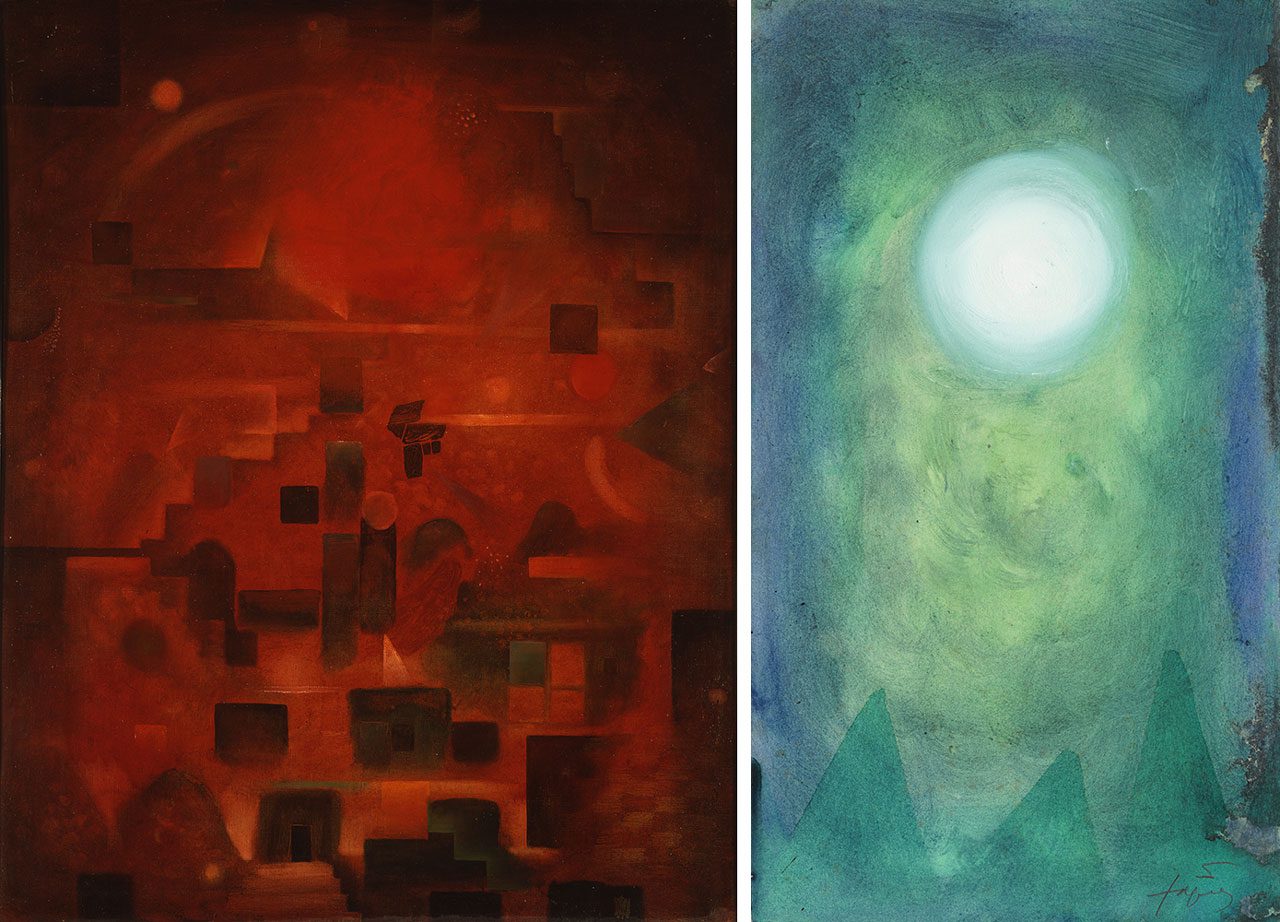
Right: Antoni Tàpies, Nocturn (1949). Private collection, Barcelona. © Tàpies Committee / VEGAP, 2026
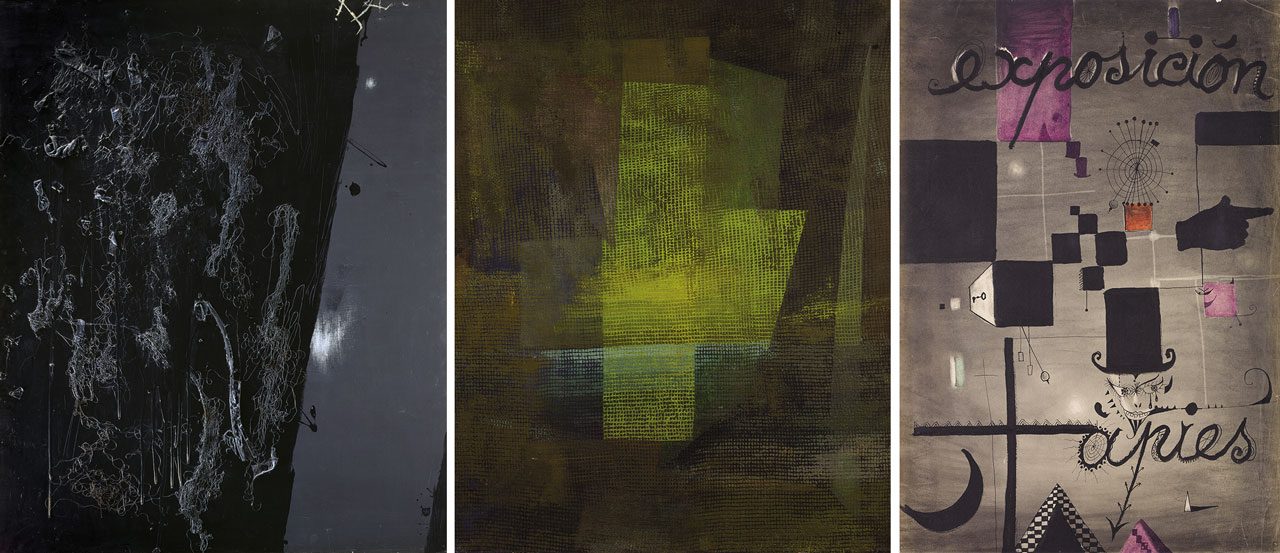
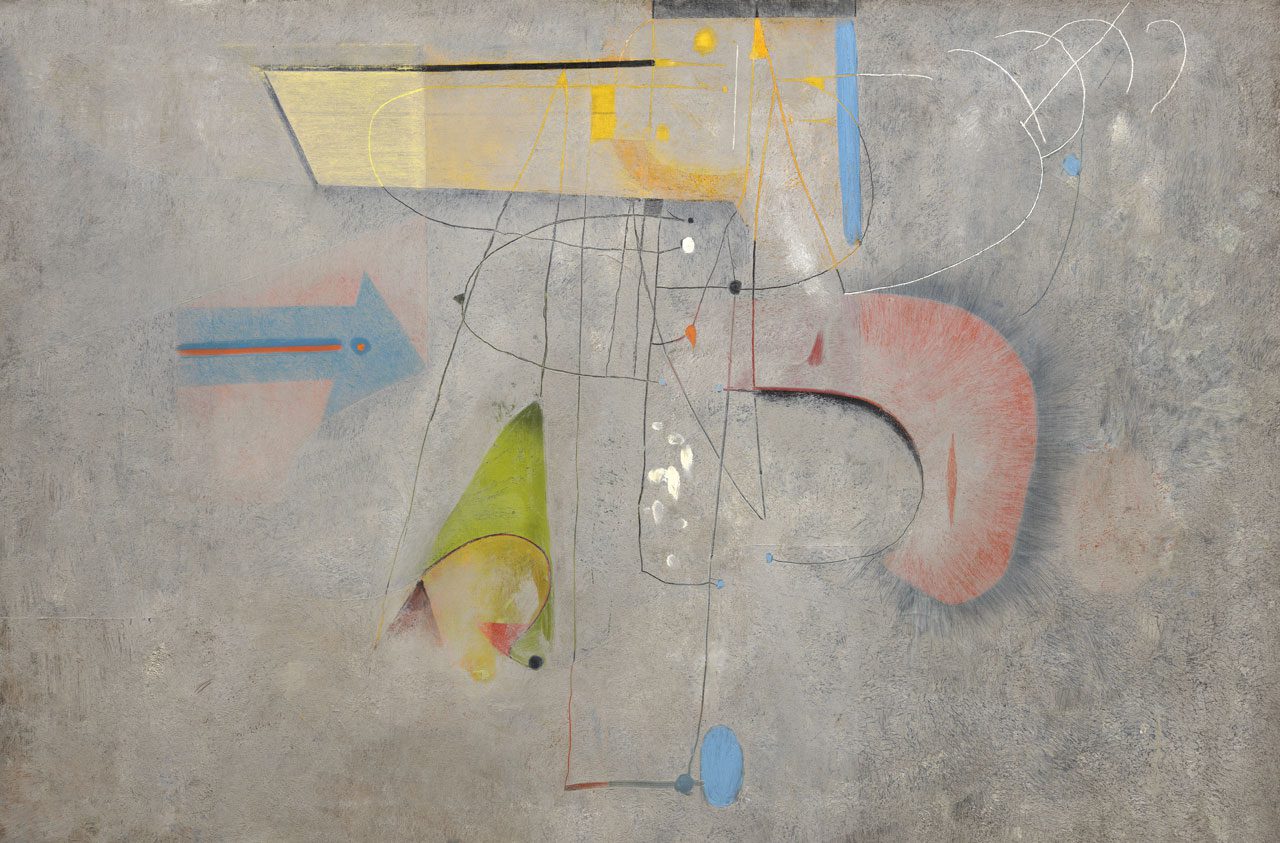
Center : Antoni Tàpies. Meditació epicúria (1953). Private Collection, Barcelona. © Comissió Tàpies / VEGAP, 2026
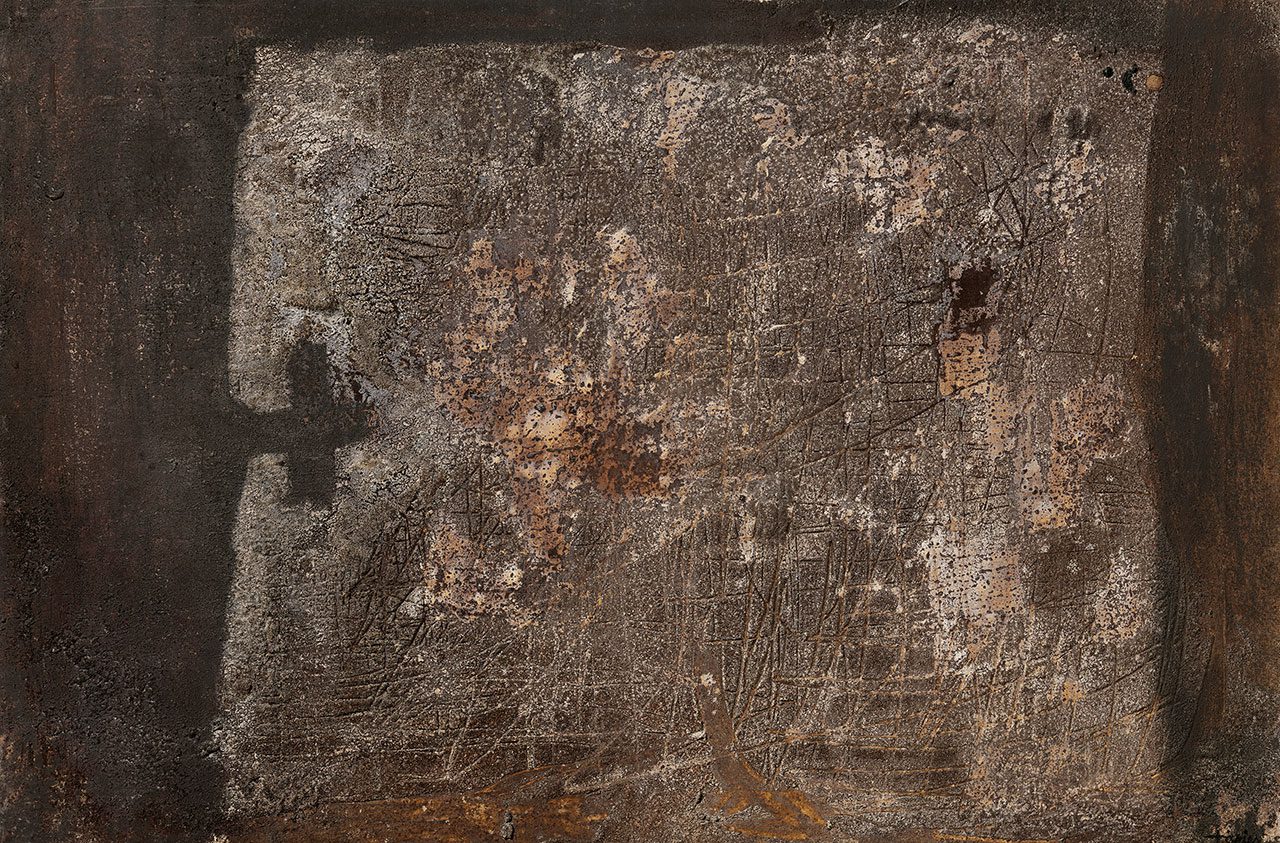
Right : Antoni Tàpies. Cartell realitzat per anunciar l’exposició a les Galerías Layetanas (1950Collection Banco Santander, 2026