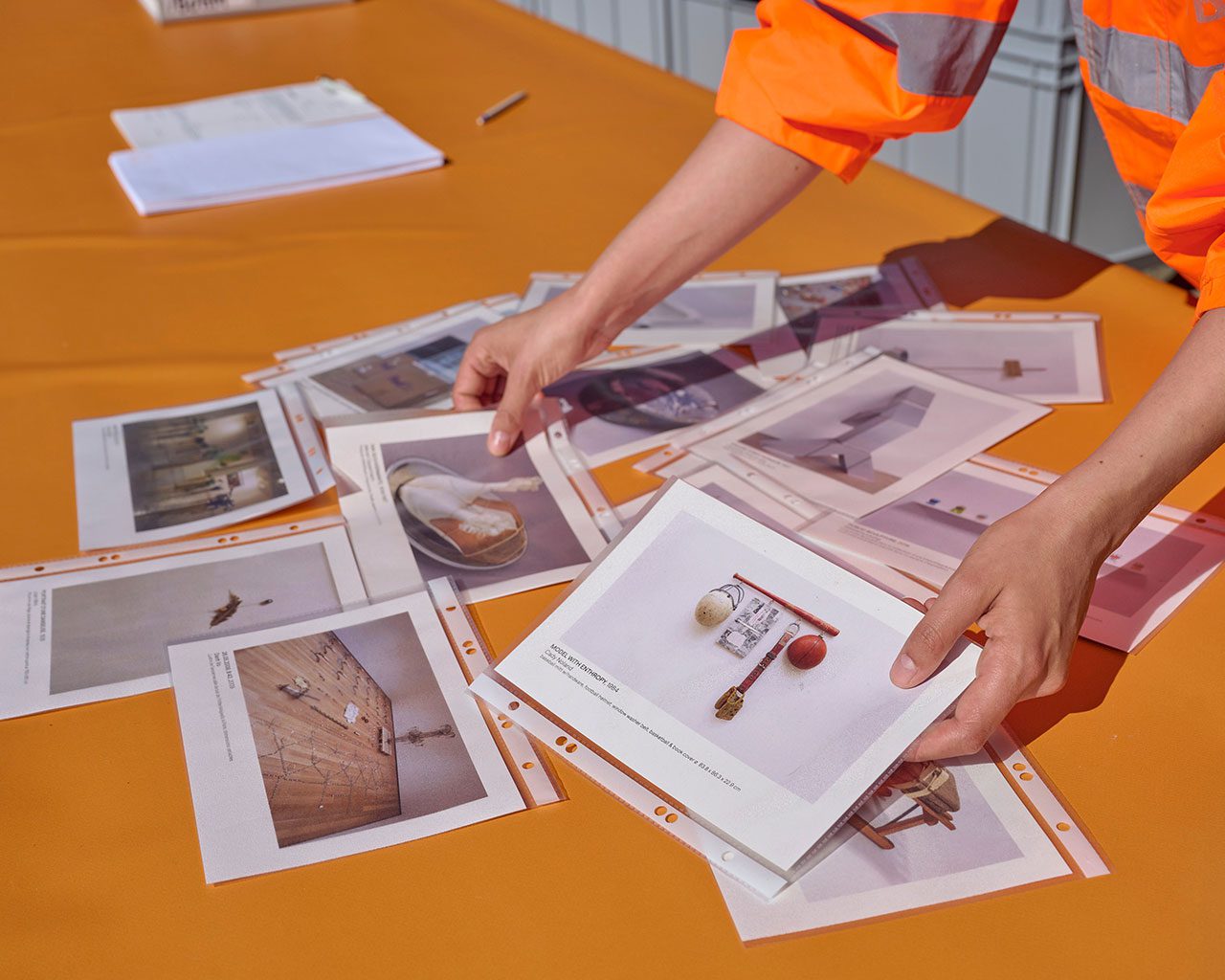
PREVIEW: Containers Love Disorder
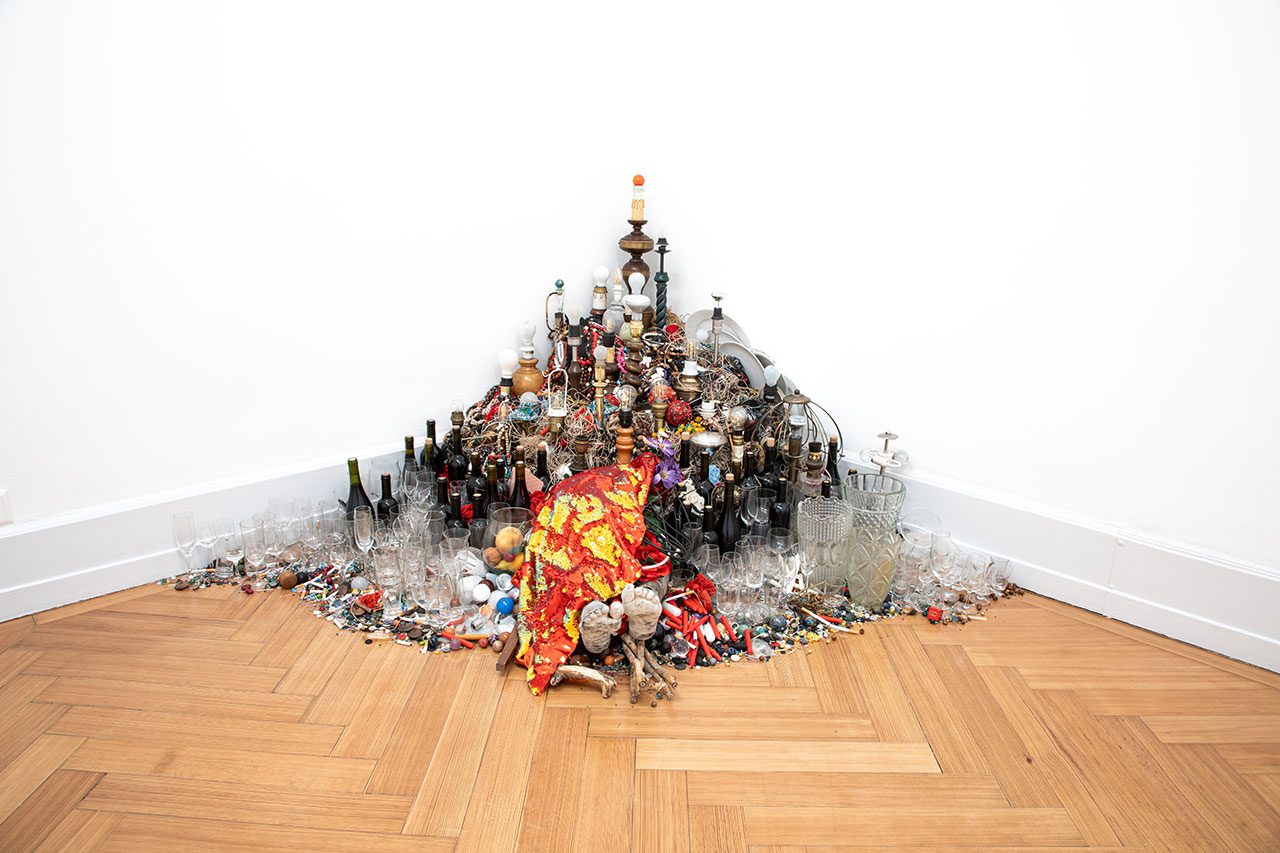
With “Containers Love Disorder”, Kunst Halle Sankt Gallen stages a rigorously conceived group exhibition that examines the logics of ordering and the inevitability of their undoing. Bringing together seven artists and collectives active in Switzerland, the exhibition unfolds as a spatial and conceptual inquiry into classification, infrastructure and the entropic dynamics inherent in every system.
By Efi Michalarou
Photo: Kunst Halle Sankt Gallen
At the core of “Containers Love Disorder” lies a deceptively simple figure: the container. Both literal and metaphorical, it becomes a structural device through which the exhibition interrogates the ways contemporary societies organise matter, information, bodies and value. The standardised metal shipping container is one of the most decisive technical inventions of the 20th century. Its modular uniformity enables frictionless intermodal transport across ships, railways and trucks. Without it, the scale and velocity of global trade as we know it would be inconceivable. The container is thus not merely a storage unit; it is an infrastructural condition for globalisation. Yet the exhibition extends the container beyond logistics. Containers create interiority and exteriority. They define what is inside and what remains outside. They assign location and fix relation. They regulate circulation and impose sequence. In this sense, they operate as moderators of social and economic life. The curatorial framework suggests that institutions function analogously. An art institution, too, is a container: it houses artworks, hosts discourse, produces narratives and stabilises networks. It determines visibility and invisibility. It structures access. Classification within art—be it curatorial taxonomy, genre designation or market segmentation—is inseparable from questions of authority, inclusion and exclusion. Every act of ordering implies a boundary; every boundary implies a politics.
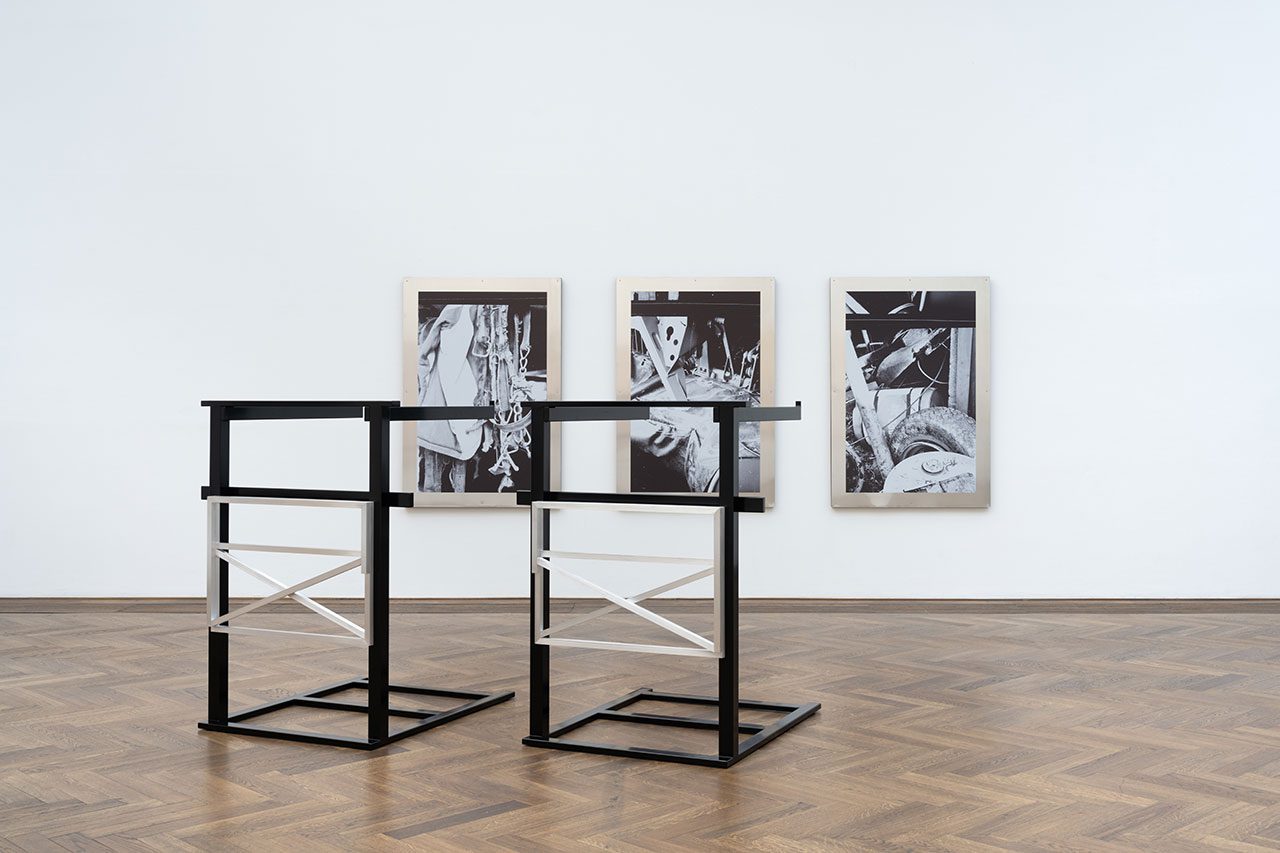
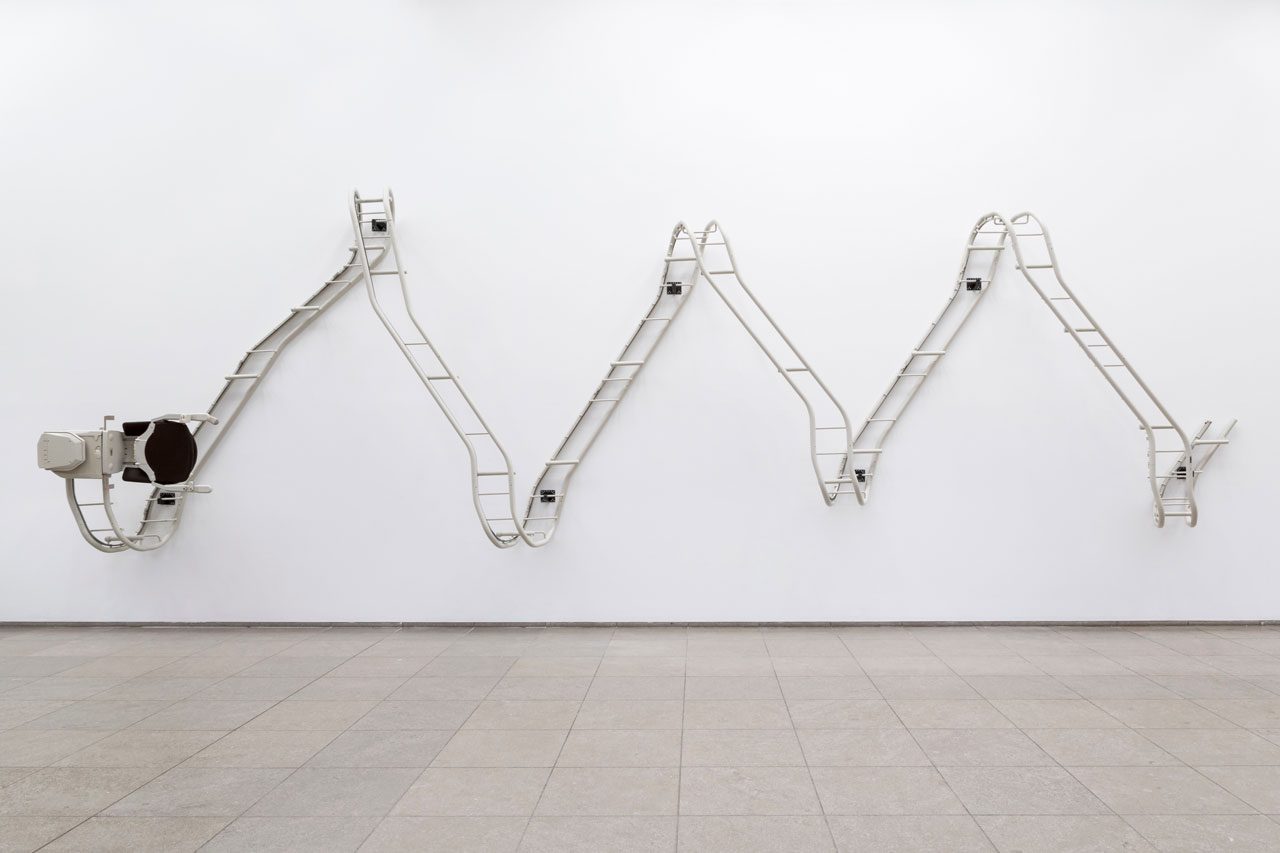
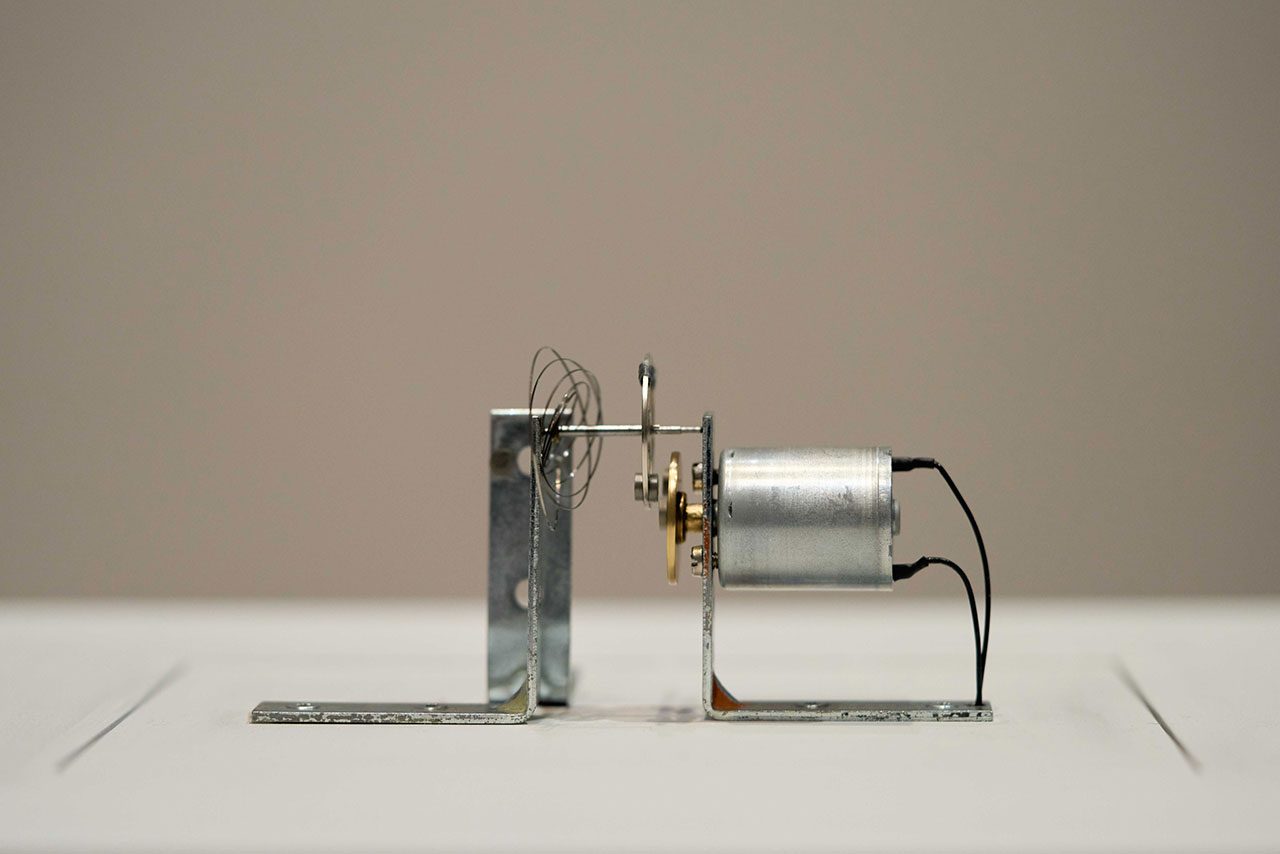
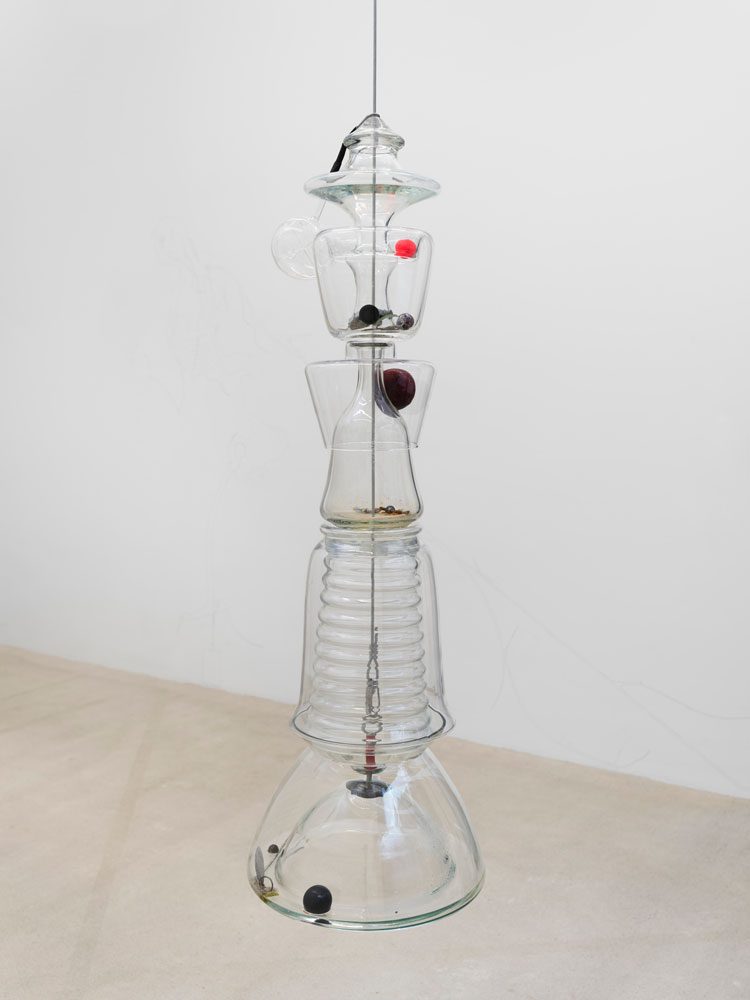
“Containers Love Disorder” proceeds from a critical yet generative thesis: every system contains within itself a destabilising force. Entropy, in thermodynamic terms, describes the tendency toward disorder. Within social systems, it may manifest as resistance, drift, mutation or rupture. The exhibition reframes disorder not as collapse but as potential—an opening for reconfiguration. This dialectic between order and disorder becomes the conceptual motor of the show. Rather than opposing the two, the exhibition suggests an intimate entanglement: systems depend on deviations to evolve; structures are animated by what exceeds them. Disorder may even appear as desire—a longing for otherness, permeability and transformation. The participating artists respond to the spatial and contextual conditions of Kunst Halle Sankt Gallen primarily through sculptural and installation-based interventions. Their works engage directly with the exhibition’s architectural container while simultaneously interrogating broader infrastructural systems. Across the exhibition, recurring methodological strategies emerge: Collecting and archiving as forms of alternative ordering; Recording and indexing as gestures of both control and vulnerability; Recycling and repurposing as critical responses to overproduction and Appropriation and recontextualisation as tools for exposing embedded narratives. Through these approaches, the artists shift attention toward the residues of contemporary life—the overlooked, discarded and peripheral. In a world characterised by material and informational excess, they privilege the remainder. The exhibition assembles a heterogeneous constellation of practices: Michèle Graf & Selina Grüter: Working collaboratively, Graf and Grüter often investigate systems of display, perception and categorisation. Their practice foregrounds subtle displacements within exhibition architecture and institutional logic, probing how meaning is stabilised—or destabilised—through arrangement.
Dominic Michel: Michel’s work frequently addresses processes of transformation and reconfiguration. Material structures become sites of negotiation, where function and form are unsettled and reassigned. Mathis Pfäffli: Pfäffli’s sculptural language engages spatial hierarchies and infrastructural codes. His interventions interrogate how space disciplines movement and perception. Matthias Sohr: Sohr examines accumulation—of objects, signs, references—and the infrastructures that sustain them. His works often expose latent networks embedded within material assemblages. Kelly Tissot: Tissot navigates the tension between systemic order and organic flux. Through material gestures that oscillate between control and contingency, she reveals the fragility of imposed structures. Paulo Wirz: Wirz addresses economic cycles, technological mediation and cultural translation. His practice situates the body and narrative within larger global flows, examining how infrastructures shape subjectivity. La Bibliothèque des Ready-Mades: This collaborative project mobilises the readymade as both archival strategy and relational framework. By collecting, cataloguing and activating found objects, the group foregrounds the politics of attribution and the instability of authorship. Together, these positions articulate a spectrum of responses to the exhibition’s central motif. No single aesthetic dominates; instead, the show functions as a discursive field in which multiple approaches to ordering coexist and interfere.
A central axis of the exhibition is the relationship between human actors and the infrastructures that organise their lives. Containers—literal and metaphorical—shape economic cycles, determine logistical pathways and influence cognitive habits. They structure how goods move, how information circulates and how art is distributed. By foregrounding infrastructures that often remain invisible, the exhibition sharpens awareness of technologised environments. It highlights how deeply economic rhythms infiltrate everyday perception. In this context, the gallery becomes a reflective chamber in which the usually seamless systems of circulation are slowed, fragmented or exposed. Crucially, “Containers Love Disorder” does not position itself outside the systems it critiques. The Kunst Halle is implicated as both host and subject. As a container for art, it embodies the very logic under scrutiny. Its walls delimit space; its programming structures discourse; its institutional framework mediates access.
This reflexivity strengthens the exhibition’s conceptual coherence. Rather than staging critique at a distance, the show performs it within the container itself. The gallery becomes both object and agent of analysis. If classification traditionally implies hierarchy and control, the exhibition proposes an alternative reading. Classification can also function as an invitation: to detect patterns, to question boundaries, to inhabit the gaps between categories. In this sense, order is not fixed but provisional. By juxtaposing divergent artistic practices within a shared thematic frame, the exhibition enacts a dynamic taxonomy—one that acknowledges its own contingency. Disorder is not the negation of order but its productive counterforce. Ultimately, “Containers Love Disorder” articulates a nuanced thesis: systems are sustained not despite disorder, but through it. The apparent contradiction between structure and entropy becomes a generative tension—a passionate relationship rather than an antagonism. Through sculpture, installation and conceptual intervention, the participating artists transform the Kunst Halle into a testing ground for (un)ordered relationships. The exhibition invites viewers to reconsider the infrastructures that shape their movements, thoughts and interactions—and to recognise that within every container lies the possibility of reorganisation. In a moment defined by global circulation, material excess and accelerated classification, this exhibition offers an aesthetic commentary of notable precision: to understand the container is to understand both the architecture of order and the fertile promise of its disruption.
Works by: Michèle Graf & Selina Grüter, Dominic Michel, Mathis Pfäffli, Matthias Sohr, Kelly Tissot, Paulo Wirz and La Bibliothèque des Ready-Mades
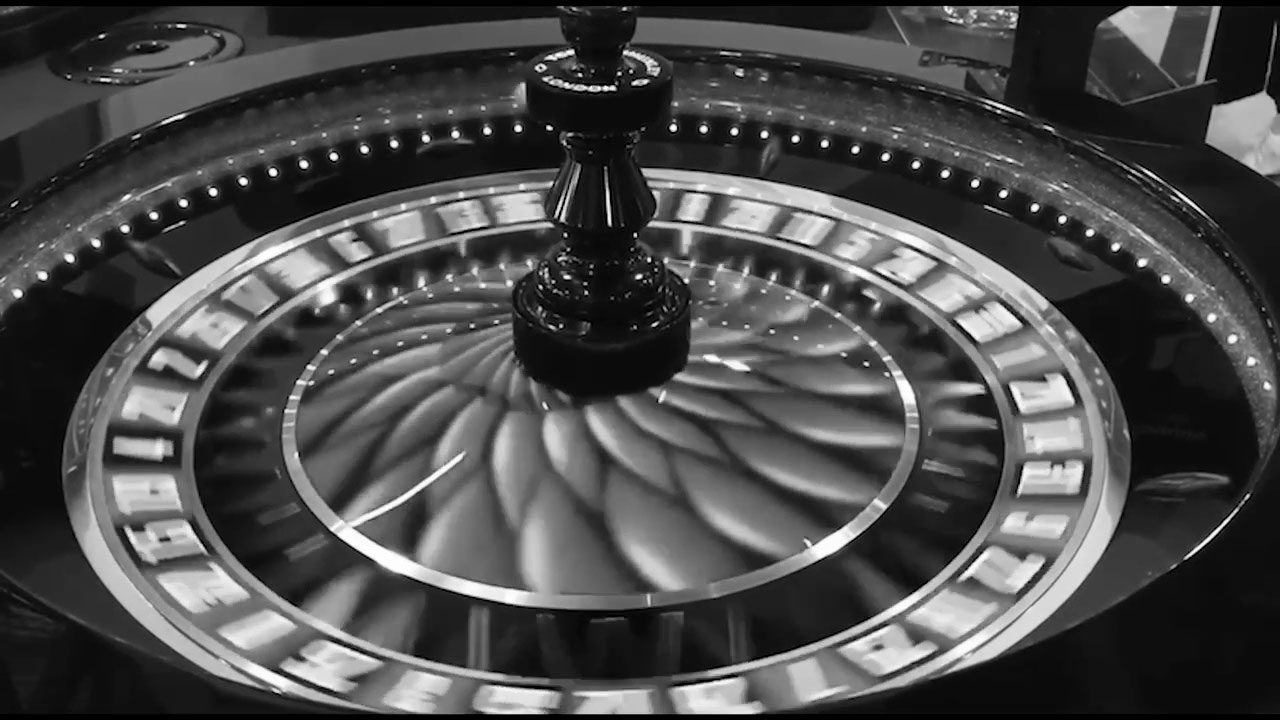
Photo: Paulo Wirz, Caçador, 2024. Photo: Villa Bernasconi, Paulo Wirz. Courtesy: the artist
Info: Kunst Halle Sankt Gallen, Davidstrasse 40, St.Gallen, Switzerland, Duration: 7/3-31/5/2026, Days & Hours: Tue-Fri 12:00-18:00, Sat-Sun 11:00-17:00, www.kunsthallesanktgallen.ch/