
ART CITIES: Los Angeles-Luc Tuymans
One of the most important painters working today, Luc Tuymans pioneered a distinctive style of figurative painting beginning in the 1980s that has been singularly influential to his peers as well as subsequent generations of artists. Featuring subject matter that ranges from the mundane to the profound, the artist’s deeply resonant compositions insist on the power of images to simultaneously reveal and withhold meaning.
By Dimitris Lempesis
Photo: David Zwirner Gallery Archive
In an era defined by algorithmic circulation and pixelated perception, Luc Tuymans continues to recalibrate the ontology of painting. Over the past decades, he has systematically adapted both subject matter and formal construction to address contemporary visual culture and the sociopolitical frameworks in which his work is encountered. The result is neither nostalgic nor reactionary. Rather, it is a sustained argument for the continued urgency of painting within a digitally saturated environment.
The exhibition “The Fruit Basket” takes as its point of departure a distinctly American condition: a pervasive atmosphere of fracture. Rather than approaching this condition through overt polemic, Tuymans foregrounds mediation itself. Images are filtered through screens, refracted through devices, or destabilized through scale shifts and painterly restraint. Across the exhibition, works appear in an unexpected cadence—alternating between monumental fragmentation and intimate confrontation—while a carefully modulated palette amplifies the heightened artificiality of the source imagery.
Tuymans’s tonal decisions are central. Colors are dampened, cooled, or rendered ashen, often mimicking the spectral cast of LED illumination. These chromatic calibrations do not merely describe digital light; they internalize it, embedding the technological condition into the facture of the canvas.
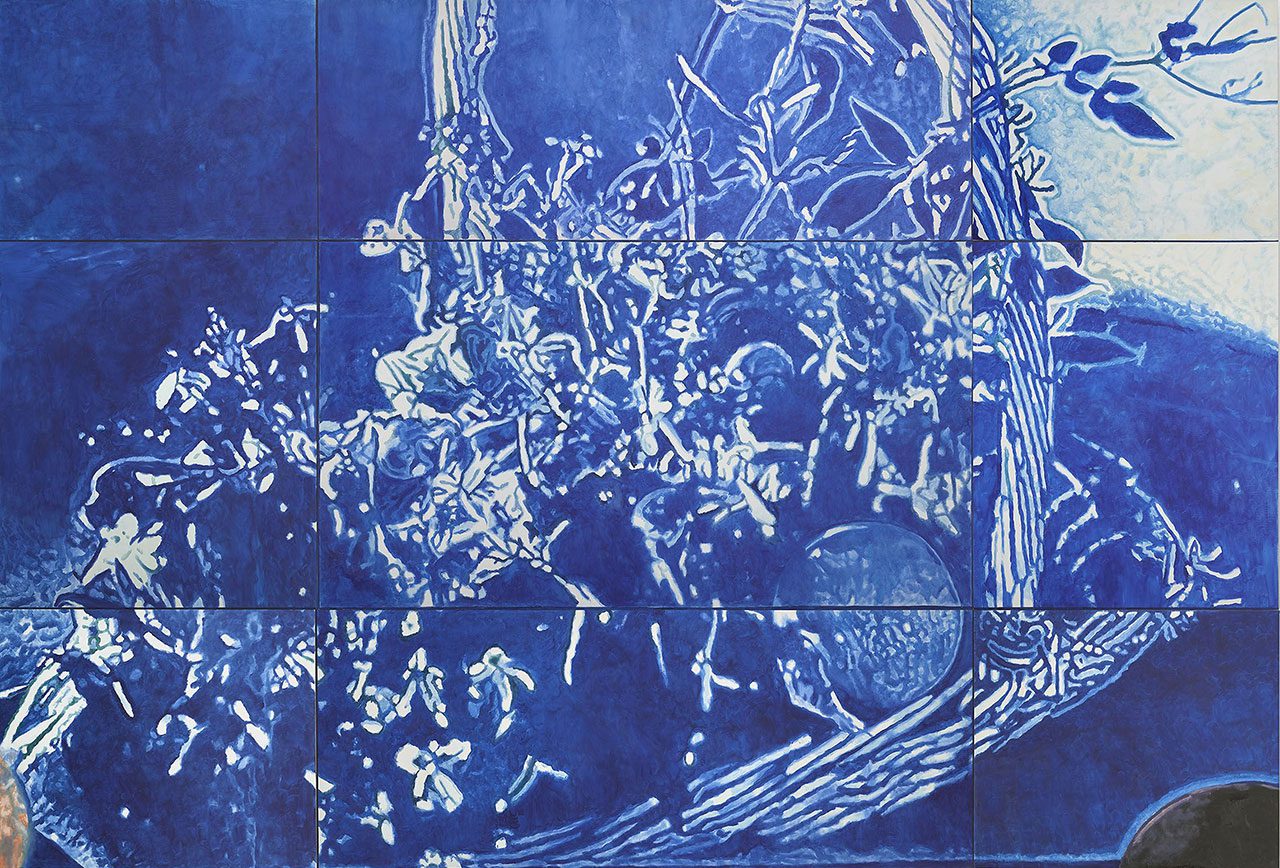
At the center of the exhibition stands “The Fruit Basket” (2025), a monumental composition measuring approximately 488 cm tall and over 701 cm wide. The painting is literally fragmented: nine distinct panels form a grid, their seams refusing seamless illusion.
The source image—a photograph taken by Tuymans on his iPhone of fermenting fruit projected onto a blue-cast multipart screen—remains legible in its digital degradation. Diffuse focus and eerie tonal shifts betray the presence of backlit display. The fruit basket, historically emblematic of abundance, here verges on abstraction, its contents decomposing into painterly haze. It becomes less a still life than a contemporary vanitas.
The scale demands physical negotiation. Only by stepping back can the viewer apprehend the total image, at which point a subtle intrusion emerges: the artist’s fingers appear at the bottom corners, indexing his engagement with the device that mediated the scene. This self-reflexive gesture situates the painting within a chain of technological translation.
A pronounced diagonal bisects the composition, echoing the compositional dynamism of Théodore Géricault’s The Raft of the Medusa (1818–1819). In likening a humble basket—often gifted to the infirm—to Géricault’s shipwrecked survivors, Tuymans displaces connotations of plenitude with those of decay and mortality. The painting thus collapses art-historical grandeur into domestic ephemerality.
A quartet of large-scale works titled “Illumination” (2024–2025) punctuates the exhibition. At first glance, these canvases resemble internally lit chromatic fields, recalling the rectilinear abstractions of Mark Rothko. Rothko—whose tragic biography continues to haunt readings of his work—serves as both formal and psychological touchstone.
Tuymans invokes the legacy of 1960s and 1970s Abstract Expressionism and Color Field painting, movements that flourished amid sociopolitical upheaval in the United States. Yet where gestural abstraction privileged spontaneity and immediacy, Tuymans substitutes deliberation. His images originate in zoomed-in stills captured on a smartphone from a documentary about the restoration of fifteenth-century illuminated manuscripts. The technological mediation is essential: these paintings reproduce the mottled glare produced when photographing a luminous screen and enlarging it dramatically.
Each composition is encased in thick, nearly black borders—achieved without black pigment—that occupy nearly as much surface area as the central “image.” These off-square frames intensify the perception of internal luminosity while foregrounding containment. The paintings oscillate between abstraction and representation, opening onto unstable readings that mirror the mutability of historical memory.
Elsewhere, Tuymans literalizes intrusion. “Hollow” (2025) depicts the interior cavity of a prosthetic latex mask suspended against a dark ground. As the inverse of a face, it stages a confrontation between authenticity and fabrication, presence and vacancy.
In “Maggot” (2025), the smallest canvas in the exhibition, the titular insect is rendered in close-up. The maggot occupies an ambiguous symbolic register: an agent of decomposition and, paradoxically, a medical instrument capable of cleansing wounds. Decay and cure collapse into a single form.
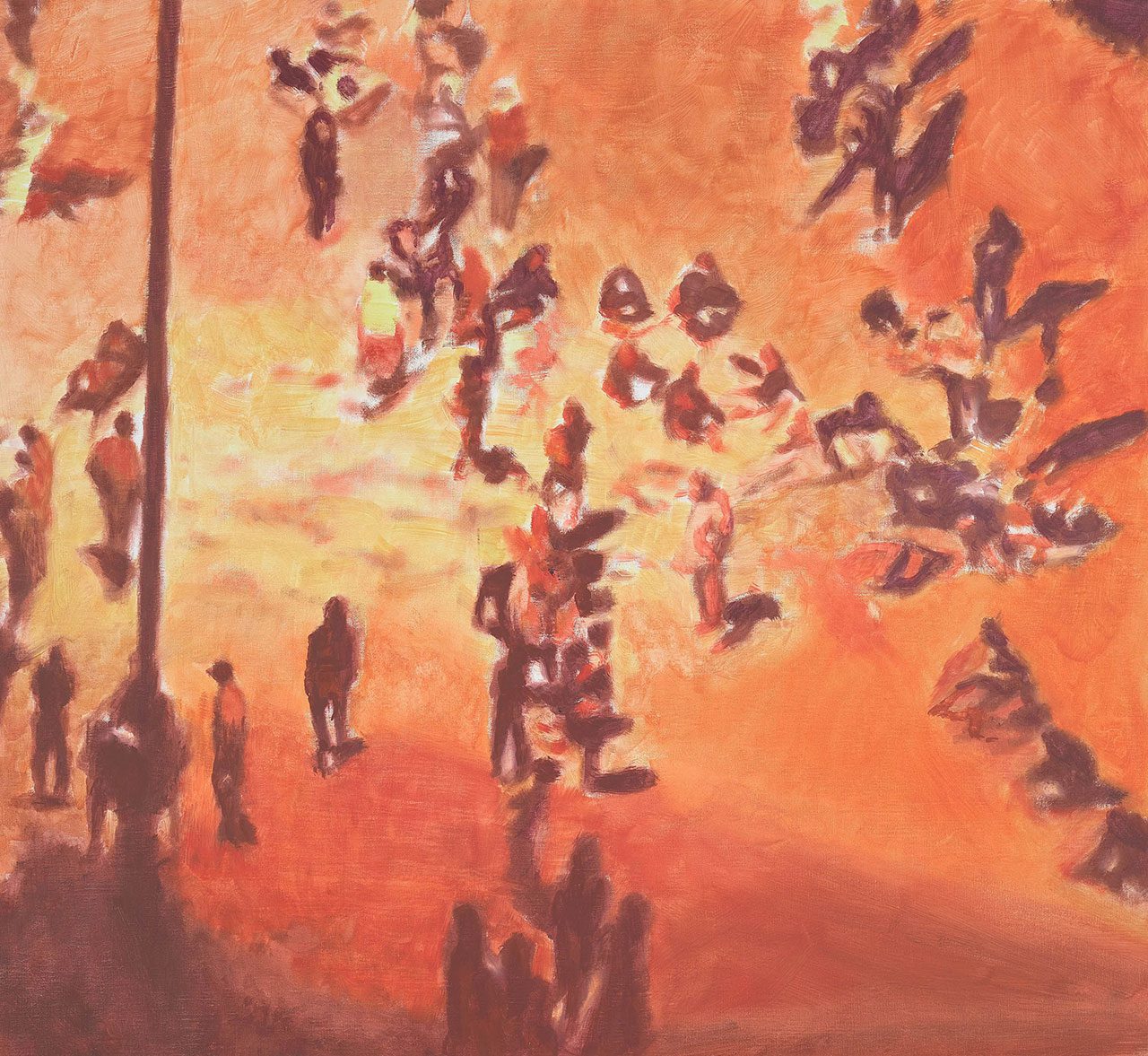
“Migrants” (2025) diverges in one crucial respect: it is the only work derived from an unmanipulated news photograph. Painted in urgent reds and oranges with comparatively loose handling, the image resolves only from a distance. Dozens of shadowed, faceless figures—waiting at a border—materialize as a collective presence. Here, mediation is not digitally compounded; instead, painterly translation underscores the instability between document and interpretation.
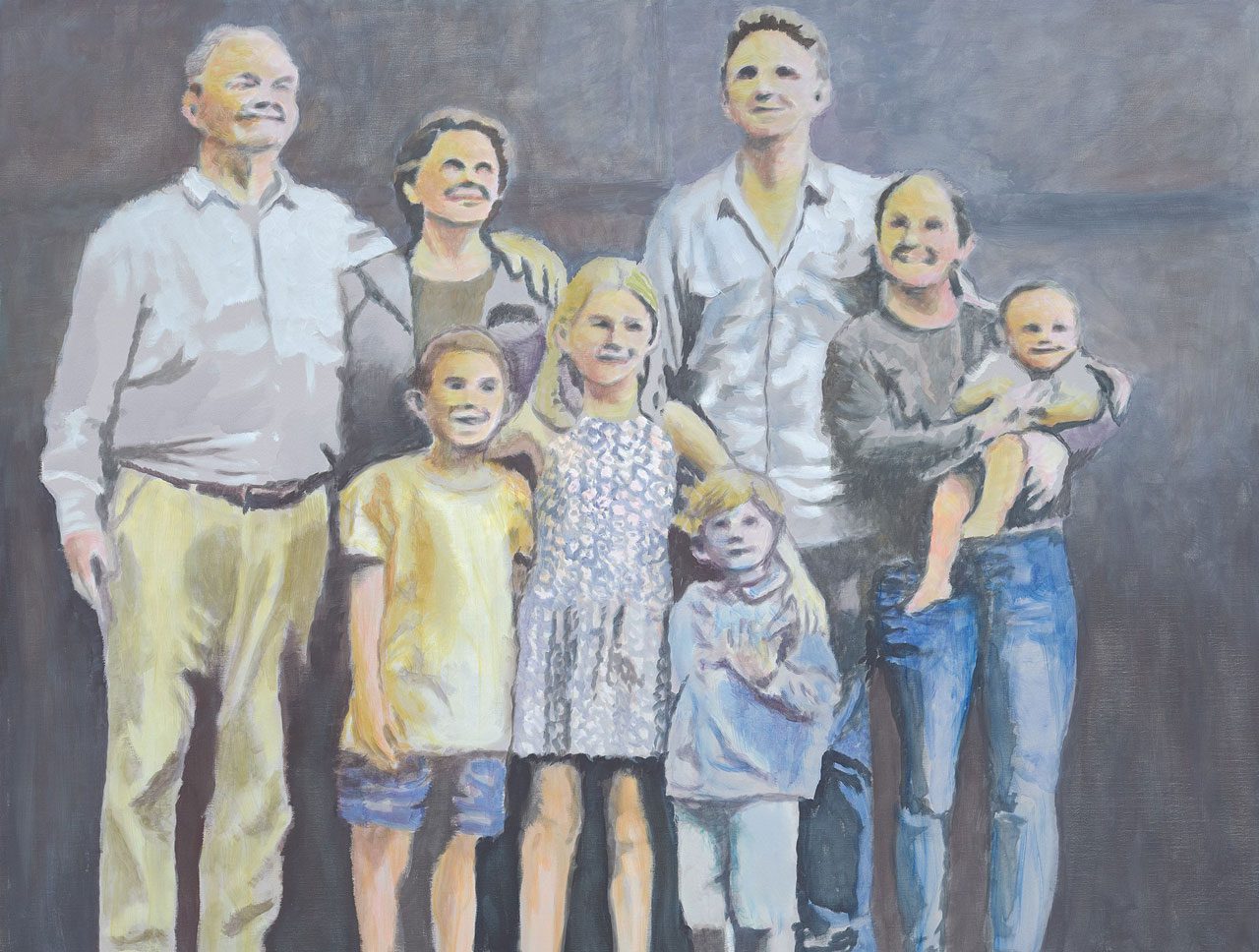
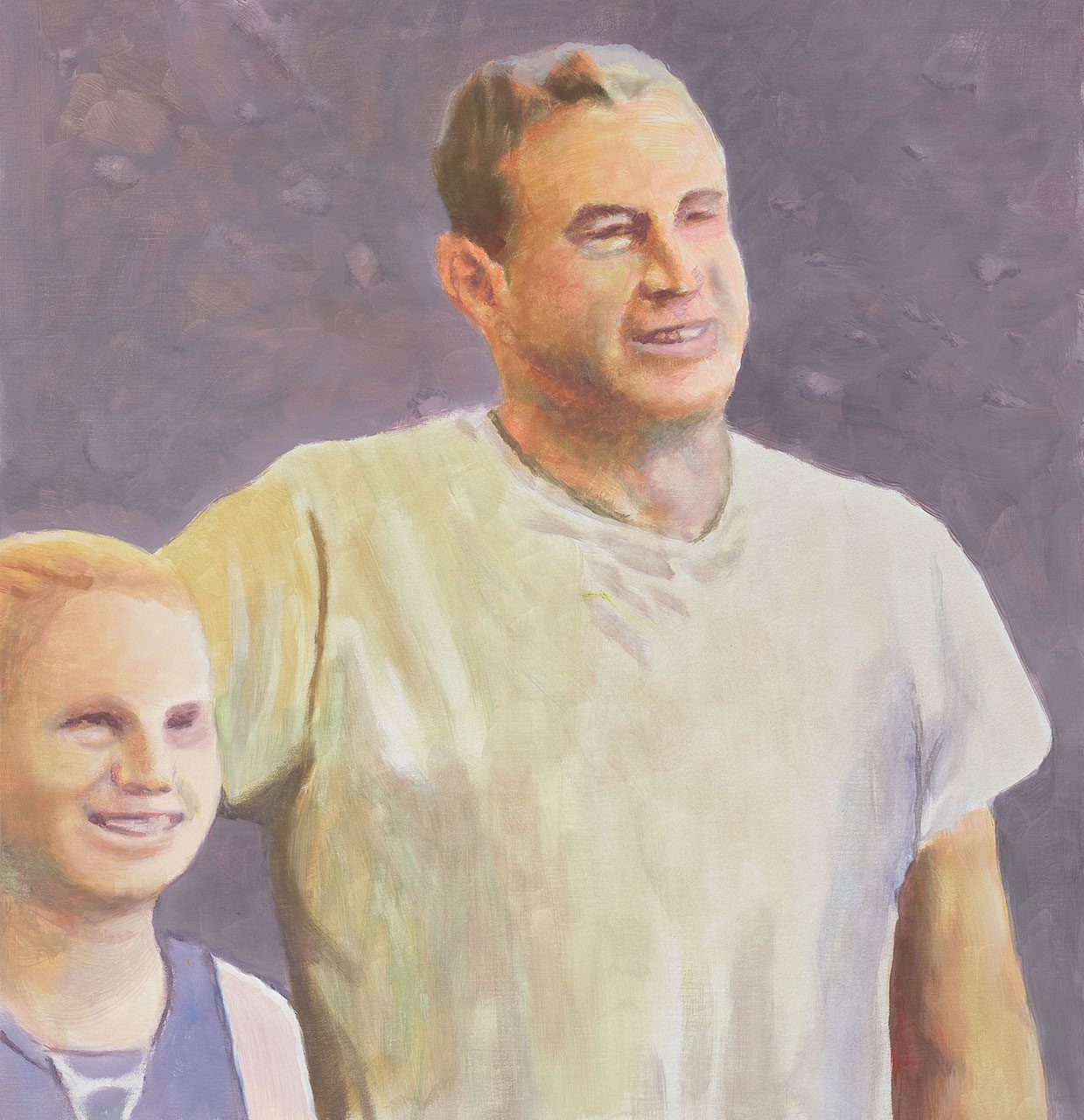
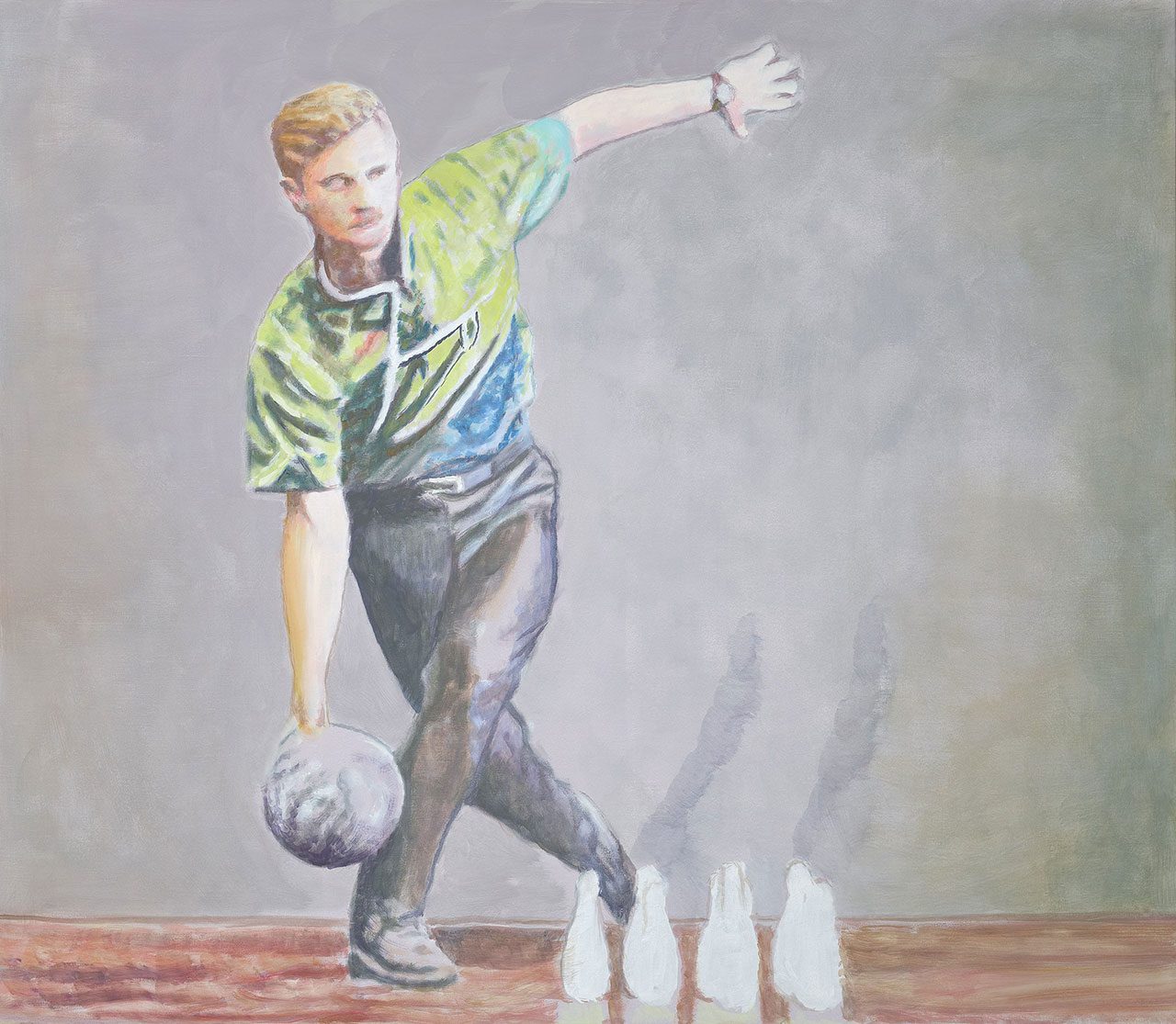
The exhibition concludes with four canvases based on 3D-printed figurines of actual individuals who read, in different ways, as archetypically American. These figures appear simultaneously lifelike and immobilized, their increased dimensionality betraying their status as objects.
Rendered on a more intimate scale, the works invite face-to-face confrontation. Yet optimism is undercut by material decisions: an ashen underlayer and thin paint application produce a spectral effect, as though vitality were never fully present.
In “Hall of Fame” (2025), a figure wearing the yellow NFL Hall of Fame jacket cradles a football while staring vacantly forward—a champion emblematic of a national pastime, yet curiously emptied of triumph. “The Family” (2025) presents three generations smiling in close formation. Their brightness recedes even as we register it, underscoring the fragility—perhaps impossibility—of a stable, shared reality.
Across “The Fruit Basket”, Tuymans demonstrates that painting need not compete with digital imagery on its own terms. Instead, he metabolizes its artifacts: glare, blur, compression, chromatic distortion. Fragmentation is not merely thematic but structural; mediation is not depicted but embodied.
By translating the logic of the screen into the material discipline of oil on canvas, Tuymans asserts that painting remains uniquely capable of slowing perception, thickening time, and reintroducing doubt into a culture of instantaneous consumption. In doing so, he does not reject the digital condition. He renders it visible—and vulnerable—within the fragile persistence of paint.
Photo: Luc Tuymans, The Fruit Basket, 2025m Oil on canvas in nine (9) parts, Overall: 192 3/8 x 283 inches (488.6 x 718.8 cm), © Luc Tuymans, Courtesy the artist and David Zwirner Gallery
Info: David Zwirner Gallery, 606 N Western Avenue, Los Angeles, CA, USA, Duration: 24/8-4/4/2026, Days & Hours: Tue-Sat 10:00-18:00, www.davidzwirner.com/
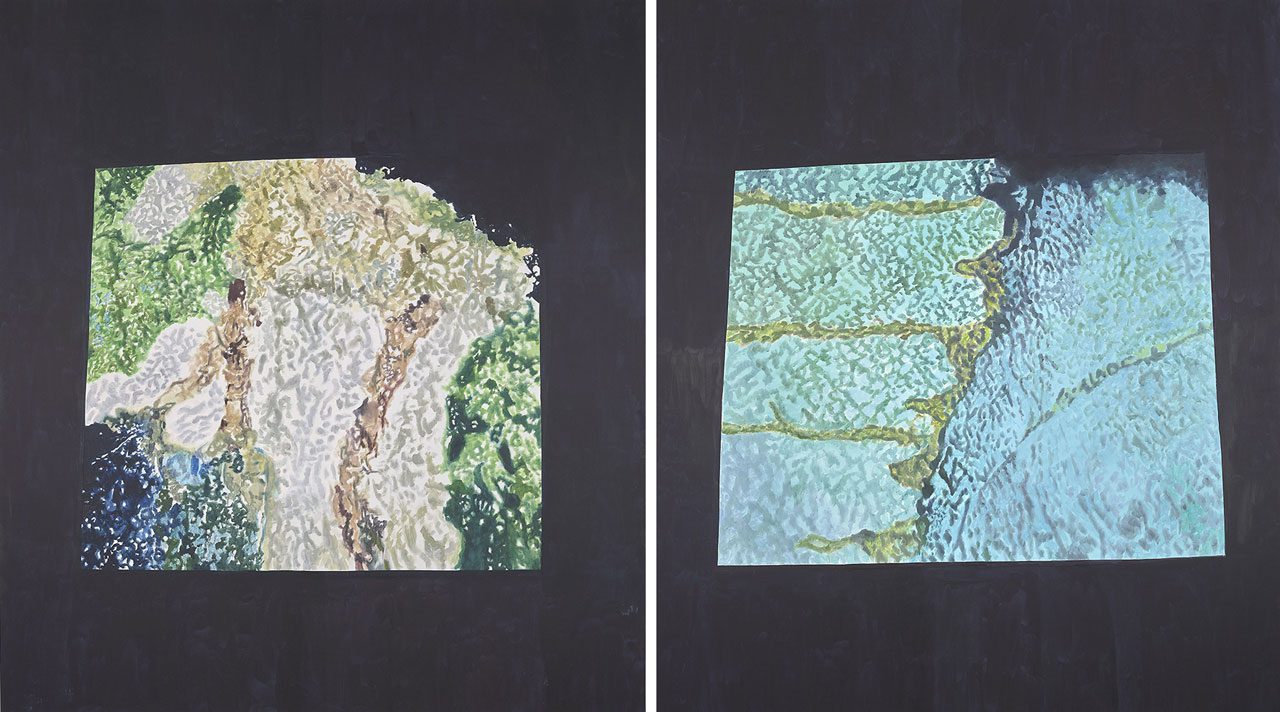
Right: Luc Tuymans, Illumination III, 2025, Oil on canvas, 122 1/2 x 114 3/8 inches (311 x 290.4 cm), © Luc Tuymans, Courtesy the artist and David Zwirner Gallery
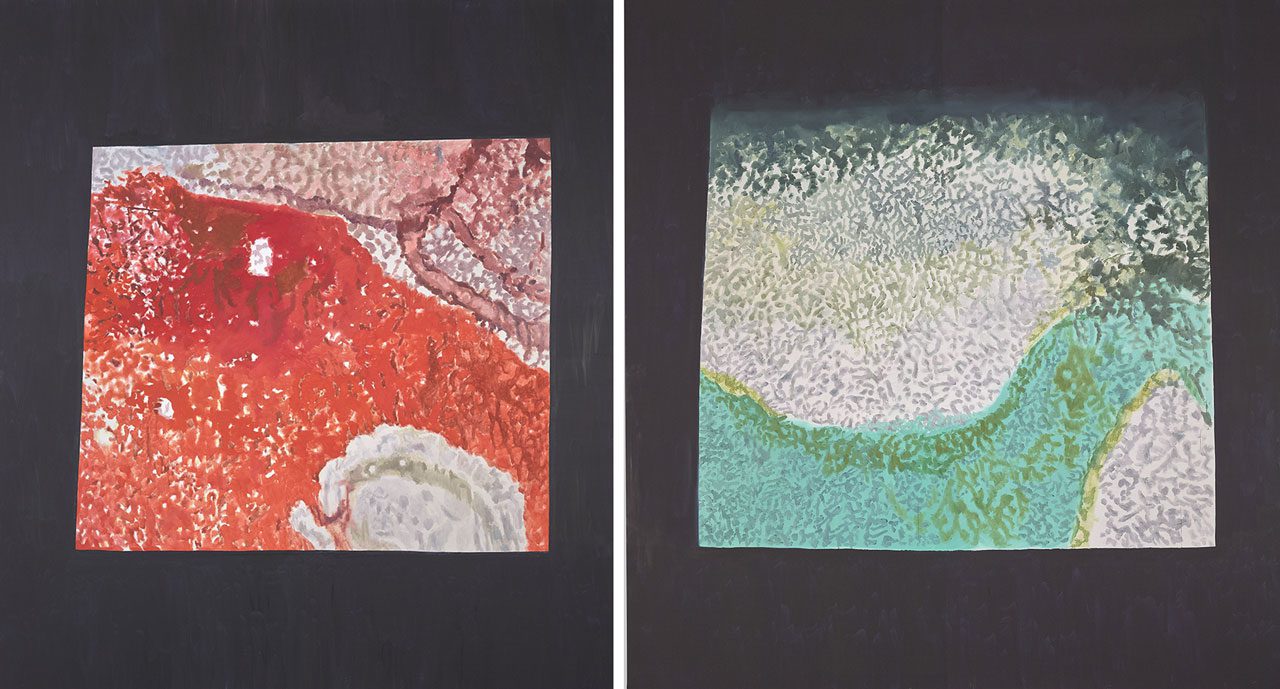
Right: Luc Tuymans, Illumination I, 2024, Oil on canvas, 114 1/4 x 108 7/8 inches (290.1 x 276.4 cm), © Luc Tuymans, Courtesy the artist and David Zwirner Gallery