ART CITIES: N.York-Kamrooz Aram
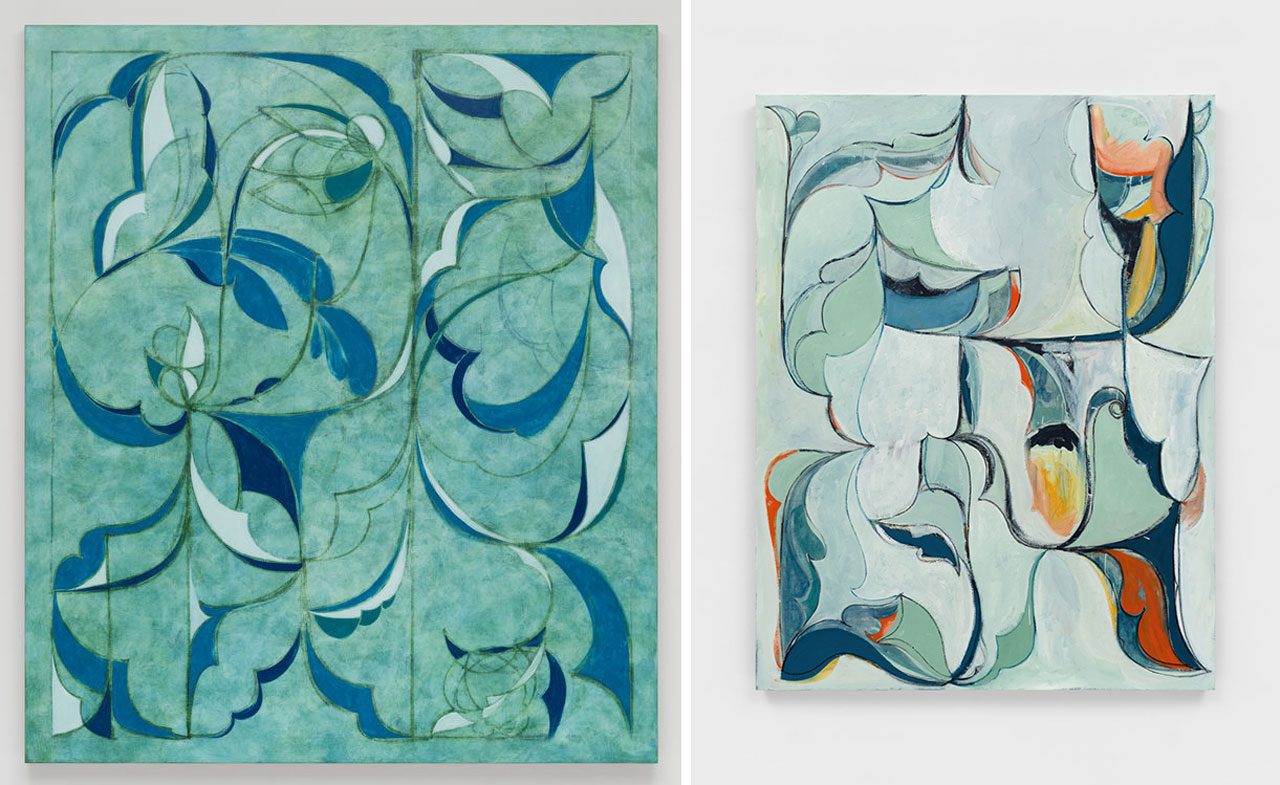
In contemporary painting, the line separating ornament from “serious” abstraction remains stubbornly intact—an inheritance of Western art history that continues to privilege certain formal languages while relegating others to the decorative. The practice of Kamrooz Aram has long been dedicated to dismantling that hierarchy. His work interrogates the systems that divide fine art from ornament and exposes how these categories shape both aesthetic value and cultural identity.
By Dimitris Lempesis
Photo: Alexander Gray Associates Archive
Born in Shiraz, Iran, and later emigrating to the United States in the 1980s, Aram encountered firsthand the pressures of classification—cultural, aesthetic, and political. These experiences inform a practice that treats categorization not as neutral description but as a generative force. Identity, his work suggests, is not merely recorded through labels; it is produced by them. In response, Aram insists on the intellectual and conceptual rigor of non-Western ornamental traditions, repositioning them as central rather than peripheral to the history of abstraction.
This investigation comes into sharp focus in “Infrequencies”, his first exhibition with Alexander Gray Associates. The presentation coincides with Aram’s participation in the Whitney Biennial 2026, situating the exhibition within a broader institutional moment that underscores the urgency of his inquiry. Together, the two contexts mark a significant juncture in his sustained engagement with ornament, abstraction, and the historical frameworks that mediate their reception.
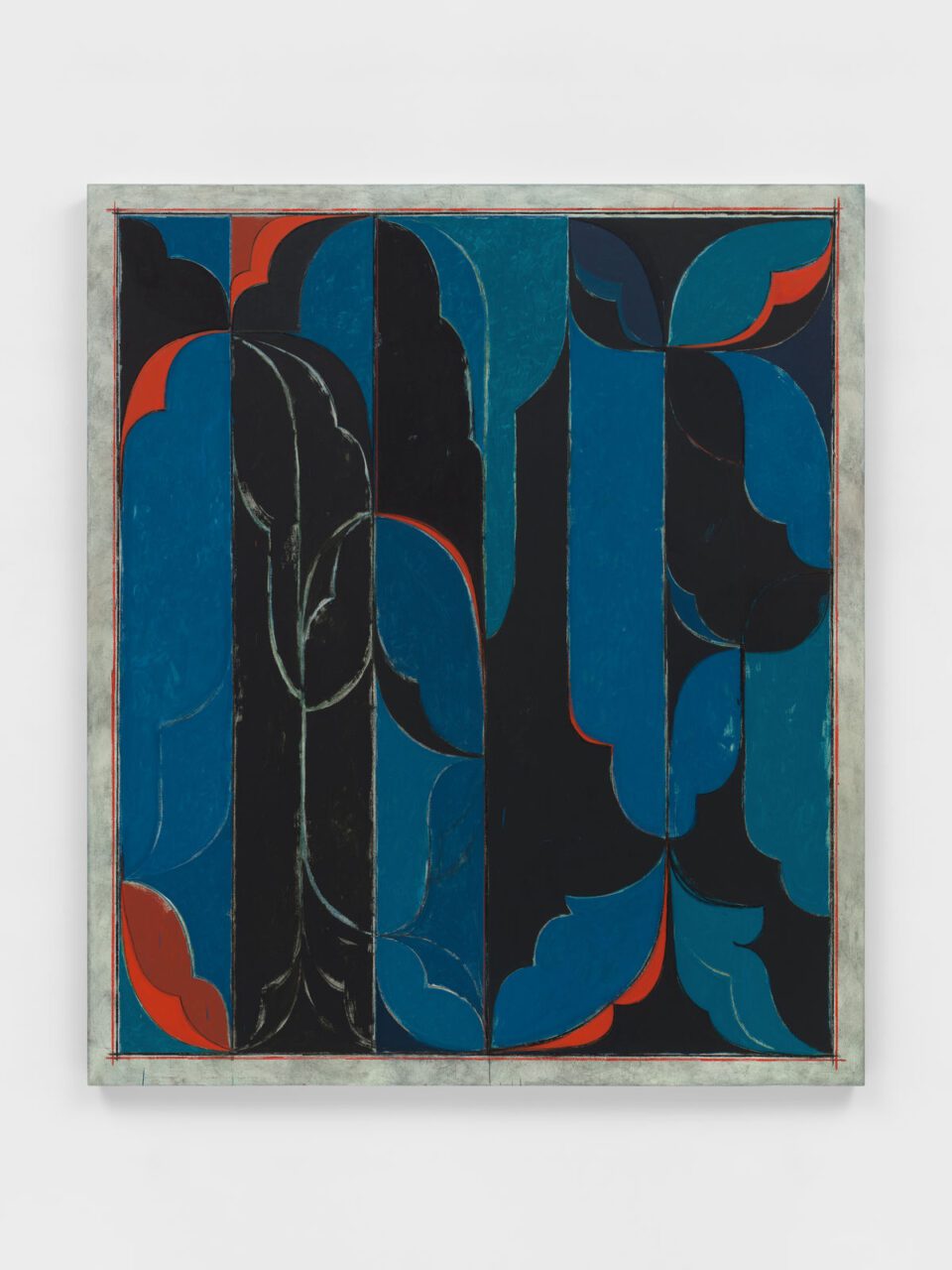
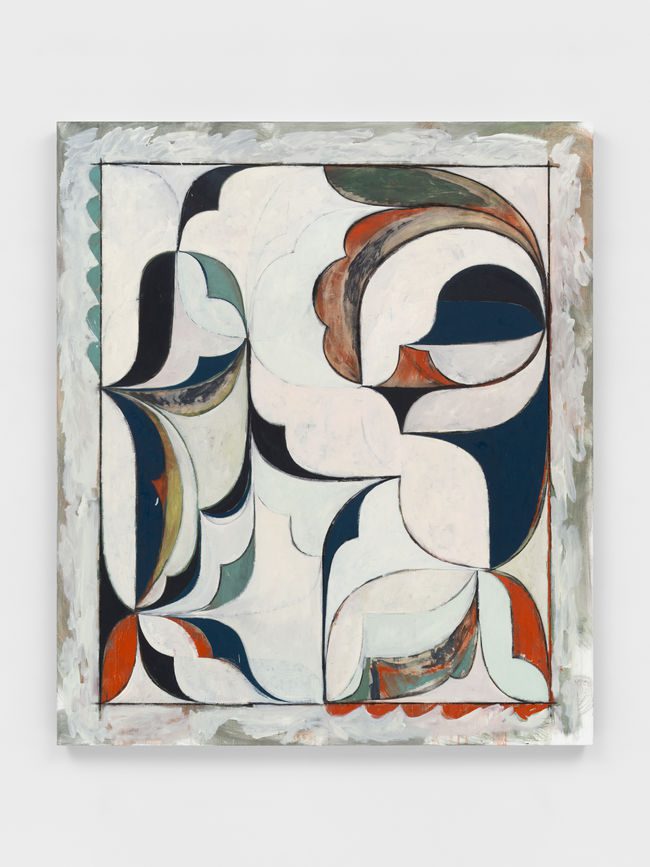
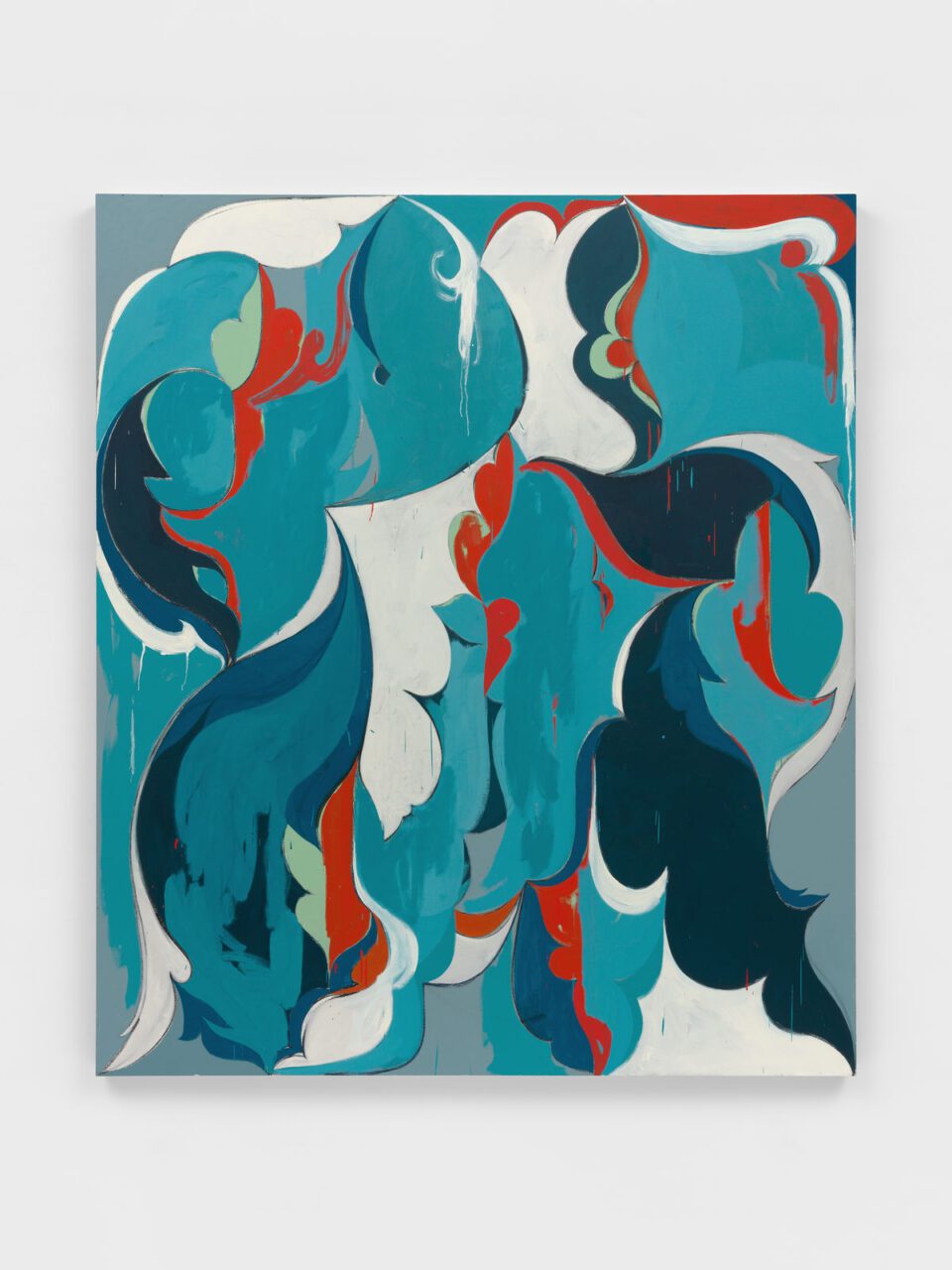
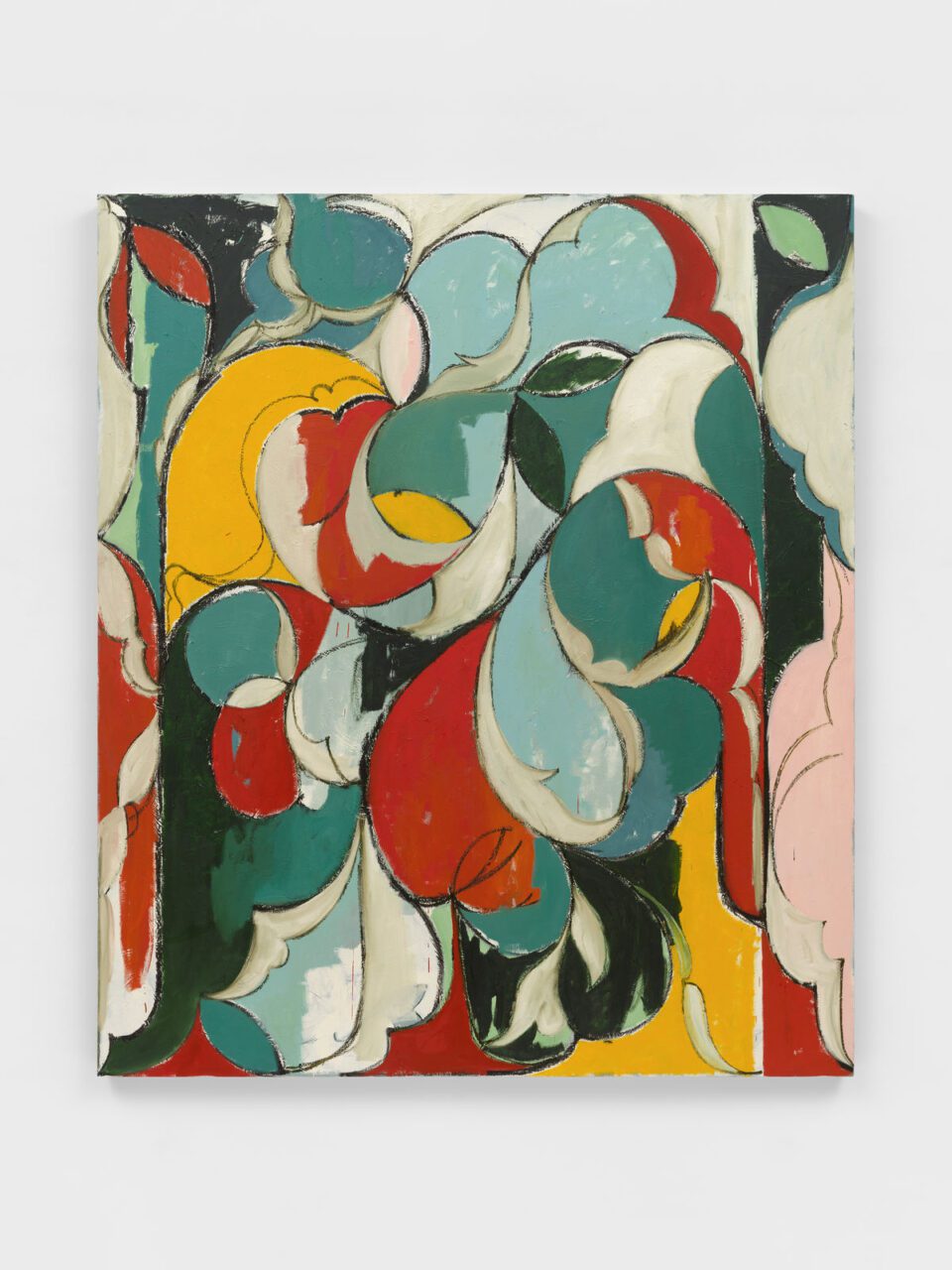
Infrequencies gathers a focused group of paintings produced intermittently over the last six years. These canvases depart from the grid-based scaffolding that has anchored much of Aram’s earlier work, shifting toward more gestural and open-ended forms of mark-making. Yet this movement does not signal a rupture. Rather, the grid persists as an internalized structure—a memory that continues to shape the paintings from within.
Arcing lines, calligraphic gestures, and curvilinear passages circulate across the surfaces, evoking ornamental traditions without resolving into stable pattern. The compositions remain responsive to the logic of the grid even as they interrupt it, producing a dynamic tension between control and improvisation, structure and embellishment. The resulting visual field is neither purely decorative nor strictly modernist; it occupies the unstable terrain between the two.
Here, modernist abstraction is not rejected but re-presented. Its formal discipline becomes a framework against which variation, drift, and asymmetry assert themselves. The push and pull between inherited order and gestural freedom becomes the engine of the work—an ongoing negotiation rather than a resolved position.
Aram’s project extends beyond formal experimentation. It constitutes a historiographic intervention into the narratives that have long defined abstraction as a Western achievement while marginalizing the ornamental as secondary or merely decorative. By foregrounding references to calligraphy, arabesque, and other non-Western visual systems, his paintings reposition ornament as a site of conceptual inquiry.
Art historian Lauren O’Neill-Butler has noted that Aram’s compositions “foreground the body of work as much as the work of the body,” emphasizing duration, repetition, and embodied engagement as key to their formation. The paintings accumulate time: traces of earlier passages remain visible beneath subsequent layers, turning each canvas into a record of revision and negotiation.
This emphasis on process challenges the static authority often associated with canonical abstraction. Instead, Aram frames painting as an evolving field—one shaped by memory, gesture, and cultural translation. Ornament becomes not surface embellishment but a critical method, capable of destabilizing entrenched hierarchies and opening abstraction to multiple genealogies.
The timing of “Infrequencies” alongside the Whitney Biennial is significant. The Biennial, the longest-running survey of contemporary art in the United States, aims to capture the textures and tensions of the present through the work of fifty-six participating artists. Aram’s inclusion situates his practice within a broader discourse about relationality, cultural entanglement, and the shifting terms of contemporary art.
In this context, his paintings operate not only as aesthetic propositions but as institutional critiques. They challenge museums and galleries to reconsider the boundaries between fine art and decorative practice, and between Western and non-Western histories. By bringing ornament into dialogue with abstraction, Aram destabilizes the taxonomies through which collections, exhibitions, and narratives have long been organized.
Ultimately, Aram’s work proposes a pluralized understanding of abstraction—one that acknowledges multiple lineages rather than a single, Western-centered trajectory. The paintings in “Infrequencies” do not abandon modernism; they reconfigure it, threading it through ornamental vocabularies and embodied processes that resist easy classification.
What emerges is a practice grounded in friction: between grid and gesture, memory and improvisation, tradition and invention. In that friction lies Aram’s most compelling contribution. He does not merely collapse the divide between ornament and fine art; he reveals it as a constructed boundary—one that can be renegotiated, reimagined, and ultimately transformed.
In doing so, Aram positions painting as a site where histories intersect and identities remain in motion. Ornament, long treated as peripheral, becomes central again—not as decoration, but as a critical language through which abstraction can be reconsidered and renewed.
Photo left: Kamrooz Aram, Murmurations, 2023, Oil, oil crayon, and pencil on linen, 84 x 72 in (213.4 x 182.9 cm), © Kamrooz Aram, Courtesy the artist and Alexander Gray Associates. Photo Right: Kamrooz Aram, Old World Telepathy, 2026, Oil, oil crayon, oil stick, and pencil on linen, 66 x 51 1/8 in (167.6 x 129.9 cm) , © Kamrooz Aram, Courtesy the artist and Alexander Gray Associates
Info: Alexander Gray Associates, 384 Broadway, New York NY, USA, Duration: 20/2-11/4/2026, Days & Hours: Tue-Sat 10:30-18:00, www.alexandergray.com/