PRESENTATION: Sue Williams-What Now
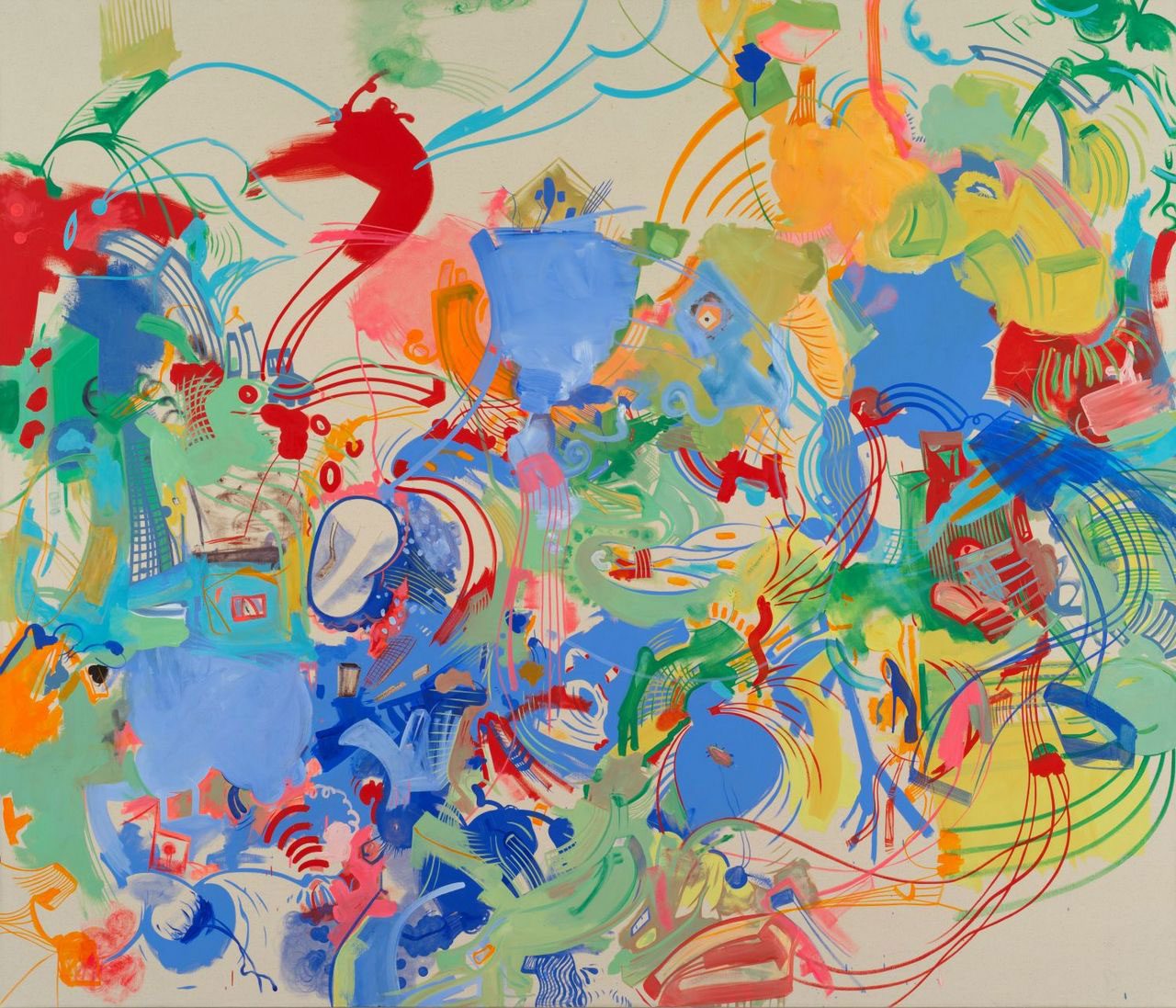
Since the late 1980s, Sue Williams has been exploring themes of power and oppression, gender relations, and body politics in her paintings and drawings. She consistently pursues a critical feminist agenda within a field that has long been considered a quintessentially patriarchal domain, which Williams brilliantly navigates using a variety of painterly strategies.
By Efi Michalarou
Photo: Belvedere 21 Archive
A major retrospective of Sue Williams is currently on view in Vienna under the title “What Now”, offering a sweeping account of one of the most incisive feminist voices in contemporary painting. Presented at Belvedere 21, the exhibition spans nearly four decades of work, bringing together paintings, drawings, and collages from the late 1980s to the present.
From the outset, Williams has positioned painting as a site of confrontation. Her work relentlessly probes power and oppression, gender relations, and body politics—subjects she has pursued since the late 1980s through a deliberately critical feminist lens in a field historically coded as patriarchal. The retrospective makes visible not only the thematic continuity of her practice, but also its formal volatility: a career-long oscillation between figuration and abstraction that functions less as stylistic evolution than as a strategic apparatus for critique.
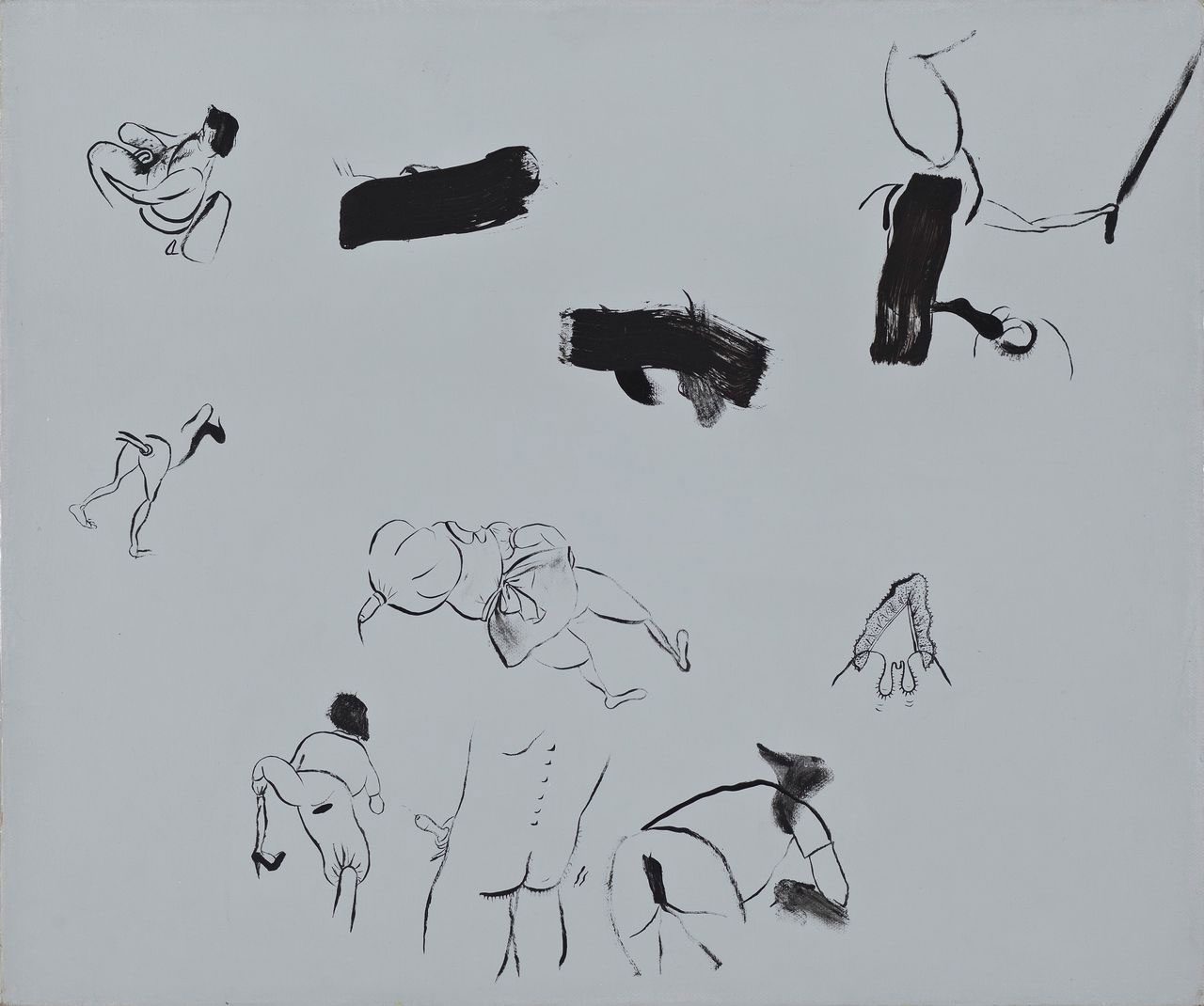
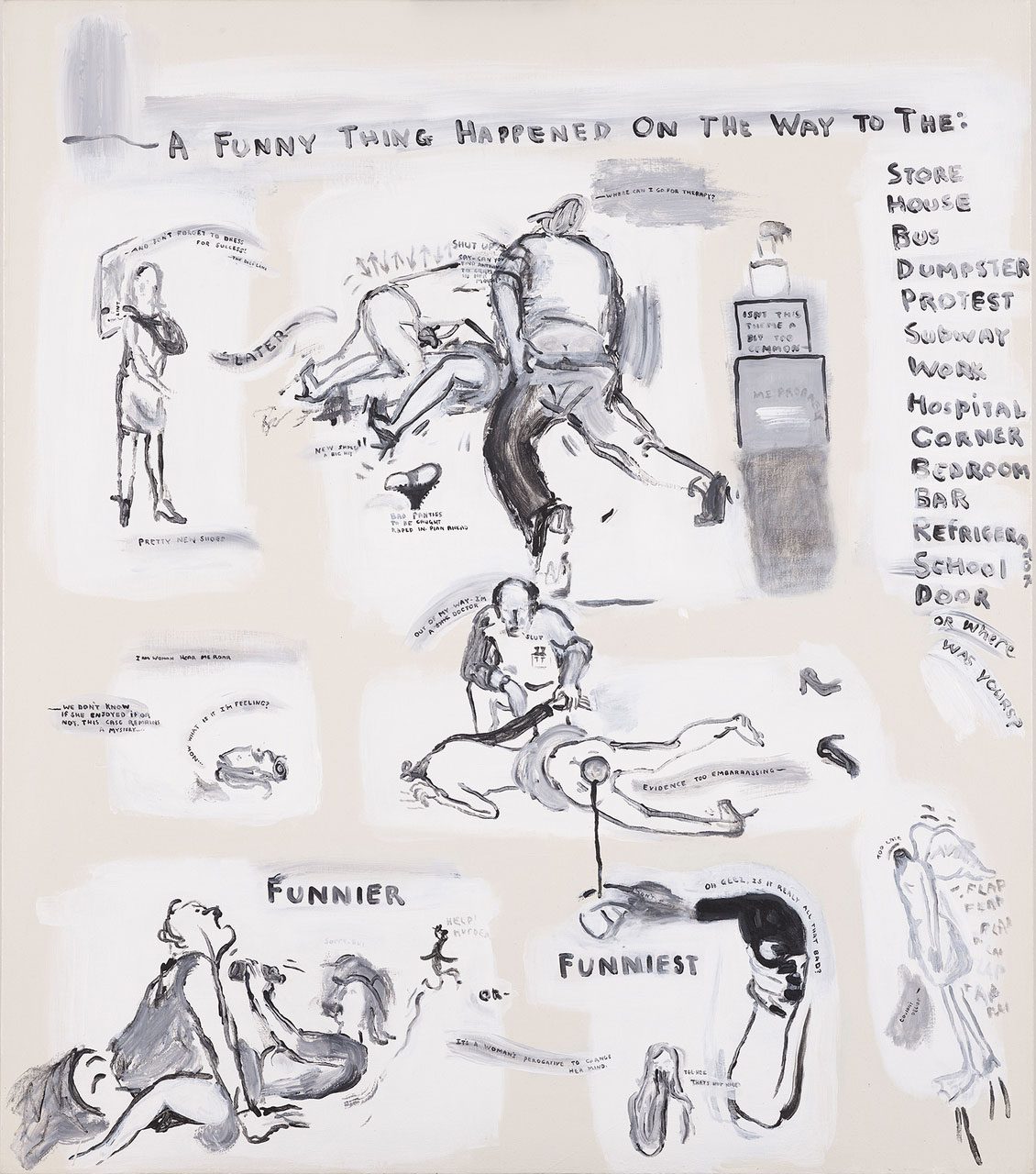
Williams emerged in the late 1980s with paintings that were raw, cartoon-like, and often rendered in stark black and white. These early works confronted sexualized violence and misogyny with startling directness, fusing diaristic narrative with aggressive graphic language. Her imagery—fragmented bodies, scrawled texts, grotesque caricatures—operated as a form of visual indictment, exposing the cultural normalization of violence against women and the failures of institutional authority.
Such work aligned with the postmodern feminist debates of the period, yet resisted easy categorization. Williams was never simply illustrative; even at her most narrative, the image functioned as a field of tension between satire and trauma, confession and performance. The retrospective underscores how these formative works established the central coordinates of her practice: the body as battleground, painting as political instrument.
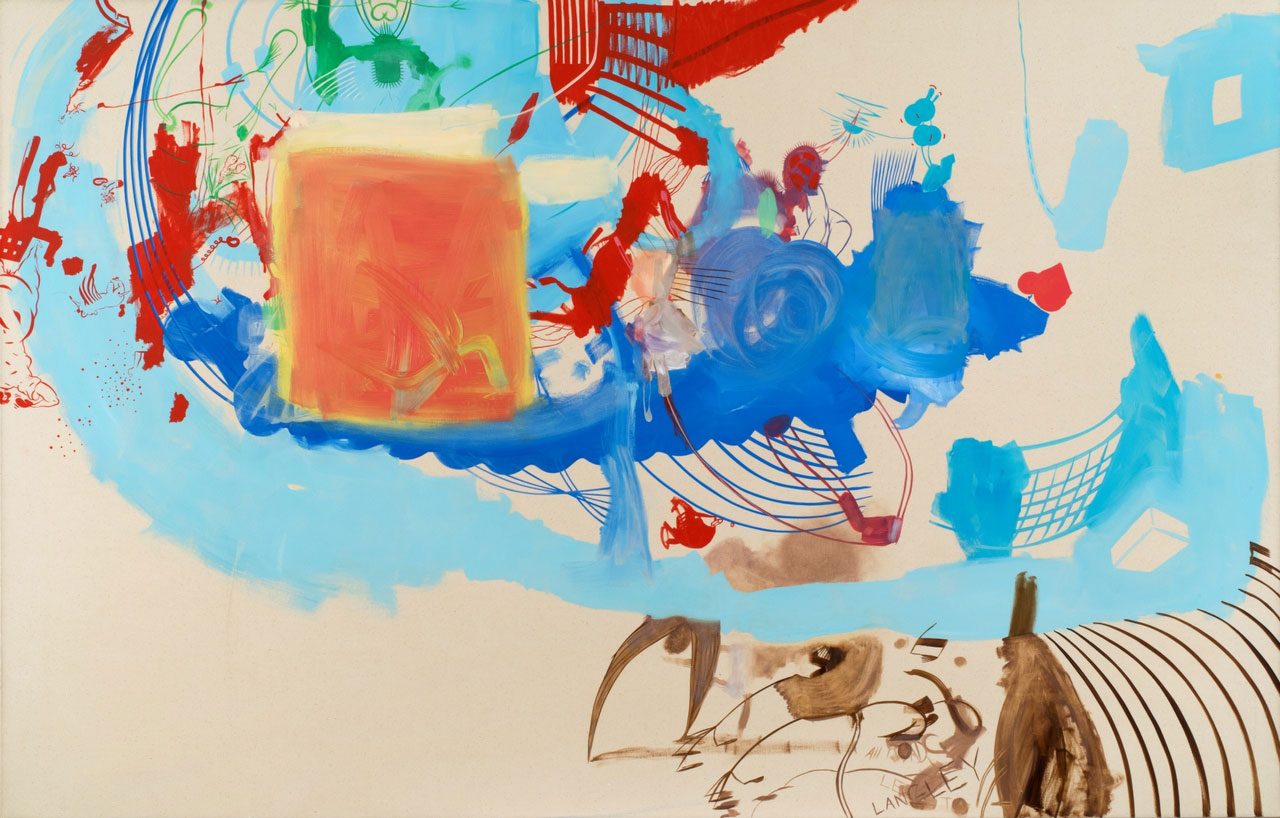
By the 1990s, Williams began to dismantle overt narrative in favor of a gestural, abstract visual language. Dynamic brushwork and saturated color increasingly dominated her canvases, while figurative elements receded into suggestion. Yet the thematic core remained intact: violence, power, and corporeality persisted, now embedded within painterly systems rather than explicitly depicted.
From a distance, many works read as ornamental all-overs—fields of rhythmic color and movement. Up close, however, abstraction reveals its instability. Patterns morph into anthropomorphic forms; swirls and stains evoke limbs, organs, or sexual anatomies. This slippage between abstraction and embodiment is central to Williams’s method. Abstraction does not signify retreat from politics; it becomes a means of approaching it obliquely, forcing viewers to confront what emerges from the pictorial surface.
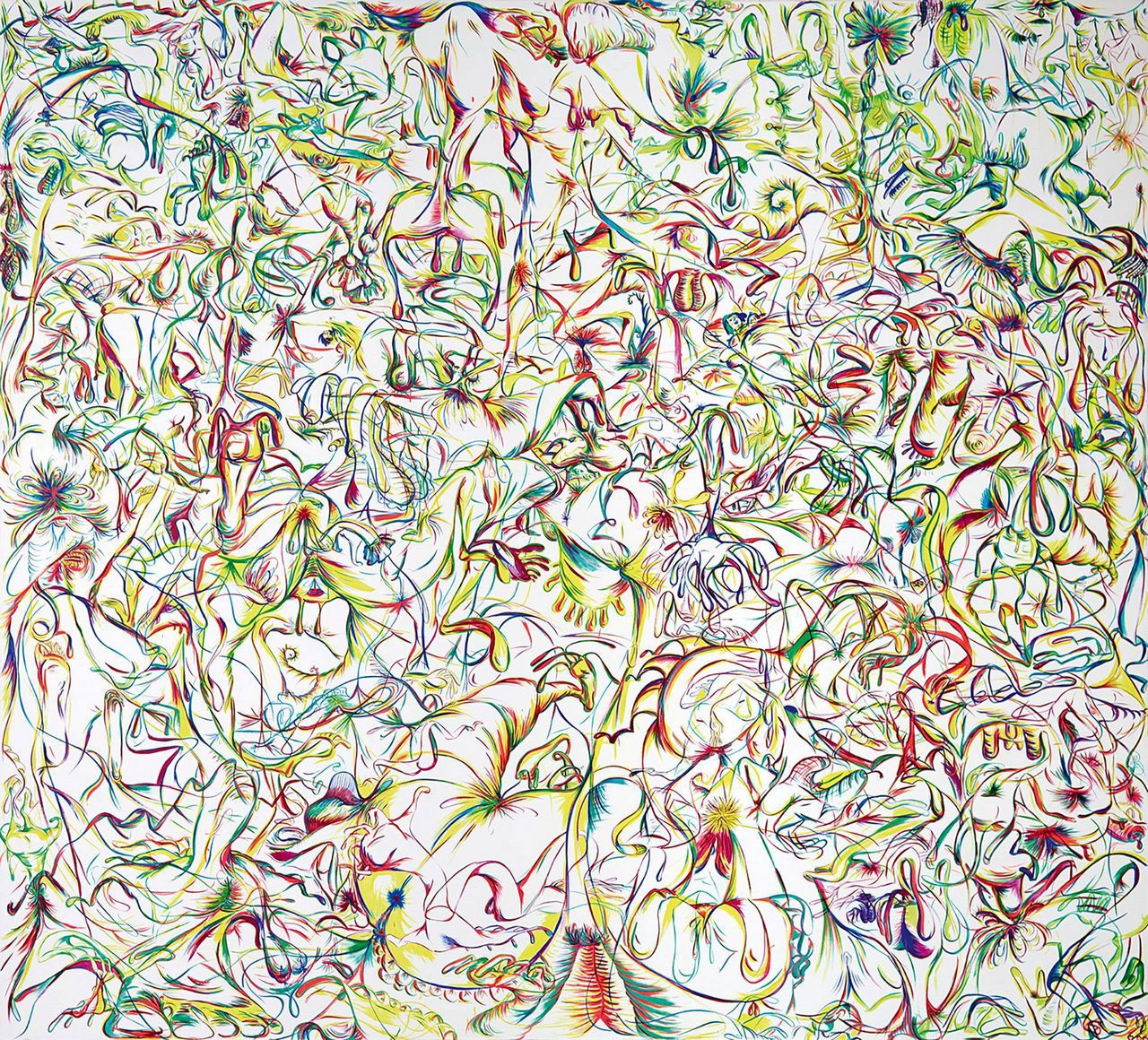
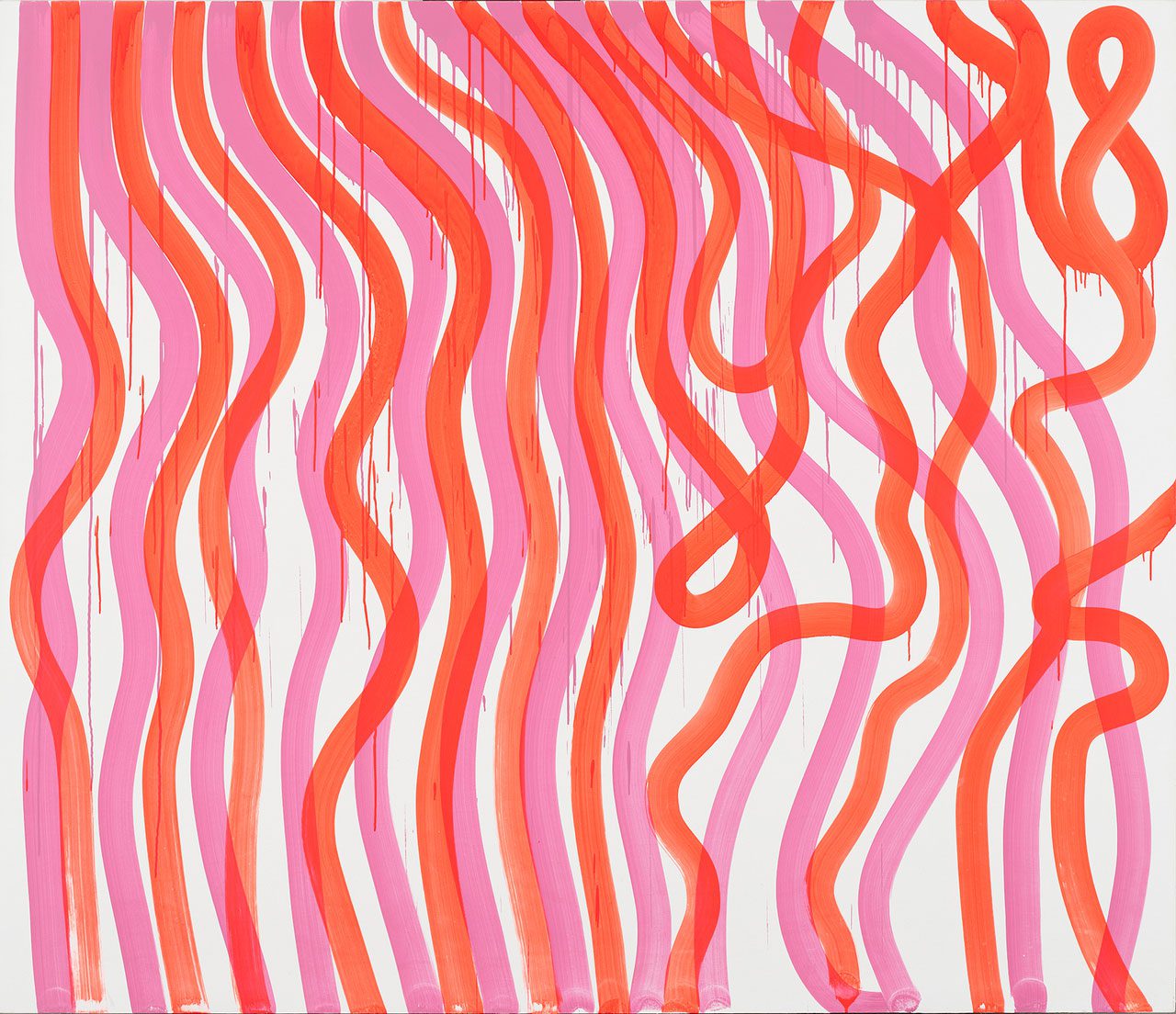
In the early 2000s, Williams pushed further toward reduction. Her compositions frequently resolved into bold, neon-colored linear structures, often suggestive of phallic forms. These works function as both homage to and critique of Abstract Expressionism: a movement historically mythologized through heroic masculinity and painterly bravado.
Williams appropriates that visual rhetoric only to destabilize it. Gesture becomes caricature; monumentality turns absurd. By exaggerating the masculine codes embedded in modernist painting, she exposes their ideological underpinnings. The result is a body of work that reads simultaneously as formal experiment and institutional critique.
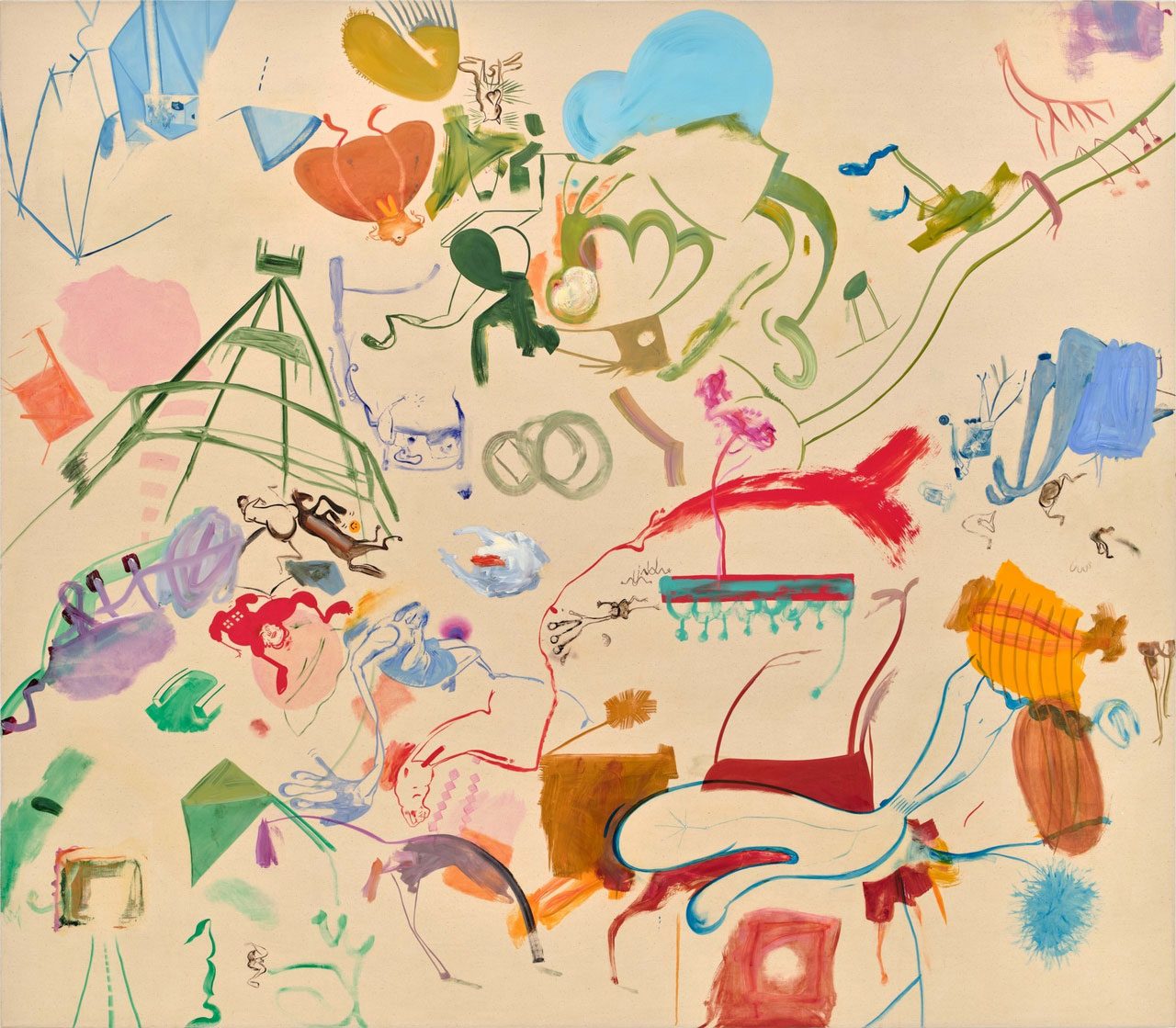
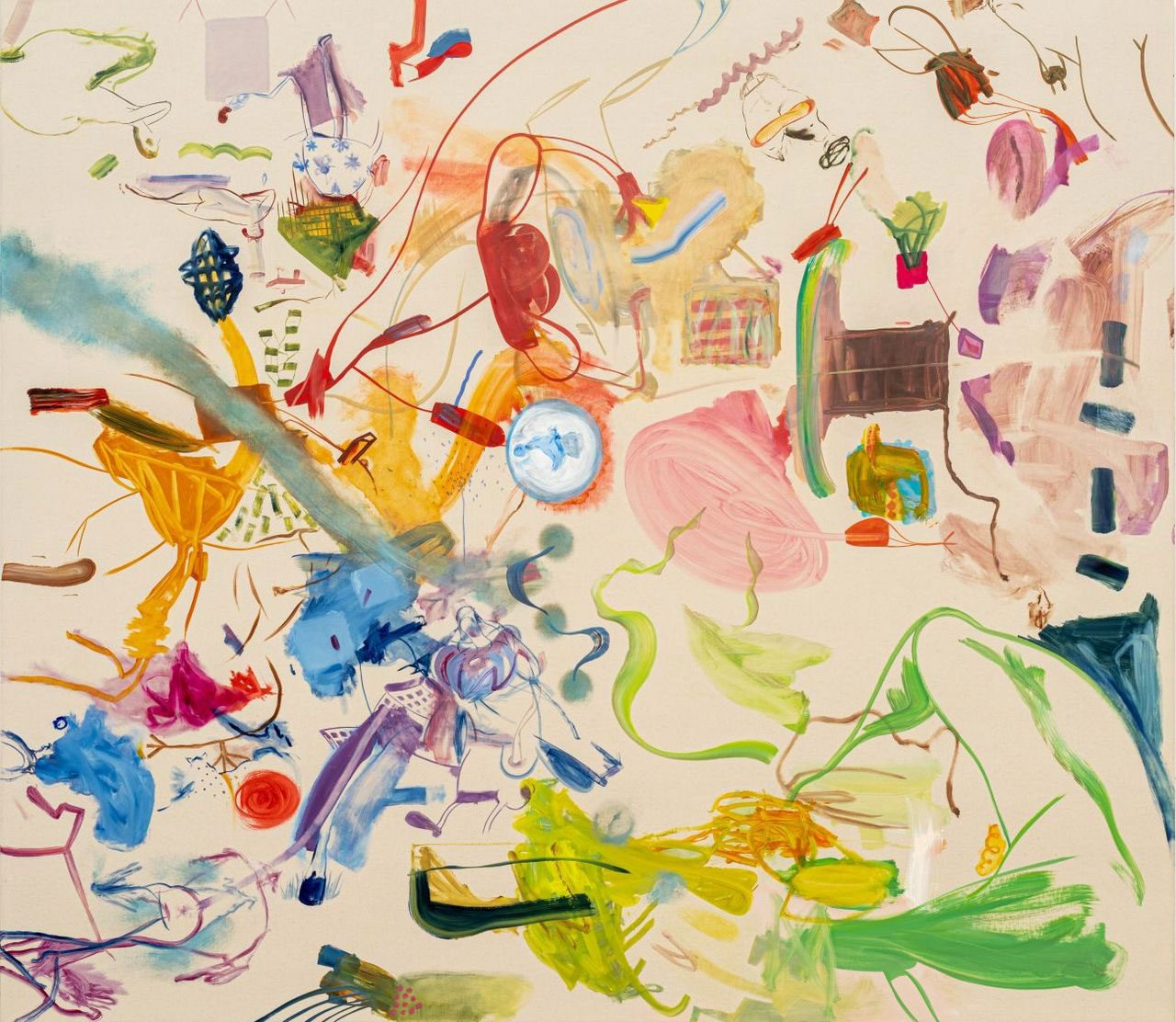
The works of the 2010s intensify this duality. Kinetic explosions of color and form reflect a world shaped by war, terror, and manipulative media environments. Here, Williams’s canvases appear almost chaotic—visual fields where fragments, stains, and linear bursts collide without hierarchy. Yet the disorder is deliberate: an image of contemporary dystopia translated into painterly terms.
These compositions continue to blur figuration and abstraction, suggesting bodies disintegrating within systems of power. The personal and the geopolitical coexist, echoing the artist’s long-standing insistence that private trauma and structural violence are inseparable.
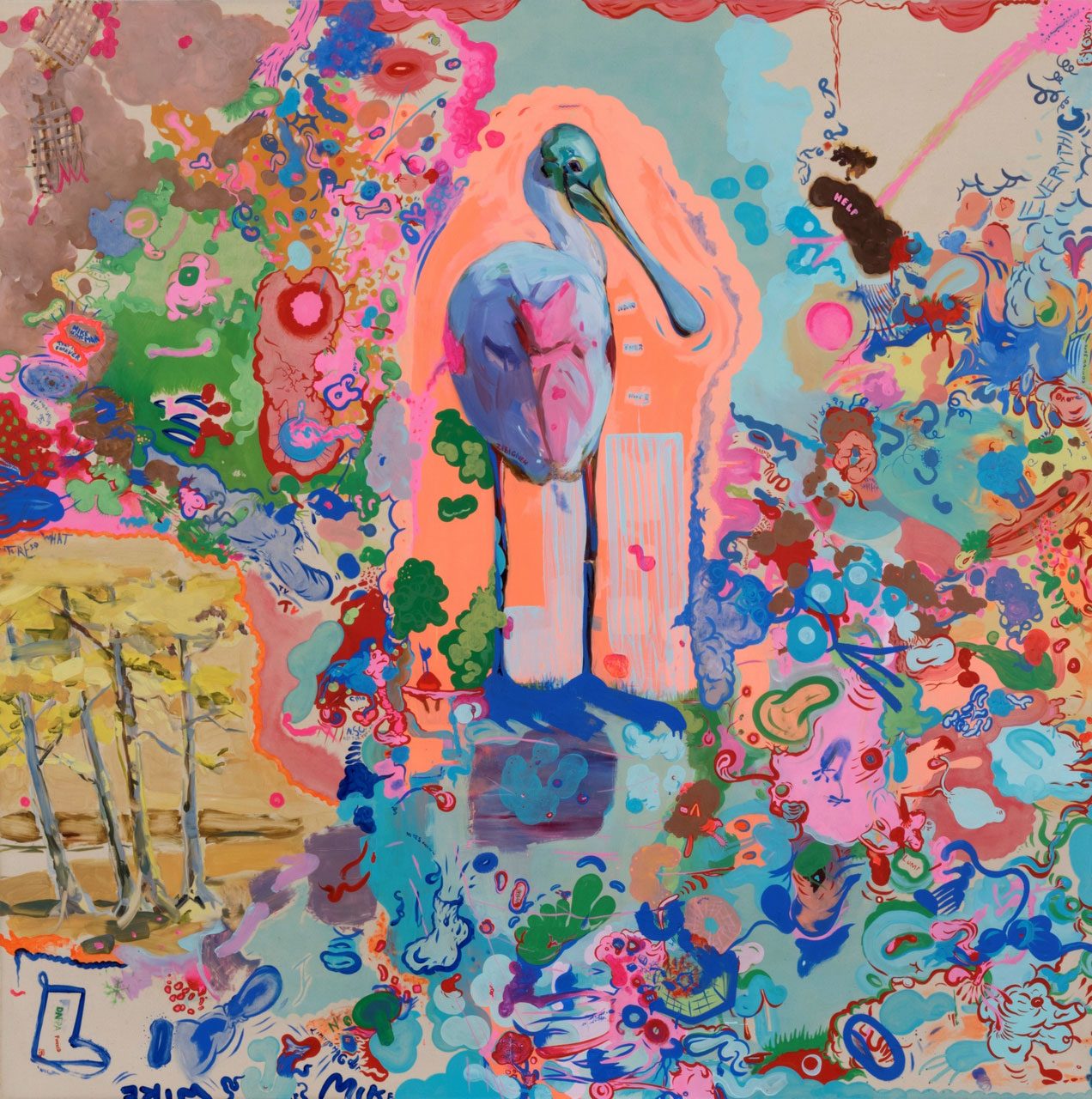
Recent works shown in “What Now” synthesize the trajectories of earlier decades. Cartoonish figuration, gestural abstraction, neon linearity, and dense color fields coexist within intricate pictorial arrangements. The oscillation between figuration and abstraction becomes more fluid, less dialectical—an ecosystem rather than a battleground.
These paintings confront structural violence and individual trauma while also registering memory and resilience. Humor, grotesque imagery, and painterly exuberance remain essential. Williams’s work is not simply accusatory; it is also inventive, irreverent, and materially seductive. The pleasure of painting becomes a counterforce to its subject matter.
Seen in retrospect, Williams’s career demonstrates a consistent refusal of stylistic fixity. Each formal shift—cartoon figuration, gestural abstraction, neon linearity, chromatic density—functions as a recalibration of how painting can address power. Her work suggests that political critique in art does not reside solely in iconography, but in the structures of seeing and making.
The Vienna retrospective frames this continuity with clarity. Across decades, Williams has treated painting not as a neutral medium but as an ideological field—one capable of exposing the grotesque mechanics of gender, violence, and authority while remaining sensuous, experimental, and unpredictable.
Photo: Sue Williams, Ministry of Hate, 2013, Private collection, New York
Info: Curator: Luisa Ziaja. Assistant Curator: Katarina Lozo, Belvedere 21, Arsenalstraße 1, Vienna , Austria, Duration: 20/2-7/6/2026, Days & Hours: Tue-Wed & Fri-Sun 11:00-18:00, Thu 11:00-21:00, www.belvedere.at/