PHOTO: Bernd and Hilla Becher
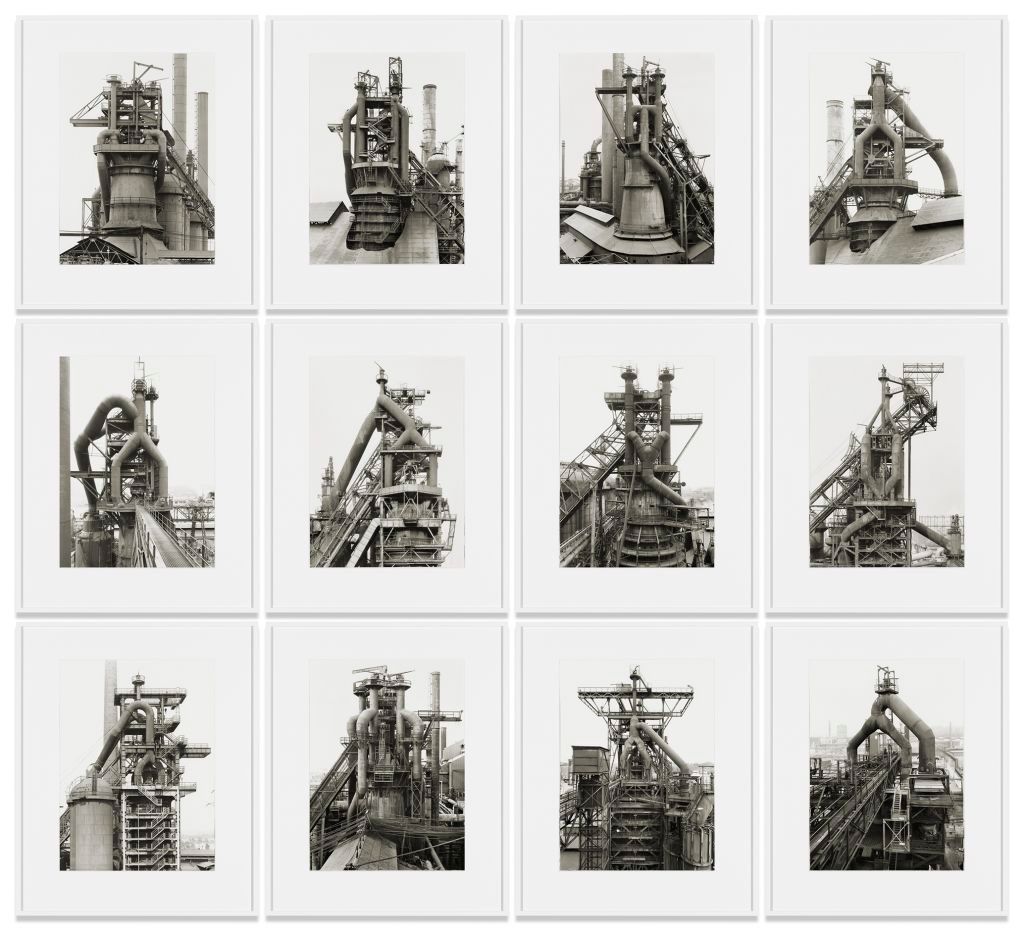
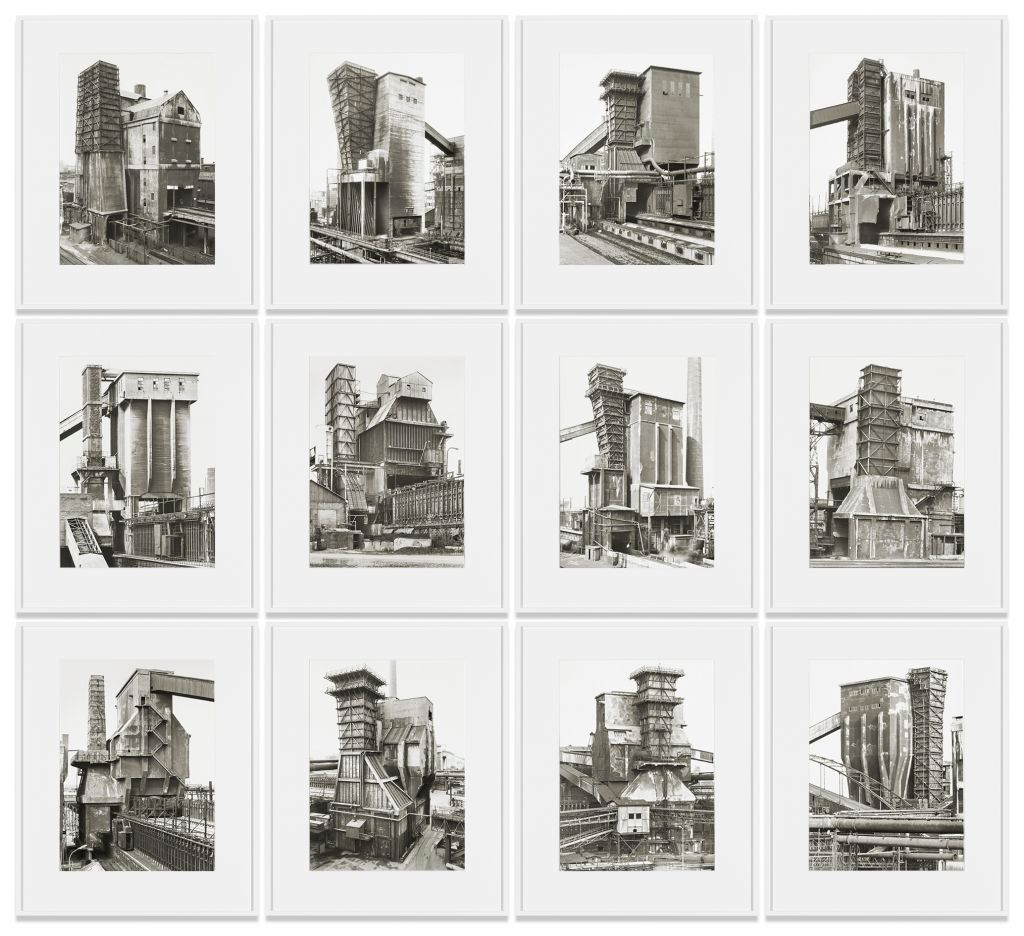
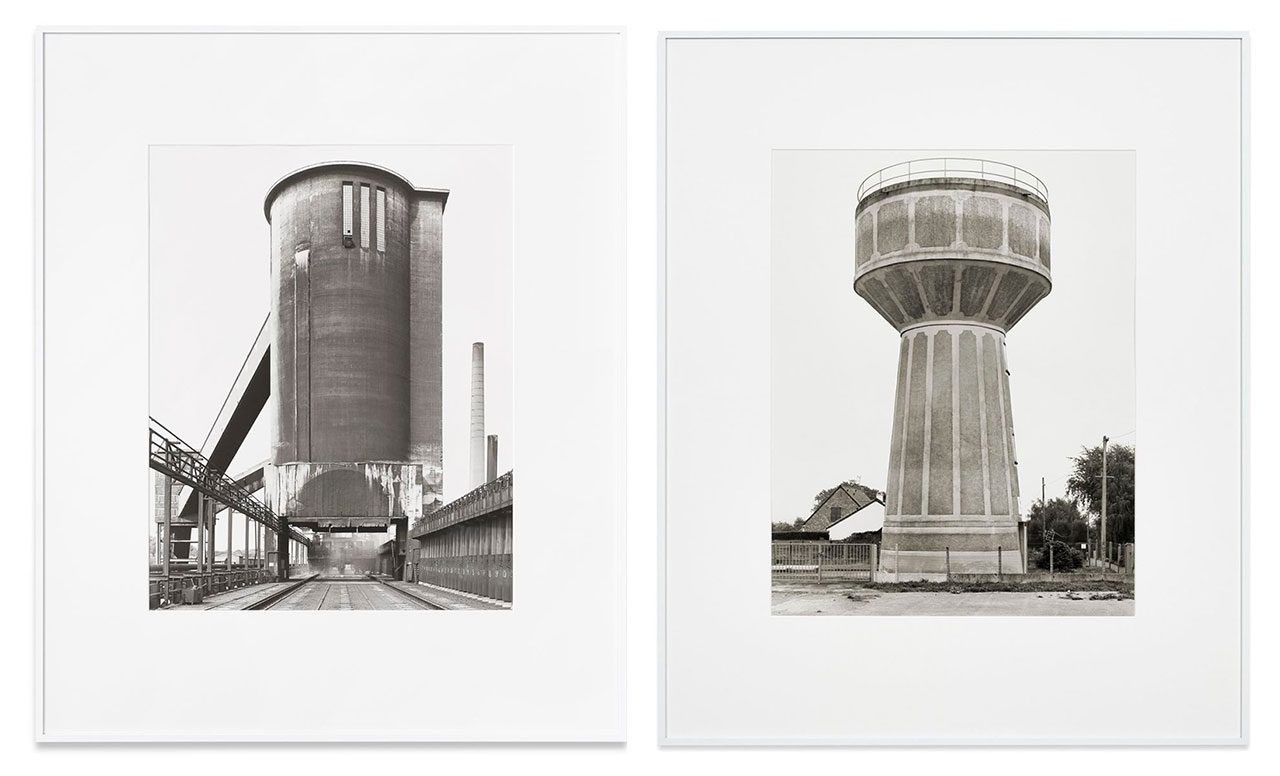
Over the past 50 years, the couple and artist duo Bernd and Hilla Becher, captured the aesthetic of disappearing industrial facilities, often making the overlooked structures visible to viewers for the first time. Their strict adherence to particular formal principles and their typological approach gave rise to the idea of photography as conceptual art. The Bechers taught at the Kunstakademie Dusseldorf and shaped the work of an entire generation of photographers, including Andreas Gursky, Thomas Ruff, Candida Höfer and Thomas Struth.
By Dimitris Lempesis
Photo: Sprüth Magers Gallery Archive
Icons of postwar photography, Bernd and Hilla Becher transformed the visual language of architectural documentation. Across five decades, the artist couple systematically photographed industrial structures throughout Europe and North America, producing an archive that simultaneously functions as sociological record, conceptual art, and sculptural study. Working with large-format cameras and an exacting visual grammar, they blurred the boundaries between documentary and fine art while establishing one of the most influential typological approaches in twentieth-century photography.
A new exhibition at Sprüth Magers in London brings together key examples from the Bechers’ practice, assembling archetypal forms—gas tanks, water towers, winding towers, framework houses, and preparation plants—into a structured dialogue across decades. The presentation marks the duo’s first solo show at the gallery in more than ten years and the first since Hilla Becher’s death in 2015.
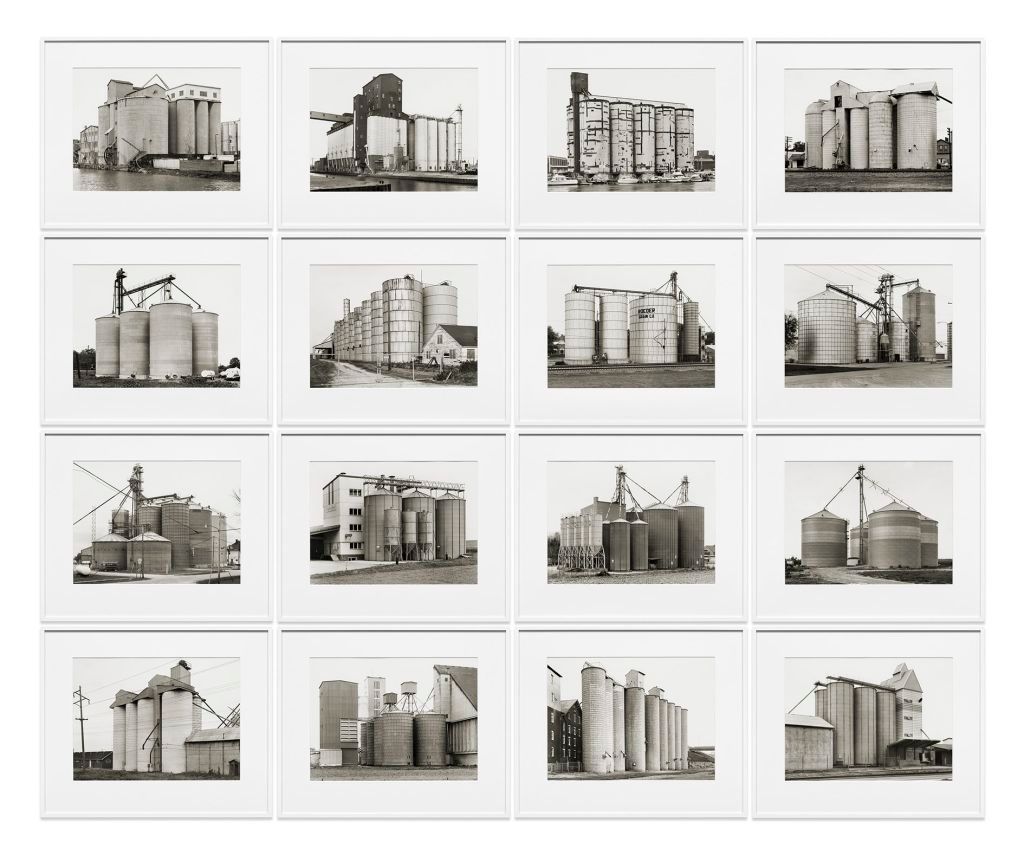
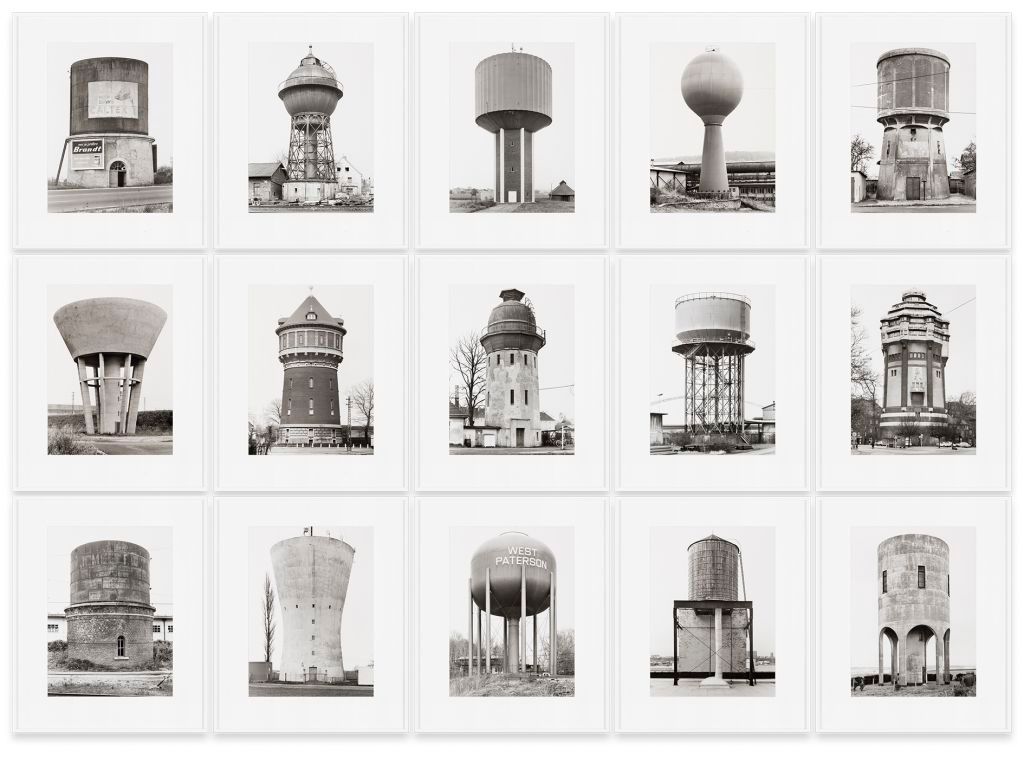
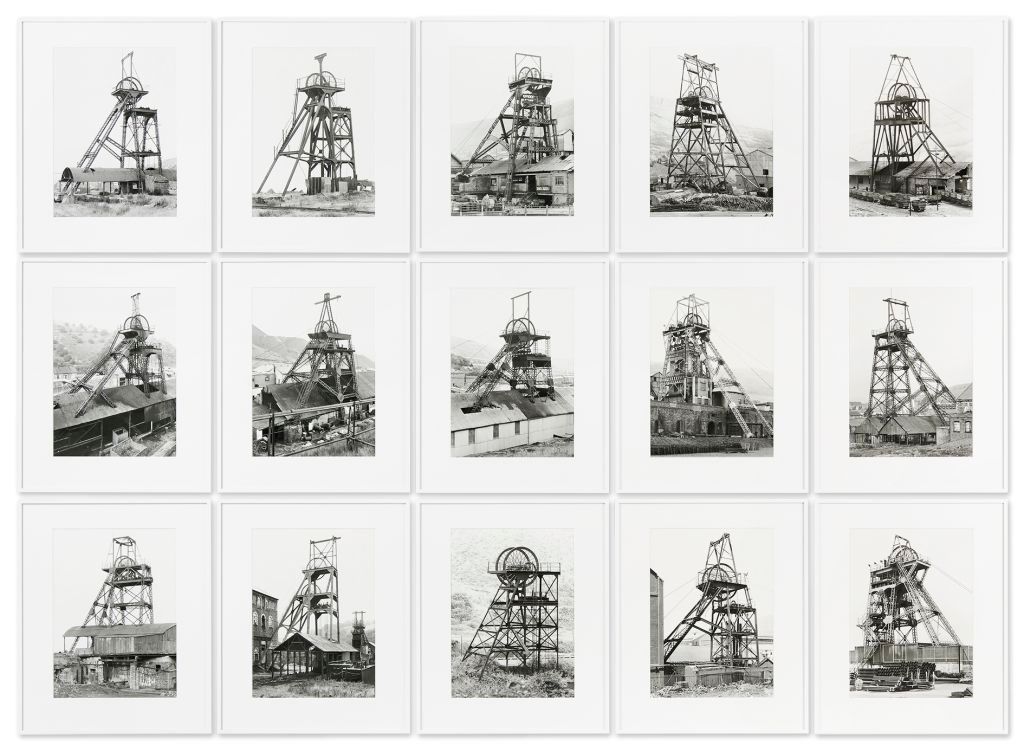
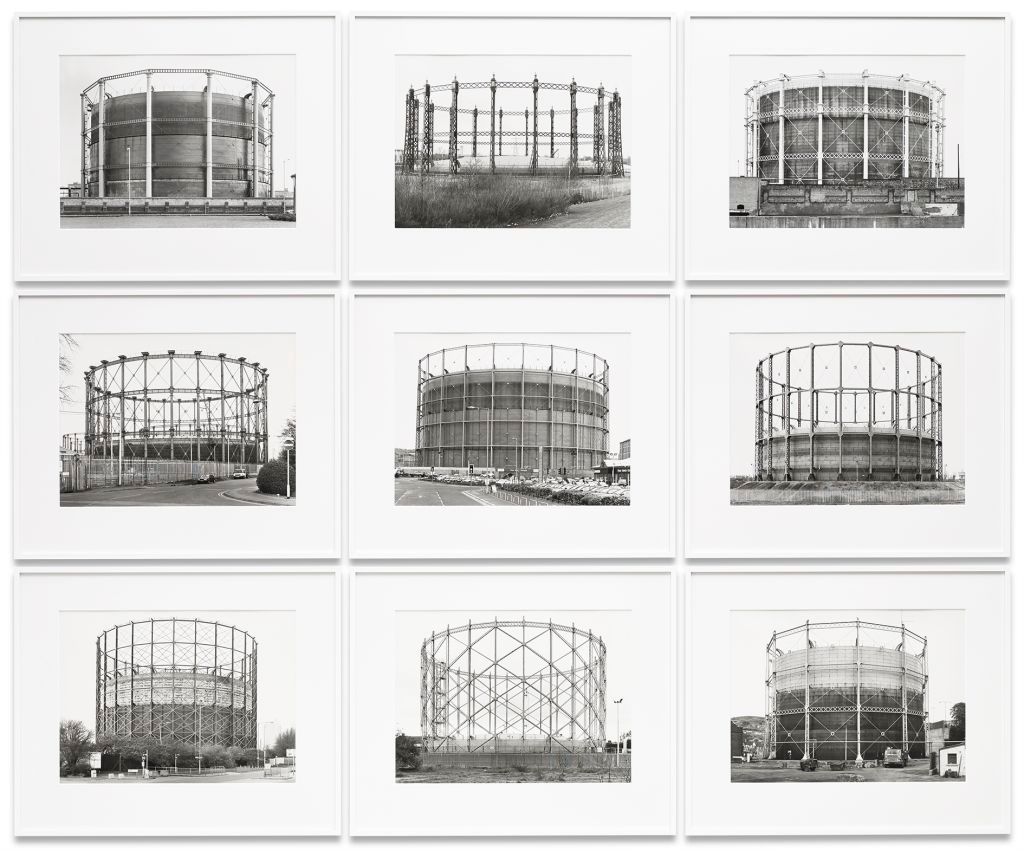
From the outset, the Bechers approached industrial architecture as a field of comparative study. Using standardized compositions and overcast lighting, they removed extraneous detail, isolating structures so they could be examined formally—almost scientifically. Their photographs were frequently organized into grids, allowing viewers to perceive similarities and deviations between forms. This “typological” system positioned the buildings as what the artists famously termed “anonymous sculptures,” at once functional and aesthetically compelling.
The London exhibition underscores this methodology by interweaving early and later works across multiple building types. Single prints and typological groupings coexist, revealing how a concise formal framework could generate extraordinary visual variation. Within the gas tanks alone, structures appear vertical, horizontal, or circular, suggesting a morphology shaped as much by engineering constraints as by regional traditions.
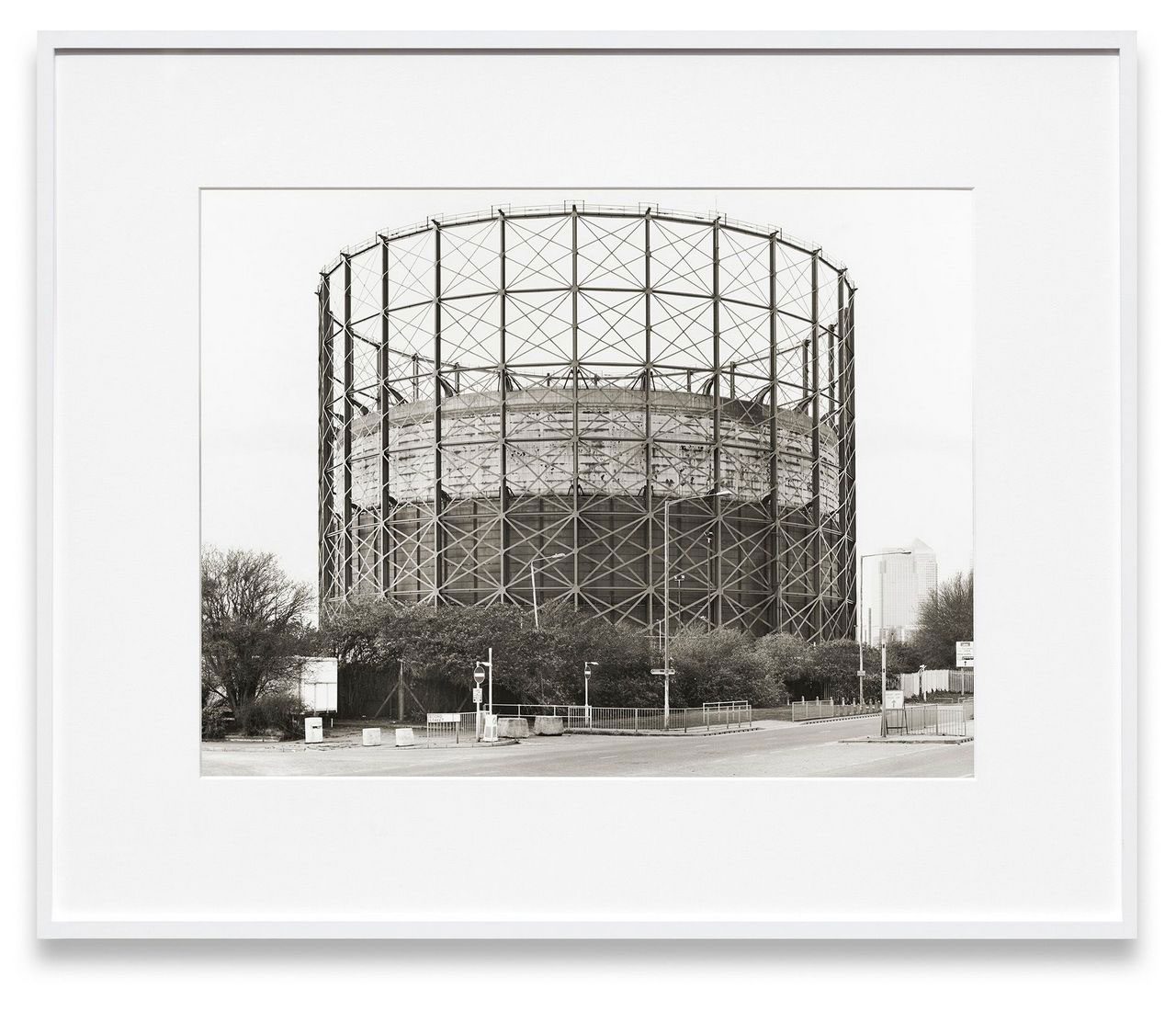
The opening section foregrounds British gas tanks—several from London itself—many of which have not previously been shown in the country. These images focus on historic gasometers: cylindrical frameworks housing expandable storage vessels. The Bechers capture them at differing stages of containment, emphasizing subtle shifts in proportion, geometry, and surface texture.
One photograph stands apart: “Gas Tank, Ilford, London, UK” (2009), in which the vessel is nearly empty, exposing the full discoid ring of the structure. The Bechers’ insistence on neutrality and frontal clarity heightens this distinction, inviting prolonged looking and comparative analysis. Their commitment to objectivity does not flatten individuality; rather, it sharpens the viewer’s ability to register difference within apparent uniformity.
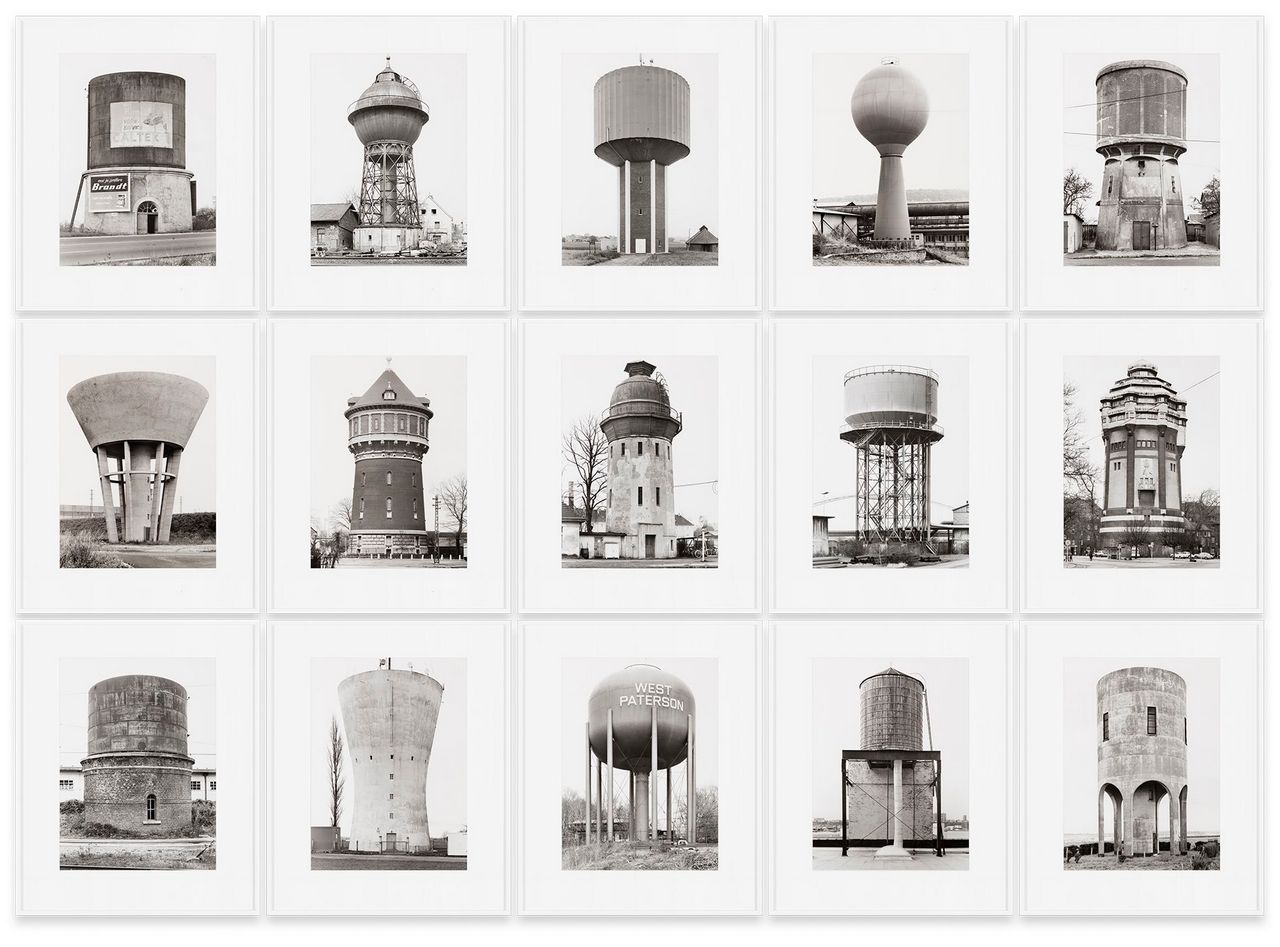
Water towers extend this investigation beyond Britain. French, Belgian, and rare Italian examples demonstrate how identical functions produce divergent architectural solutions across borders. Engineering necessity becomes a catalyst for stylistic diversity, whether in the slender verticality of one tower or the squat mass of another.
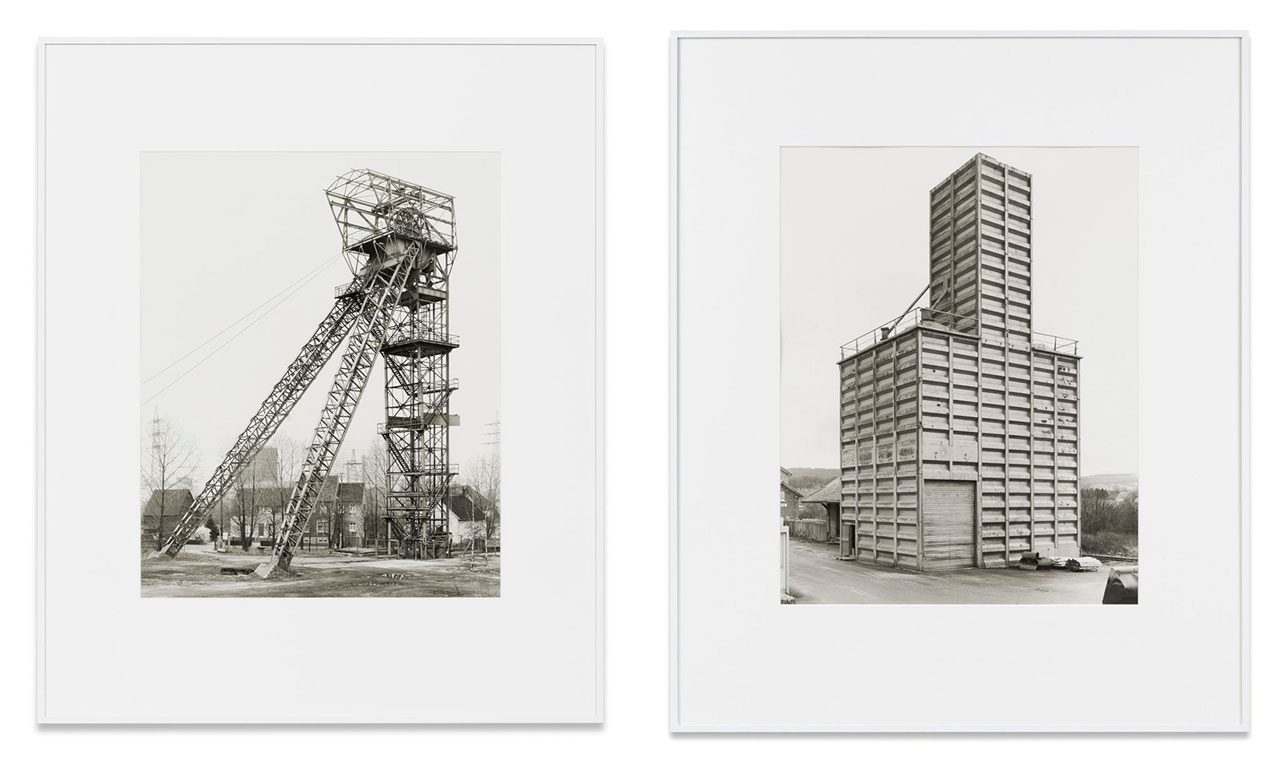
On the second floor, winding towers—used to transport miners and materials—introduce a different visual logic. Unlike containment structures, these are operational machines, and the photographs often omit their subterranean bases. The resulting compositions feel fragmentary, suggesting both presence and absence: monuments whose essential function lies hidden underground.
The exhibition’s earliest works document framework houses in Germany’s Siegen region, one of Europe’s oldest iron-producing areas. A late-eighteenth-century regulation on timber usage shaped the distinctive half-timbered architecture recorded here. For Bernd Becher, who grew up in such a house, these buildings were not merely subjects but formative environments.
Trained initially as a painter and illustrator, he began photographing landscapes as references for hand-drawn images. This practice evolved into a photographic discipline that later intersected with Hilla Becher’s technical expertise. Their collaboration fused painterly composition with photographic precision, ultimately yielding a rigorous visual system that would influence generations of artists.
Across domestic framework houses and the idiosyncratic preparation plants that conclude the show, the Bechers reveal a consistent aesthetic proposition: industrial architecture is not merely utilitarian backdrop but sculptural presence. Their images distil the built environment of modernity into an inventory of forms—repetitive yet singular, standardized yet expressive.
By stripping away narrative drama, they compel viewers to reconsider infrastructure as a site of visual and cultural meaning. The resulting photographs operate simultaneously as documents of disappearing industries and as formal meditations on structure, repetition, and variation.
In London, this exhibition reaffirms the enduring resonance of the Bechers’ method. At a moment when many of the photographed sites have vanished or been repurposed, their typologies function not only as archival memory but as a framework for thinking about how photography orders the world. What emerges is a quiet yet radical proposition: that the overlooked architectures of labour and production can be read as a taxonomy of modern sculpture—precise, serial, and profoundly human.
Photo: Bernd & Hilla Becher, Courtesy Sprüth Magers Gallery
Info: Sprüth Magers Gallery, 7A Grafton Street, London, United Kingdom, Duration: 20/2-28/3/2026, Days & Hours: Tue-Sat 10:00-18:00, https://spruethmagers.com/